


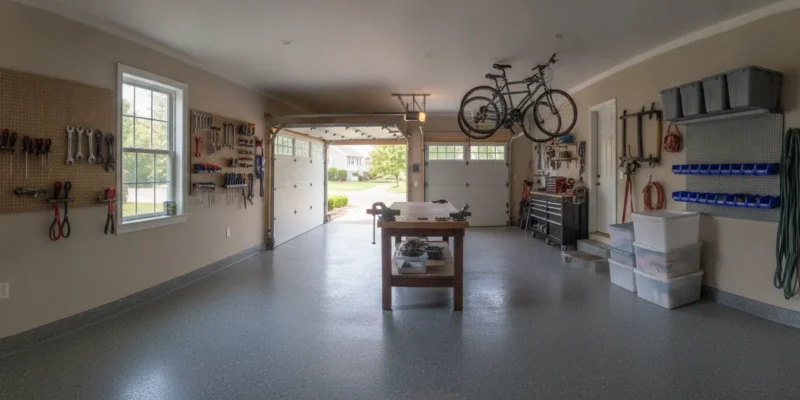
Planning an epoxy floor starts with more than the price printed on a coating kit. Concrete condition, square footage, preparation, coating layers, access, and intended use all affect the installed total. A garage exposed to road salt and vehicle traffic also differs from a covered patio used for outdoor seating. On Long Island, reviewing those conditions helps turn a broad national range into a useful project budget.
Contact Gappsi through our contact page
Epoxy garage floor cost commonly falls between $3 and $12 per square foot for professional installation as a national planning benchmark, according to Bob Vila’s published cost research. That is not a Long Island quote. The actual scope depends on the slab, repairs, coating system, access, finish, and whether the project is indoors or outside.
This guide explains how to use that benchmark without treating it as a promise. It also covers preparation, epoxy versus polyaspartic, patios, DIY tradeoffs, and the questions to ask before comparing proposals.
What Does Epoxy Garage Floor Cost on Long Island?
As an early planning figure, a professionally installed epoxy garage floor may be evaluated against a national range of roughly $3 to $12 per square foot. Long Island pricing can move above or below that benchmark because labor, access, concrete repairs, moisture conditions, coating layers, and finish details vary from one property to another.
National cost research is useful because it gives a homeowner a starting point. It should not replace an assessment of the actual slab. Bob Vila reports a typical overall project range of $1,595 to $3,337, with a national average of $2,441. Those figures help establish a planning conversation, but they do not include every condition found in a Long Island garage or patio.
For example, a clean, open garage with sound concrete may need less corrective work than a floor covered with old paint, oil residue, failed patching, or deep cracks. A narrow garage with stairs, columns, floor drains, and tight edges can also require more labor than a larger open rectangle. The selected finish matters too. A solid color, decorative flake broadcast, protective topcoat, or traction additive changes the materials and application sequence.
A practical cost list for early planning
- DIY materials: A retail kit may appear to have a lower starting price. But the complete budget can include grinding equipment, cleaning supplies, repairs, safety gear, mixing tools, disposal, and your time.
- Professional installation: The $3 to $12 national benchmark is a planning reference. A contractor should explain which preparation steps, coating layers, repairs, and cleanup services are included.
- One-car garage: A 240-square-foot floor may require less coating material, but edges, cracks, oil contamination, and difficult access can still affect the installed scope.
- Two-car garage: A 400 to 500-square-foot floor uses more material and may require more labor. The concrete condition remains just as important as the measurement.
- Patio or outdoor slab: Sunlight, rain, drainage, temperature changes, traction, and transitions into landscaping or masonry can add planning requirements that do not apply to an enclosed garage.
The best estimate separates preparation, coating layers, repairs, access, and cure timing instead of presenting one unexplained price. Gappsi’s epoxy garage flooring installation service provides context for the type of project being evaluated.
Contact Gappsi through our contact page
Which Factors Change Epoxy Garage Floor Cost?
The largest cost differences usually come from the condition of the concrete and the scope of preparation. Square footage, repairs, grinding, moisture management, coating chemistry, decorative finishes, edges, access, and cure requirements can all change the labor and materials needed for a durable installation.
Two garages with the same dimensions can need different proposals. Gappsi reviews the full surface and intended use rather than applying a flat number to every floor.
- Concrete condition: Oil saturation, spalling, deep cracks, loose material, old paint, and failed repairs need attention before a coating is applied. Coating over a weak or contaminated surface can hide a problem temporarily without solving it.
- Mechanical preparation: Diamond grinding removes weak surface material and creates a profile that helps the primer and coating bond. The time required depends on the existing finish, contamination, concrete density, and previous coatings.
- Moisture: Moisture moving through a slab can interfere with adhesion. Testing or additional evaluation may be needed before the final system is selected.
- Coating build: Primer, base coat, decorative flakes, broadcast material, and protective topcoat each affect material use and application time. The right system depends on traffic, exposure, appearance, and maintenance expectations.
- Edges and obstacles: Steps, walls, drains, stem walls, door thresholds, columns, and narrow corners require additional masking and cutting-in work.
- Access and scheduling: Equipment movement, garage access, ventilation, temperature, humidity, and time without vehicle traffic can affect the schedule and labor plan.
- Related renovation work: Flooring may be coordinated with storage, lighting, wall finishes, or other garage improvements. Gappsi’s garage renovation services can help define that broader scope separately from the floor coating.
A clear proposal should state whether cleaning, grinding, crack repair, moisture review, materials, labor, topcoat, and cleanup are included. It should also explain what is excluded. That detail makes it easier to compare two estimates without choosing the lower number simply because important preparation work was left out.
Is Epoxy or Polyaspartic Better for a Garage or Patio?
Epoxy and polyaspartic can both be useful coating technologies, but neither is automatically best for every project. Epoxy often offers a longer working window, while polyaspartic may be selected for faster cure characteristics and greater outdoor UV consideration. The concrete, exposure, traffic, and complete system should guide the choice.
The coating label is only one part of the specification. A system can perform poorly when the slab is oily, dusty, damp, weak, or improperly profiled. The installer should evaluate the primer, base coat, flakes, topcoat, texture, and expected use together.
| Consideration | Epoxy | Polyaspartic |
|---|---|---|
| Working time | Often provides more time for organized placement and decorative flake distribution. | Often sets faster, requiring efficient staging and experienced application timing. |
| Garage use | Can suit an enclosed garage when the system matches vehicle traffic and the slab is properly prepared. | Can suit a garage when a faster return-to-use schedule or different system characteristics are important. |
| Outdoor exposure | Direct sunlight can affect some epoxy systems, so the finish and exposure should be reviewed carefully. | Often considered where UV exposure is a major part of the specification, subject to the selected product. |
| Cure timing | May require a longer wait before foot or vehicle traffic. Follow the product and installer schedule. | May allow faster use in some systems, but temperature and site conditions still control the schedule. |
| Preparation | Needs clean, sound, profiled concrete. Faster or slower chemistry does not remove the need for preparation. | Also needs clean, sound, profiled concrete. Speed does not compensate for oil, moisture, dust, or weak concrete. |
For a garage, road salt, tire heat, oil, dropped tools, and vehicle traffic may matter more than a short cure claim. For a patio, UV exposure, rain, wet-foot traction, drainage, frost, and transitions into the rest of the yard become more important. A coating should be specified for the conditions it will face.
Homeowners considering a broader outdoor project can compare a coated concrete area with Gappsi’s outdoor living services. If the design calls for a different surface, travertine paver options may be evaluated alongside the drainage, steps, borders, and surrounding masonry.
How Does Surface Preparation Affect the Final Cost?
Surface preparation affects both price and performance because the coating bonds to the prepared concrete, not to an abstract square-foot measurement. Inspection, cleaning, repairs, grinding, profiling, moisture review, and dust removal may add labor, but they help the selected system address the actual condition of the slab.
Preparation is where many coating estimates become difficult to compare. One proposal may include mechanical grinding and repairs, while another may assume that the floor is ready for application. Ask for the preparation method and the condition it is designed to address.
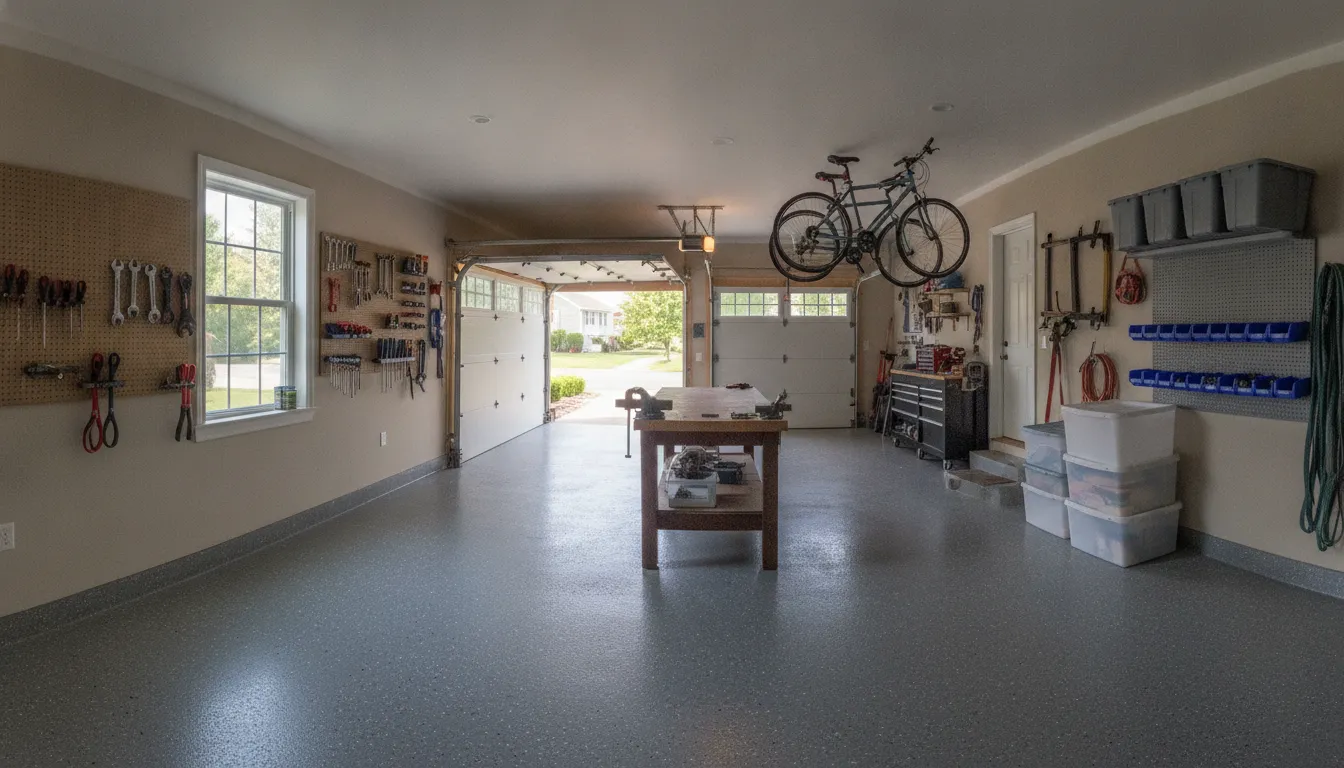
The typical preparation sequence
- Inspect the slab: Review cracks, spalling, old coatings, oil contamination, uneven areas, drains, edges, and access points.
- Clean the surface: Remove dirt, grease, dust, and other contaminants before mechanical preparation.
- Repair defects: Address cracks, pits, loose concrete, and deteriorated areas according to the selected system.
- Grind and profile: Use mechanical preparation to remove weak material and create the surface profile needed for bonding.
- Review moisture: Consider whether moisture conditions require further testing, a compatible product, or a change in scope.
- Apply the system: Install primer, coating, flakes, and protective layers according to the project specification.
- Plan access: Keep vehicles, furniture, and foot traffic off the floor for the time required by the system and conditions.
Skipping a preparation step may reduce the initial estimate while increasing the chance of peeling, visible repairs, weak adhesion, or premature wear. Gappsi can explain which steps are necessary for the proposed floor and which conditions would change the scope.
For a related hardscape plan, the masonry design and construction team can coordinate steps, transitions, drainage, and surrounding surfaces when the coating is part of a larger project.
Can Epoxy Garage Floor Cost Planning Include a Patio?
Epoxy garage floor cost planning can include a patio, but an outdoor slab needs a separate evaluation. Drainage, sunlight, rain, seasonal temperature changes, cracks, traction, adjacent landscaping, and door or step transitions can affect whether a coating is suitable and what preparation the project requires.
A patio should not be treated as an uncovered garage. Outdoor concrete experiences water and temperature changes that can expose weaknesses in the slab. Moving cracks, settlement, crumbling areas, recurring dampness, and poor drainage should be addressed before a coating is considered.
Start with drainage and transitions
Water should move away from the home, door thresholds, walls, and foundation rather than collecting at the patio edge. The installer should review transitions at steps, pool areas, planting beds, masonry, and exterior doors. Expansion and control joints also need a defined treatment instead of being filled without considering movement.
Plan for UV exposure and wet traction
Direct sun can affect the appearance and long-term suitability of some epoxy systems. Rain and wet footwear can also make a smooth coating difficult to walk on. A compatible finish or texture may improve traction, but the surface should still remain practical to clean and comfortable for the intended use.
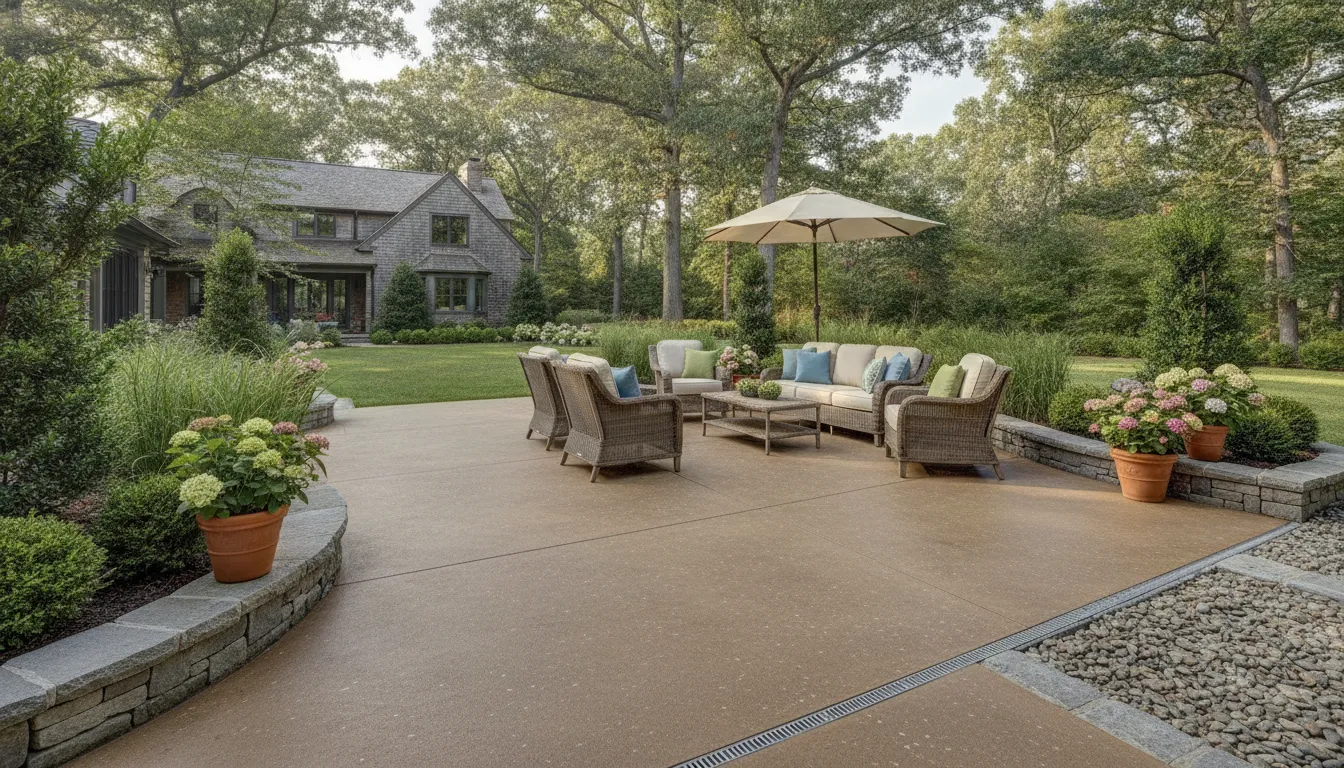
Gappsi can review a coated patio as part of a broader outdoor plan. A homeowner may also compare the coating with natural stone, porcelain, or pavers. Gappsi’s paver sealing guide offers related maintenance context when the selected surface is pavers rather than coated concrete. The decision should account for the complete outdoor design, not only the lowest surface price.
Is DIY Epoxy Worth the Lower Epoxy Garage Floor Cost?
A DIY kit can lower the initial product line item, but it does not eliminate preparation. Equipment, safety, repairs, application timing, or the risk of correcting a failed finish. DIY may be reasonable for a sound, simple slab and an experienced homeowner. A difficult floor needs a more complete cost comparison.
Materials are only one part of the calculation. A homeowner may need a grinder or grinding accessories, industrial cleaning products, mixing buckets, rollers, squeegees, protective equipment, crack-repair materials, and disposal supplies. Tool rental can narrow the gap between a kit and professional installation.
Where DIY applications commonly go wrong
- Insufficient preparation: Dust, oil, paint residue, and weak concrete can interfere with bonding.
- Unresolved moisture: Moisture moving through the slab can create adhesion problems after the floor appears finished.
- Missed working time: Fast-setting systems require organized staging and consistent application speed.
- Thin or uneven coverage: Inconsistent material distribution can create visible variation and weaker areas.
- Inadequate cure planning: Walking or driving on the floor too soon can damage the finish.
A fair DIY comparison adds equipment, time, cleanup, material waste, and the possible cost of removing or repairing a failed coating. It should also account for the value of a documented preparation and installation plan.
What Should You Ask Before Comparing Epoxy Flooring Estimates?
Before comparing epoxy estimates, ask each contractor to identify the preparation method, repairs, coating layers, finish, moisture considerations, access requirements, cure schedule, exclusions, and warranty terms. A written scope lets you compare complete systems instead of comparing one contractor’s full installation with another contractor’s materials-only number.
- What preparation method will be used, and what conditions does it address?
- Are oil stains, old coatings, cracks, spalling, and patching included in the scope?
- Which primer, base coat, flakes, and protective topcoat are specified?
- How will moisture, temperature, humidity, drainage, and outdoor exposure be evaluated?
- How long will the garage or patio remain unavailable to vehicles, furniture, and foot traffic?
- What work is excluded, such as major slab repair, drainage correction, storage removal, or unrelated renovation?
- How will edges, stairs, drains, thresholds, and transitions be finished?
- What maintenance and cleaning practices does the selected system require?
Gappsi takes a project-specific approach to flooring and related home improvement work. If your garage is part of a larger property plan, review the swimming pool service page. Surface, drainage, access, and surrounding outdoor work may need to be coordinated across a Long Island property.
Contact Gappsi through our contact page
Frequently Asked Questions
How much does it cost to epoxy a 20×20 garage floor?
A 20×20 garage covers 400 square feet. Applying the national planning benchmark of $3 to $12 per square foot produces a broad starting range, but it is not a Long Island quote. Concrete repairs, grinding, access, coating layers, finish, and cure requirements can move the final scope.
What is the cost of epoxy garage floor installation per square foot?
Published national guidance commonly places professional installation around $3 to $12 per square foot. Use that figure for early planning only. A contractor should inspect the slab and explain preparation, repairs, materials, labor, finish, and exclusions before giving a project-specific estimate.
Is it worth epoxying a garage floor?
It can be worthwhile when the concrete is suitable, the system matches the garage conditions, and the preparation is complete. A coating can create a more consistent, cleanable surface, but it should not be used to conceal moving cracks, moisture, weak concrete, or unresolved drainage problems.
What are the disadvantages of epoxy flooring?
Potential disadvantages include preparation requirements, cure downtime, sensitivity to moisture or contaminated concrete, and appearance changes under unsuitable outdoor exposure. A smooth finish can also become slippery when wet. The system should be selected for the space, traffic, weather, and maintenance plan.
How much does it cost to DIY epoxy a garage floor?
A DIY kit can have a lower starting product price, but the complete budget includes equipment, cleaning, repairs, safety gear, waste, time, and possible correction work. Compare the full process, including surface preparation and cure planning, rather than comparing the kit price alone.