


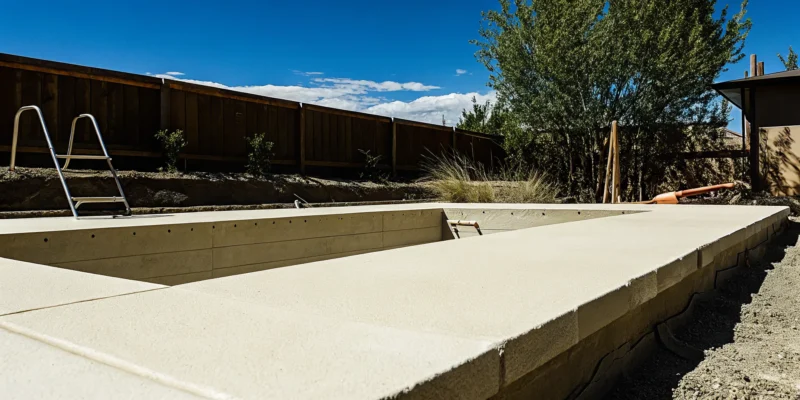
Nothing jeopardizes the excitement of a new swim spa faster than a foundation failure. The most common and costly mistake we see homeowners make is underestimating the importance of the concrete pad. Placing a 20,000-pound structure on an unlevel or poorly constructed base is a recipe for disaster, potentially causing the spa’s shell to crack under the uneven pressure. This kind of damage is almost never covered by a manufacturer’s warranty. While a quick search for swim spa concrete pad requirements usa will give you the minimum thickness, it won’t explain the crucial role of steel reinforcement or a compacted gravel base. This guide details how to avoid these pitfalls and ensure your masonry foundation is built correctly from the start.
Key Takeaways
- Go Beyond the Minimum for Your Pad: A swim spa’s immense weight requires more than a standard 4-inch pad. For true stability, your foundation should be a 6-inch thick concrete pad reinforced with steel rebar and built upon a compacted gravel base.
- Plan Before You Pour: Careful site preparation is essential for a successful installation. This includes confirming a clear delivery path, professionally leveling the ground for proper drainage, planning for electrical work with a licensed pro, and securing all necessary local permits.
- Don’t Risk Your Warranty on a Weak Foundation: An improper pad can cause structural damage, create safety hazards, and void your spa’s warranty. Investing in a professional installation is the best way to protect your new spa and ensure it lasts for years.
How Big and Thick Should Your Swim Spa Pad Be?
Getting a swim spa is incredibly exciting, but before you can start dreaming of your first dip, we need to talk about the foundation. The concrete pad your swim spa sits on is more than just a slab of concrete; it’s the support system that protects your investment for years to come. A pad that is too small or too thin can lead to serious problems, including damage to the spa itself.
The right foundation depends on the size of your spa, your local climate, and your property’s specific conditions. Getting these details right from the start is the most important step in a successful installation. Think of it as building a solid base not just for your spa, but for countless hours of relaxation and fun. Let’s walk through exactly what you need to know to create a durable and safe foundation for your new hot tub or swim spa.
What Is the Minimum Thickness?
When you start researching, you’ll often see a minimum thickness of four inches recommended for a reinforced concrete pad. While that’s a common industry baseline, it’s important to think of it as just that: a minimum. For a heavy-duty item like a swim spa, especially in a climate like Long Island’s with its freezing and thawing cycles, simply meeting the minimum might not be enough for long-term stability.
We generally advise our clients to consider a thicker pad for greater peace of mind. A slightly thicker foundation provides an extra margin of safety and durability, ensuring your pad won’t crack or shift under the immense weight. The exact thickness will depend on your specific spa model and site conditions, which is why professional guidance is so valuable.
Accounting for Your Spa’s Size and Weight
It’s easy to underestimate just how heavy a swim spa is. When filled with water and people, a swim spa can weigh over 20,000 pounds. That’s more than three large SUVs combined. This incredible weight is why a standard 4-inch concrete patio slab just won’t do the job. To properly support that load, the best choice is a 6-inch thick concrete pad that is reinforced with steel bars, or rebar. This combination creates a powerful foundation that can handle the pressure without failing.
The pad should also be slightly larger than the swim spa’s base, extending at least six inches on all sides. This provides a stable, level surface and makes it easier and safer to get in and out of the spa. Our masonry experts always plan for this extra space during the design phase.
Why You Need Expansion and Control Joints
Concrete looks solid, but it actually moves. It expands in the heat and contracts in the cold. Here on Long Island, where we experience all four seasons, this movement can cause a large, solid slab of concrete to crack. That’s where control joints come in. These are planned cuts made in the concrete surface that encourage cracking to happen in a neat, straight line within the joint, rather than in a jagged, uncontrolled way across the pad.
Expansion joints are similar, but they create a complete separation between the new pad and other structures, like your house foundation or an existing patio. This prevents the two slabs from pushing against each other and causing damage. Including these joints is a critical step for ensuring your swim spa pad survives our seasonal temperature swings.
How Long to Let the Concrete Cure
After your concrete pad is poured, the waiting game begins. It’s tempting to want to get your swim spa delivered and set up right away, but patience is essential. Concrete doesn’t just dry; it cures. Curing is a chemical process where the concrete hardens and gains its full strength. Placing a 20,000-pound spa on a pad that hasn’t fully cured can cause it to crack or settle, ruining the foundation before you’ve even used it.
While the surface may feel hard to the touch within a day or two, it takes about 28 days for most concrete mixes to reach their optimal strength. This timeline can vary based on the weather and the specific mix used. Proper installation is crucial for the safety and longevity of your spa, and allowing for adequate curing time is a non-negotiable part of that process.
What Materials Create a Durable Concrete Pad?
Creating a concrete pad that will last for years involves more than just pouring some cement and calling it a day. The real secret to a long-lasting foundation for your swim spa is using the right combination of high-quality materials. Think of it as a complete system where each component, from the ground up, plays a vital role in providing strength and stability. A properly constructed pad will prevent cracking, shifting, and sinking, ensuring your investment is protected for the long haul. When you get the materials right from the start, you’re building a base that can easily handle the immense weight of a swim spa filled with water and people, giving you total peace of mind.
Choosing the Right Concrete Mix
The concrete mix itself is the star of the show, and not just any mix will do. Your swim spa needs a solid, level surface that can support its significant weight, so a high-strength concrete is essential. We recommend a mix rated for at least 4,000 PSI (pounds per square inch) to provide the necessary durability. This ensures the pad won’t crumble or crack under the constant pressure. Using a standard, lower-strength mix might save a little money upfront, but it risks failing over time, leading to costly repairs. Our expert masonry team always uses the appropriate mix to create a foundation that’s built to last.
Rebar vs. Wire Mesh: Which Is Better?
To give your concrete pad extra strength and prevent it from cracking, it needs internal reinforcement. The two most common options are steel rebar and wire mesh. While wire mesh can help control small surface cracks, rebar is the superior choice for supporting a heavy structure like a swim spa. Rebar consists of thick steel rods arranged in a grid pattern, providing significant structural integrity and preventing large, deep cracks from forming. It helps the concrete slab resist the tension and flexing that can occur with ground movement or temperature changes. For the ultimate in durability and support, we always recommend reinforcing your swim spa pad with rebar.
The Importance of a Compacted Gravel Base
What lies beneath your concrete pad is just as important as the concrete itself. A properly prepared base of compacted gravel is critical for stability and drainage. This gravel layer, typically 4 to 6 inches deep, creates a solid, level foundation for the concrete to be poured on. More importantly, it allows water to drain away from the underside of the pad, preventing soil erosion and damage from frost heave during Long Island’s cold winters. Without a compacted base, the ground can shift and settle unevenly, causing your concrete pad to crack, sink, or tilt. Our landscape construction process always includes meticulous site preparation to ensure your foundation is secure.
How to Prepare Your Site Before Pouring Concrete
Before a single drop of concrete is poured, careful site preparation is the most critical step for a successful swim spa installation. This foundational work is what guarantees your spa will have a stable, secure home for decades of enjoyment. Rushing this stage can lead to frustrating and expensive issues later, from a damaged spa shell to persistent drainage problems. Think of it like the foundation of your house; you wouldn’t cut corners there, and the same logic applies to your backyard investment. We’ll walk through the essential steps you need to take, from ensuring the spa can actually get into your yard to planning for safe electrical connections. Taking the time to prepare your site correctly is the best thing you can do to protect your new oasis. At Gappsi, our teams handle this entire process, making sure every detail is covered.
Picking the Perfect Spot for Access and Delivery
First things first: can the swim spa physically get to its final destination? Before you get too attached to a specific spot, grab a tape measure. Swim spas are large, typically eight feet wide, and the delivery path needs a clear, wide berth from the street to the pad. You’ll need to measure gates, side yards, and any tight corners. Don’t forget to look up, as overhanging tree limbs, roof eaves, and utility lines can stop a delivery in its tracks. Planning the route ahead of time prevents a stressful and potentially costly surprise on installation day. Our swimming pool installation teams are experts at logistical planning and can help you assess the best path for a smooth delivery.
Leveling the Ground and Ensuring Proper Drainage
A perfectly level surface is non-negotiable for your swim spa. If the pad is uneven, it places imbalanced stress on the spa’s shell, which can lead to cracks and even void your warranty. The site must be professionally graded and compacted to create a solid, flat footing. Beyond being level, the area needs proper drainage. Water from splashing, rain, and routine maintenance has to go somewhere. A gentle slope directing water away from your home’s foundation and the spa’s equipment is essential. Proper site preparation and masonry work are key to preventing pooling water and potential moisture damage down the line.
Considering Soil Conditions and Frost Lines
The ground beneath your spa pad plays a huge role in its stability. On Long Island, soil conditions can vary, so it’s important to create a base that won’t shift or settle over time. This usually involves excavating the area and laying a compacted gravel base before pouring concrete. You also have to account for the frost line. During our cold winters, the ground freezes and expands, and a shallow pad can heave and crack. The foundation must be designed to withstand these seasonal shifts. This is where professional landscape design and construction expertise becomes invaluable, as we understand how to build lasting structures in our local climate.
Planning for Electrical Needs and GFCI Protection
A swim spa requires a significant amount of power, so electrical planning is a major safety consideration. This is not a DIY project. Most swim spas need a dedicated 240V circuit, which must be installed by a licensed electrician to meet local and national codes. A critical component of this installation is a Ground Fault Circuit Interrupter, or GFCI. This device is designed to quickly shut off power if it detects any electrical imbalance, protecting you and your family from shock. Coordinating with professionals for your home improvement projects ensures all electrical work is done safely and correctly from the start.
Checking Local Permits and Regulations
Before you break ground, you need to know the rules. Most towns in Nassau and Suffolk County require a permit for a swim spa installation. These local regulations often dictate exactly where you can place your spa, including setback requirements from property lines, your house, and septic systems. There may also be specific rules regarding safety barriers, like fencing or a locking cover, to prevent accidents. Navigating these codes can be confusing, but it’s a necessary step. Working with an experienced local contractor like Gappsi simplifies the process, as we are familiar with the permit requirements across Long Island and can manage the paperwork for you.
What Happens If Your Swim Spa Pad Is Built Incorrectly?
Investing in a swim spa is a fantastic decision for your home and well being, but the excitement can quickly turn into a costly headache if the foundation isn’t right. A properly constructed concrete pad is not just a suggestion; it’s a requirement for the safety, function, and longevity of your spa. Cutting corners on the pad might seem like a way to save a little money upfront, but it almost always leads to much bigger, more expensive problems down the road. From structural damage to serious safety risks, a faulty foundation can jeopardize your entire investment. Let’s walk through exactly what can go wrong and, more importantly, how to make sure it’s done right from the start.
Risks to Your Warranty and Spa Structure
An unlevel or unstable pad is your swim spa’s worst enemy. The spa’s shell is designed to hold thousands of pounds of water, but it needs to be perfectly supported to do so. If the pad is uneven, it creates pressure points and puts immense stress on the acrylic shell. Over time, this uneven load can cause the shell to warp or even develop cracks, leading to leaks that are difficult and expensive to repair. Even worse, most manufacturer warranties are very clear that damage caused by an improper foundation is not covered. This means a simple mistake during installation could void your warranty and leave you responsible for all repair costs on your brand new swim spa.
Potential Electrical and Safety Hazards
Beyond structural damage, a poorly built pad introduces serious safety concerns, especially regarding the electrical system. Your swim spa requires a dedicated, high-voltage electrical connection. If the pad shifts, settles, or cracks, it can strain or damage the electrical conduit and wiring. This creates a significant risk of electrical shorts or, in the worst case, electrical shock. For this reason, all electrical work must be completed by a licensed electrician who can install the necessary GFCI (Ground Fault Circuit Interrupter) protection. A professional home improvement team ensures the entire setup, from the pad to the wiring, meets strict safety codes to protect you and your family.
Avoiding Long-Term Drainage and Maintenance Problems
Proper site planning goes beyond just the pad itself. Think about where all the water will go. An incorrectly graded site can cause rainwater or splash out to pool around the base of your swim spa, which can erode the soil under the pad and lead to instability. It also creates a mess in your yard and can damage surrounding landscaping. Furthermore, you will need to drain your spa periodically for maintenance. A well-designed installation includes a plan for where this large volume of water can be safely directed. Without proper landscape and drainage planning, a routine task can become a major logistical problem.
How to Avoid Common Installation Mistakes
The good news is that all these problems are completely avoidable with a professional installation. The most common mistakes come from trying to cut corners. Never install a swim spa directly on grass, soil, or an uneven patio. You should also never try to “shim” a spa by placing blocks of wood or other objects underneath it to make it level; this creates dangerous pressure points. The only correct method is to start with a properly leveled site and a professionally poured concrete pad. By working with an experienced masonry and construction company, you can be confident that your foundation is built to last and will provide a safe, stable base for years of enjoyment.
How Much Does a Swim Spa Concrete Pad Cost?
Let’s talk numbers. Budgeting for a new swim spa is exciting, but it’s easy to focus only on the price of the spa itself. The foundation it sits on is just as important, and its cost is a key part of your total investment. Think of the concrete pad as the unsung hero of your backyard oasis. A properly installed pad ensures your swim spa remains stable, safe, and functional for years to come. Cutting corners here can lead to serious headaches and costly repairs down the road, so it’s wise to get it right from the start.
The final price tag for a concrete pad can vary quite a bit. While there’s a general cost per square foot for concrete, the total expense depends on several factors unique to your property and project. Things like the size of your spa, the condition of your yard, and any special requirements for installation will all play a role. We’ll break down these costs so you can create a realistic budget and feel confident in your planning. From the concrete itself to site preparation and those little details you might not have thought of, we’ve got you covered. Gappsi has been building incredible outdoor spaces since 1987, and we know that a solid foundation is the first step to creating your dream swimming pool or spa area.
Breaking Down the Cost Per Square Foot
When you start looking at quotes, you’ll often see the cost of concrete broken down per square foot. Generally, you can expect a concrete slab to cost between $3 and $7 per square foot for the material and basic installation. So, for a typical 8-foot by 15-foot swim spa, you’d need a pad that’s at least 120 square feet. This puts your starting cost somewhere between $360 and $840.
Keep in mind, this is just a baseline. This price range usually covers the concrete itself and the labor to pour and finish it. It doesn’t typically include the necessary groundwork, reinforcement like rebar, or any complex finishing touches. It’s a helpful starting point for your budget, but the final price will be higher once all the essential components of a durable foundation, like those used in professional masonry, are added.
What Factors Affect the Final Price?
Several key factors can influence the final cost of your swim spa pad, moving it beyond the basic price per square foot. First is the size of your swim spa. A larger spa requires a larger, thicker pad, which naturally increases material and labor costs. Second is site preparation. If your chosen spot isn’t perfectly level or has poor soil, significant work may be needed to grade the land and create a stable base. Accessibility is another big one; if your backyard is hard to reach, a crane might be needed to place the spa, which is an additional rental fee.
Finally, don’t forget the electrical and plumbing work. A licensed electrician must run a dedicated circuit to power your spa safely, and this is a crucial part of the installation budget. These elements are all part of a comprehensive home remodeling project and contribute to the final price.
Budgeting for Sealing, Inspections, and Maintenance
Beyond the concrete and labor, there are a few other costs to plan for. Sealing the concrete pad is a smart move. A good sealant protects the concrete from water, chemicals, and the freeze-thaw cycles we experience on Long Island, extending its life. This is a small upfront cost that prevents bigger problems later. You can explore professional restoration and sealing services to ensure the job is done right.
You should also budget for any necessary permits and inspections required by your local town. These fees vary but are essential for ensuring your installation is up to code. Lastly, think about drainage. Proper site preparation includes planning where water will go when you eventually drain your spa. A good drainage plan prevents water from pooling around the foundation or creating a swampy mess in your yard.
Related Articles
- back yard Archives – Gappsi Group
- Concrete Pool Archives – Gappsi Group
- Patio Archives – Gappsi Group
Frequently Asked Questions
Can I just put the swim spa on my existing concrete patio? This is a common question, but unfortunately, the answer is almost always no. Most standard patios are only about four inches thick and lack the steel reinforcement needed to support the immense weight of a filled swim spa. Placing a 20,000-pound spa on a typical patio slab is a recipe for cracks in both the patio and your new spa, which would likely void your warranty. A dedicated, professionally built pad is the only way to ensure a safe and stable foundation.
Is a 6-inch thick pad really necessary if the minimum is 4 inches? While some sources mention a four-inch minimum, we strongly recommend a six-inch thick, rebar-reinforced pad for any swim spa installation on Long Island. Think of the extra two inches as an investment in long-term stability. Our climate’s freeze and thaw cycles put a lot of stress on concrete, and the extra thickness provides superior strength to prevent cracking and shifting under the spa’s heavy, constant load.
How much will site preparation add to the total cost? The cost for site preparation can vary significantly because it depends entirely on your property’s current condition. A yard that is already flat and clear will require much less work than a sloped or uneven site that needs extensive excavation, grading, and the addition of a compacted gravel base. The only way to get a precise figure is to have a professional assess the site, which is a standard part of our planning process.
Do I need to worry about permits for a swim spa in Long Island? Yes, you absolutely do. Most towns across Nassau and Suffolk County require permits for swim spa installations. These regulations are in place for your safety and dictate important details like how far the spa must be from property lines and your house. They also ensure all electrical work is performed to code. Working with an experienced local company simplifies this, as we can manage the permit process for you.
What happens if I don’t let the concrete cure for the full 28 days? It is incredibly tempting to rush this step, but patience is key. Concrete gains its strength through a chemical curing process, and the surface hardening in a day or two is deceptive. Placing a heavy swim spa on the pad before it has reached its optimal strength can cause the foundation to crack or settle unevenly. This can permanently damage the pad and compromise the support for your spa, potentially voiding its warranty.