


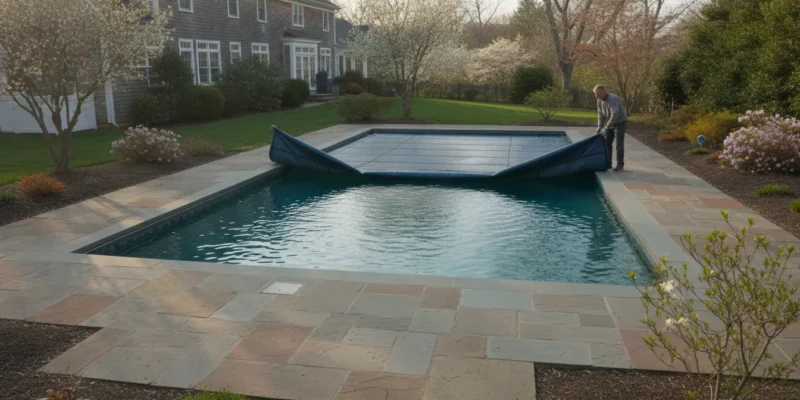
After a Long Island winter, a pool can look ready from the deck while its cover, plumbing, filter, and water still need careful attention. Opening in the right order helps you find winter damage early, avoid restarting equipment under strain, and create a cleaner path to the first swim. Contact Gappsi through our contact page A spring opening is more than removing a cover. It is a coordinated check of the pool shell, water level, circulation equipment, filter, controls, and safety features. Homeowners in Nassau and Suffolk counties can use the sequence below to decide what they can handle safely and when a professional inspection is the better choice.
What Is the Best Time for Pool Opening on Long Island?
For most Long Island homeowners, the best pool opening window comes when daytime weather is consistently mild and you have enough time to clean. Restart equipment, test chemistry, and correct problems before swimming. Gappsi recommends treating the calendar as a planning tool, not as a fixed date that overrides the condition of the pool. Late April through May is a common planning window in Nassau and Suffolk County, but the right date depends on the property. A shaded yard, heavy tree cover, a damaged winter cover, or a colder-than-usual spring can change the amount of work waiting under the cover. Look at the full forecast rather than one warm afternoon. Opening too early may expose the pool to more debris and leave you maintaining water before the season is established. Waiting too long can give algae and organic matter more time to accumulate. The practical goal is to open with enough time for circulation and water treatment to stabilize before the first planned swim.
Plan around the first swim, not the first warm day
Choose an opening date that leaves room for inspection and follow-up. If the pump will not hold its prime, the filter pressure is abnormal, or the water does not respond to treatment, you need time to diagnose the cause. A rushed opening can turn a manageable equipment issue into a delayed start to the season. Professional spring appointments can also fill after the first sustained warm spell. Gappsi’s pool opening services include the practical sequence of removing cover water and debris, cleaning the pool, reconnecting equipment, and checking operation. Scheduling before your target swim date makes it easier to address findings without compressing the rest of the preparation.
What Should You Do Before Removing the Pool Cover?
Before removing a winter cover, clear standing water and loose debris from its surface, protect the surrounding deck, and inspect the cover and anchors as you work. Gappsi’s opening approach starts with controlling debris transfer, because a careless cover removal can add leaves, sediment, and contaminated water to the pool.
- Inspect the area around the pool. Move furniture, toys, branches, and other obstacles away from the deck. Check that the working area is stable and that no damaged coping, loose pavers, or exposed electrical components create a hazard.
- Remove water from the cover where appropriate. Use equipment suited to your cover and follow the cover manufacturer’s instructions. Do not step onto a safety cover or use an unsafe method to reach the center of accumulated water.
- Clear leaves and branches. Use a cover brush or soft tool that will not puncture the material. Remove heavy debris in stages instead of dragging a loaded cover across the deck or pool edge.
- Check anchors, straps, springs, and seams. Look for tears, stretched areas, damaged hardware, and places where the cover no longer sits correctly. Photograph damage so you can plan a repair or replacement before the next closing.
- Remove and store the cover carefully. With help when needed, fold or roll the cover according to its care instructions. Clean and dry it before storage so trapped moisture and debris do not create additional deterioration.
- Clean the deck before debris reaches the water. Sweep or rinse the area using a method appropriate for the deck material. Keep loose dirt from being pushed toward open drains or back into the pool.
Once the cover is off, use a leaf net to remove large debris from the surface and floor. Do not stir a heavy layer of sediment unnecessarily. A slow, controlled cleaning pass gives you a clearer view of the waterline, tile, coping, steps, and visible pool surfaces. Gappsi also builds and renovates pools, so a spring inspection can reveal a separate construction or renovation question. If the pool needs more than seasonal preparation, review the company’s swimming pool design and construction services rather than treating a structural concern as routine maintenance.
How Do You Reconnect Pool Equipment Safely?
Reconnect pool equipment only after the water reaches the correct operating level and the equipment pad is clear. Gappsi’s pool opening process treats the pump, filter, heater, valves, plumbing, and controls as one circulation system. So each part should be checked before the system is placed under normal operating pressure. Start with a visual inspection. Check the pump lid and basket, filter tank, pressure gauge, valves, unions, plugs, visible plumbing, and drain points. Replace or reinstall winterizing plugs and fittings according to the equipment manufacturer’s instructions. Do not force a connection or bypass a safety device to make the system run. Confirm that valves are in their expected positions before starting the pump. If the water level is below the skimmer’s safe operating range, add water first. A pump that runs without adequate water flow can lose its prime and suffer damage. Keep children and untrained people away from the equipment pad during startup.
What should you check during the first startup?
Prime the pump as directed for your equipment, then observe the clear lid, return flow, pressure gauge, and visible connections. Listen for unusual sounds and look for leaking water or air entering the system. If the pump will not hold its prime, shut it off and investigate instead of repeatedly restarting it. Check the filter’s starting pressure against the normal range recorded for your system. A sudden reading that is unusually high or low can point to a dirty filter, restricted flow, a valve position problem, or air in the system. Record the reading so future maintenance has a useful baseline. Reconnect heaters, salt chlorine generators, automation controls, lights, and other installed equipment according to the manufacturer’s instructions. Never remove electrical covers, change wiring, or bypass interlocks as part of a routine opening. Electrical work around water requires a qualified professional and the correct safety procedures. Contact Gappsi through our contact page 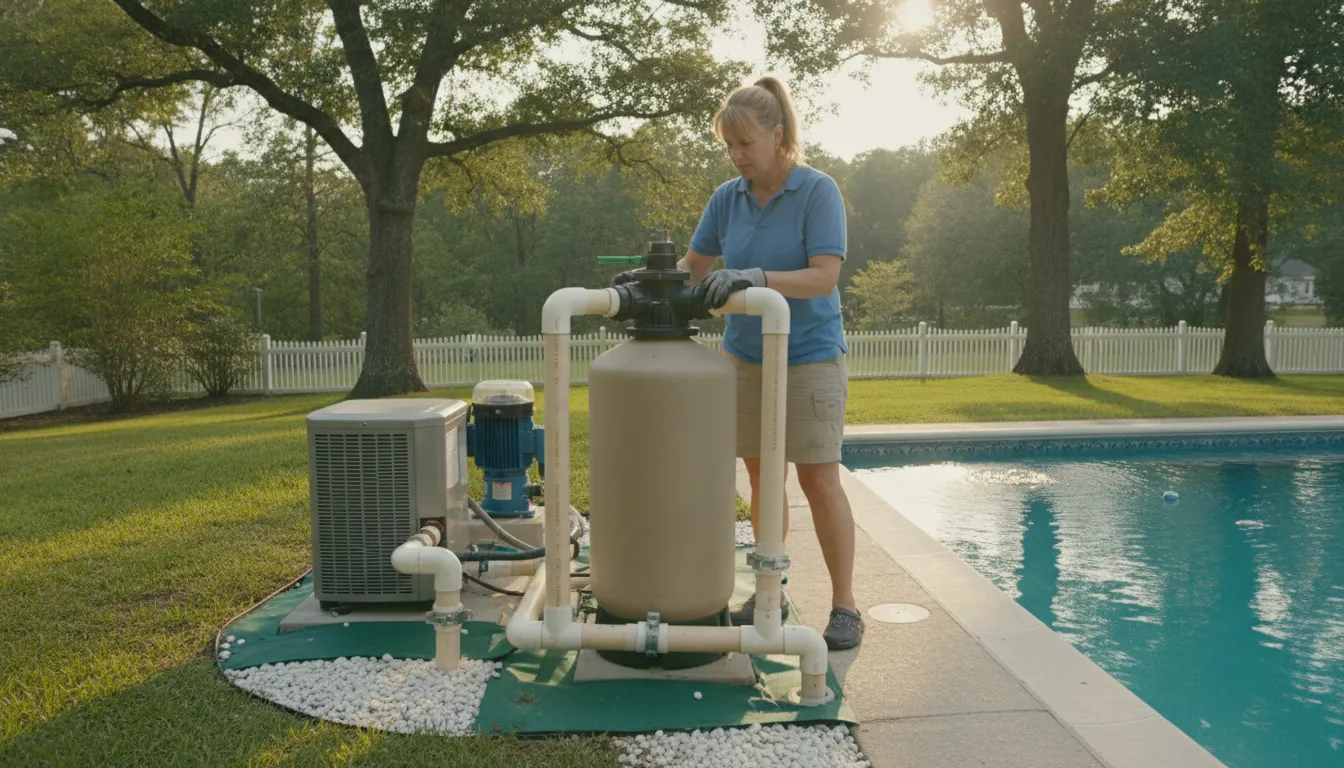
How Should You Balance Pool Water at Opening?
Test pool water after the pool is clean and circulation is stable, then adjust chemistry in a controlled order. For a Long Island pool opening, Gappsi’s practical sequence is to establish flow. Collect a representative sample, measure pH and sanitizer, and continue testing as treatment changes the water. Use a test method appropriate to your pool and follow the product labels. The Centers for Disease Control and Prevention provides home pool water guidance that includes a pH range of 7.0 to 7.8 and at least 1 part per million of free chlorine for pools. Read the CDC guidance on home pool and hot tub water treatment for context and testing considerations. Do not estimate chemistry from water appearance alone. Clear water can still have an imbalance, while cloudy water can reflect several different conditions. Test the water, make one measured adjustment at a time, and allow the circulation system to distribute the treatment before testing again.
| Opening check. | What to observe. | When to pause. |
|---|---|---|
| Water level. | Safe operating level reached. | Level is low or falling. |
| Circulation. | Steady returns and a held pump prime. | Noise, lost prime, or air problem. |
| Filter pressure. | Gauge is in the normal range. | Pressure changes sharply. |
| Water chemistry. | pH and free chlorine move toward targets. | Cloudy water or poor response. |
Keep chemicals in their original labeled containers and follow handling, storage, and mixing directions. Never mix pool chemicals together or add products in a way that contradicts the label. If you are unsure which condition you are treating, pause and ask a pool professional to evaluate the water and equipment together.
How Do You Care for the Filter Before the First Swim?
Filter care at opening prepares the circulation system to remove debris after winter cleanup and chemical treatment. Gappsi’s pool equipment guidance emphasizes checking filter condition, priming, and operating pressure before swimmers enter the water, because filtration and chemistry work together throughout the opening. The correct procedure depends on whether the pool uses a cartridge, sand, or diatomaceous earth filter. Inspect the filter housing, lid, clamps, pressure gauge, valves, and visible seals. Clean or service the filter according to the manufacturer’s instructions and the condition of the media. Do not use a guessed procedure on unfamiliar equipment. For a cartridge filter, inspect the cartridge for tears, crushed pleats, or heavy buildup before cleaning it. For a sand filter, check the valve setting and follow the manufacturer’s backwash and rinse sequence. For a diatomaceous earth system, use the specified method for cleaning and recharging the filter media. After service, start circulation and watch for leaks around the tank, pump, unions, and drain points. A clean filter with a stable pressure reading is a better starting point than a filter that is simply switched on after months of winter shutdown. Keep a record of the opening pressure and any work completed. The first swim should wait until the water is clear, the circulation system is operating normally, and testing confirms that the water is within the applicable targets. Check ladders, handrails, gates, barriers, covers, and other safety features as well. Clean water is only one part of a safe return to swimming. 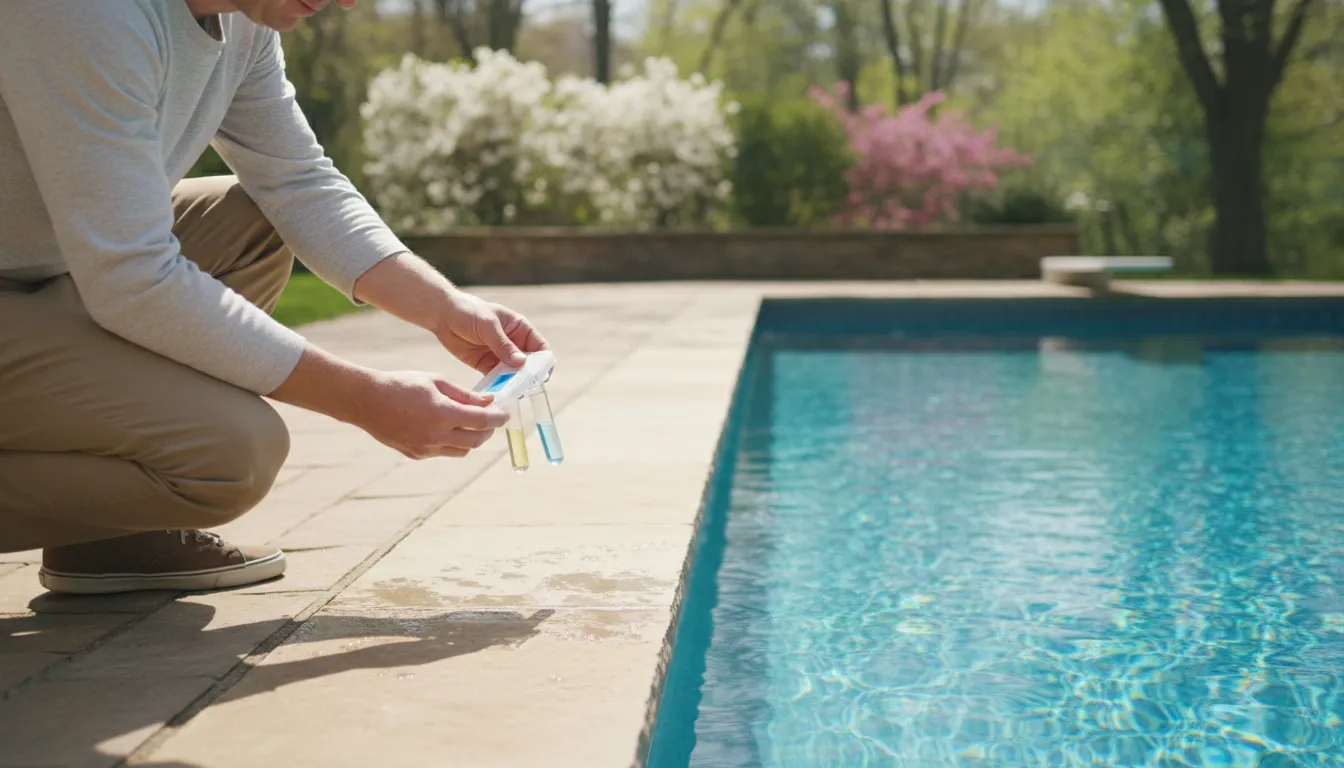 If you are considering an equipment upgrade as part of opening, Gappsi can help connect equipment choices to a broader pool plan. You can also view Gappsi’s swimming pool services and recent Long Island pool projects for additional context.
When Should You Hire a Professional for Pool Opening?
Professional help is appropriate when winter damage, electrical risk, leaks, unfamiliar equipment, or persistent water problems make the opening uncertain. For Long Island homeowners, Gappsi can inspect the seasonal condition of the pool and equipment together. Rather than asking you to solve a circulation problem by trial and error.
Winter damage or unexpected water loss
Stop and arrange an inspection if you see cracked fittings, damaged plumbing, displaced coping, broken cover hardware, a wet equipment pad, or water that drops unexpectedly. These conditions can indicate a leak or winter damage that should be found before the system runs for an extended period.
Equipment will not start or operate normally
Turn off equipment that will not hold prime, makes a new grinding or screeching sound, leaks at a connection, trips a breaker, or shows an abnormal pressure reading. Do not remove electrical covers or defeat a safety switch. A qualified technician can isolate the issue before it becomes a larger equipment failure.
Cloudy water or chemistry that will not stabilize
Cloudiness, persistent discoloration, or chemistry that does not move toward the tested targets deserves a measured diagnosis. The cause could involve debris, filtration, circulation, testing, or treatment. Repeatedly adding chemicals without understanding the condition can waste product and make the next test harder to interpret. Gappsi’s opening service is also useful when the pool has automation, a heater, a salt system, underwater lighting, or other components that were winterized. The goal is not merely to get a pump running. It is to confirm that the pool is clean, circulating, tested, and ready for the season’s use. For a larger project, keep seasonal opening separate from design and installation decisions. Gappsi’s custom gunite pool design information is a better starting point for a new-build conversation than a repair-focused opening checklist. Contact Gappsi through our contact page
Frequently Asked Questions
When should I schedule a spring pool opening on Long Island?
Most homeowners plan for late April through May, but the best date depends on weather, shade, debris, water condition, and the time needed for repairs. Schedule early enough to clean, restart equipment, test chemistry, and correct problems before the first planned swim.
Can I start the pump before adding water?
No. Bring the water to the equipment’s safe operating level before starting the pump. A low water level can prevent proper circulation, cause the pump to lose prime, and create avoidable equipment damage. If the level keeps falling, pause and arrange a leak inspection.
What water chemistry should I check first?
Begin with a representative water sample and test pH and free chlorine, then follow the product directions and applicable guidance for the rest of the system. The CDC identifies pH from 7.0 to 7.8 and at least 1 part per million of free chlorine as home pool reference points.
When should I call a professional for pool opening?
Call a professional when you find winter damage, leaks, unsafe electrical conditions, equipment that will not prime, abnormal filter pressure, persistent cloudiness, or chemistry that will not stabilize. Gappsi can evaluate the pool and equipment as a connected system before the season begins. Contact Gappsi through our contact page