


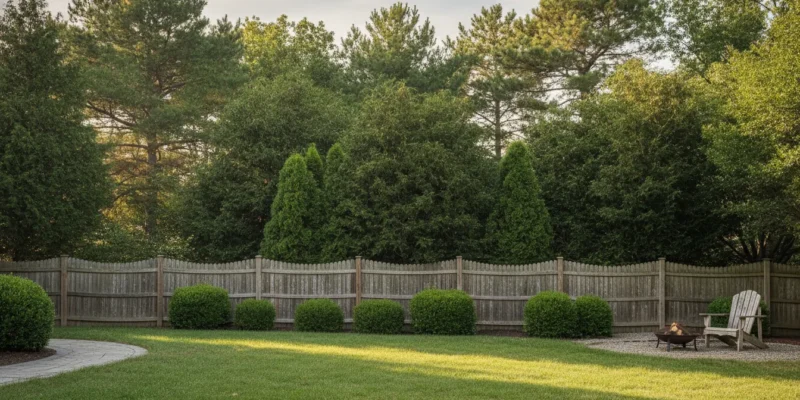
A backyard can feel exposed even when the property has plenty of space. On Long Island, neighboring homes, open side yards, coastal wind, and established masonry can all shape how much screening you need and where it should go. The most effective approach starts with the sightlines you want to soften, not with choosing a single plant or fence style.
Contact Gappsi through our contact page
The best privacy landscaping ideas combine screening layers that suit the yard: evergreen plantings for year-round coverage, shrubs for depth and seasonal texture. Fencing for immediate separation, and trellises or mixed plantings where you want privacy without a solid visual barrier. The right mix depends on setbacks, mature plant size, sun, drainage, maintenance, and the views from inside the home and outdoor living areas.
Planning these elements together helps the result look intentional rather than pieced together. Begin by mapping the views, boundaries, and daily-use areas that need protection, then compare how each screening method will perform as the landscape matures.
How Do You Plan Privacy Landscaping Ideas for a Long Island Yard?
Start with the privacy problem you actually want to solve. A screen may keep neighbors from looking into a patio or pool area, soften road noise, hide an unattractive view, or create a defined outdoor room. Those goals can require different heights, placements, and combinations of plants or structures. Sketch the views from the spots where you sit, dine, swim, and enter the yard before choosing a hedge or fence. A useful planning reference from Washington State University Extension recommends using line of sight and temporary stakes to test the preferred location and height.
Decide how much privacy you need. A fully opaque boundary is not the only option. A lower planting bed, staggered shrubs, trellis, or partial screen may provide enough separation while preserving light and openness. Mark the sightlines with stakes, then view them from both sides of the property. This simple test can reveal that a screen needs to be taller in one area, shifted to one side, or layered rather than installed as a continuous wall.
Allow for mature width, not just current size. Measure the planting bed, access paths, property edges, and space around utilities before selecting plants. The mature width of a hedge must fit the available area, and spacing should follow the requirements of the chosen plants. Crowding a narrow bed may create future pruning problems, restrict walkways, and put roots or branches too close to structures. A coordinated Long Island landscape design plan can show those dimensions before installation.
Account for Long Island site conditions. Note whether the yard receives salt exposure, strong coastal or winter winds, full sun, shade, standing water, or fast-draining soil. Plant selection should respond to those conditions rather than rely on a universal list. Check how water moves after heavy rain and make sure grading and irrigation will support the screen without directing runoff toward a foundation or neighboring property.
Before finalizing the layout, review applicable town, county, property, and homeowner association rules for screen height and planting types. Also protect safety sightlines. A privacy screen should not block the view needed for vehicles entering, leaving, or traveling beside the property. Planning around privacy level, mature dimensions, exposure, drainage, regulations, and safety produces a screen that functions well as the yard develops.
Evergreen Plantings Offer Year-Round Structure
Evergreen screening can provide a consistent visual boundary when a backyard needs privacy in every season. That does not make it the right answer for every Long Island property. A planting that looks suitable at the garden center may struggle when its roots meet compacted soil. Poor drainage, limited water, or conditions that do not match its needs.
Start with the site, not the plant list. Evaluate soil type, natural drainage, available water, and the amount of direct sunlight before choosing an evergreen hedge. The same review should account for exposure to coastal salt, drying wind, reflected heat, and winter weather. Horticultural guidance recommends selecting hedge plants according to soil, water availability, sunlight, and their other relevant characteristics, rather than appearance alone. When site conditions are ignored, plants may struggle or die. North Carolina Cooperative Extension explains the site-selection considerations.
Water management matters during establishment. New plantings need a plan for consistent irrigation while their root systems develop, but the soil must also drain appropriately. A landscape professional can identify whether grading, amended soil, or a different planting location is needed before a row goes in. This is especially important where downspouts, paved areas, or compacted construction soil create alternating wet and dry conditions.
Plan for mature width before deciding on spacing. Measure the available bed from the property line, fence, walkway, patio, or pool edge. Then verify that the hedge’s mature width will fit without constant shearing or encroaching into circulation space. Spacing should follow the needs of the selected hedge plants, not an arbitrary visual rule. Plants placed too close together can compete for water and root space, while plants placed too far apart can leave openings for years.
Evergreens also involve a timing decision. They offer year-round coverage, but they may take time to reach their intended height and density. If screening is needed immediately, combine them with a fence, trellis, or another structural element rather than forcing immature plants to solve an urgent sightline problem. Conversely, if the goal is a softer seasonal boundary, deciduous or layered planting may provide more variation and may suit the space better. Wind-buffering and privacy benefits can develop as a living screen matures, but the final design should reflect the property’s exposure, available room, and maintenance capacity. Washington State University Extension outlines living-screen planning and mature-size considerations.
Can Layered Shrubs and Trees Create Better Privacy?
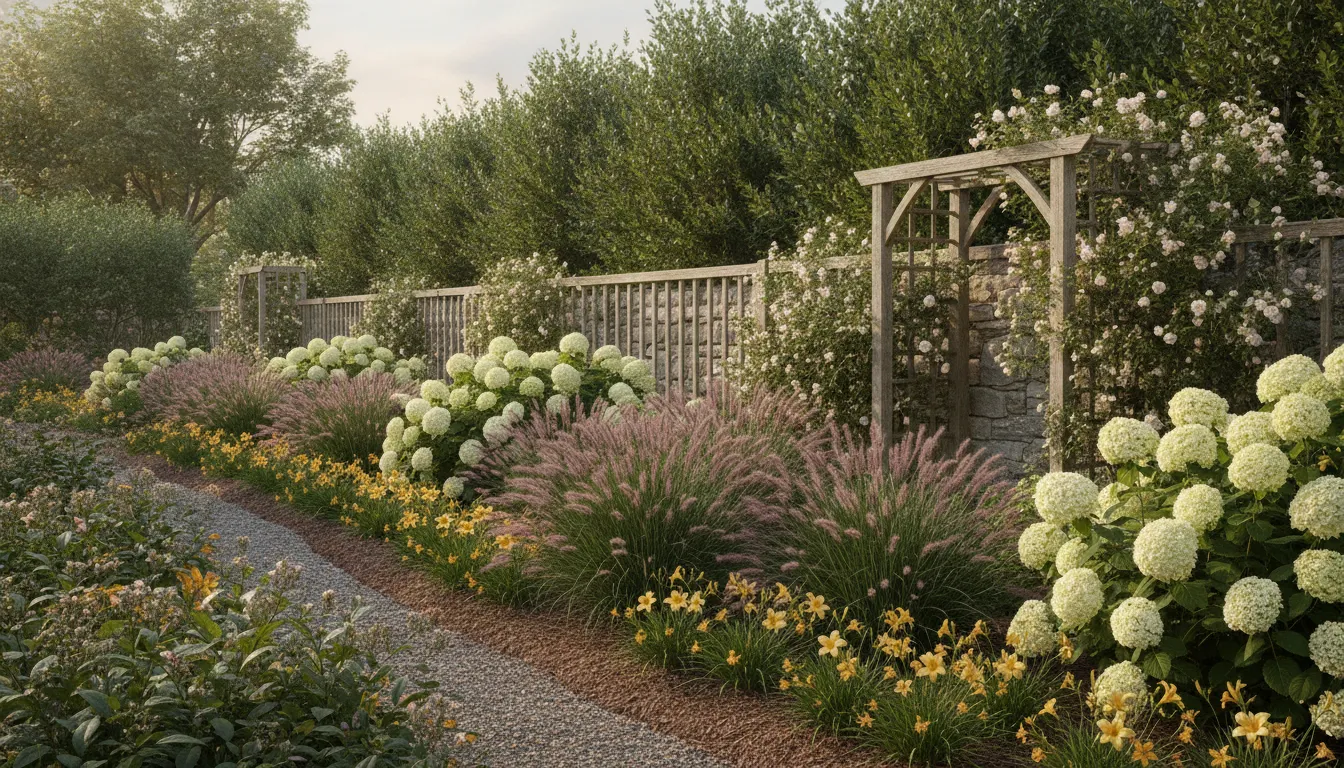
Yes. A layered planting plan can soften a property edge while addressing several sightlines instead of creating one rigid wall. Structural diversity combines plants with different heights and forms, including trees, shrubs, ornamental grasses, and groundcovers. That mix can make a backyard feel more connected to its surroundings and less like a single row of plants placed along the property line.
The key is to assign each layer a job. Taller trees and large shrubs can create a backdrop where views travel over or through the yard. Medium-height shrubs can fill the visual gaps between larger plants, while ornamental grasses and groundcovers define the lower edge. This arrangement follows a layered screening approach recommended by the University of Maryland Extension, which places larger plants behind medium plants and uses lower plants around the perimeter. Learn more about mixed privacy screens from the University of Maryland Extension.
How do layers respond to different sightlines?
Privacy is rarely needed at one uniform height. A neighbor’s second-story window, a nearby road, and a seating area may each require a different visual response. A taller backdrop can interrupt an elevated view, while a denser middle layer can screen people standing or sitting across a boundary. Lower planting can define a pool deck, patio, or walkway without closing off the entire yard.
This approach also allows privacy to feel more natural. Rather than repeating identical plants at equal intervals, the design can vary height, texture, and spacing while preserving a deliberate visual rhythm. More plant species and structural diversity are associated with greater visual interest and can support wildlife such as pollinators and beneficial insects. Those benefits should support the design, not override practical concerns such as available space, drainage, sunlight, wind, salt exposure, and mature plant dimensions.
Where can layered planting work around a pool?
For a pool area, the lowest layer can frame the hardscape without obstructing circulation or sightlines. Medium shrubs can screen a neighboring property from the lounge area, while taller plants can address views from beyond the immediate yard. Plant placement should leave room for access, maintenance, drainage, and equipment service. It should also be coordinated with paving, fencing, grading, and irrigation rather than added as an afterthought.
Homeowners planning a screened pool area can also review these pool landscaping ideas for Long Island. The right mix depends on the specific property, so a planting plan should be based on measured sightlines and site conditions rather than a universal plant list.
Fences, Trellises, and Low Walls Add Immediate Structure.
Not every backyard needs a fully enclosed visual barrier. In many cases, the most effective privacy landscaping ideas combine a built element with planting, especially where space is tight or the desired screening level changes from one part of the yard to another. A fence can close a narrow side yard quickly, while a trellis, low wall, or berm can define an outdoor room without making the entire property feel enclosed. Privacy screening can also be phased over time rather than treated as an all-or-none decision, according to Washington State University Extension guidance.
| Option. | Speed. | Footprint. | Seasonal coverage. | Maintenance. | Best use. |
|---|---|---|---|---|---|
| Fence. | Fast once designed and permitted. | Efficient in narrow spaces. | Consistent through the year. | Periodic cleaning, repairs, and finish care. | Immediate boundary definition or a side yard where plants would leave too little room. |
| Trellis. | Fast to install; coverage develops as plants grow. | Small vertical footprint. | Depends on the selected climber and season. | Plant training, pruning, and structure checks. | Softening a patio edge, screening a view, or adding height without a solid wall. |
| Low wall or berm. | Fast after grading and layout are resolved. | Uses more ground area than a fence. | Structure remains; planting determines additional coverage. | Wall or slope inspection plus planting care. | Creating a graduated boundary, redirecting foot traffic, or separating outdoor rooms. |
| Living screen. | Coverage increases as plants mature. | Requires room for mature width and root zones. | Varies by plant selection; evergreen coverage is possible. | Watering during establishment, pruning, mulching, and plant health monitoring. | Filtering views while preserving a planted, natural character. |
In a narrow side yard, a manmade fence may be more practical than living plants because it uses less horizontal space. A low screen or flower bed can establish a sense of partition, while a berm or terrace wall can create a physical barrier and help redirect movement. These approaches are not mutually exclusive. For example, a fence can handle the immediate sightline, with a trellis or planting bed softening its appearance.
Material, height, property lines, drainage, and local requirements should be reviewed before construction. Explore Gappsi’s Long Island fencing options when comparing structured boundaries for a Nassau or Suffolk County property.
Why Mixed Screening Often Beats a Single-Row Hedge
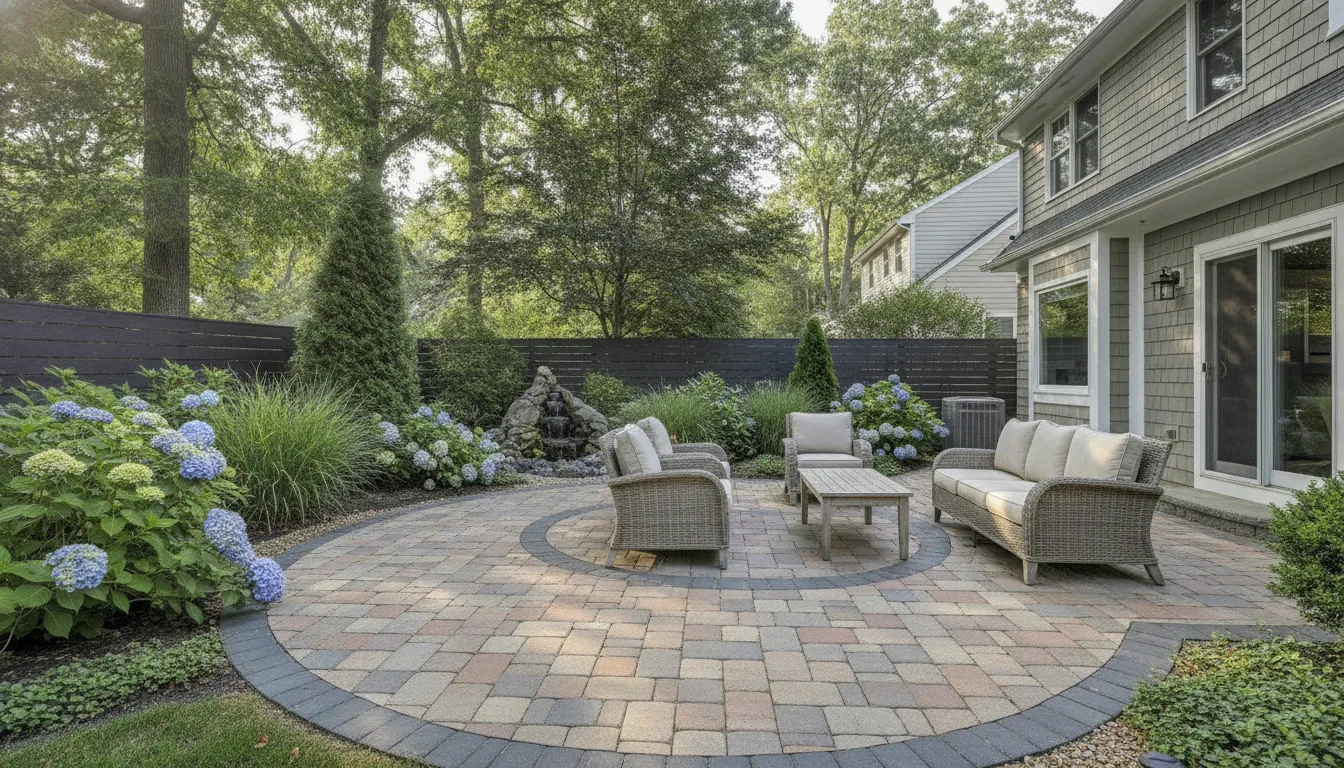
A single-row hedge can create a clean boundary, but it also concentrates your screening in one plant type. If that plant struggles with a site condition, pest, or disease, gaps can develop across the same row. A mixed screen distributes that risk while creating a more natural view from the patio, pool area, or outdoor room. University of Maryland Extension recommends using a variety of plants rather than many plants of one kind. The extension notes that diversity can make a screen more resilient to pests, disease, and changing climate conditions. Learn more about mixed privacy screens.
Think in layers, not just rows. A taller plant can establish the backdrop, with medium-height shrubs filling spaces between larger forms. Lower plants, ornamental grasses, or groundcovers can define the edge without making the entire planting bed look like a wall. This arrangement adds texture and seasonal variation, and structurally diverse landscapes tend to provide greater visual interest and support more wildlife, including pollinators and beneficial insects.
Choose plants for the site, not only the appearance
Native plants are adapted to local soils and climate conditions and generally need less fertilizer and watering after establishment. That does not mean every native plant belongs in every Long Island yard. Selection still depends on sunlight, soil, mature dimensions, wind, salt exposure, water availability, and the amount of privacy needed in each season. Avoid invasive choices such as bamboo and Japanese barberry. A qualified planting plan should also account for mature width so the screen does not overtake a walkway, fence line, drainage area, or neighboring property.
Coordinate maintenance, irrigation, and drainage
Mixed screening is not maintenance-free. Different plants may have different pruning, watering, and replacement needs, so group plants with similar requirements where possible. Check how water moves through the bed before installation. Clay or sandy soil can affect how plants establish and respond to drought or heavy rainfall. A poorly drained area can undermine plants that cannot tolerate wet soil. Irrigation should support the actual planting zones rather than deliver the same amount of water indiscriminately to every species.
Planning a resilient screen for your Long Island property? Contact Gappsi through our contact page to discuss planting, grading, drainage, irrigation, and privacy screening together.
A phased installation can also make sense. Start with the most exposed sightline, then add lower layers, adjacent screening, or a trellis as the yard develops. Privacy does not have to be all or nothing. A site-specific plan can combine living plants with fencing or hardscape, then expand the screen over time as the landscape and your outdoor uses evolve.
How Should Privacy Screening Fit the Rest of Your Backyard?
Privacy screening works best when it is planned as part of the backyard, not added as an isolated row along the property line. The right location may protect a patio from a neighboring view, soften a pool deck, define an outdoor room, or guide movement along a walkway. It also needs to coexist with grading, irrigation, access, and the mature size of the planting.
- Map the sightlines and daily uses first. Stand in the patio, pool, kitchen, and seating areas where privacy matters most. Mark the views you want to block and the views you want to preserve. Temporary stakes can help test the preferred height and placement before construction or planting begins. Keep driveways, corners, and vehicle sightlines clear. This approach lets the screen support the way your family uses the yard instead of creating a visual barrier everywhere.
- Choose a screening type that fits the space. A living screen may suit a broad planting bed, while a fence or trellis may be more practical in a narrow side yard. Layered trees, shrubs, grasses, and groundcovers can create a softer transition than one straight row. Screening can also be phased, beginning with a low planting bed or structural element and adding taller coverage over time. Review mature width, soil, sunlight, water availability, and salt or wind exposure before selecting plants. A landscape designer can develop these decisions through Long Island landscape design rather than relying on a universal plant list.
- Coordinate grading and irrigation before installation. Privacy beds, fences, patios, and walls all depend on accurate elevations and clear drainage paths. Confirm where runoff will move, how planting areas will be watered, and whether roots or footings could interfere with existing utilities. Gappsi’s landscape planning can combine grading, planting, fencing, irrigation, and 3D design into one site plan. That coordination is especially useful on Long Island properties where compact lots and changing soil conditions limit room for adjustment.
- Connect the screen to hardscape and outdoor rooms. Use planting to frame a patio rather than hide it, or place a trellis and layered bed behind a seating area to give the space definition. If a new entertaining area is part of the project, review paver patio ideas alongside the screening layout. Walkways, pool decks, retaining walls, outdoor kitchens, and fire features should share a coherent material and circulation plan. For those details, explore masonry design and construction as part of the broader backyard design.
Contact Gappsi through our contact page
Frequently Asked Questions
How can you create privacy with landscaping?
Start by mapping the views you want to block, then combine evergreen plantings, layered shrubs, and smaller trees to create depth. A single row can look thin when young, while varied heights soften the boundary and provide screening from more than one angle. Leave room for mature growth and account for coastal exposure, existing masonry, fences, and pool or patio access.
What provides privacy faster, plants or structures?
Structures provide immediate screening, so a fence, trellis, or privacy panel can block a sightline as soon as it is installed. Plants take time to establish, but they add seasonal texture and can soften the appearance of a structure. Many Long Island backyards benefit from combining both, such as evergreen shrubs in front of a fence or vines trained across a trellis.
How do you block a neighbor’s view without enclosing the whole yard?
Focus on the specific sightline rather than screening every boundary. Use a layered privacy plan with taller evergreens or a narrow tree where the view enters, then add mid-height shrubs and a trellis near the seating area. This preserves open views elsewhere and helps the yard feel more spacious. Check mature plant width before choosing locations.
What is the cheapest way to create backyard privacy?
The least expensive approach depends on the site, but using existing fences or walls and adding strategically placed shrubs is often more economical than rebuilding the entire boundary. A trellis with fast-growing, site-appropriate plants can address a smaller view. Compare installation, watering, pruning, and replacement needs, not just the initial materials cost.
Ready to Plan Your Long Island Privacy Landscape?
A site-specific plan can help you balance mature plantings, layered shrubs, fencing, trellises, and mixed screening with your backyard’s sightlines and existing features. Gappsi can discuss the layout and help identify an approach that fits the way you use the space. Contact Gappsi through our contact page for a custom Long Island privacy landscape plan.