


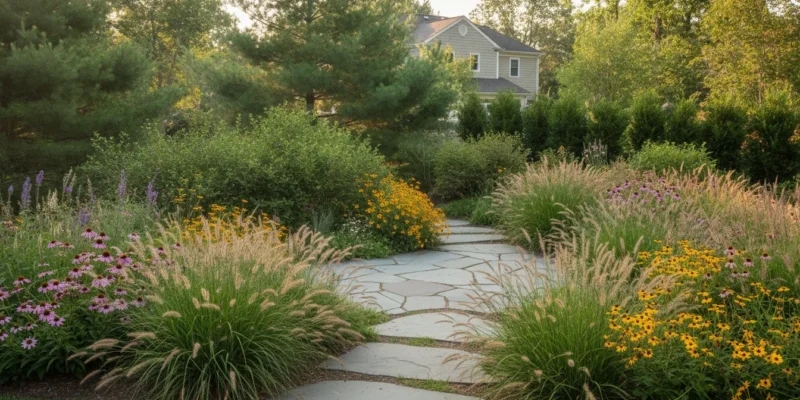
A successful Long Island planting plan starts with the property, not a preset list of attractive plants. A coastal yard in Suffolk may face salt and wind, while an inland lot in Nassau may have different sun, soil, drainage, and available space. Those conditions shape which trees, shrubs, grasses, and perennials can establish and contribute useful structure through the seasons.
Contact Gappsi through our contact page to discuss landscape design and planting installation for your property.
Choosing native plants Long Island homeowners can rely on begins with matching each plant to its growing conditions, mature size, seasonal role, and maintenance needs. Regional references group choices into trees and shrubs, grasses, rushes and sedges, perennials, and ferns, while emphasizing that Long Island includes both coastal and inland ecosystems.
Before choosing species, clarify what native means in this regional context and how that definition supports practical landscape decisions. That foundation makes the rest of the planting plan more intentional, from the first site assessment through installation.
What does native mean for a Long Island landscape?
In practical terms, a native plant is a species that was growing locally before the arrival of Europeans, according to New York Sea Grant. That definition is more useful than treating every plant sold as “native” in the same way. For a homeowner, the key question is whether a plant’s natural range and growing conditions align with the specific property in Nassau or Suffolk County. A plant can be native to the broader region yet still be a poor fit for a shaded, compact, salt-exposed, or poorly drained yard.
Long Island includes both coastal and inland ecosystems, so conditions can change substantially between a waterfront property, a North Shore slope, and an inland suburban lot. Regional sources describe native plants as adapted to Long Island’s soils and climate, but adaptation does not mean every species will thrive everywhere. Sun exposure, soil moisture, wind, salt, drainage, and available root space still determine whether a selection is practical. This is why choosing native plants Long Island homeowners can maintain successfully starts with a site assessment rather than a universal list.
Native status is about place and relationship
Native plants also have an ecological context. Long Island’s native butterflies, bees, and birds evolved alongside local plant communities over thousands of years. Those plants can provide habitat where native animals hide, eat, and reproduce. In a residential landscape, that may translate into a planting plan with more than one seasonal purpose: flowers for visual interest. Seed heads or foliage that remain useful later in the year, and layered cover that gives wildlife places to move through the yard.
These benefits should be described carefully. A native label does not guarantee a particular number of pollinators, eliminate maintenance, or solve a drainage problem. It indicates a stronger regional relationship that can support habitat when the plant is matched to the site and managed appropriately.
Seasonal interest still requires planning
Native planting does not have to look informal or unfinished. A coordinated mix of trees, shrubs, grasses, perennials, and ferns can create structure at different heights and provide seasonal interest from spring blooms through fall foliage. The right combination depends on the landscape’s intended use, sightlines, mature space, and maintenance expectations.
It is also worth distinguishing a true native species from a cultivar. Cultivars are plants selected or bred for traits such as flower color, shape, or size. Those changes may affect how useful the plant is to wildlife, especially when flower structure or leaf color changes. When habitat value matters, ask how the plant was selected and whether its wildlife function remains appropriate, not only whether the label includes the word native.
For a broader look at site-specific planning, review Gappsi Group’s Long Island landscape design process alongside a property assessment.
How should you assess sun, soil, and drainage before choosing plants?
A short site assessment helps match native plants Long Island homeowners choose to the conditions where they will actually grow. Long Island includes both coastal and inland ecosystems, so a planting bed near the Sound may present different wind. Salt, and moisture concerns than a sheltered yard farther inland. Walk the property before selecting a species, and record observations rather than relying on a general plant list.
- Track sunlight throughout the day. Note which areas receive direct light in the morning, midday, and afternoon, including seasonal changes from trees and buildings. As a practical guide, full sun is at least six hours of direct sunlight. Partial shade is about three to six hours, and full shade is less than three hours. These ranges are useful starting points, not absolute rules for every plant. Review these regional sunlight definitions alongside the plant’s specific growing requirements.
- Examine soil texture and moisture. A sandy bed, compacted fill, and loamy topsoil can hold water and nutrients differently. Check whether soil feels loose, gritty, dense, or consistently damp, and observe whether water remains after rain. Native plants are described as adapted to Long Island soils and climate, but adaptation does not mean every native species suits every soil condition.
- Identify drainage problems before planting. Mark low spots, standing water, runoff paths, and areas where downspouts discharge. A wet planting area may require grading, improved soil conditions, or a drainage solution before plants are installed. Use these Long Island yard drainage solutions as a planning companion, rather than trying to conceal a persistent drainage issue with plant selection alone.
- Record wind and salt exposure. Properties near the coast, open lots, and yards with limited windbreaks may expose plants to stronger drying winds or salt spray. Note the direction of prevailing exposure and whether fences, homes, or existing trees provide protection. Treat coastal tolerance as a site-specific consideration and confirm it for each proposed plant.
- Plan for mature space and utilities. Measure the available width and height, then locate overhead lines, underground utilities, foundations, walkways, patios, pools, and property boundaries. Leave room for mature growth, root zones, maintenance access, and clear views. A plant that fits its container size may not fit the landscape several years later.
- Match the planting plan to maintenance capacity. Consider irrigation access, watering during establishment, pruning, leaf cleanup, mowing, and seasonal inspections. A cited regional guide recommends one to two inches of water weekly for newly planted plants, while established plants should be watered as needed according to weather. Actual needs vary by plant and site, so build a realistic care plan before installation.
Contact Gappsi through our contact page
Which native trees and shrubs fit different Long Island settings?
Plant selection should follow the conditions on your property, not a generic list of plants labeled native. Long Island includes both coastal and inland ecosystems. So a tree or shrub that handles an exposed shoreline may not be the right choice for a sheltered suburban yard. Start with the role you need the plant to perform, then match that role to sunlight, soil moisture, wind, available space, and expected maintenance.
| Setting or goal | Selection considerations | Example direction |
|---|---|---|
| Sunny, exposed coastal area | Evaluate salt spray, wind, sandy soil, and drying conditions before choosing a tree or shrub. Avoid placing a plant where its mature canopy will conflict with a view or structure. | Beach plum can be considered for an appropriate sunny coastal setting, but it is not a universal prescription. |
| Sheltered shade or woodland edge | Look for filtered light, consistent moisture, and enough room for branching. Confirm that nearby trees will not create dense competition as the planting matures. | Spicebush may suit a compatible shady setting. Verify soil and moisture first. |
| Privacy screening | Plan for mature height and width, spacing, seasonal density, and access for pruning. A screen should not be planted directly over utilities or against a foundation. | Choose a locally appropriate mix rather than a single row of one species. See these ideas for native privacy plants for Long Island. |
| Small yard, patio, or utility corridor | Prioritize a tree’s mature canopy, trunk placement, root zone, and clearance from overhead and underground utilities. A smaller plant at installation can still become a long-term conflict. | Use the available footprint and service-line locations to narrow the choices before purchasing. |
Mature size matters more than nursery-container size. Review the expected height and spread of every tree and shrub, then map that footprint against walkways, fences, pools, septic components, foundations, and utility lines. Roots need adequate soil volume, and branches need clearance from buildings and wires. These checks can prevent routine pruning from becoming a permanent maintenance burden.
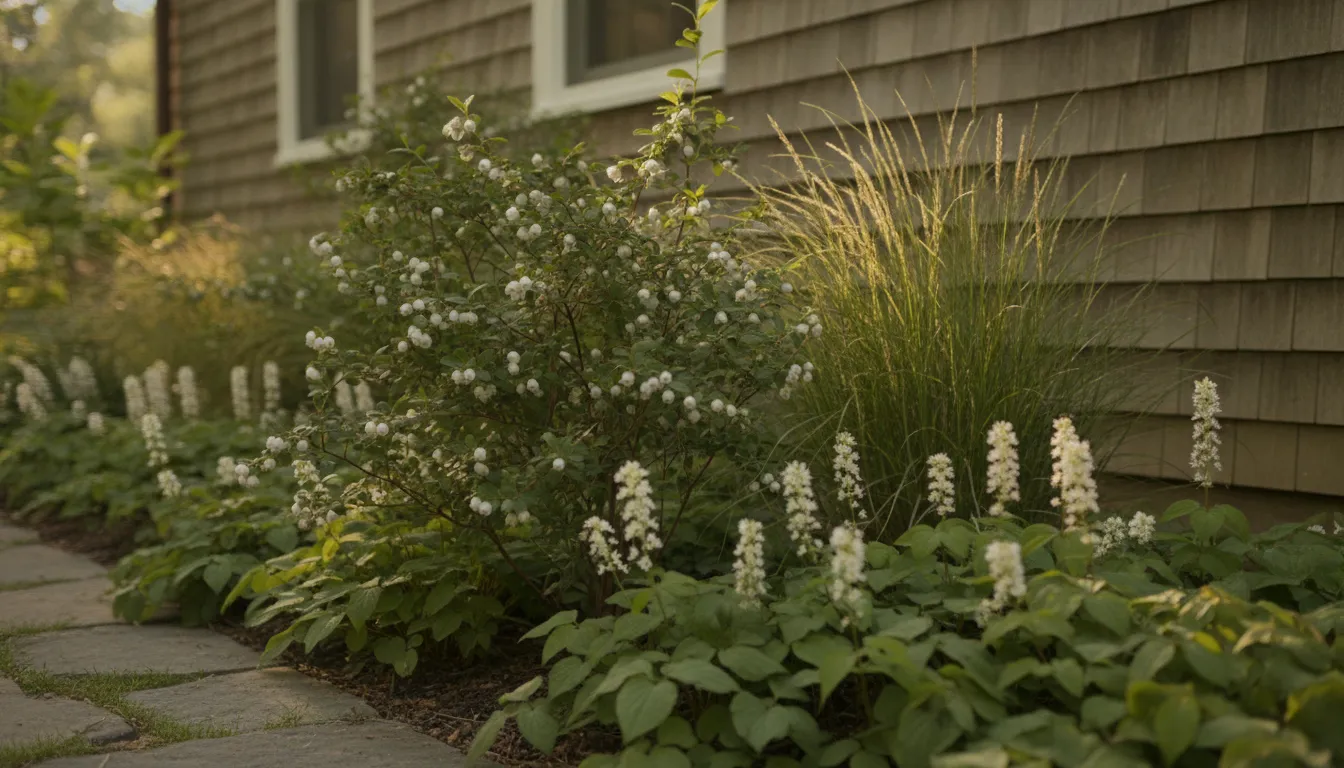
For screening, combine function with the way the property is used. A planting near a deck may need filtered privacy without blocking all light, while a boundary planting may need greater seasonal density. For a sunny site, the cited Long Island guide lists beach plum among options for sunny areas. For shade, it lists spicebush among examples for shady areas. Treat both as starting points for site review, not automatic recommendations.
Native plants are described as adapted to Long Island’s soils and climate, but adaptation does not remove the need for proper placement or establishment care. A landscape plan should account for drainage, wind exposure, irrigation access, and the maintenance you can consistently provide. Gappsi’s landscape design and planting installation service can help coordinate those decisions across Nassau and Suffolk County properties.
How can grasses and perennials add seasonal structure?
Grasses and perennials give a planting plan a changing visual rhythm rather than a single burst of color. Use them to build layers of height, texture, and movement: taller grasses or flowering stems can define the back of a bed. Medium plants can carry the central seasonal display, and lower perennials can soften the edge near a walkway or patio. Regional plant catalogs group grasses, rushes, sedges, and perennials as distinct planting categories. Which makes it easier to combine different forms instead of repeating one type throughout the property.
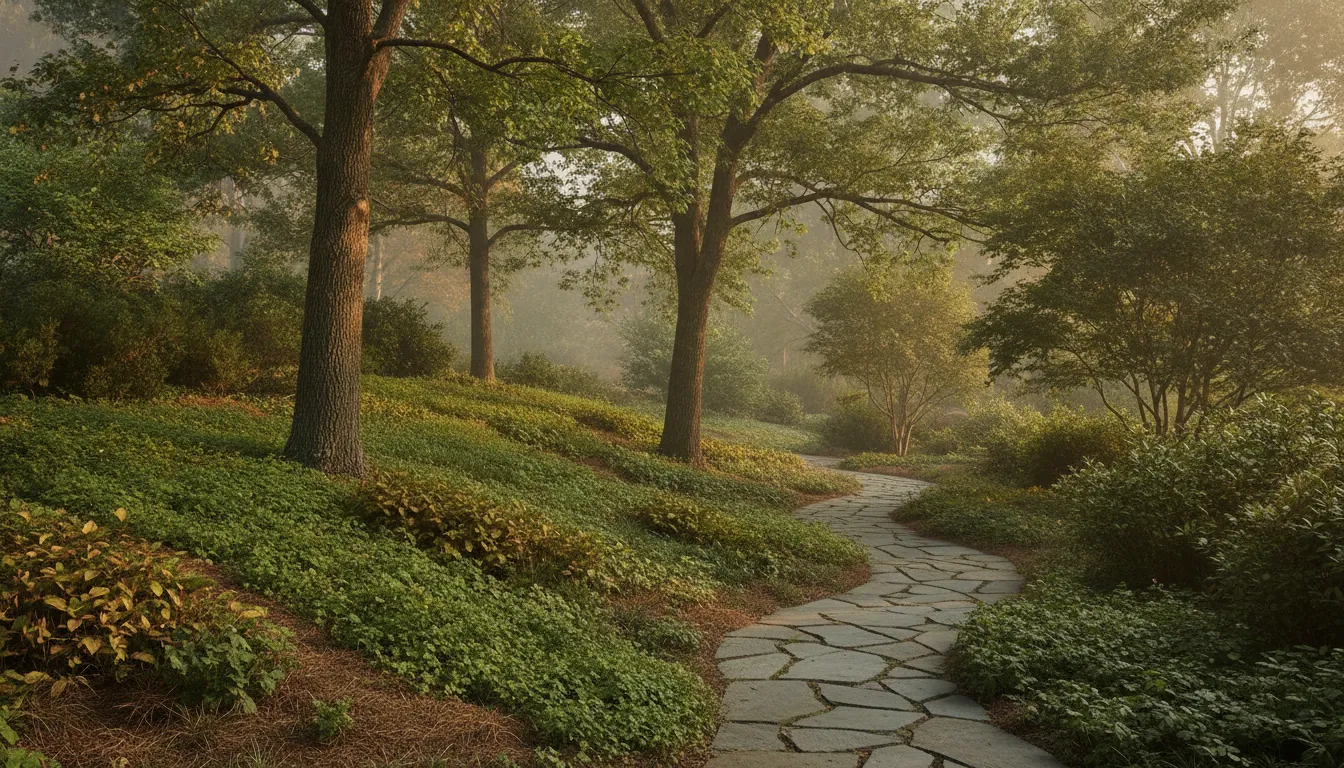
Seasonal structure also means planning for more than peak summer. Some perennials contribute spring flowers, while grasses can hold their shape into fall and winter. Native plants on Long Island can provide interest from spring blooms through colorful fall foliage, although the timing and appearance will vary by species and site conditions. A balanced palette might combine flowering periods with seed heads, fine foliage, or upright stems so the garden remains legible after individual flowers fade. This approach is especially useful around outdoor living areas, where texture and form matter even when a bed is not in bloom.
Wildlife value can be part of the design objective. Native plants and local butterflies, bees, and birds evolved together, and native vegetation can provide places for animals to hide, eat, and reproduce. That does not mean every native planting must look informal. Repeated groups, defined edges, and deliberate spacing can support a clean landscape while still offering seasonal resources. The benefit depends on the selected plants, their arrangement, and how the property is maintained.
Be thoughtful when choosing cultivars. A cultivar is a plant bred or selected for traits such as a different flower color, leaf color, shape, or size. Those changes may affect how useful the plant is to wildlife, particularly when flower structure or foliage has been substantially altered. Ask the nursery or designer what trait was changed and whether the selection remains appropriate for the intended habitat goal. Also confirm that any non-native alternatives are not invasive.
Grasses and perennials can contribute to difficult areas, too. Native plants are identified as useful for shoreline and hillside erosion control, and regional listings include American beach grass and Spartina species for coastal erosion applications. These examples are not universal prescriptions. Salt exposure, flooding, soil, slope, and local regulations should be reviewed before selecting a plant for erosion control. A site-specific plan is more dependable than choosing a species from a list simply because it is labeled native.
What should a practical native planting plan include?
A useful plan turns a plant wish list into a layout that can be installed and maintained. Start with a site assessment, then document the plant palette, quantities, mature dimensions, soil work, grading, irrigation, and establishment care. Native plants are becoming more available at local garden centers, but sourcing still deserves attention. Research nurseries that specialize in local flora and ask about each plant’s provenance, growing conditions, and expected mature size. New York Sea Grant notes that native plants are increasingly available at local garden centers.
- Source plants that fit the project. Choose trees, shrubs, grasses, rushes, sedges, perennials, and ferns from a reputable local source. Confirm that selections are appropriate for the property’s sun, moisture, exposure, and intended function. Avoid treating the word native as a substitute for site review.
- Group plants by shared needs. Place plants with similar light and water requirements together. Grouping simplifies irrigation and maintenance, while repeating a few compatible forms creates a more legible design than scattering individual specimens throughout the yard.
- Plan for mature space. Record the expected mature height and width of every tree and shrub. Allow clearance from foundations, paving, utilities, property lines, sightlines, and overhead branches. A planting plan should show spacing at maturity, not only the gaps visible in a nursery container layout.
- Prepare soil before planting. Test or observe soil texture, compaction, and moisture. Correct unsuitable topsoil and compacted areas before roots go in. Gappsi’s documented landscape work includes ground preparation and topsoil work, which can be coordinated with the broader Long Island landscape design process.
- Resolve grading and drainage first. Confirm where water should move and whether a low area needs a drainage solution before selecting plants. Grading and topsoil work can be addressed as part of the landscape plan. For wet or poorly drained locations, review these Long Island yard drainage solutions before finalizing the planting palette.
- Coordinate irrigation and establishment watering. Show irrigation zones on the plan and protect new roots from inconsistent watering. One cited Long Island guide recommends 1 to 2 inches per week for newly planted plants, although actual needs vary by plant, soil, weather, and exposure. Established plants should be watered as needed while local weather is observed.
- Write the maintenance plan. Identify mulch, pruning, weeding, monitoring, and seasonal inspections. Native plants typically require less fertilizer than non-natives. But that does not eliminate establishment care or the need to watch for stress, weeds, and conflicts with paths or structures.
Contact Gappsi through our contact page
For a Nassau or Suffolk County property, the finished plan should connect plant selection with preparation, irrigation, grading, and installation. That coordinated approach gives each planting area a clear purpose while leaving room to adjust choices after the site is measured and reviewed.
How do you balance native planting with privacy, patios, and pools?
Native plants Long Island homeowners choose should support the way the property is used, not compete with it. A successful plan places planting where it can frame a view, soften a hardscape edge. Or screen a neighbor while preserving clear access to the patio, pool equipment, and doors. The right choice depends on mature size, root behavior, moisture, salt exposure, maintenance needs, and the distance from structures.
For privacy, think in layers rather than a single solid hedge. A staggered combination of appropriately sized trees, shrubs, and lower plants can screen sightlines while leaving room for air movement and circulation. Evergreen screening may be useful in some locations, but a native designation alone does not guarantee year-round foliage or a suitable mature height. Review the guidance on native privacy plants for Long Island alongside the property’s specific views and boundaries.
Pool and patio areas require additional restraint. Keep plants that drop heavy fruit, shed persistent debris, attract frequent insect activity, or develop invasive roots at an appropriate distance from seating, coping, drains, and mechanical equipment. That does not mean native plants cannot belong near a pool. It means each plant should be evaluated for its mature form, seasonal behavior, and maintenance impact before installation. The Long Island pool privacy planting approach should coordinate screening with safe circulation and clean sightlines, rather than placing vegetation wherever there is an open bed.
Drainage is part of the design, too. Planting beds should not conceal a grading problem or direct runoff toward a foundation, patio, or pool structure. On a wet or poorly drained property, coordinate soil preparation, grading, and plant selection. Long Island yard drainage solutions can help frame that site review. Some native plants may tolerate wetter conditions, but tolerance is not a reason to ignore standing water or place roots against a structure.
Gappsi can coordinate planting with irrigation and privacy-screening requirements, while addressing grading and topsoil work before installation. A measured plan protects the functions of the patio and pool, preserves circulation, and uses native planting where it genuinely fits the Nassau or Suffolk County site.
Frequently Asked Questions
What are the best native plants for Long Island landscapes?
There is no single best list for every property. Start with the site: sunlight, soil moisture, drainage, wind exposure, available space, and the amount of maintenance you can provide. Long Island includes both coastal and inland ecosystems, so a plant that works near the shore may not be the right choice for an inland yard. Build a layered plan using trees and shrubs, grasses or sedges, and perennials that match those conditions. A regional guide lists options such as beach plum for sunny areas and spicebush for shady areas, but those examples still require site review. Source
Which native trees are suitable for a Long Island yard?
Choose a tree by its mature size, root zone, light exposure, soil moisture, and distance from structures, utilities, patios, and pool equipment. Coastal wind and salt exposure also matter. Rather than selecting a tree from a generic online list. Have the planting location assessed and confirm the species and source with a knowledgeable local nursery or landscape professional. Native plants are adapted to Long Island soils and climate, but that does not mean every native tree fits every microclimate. Source
Are there evergreen native plants for Long Island privacy screening?
Evergreen screening can be appropriate, but the right choice depends on the width and height available, sun, drainage, wind, and the desired view obstruction. Confirm that a proposed plant is native to the region and suitable for the exact exposure before purchasing several. If the area is wet, address drainage and grading as part of the plan instead of assuming an evergreen will solve the problem.
Where can I buy native plants on Long Island?
Check local garden centers and nurseries that specialize in local flora, and ask how the plants are identified as native to Long Island. Native plants are becoming more available at local garden centers, while regional growers organize choices across trees and shrubs, grasses, sedges, perennials, and ferns. Availability changes by season, so verify current stock and plant provenance before making a design commitment. Source
When should I plant native plants on Long Island?
Plan planting around the plant’s availability and the property’s current conditions rather than relying on one calendar date. Review soil moisture, drainage, access, and the forecast with the nursery or installer, then schedule work when the site can be prepared and maintained properly. Newly planted plants need consistent establishment watering, with one regional guide recommending 1 to 2 inches per week as a starting reference, adjusted for the plant and weather. Source
Plan native plants for your Long Island property
A site-specific plan can help you match native trees, shrubs, grasses, and perennials to your property’s light, soil, drainage, space, and maintenance needs. Gappsi Group can help connect planting choices with the broader landscape design, grading, irrigation, and outdoor living plan. Contact Gappsi through our contact page