


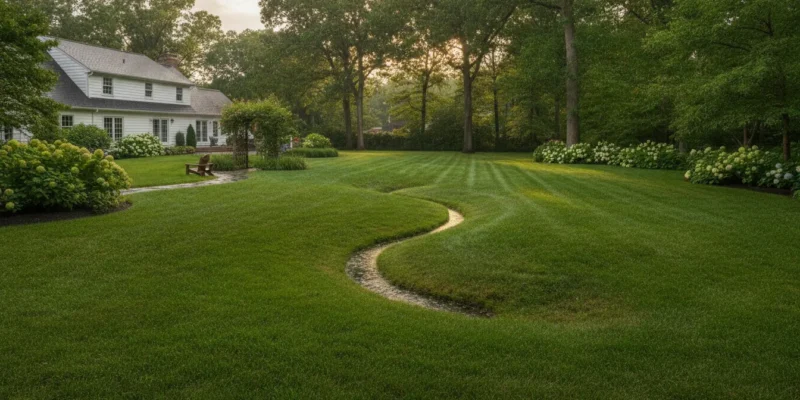
Standing water is rarely just a lawn problem. In a Long Island yard, ponding may point to a low spot or compacted soil. It may also come from a downspout that releases too much runoff in one area. A drainage path may never have been planned around the finished landscape.
Contact Gappsi through our contact page
The right yard drainage solutions depend on the cause and the available discharge path. A site evaluation can determine whether grading, a swale, catch basin, French drain, dry well, planting adjustment, or a combination will manage water. The plan should not direct runoff toward your home or a neighboring property.
Before choosing a system, look at when the water appears and where it collects. Note what happens after heavy rain. These clues help separate a surface-flow issue from a soil-absorption or roof-runoff problem.
What Causes Standing Water in a Long Island Yard?
Standing water is usually a clue that water is arriving faster than the site can move or absorb it. The cause may be a shallow low area, an interrupted drainage path, compacted soil, concentrated roof runoff, or hardscape that changes the direction of flow. On Long Island, the response depends on the relationship between the yard, soil, structures, property lines, and discharge path. A surface fix that ignores those conditions can leave the underlying problem in place.
Start with the shape of the ground
Watch where water collects after rain and where it appears to come from. If runoff travels toward the house, patio, walkway, or another structure, the finished grade may not be directing water away effectively. A broad wet area can indicate an uneven grade or a naturally low portion of the property. A narrow wet line may follow a swale, edge, or other route where water is concentrating. Grading and topsoil preparation can coordinate the ground surface with the finished landscape. The proposed flow must end at a suitable location, not near a neighboring property.
Check soil absorption and downspouts
Soil that stays saturated or has been compacted by construction and repeated traffic may absorb water slowly. Compare the wet area with nearby soil. Note whether the problem occurs only after heavy rain or persists through ordinary weather. Also inspect every downspout during rainfall. A downspout that releases water beside the foundation, into a planting bed, or onto a hard surface can create a concentrated pond. Irrigation overspray or a leak can produce similar symptoms, so include an irrigation review when the pattern does not match rainfall.
Look at hardscape and recurring low spots
Patios, driveways, pool decks, and walkways can redirect runoff when their slope, joints, edges, or adjacent soil do not work together. Water that gathers along a hardscape edge may need a coordinated surface and subsurface review, not simply more soil or mulch. A naturally low area may be incorporated into planting or a planned collection feature. Plants alone are not a substitute when water threatens a structure or keeps the ground unusable.
Record the location, timing, depth, and apparent source of the water. Share those observations during a site evaluation. Gappsi’s landscape services combine grading, drainage, irrigation, planting, and related design-build work for homeowners throughout Nassau and Suffolk Counties. The review helps determine whether the property needs a grade change, a collection and discharge system, landscape reworking, or a combination.
How Do You Choose Yard Drainage Solutions for the Problem?
The right approach starts with the source and direction of the water, not with a product. A low area may need grading, while roof runoff may need collection and a defined outlet. Soil type, patios, walkways, foundation elevations, utilities, and the discharge path all affect the design. On Long Island, evaluation is important when water remains after ordinary rain or a proposed solution could affect a neighboring property.
| Approach | Best fit | What to evaluate |
|---|---|---|
| Grading and swales | Broad low areas, shallow sheet flow, or water that is moving toward a structure. | Existing elevations, soil and fill conditions, the slope away from buildings, and where the redirected water will safely end. A swale should guide flow without creating a new problem elsewhere. |
| Catch basins and channel drains | Concentrated surface water near downspouts, driveways, patios, walkways, or other hardscape. | Inlet locations, grate capacity, pipe routing, cleanout access, and a legal discharge or infiltration point. Collection alone is not a complete plan if there is nowhere for the water to go. |
| French drains | Subsurface or edge drainage where water needs to be intercepted along a slope, planting bed, or frequently wet boundary. | Trench location, depth, soil permeability, gravel and perforated-pipe details, filter protection, outlet elevation, and access for future maintenance. The system must be designed around the actual water source. |
| Dry wells | Collected runoff that may be directed to a subsurface destination when site conditions allow infiltration. | Soil absorption, seasonal groundwater, separation from foundations and utilities, overflow planning, and local requirements. A dry well is not automatically appropriate for every saturated yard. |
| Planting and rain gardens | Manageable runoff areas where a planted depression can collect water and let it soak into the ground. | Drainage rate, plant tolerance, location, maintenance, and protection of nearby structures. The EPA describes rain gardens as depressed landscape areas that collect runoff and allow infiltration, but planting alone does not replace infrastructure when water threatens a foundation. |
These methods can also work together. Grading may move water toward a catch basin. A French drain may protect a planting edge, while a rain garden handles an appropriate portion of runoff. Gappsi’s landscape design and construction team coordinates grading, drainage, planting, irrigation, and related outdoor work as one plan. The review matches the system to the yard instead of treating every wet spot with the same fix.
How Can Grading and Swales Redirect Runoff Safely?
Grading is the shaping of the ground so water follows a deliberate route instead of collecting beside the house, patio, or walkway. A swale is a shallow, gently sloped depression that guides surface water while remaining part of the landscape. Together, these approaches can be useful yard drainage solutions when the existing low areas, soil conditions, and discharge path are understood first.
The goal is not simply to move water faster. The finished grade should direct runoff away from the foundation toward an appropriate area. That area should manage the flow without creating erosion, flooding, or a new saturated zone. On Long Island, the plan may need to account for the property’s slope, compacted fill, planting beds, pavement, and soil absorption.
Start with the source and the full drainage path
Before changing the grade, trace where the water begins and how it travels during and after a storm. Downspouts can concentrate roof runoff in one location. A driveway, patio, pool deck, or walkway can also shed water toward a low part of the yard if its pitch and surrounding elevations are not coordinated. Redirecting only one visible puddle may leave the larger flow pattern unchanged.
A site plan should consider whether runoff can be dispersed, collected, or directed to another drainage feature. Surface grading may work with catch basins, a French drain, a dry well, or planting designed for wetter conditions. The appropriate combination depends on soil absorption, available space, existing utilities, structures, and the proposed outlet. A remote inspection cannot establish those conditions reliably.
Why cannot runoff simply be sent next door?
Water should never be graded or piped onto a neighboring property as a shortcut. That can transfer the original problem, cause erosion, damage a landscape, or create conflict. The discharge route must be evaluated within the constraints of the property and applicable local requirements. A solution that looks effective at one lot line may be unacceptable once neighboring grades and downstream conditions are considered.
Permits or other approvals may apply depending on the work, location, structures, and drainage changes involved. Requirements vary, so homeowners should confirm the applicable process rather than assume that a swale or regrading project is exempt. Gappsi’s masonry division documents permit expediting when applicable, while the landscape team can coordinate grading, drainage, planting, irrigation, and ground preparation as one design-build plan.
Account for slopes, walls, and hardscape
Steeper yards require more than a shallow channel scratched into the soil. The design may need erosion control, stabilized surfaces, retaining elements, or staged changes in elevation. For background on drainage for sloped yards, see Gappsi’s guide to gabion walls on Long Island properties. Hardscape also needs to be included from the beginning, since a new patio or walkway can alter the direction and volume of surface runoff.
A site-specific evaluation can identify the high points, low points, downspout outlets, soil limitations, and structures that control the design. That information allows grading and swales to support the finished landscape rather than merely hide standing water for a short time.
French Drains, Catch Basins, and Dry Wells
Drainage components solve different water problems, so selecting one by name is not enough. A French drain is typically a gravel-filled trench containing perforated pipe. It receives water that moves through surrounding soil and carries that water toward an appropriate outlet. This can help intercept runoff before it reaches a foundation, low planting bed, or frequently muddy area, but the pipe still needs somewhere safe to discharge.
A catch basin works at the surface. Its grated opening collects water flowing across a lawn, patio, driveway, or other hardscape, while the connected solid pipe directs it away. Catch basins are useful where water follows a visible path or gathers at a low point. A channel drain serves a similar collection purpose in a linear area, such as the edge of a patio, walkway, or pool deck. For hardscape-specific planning, see this guide to Long Island pool deck drainage.
When does a dry well make sense?
A dry well is a subsurface structure that receives collected water and allows it to disperse into surrounding soil. It may be considered when there is no practical surface outlet, but it is not simply a gravel-filled hole that works in every yard. The soil must be able to accept water, and the location must be compatible with the house, property features, utilities, and seasonal groundwater conditions. A site evaluation should confirm whether infiltration is realistic before excavation begins.
That evaluation also matters for French drains and catch basins. Soil type and moisture affect how ground compacts and absorbs water, while existing grades determine whether water can be moved without creating a new low spot. Underground utilities must be located before digging. The proposed outlet also deserves careful attention: redirecting water toward a foundation, walkway, neighboring property, or another vulnerable area simply transfers the problem.
In some hardscape projects, the surface itself can reduce runoff. Permeable paver drainage allows water to filter through a properly designed surface and base, although it does not replace subsurface drainage where soil or grade cannot handle the volume. Gappsi’s landscape division coordinates grading, drainage, irrigation, planting, and related construction services. That broader view helps match the collection method, pipe route, outlet, and finished landscape instead of installing an isolated component without considering the whole site.
Can Planting and Hardscape Improve Yard Drainage?
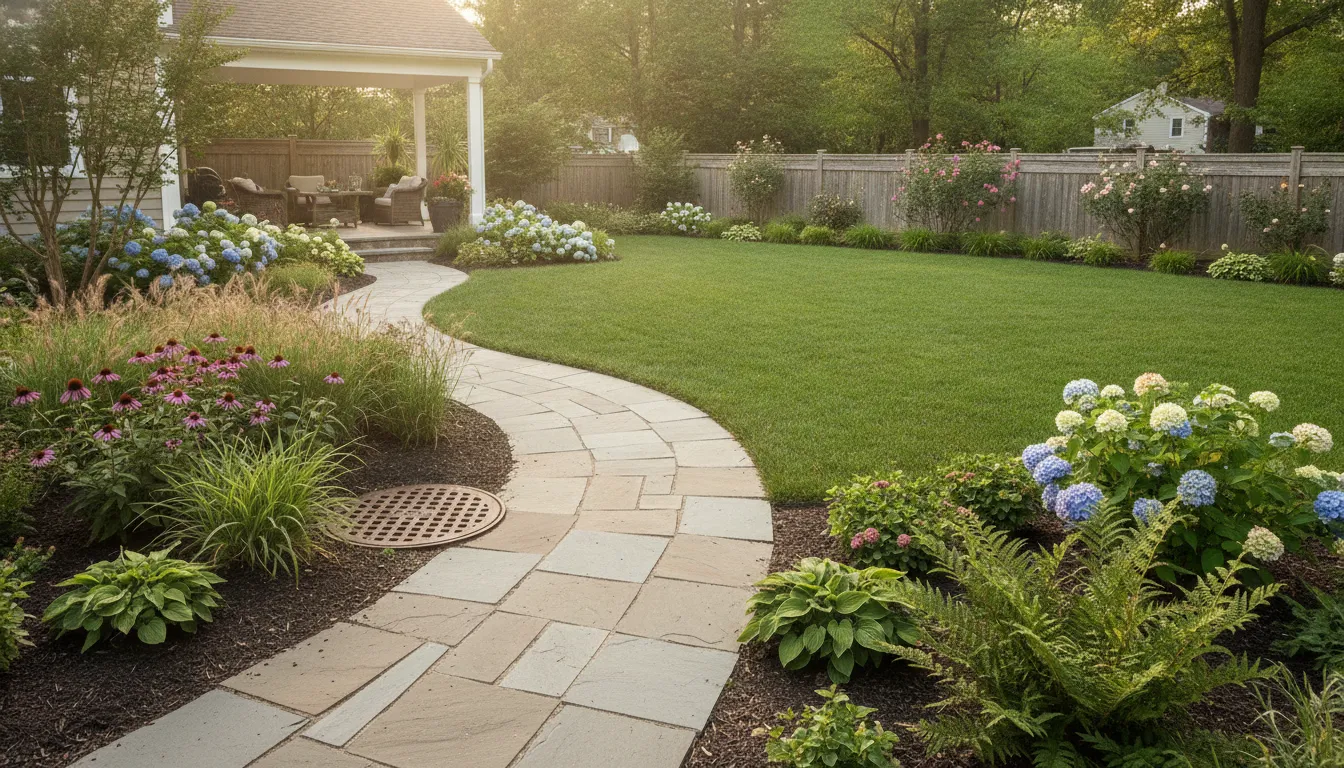
Yes, when they are planned as part of the site’s water-management strategy. Planting beds, pavers, walkways, patios, and gravel surfaces all change how rain moves across a yard. The right combination can slow runoff, improve infiltration, and keep frequently used areas more stable. The wrong combination can simply move water toward another low spot. In Nassau and Suffolk County, the finished landscape should be designed around the existing grade, soil, structures, and a safe discharge path.
Use planting to support, not replace, drainage
Rain-tolerant planting can give water a deliberate place to settle. A rain garden or planted swale may help manage runoff in a suitable low area. Selected plants can tolerate moisture better than species placed in chronically saturated soil. Soil matters here. Poorly drained soil holds water longer, and excess water reduces the oxygen available to plant roots. Adding plants without addressing compaction, grade, or runoff may leave the original problem unchanged.
Planting alone is not a substitute for drainage infrastructure when water is collecting beside a foundation, entering a structure, undermining a walkway, or creating a persistent saturated area. Those conditions call for a site evaluation and a coordinated plan. Gappsi’s landscape services include grading, drainage, irrigation, planting, and ground preparation, allowing the planting plan to follow the drainage design rather than compete with it. See the Long Island landscape design and construction services for the broader planning approach.
Choose surfaces and base materials that manage water
Hardscape does not have to make drainage worse. Permeable pavers can allow water to filter through the surface when the paving system and underlying soil conditions are appropriate. A properly prepared paver base also affects stability and water movement. The base, edge restraints, finished elevations, and adjacent grade must work together, especially where a patio or walkway meets lawn, planting beds, or a foundation.
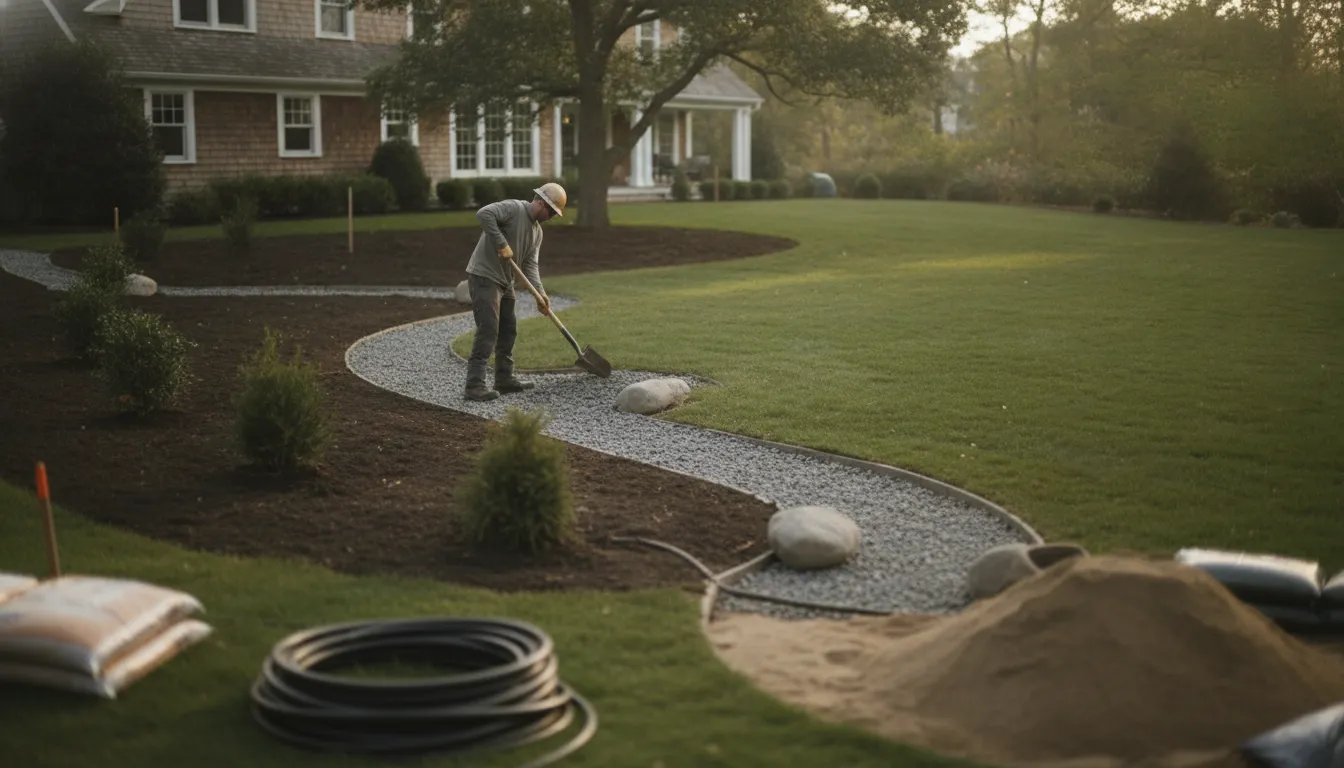
Gravel surfaces can also support permeability when they are installed with the right preparation and containment. A walkway or driveway still needs a runoff-aware layout, so water does not wash loose aggregate into planting beds or toward a neighboring property. For related planning, review permeable paver drainage, properly prepared paver base, and walkway grading and runoff. The best yard drainage solutions coordinate these details with grading, planting, and the property’s actual discharge conditions.
Contact Gappsi through our contact page
When Should a Long Island Homeowner Get a Site Evaluation?
A site evaluation is worth considering when standing water returns after ordinary rain, soil stays muddy. A slope is eroding, or runoff reaches the foundation, patio, walkway, or another structure. These patterns usually require more than a surface fix. Drainage issues are unique to each property. The useful starting point is to identify where water comes from and where it goes. A professional review can connect the right yard drainage solutions to the site’s grade, soil, hardscape, and discharge path.
- Document the warning signs. Photograph ponding during and after rain, muddy areas, washed-out soil, damaged planting beds, overflowing gutters, and water near the foundation. Note how long the water remains, which direction it travels, and whether the problem appears only after heavy storms or after ordinary rainfall. Record recent changes, such as a new patio, driveway, retaining wall, shed, pool area, or altered downspout. If water threatens the building or appears connected to foundation movement, involve an appropriate structural or foundation specialist as well as a drainage professional. Extension guidance recommends professional help when flooding or foundation danger is involved.
- Prepare the site questions. Ask whether the evaluation will trace roof and surface runoff, inspect downspout outlets, review low spots, and assess the finished grade around structures. Soil matters too. Clay-heavy or compacted soil may hold water longer, while a slope does not automatically mean the property drains well. Depending on the proposed approach, the assessment may include soil infiltration or percolation testing. It should also review catch basins, drainage lines, utilities, irrigation, and available outlets. The goal is not to select a product first. It is to match the method to current site conditions.
- Review the complete outdoor plan. Existing patios, walks, walls, planting beds, and other hardscape can change how water moves. A site evaluation should show how grading, drainage infrastructure, planting, and future construction can work together without sending water toward a neighboring property. For sloped ground, review drainage for sloped yards as a related planning consideration.
- Confirm local requirements before construction. Drainage structures, excavation, grading changes, retaining features, and work near utilities or property lines may involve permits, approvals, utility marking, or local requirements. The applicable process depends on the municipality and project scope, so confirm it before work begins. In Nassau and Suffolk Counties, a coordinated design-build review can reduce conflicts between the proposed drainage work and the finished landscape.
Gappsi connects site planning with grading, drainage, irrigation, planting, and hardscape construction. Its Long Island landscape design and construction service can evaluate the outdoor plan as a whole, then coordinate design and installation around the actual property rather than assuming one method fits every yard.
Frequently Asked Questions
How do I fix bad drainage in my yard?
Start by observing where water comes from and where it goes after rain. Check roof runoff, downspouts, grading, low areas, compacted soil, and nearby hardscape. The right response may involve correcting grade, adding a swale or catch basin, installing a French drain, improving the discharge path, or coordinating planting with the drainage plan. Because drainage issues are unique to each property, a site evaluation is more reliable than choosing one method from a standard list.
What is best for drainage in a yard?
The best approach depends on the source of the water, soil conditions, available slope, structures, and a safe destination for runoff. Grading can redirect surface water, while catch basins collect concentrated flow and French drains manage subsurface water in suitable locations. A dry well or rain garden may also fit when site conditions allow. Water should not simply be redirected toward a neighboring property.
What soaks up water in the yard?
Well-drained soil, properly selected plants, rain gardens, and bioswales can help manage water. Native planting can give water a place to settle and drain while adding structure to the landscape. However, plants alone do not replace drainage infrastructure when ponding threatens a foundation, patio, walkway, or other structure. Compacted or clay-heavy soil may require grading, soil preparation, or a designed drainage system.
Can I dig a hole and fill it with gravel for drainage?
A gravel-filled hole may not solve the problem if the surrounding soil drains slowly, the water table is high, or there is no suitable subsurface destination. Before installing a dry well or similar feature, evaluate soil absorption, groundwater conditions, nearby foundations, utilities, and the discharge plan. Persistent ponding near a building or signs of foundation risk warrant professional drainage or structural guidance.
Ready to Plan the Right Drainage Approach?
Standing water can have more than one cause, so a site evaluation helps connect grading, runoff, soil, and the finished landscape into one practical plan. Gappsi can discuss the conditions affecting your Long Island property and the yard drainage solutions that may fit its layout.