


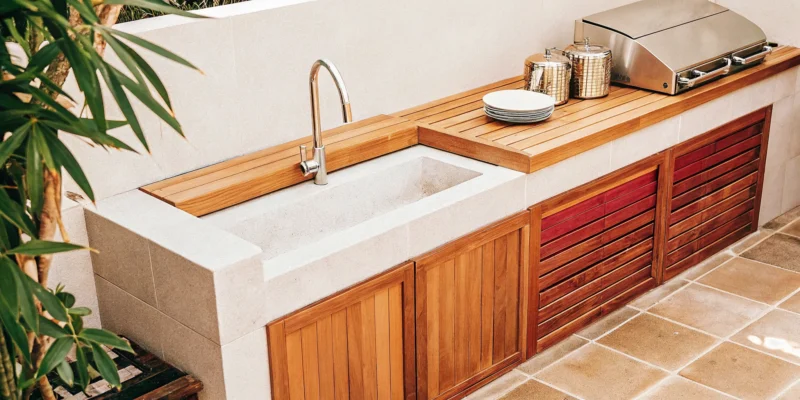
Having a small backyard or patio on Long Island doesn’t mean you have to give up on your dream of an outdoor kitchen. In fact, a compact space often leads to the most efficient and creative designs. It’s not about how much room you have, but how you use it. A well-designed small kitchen can be just as functional as a larger one, providing everything you need to grill, prep, and entertain. We’ll walk you through simple outdoor kitchen ideas specifically for smaller areas, focusing on smart layouts, vertical storage, and multi-functional pieces that make the most of every inch.
Key Takeaways
- Build your kitchen around the basics: Before anything else, secure your three core components: a grill that fits your cooking style, ample counter space for prep, and practical, weather-resistant storage to keep things organized.
- Select materials that match durability with style: The right materials are crucial for longevity. Balance your budget and aesthetic by considering options from affordable concrete to premium, low-maintenance choices like porcelain and natural stone that withstand the elements.
- Think beyond summer with a smart design: Maximize your investment by planning for year-round enjoyment. A strategic layout, proper utility planning, and adding shelter like a pavilion or heaters will make your outdoor kitchen a go-to spot in any season.
What Does a Simple Outdoor Kitchen Need?
An outdoor kitchen doesn’t have to be a massive, complex project. At its heart, a simple setup just needs a few key elements to make cooking outside a breeze. Think of it as building your ideal culinary corner, piece by piece. Whether you’re starting small or planning a more involved setup, getting the foundation right is what matters most. It’s all about creating a space that works for you, your family, and your love for outdoor entertaining.
The Essentials: Grill, Counter Space, and Storage
Every great outdoor kitchen starts with three core components. First, the grill is your centerpiece. It’s where all the cooking magic happens, so choose one that fits your style, whether it’s gas, charcoal, or a flat-top. Next, you need adequate counter space. Don’t underestimate how much room you’ll need for prepping ingredients, plating food, and setting down tools. We can build beautiful, durable countertops using materials like natural stone or porcelain. Finally, include some storage. Weather-resistant cabinets or drawers keep your grilling tools, spices, and cleaning supplies organized and protected from the elements, so you’re always ready for an impromptu barbecue.
Helpful Upgrades: Sink, Refrigeration, and Lighting
Once you have the basics covered, a few upgrades can seriously improve your outdoor cooking experience. Adding a sink is a game-changer, eliminating the need to run back inside to wash hands or rinse vegetables. An outdoor-rated mini-fridge is another fantastic addition, keeping drinks cold and ingredients fresh right where you need them. And don’t forget about lighting. For evening cookouts, proper illumination is a must. You can install sconces on a nearby wall or hang string lights from a custom-built pergola to create a warm, inviting atmosphere. These additions transform a simple cooking area into a fully functional and stylish outdoor room.
Choose the Right Spot and Plan for Utilities
Location and logistics are just as important as the kitchen components themselves. A common mistake is placing the outdoor kitchen too far from the house, which means endless trips back and forth for supplies. Instead, design it to feel like a natural extension of your home. You also need to plan for utilities early on. Gas lines for the grill, plumbing for a sink, and electrical wiring for refrigeration and lighting require professional planning and installation. Thinking through these details from the start ensures your project runs smoothly and your finished kitchen is both safe and functional. Our team handles these complexities, making sure your home improvement project is seamless from concept to completion.
What Are the Best Materials for an Outdoor Kitchen?
Choosing the right materials for your outdoor kitchen is one of the most important steps. You need surfaces and structures that can handle everything Long Island weather throws at them, from humid summer days to freezing winter nights. The goal is to find a balance between your budget, your personal style, and long-term durability. While some materials are great for a quick DIY setup, others are a true investment in your home’s value and your family’s enjoyment for years to come.
Think about how you plan to use the space. Will you be cooking every weekend or just for special occasions? Do you need something that’s easy to clean, or are you willing to do a little more maintenance for a specific look? The materials you choose for your countertops, cabinets, and frame will define not only the kitchen’s appearance but also how well it holds up over time. A solid foundation and weather-resistant finishes are key to creating a space that you can rely on season after season. Gappsi’s home remodeling experts can help you select the perfect combination of materials for your vision and property.
For Affordability and Strength: Concrete and Wood
If you’re working with a tighter budget but still want something sturdy, concrete and wood are excellent starting points. Poured concrete countertops are a popular choice because they are incredibly durable and cost-effective. Once sealed properly with a food-safe sealer, they create a tough, industrial-chic surface that can handle the heat from a grill and is easy to wipe down. For the kitchen’s frame, pressure-treated wood is a common and affordable option. It provides a solid structure, though it’s best paired with a more water-resistant material like cement board to protect it from moisture and extend its life.
For Durability and Style: Porcelain and Natural Stone
For a truly stunning and resilient outdoor kitchen, you can’t go wrong with porcelain or natural stone. Materials like granite, slate, and soapstone are the gold standard for outdoor countertops because they are built to last. They effortlessly handle heat, moisture, and UV rays without fading or cracking. We offer a wide selection of beautiful porcelain and natural stone that can create a seamless flow from your patio to your kitchen. Porcelain, in particular, is non-porous, which means it resists stains and is incredibly easy to clean, making it a practical and stylish choice for any outdoor cooking space.
For Longevity: Stainless Steel and Cement Board
When your top priority is building a kitchen that will last a lifetime, focus on the core structure. A frame made from stainless steel or powder-coated galvanized steel offers the best defense against the elements. These materials won’t rust or warp, providing a stable base for your appliances and countertops for decades. To complete the structure, cement board is a far better choice than drywall or plywood. It’s designed to resist water and won’t break down when exposed to moisture, making it the ideal backing for stone veneer or tile finishes. This combination ensures your investment is protected from the inside out, a standard for all our masonry projects.
Simple Outdoor Kitchen Ideas for Every Budget
Creating a beautiful and functional outdoor kitchen doesn’t have to be an all-or-nothing project. Whether you have a small budget for a simple grilling station or are ready to invest in a full-service culinary space, there’s a solution that fits your needs. The key is to match your vision with your budget and start with a plan. You can always begin with a basic setup and add more features over time.
Thinking about your outdoor kitchen in terms of budget tiers can make the planning process much more manageable. A modest budget can get you a surprisingly functional and stylish space with a little creativity, while a larger investment opens the door to premium materials and custom designs that truly extend your home’s living area. Let’s look at what you can achieve at three different price points.
Under $500: DIY Projects and Portable Setups
You can absolutely create a dedicated outdoor cooking space on a tight budget. This price range is all about getting creative with DIY projects and portable solutions. Start with a good quality grill as your centerpiece and build around it. You can construct a simple workstation using reclaimed wood or cinder blocks for a rustic, industrial look. For countertops, poured concrete is a durable and very affordable option. You can also find plenty of inexpensive DIY outdoor kitchen ideas online for inspiration. A rolling cart can serve as both a prep surface and storage, giving you flexibility without the commitment of a permanent structure.
$500–$2,000: Modular Kits and Semi-Permanent Ideas
With a bit more to spend, your options expand to include modular and semi-permanent setups. Modular outdoor kitchen kits are a fantastic middle ground, offering a more polished look without the cost of a fully custom build. These kits often include frames, cabinets, and countertop sections that you can assemble yourself. This approach allows you to pick and choose the components you need, whether it’s just a grill cabinet or a more complete L-shaped layout with storage. You can find great outdoor kitchen modules that are easy to put together and configure for your space, giving you a semi-custom feel for a fraction of the price.
$2,000+: Built-In Kitchens with Premium Finishes
If you’re ready to create a true outdoor culinary destination, a custom built-in kitchen is the way to go. This investment allows you to design a space that perfectly fits your cooking style and aesthetic. You can integrate high-end appliances, a sink, refrigeration, and ample storage, all finished with premium materials. A professional masonry design can create a structure that seamlessly blends with your home and landscape. For a modern look, consider sleek stainless steel cabinets paired with durable porcelain countertops. For a more classic or rustic feel, natural stone offers timeless beauty and incredible durability, ensuring your outdoor kitchen will be a centerpiece for years of gatherings.
How to Design a Small but Mighty Outdoor Kitchen
A small backyard or patio doesn’t mean you have to shelve your outdoor kitchen dreams. In fact, a compact space often inspires the most creative and efficient designs. The key is to think strategically about every square foot, focusing on layout, smart storage, and multi-functional elements. A well-designed small kitchen can be just as functional and stylish as a larger one, providing everything you need to grill, prep, and entertain without overwhelming your yard.
Instead of seeing limitations, view your space as a design challenge. How can you create a seamless flow from your grill to your counter? Where can you tuck away tools and supplies? How can you make the kitchen feel like a natural extension of your home and garden? With a thoughtful approach, you can build a beautiful outdoor cooking area that feels spacious and works perfectly for your needs. The right combination of materials and a clever layout can transform a tiny corner into your favorite spot for summer dinners. Gappsi’s expertise in home remodeling and outdoor construction can help you map out a plan that makes the most of your unique space.
Smart Layouts: Straight-Line and L-Shapes for Tight Spaces
When space is at a premium, your layout is everything. The two most effective designs for small outdoor kitchens are the straight-line and the L-shape. A straight-line layout is the simplest and often the best choice for narrow areas, like a side yard or a long patio. It arranges all your components, such as the grill, counter space, and refrigerator, along a single wall. This keeps the footprint minimal while still providing a clear and functional workspace.
An L-shaped kitchen is another fantastic option, especially for corner spots. This layout uses two adjoining walls to create a more defined cooking zone. It offers more counter space than a straight-line design and can create a natural work triangle between your grill, sink, and prep area. Our masonry design team can help you build a custom base in either shape that fits your space perfectly.
Creative Storage: Go Vertical and Use Multi-Functional Pieces
In a small kitchen, clutter is the enemy. To keep your counters clear, think vertically. Installing open shelving on an adjacent wall gives you a place to store plates, glasses, and spices without taking up valuable surface area. It also adds a decorative touch, allowing you to display your favorite serving pieces. Look for weather-resistant materials that can stand up to the elements.
You can also get creative with multi-functional furniture. A small cart can serve as both an extra prep surface and a bar for serving drinks. Benches with built-in storage can hold cushions, grilling tools, or charcoal. Even simple additions, like crate end tables, can provide a spot to set a drink and store small items. These clever solutions ensure every piece in your outdoor kitchen earns its keep.
Space Savers: Choose Compact Appliances and Islands
You don’t need massive, commercial-grade appliances to create a great outdoor kitchen. Many brands now offer compact versions of grills, refrigerators, and sinks that are specifically designed for smaller spaces. Choosing these smaller appliances frees up more room for precious counter space. You can find high-quality options for your project at the Gappsi Store.
A small island is another game-changer for compact kitchens. It can define the cooking area while providing bar seating on one side and a functional work surface on the other. An island makes excellent use of patio space, creating a central hub for cooking and socializing without closing off the area. It’s a smart way to add functionality and create a gathering spot for family and friends.
Blend Your Kitchen with Your Landscaping
The most beautiful outdoor kitchens are the ones that feel completely integrated with their surroundings. Your kitchen shouldn’t look like it was just dropped into your backyard. Instead, it should blend seamlessly with your existing patio, garden, and other outdoor features. Using complementary materials is a great way to achieve this. For example, you can use the same porcelain or natural stone for your kitchen base as you have on your patio.
Thoughtful landscape design also plays a huge role. Planting herbs in containers near your prep area is both practical and beautiful. Adding soft landscape lighting can highlight the kitchen at night, while surrounding it with lush greenery can soften the hard lines of the structure. This holistic approach ensures your kitchen becomes a harmonious part of your overall outdoor living space.
How to Enjoy Your Outdoor Kitchen All Year Long
An outdoor kitchen is a fantastic investment in your home and lifestyle, but you don’t have to limit its use to just the summer months. With a bit of smart planning, you can create a comfortable and functional space that you and your family can enjoy no matter the season. Extending the usability of your outdoor kitchen means more cozy fall dinners, festive winter cookouts, and fresh spring brunches. It’s all about adding the right elements to protect you from the weather and keep you comfortable.
From structural covers that shield you from rain and sun to heating elements that take the chill out of the air, the right features can transform your kitchen into a true four-season extension of your home. Thinking about these additions during the initial design phase is ideal, but many can also be incorporated into an existing setup. Let’s look at how you can make your outdoor kitchen a year-round destination for cooking, dining, and entertaining.
Add Shelter: Pergolas, Pavilions, and Other Covers
The first step to year-round enjoyment is adding a roof over your head. A permanent shelter protects your appliances from the elements and provides a comfortable, defined space for you and your guests. A well-designed structure can turn your kitchen into a go-to spot throughout the year. Gappsi offers beautiful custom pavilions and pergolas that can be tailored to match your home’s aesthetic.
These structures do more than just block sun and rain. You can integrate features like ceiling fans for breezy summer days or built-in heaters to keep the space warm during cooler months. This makes your outdoor kitchen a versatile area, perfect for any gathering, regardless of what the Long Island weather decides to do.
Stay Cozy: Install Heaters, Lighting, and Weather-Resistant Finishes
Comfort is key to making a space inviting, especially when it’s chilly outside. Installing heating elements is a game-changer for fall and winter use. Options range from freestanding propane heaters to built-in infrared units mounted in your pavilion’s ceiling. A fire pit or outdoor fireplace nearby can also add warmth and a wonderful ambiance. Thoughtful lighting is just as important, ensuring you can safely cook and entertain after dark. Wall-mounted sconces can illuminate your cooking area, while string lights overhead create a magical, cozy atmosphere.
The materials you choose also play a huge role in year-round usability. Opting for durable, weather-resistant finishes ensures your kitchen can withstand the seasons for years to come. High-quality materials like porcelain and natural stone are not only beautiful but also incredibly resilient against moisture, temperature changes, and wear.
Plan Utilities for Every Season: Water, Power, and Storage
Properly planning for utilities is a crucial step that is often overlooked. To make your kitchen functional all year, you need reliable access to water, gas, and electricity. This means thinking about how to prevent pipes from freezing in the winter and ensuring all electrical outlets are weatherproof and safely installed. Underestimating these needs can lead to frustrating limitations or costly fixes down the road. Working with an experienced team ensures every detail is handled from the start.
This is where comprehensive home remodeling expertise becomes invaluable. A professional can help you map out the utility lines and integrate them seamlessly into your design. They will also help you select weather-resistant cabinetry and storage solutions to keep your cookware and supplies protected and ready for use, no matter the season.
Related Articles
- Gazebo | Pavilion | Pergola Archives – Gappsi Group
- fire Archives – Gappsi Group
- cement Archives – Gappsi Group
- blocks Archives – Gappsi Group
Frequently Asked Questions
What’s the most important first step when planning an outdoor kitchen? Before you start picking out a grill or countertop materials, think about location. The best spot is usually close to your house to make carrying food and supplies back and forth easy. You should also consider your utility lines. Planning for gas, water, and electricity from the very beginning will save you a lot of headaches and ensure your kitchen is both safe and fully functional when it’s finished.
What material is the easiest to take care of? For a low-maintenance outdoor kitchen, porcelain is an excellent choice for countertops. It’s non-porous, so it resists stains from things like wine or grease, and it’s incredibly easy to wipe clean. While natural stones like granite are also very durable, they typically require sealing to prevent stains. Stainless steel cabinets are another great option for longevity and simple cleaning.
Can I really use an outdoor kitchen during a Long Island winter? Absolutely. The key is creating a comfortable, sheltered space. A pavilion or other permanent roof structure is essential for keeping snow and rain out. When you combine that with built-in heaters or a nearby outdoor fireplace, you can create a cozy environment for grilling, even on a chilly day. It transforms your kitchen from a summer-only spot to a year-round destination.
My backyard is small. Is an outdoor kitchen still possible? Yes, a small space just requires a smart design. A simple straight-line layout against a wall or a compact L-shape in a corner can be very efficient. You can also choose smaller appliances, use vertical shelving to save counter space, and incorporate multi-functional pieces like a rolling island that doubles as a prep area and bar.
Do I need to hire a professional for the whole project? While some people enjoy the DIY aspects of building a frame or assembling modular kits, certain parts of the project really benefit from professional expertise. We always recommend hiring licensed professionals for any gas, electrical, or plumbing work. This ensures everything is done safely and up to code. A professional designer can also help you create a layout that maximizes your space and blends beautifully with your home and landscape.