


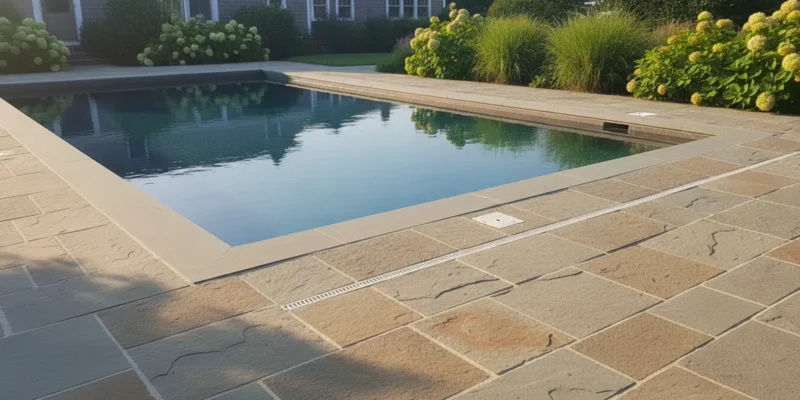
Pool deck repair can range from replacing a few loose pavers to rebuilding a larger section where movement, water, or failed joints have damaged the surface. The right choice depends on what caused the damage, how far it extends, and whether the deck still drains and feels stable underfoot. Here is how to assess the problem and decide what to do next.
Contact Gappsi through our contact page
Posted by Gappsi Group
What does pool deck repair involve?
Pool deck repair means correcting a localized defect while retaining as much of the existing deck as practical. The work may involve resetting pavers, replacing cracked units, renewing joint material, correcting a small uneven area, or addressing a limited drainage issue. It is different from replacing the whole deck, which removes and rebuilds most or all of the walking surface.
A useful assessment starts with more than the visible mark. A cracked paver may be a damaged unit, but it may also point to movement in the bedding beneath it. A puddle can result from a low spot, a blocked drainage path, or a slope that sends water toward the pool or house. Repairing the surface without understanding the cause can leave the underlying condition unchanged.
Think of the deck as a system made up of the walking surface, its base, joints, edge restraints, transitions, and drainage. The material matters, but so do the installation details and the way the deck meets the pool coping, steps, fence, and nearby landscape. For examples of outdoor layouts, browse Gappsi’s pool patio projects and patio articles.
Which signs can a pool deck repair address?
Some defects are confined to a small area and may be candidates for a targeted repair. Others call for a broader inspection before anyone recommends a fix. Note where the issue appears, when it occurs, and whether it is changing.
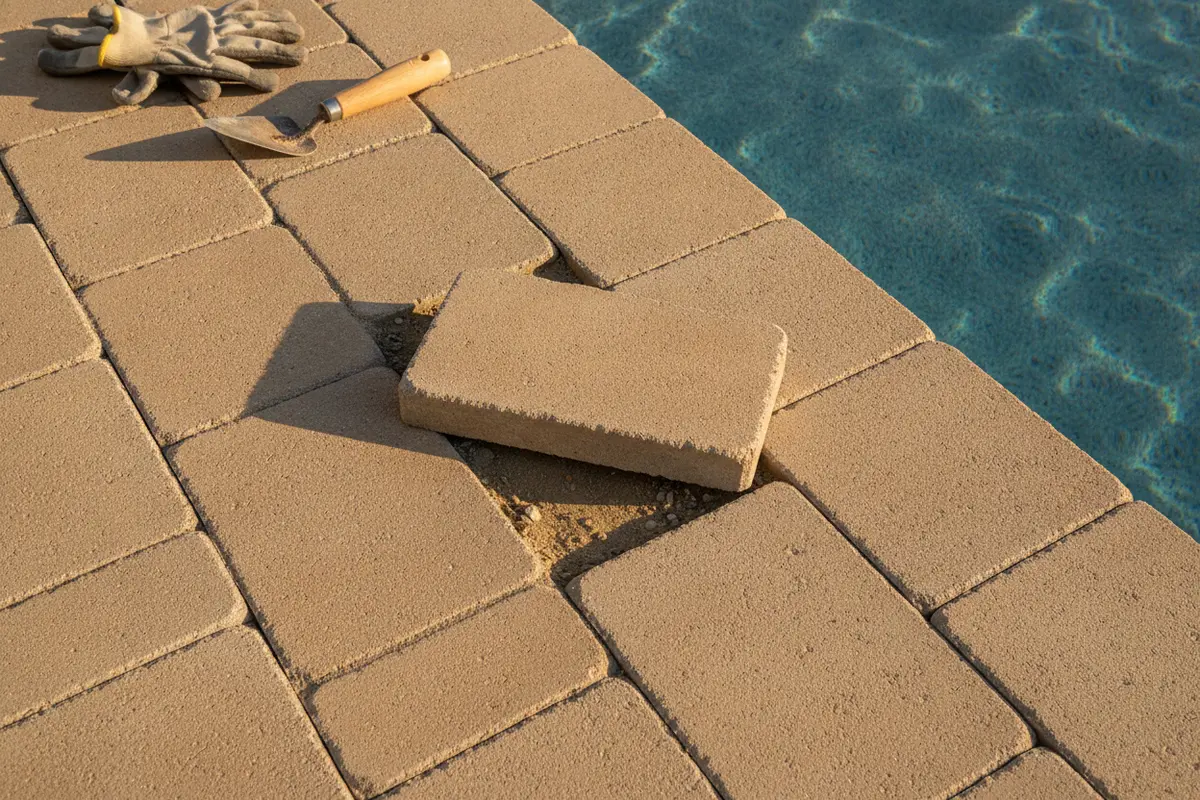
- One or a few cracked pavers: Replacement may be possible if matching material is available and the supporting base is stable.
- Loose or rocking units: These may need to be lifted and reset. Ask whether the bedding and base will also be checked.
- Open or eroded joints: Joint material may need renewal, but first identify whether washout or recurring water flow is contributing.
- A small uneven transition: A localized correction could help reduce a trip concern. Check adjacent surfaces and the pool coping as well.
- Staining or surface discoloration: Cleaning may be more appropriate than construction repair, depending on the material and the cause.
- Water that remains after ordinary rainfall: Observe where it collects and how it leaves the deck. A drainage correction may be needed rather than a patch.
Take clear photographs from close up and from farther back. Include a familiar object for scale, but do not step onto a loose or unstable section to photograph it. If the deck moves, has a sharp change in height, or appears to be separating near the pool, keep people away from that spot until it has been assessed.
When is repair enough, and when is replacement more practical?
There is no single crack size or age that determines the answer. A sound repair plan weighs the extent of the affected area, the cause, the condition of the surrounding surface, the likelihood of finding a close material match, and the disruption of opening up the deck. A small defect on a stable surface is different from repeating movement across multiple areas.
| Condition observed | Possible next step | What to confirm |
|---|---|---|
| One isolated damaged paver | Replace or reset that unit | Whether the base beneath it is stable and a compatible replacement is available |
| Several loose units in one limited area | Open and rebuild the affected section | Extent of base movement, joint condition, and edge support |
| Recurring pooling or water moving toward a structure | Assess slope and drainage before surface work | Where water originates and where it can be directed safely |
| Widespread movement, cracking, or unevenness | Compare broader reconstruction with staged repair | Whether a local fix will last and how the deck connects to coping and steps |
| Surface looks worn but remains stable | Consider cleaning or a suitable maintenance treatment | Material compatibility and whether the treatment changes traction or appearance |
Repair is usually the more focused option when damage is limited and the surrounding construction remains stable. Replacement becomes more reasonable when defects recur, affect a large area, or stem from a condition that a small patch cannot correct. If a repair would leave many visible mismatches or a patchwork of surfaces, compare that outcome with replacing a defined section.
Neither choice should be made from appearance alone. Ask for the proposed work area to be identified, the suspected cause to be explained, and any assumptions to be stated. A written scope can clarify whether the work includes lifting and resetting material, preparing the base, replacing joint material, adjusting drainage, and making transitions flush.
When comparing estimates, compare the work included rather than a single bottom-line figure. One proposal might cover only replacing visible units, while another may include opening the area, correcting its support, and restoring nearby joints. Those are different scopes. Ask whether cleanup, material disposal, access limits, and any additional work discovered after lifting the surface are addressed. If the estimate lists an allowance or excludes a component, ask what that means before approving it. This makes it easier to understand the tradeoff between a smaller intervention and work intended to address a wider cause.
Ask Gappsi about your pool deck project and share photos of the affected area, if available.
How can you tell whether the base or drainage is part of the problem?
Look for patterns. Several pavers that rock together may suggest a broader issue than one damaged unit. A line of settlement near an edge, a recurring low spot, or joint material that repeatedly washes out can help describe where to investigate. These observations do not prove a particular cause, but they help a professional decide what to inspect.
Watch the deck during and after rain from a safe position. Note whether water pools, crosses the walking route, flows toward a doorway, or runs over an edge. Do not assume that a puddle should be corrected by raising a surface without considering the pool coping, adjacent grades, and the path water will take afterward.
Drainage and deck work can affect neighboring features. A change to one section may alter the transition to steps, a fence line, a pool house, or a planting bed. Gappsi’s hardscaping projects and pool house work provide examples of how pool areas connect with other backyard elements. Every property still needs a site-specific assessment.
For background on pool ownership and safety resources, consult the Pool & Hot Tub Alliance. Around any pool, keep the deck clear of trip hazards and use caution on wet surfaces. A repair does not replace routine supervision or other pool safety measures.
What should you compare when choosing a repair material?
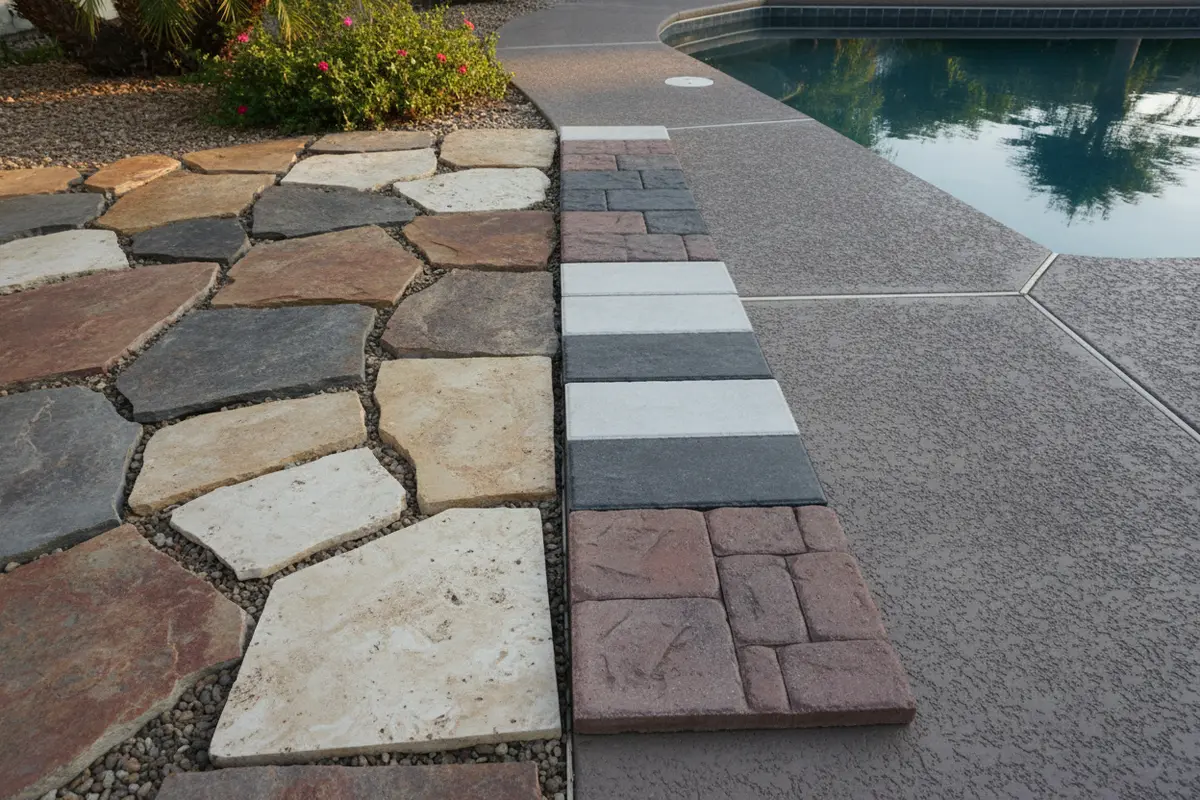
A replacement should suit the existing installation and its use, not just look similar in a photo. Ask how the proposed material relates to the deck’s existing color, thickness, surface texture, joint pattern, and exposure. Natural stone and concrete pavers can vary in appearance, and a new batch may not match material that has weathered outdoors.
- Surface texture: Discuss how the material feels underfoot, including when wet, and whether its finish suits a poolside setting.
- Thickness and fit: Confirm that the new unit can align with adjacent pavers and nearby coping without creating an abrupt lip.
- Color and variation: Compare samples outdoors if possible. Sunlight and age can make an exact match difficult.
- Joint approach: Ask what joint material is proposed and how it will be maintained or replaced.
- Cleaning and sealing: Check that any product is suitable for the specific material and will not create an unwanted surface change.
Do not choose a sealer or cleaning method solely because it was used on another deck. Materials respond differently, and treatments can affect appearance and traction. For related care topics, see Gappsi’s paver cleaning information and sealing articles. Ask for recommendations that match the actual surface and follow product instructions.
How should you plan pool deck repair?
- Document the concern. Photograph cracks, movement, pooling, or missing joint material. Record when it began and whether it changes after rain or seasonal weather.
- Mark the affected area. Identify the visible defect and the nearby transitions. Avoid marking a surface in a way that could stain or damage it.
- Ask for a cause-focused inspection. Request an explanation of what will be checked below or around the damaged area, not just what will be replaced on top.
- Compare a focused repair with a larger scope. Ask why the proposed boundary makes sense and what risks remain if only the visible defect is addressed.
- Review material and drainage details. Confirm how the repaired area will align with coping, steps, and adjoining surfaces, and how water will move afterward.
- Get the work scope in writing. It should identify the area, material, preparation, cleanup, and any exclusions or matching limitations.
- Plan access and pool use. Ask how long the area must remain clear and when it is suitable to walk on or use again. Follow the project professional’s instructions.
If the project includes broader changes to the pool area, compare it with Gappsi’s pool remodeling information. A repair conversation can establish whether the issue is isolated or part of a larger project, without assuming that a full renovation is necessary.
What can happen during a localized repair?
For a paver repair, the work may start with removing the affected units carefully so the bedding and support below can be examined. If the material can be reused, it may be cleaned and reset; damaged units may need replacement. The installer may then adjust the base, restore the surface to a consistent level, and refill joints. The exact steps depend on the construction and the cause of the defect, so ask which parts of this process are included in the estimate.
Plan for a defined work area and temporary limits on walking through it. Move furniture, planters, and pool accessories out of the way before the crew arrives, and keep children and pets away from tools and open work areas. Ask how access to the pool, gate, and nearby entrances will be managed. If the repair uses materials that need time to set or cure, follow the contractor’s direction about when to walk on the surface and when to return furniture or resume poolside activity.
After the work, look over the repaired area with the installer. Check that the surface feels stable, transitions are reasonably even, joints have been addressed as agreed, and the work area has been cleaned. Discuss any expected variation in color or texture before judging a new material against an older, weathered deck. Keep the written scope and care instructions with your project records so future maintenance can follow the materials actually installed.
What questions should you ask before approving the work?
Use the estimate discussion to understand the recommended scope. A useful answer should connect the observed condition to the proposed work and make clear what is not included.
- What do you believe caused the movement, cracking, or water collection?
- How will you check whether the base and surrounding units are stable?
- Which material will be used, and can its color or texture be matched closely?
- Will the repair include joints, edge support, and the transition to the coping?
- How will the work affect drainage, and where will water go afterward?
- What conditions could require expanding the work once the area is opened?
- How should the area be protected and maintained after completion?
Ask for any uncertainty to be explained before work begins. For example, a contractor may not be able to confirm the full condition beneath a surface until it is lifted. Understanding that possibility helps you compare scopes fairly and decide how changes will be discussed if concealed conditions appear.
Contact Gappsi to discuss your pool deck repair
Frequently Asked Questions
Can one cracked pool deck paver be replaced by itself?
Often, one unit can be replaced if the surrounding area and supporting base are stable and a suitable replacement is available. The installer should check why the paver cracked before treating it as an isolated surface defect.
Should I repair a pool deck before the swimming season?
Address a loose, raised, or otherwise hazardous area as soon as practical, and plan construction around weather, material requirements, and access. Ask the project professional how the schedule affects pool use and when the repaired surface can be used.
Can a pool deck be repaired if the new material does not match?
Possibly. Compare the proposed material with the existing deck outdoors and discuss the size and visibility of the repair. If a close match is not available, ask whether a larger defined section would create a more consistent appearance.
Does a puddle always mean the entire pool deck needs replacement?
No. Pooling can be localized, but the cause should be assessed before deciding on the scope. A small correction may be possible, while recurring water problems or widespread unevenness can require broader work.
Ready to plan a pool deck repair?
Contact Gappsi through our contact page to discuss the condition of your deck and possible next steps.
Bring photos and notes about where the surface feels loose, where water collects, and when the problem began so the project conversation can focus on the right questions.