


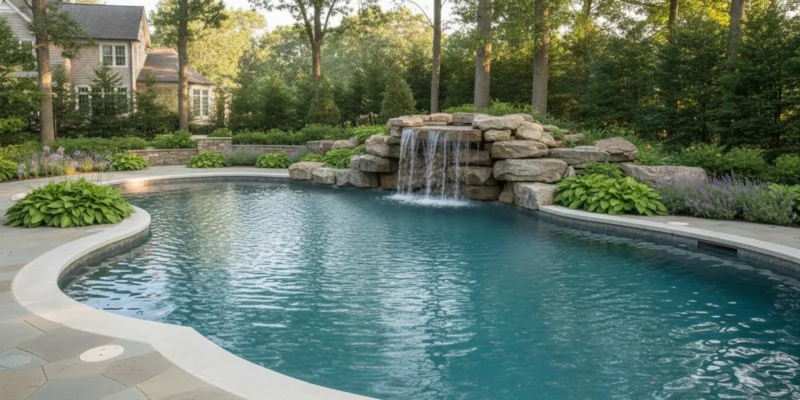
Pool waterfall maintenance on Long Island starts with a simple routine: learn the normal flow, clear loose debris safely, and watch for changes in water level, stone, and drainage. A waterfall is both a visual feature and part of a working circulation system. A small, consistent check can help separate routine care from signs that call for a closer inspection.
Contact Gappsi through our contact page to discuss your pool waterfall
Posted by Gappsi Group
What does pool waterfall maintenance involve?
Begin by recording how the feature looks when it is working normally. From a stable spot, note whether water falls as a broad sheet, several streams, or a narrow cascade. Notice where it lands, how much splashing occurs, and whether the sound is steady. A short video from the same angle can become a useful comparison later.
When the feature is off, look over visible stone, joints, the catch basin, and accessible areas around the intake. Check for debris, loose pieces, new cracks, persistent wet soil, or water collecting behind the feature. Do not pry at stone or reach into a moving intake. Follow the pool and equipment instructions for operation and treatment.
The feature shares water with the pool, so ordinary water care and circulation matter. Do not pour cleaner onto stone or into a feature unless its label identifies it as suitable for that material and pool use. The U.S. Environmental Protection Agency provides general information about safe use of household products at EPA.gov; always read and follow the directions for the specific product you use.
How often should you inspect a pool waterfall on Long Island?
A quick glance whenever you use the pool can catch obvious leaves or unusual splashing. During the swimming season, make a more deliberate check about once a week. Check after strong wind, a storm, or nearby yard work, when leaves and twigs may collect at an intake or basin. Add a slower review in spring and fall, including visible stone, joints, and drainage.
| Check | What to notice | Practical response |
|---|---|---|
| Flow pattern | Less water, a changed sheet, or new oversplash | Compare with baseline; check water level and visible debris |
| Pool level | Below the normal operating range or recurring loss | Follow pool guidance and record when it changes |
| Stone and joints | Loose material, cracks, or crumbling joints | Keep clear of unstable areas and arrange assessment |
| Surroundings | Wet soil, erosion, or water behind the feature | Turn off the feature if escape continues; investigate |
| Sound and equipment | New rattling, grinding, or persistent air noise | Stop unsafe operation and request qualified help |
Keep a brief log with the date, water level, weather, pump start time, and what changed. If a problem is intermittent, record whether it happens immediately at startup or after the feature has been running. A consistent record can help distinguish a recurring pattern from a one-time change. For ideas about how a water feature and surrounding area relate, browse Gappsi’s pool patio project archive.
How can you clean a pool waterfall without damaging it?
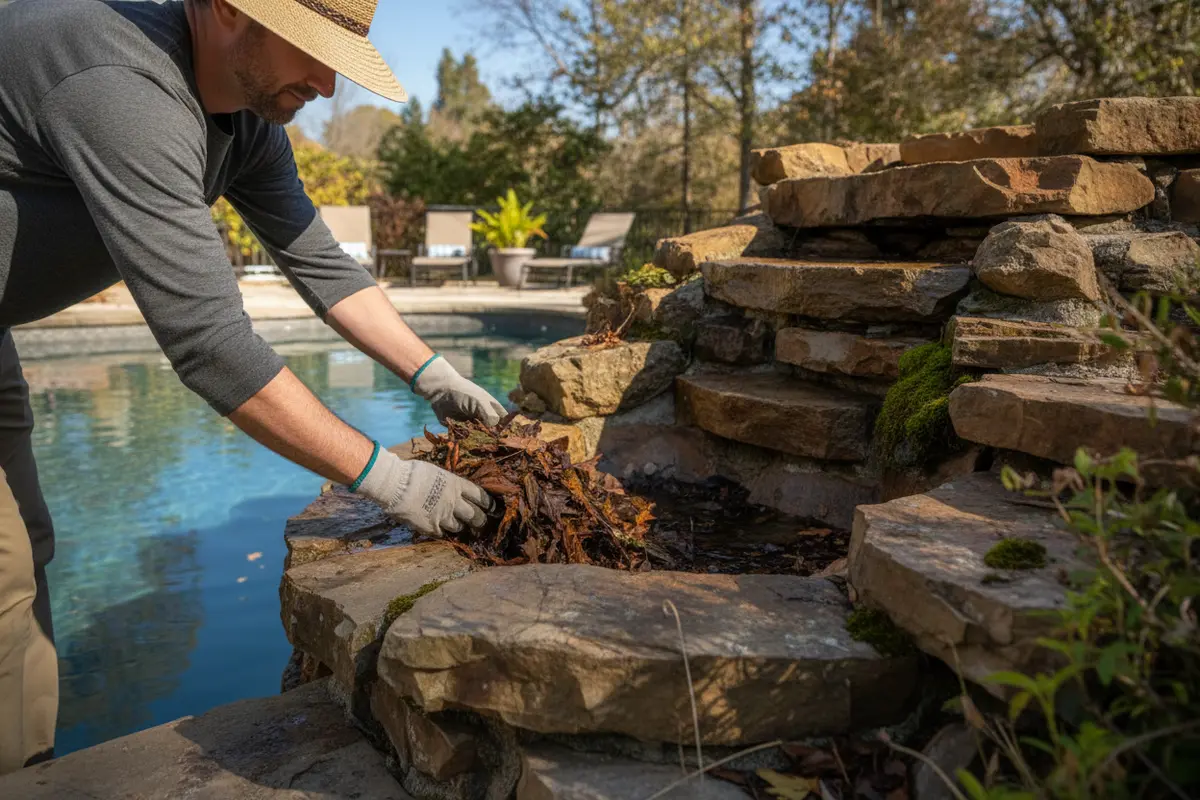
Start with the least aggressive approach. Switch off the waterfall and follow equipment safety instructions before approaching an intake or moving parts. Lift out loose leaves and twigs by hand or use a soft pool brush on accessible surfaces. Rinse with clean water where appropriate, directing debris away from the pool when practical. Do not stand on a wet edge or lean against stonework.
Before treating a stain, consider whether it appears to be mineral scale, algae, or organic material. They can have different causes and may respond differently. Strong acids, abrasive pads, or general household cleaners can damage some stone, discolor joints, or introduce unsuitable substances to pool water. Identify the surface, read the product label, and test any approved cleaner in a small, inconspicuous area first.
Natural stone varies in porosity and finish. Avoid wire brushes and high-pressure washing unless a qualified person familiar with the material confirms that method is appropriate. If deposits return quickly after careful cleaning, do not simply scrub harder. Consider whether water balance, circulation, or persistent moisture needs attention. Gappsi’s hardscaping archive and sealing-related projects offer context on nearby surfaces and finishes.
What can a change in flow tell you?
A weaker cascade may be related to a low pool level or visible debris, but a valve, pump, circulation, or plumbing issue is also possible. Check only items you can identify and safely access. Do not open electrical equipment, remove pump covers, or dismantle plumbing to diagnose a problem.
An uneven spill may reflect an obstruction or a change in how water reaches the outlet. Some variation may be part of the design, so compare with earlier photos rather than assuming every irregular edge indicates a fault. New splashing outside the basin deserves attention, especially if it repeatedly wets soil or paving.
Consider two examples. If the flow is weak immediately after startup, note the pool level and whether the pattern settles as the system runs. If it remains weak and the pump sounds different, avoid repeatedly cycling equipment or adjusting unknown valves. Save a video and arrange an inspection. If the flow changes mainly when wind picks up, note the direction and whether water escapes the catchment area. That detail may help explain the symptom without establishing its cause.
Use a simple observation sequence: compare the feature with its baseline, note pool level and weather, check only visible debris, and record whether the sound changed. If the issue persists, share those observations rather than attempting repairs beyond your experience. Nearby paving is part of the setting too; see Gappsi patio projects for examples of poolside layouts.
Which warning signs need prompt attention?
Seek an assessment when you notice repeated or unexplained pool-water loss, persistent wet soil, water behind the feature, new cracks, loose stone, deteriorated joints, or water washing soil away. A pump that becomes unusually loud, loses prime, or repeatedly trips a protective device also needs attention. Keep people away from loose stone and slick surfaces until they are checked.
If water may be escaping, turn off the feature when it is safe to do so and observe whether the wet area changes. Do not remove stone, seal a moving joint, or apply a quick patch while water is running. A patch can obscure the source without correcting it. Pool-water loss can have causes other than the waterfall. Note whether the level changes while the feature is off and whether wet ground appears only during operation; these observations are clues, not a diagnosis.
How should you prepare a waterfall for seasonal changes?
Before opening the pool, clear leaves and winter debris from the top, basin, and nearby drains. Inspect visible stone and joints without prying. Start the system according to the pool’s opening procedure and watch the feature as it comes on. Check for unusual sound, leaks, or an altered flow pattern before leaving it unattended for a long period.
Before winter, follow the pool and equipment winterization plan. Water left in exposed plumbing can freeze and expand, but the right preparation depends on how the feature is built and connected. Ask the person handling winterization whether waterfall lines, valves, and separate equipment need draining or protection. Do not assume that the pool’s general procedure covers every feature.
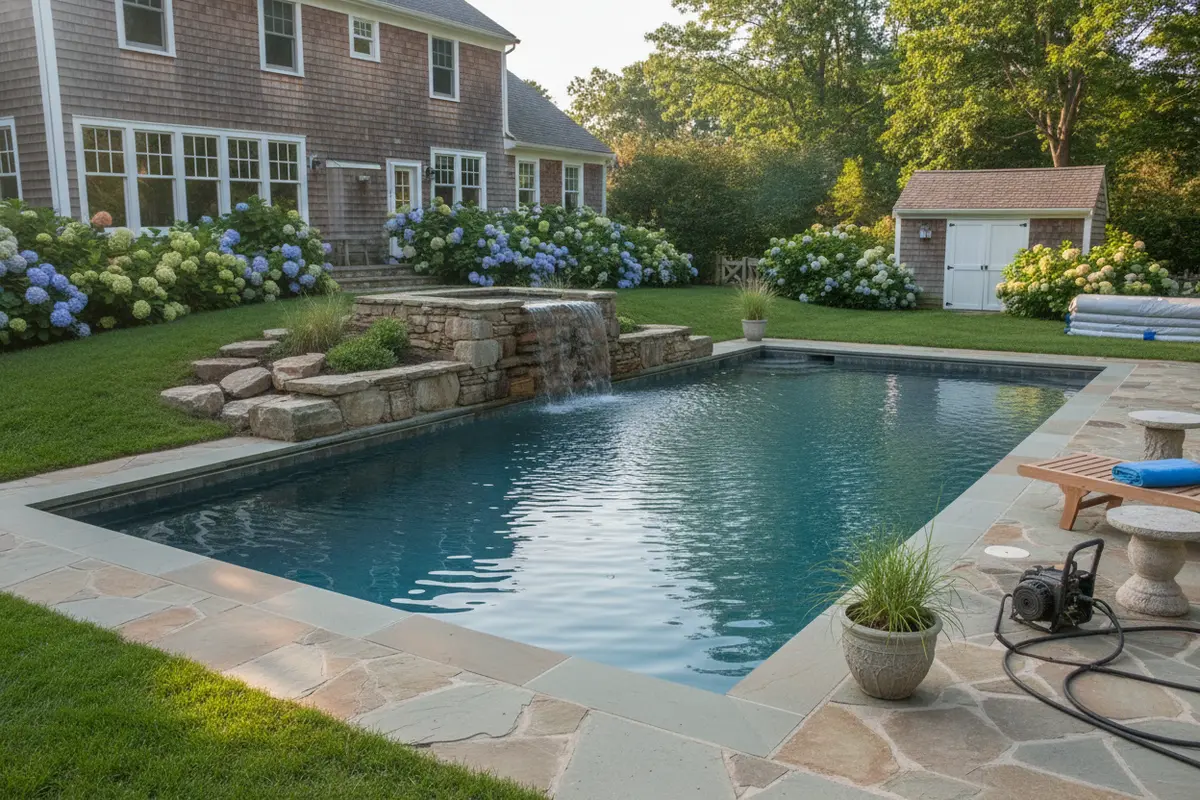
Remove branches and leaves without tools that could chip stone or damage joints. Keep de-icing products and snow-removal equipment away from pool water and the feature unless material and product instructions allow them. If the waterfall shares space with a patio or retaining elements, include drainage and surface movement in your seasonal review. Related project examples appear in Gappsi’s pool remodeling archive and backyard project archive.
What should you ask before arranging service?
When contacting a professional, describe the feature’s construction as far as you know, when the issue began, and whether it changes with pump operation or weather. Share notes, photos, and any cleaner or sealer used. Ask whether the inspection covers visible stone and joints, drainage, accessible circulation components, or more than one of these areas.
Clarify how the feature will be accessed and whether the pool must be off during the inspection. Ask what observations support the proposed repair and whether the issue appears limited to a surface or may involve plumbing. Describe separate symptoms separately: normal water flow with a loose stone is not the same report as a suspected leak. For other water-feature examples, see the sheer descent archive. The restoration archive and Gappsi Store provide additional surface and finish context.
Before a consultation, gather a few useful details: the normal flow pattern, the first date you noticed a change, recent weather, water level when observed, and whether the feature was on or off when wet ground appeared. This makes the first discussion more focused without requiring you to diagnose the system yourself.
Contact Gappsi through our contact page to discuss your pool waterfall and the next inspection step.
Review pool patio project examples to see how a water feature can sit within a larger poolside setting.
What does pool waterfall maintenance on Long Island involve in practice?
A useful routine is modest: observe the feature during normal use, remove loose debris safely, compare its flow with a familiar baseline, and note any water loss or surface change. Wind, storms, and winter preparation make it useful to check after weather events and before freezing conditions. The routine does not replace diagnosis of a leak, equipment fault, or unstable stone.
When something changes, pause operation if water is escaping or equipment sounds unsafe. Make a visual check from stable ground, record the conditions, avoid unverified chemicals or repairs, and seek an assessment when the warning persists. These steps preserve useful evidence while limiting unnecessary disturbance.
Contact Gappsi through our contact page to discuss an inspection
Frequently Asked Questions
Can I run a pool waterfall every day?
That depends on the design, equipment, and operating plan. Follow the instructions for your system and watch for changes in flow, sound, and water level. Ask your pool professional whether the feature has separate operating limits.
Why is my waterfall flow weaker than usual?
A low water level or visible obstruction may be involved, but a valve, pump, circulation, or plumbing issue is also possible. Check only accessible items. If the change persists or the equipment sounds abnormal, arrange an assessment.
Can I pressure-wash waterfall stone?
Do not assume high pressure is safe. It can damage some stone finishes and joints. Begin with clean water and a soft brush, and confirm the material and appropriate method before using stronger cleaning.
Should I shut off the waterfall if I see a leak?
If water is escaping beyond the intended basin, turning off the feature can limit further wetting while you arrange an inspection. If the leak affects pool level or electrical equipment, contact a qualified professional promptly.
A steady routine helps you catch changes early and describe them clearly. When flow, water level, stone, or drainage changes, document what you see and get advice suited to the specific pool waterfall.