


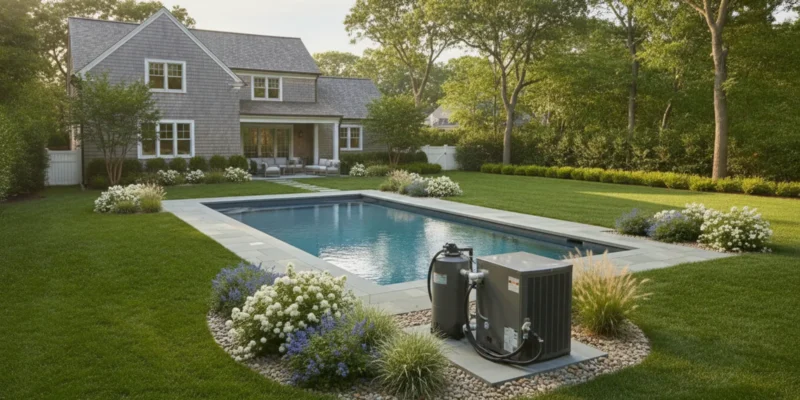
Pool heater cost is not one fixed number. The equipment itself is only part of the decision: pool size, fuel or power availability, installation conditions, desired water temperature, and how often you swim all affect the project. For Long Island homeowners, comparing a complete installed proposal rather than a heater label alone is the clearest way to understand what is included.
Contact Gappsi through our contact page to discuss your pool project
Posted by Gappsi Group
Start with the pool’s actual use. A heater for occasional shoulder-season swimming may not match a household aiming to keep water warm for frequent use. Before comparing equipment, write down what you want the heater to do: warm the pool before occasional swims, maintain a preferred temperature during regular use, or extend the period when the pool is comfortable. The clearer the intended outcome, the easier it is to compare proposals on the same basis.
What shapes pool heater cost?
Pool heater cost depends on both the unit and the work needed to connect it. A proposal may include equipment, delivery, gas or electrical connections, plumbing changes, controls, permits where applicable, startup, and commissioning. Ask which items are included, which are allowances, and which are excluded. A quote that lists only a heater model does not show the whole project scope.
Several practical factors can change the size of the project or the operating plan:
- Pool volume: A larger body of water generally takes more energy and time to heat. Ask whether sizing is based on measured dimensions, an estimated volume, or an assumption.
- Target temperature: The preferred water temperature and the difference between that target and outdoor conditions affect heating demand. Compare recommendations against the same target.
- Swimming schedule: Frequent use can lead to a different operating approach than occasional weekend swimming. Explain which days and seasons matter to your household.
- Available utilities: Distance to gas, electrical service, and plumbing can change installation work. Existing capacity should be checked rather than assumed.
- Equipment location: Access, clearances, ventilation where relevant, service space, drainage, and nearby seating all belong in the site review.
- Heat retention: Wind exposure, evaporation, pool-cover habits, and operating settings can influence how much heat the pool loses.
- Controls and integration: Controls, valves, plumbing configuration, and connection to existing pool equipment affect both usability and the work required.
Do not compare proposals until you know whether each assumes the same pool size, use pattern, installation scope, and target temperature. A lower equipment price may not represent a lower project cost if connections, controls, or site work are excluded. Request a written list of what is covered so that the comparison is about equivalent work.
Which pool heater options should you compare?
Common choices include gas heaters, electric heat pumps, and solar heating systems. Their suitability depends on available utilities, climate, swimming habits, and the desired pace of heating. The table below is a planning comparison, not a price list or a substitute for checking a specific model and property.
| Option | Potential fit | Site questions | Cost and scope items to clarify |
|---|---|---|---|
| Gas heater | May suit a homeowner who values a faster temperature increase when properly sized | Is gas service available and adequate at the proposed equipment location? Are clearances and ventilation addressed? | Unit, gas-line work, venting, controls, startup, and fuel-use assumptions |
| Electric heat pump | May suit regular use and temperature maintenance in appropriate air conditions | Will expected air temperatures and electrical service support the desired swimming schedule? | Unit, electrical work, operating conditions, controls, and assumptions about season length |
| Solar heating | May suit a property with appropriate sun exposure and a compatible system layout | Is unshaded roof or ground area available, and can plumbing reach it practically? | Collectors, mounting, plumbing run, controls, and expected seasonal performance |
For example, a household that wants to warm the pool before occasional use may prioritize a different feature set from one that hopes to maintain a preferred temperature during regular swimming. Ask the installer to explain how the recommended unit relates to the pool volume and your schedule. Request the model’s specifications and the assumptions used in any performance estimate, rather than relying on broad claims about a whole equipment category.
A gas heater is often considered when a homeowner values a quicker temperature increase, but the fuel supply and venting requirements need to be checked. A heat pump draws heat from surrounding air, so its performance is tied to ambient conditions and the length of the season. Solar heating depends on sun exposure, collector placement, and the conditions when heat is needed. These differences affect what the installation involves and how you may choose to operate the system.
To make a fair comparison, ask each contractor to evaluate the same outcome: the same target water temperature, swimming dates, and expected hours of use. Clarify whether the proposal includes controls that let you set a schedule or temperature. If you are replacing a system, share the existing model information and describe any prior operating concerns. That context helps the installer assess whether the proposal addresses the actual problem.
Contact Gappsi through our contact page to review pool heater options
How do installation conditions affect pool heater cost?
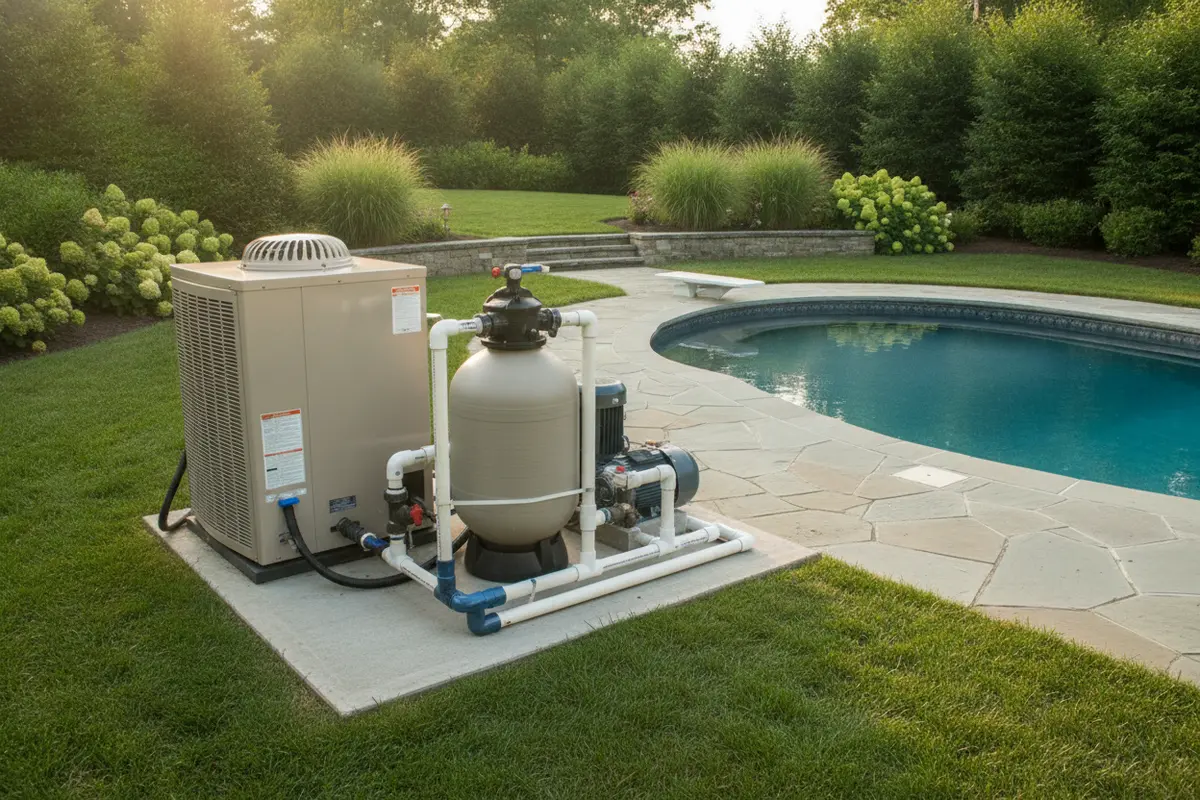
The equipment pad is only one part of the site review. The location must support safe access, required clearances, service access, and the connections specified by the manufacturer. Ventilation requirements may apply to some equipment. Moving a unit farther from existing utilities can add work, and existing plumbing may need changes to accommodate the selected system. These are reasons to review the actual equipment area instead of estimating the project from the pool’s dimensions alone.
Before choosing a location, walk through the site and ask about the following details:
- Can technicians reach the unit for maintenance and repair without moving other equipment or disrupting the finished pool area?
- Does the proposed location satisfy the selected model’s clearance, airflow, and ventilation requirements?
- Where will condensate or another discharge go, if the selected equipment produces it?
- Could equipment sound or airflow affect nearby windows, seating areas, or property lines?
- Can the electrical panel, gas service, and pool plumbing support the proposed installation?
- Will the selected location preserve access to pumps, filters, valves, and other equipment?
- Is there a clear route for delivery and future service, including around gates, steps, and landscaping?
For an existing pool, document the current heater, plumbing, controls, and equipment-pad layout. Clear photos and model information help make a first discussion more specific. For a new pool, coordinate heater selection with the overall equipment plan rather than treating it as a later add-on. Gappsi’s Long Island swimming pool information can help start a discussion about the broader pool project. A site review should still confirm the details for your property.
Think through the finished surroundings as well as the unit itself. A heater should not block routine access to pool equipment, paths, or planned seating. If a patio is part of the project, consider how the equipment route and service space relate to the layout; Gappsi also shares information about pool patio planning and patio projects. These links offer context for planning, but they do not establish a particular heater’s requirements.
How can you estimate ongoing operating needs?
The purchase and installation figure is not the whole cost of ownership. Energy use varies with system type, weather, pool size, setpoint, operating hours, and heat loss. Ask for an explanation of the assumptions behind any operating estimate instead of treating a single number as guaranteed. If the estimate relies on a certain utility rate, make sure that rate and the expected operating period are stated.
A pool cover can reduce heat loss when used as recommended, while wind exposure and evaporation can increase demand. The amount of benefit depends on the pool, the cover, weather, and how consistently it is used. Do not assume a cover eliminates the need for heating energy. Instead, discuss heating and heat retention together. Gappsi’s information about pool safety covers and automatic pool covers can help you prepare questions about cover options and pool use.
Use a simple worksheet to compare projected operation:
- Record the pool basics. Note dimensions or estimated volume, current equipment, and any known issues.
- Define the goal. Write the water temperature you want and the dates or occasions when you expect to swim.
- Describe the routine. Estimate how often the heater may run and whether you want the water maintained between swims or warmed for planned use.
- Include heat retention. State whether there is a cover and how consistently you expect to use it. Note unusual wind exposure or shade if relevant.
- Identify the energy assumptions. Ask which utility rates, operating conditions, and schedule underpin the projection.
- Separate projections from commitments. Ask what is estimated, what depends on weather or usage, and what the proposal actually guarantees.
This worksheet is useful when estimates seem far apart. One proposal may assume a longer season, a higher setpoint, or more hours of operation than another. The differences may explain the gap without either proposal being inherently wrong. Ask each provider to revise or explain its estimate using the same operating assumptions before you choose.
What should a pool heater proposal include?
A useful proposal makes it possible to compare scope, not just the equipment brand. Ask for the model and capacity, a description of the installation, and any site work that could affect the final amount. Confirm who is responsible for utility connections and any required approvals. If an item cannot be confirmed until a site check, have the proposal identify that uncertainty and explain how it will be resolved.
- Manufacturer, model, capacity, and applicable warranty information.
- Assumptions about pool size, use, target temperature, and swimming season.
- Included plumbing, electrical, gas, controls, delivery, setup, and startup work.
- Items excluded from the proposal and any allowances that may change.
- Equipment location, access needs, clearances, and site requirements.
- Any approvals or inspections the homeowner should verify for the property.
- Expected project schedule, dependencies, and how unexpected site work will be handled.
- Operating assumptions, maintenance instructions, and whom to contact with service questions.
Look for a clear description of the handoff at startup. Ask whether the proposal includes an explanation of the controls, recommended operating settings, and the owner’s routine responsibilities. A homeowner who understands the controls can more readily follow the intended schedule and raise questions if the system does not behave as expected. The proposal should also make clear where manufacturer instructions take precedence for clearances, operation, and maintenance.
When reviewing pool project work, coordination matters: heater placement may affect access to other equipment and the layout of the surrounding patio. Gappsi also provides information about pool house projects and pool remodeling. Use these pages as context when considering the wider backyard, while keeping the heater decision grounded in the specific model and site.
How can you compare pool heater cost proposals?
When estimates arrive, make a side-by-side comparison using the same questions for each. Do not reduce the decision to the first number on the page. Record the total proposed scope, major exclusions, equipment model, utility work, and any assumptions that could change the amount. If a proposal is less detailed than another, request the missing information before treating the totals as comparable.
A practical comparison can follow these steps:
- Match the goal. Check that each proposal addresses the same pool, target temperature, expected swimming period, and use pattern.
- Compare the equipment. Record type, model, stated capacity, and any model-specific conditions that affect performance.
- Map the connections. Identify whether gas, electrical, plumbing, controls, and related changes are included in each scope.
- Check site work. Compare location assumptions, access, clearances, drainage, and any work needed to prepare the equipment area.
- Review exclusions and allowances. Ask how unresolved utility or site conditions could affect the final project amount.
- Compare operation assumptions. Make sure projected energy needs use a similar schedule, setpoint, season, and heat-retention approach.
- Confirm startup and follow-up. Understand what instruction, documentation, and service contact information are provided.
For instance, imagine one proposal includes heater installation but assumes the existing gas or electrical connection is adequate, while a second includes a defined utility connection scope. The first figure may be lower, but the scope is not yet equivalent. Ask what inspection or verification will establish utility capacity and what happens if changes are needed. The same logic applies if one proposal includes controls or startup and the other lists them separately.
Another common comparison issue is the operating target. A proposal built around occasional heating is not directly comparable to one that assumes frequent temperature maintenance. Before weighing the options, ask each provider to state its assumptions in plain language. This small step gives you a better basis for discussing tradeoffs without expecting a single number to fit every household.
For general background on energy use and efficiency, consult the U.S. Department of Energy. The agency’s website is a starting point for general energy information; it does not determine the right heater, utility requirements, or project cost for a particular pool. Confirm model performance and site requirements with the product documentation and a project-specific assessment.
Gappsi’s pool resources also include information on pool pumps and saltwater pools. They can help you identify related equipment questions to raise during planning. A heater selection should be checked against the complete pool system, not assumed compatible based only on a general description.
Contact Gappsi through our contact page to discuss your pool heating plans
How should Long Island homeowners plan a pool heater project?
Start by identifying the problem you want to solve. Is the water too cool at the start or end of the season? Do you want more predictable temperatures during regular use? Are you replacing an older heater? The answer helps shape the questions to ask and the information to collect. A replacement discussion may focus on the existing equipment and connections, while a new pool plan can coordinate heating with the full equipment layout.
Next, gather practical information before requesting a conversation. Make a note of pool dimensions, current equipment details, utility access, typical swimming dates, and your target temperature. Photograph the heater, equipment pad, and nearby utility connections if accessible and safe to do so. Note whether the pool has a cover and whether wind exposure, shade, or limited service access is a concern. These details make it easier to identify what needs to be checked on site.
Use a short list of questions when you review recommendations:
- What pool size and use schedule did you assume?
- Which equipment model and capacity are being proposed, and why is it a fit for this goal?
- What utility work, plumbing changes, controls, and startup are included?
- What site conditions have not yet been verified?
- What assumptions were used to discuss operating needs?
- How should a pool cover and the heater’s schedule work together?
- What clearances, maintenance access, and owner instructions apply to this model?
Gappsi serves Nassau and Suffolk County homeowners with pool and outdoor living projects. Bring the pool details, photos, and preferred swimming schedule to a project conversation so the options can be considered against your property and expectations. Use related resources as prompts for questions, not as a substitute for checking the specific installation.
Frequently Asked Questions
Is a gas heater or heat pump cheaper?
There is no single answer for every pool. Purchase and installation requirements, local utility costs, weather, pool use, and how quickly you want to heat the water all affect the comparison. Review complete proposals and ask for the operating assumptions rather than judging by the equipment price alone.
Does a larger pool always need a more expensive heater?
Pool volume is an important sizing factor, but it is not the only one. Target temperature, use schedule, utility access, site work, and heat loss also affect the selected capacity and total project scope. Ask how the proposed model was sized for your pool.
Can a pool heater be added to an existing pool?
A heater may be incorporated into an existing pool system, but feasibility depends on plumbing, electrical or gas service, equipment space, and the selected model’s requirements. A site review can identify what connections or layout changes are needed.
Does a pool cover reduce heating expense?
A properly selected and consistently used cover can reduce heat loss, but the effect depends on pool conditions, weather, and usage. Ask how the cover and heater fit into the proposed operating plan, and follow the cover and heater manufacturers’ instructions.
What should I bring to a pool heater consultation?
Bring pool dimensions or an estimated volume, the existing heater’s model information if applicable, photos of the equipment area, your typical swimming dates, and the temperature you hope to maintain. Mention utility access, cover use, and any operating problems you want addressed.
Plan the next step
When you are ready to review the options for your property, contact Gappsi through our contact page to discuss your pool heating project.
Bring your pool details, equipment information, and preferred swimming schedule so the conversation can focus on a heater plan that fits your property and expectations.