



Pool maintenance cost is not one fixed number. For a Long Island homeowner, an annual budget depends on the pool’s size and equipment, how often it is used, its water and surface condition, and which tasks are handled at home or by a service provider. A useful estimate separates routine care from seasonal work and repairs, so you can compare plans without overlooking occasional needs.
Contact Gappsi through our contact page
What does pool maintenance cost include?
Start by dividing upkeep into water care, cleaning, equipment attention, and seasonal services. A service plan may include some tasks but exclude others. The pool’s surface, circulation system, sanitation method, and local operating season all affect what needs to be done. Repairs and restoration should be considered separately from recurring visits.
| Budget area | Typical work | What may change the scope |
|---|---|---|
| Water care | Testing, balancing, and adding appropriate treatment products | Pool volume, weather, use, and water conditions |
| Cleaning | Skimming, brushing, vacuuming, and clearing baskets | Debris, trees, pool shape, and frequency |
| Equipment | Checking pump, filter, heater, and controls | Equipment age, condition, run time, and symptoms |
| Seasonal work | Opening, closing, and protecting equipment | Pool configuration, cover, accessories, and service scope |
| Repairs | Diagnosing leaks, worn parts, or surface concerns | Cause, parts, access, and extent of the issue |
This is a planning framework, not a price list. Ask whether a quote includes chemicals, testing, visits, and equipment checks, and which items are extra. A monthly figure can be misleading if opening, closing, or repairs are excluded. To compare proposals fairly, line up the frequency and included work before comparing totals. Read about pool remodeling separately when the surface or structure needs a larger project rather than routine upkeep.
Which factors shape pool maintenance cost most?
Pool size, shape, and features
A larger pool generally contains more water and has more surface to clean. Steps, benches, attached spas, water features, and unusual shapes can add cleaning or circulation considerations. Record the dimensions and features when asking for a quote. A provider can then evaluate the actual setup instead of estimating from a generic description. Include any cover and describe how it is operated, since cover handling may be outside a standard visit.
Water conditions and use
Rain, heat, windblown debris, and frequent swimming can change water conditions and cleaning needs. A pool used often may need more attention than one that is covered and used occasionally. Keep a simple record of test results, treatment, and unusual changes. Patterns over several weeks are more useful than reacting to one isolated reading. Heavy use after a gathering, for example, is worth noting along with any unusual cloudiness or debris.
Equipment type and condition
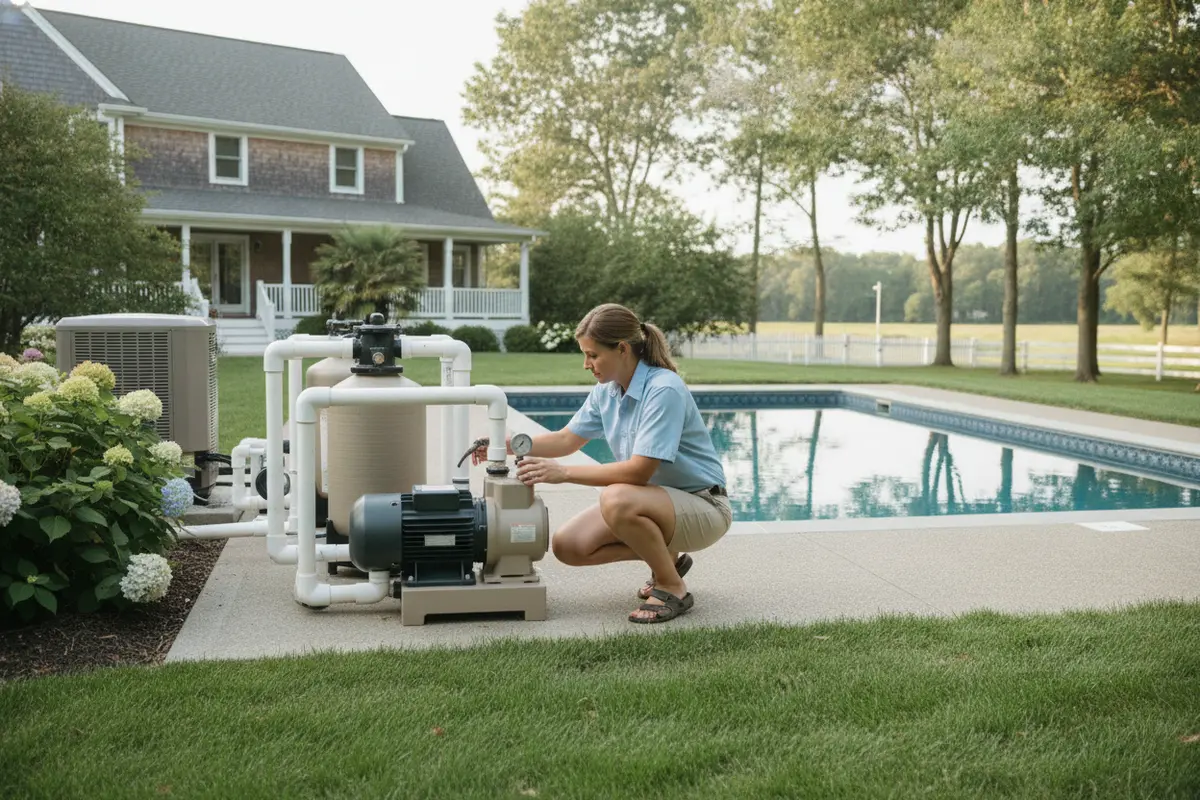
The pump, filter, heater, sanitation system, and controls have different operating and upkeep needs. Older or poorly functioning equipment may require diagnosis or repair, which is distinct from routine service. If circulation changes, an alert persists, or an unfamiliar sound begins, note when it happened and what else changed. Avoid opening electrical equipment or attempting repairs beyond your training. Save equipment manuals and service records so a provider can identify the setup more quickly.
Surface and surroundings
Leaves, pollen, grass clippings, and soil can increase cleaning work. Staining, roughness, cracks, or loose coping should be documented and assessed rather than treated as ordinary weekly cleaning. Nearby trees or a recent landscape change can also affect how much debris reaches the water. For a broader poolside project, consider pool patio planning as a distinct scope from water-care expenses.
How can you build a realistic annual pool budget?
Use a three-part worksheet: recurring tasks, seasonal services, and a separate allowance for repairs. You do not need to assume a major repair every year, but it is wise not to treat a repair as though it were included in a routine monthly fee. Gather details before requesting estimates, then update the worksheet as actual invoices and observations come in.
- Write down pool details. Record approximate dimensions, surface type, sanitation system, equipment models, cover, and attached features.
- List recurring work. Include testing, chemical care, brushing, vacuuming, basket cleaning, and filter maintenance. Note who currently performs each task.
- Mark seasonal services. Ask what opening and closing involve for this pool and which lines, accessories, or equipment require attention.
- Review equipment history. Note service dates, recurring alerts, leaks, unusual noises, and changes in circulation or clarity.
- Compare written scopes. Check visit frequency, supplies, exclusions, seasonal work, and how extra work is approved.
For a Long Island property, the timing and duration of the swimming season matter. Prepare for opening and closing rather than assuming a uniform year-round schedule. If you are planning improvements at the same time, review patio work separately from water-care expenses. Poolside paving and the pool itself may have different maintenance schedules and contractors.
Turn the worksheet into a useful estimate
Make one row for each task and record the frequency, who is responsible, and whether the task is included in a service proposal. Keep recurring labor and products separate from seasonal visits and unplanned repairs. If a quote lists one monthly amount, ask for the work behind that amount and whether service continues through the entire year or only during the swimming season.
For example, suppose you handle skimming and basket checks but need help with testing and seasonal preparation. Write those responsibilities down rather than comparing a full-service plan with a narrower visit plan as though they were identical. If a repair appears during the season, record it separately and note whether it was an urgent correction or an improvement you chose to schedule later. This distinction makes next year’s budget more useful.
Should you maintain the pool yourself or hire a service?
Homeowners may handle basic observations and routine cleaning when they have time, understand their equipment, and follow its instructions. A service provider can offer scheduled testing and maintenance, but the scope varies. Neither approach is automatically less expensive. Compare time, supplies, knowledge, visit frequency, and what happens when an issue needs diagnosis.
| Approach | May fit when | Questions to ask |
|---|---|---|
| Homeowner-led | You can monitor and clean consistently | Can you follow equipment guidance and safe product practices? |
| Scheduled service | You want regular visits with defined responsibilities | Which tests, tasks, supplies, and seasonal visits are included? |
| Combination | You prefer simple tasks at home and selected work outsourced | Who tracks results, equipment concerns, and follow-up? |
For example, an owner might handle skimming and keeping a log, while arranging help for seasonal preparation or a persistent equipment concern. That division works only if responsibilities are clear. Agree who checks water, who supplies treatment products, and who contacts whom when a reading or equipment condition falls outside the expected range. A written division of tasks can prevent missed checks and duplicate work.
Regardless of approach, store and handle treatment products according to their labels, and never mix chemicals. Follow the pool and equipment manufacturers’ instructions. For a suspected electrical, structural, or persistent leakage concern, arrange a qualified evaluation rather than guessing at a fix. The U.S. Environmental Protection Agency provides information about environmental and product safety; always follow the specific label directions for any product you use. When comparing sanitation equipment, learn about saltwater pool systems and ask what routine checks apply to the selected system.
Contact Gappsi through our contact page to discuss your pool project
What should you ask before accepting a maintenance quote?
Request a written description of the work and the process for exceptions. Ask whether the fee covers water testing, treatment products, cleaning, and filter care, and whether visits follow a fixed schedule or respond to conditions. Confirm whether opening and closing are separate, what equipment checks cover, and how repairs are priced and approved.
- Which tasks are included at every visit?
- Are treatment products and replacement parts included or billed separately?
- How are visits handled after heavy rain, storms, or unusually frequent use?
- Does the plan include opening, closing, and cover handling?
- How are equipment concerns documented and communicated?
- What work needs a separate estimate and customer approval?
- Who is responsible for access, gates, and securing the pool area after a visit?
Keep comparable quotes side by side. A clear scope is more useful than one headline price because it shows whether you are comparing the same responsibilities. Decisions about pool safety covers and automatic pool covers may involve separate equipment and handling choices. Confirm exactly what seasonal cover work is included rather than assuming it is part of standard maintenance.
When a proposal is vague, ask for a sample visit description. It should say what is checked, what is cleaned, how water results are shared, and what triggers a recommendation for additional work. Also ask whether a missed visit is rescheduled and how weather disruptions are handled. These details help you compare the service experience as well as the list of tasks. A proposal should make clear how you authorize work beyond the routine scope.
How do seasonal tasks affect pool maintenance cost?
Opening a pool involves more than removing its cover. Depending on the setup, the work may include reconnecting equipment, restoring circulation, checking water, and addressing winter protection. Closing may involve protecting lines and equipment, setting the pool up for colder weather, and securing the cover. The specific scope should reflect the pool’s configuration and manufacturer instructions.
Before opening or closing, take photos and note concerns from the prior season. Record the cover condition, visible fittings, pump area, and surrounding paving. This helps distinguish a new issue from an existing one and gives a service provider useful context. Keep a copy of any written opening or closing checklist so you can compare the work from season to season.
If the pool is part of a broader outdoor project, backyard improvements, hardscaping, and surface sealing are separate scopes to plan. For example, repairing a patio edge does not replace water testing, and a maintenance visit does not necessarily include paving repairs. Listing each task under the right budget category prevents double-counting or leaving gaps.

What records help you manage the annual budget?
A simple maintenance log can reduce uncertainty. Record the date, test results, treatment added, cleaning performed, and equipment observations. Save service invoices and note the model and age of key equipment. If a problem recurs, this history gives a technician useful context and may help distinguish a one-time event from a developing pattern.
Track changes around the pool, too. New trees, nearby construction dust, or altered drainage may increase debris or affect the surrounding area. Note when those changes occur and whether cleaning frequency or water conditions seem different afterward. If the pool area needs a larger refresh, pool house planning can be considered apart from weekly water care.
How can a sample month test your budget?
Choose a representative month during the swimming season and write down every pool-related task and expense. Separate the regular visit or homeowner supplies from one-time purchases and repairs. Then note what changed: heavy rain, a gathering, a longer period of hot weather, or a new equipment symptom. This exercise does not predict every future cost, but it reveals which parts of the budget are stable and which depend on conditions.
For instance, if the month includes routine cleaning, a replacement basket, and extra treatment after a storm, do not combine all three under a single generic maintenance label. Keep recurring care in one column, consumable supplies in another, and equipment or repair items in a third. At year-end, review several months together. Seasonal expenses can be uneven, so a single quiet month is not a sound basis for the annual estimate.
Use that record when comparing service options. If most of your effort goes to cleaning but equipment checks are inconsistent, ask what a plan would change in those areas. If a proposal already includes tasks you perform well, ask whether responsibilities can be divided. The goal is not to maximize visits or minimize them automatically; it is to define the work that protects the pool’s operation and fits your household’s capacity.
Explore pool restoration considerations when records point to a concern beyond routine service, and distinguish that project from recurring care.
Frequently Asked Questions
Is pool maintenance cost the same every month?
No. Seasonal opening and closing, weather, use, and repairs can make expenses uneven. Build the annual plan from recurring care plus separate seasonal and repair categories.
What should a pool maintenance plan include?
It should state visit frequency, cleaning and testing tasks, whether treatment products are included, equipment checks, seasonal services, and exclusions. Ask how additional work is approved.
Can I reduce expenses by doing some maintenance myself?
Possibly, if you have the time and follow equipment instructions and safe product-handling practices. Compare your supplies, time, and knowledge needs with the written service scope.
Are repairs part of routine pool maintenance?
Not necessarily. Routine service and repair work are often separate. Ask for the issue, recommended scope, and an estimate before additional work proceeds.
Plan a clear next step
Document your pool’s equipment, recurring tasks, seasonal needs, and current concerns, then compare written scopes on equal terms. Posted by Gappsi Group.
Contact Gappsi through our contact page to discuss your pool project
A clear record and a defined scope make it easier to plan pool care from season to season.