


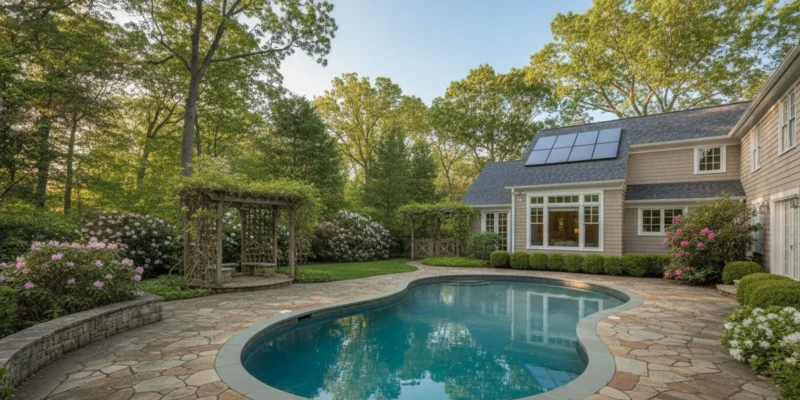
Solar pool heating can make swimming more comfortable by using collected sunlight to warm circulating pool water. For Long Island homeowners, a useful plan starts with more than choosing panels: consider the pool season you want, where collectors can fit, how water will reach them, and whether a cover will help retain heat. This guide explains the decisions to work through before discussing a solar pool heating project.
Contact Gappsi through our contact page to discuss your pool project
Posted by Gappsi Group
How does solar pool heating work?
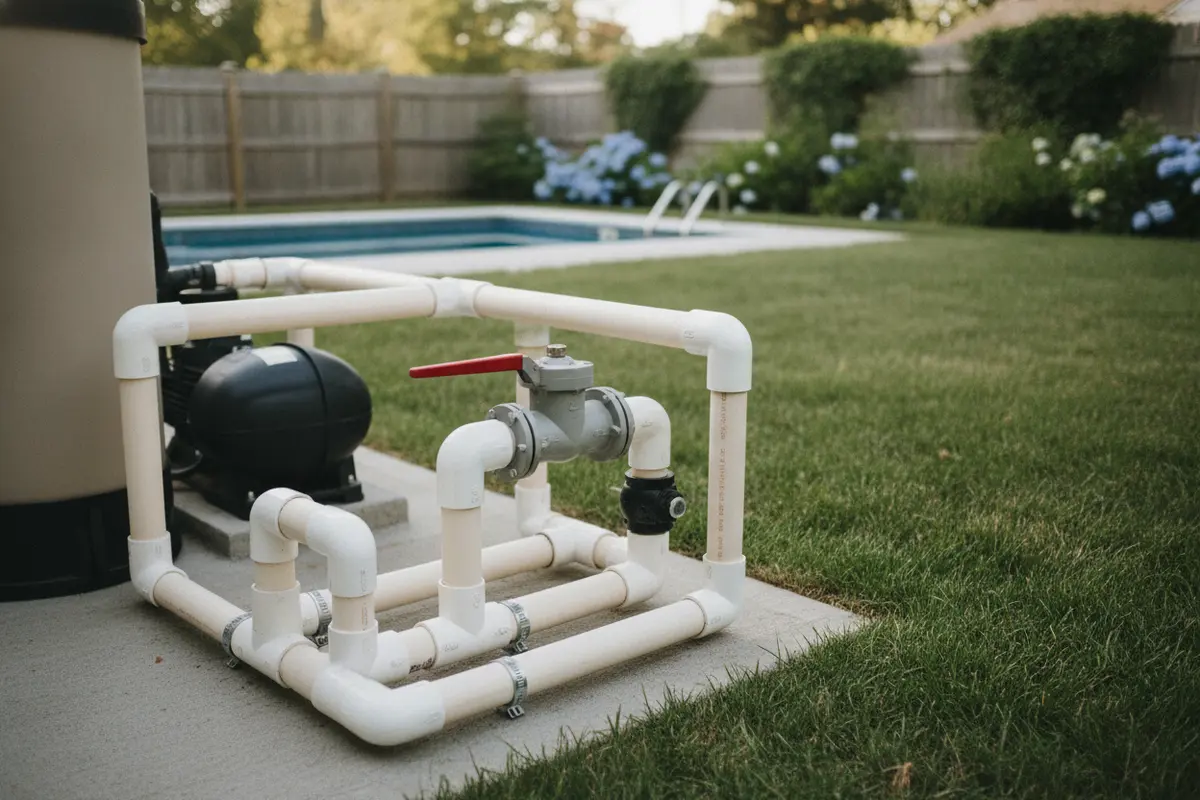
A solar pool heating system generally uses the pool’s circulation system to move water through a solar collector. Sunlight warms the collector, and the warmed water returns to the pool. A control or diverter valve can direct water through the collectors when conditions suit heating, then bypass them when they are not needed. Exact equipment and plumbing arrangements depend on the pool and the chosen system.
This is different from using photovoltaic panels to generate electricity for a separate pool heater. Solar thermal collectors transfer heat to the pool water; photovoltaic panels produce electricity. When comparing proposals, ask which approach is being described, what equipment is included, and how it connects to your existing pool system. The U.S. Department of Energy is a starting point for general information about energy technologies; site-specific design still requires an assessment of the property and pool.
What should Long Island homeowners consider before choosing solar pool heating?
First define the goal. Are you hoping to make spring and fall swimming more comfortable, keep water warmer through the main summer season, or reduce reliance on another heating method? Those goals involve different expectations. Solar collectors depend on available sunlight and operating conditions, so they do not provide the same controllable heat output as a fuel-fired heater or heat pump in every situation.
Make a note of how the pool is used: typical swim months, preferred water temperature, time of day, and whether the pool is covered when no one is swimming. Consider whether the project is part of a larger renovation. Changes to a pool remodeling plan or a new pool patio may affect equipment access, pipe routing, and the order of construction. A heating decision is easier to evaluate when the whole pool area is considered together.
Also identify practical limits. A roof or ground area may look suitable from the yard but still need review for available space, shading, structure, access, and plumbing distance. A qualified project assessment can determine what is feasible rather than assuming that every sunny surface is an appropriate collector location.
Contact Gappsi through our contact page to discuss your pool heating goals
Where can solar collectors go?
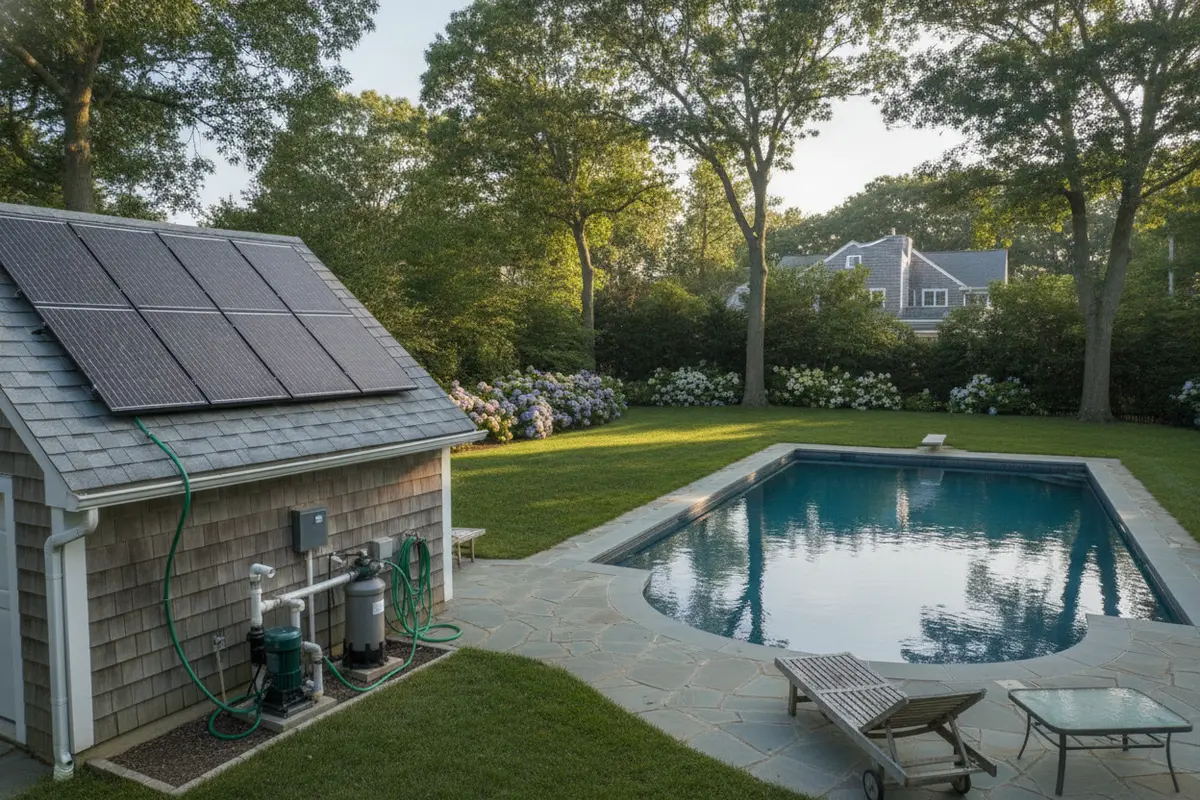
Collectors are commonly considered for a roof or a suitable ground-mounted area. The best location is not simply the largest open surface. The installer needs to assess sun exposure during the part of the day and season when the pool is in use, shade from trees or nearby structures, roof or ground conditions, and the route between the collector and pool equipment.
- Sun exposure: Observe shadows at different times, not just during one midday visit. Trees can leaf out and create seasonal shade.
- Usable area: Compare the collector footprint with vents, skylights, roof edges, access paths, and other equipment or planned improvements.
- Structure and access: Have the proposed mounting area and maintenance access evaluated as part of the project. Do not assume a roof is suitable based only on appearance.
- Pipe route: Discuss the distance and path from the pool equipment to the collectors, including penetrations and how the system will be serviced.
- Appearance: Consider how the collectors and visible plumbing will look from the house and yard, and whether a ground location would interfere with landscaping or circulation.
For a ground-mounted arrangement, ask how the installation will preserve usable yard space and keep the collector accessible. For a roof arrangement, request a clear explanation of mounting, pipe routing, and any coordination needed with other home work. These details help distinguish a practical design from a panel count on paper.
How do pool covers affect a solar heating plan?
A cover is a separate part of the heat-management plan. It helps limit heat loss when the pool is not being used, though the result depends on the cover, weather, and how consistently it is used. Solar collectors add heat when conditions allow; a cover helps retain heat already in the water. They serve different roles, so compare them as complementary choices rather than substitutes.
Review how the cover will work with the pool’s shape and daily routine. An automatic pool cover has different operating considerations from a manually handled cover. A pool safety cover is designed around a different purpose and should not be treated as an interchangeable heating accessory. Ask which cover is appropriate for your pool, how it will be used, and how it affects access and operation of the heating system.
When estimating the value of added heat, be realistic about uncovered periods. If the pool is left open overnight or during cool, windy weather, heat can be lost even after a sunny day. A practical plan considers collector operation and the household’s cover habits together.
How does solar pool heating compare with other options?
Solar thermal collectors, heat pumps, and fuel-fired heaters approach the heating task differently. The right comparison depends on desired control, site conditions, existing equipment, energy availability, and how often the pool is used. The table is a discussion guide, not a guarantee of performance or operating cost.
| Heating approach | How it supplies heat | Key planning question | Considerations |
|---|---|---|---|
| Solar thermal collectors | Sunlight warms pool water circulated through collectors. | Is there a suitable, well-exposed collector location and practical pipe route? | Output depends on sunlight and operating conditions; retaining heat with a cover matters. |
| Heat pump | Uses electricity to move heat from surrounding air to pool water. | Does the available electrical service and outdoor equipment location fit the project? | Performance varies with air conditions and equipment; ask about sound, clearances, and operating needs. |
| Fuel-fired heater | Burns fuel to heat water as it passes through the heater. | Is the fuel supply and venting arrangement suitable? | Can offer responsive heating, but fuel use and installation requirements need review. |
Some pools use a combination of equipment, with one source supporting another. Do not assume a solar system will replace existing equipment or deliver a specific temperature by a fixed date. Ask for assumptions about collector placement, weather, pool size and exposure, cover use, and the intended swim period. Have the contractor explain what the proposed equipment can and cannot do for your specific conditions.
How can you set useful goals for solar pool heating?
Before comparing equipment, describe what a successful result means in everyday terms. A household that swims mainly on warm weekend afternoons may have a different goal from one that wants regular morning use or a longer shoulder season. This distinction helps a contractor discuss likely operating patterns rather than promising a single outcome based on a product label.
Write down a few weeks of observations if the pool is already operating. Note approximate water temperature when you swim, the time of day, whether the pool was covered, and general weather conditions. A simple record will not predict future performance, but it gives the project conversation real context. If the pool is new, describe the months and times you expect to use it, and ask what assumptions the design would make.
Ask how collector area is determined for your pool and site. The answer should account for pool characteristics, collector exposure, available surface, and the heating objective. Do not compare two proposals only by their number of panels. Panel dimensions, collector type, layout, plumbing, controls, and site exposure all matter. Ask each provider to state what is included and what conditions could limit the result.
It also helps to identify trade-offs. A larger collector layout may need more surface and additional plumbing. A location with better sun may be less convenient visually or harder to access. A compact layout may fit neatly but need especially careful expectation-setting. Ask the installer to explain the reasoning behind the proposed location and configuration, and to flag any site limitations before work starts.
Finally, decide how you want to use any existing heater. Some homeowners may want solar as a supplemental source, while others may be evaluating a different heating arrangement. The proposal should clarify whether existing equipment remains, when it may operate, and who sets the controls. This avoids confusion about the role of each component after installation.
What should the project plan cover?
A useful proposal connects the heating goal to the pool’s actual layout and equipment. It should identify the collector location, how the pool circulation system will connect, where controls and valves will be placed, and what work is included. Ask how the system will operate with the pool pump and what instructions will be provided for seasonal use.
- Document the pool: Share the pool dimensions, current equipment details if available, typical use, and any known circulation or heating concerns.
- Review the site: Walk through roof or yard placement, shade, access, pipe route, and any conflicts with landscaping or other improvements.
- Clarify the equipment: Ask for the collector and control approach, how water is diverted, and whether any existing equipment remains part of the system.
- Understand operating assumptions: Discuss when the system is expected to run, how cover use factors into the plan, and what weather limitations to expect.
- Confirm scope and care: Ask what installation work, startup, homeowner instructions, and ongoing checks are included, and who handles any required coordination.
Pool water circulation is central to the system. If you are reviewing equipment at the same time, look at how the solar proposal fits the existing pool pump setup and ask whether any changes are proposed. A system should be designed around compatible flow and controls, not attached as an isolated add-on.
Request a conversation about planning solar heating for your pool
What maintenance and seasonal questions should you ask?
Maintenance depends on the collector type, plumbing, controls, climate, and manufacturer instructions. Before work begins, ask what routine checks are recommended and how to identify a valve or control issue. Ask how the system should be handled when the pool is closed for winter, and whether any special drain-down or winterization steps apply to the installed configuration. Do not rely on a generic instruction if the equipment manual calls for a different procedure.
Also ask who will explain system startup in spring, how to tell whether water is being routed through the collectors, and what to do if the pool is not warming as expected. Keep equipment and installation documentation with the rest of the pool records. If a broader pool project includes water features or a different shallow area, clarify how those elements connect to pool circulation; a shallow pool area may affect how you think about comfort and use, but does not change the need for system-specific design.
How does solar heating fit into a larger backyard project?
Heating can be one part of a broader pool plan, but construction sequence matters. If paving, planting, drainage, fencing, or a pool house is also under consideration, identify equipment routes and access early. Coordinating these choices can help avoid placing a pipe where later work may disturb it or putting equipment where it is hard to reach.
For example, changes to a pool house or nearby service area may influence where controls and plumbing are convenient. A saltwater pool system is another equipment detail worth disclosing during planning so the proposal accounts for the actual pool setup. These links offer related project topics, but they are not substitutes for checking the specific system installed at your home.
Consider the appearance and use of the entire yard, too. A collector arrangement should not undermine walking routes, planned seating, or future maintenance access. Discuss the sequence of work and confirm which contractor is responsible for coordinating any structural, electrical, plumbing, or pool equipment elements that apply.
Contact Gappsi through our contact page before planning your installation
Frequently Asked Questions
Can solar pool heating work in Long Island’s climate?
It can be considered for a Long Island pool, but the useful heating period and output depend on sunlight, collector placement, weather, pool conditions, and operating habits. A site review is needed to set realistic expectations for a particular property.
Does solar pool heating require a separate pump?
Some systems use the pool’s circulation equipment to move water through collectors, with controls or valves directing the flow. The arrangement depends on the system design. Ask the installer to explain whether existing equipment is used or modified and what flow requirements apply.
Will solar collectors heat the pool when it is cloudy?
Cloud cover reduces available sunlight, so collector output can be lower than on a sunny day. Ask how the design is expected to operate under local conditions and whether another heating source is part of the plan.
Should I get a pool cover with solar heating?
A cover can help retain heat when the pool is not in use, while collectors add heat when conditions are favorable. Discuss cover options, safe use, and how the selected cover works with the pool’s design and routine.
What information should I have before requesting an estimate?
Bring the pool’s approximate size, current equipment information, preferred swim season, any existing cover details, and photographs of possible collector locations. Note shade patterns and other planned backyard work. These details help make the initial conversation more useful.
Plan a solar pool heating conversation
Contact Gappsi through our contact page to discuss your pool plans
With your goals, pool details, and possible collector locations in hand, you can compare options with clearer expectations and decide what next step fits your Long Island property.