


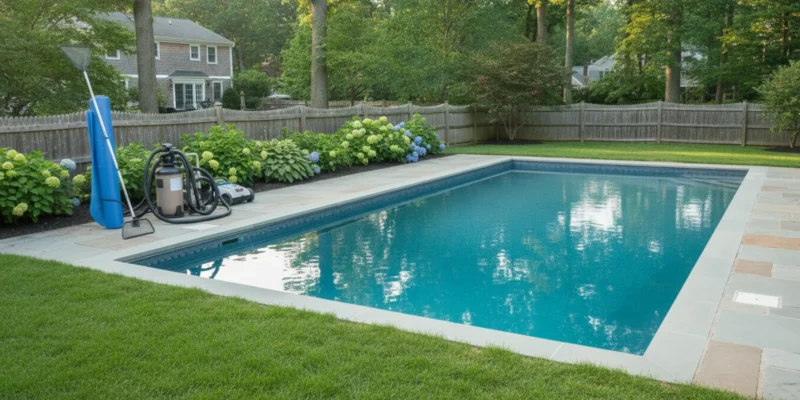
When circulation changes or the pump sounds different, a few careful checks can help narrow down the issue. This pool pump troubleshooting guide covers safe observations, symptoms to record, and situations where testing should stop.
Contact Gappsi through our contact page
What should you check first during pool pump troubleshooting?
Begin with observations that do not require opening equipment or reaching near moving parts. The pump is one part of a circulation system. A symptom may relate to power, water level, a basket, a valve, the filter, or plumbing farther from the motor. Change one thing at a time and note the result.
- Check whether the pool water is at its usual operating level.
- Look for visible debris around the skimmer and pump area. Switch power off before opening any basket lid, and follow the equipment manual.
- Observe accessible valve positions. Do not force a stuck handle or guess at a setting.
- Read the filter pressure gauge if the system has one. Compare it with your own normal reading rather than relying on a universal number.
- Listen for a new hum, rattle, grinding sound, or repeated starting and stopping.
These clues help describe what is happening, but they do not prove the cause. If you are unsure how to isolate power or safely open a component, leave it closed and seek qualified help. A clear description is useful even when you do not attempt a repair.
How can you check power without creating a hazard?
If the pump is completely off, check whether its normal control, timer, or scheduled operating window appears correct. Look at a breaker only if the electrical panel is safely accessible and you know which circuit serves the equipment. If a breaker has tripped, do not repeatedly reset it. A second trip, burning odor, visible damage, or water near electrical equipment is a reason to stop and keep clear.
Keep hands dry and stand on a dry surface when using normal controls. Do not handle wiring, remove electrical covers, or work on equipment in standing water. Pool equipment combines water and electricity, so electrical diagnosis is not a homeowner observation task. If the controls are unclear, do not experiment with switches or bypass a timer or safety device.
When the pump is silent, write down what the control display shows and whether other pool equipment has power. Avoid repeatedly switching the unit on and off to test it. If it hums but does not start, stop the test rather than assuming the motor needs a specific replacement part. A hum can have more than one explanation, and internal diagnosis requires appropriate skills and precautions.
Why might a pump run but move little water?
A running motor does not guarantee normal circulation. Low pool water can allow air into the suction path. Debris in a skimmer basket, pump basket, or filter can restrict flow, while a valve position may be different after maintenance. Compare the water level, visible return flow, and any gauge reading with the system’s usual behavior before adjusting anything.
If the equipment manual explains how to clean a strainer basket, follow its shutdown steps exactly. Turn the system off at its designated control before opening a lid, and release pressure only as the manual directs. Never force a lid or clamp. Before restoring power, confirm that the lid and seal are seated as instructed. If the lid is damaged, the seal is uncertain, or the pump will not prime, stop rather than running it dry.
Pressure readings are most useful as a comparison over time. Record the gauge reading when the system is behaving normally, then note the reading alongside a later change in flow. A gauge that does not move, appears damaged, or gives inconsistent readings should not be treated as a reliable diagnosis. Do not open a filter vessel or loosen a pressure-bearing fitting to investigate a reading.
| Observed symptom | Low-risk observation | When to stop |
|---|---|---|
| Pump does not start | Check normal timer or control setting; note whether the breaker is tripped | Breaker trips again, burning odor, or visible electrical damage |
| Pump runs with weak flow | Compare water level, visible debris, return flow, and gauge reading | Flow remains weak after safe, manual-approved checks |
| Bubbles or loss of prime | Observe water level and whether the symptom repeats | Persistent air entry, leakage, or pump running without water |
| New loud noise | Note when the sound begins and whether flow changes | Grinding, severe vibration, heat, or burning smell |
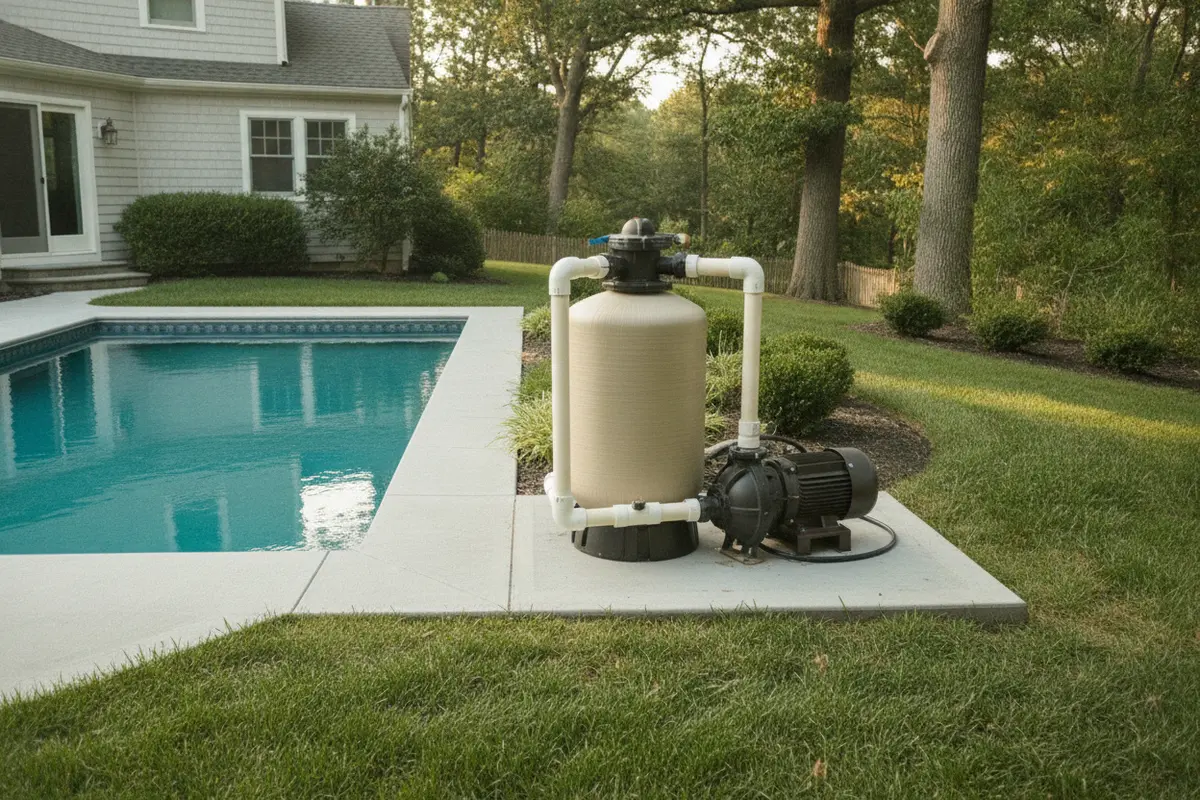
What do bubbles, leaks, or loss of prime tell you?
Air bubbles returning to the pool, a pump that repeatedly loses prime, or moisture near a connection can indicate an issue somewhere along the suction or plumbing path. A visible clue alone cannot identify the source. Avoid aggressively tightening fittings or applying sealant as a guess, because that can damage a connection or hide the underlying problem.
Check whether the water level is low and whether a recently handled lid appears seated as the manual describes. Do not run equipment that is dry, leaking significantly, or making a sudden harsh sound. Take a photo from a safe distance and record when the symptom occurs. Note whether bubbles appear continuously or only at startup, and whether return flow changes at the same time.
For example, a brief change in visible bubbles after a system restarts is different information from persistent bubbles paired with weak return flow. Neither observation by itself identifies a repair. Record the sequence, avoid repeated restart attempts if the pump is losing prime, and share the details with a qualified pool professional.

Which pump noises deserve immediate attention?
A modest sound change can be useful evidence, especially when it begins with reduced flow. Loud grinding or rattling, strong vibration, a burning smell, or a motor that repeatedly starts and stops calls for caution. Switch the system off using its normal control if safe, keep clear of hot or damaged components, and do not open the motor or attempt an internal repair.
Describe the sound in plain terms and note when it occurs: at startup, after several minutes, or continuously. Mention whether the pump is moving water at the same time. This helps distinguish the observed pattern from a guess about a failed bearing, blockage, or other component. Do not run the pump longer just to capture a recording if the sound is severe or the equipment appears unsafe.
For broader pool planning, Gappsi shares pool patio information and pool remodeling resources. Homeowners reviewing the swimming pool work can also see the company’s pool equipment guidance.
How can you prepare for a service conversation?
Useful details can help a pool professional understand the situation. Before contacting someone, make a short note of the following, without opening panels or placing yourself near a hazard:
- Whether the pump is silent, humming, running normally, or cycling.
- When the symptom began and whether it followed cleaning, a storm, or another change.
- Whether water returns to the pool and whether bubbles are visible.
- The gauge reading, if there is a gauge, and how it compares with your usual reading.
- Any visible leak, unusual smell, heat, vibration, or breaker trip.
- What you already checked and what changed afterward.
Keep the equipment model information and manual available if you already have them. Do not remove panels to find a label. A safe photo of the general equipment area can help explain what you see, but do not approach equipment if water is near electrical parts, a leak is spreading, or a component is hot or damaged.
Separate facts from assumptions when you explain the issue. “The pump runs, the return flow is weaker than usual, and bubbles continue after restart” is more useful than “the motor is broken.” Mention the timing and any recent maintenance. Do not promise yourself that a particular part is the cause before testing identifies it.
When should troubleshooting stop?
Stop homeowner checks when the next step involves wiring, motor disassembly, pressure-bearing parts you do not know how to handle, or a breaker that trips again. Stop as well for persistent loss of prime, a pump running dry, a worsening leak, severe vibration, smoke, burning odor, or water near electrical equipment. Keep people away from unsafe equipment and use a normal shutoff only if it can be reached safely.
Routine observation is different from repair. You can note water level, sound, visible flow, control status, and gauge readings. You should not bypass a safety feature, loosen a pressurized fitting, run the pump dry, or substitute a part based only on a symptom. The equipment manual is the boundary for any simple homeowner task; when its instructions are unclear, stop.
Pool circulation and water treatment are connected, so reduced circulation may affect the broader pool system. The CDC’s guidance on healthy swimming explains why maintaining healthy pool water matters. If circulation is uncertain, follow the pool’s care instructions and do not assume that clear-looking water proves the system is operating properly.
How do system checks fit into the bigger picture?
The pump works with plumbing, valves, a filter, and return lines. A symptom near the pump can originate elsewhere, and a change in filter condition can affect how the system behaves. A simple log of normal readings and sounds can be more helpful than repeated adjustments. Keep the log in one place so that a change can be compared with a known baseline.
A practical record might have four columns: date and time, pump status, visible flow or bubbles, and gauge reading. Add a brief note if there was recent cleaning, heavy debris, or a change in water level. For example, if flow is normal in the morning and weak after a basket inspection, record exactly what was opened and whether the lid was reseated according to the manual. Do not repeat the inspection if you are unsure it was safe.
Homeowners considering wider outdoor improvements can browse Gappsi’s hardscaping ideas, backyard projects, and patio examples. For pool-related context, see pool safety cover information, shallow pool area ideas, and pool house information. Other outdoor features include landscaping projects and retaining wall information.
What should a homeowner do next?
Use a short decision sequence: observe the symptom, check only normal controls and visible conditions, compare with the equipment’s usual behavior, and stop if the next step requires repair or an unsafe test. If a simple manual-approved task does not restore normal operation, do not keep repeating it. Share your notes and ask for a professional assessment.
For example, a low water level can be corrected according to the pool’s routine care instructions, followed by observation of whether the pump primes normally. If the pump still loses prime or flow remains weak, that is the point to stop rather than trying several valve settings in sequence. If you see water near electrical components or smell burning, skip the basic checks and keep clear.
When the system is stable but a concern remains, explain what changed, when it began, and what you observed. A clear record helps focus the conversation on diagnosis rather than guesses. Gappsi’s pool pump resources are another place to review related pool information.
Contact Gappsi through our contact page to discuss your pool circulation concern
Frequently Asked Questions
Can I keep running a noisy pool pump?
Not if the sound is severe, newly grinding or rattling, or accompanied by heat, vibration, odor, or reduced flow. Turn it off safely and get qualified guidance.
Why does the pump basket keep collecting air?
Air can enter the system at more than one point. Low water or a lid that is not seated as instructed may contribute, but those signs do not identify the source. If a safe water-level check does not resolve it, stop and seek an assessment.
Should I reset a breaker that trips?
Do not repeatedly reset a breaker that trips. If it trips again after a normal reset, stop and leave electrical diagnosis to a qualified professional.
What should I tell the pool team?
Describe the sound, water flow, timing, visible leak, water level, and gauge reading. Mention recent changes and provide equipment information if readily available.
Plan a safe next step
Careful observations can help distinguish a simple operating check from a problem that needs diagnosis. When pool pump troubleshooting reaches electrical, mechanical, or persistent circulation symptoms, stop testing and contact a pool professional.
Posted by Gappsi Group
Contact Gappsi through our contact page to plan your next step
Prioritize safety and share clear observations so the circulation issue can be evaluated appropriately.