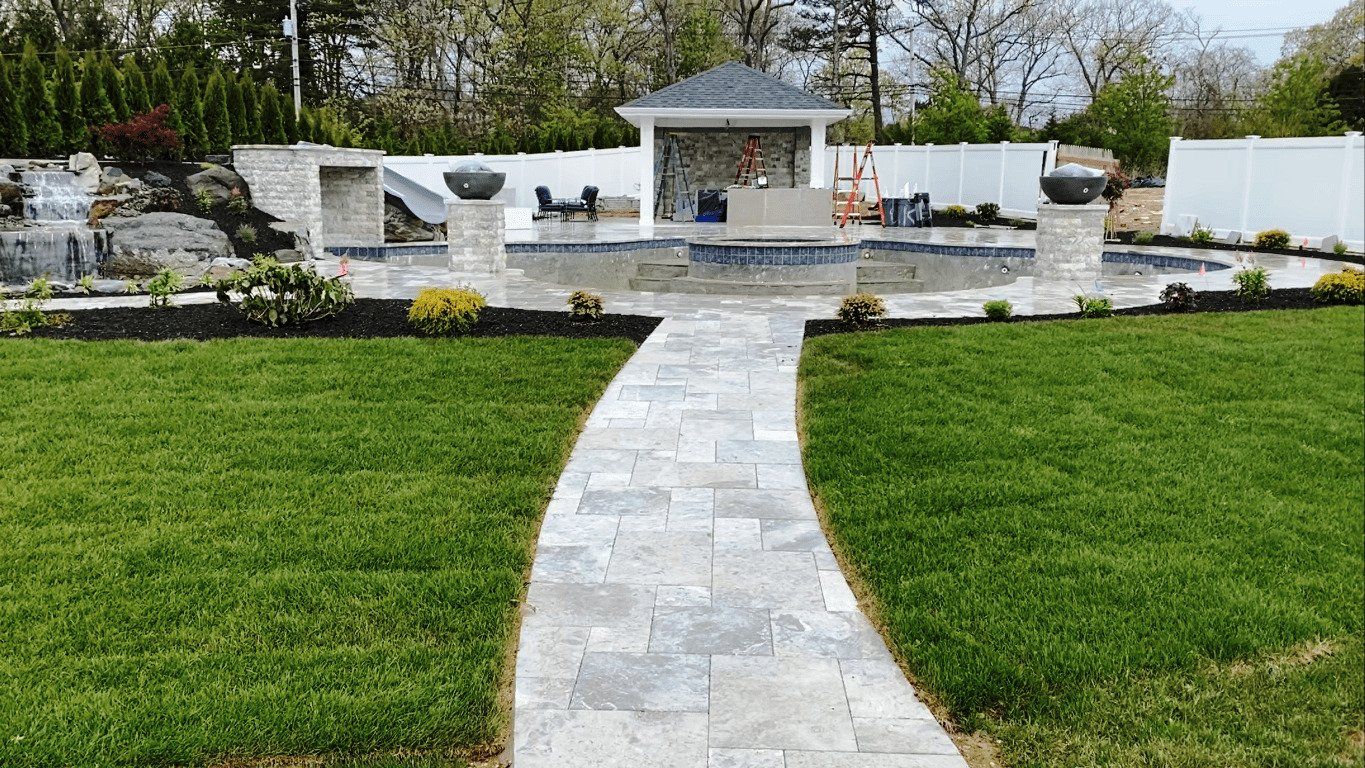
Gunite swimming pool-Porcelain Patio–West Hampton NY

Gunite swimming pool-Porcelain Patio–West Hampton NY16×33 Gunite swimming pool, built in West Hampton, NY by Gappsi. Pool was finished with French Gray Diamond Brite and Gray Porcelain tile trim. The pool also has a safety auto-cover, corner stairs, deep-end bench, and flamed bluestone coping. The patio tiles are a random pattern combination of large-sized Italian grey (Metal) porcelain pavers. Project designed by Giuseppe Abbrancati and installation done by Gappsi. To learn more about Gappsi products, please contact us at 631-543-1177 or visit our web site at www.gappsi.com.

Porcelain Tile Pavers Supplier Installer Company Long Island NY

Share this page:

How to Find the Right Pool Company in Centerport

A swimming pool is often the star of the backyard, but the most breathtaking outdoor spaces are the ones where everything works together in harmony. The pool, the patio, the landscaping, and the shady spots for relaxing all combine to create a true oasis. It’s this complete vision that transforms a simple backyard into a luxurious retreat. If you’re thinking about a pool, we encourage you to think bigger. This guide will show you how a great pool company centerport can help you design a cohesive outdoor living area. We’ll explore how to pair your pool with the perfect stone patio, lush plantings, and functional entertainment structures for a backyard you’ll never want to leave.

Swimming Pool Company Centerport Long Island NYVinyl liner swimming pool with concrete walls built in Centerport NY by Gappsi. This Hampton style setting is on a waterfront property, the swimming pool was built with a safety auto-cover and 18 inches bluestone coping.

Thinking About a Pool in Centerport, NY?

Centerport, with its beautiful waterfront views, is the perfect backdrop for a stunning outdoor living space. If you’re a homeowner here, you’ve probably imagined adding a pool to your property to make the most of those long summer days. A Hampton style pool, known for its timeless elegance and clean lines, is a popular choice that complements the coastal charm of the area. It’s more than just a place to swim; it’s the centerpiece of your backyard oasis. But turning that vision into a reality requires careful planning and the right team. You need a partner who understands the local landscape and has a proven track record of creating beautiful, durable pools.

This is where finding an experienced builder becomes so important. A company with deep roots in Long Island can guide you through the entire process, from initial design to the final touches. At Gappsi, we specialize in creating custom swimming pools that are built to last and tailored to your property’s unique character. For projects in Centerport, we often combine our pool construction with expert masonry work to create a cohesive and luxurious environment. We understand that a pool is a significant investment, and our goal is to deliver a space that you and your family will enjoy for years to come, ensuring every detail reflects quality and craftsmanship.

A Look at a Hampton Style Pool Project

Let’s look at a specific example to see how these elements come together. We recently completed a project on a waterfront property in Centerport that perfectly captures the Hampton style. This vinyl liner swimming pool was constructed with sturdy concrete walls, offering both durability and design flexibility. A key feature of this installation is the safety auto-cover, which provides peace of mind and helps keep the pool clean with the simple turn of a key. To frame the pool, we used 18-inch bluestone coping. This beautiful natural stone not only adds a touch of classic sophistication but also provides a durable, non-slip surface, blending safety and style seamlessly.

Centerport NY Swimming Pool & Masonry Contractor

Choosing the Right Inground Pool for Your Home

Deciding to build a pool is exciting, but the first big choice you’ll make is selecting the type of pool that best fits your backyard, budget, and lifestyle. The three main types of inground pools are vinyl liner, gunite, and fiberglass. Each has its own set of benefits, and understanding them is the first step toward creating your perfect backyard escape. On Long Island, where we experience all four seasons, choosing a durable material that can handle our weather is key. Let’s look at the options so you can make an informed decision for your home.

Vinyl Liner Pools

Vinyl liner pools are a very popular choice, primarily because they offer a great balance of affordability and customization. These pools are constructed with a durable vinyl liner fitted over a structured frame, which can be made from materials like steel or polymer. One of the biggest advantages is the sheer variety of liner patterns and colors available, allowing you to achieve a custom look without the higher price tag of other pool types. The vinyl surface is also smooth to the touch, which is a nice feature for families with young children. While the liner will eventually need to be replaced, modern vinyl liners are incredibly resilient and offer a fantastic value for the initial investment.

Gunite Pools

If you’re looking for ultimate durability and complete design freedom, a gunite pool is an excellent option. Gunite is a mixture of sand, cement, and water that is sprayed onto a rebar framework, allowing for any shape, size, or depth you can imagine. This flexibility means you can create a pool that perfectly complements your landscape, with features like built-in benches, tanning ledges, and custom steps. While gunite pools have a higher upfront cost, they are incredibly strong and built to last. Their robust construction makes them particularly well-suited to withstand Long Island’s freeze-thaw cycles, making them a long-term investment in your property.

Durability and Design Flexibility

The true beauty of a custom-built pool, especially a gunite one, lies in its ability to be both a durable structure and a unique work of art. Building a pool that is engineered to last through harsh Long Island winters is a priority for any reputable builder. The goal is always to do the job right the first time, ensuring the pool’s structure can handle the elements for decades to come. This focus on quality construction doesn’t mean sacrificing design. In fact, the strength of materials like gunite unlocks endless possibilities for creative features that can be integrated directly into the pool’s structure, giving you a truly one-of-a-kind backyard oasis.

Fiberglass Pools

Fiberglass pools offer a compelling middle ground with some unique advantages of their own. These pools are factory-molded into a single large shell that is then transported to your home and lowered into the excavated hole. This process makes for a much faster installation compared to gunite. The surface of a fiberglass pool is a non-porous gel coat, which is smooth, stain-resistant, and less prone to algae growth, often resulting in lower chemical usage. While you are limited to the manufacturer’s available shapes and sizes, modern fiberglass pools come in a wide array of beautiful designs and colors, many with built-in benches, spas, and ledges.

The Pool Building Process: From Concept to Completion

Seeing a new swimming pool come to life in your backyard is a fascinating process. It’s a journey that transforms a patch of grass into the centerpiece of your summer. While it might seem complex, a professional pool company guides you through every stage, from the first sketch to the first time you dip your toes in the water. Understanding the key milestones can help you know what to expect and make the entire experience smoother and more enjoyable. It all starts with a bit of smart planning and a great design.

When to Start Planning Your Pool

If you’re dreaming of swimming in your new pool by summer, the best time to start the planning process is in the fall or winter. This might seem early, but it’s the strategic way to approach a large construction project. This timeframe gives you and your builder ample time to perfect the design, select materials, and navigate the permit application process without feeling rushed. By getting everything in order during the off-season, you can secure your spot on the construction schedule. This ensures that as soon as the ground thaws in the spring, your project can break ground, putting you on the fast track to a full season of poolside fun.

The Initial Design Consultation

The design consultation is where your vision starts to take shape. This is the creative meeting where you sit down with a designer to discuss your ideas, needs, and budget. You’ll talk about how you plan to use the pool: for relaxing, for exercise, for entertaining, or for family fun. This conversation helps determine the ideal size, shape, and features for your lifestyle. A great designer will listen to your dreams and then translate them into a functional and beautiful plan. At Gappsi, our design experts work with you to create a comprehensive vision for your entire backyard, ensuring the new swimming pool integrates perfectly with your home and landscape.

Site Evaluation and Layout

Following the initial design discussion, a crucial next step is a thorough evaluation of your property. A project manager or designer will visit your home to assess the proposed pool location. They will analyze key factors like your yard’s topography, sun exposure throughout the day, drainage patterns, and accessibility for construction equipment. This is also when they will identify the location of underground utilities to ensure a safe and smooth excavation. Based on this hands-on assessment, they can finalize the pool’s placement and layout, making sure it not only looks great but also functions perfectly within the unique conditions of your backyard.

Permits and Timelines

Before any digging can begin, every pool project requires permits from your local town or village. This process is a critical part of ensuring your pool is built to code and meets all safety regulations. A reputable pool company will handle the entire permit application for you, submitting the necessary architectural plans and paperwork. On Long Island, securing permits can typically add two to three weeks to the pre-construction timeline, though this can vary by municipality. While it’s a step that requires patience, it’s a non-negotiable part of the process that protects you and ensures your pool is a safe, compliant addition to your home.

The Construction Phase

Once the permits are approved, the real excitement begins. The construction of a custom inground pool is a carefully orchestrated sequence of events. Generally, from the day excavation starts until your pool is filled with water and ready for swimming, you can expect the process to take about six to eight weeks. This timeline can be influenced by weather, the complexity of the design, and the inspection schedule. The major stages include digging the hole, installing the steel framework and plumbing, applying the gunite or liner, and finally, completing the surrounding patio and landscaping. It’s a transformation that requires expertise at every step.

From Excavation to Your First Swim

Watching the construction unfold is an amazing experience. It starts with the arrival of an excavator, which quickly turns a section of your lawn into the clear shape of your future pool. Soon after, a web of steel rebar creates the skeleton, and a network of plumbing is laid out like veins. The application of gunite is a particularly dramatic day, as the pool’s solid shell is formed in a matter of hours. After that, the finishing touches like tile, coping, and the interior surface are meticulously installed. The final, magical moment is when the water truck arrives, and you watch your beautiful new pool fill up, ready for that long-awaited first swim.

Understanding the Investment: Pool Costs in Suffolk County

A swimming pool is a significant investment in your home and your family’s enjoyment, so it’s important to have a clear understanding of the costs involved. The price of a pool isn’t just the number on the initial contract; it also includes the long-term expenses of operation and maintenance. Being informed about both the upfront installation costs and the ongoing upkeep will help you budget effectively and ensure your pool remains a source of joy, not financial stress. In Suffolk County, costs can vary, but a well-planned budget will account for the entire lifecycle of your pool.

Initial Installation Costs

The upfront cost of building an inground pool is the largest single expense you’ll encounter. In Suffolk County, a typical residential inground pool installation can range from $30,000 to $70,000, but this is just a starting point. The final price tag is influenced by many factors, including the pool’s size, the type of construction (vinyl, gunite, or fiberglass), and the features you choose. Adding elements like a spa, waterfalls, advanced lighting, or an automatic cover will increase the cost. A detailed proposal from your builder should break down all expenses, from excavation to finishing, so you know exactly what you’re paying for.

Long-Term Maintenance and Upkeep

Once your pool is built, it will require regular care to keep it clean, safe, and beautiful. Long-term maintenance costs include electricity for the pump and filter, chemicals to balance the water, and routine cleaning. Many homeowners opt for a professional weekly or bi-weekly service to handle these tasks. You should also budget for occasional repairs or equipment replacement over the years. Thinking about the complete backyard, it’s also wise to properly care for the surrounding patio and stonework. Gappsi offers professional cleaning and sealing services to protect your investment and keep your entire pool area looking its best for years to come.

Seasonal Care and Winterization

On Long Island, one of the most critical aspects of pool ownership is proper seasonal care, especially winterization. Closing a pool correctly for the winter involves lowering the water level, blowing out all the plumbing lines to remove every drop of water, and securely fastening a safety cover. This process is essential to prevent pipes from freezing and bursting during the cold months. An improper closing can lead to catastrophic damage, with potential repairs costing anywhere from $5,000 to $15,000. Investing in a professional closing service is one of the smartest decisions a pool owner can make to protect their investment.

Future Resurfacing and Liner Replacement

All pool surfaces have a lifespan and will eventually need to be renovated. For vinyl liner pools, you can expect to replace the liner approximately every 5 to 10 years, depending on its quality and how well it’s maintained. For gunite pools, the plaster surface will typically need to be resurfaced every 10 to 15 years to keep it looking fresh and feeling smooth. Fiberglass pools are extremely durable, but the gel coat may require minor repairs over its lifetime. Factoring these future big-ticket items into your long-term financial plan will ensure you’re prepared when the time comes for a refresh.

How to Hire the Best Pool Company for Your Project

Choosing the right company to build your pool is the most important decision you will make in this entire process. The right partner will not only deliver a high-quality product but also provide a smooth, transparent, and enjoyable experience from start to finish. A great pool builder acts as your trusted guide, managing all the complexities of design, permits, and construction. Taking the time to vet potential companies thoroughly will give you peace of mind and ensure the final result matches your vision. Here are the key steps to follow when selecting the best pool company for your home.

Check for Licensing and Insurance

Before you even begin discussing designs or prices, your first step should be to verify that any pool company you consider is fully licensed and insured. Ask for proof of their Suffolk County Home Improvement license and their liability and workers’ compensation insurance policies. This is non-negotiable. Licensing ensures the company has met the county’s standards for professionalism and knowledge. Insurance protects you, the homeowner, from any liability in the unfortunate event of an accident or damage to property during construction. A reputable company will readily provide this documentation, as it’s a hallmark of their professionalism and commitment to client protection.

Review Portfolios and Ask for References

You wouldn’t hire an artist without seeing their work, and the same principle applies to pool builders. Spend time reviewing a company’s portfolio of past projects. Look at their online galleries, social media profiles, and even their YouTube channel to get a feel for their style and the quality of their craftsmanship. Does their work align with your vision? If you like what you see, ask for references from recent clients. Speaking directly with past customers is one of the best ways to learn about their experience with the company’s communication, timeliness, and overall process. A builder who is proud of their work will be happy to connect you with satisfied homeowners.

Understand the Contract and Warranties

When you’ve selected a company, you’ll be presented with a contract. It’s essential to read this document carefully before signing. A thorough contract should detail the entire scope of work, including specific materials and equipment to be used. It should also clearly outline a payment schedule, a projected timeline with key milestones, and what happens in the event of delays. Pay close attention to the warranties offered on both the pool structure itself and the equipment, like pumps and filters. A clear, comprehensive contract protects both you and the builder, setting clear expectations and preventing misunderstandings down the road.

The Benefit of In-House Crews

One important factor to consider is how a company staffs its projects. Some companies rely heavily on a rotating cast of subcontractors, while others, like Gappsi, utilize their own dedicated, in-house crews for all aspects of the job. The advantage of an in-house team is significant. It allows for much greater quality control, as every worker is trained to the same high standard. Communication is more streamlined, and scheduling is more reliable, leading to a smoother project with fewer surprises. When the masonry team, the plumbing team, and the landscape team all work for the same company, the result is a more cohesive and efficiently managed project from start to finish.

Creating Your Complete Outdoor Oasis with Gappsi

A swimming pool is a fantastic addition, but it’s truly just the beginning of what your backyard can become. To create a true outdoor oasis, you need to think about the entire space and how all the elements work together. The most stunning backyards are those where the pool, patio, landscaping, and other features are designed as a single, cohesive environment. This is where working with a full-service company like Gappsi makes all the difference. We don’t just build pools; we design and construct complete outdoor living spaces, ensuring every detail contributes to a beautiful, functional, and personalized retreat for you and your family.

Patios and Pool Surrounds

The surface you choose for your pool patio and surround is one of the most impactful design decisions you’ll make. This is the area where you’ll lounge, walk, and entertain, so it needs to be both beautiful and practical. The right material will complement your home’s architecture and provide a safe, non-slip surface. Options range from classic natural stone to modern porcelain pavers and traditional brick. The design of the patio itself is also key, as it defines the usable living space around the pool. Our expert masonry team can help you design a layout that provides ample room for dining, sunbathing, and gathering with friends and family.

Porcelain and Natural Stone Options

Two of the most popular choices for high-end pool patios are porcelain and natural stone, and for good reason. Porcelain pavers offer incredible durability, are stain and fade resistant, and come in a vast array of styles that can mimic wood, concrete, or stone. They are also valued for their non-slip properties, making them a safe choice for wet areas. Natural stone, such as travertine or bluestone, provides a timeless, organic beauty that is unmatched. Each stone has unique color variations and textures, creating a one-of-a-kind surface. Both options provide a luxurious foundation for your poolside living space, and you can explore a wide selection at the Gappsi Store.

Landscaping to Enhance Your Pool Area

Thoughtful landscaping is the finishing touch that brings a pool area to life. The right combination of trees, shrubs, and flowers can provide natural privacy, soften the hard edges of stone and water, and add color and fragrance to the air. When designing a landscape around a pool, it’s important to choose plants that are not only beautiful but also low-mess, so you aren’t constantly cleaning leaves out of the water. Strategic placement of taller trees and hedges can create a secluded feel, while layered flower beds add depth and seasonal interest. Our landscape design experts can create a planting plan that thrives in our Long Island climate and turns your pool into a lush garden paradise.

Shade and Entertainment Structures

To truly maximize the enjoyment of your pool area, you need to plan for comfortable spaces to relax outside of the water. A dedicated shade structure is essential for escaping the intense midday sun, providing a cool spot to read a book, enjoy a meal, or simply watch the kids swim. These structures also serve as architectural focal points and can define different “rooms” within your outdoor living area. Whether it’s a simple pergola for dappled sunlight or a fully-roofed pavilion for an all-weather entertainment hub, adding a vertical element brings a new level of function and sophistication to your backyard design.

Pavilions and Pergolas

While both provide shade, pavilions and pergolas serve slightly different functions. A pergola features a slatted or open roof, creating an area of partial shade that is perfect for training climbing vines. It’s an excellent way to define a lounge area or a walkway without completely blocking the sun. A pavilion, on the other hand, has a solid, waterproof roof, creating a true outdoor room that is protected from both sun and rain. This makes it the ideal structure for housing an outdoor kitchen, a dining set, or a comfortable living area with a fireplace. Gappsi designs and builds custom pavilions and pergolas to perfectly suit your space and needs.

Adding Fun and Recreation

Once you have the perfect pool and patio for relaxing, think about adding elements for more active fun. A backyard can be a hub for recreation and friendly competition for all ages. Beyond swimming, you can incorporate features that encourage play and make your home the go-to destination for friends and family. This could be a simple, lush lawn area for tossing a ball or a more structured space designed for your family’s favorite sports. The goal is to create a versatile environment where memories are made, whether you’re lounging by the water or engaged in a lively game.

Synthetic Turf and Sports Games Courts

For a pristine, low-maintenance green space around your pool, consider installing synthetic turf. It provides a lush, green look year-round with no mowing, watering, or fertilizing, and it’s durable enough to handle heavy foot traffic. For even more recreational opportunities, you can dedicate a part of your yard to a custom sports games court. Imagine having your own putting green, a basketball half-court, or a versatile multi-sport surface for pickleball or volleyball. Gappsi specializes in designing and installing high-performance synthetic turf and sports games courts, adding another layer of fun and activity to your complete outdoor oasis.

Frequently Asked Questions

What’s the best time of year to start planning a new pool? If you want to be swimming by summer, the ideal time to begin planning is the fall or winter before. This gives you plenty of time to work with a designer to perfect your vision, select all your materials, and get the necessary permits approved by your town. Starting early ensures that as soon as the weather is right in the spring, construction can begin without delay.

What are the main differences between vinyl, gunite, and fiberglass pools? Vinyl liner pools are known for being affordable and highly customizable with many liner patterns, though the liner will need replacement every 5 to 10 years. Gunite pools are built with a concrete mixture, offering complete design freedom for any shape or size and incredible durability, making them a long-term investment. Fiberglass pools are pre-molded shells that are installed quickly and have a smooth, low-maintenance surface, but you are limited to the manufacturer’s available designs.

Besides the pool itself, what other costs should I budget for? Your initial investment will include the pool construction, but you should also plan for long-term upkeep. This includes yearly costs for chemicals and electricity, as well as professional opening and closing services, which are critical for preventing winter damage. It’s also smart to set aside funds for future needs, like replacing a vinyl liner or resurfacing a gunite pool, which typically happens every 10 to 15 years.

How can I be sure I’m hiring a reputable pool company? Start by confirming they have a valid Suffolk County Home Improvement license and carry full liability and workers’ compensation insurance. Next, review their portfolio of completed projects to see if their work matches your style and ask for references from recent clients. A trustworthy company will be transparent, provide a detailed contract outlining all costs and warranties, and ideally, use their own in-house crews for better quality control.

How can I make my pool area more than just a place to swim? Think of your pool as the centerpiece of a complete outdoor living space. You can create a true oasis by adding a beautiful patio made from natural stone or porcelain pavers for lounging and dining. Incorporate thoughtful landscaping for privacy and beauty, and add a pergola or pavilion for a dedicated shade structure. For more active fun, you could even include a putting green or a custom sports games court.

Key Takeaways

  • Design the entire oasis, not just the pool: The most impressive backyards are designed cohesively. Consider how your pool will integrate with the patio, landscaping, and shade structures from the start to create a complete and functional outdoor living space.
  • Plan early and vet your builder carefully: To enjoy your pool by summer, begin the design and permit process in the fall or winter. When hiring a company, always verify their license and insurance, review their past work, and ask for references to ensure a quality build and a smooth process.
  • Understand the full investment: Your pool’s cost includes the initial installation plus long-term upkeep. Budget for regular maintenance, seasonal winterization to prevent costly damage, and future expenses like resurfacing or liner replacement to protect your investment for years to come.

Related Articles

Share this page:

Gunite Pools in Oakdale: Pros, Cons & Costs

Gunite Swimming Pool Company Oakdale Long Island NYGunite swimming pool renovated in Oakdale NY by Gappsi with French gray Diamond bright, new porcelain tiles and scogli di mare limestone coping and patio.## What is a Gunite Pool?

If you’re dreaming of a backyard pool that perfectly fits your space and style, you’re probably thinking about gunite. Unlike standard pre-molded pools, a gunite pool is built completely custom, right in your yard. This is what gives you incredible design freedom. For homeowners looking into gunite pools Oakdale, this means you can get the exact shape, size, and features you want—like a waterfall or built-in seating. The process involves spraying a unique concrete mix over a steel grid, creating a solid, ultra-durable shell. It’s the ultimate choice for a one-of-a-kind pool that lasts a lifetime.

## The Gunite Pool Construction Process

Building a gunite pool is a meticulous craft that transforms your backyard from the ground up. The process begins with excavation, followed by the installation of a complex web of steel rebar that forms the skeleton of your pool. Plumbers then install all the necessary piping for circulation and filtration. The key moment is the application of the gunite itself, where the high-pressure spray creates the pool’s shell. This is followed by a critical curing period before the interior finish, such as plaster or tile, is applied. Finally, the surrounding patio and coping are installed, and the pool is filled. It’s a comprehensive project, but seeing each stage come together is part of the excitement of creating a custom swimming pool.

How Long Does It Take to Build?

Patience is key when it comes to quality construction. Building a gunite pool is not an overnight project; it typically takes between two and three months from excavation to the first splash. A significant portion of this timeline is dedicated to the curing process, where the gunite shell needs to harden and gain its full strength. This step alone requires about 28 days. While it might seem like a long wait compared to other pool types, this unhurried approach ensures the structural integrity and durability that gunite pools are known for. Rushing the process can lead to problems down the road, so a well-planned schedule is essential for a successful build.

The Importance of the Curing Process

The curing phase is arguably the most critical part of the gunite pool construction. After the gunite is sprayed to form the pool shell, it needs time to hydrate and harden properly—a chemical process that gives the concrete its immense strength. During this period, which lasts about four weeks, the shell must be kept moist, often by spraying it with water multiple times a day. This slow, controlled drying prevents the concrete from shrinking too quickly and developing cracks. A proper cure ensures your pool shell is watertight, incredibly strong, and ready to withstand decades of use, making it the foundation of a long-lasting backyard oasis.

## Understanding the Cost of a Gunite Pool

When planning for a gunite pool, it’s helpful to see it as a long-term investment in your home and lifestyle. The initial cost is higher than for other pool types, but you’re paying for unparalleled customization and durability. The total price tag can vary widely based on the size, depth, and complexity of your design, as well as the features you choose to include. It’s important to consider not just the initial build but also the additional elements that complete the project, like landscaping and decking, as well as the ongoing costs of ownership. A clear budget from the start helps ensure your vision can be brought to life without any surprises along the way.

Initial Installation Costs

The upfront cost for a gunite pool is a significant investment, with most projects falling in the range of $90,000 to $140,000. However, the total can span from $50,000 for a very basic design to over $180,000 for a large, feature-rich pool. This price covers the fundamental construction: excavation, steel reinforcement, plumbing, the gunite application, and a standard interior finish. The final cost within this range depends heavily on the pool’s dimensions and the specific site conditions of your Long Island property. This initial outlay establishes the foundation for a durable, custom-designed pool that will be a centerpiece of your home for years to come.

Costs of Custom Features

One of the biggest draws of a gunite pool is the ability to add custom features, but these will influence the final cost. Popular additions like an integrated spa or hot tub, a cascading waterfall, or a sun shelf for lounging can each add several thousand dollars to the project. Advanced features such as automated covers, high-end LED lighting systems, and swim jets also contribute to the overall price. The materials you choose for the surrounding patio and coping, such as elegant porcelain or natural stone, will also play a role in the budget. These elements are what make your pool truly unique, so it’s a matter of balancing your dream design with your financial plan.

Additional Project Costs to Consider

Beyond the pool itself, there are several other costs to factor into your budget. Securing the necessary permits and arranging for inspections can cost anywhere from $450 to $1,800. Once the pool construction is complete, you’ll need to invest in landscaping to restore your yard and integrate the new pool into the environment, which can range from $1,300 to $6,000 or more. Fencing is another crucial and often legally required expense for safety. These ancillary costs are an essential part of the total project and should be discussed with your builder from the outset to create a comprehensive and realistic budget for your entire backyard transformation.

Long-Term Ownership Costs

Owning a gunite pool involves ongoing expenses to keep it in pristine condition. You should budget for annual maintenance, periodic resurfacing, and potential repairs over the pool’s lifespan. These costs ensure your pool remains a safe, beautiful, and functional feature of your home. On average, homeowners can expect to spend between $2,700 and $4,000 per year on routine upkeep, which includes chemicals, electricity for the pump and filter, and professional cleaning services if you choose to hire them. Understanding these long-term financial commitments is just as important as planning for the initial installation.

Annual Maintenance

Regular maintenance is essential for any swimming pool, and gunite is no exception. Annual costs typically cover water testing and chemicals to maintain proper pH balance, cleaning services, and opening and closing the pool for the season. You’ll also need to account for the electricity used to run the pump and filter. While the porous nature of a gunite finish can sometimes lead to higher chemical usage to prevent algae growth, consistent care keeps these costs manageable. Staying on top of weekly brushing and chemical balancing will protect your investment and ensure the water is always sparkling clean and ready for a swim.

Resurfacing Needs

The interior finish of a gunite pool, typically plaster, is not permanent and will need to be replaced over time. Depending on the finish material and how well the pool is maintained, you can expect to resurface it every 8 to 15 years. This process involves chipping out the old plaster and applying a new coat, and it can cost between $6,000 and $15,000. While it’s a significant expense, resurfacing is a great opportunity to update the look of your pool with a new color or a more durable finish like pebble or tile, effectively giving it a complete makeover.

Potential Repairs

With proper construction and maintenance, gunite pools are incredibly resilient, but like any part of a home, they may eventually need repairs. Small surface cracks can develop over time and typically cost around $75 per linear foot to fix. Major equipment like pumps, heaters, and filters also have a finite lifespan and may need to be replaced, with costs ranging from $3,000 to $8,000. Our expert restoration and sealing services can address many of these issues, helping to extend the life of your pool and its components and protecting your backyard investment.

## Pros and Cons of Gunite Pools

Choosing the right type of pool is a big decision, and it’s important to weigh the benefits and drawbacks. Gunite pools are a top choice for many homeowners, especially those with a specific vision for their backyard. Their greatest strengths lie in their durability and design flexibility, allowing for a level of customization that other pool types simply can’t match. However, these advantages come with a higher price tag, a longer construction timeline, and a commitment to regular maintenance. By understanding both sides of the coin, you can make an informed decision about whether a gunite pool is the right fit for your family, budget, and lifestyle.

Key Advantages

The reasons for choosing a gunite pool often come down to three main benefits: incredible durability, complete design freedom, and a positive impact on your home’s value. These pools are built to last for decades, standing up to the elements and years of family fun. Their custom-built nature means you aren’t limited to standard shapes or sizes; if you can dream it, you can likely build it with gunite. This combination of longevity and bespoke design makes a gunite pool a substantial and worthwhile addition to your property, enhancing both your lifestyle and your home’s market appeal.

Durability and Longevity

When it comes to strength, gunite pools are in a class of their own. The steel-reinforced concrete shell is exceptionally strong and built to last for decades. Unlike vinyl liner pools that require liner replacements or fiberglass pools that can be susceptible to damage during shipping and installation, a properly constructed gunite shell is a permanent structural feature of your property. This inherent toughness means it can withstand ground movement and harsh weather conditions better than other pool types, making it a reliable, long-term investment that your family can enjoy for generations with proper care.

Complete Design Flexibility

The single greatest advantage of a gunite pool is the limitless design potential. Because it’s built on-site, you are not confined to predetermined shapes or sizes. You can create a freeform lagoon, a classic Roman-style pool, or a sleek modern design that perfectly complements your home’s architecture. This flexibility extends to features as well—you can easily incorporate tanning ledges, built-in bar stools, vanishing edges, or attached spas. This level of customization ensures your pool is a one-of-a-kind creation tailored precisely to your aesthetic preferences and how you plan to use the space.

Increased Home Value

A well-designed and properly maintained inground pool is a highly desirable feature that can make your property more attractive to potential buyers. A beautiful gunite pool, in particular, can increase your home’s value by an estimated 5% to 7%. It transforms the backyard into a luxurious retreat, which is a major selling point. This value increase helps offset the initial investment and solidifies the pool’s status as not just an expense, but a true enhancement to your home’s overall worth. It’s a feature that provides countless hours of enjoyment while also being a smart financial addition to your property.

Potential Disadvantages

While gunite pools offer many benefits, it’s also important to be aware of the potential downsides. The primary considerations are the higher initial cost, the extended construction time, and the need for consistent maintenance. These factors can make gunite a less suitable option for homeowners on a tight budget or a strict timeline. The hands-on maintenance, such as regular brushing and careful water chemistry management, requires a level of commitment that’s greater than with some other pool types. Being realistic about these aspects from the start will help you decide if a gunite pool aligns with your expectations and resources.

Higher Initial Investment

There’s no getting around it: gunite pools are one of the most expensive inground pool options available. The cost of materials, the skilled labor required, and the custom nature of the construction process all contribute to a higher upfront price compared to fiberglass or vinyl liner pools. For homeowners, this means a larger initial financial commitment is necessary. While the long-term durability can justify the cost for many, it’s a significant factor that needs to be carefully considered when planning your budget and exploring financing options for your backyard project.

Longer Construction Timeline

If you’re hoping for a new pool in just a few weeks, a gunite pool might not be the best choice. The multi-stage construction process, from excavation and rebar installation to the lengthy curing period for the concrete shell, results in a timeline that is considerably longer than for other pool types. As mentioned, you can typically expect the project to take two to three months. This extended timeframe requires planning and patience, and it means your backyard will be a construction zone for a full season, which is an important consideration for your family’s schedule and lifestyle.

Ongoing Maintenance Requirements

The plaster finish of a gunite pool is slightly porous, which means it requires more hands-on maintenance to prevent algae from taking hold. This involves weekly brushing of the pool’s entire surface to remove any nascent algae spores, along with diligent water chemistry management. Because of this, gunite pools can use more chemicals and electricity over their lifetime compared to pools with less porous surfaces. While this maintenance is straightforward, it is a consistent commitment that is necessary to keep the pool looking its best and to prolong the life of the interior finish.

## Tips for Saving Money on Your Pool Project

While a gunite pool is a major investment, there are smart ways to manage the cost without compromising on quality. One of the most effective strategies is to plan for all your desired features from the very beginning. It is almost always more cost-effective to incorporate elements like waterfalls, special lighting, or an attached spa during the initial construction phase rather than trying to add them later. Retrofitting these features can be significantly more expensive and complex. Additionally, consider the long-term savings of energy-efficient equipment, like a variable-speed pump, which can reduce your monthly utility bills for years to come, offering a return on a slightly higher initial investment.

Swimming Pool Contractor Oakdale Suffolk county NY

Frequently Asked Questions

Is a gunite pool really worth the higher price tag compared to other types? Think of it this way: a gunite pool is less like a product you buy and more like a custom feature you build for your home, similar to a kitchen extension. The higher initial cost covers the complete design freedom to create a pool that fits your yard and lifestyle perfectly, plus the incredible durability of a steel-reinforced concrete structure. While other pool types can be great, you’re investing in a permanent, one-of-a-kind addition that can last for generations and significantly adds to your home’s character and value.

Why can’t the construction process, especially the curing, be done faster? I know the wait can feel long when you’re excited to swim, but the curing stage is a critical chemical process, not just a matter of letting concrete dry. During those 28 days, the gunite shell is hydrating and gaining the immense strength it needs to be watertight and withstand ground pressure for decades. Rushing this step would risk the structural integrity of the entire pool, potentially leading to serious cracks and leaks down the road. A patient, proper cure is the secret to a pool that truly lasts a lifetime.

What’s the biggest mistake to avoid when planning a gunite pool project? The most common oversight is focusing only on the cost of the pool itself and not budgeting for the complete backyard transformation. Your project doesn’t end when the pool is filled with water. You also need to account for essential elements like safety fencing, the surrounding patio or deck, and landscaping to restore your yard. Thinking about the entire scope from the very beginning ensures you have a realistic budget and avoids surprise expenses that can delay the finishing touches on your dream oasis.

How much work is the weekly maintenance for a gunite pool, really? It’s more about consistency than heavy labor. The main task is brushing the pool’s interior surfaces once a week to prevent any algae from getting a foothold on the plaster finish. This usually takes about 15-20 minutes. You’ll also need to test the water and add chemicals as needed, which is a quick process once you get the hang of it. Staying on top of this simple routine is the key to keeping your water sparkling and protecting the pool’s finish.

Can I add features like a waterfall or a built-in spa later on? While it’s technically possible in some cases, adding major features after the pool is built is significantly more complex and expensive than including them in the initial design. Doing so often requires breaking into the existing concrete shell, running new plumbing, and then carefully patching the area, which can compromise the original structure. For the best results and the most cost-effective approach, it’s always better to plan for all your desired features from the start.

Key Takeaways

  • Design a Pool That’s Uniquely Yours: Because gunite pools are built from scratch in your yard, you have complete control over the shape, size, and special features. This custom approach results in a highly durable, steel-reinforced concrete shell that’s built to last.
  • Understand the Full Investment: Gunite pools require a larger upfront budget and a longer construction timeline, typically two to three months. A realistic plan should account for the initial build, potential features, and long-term ownership costs like resurfacing.
  • Factor in Long-Term Maintenance: The durability of a gunite pool relies on a proper 28-day curing process after installation. To keep it looking great, plan for consistent weekly brushing and careful water chemistry management to protect the plaster finish.

Related Articles

Share this page:

Gunite Swimming Pool With safety Auto-cover Nassau County NY

Nassau County Gunite Swimming Pool Company

Gunite pool built indoor, with safety auto cover to help minimize the amount of steam rising from the heated water in to the room. Gappsi constructed the swimming pool and the room addition for this residence in Nassau Long island NY. The coping and patio installed were Cambridge Ledgestone in onyx and gray blend. The interior finish of the swimming pool was a 6 inches tile bend around the top perimeter and tile markers on the step edges and white marble dust finish. To learn more about Gappsi products, please contact us at 631-543-1177 or visit our web site at www.gappsi.com
[wpvideo ezovyCf7]

Share this page: