


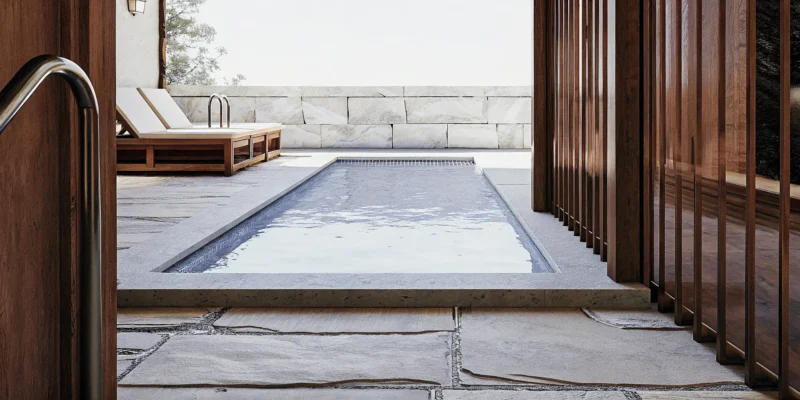
Hydrazzo can reveal white dust, dark blotches, or rough patches before pool season starts. These marks warn that the polished surface needs attention. Early action matters.
Request a Long Island pool finish consultation with Gappsi.
Hydrazzo pool finish problems usually appear as white dust, scale, streaks, dark blotches, rough spots, or uneven color. Some begin with inconsistent application, uneven thickness, or missed steps during the critical start-up period. Others develop when pH, total alkalinity, calcium hardness, or circulation shifts far enough to affect the polished marble surface. Because water can become corrosive or leave damaging mineral deposits, routine water testing and careful chemical adjustments help protect the finish. Long Island homeowners can reduce preventable damage through professional installation, a controlled start-up, regular brushing, steady circulation, and ongoing water testing. A trained pool professional can distinguish surface deposits from deeper damage and recommend cleaning, correction, or repair without making the condition worse.
The key question is whether the mark began during application or developed after filling, because prevention depends on the cause. Hydrazzo pool finish problems: what homeowners see identifies the clear clues worth checking before any repair decisions begin. The path begins with.
Hydrazzo pool finish problems: what homeowners see
Hydrazzo is a polished marble finish, so changes in color or texture can stand out in clear water. Some variation is cosmetic, while other changes point to wear, poor application, or a surface that needs inspection. Knowing the difference helps homeowners describe the problem without guessing at its cause.
Blotching, streaks, and discoloration
Blotching looks like uneven light and dark patches across the pool floor or walls. Streaks appear as lines, bands, or trowel-shaped marks that interrupt the finish color. These signs may be more noticeable on a dark Hydrazzo finish or under strong sunlight.
Small color shifts can be part of the hand-finished appearance, especially when they remain stable and feel smooth. New or spreading stains deserve closer attention. White haze, dust, or pale deposits may also point to scale rather than a change within the finish.
Pool water can become corrosive or form damaging mineral deposits when its balance moves outside the proper range. This pool chemistry guidance explains why pH, alkalinity, and calcium hardness matter. A technician can test the water before anyone tries to scrub or treat the mark.
Rough or uneven areas
A sound Hydrazzo surface should have the smooth, polished feel described in Gappsi’s guide to common Hydrazzo pool finish problems. Rough patches may feel like fine sandpaper, raised grains, sharp points, or shallow pits. Homeowners often notice them first on steps, benches, and shallow floors.
Texture changes can come from material on top of the finish or wear within it. Scale usually creates a raised deposit, while etching leaves a dull or pitted surface. Avoid harsh scraping until a pool professional has found which condition is present.
- Cosmetic signs: mild, stable color variation with a smooth surface.
- Inspection signs: rough patches, pits, sharp edges, spreading stains, or recurring white deposits.
Cracks, hollow spots, and delamination
Cracks may look like fine hairlines, branching lines, or wider openings through the finish. Mark their length and location, then watch for growth or nearby discoloration. A crack that changes or leaks needs prompt professional review.
Hollow areas may sound different when a trained professional checks the surface. Delamination means the finish has begun to separate from the layer below it. Bulges, loose edges, flaking pieces, or a cluster of cracks can signal this type of problem.
These signs are more serious than a stable color patch because loose material can continue to break away. A review of the pool shell and pool finish maintenance and repair needs can show whether the area requires a local repair or broader resurfacing.
Why do Hydrazzo finish problems happen?
Hydrazzo pool finish problems often begin when one stage of installation does not support the next. Shell preparation, application, polishing, filling, and startup work as one process. A qualified installer should inspect each stage before moving forward.
Shell preparation and bonding
The pool shell needs careful inspection before the finish goes on. The crew should check its condition, cleanliness, and readiness for the planned bond method. Any concern found at this point should be addressed before application begins.
Bonding quality can affect how the new finish performs as part of the pool system. Homeowners planning new work or repairs can review Gappsi’s pool finish maintenance and repair services for details about available pool finishes and construction support.
Application and polishing
Application calls for steady control of thickness, water use, and troweling. Inconsistent thickness and voids can contribute to staining or uneven wear in specific areas. Changes in water use or finishing methods during the initial set may also cause blotches or color variation.
Hydration must remain consistent while the material sets. The crew also needs to manage polishing and any filling work with care. These steps shape the finished surface, so the installer should inspect for uneven areas before the pool is filled.
A polished finish can look smooth while still showing a local issue that began during application. Before deciding on a repair, compare the affected area with the surrounding finish. Gappsi’s guide to common Hydrazzo pool finish problems provides more context on this finish and its appearance.
Filling and startup control
The first fill and startup are part of the installation, not separate maintenance tasks. Startup procedures help limit plaster dust and early surface concerns. The person managing startup should follow the finish provider’s instructions and record water test results.
Water balance matters from the beginning because aggressive water can corrode surfaces, while scaling water can leave mineral deposits. Pool operators should monitor pH, total alkalinity, and calcium hardness. This pool chemistry guide from the National Institute of Technology explains why those controls protect the pool itself.
When a new finish shows dust, blotches, streaks, or uneven wear, an inspection should trace the full process. Useful records include shell photos, application notes, fill timing, startup steps, and water test results. That evidence helps separate an installation concern from a later water-balance issue.
How to prevent Hydrazzo pool finish problems
Most Hydrazzo pool finish problems can be prevented when installation and care follow one clear plan. That plan should begin before plastering and continue through each Long Island swimming season.
Planning and professional application
Good preparation gives the polished marble surface a sound base. The pool shell, plumbing, equipment, fill-water source, finish color, and startup schedule should all be reviewed before application begins.
- Set the plan before plastering. Choose the finish color, inspect the shell, test the planned fill water, and confirm who will manage startup. Darker finishes can make small color changes easier to see, so expectations should be clear.
- Use a trained Hydrazzo applicator. Consistent mixing, water use, thickness, troweling, and polishing help prevent voids, streaks, blotches, and uneven wear. Ask the installer to explain the full application and startup process before work starts.
- Fill and start the pool without delay. Follow the installer’s directions for beginning the fill and do not stop the water early. Keep the new surface under professional startup care while circulation and water balance are established.
- Brush the new finish as directed. Use the approved brush and follow the installer-provided schedule. Regular brushing helps move plaster dust toward the filter and supports a more even surface during startup.
- Test and adjust the water. Check pH, total alkalinity, calcium hardness, sanitizer, and other advised measures on a set schedule. The pool chemistry guide explains that unbalanced water can become corrosive or create damaging mineral deposits.
- Maintain the pool through every season. Keep water moving, clean the filter, brush the surface, and record test results. Arrange professional checks before closing and after opening to catch changes caused by winter conditions or fresh fill water.
Startup care and water testing
The first fill needs close attention because fresh plaster and changing water can affect each other. Avoid guessing at chemicals or adding large doses in one spot. Let the startup professional adjust the water in a controlled sequence.
Water balance is not a one-time task. Rain, heat, swimmers, added water, and treatment products can change it. Routine testing helps limit scale, etching, stains, and dark blotches before they become harder to correct.
Long Island seasonal maintenance
Long Island pools often move through a busy summer, a fall closing, and months without normal use. Plan opening and closing care around the Hydrazzo surface, not just the pump and cover. Keep dated water-test records so unusual changes are easy to trace.
Watch for rough areas, new color shifts, persistent dust, stains, or cracks during weekly care. Do not use strong treatments or acid washing without professional guidance. A provider experienced in pool finish maintenance and repair can assess the cause before a small surface issue spreads.
Explore Gappsi pool renovation options before a finish concern spreads.
Is the problem staining, scaling, or application-related?
Many Hydrazzo pool finish problems look alike from the deck. A pale patch may be scale, plaster dust, etching, or a change in application. Dark marks may point to metals, organic debris, or a local chemistry issue. The right response starts with the pattern, feel, timing, and recent water test results.
Read the surface clues
First, note whether the mark is raised, rough, smooth, or set within the finish. Scale and plaster dust often leave a light deposit on top. Metal staining may create rust, brown, green, or dark tones. Leaves and other organic debris can leave marks that follow their shape or resting place.
Water balance can shift a pool toward corrosion or mineral deposits. That is why a current test of pH, total alkalinity, and calcium hardness matters. This pool chemistry guide explains why operators must track those measures to protect the pool.
| Possible issue | Visible or tactile clue | Check before treatment | Likely next step |
|---|---|---|---|
| Calcium scale or plaster dust | White or pale film; often rough or powdery | Water test, start-up records, and surface feel | Correct chemistry, then choose a safe cleaning method |
| Metal stain | Rust, brown, green, or dark discoloration | Fill water, recent chemical additions, and metal testing | Confirm the metal before stain treatment |
| Organic stain | Localized mark near leaves or debris | Debris history and sanitation conditions | Remove the source and reassess the mark |
| Application variation | Streaks, blotches, uneven color, or repeatable bands | Photos from fill day and installer records | Have the installer inspect thickness and finish work |
| Etching or wear | Dull, rough, or uneven areas without a surface deposit | Water history and close surface inspection | Correct chemistry and assess repair options |
Separate deposits from finish variation
A deposit sits on the Hydrazzo surface, while application variation is part of the finish itself. Check several areas under the same light, including steps, walls, and the floor. If a pattern follows tool passes or fixed bands, ask the installer to inspect it. Inconsistent water use, finishing methods, thickness, or hidden voids may cause local variation.
New-finish timing also matters. A pale film that appears soon after filling may relate to start-up chemistry or plaster dust. Compare the condition with Gappsi’s guidance on pool finish maintenance and repair before choosing a treatment.
Why testing comes before treatment
Do not choose acid washing, polishing, or patch repair from color alone. Acid may remove material when the issue is only a deposit. Polishing will not fix a chemistry source, and a patch may stand out if the surrounding color is sound. Document the area, test the water, and have a qualified pool professional inspect the finish.
A sound diagnosis also creates a useful baseline. Take clear photos in steady light and record where each mark appears. Note whether it changes after brushing or water correction. Those details help a professional match the response to common Hydrazzo pool finish problems without causing needless surface wear.
Can a damaged Hydrazzo finish be repaired?
Many Hydrazzo pool finish problems can be improved, but the right repair depends on the cause and depth of the damage. A stain, scale deposit, etched area, crack, and hollow spot each need a different response. Start by noting the location, texture, color, and whether the affected area is spreading.
Do not assume every mark means the finish has failed. Water can become corrosive or form mineral deposits when its balance shifts, according to this pool chemistry guide. Correcting the cause first can prevent more damage while a repair plan is prepared.
Start with water chemistry and assessment
Test pH, total alkalinity, and calcium hardness before scrubbing or adding treatment chemicals. Keep a written record of results and recent chemical changes. A pool professional can compare those readings with the surface pattern and check whether the issue is scale, staining, or etching.
Stop DIY troubleshooting if the surface feels rougher after treatment, the discoloration grows, or plaster starts flaking. Also call a professional when cracks, hollow areas, leaks, or sharp edges appear. Gappsi’s pool finish maintenance and repair team can assess the finish and the pool system together.
Polishing and spot repair options
Professional polishing may improve a sound finish with light roughness, minor surface marks, or some deposits. It removes a small amount of surface material, so the contractor must first confirm that enough sound finish remains. Aggressive grinding can make an uneven area worse.
A spot repair may suit a small, stable area with isolated damage. The crew removes weak material, prepares the base, and places a compatible repair mix. Color and sheen can vary around a patch, especially after years of water exposure. Ask how the repair will look both wet and dry.
Chemical treatments or acid washing may address certain deposits or plaster issues, but they are not general fixes. These methods can harm the marble-based surface when used incorrectly. Leave them to a trained pool professional who can control the treatment and protect nearby fittings.
When resurfacing makes more sense
Resurfacing may be the sounder response when damage is widespread, repeated repairs have failed, or large areas are loose or deeply etched. The contractor should inspect the shell, plumbing, fittings, and existing finish before recommending that work. This assessment helps separate surface damage from a deeper pool issue.
Ask for a written scope that explains preparation, repair areas, finish application, curing, and start-up care. Proper start-up and ongoing water balance help protect the new surface. Review common Hydrazzo pool finish problems before the visit, then share photos and water-test records with the contractor.
A Long Island maintenance plan for a polished finish
A seasonal plan helps Long Island homeowners spot small surface changes before they become harder to assess. It also keeps water care, visual checks, and service notes tied to the same routine. Use the plan to track possible hydrazzo pool finish problems through opening, active use, and closing.
Opening checks and careful start-up
At opening, inspect the empty visible areas, waterline, steps, benches, and fittings before normal use begins. Note any new blotches, rough patches, stains, streaks, or white dust. Take clear photos from the same positions each year, so changes are easy to compare.
Once the system is running, check circulation and test the water before making chemical changes. Routine control of pH, total alkalinity, and calcium hardness helps protect both swimmers and the pool itself. This pool chemistry guidance also explains how aggressive water can corrode surfaces while scaling water leaves mineral deposits.
In-season monitoring and records
During the swim season, keep a simple log of test results, chemical additions, brushing, filter service, and unusual weather. Add dated photos when the finish looks different. A useful record shows whether a mark appeared at once, grew slowly, or changed after water treatment.
Watch high-use areas and places where water flow may differ, including steps, corners, returns, and the waterline. Do not treat every color shift as dirt. If brushing does not change it, record the location and ask a professional to assess it before using a harsh treatment.
Gappsi’s pool finish maintenance and repair page outlines its Long Island pool services and finish options. Sharing your log and photos can help a technician review the surface history instead of relying on one visit.
Closing, winter, and professional review
Before closing, inspect the polished finish under good light and save a final set of photos. Note chips, hollow-looking spots, stains, or areas that feel rougher than nearby plaster. Keep these notes with the closing service record and water test results.
Long Island’s cold season makes before-and-after checks useful. During the spring opening, compare the same areas after winter and freeze-thaw cycles. Avoid guessing at the cause of a new mark; the photos and service records provide a clearer basis for inspection.
Schedule a professional review when a stain spreads, a rough area grows, or a surface change returns after water correction. Ask the technician to inspect the finish, circulation, and recent chemistry records together. That full review can separate a water-care concern from an installation or repair issue.
Frequently Asked Questions
What causes white dust on a new Hydrazzo pool finish?
White dust is often calcium carbonate released during start-up when water chemistry is not balanced correctly. It may settle on the new finish instead of staying dissolved. Prompt brushing, circulation, and water testing help control buildup. The pool chemistry guide explains that scaling water can damage pools through mineral deposits.
Are blotches normal on a new Hydrazzo pool finish?
Slight color variation can occur as a new Hydrazzo finish cures, but pronounced or worsening blotches need evaluation. Uneven application, inconsistent moisture, mineral deposits, or localized etching may cause the appearance. Homeowners should document changes and have the water tested before choosing a treatment. Early diagnosis helps distinguish temporary curing variation from a finish problem that requires professional correction.
Why do Hydrazzo pool finishes develop streaks or color variations?
Hydrazzo can develop streaks when application methods, water use, polishing, or curing vary across the surface. Water chemistry can also make existing differences more visible through scale or etching. The polished marble finish should be assessed before any aggressive cleaning. According to the American Chemical Society, pH affects calcium carbonate solubility, which influences scaling and corrosion.
How do application thickness and voids affect Hydrazzo finish problems?
Inconsistent thickness can make some areas cure, polish, or wear differently from the surrounding Hydrazzo finish. Voids beneath the surface may create weak spots that are more prone to localized staining or uneven wear. These installation-related conditions cannot usually be corrected through water balancing alone. A pool finish professional should inspect persistent hollow, discolored, cracked, or uneven areas before repairs begin.
Can chemical imbalances cause dark blotches in Hydrazzo plaster?
Yes. Unbalanced water can cause localized mineral deposits or etching that appears as dark or uneven patches on Hydrazzo plaster. Testing should cover pH, total alkalinity, and calcium hardness before any cleaning method is selected. The pool chemistry guide notes that water can become corrosive or scaling, and both conditions can damage pool surfaces.
Ready to Protect Your Hydrazzo Pool Finish?
Waiting to address stains, rough spots, or surface changes can allow a manageable finish concern to become a larger pool repair. Starting now gives your pool professional time to inspect the finish, identify likely causes, and plan the right work before swimming season. A clear maintenance plan can also help you protect the appearance of your Hydrazzo finish and avoid rushed decisions later.
Ready to protect your pool? Request a pool finish consultation to review your concerns, discuss prevention, and choose practical next steps for your Long Island property. You can also visit the Smithtown showroom to compare finish options and speak with the Gappsi team before scheduling service. Acting early keeps the process organized and gives you time to understand the recommended scope.