Your Guide to Driveway Installation in East Quogue

A driveway should never be an afterthought in your home’s design. It’s one of the largest features of your front yard, and it has the power to tie your entire property together. The right materials, colors, and layout can create a seamless transition from the street to your front door, complementing your home’s architecture and landscaping. Instead of seeing it as a separate project, think of it as a key element of your overall outdoor aesthetic. This guide will help you explore how a thoughtful driveway installation in East Quogue can enhance your home’s character and create a cohesive, welcoming, and polished look for your entire property.
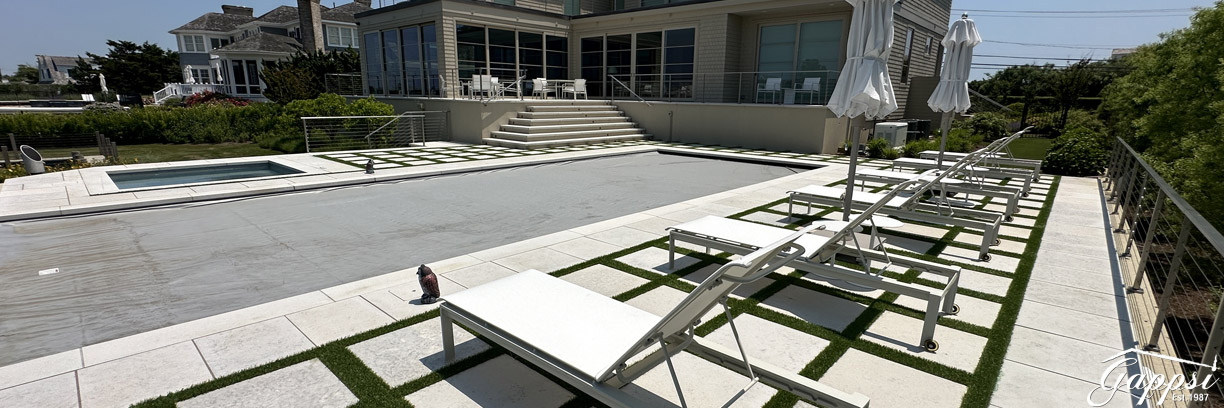
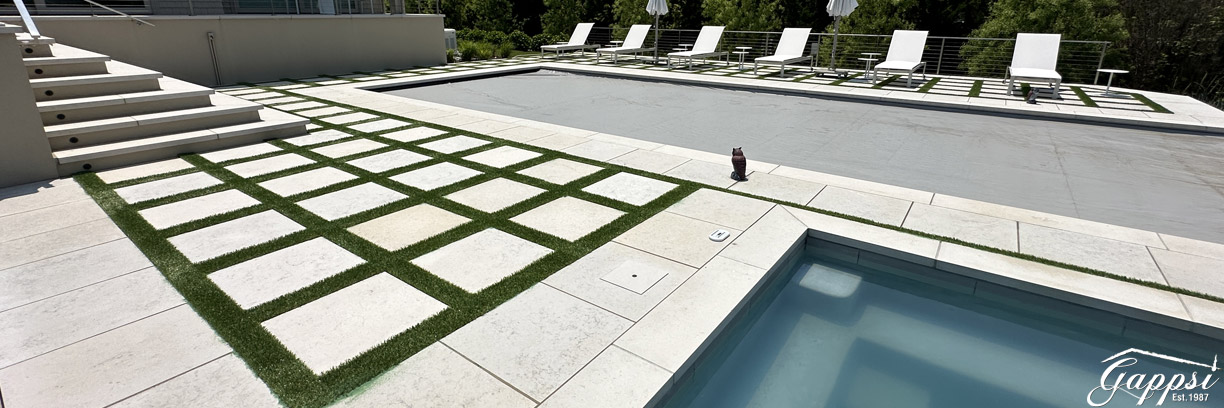
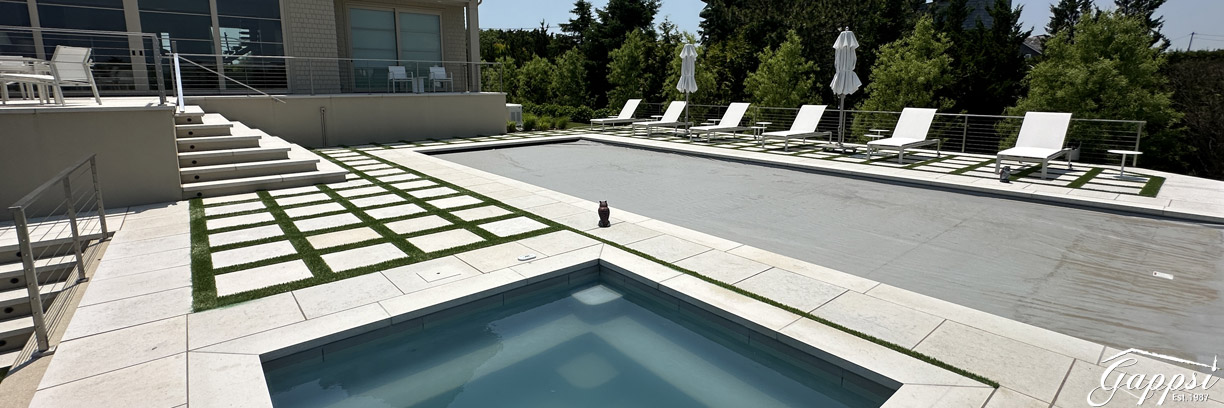
sandblasted-marble-pavers-with-synthetic-turfSandblasted Marble Pavers with Synthetic Turf in East Quogue NY.  Marble’s unrivaled beauty and elegance may be its most significant benefit as a paver.  Gappsi installed synthetic turf strips to border the sandblasted marble tiles installed around this gunite pool in East Quogue NY.  The sandblasted finish is highly slip-resistant and perfect for wet slippery areas like the pool deck and surrounding areas.  Sandblasted marble pavers are extremely durable and can withstand extreme temperatures, making them ideal for outdoor use in any climate. These pavers are also easy to clean and maintain and come in a variety of sizes, shapes, and colors to fit any design. Gappsi’s natural stone collection of marble pavers will give your outdoor space a timeless and elegant look that you and your guests will enjoy for years to come.

Synthetic Turf and Silica Sand Infill

In our recent application using sandblasted marble pavers with synthetic turf, Gappsi used a recycled concrete base between the marble paver tiles, and synthetic turf nailed to the base.  We used green infill on the synthetic turf.  Green silica sand infill elevates your synthetic turf performance with premium material for enhanced durability. 

Turf infill is those tiny bits of material sprinkling between the artificial grass blades. For example, if the edges are similar to blades of grass, then infill is the dirt for the turf.  Adding silica sand infill helps your faux grass blades stand up and keep their real look in high-traffic areas. The silica sand infill also gives you the feel of walking on real grass by emulating the impact absorption qualities of soil. It helps weigh down the imitation turf and helps keep the artificial grass from getting wrinkles or ripples caused by movement. Microban is an antimicrobial product that helps prevent the growth of mold and mildew. It’s non-toxic, so it’s also safe for kids and pets.

Synthetic Turf Low Maintenance Design

Artificial turf can save money, requires minimal repairs, and requires no watering, mowing, fertilizing, or weed prevention. Synthetic turf strips between pavers are a growing trend that can enhance your outdoor living area immediately.  Turf strips between pavers or slabs add a more inviting feel to landscaping by adding design elements that are easy to maintain and care for. It’s an aesthetically pleasing natural lawn alternative and looks great year-round without the need for watering or maintenance.
sandblasted-marble-pavers-with-synthetic-turf1

Elevate Your Yard with Synthetic Turf

Synthetic turf can accentuate your patio, deck, or pool with other design elements. However, it is not just for gardens or backyards. With different textures and colors, synthetic grass can be used to enhance nearly any space. It can be cut into strips or given curved edges to fit your existing landscape design.

To make a patio space with pavers, the artificial grass needs to be cut around the spacing of the concrete pavers or slabs. Alternatively, artificial grass can be cut into strips and installed between the spaces. Depending on the homeowner’s preference, the strips or sections can be completely flush with the slab tops or raised to provide a fluffy overspill.

It’s also a great choice because it is environmentally friendly, safe for the whole family, easy to care for, and non-slip. Because of its great aesthetics and functional capabilities, there’s also a lot of versatility in how and where you can lay it.

Why are Marble Pavers the Preferred Paver Choice Around Pools?

Marble pavers are the preferred choice because they have a high resistance to weather elements, including UV rays and temperature variations. Marble pavers have excellent strength and durability, capable of handling heavy foot traffic and vehicular loads. Additionally, they have a long lifespan when properly installed and maintained.

Durability: Being a natural stone, marble has a strong and durable structure. It is resistant to scratches, wear, and high temperatures. With proper maintenance and care, marble can retain its beauty for many years.

Workability: Marble is a malleable material that can be easily shaped.
sandblasted-marble-pavers-with-synthetic-turf2Is Marble Good for Outdoor Paving?

Marble can create an exquisite paved area in your garden and pool deck surrounding area.  Its unique design patterns and stunning colors make it stand out. Don’t be fooled by its elegant and beautiful appearance.  Marble is also a very durable base, which can withstand heavy objects, constant movement, and the elements of NY weather

Why Do People Want Marble?

Unlike some other flooring types, marble is timeless and will still look as beautiful 15 years down the road as it does today. It’s a natural material that offers a multitude of textures, colors, and patterns. Because of marble’s luxurious appearance, it can add significant value to a home.

Selecting Natural Stones For Around Your Pool

The correct stone can create a natural, beautiful, lifelong finish around any swimming pool. However, not all stone should be used around a swimming pool and it is almost impossible to tell suitability just by looking at a piece on display.

At Gappsi we have focused our selection process for all outdoor stones around a combination of critical characteristics:

  • Salt Resistance
  • Slip Resistance
  • Abrasion resistance
  • Wear resistance
  • Compressive strength
  • Porosity
  • Geological structure
  • Chemical makeup

Building a luxury swimming pool is a lifetime investment for your family and home in general. It is wise to choose the best natural stone paver that can provide the much-needed aesthetic, longevity, and durability that fits your lifestyle. Your selection of stone pavers should give you value for your money both on a short-term and long-term basis. For more inquiries about premium natural stone pavers for luxury pools, contact Gappsi today at 631-543-1177. This is the latest backyard project done by Gappsi in East Quogue NY. 

Planning Your Driveway Installation in East Quogue

A new driveway is more than just a place to park your car; it’s the welcome mat to your home. It sets the first impression and can significantly impact your property’s curb appeal. Planning your installation in East Quogue starts with understanding that this is a major home improvement project. The key to a driveway that looks great and lasts for decades is choosing the right materials and, just as importantly, the right team for the job. A professional contractor will guide you through material selection, explain the full installation process, and manage everything from excavation to the final finishing touches. This initial planning phase is your opportunity to define your vision, set a realistic budget, and ask all the important questions before any ground is broken. Taking the time to plan properly ensures the final result not only meets but exceeds your expectations for your home.

Before you get too far into dreaming about materials and designs, it’s wise to think about the practical aspects of your project. Consider the size and shape of the driveway, how it will connect to your home and the street, and any potential challenges like slopes or drainage issues. A well-thought-out plan addresses these factors from the start. For instance, expert contractors in East Quogue can provide solutions for water runoff to protect both your new driveway and your home’s foundation. By partnering with an experienced company, you gain access to their expertise in navigating these details, ensuring a smooth process from start to finish. This foundational step helps you build a clear roadmap for a successful and stress-free driveway installation that will serve your family well for years to come.

Exploring Driveway Material Options

Choosing the right material for your driveway is one of the most exciting parts of the planning process. Your decision will influence the look, longevity, and maintenance needs of your new installation. The three most common options for Long Island homes are asphalt, concrete, and pavers. Each has its own unique set of benefits and aesthetic qualities. Asphalt offers a classic, seamless blacktop look, while concrete provides a clean, durable surface that can be customized with different finishes. Pavers, available in a vast array of materials like concrete, brick, and natural stone, offer unparalleled design flexibility and a high-end appearance. Understanding the characteristics of each option will help you select the perfect material to complement your home’s style and fit your lifestyle. It’s about finding the perfect balance between beauty, durability, and your budget.

Asphalt Driveways

Asphalt is a popular and often cost-effective choice for driveways. It provides a smooth, dark surface that is flexible and less prone to cracking from frost heave during Long Island’s cold winters. One of the main advantages of asphalt is its resilience in colder climates; it also absorbs heat, which helps melt snow and ice a bit faster. With proper installation and regular maintenance, such as sealcoating every few years, an asphalt driveway can last between 15 and 20 years. It’s a practical option that delivers a clean, uniform look while standing up to the demands of daily use and seasonal weather changes, making it a reliable choice for many homeowners in East Quogue.

Concrete Driveways

If you’re looking for incredible longevity, a concrete driveway is an excellent investment. Known for its strength and durability, a professionally installed concrete driveway can last for decades, sometimes even over 100 years with the right care. It offers a bright, clean appearance that can be customized with various finishes, from a traditional broom finish to more decorative stamped patterns that mimic stone or brick. While the initial cost may be higher than asphalt, its long lifespan and minimal maintenance requirements can make it more economical over time. Concrete provides a rigid, strong surface that can handle heavy vehicles and creates a polished, modern look for your home’s entrance.

Paver and Natural Stone Driveways

For homeowners who want to make a statement, paver and natural stone driveways offer unmatched beauty and design potential. Pavers can be arranged in stunning patterns, from classic herringbone to intricate circular designs, adding a touch of elegance and significantly increasing your property’s value. One of the biggest advantages of pavers is their repairability; if a single paver cracks or becomes stained, it can be replaced without redoing the entire driveway. Materials range from durable concrete pavers to luxurious natural stones like granite, travertine, and marble. This option allows you to create a truly custom look that perfectly reflects your personal style and enhances your home’s architectural character.

Why Gappsi Recommends Pavers for Long Island Homes

Here on Long Island, we experience a full range of weather, from hot, sunny summers to freezing, snowy winters. That’s why choosing a driveway material that can withstand these elements is so important. At Gappsi, we often recommend natural stone and high-quality pavers because of their exceptional durability and weather resistance. For example, marble pavers are highly resistant to UV rays and extreme temperature shifts, preventing fading and cracking. Pavers also offer a permeable surface option, which can help with drainage during heavy rain. With our extensive collection of porcelain and natural stone, you can achieve a luxurious, timeless look that is built to last through every season Long Island throws at it.

The Driveway Installation Process Explained

Understanding what happens during a driveway installation can make the entire experience feel much more manageable. The process is a systematic construction project that transforms your property, and it all begins long before the final surface is laid. The first step is always a thorough site evaluation and excavation. This involves removing the old driveway, if one exists, along with any soil and debris to create a clean slate. The depth of this excavation is critical, as it makes way for the most important part of the driveway: the base. A professional crew will ensure the area is properly graded for drainage and ready for the foundational layers that will support your driveway for years to come. This careful preparation is the secret to a long-lasting, stable surface, regardless of the material you choose.

Base Preparation: The Foundation of a Lasting Driveway

Think of the base as the hidden hero of your driveway. You’ll never see it, but its quality determines the lifespan and performance of the entire structure. After excavation, a thick layer of crushed stone or gravel is spread and compacted to create a solid, stable foundation. A proper base, often around 10 inches deep, is designed to distribute the weight of vehicles evenly and prevent the surface from sinking, shifting, or cracking over time. This step is especially crucial in our climate, as it helps manage the effects of ground freezing and thawing. Skipping or rushing this stage is a recipe for future problems, which is why a reputable contractor will always prioritize creating a robust and well-compacted base.

Installation Timelines and Material Thickness

The timeline for your driveway installation can vary depending on several factors, including the material you choose, the size of the project, and, of course, the weather. A simple asphalt driveway might be completed in a few days, while a complex paver design could take a week or more. Your contractor should provide a clear schedule upfront. The thickness of the material itself is also a key consideration. For a standard residential driveway, a certain thickness of asphalt or concrete is required to handle cars and SUVs. However, if you have heavier vehicles like an RV or a large truck, your contractor may recommend a thicker application and a deeper base to provide the necessary support and prevent damage.

The Importance of Proper Drainage

Water is the number one enemy of any paved surface. Without a proper drainage plan, water can pool on your driveway, seep into the base layer, and cause significant damage over time, from cracks and potholes to major structural failure. A professional installation always includes a strategy for managing water runoff. This might involve carefully grading the driveway to slope away from your home, installing channel drains, or even incorporating a dry well to collect excess water. At Gappsi, our comprehensive approach to masonry and site work ensures that drainage is a top priority, protecting your investment and giving you peace of mind every time it rains.

Understanding Driveway Installation Costs

Figuring out the budget for a new driveway is a top priority for every homeowner. The cost can vary widely, so it’s helpful to understand the factors that contribute to the final price tag. The primary driver of cost is the material you select, with options ranging from budget-friendly asphalt to premium natural stone pavers. The size of your driveway is another major factor; a larger, longer driveway will naturally require more materials and labor. However, the expenses don’t stop there. The total cost also includes site preparation, demolition and removal of an old driveway, labor, and any special features or design elements you choose. Getting a detailed quote that breaks down these costs is essential for comparing bids and making an informed financial decision for your project.

Average Costs by Material

While prices can fluctuate, it’s useful to have a general idea of what to expect. Nationally, driveway paving costs typically range from $3 to $15 per square foot. Asphalt is generally the most affordable option, falling on the lower end of that spectrum. Poured concrete is usually in the mid-range, offering a balance of cost and extreme durability. Paver driveways, including both concrete and natural stone options, tend to be at the higher end of the price range due to the higher material costs and the more intensive labor required for installation. These figures are a starting point, and a local contractor can give you a precise estimate based on your specific project in East Quogue.

Additional Factors Affecting Your Budget

Beyond the square footage and material choice, several other elements can influence your total budget. The condition of your existing site plays a big role; if significant excavation or grading is needed to ensure proper drainage, this will add to the cost. The complexity of the design also matters. A simple, straight driveway will be less expensive than one with curves, multiple colors, or intricate paver patterns. Finally, remember that the quality of the contractor is just as important as the quality of the material. While it might be tempting to go with the lowest bid, a well-established company with a proven track record provides value that can save you from costly repairs in the future.

Permits and Complex Designs

Don’t forget to account for administrative and design-related costs. Many municipalities, including those in the Town of Southampton, may require a permit for driveway installation, especially if you are creating a new curb cut or altering drainage. These permits come with fees and can add time to your project schedule. Additionally, if you opt for a high-end design with custom borders, inlays, or a mix of materials, the labor costs will increase. These intricate designs require more time, skill, and precision from the installation crew. While these elements can create a stunning result, it’s important to factor them into your budget from the beginning to avoid any surprises.

Driveway Maintenance and Long-Term Care

Once your beautiful new driveway is installed, a little bit of care will go a long way in keeping it looking and performing its best. Every driveway material requires some form of maintenance to maximize its lifespan and protect your investment. For some materials, this might mean regular cleaning and sealing, while for others, it could involve occasional repairs to small cracks or individual pavers. Proactive maintenance not only preserves the appearance of your driveway but also helps prevent small issues from turning into large, expensive problems. Establishing a simple care routine from the beginning will ensure your driveway remains a point of pride for your home for many years to come.

Sealcoating and General Upkeep

For asphalt driveways, sealcoating is the most important maintenance task. Applying a sealant every two to three years helps protect the surface from UV rays, water penetration, and oil spills, while also restoring its rich, black color. For concrete and paver driveways, sealing is also recommended to protect against stains and weather damage. At Gappsi, our restoration and sealing services can protect your investment and keep it looking new. Beyond sealing, general upkeep includes sweeping away debris, treating stains promptly, and keeping the edges clear of overgrown grass or weeds. These simple steps help maintain your driveway’s integrity and curb appeal.

Resurfacing vs. Full Replacement

Over time, you might notice signs of wear and tear. If your driveway has surface-level issues like minor cracks or discoloration but the base is still solid, resurfacing can be a great option. Resurfacing involves adding a new top layer of material, which is a faster and more affordable solution than a full replacement. However, if your driveway has deep cracks, large potholes, or significant drainage problems, these are signs of foundational failure. In these cases, a full replacement is necessary to address the root cause of the problem and ensure a lasting solution. An honest contractor can inspect your driveway and help you decide which approach is right for you.

Safe De-Icing Practices for Your Driveway

During our Long Island winters, keeping your driveway clear of ice is a top priority for safety. However, it’s important to use de-icing products that won’t harm your driveway’s surface. Harsh chemicals, particularly rock salt (sodium chloride), can be corrosive to concrete and certain types of natural stone pavers, causing pitting and scaling over time. Instead, opt for safer alternatives like calcium chloride or magnesium chloride, which are less damaging. Sand is another excellent option for adding traction without using chemicals. Using a plastic shovel instead of a metal one can also help prevent scratches and chips while clearing snow.

Key Advice for Homeowners

Embarking on a driveway installation project is a significant undertaking, and being well-prepared can make all the difference. As a homeowner, your role is to make informed decisions, and that starts with doing your homework. From selecting a contractor to understanding local regulations, taking a few key steps can help ensure your project runs smoothly and results in a driveway you love. This final piece of advice is all about empowering you with the practical knowledge you need to hire with confidence and protect your investment. By being a proactive and knowledgeable partner in the process, you can help steer your project toward a successful outcome.

Getting Multiple Quotes

One of the most important steps in the hiring process is to get at least three detailed quotes from different contractors. Don’t just look at the bottom-line price; compare the specifics of what each quote includes. Does it detail the depth of the base, the thickness of the surface material, and the plan for drainage? A thorough, written estimate is a sign of a professional and transparent contractor. This process allows you to compare apples to apples and get a feel for the different companies, helping you find a partner who understands your vision and offers fair value for high-quality work.

How to Vet Your Contractor

Choosing the right contractor is the single most critical decision you will make for your driveway project. Look for a company with a long-standing reputation in the East Quogue area. Verify that they are fully licensed and insured to protect yourself from any liability. Ask for a portfolio of their recent work and a list of local references you can contact. Reading online reviews can also provide insight into their customer service and workmanship. A trustworthy contractor will be happy to provide all of this information and will communicate clearly and professionally from the very first conversation.

Checking Local and HOA Rules

Before you finalize any plans, take a moment to check for any local regulations or Homeowners Association (HOA) rules that might apply to your project. The Town of Southampton may have specific requirements regarding setbacks, materials, or permits for driveway construction. If you live in a community with an HOA, there may be additional guidelines on driveway materials, colors, or designs to maintain a cohesive neighborhood aesthetic. A quick phone call or visit to the local building department and a review of your HOA documents can save you from potential headaches and ensure your new driveway is fully compliant.

Integrating Your Driveway with Landscape Design

Your driveway is a major feature of your front yard, and it should work in harmony with the rest of your landscape. A truly exceptional design considers how the driveway’s lines, materials, and colors connect with walkways, garden beds, and your home’s facade. Think of it as the foundation of your entire outdoor aesthetic. You can use complementary pavers for a connecting walkway, line the driveway with low-maintenance plantings, or add landscape lighting to enhance safety and create a dramatic evening look. Integrating your driveway into a cohesive design creates a polished and intentional feel that elevates your entire property. This holistic approach ensures your new driveway is not just a utility but a beautiful extension of your home.

This is where working with a full-service company can be a huge advantage. Instead of hiring a separate paving company and a landscaper, you can work with one team that sees the big picture. At Gappsi, our expertise extends from driveway installation to comprehensive landscape design and construction. Our team can help you select materials and create a layout that seamlessly blends your new driveway with surrounding plantings, walkways, and even features like retaining walls or entry pillars. This integrated approach ensures every element works together, resulting in a stunning and unified curb appeal that welcomes you home every day. By planning your driveway and landscape together, you create a more beautiful, functional, and valuable outdoor space.

SCHEDULE A MEETING TODAY WITH GAPPSI

View Gappsi’s YouTube Channel for Videos of Sandblasted Marble Pavers with Synthetic Turf | East Quogue NY

https://youtu.be/_iDZBfyAkLI

Frequently Asked Questions

How long will my driveway installation take from start to finish? The timeline for a new driveway really depends on the material you choose and the complexity of the job. A straightforward asphalt driveway might only take a few days, while an intricate paver design could take a week or more. The process includes excavation, base preparation, and installation, so weather can also play a role. Your contractor should give you a clear and realistic schedule before any work begins.

With Long Island’s weather, what’s the most durable driveway material? For our freeze-thaw cycles, pavers are an excellent choice because of their strength and flexibility. Unlike a solid slab of concrete or asphalt, individual pavers can shift slightly with the ground, which reduces the risk of widespread cracking. High-quality natural stone and concrete pavers are designed to withstand the elements, from summer sun to winter ice, making them a fantastic long-term investment for any Long Island home.

You mentioned the base is important. Why does it matter so much? The base is truly the foundation of your entire driveway, even though you’ll never see it. A deep, well-compacted layer of gravel creates a stable platform that distributes the weight of vehicles and prevents the surface from sinking or developing low spots. It also allows for proper drainage, which is critical for preventing damage from water and ice. A solid base is the secret to a driveway that lasts for decades instead of just a few years.

How much upkeep does a paver driveway really need compared to asphalt? While no driveway is completely maintenance-free, pavers are surprisingly easy to care for. Unlike asphalt that needs regular sealcoating every few years to prevent cracking, pavers just need occasional cleaning. Applying a sealant to pavers is a good idea to protect them from stains, but it’s not as frequent a requirement. Plus, if one paver ever gets damaged, you can replace just that single stone instead of having to patch or resurface the entire driveway.

Can I combine different materials, like the pavers and turf you showed, for my driveway? Absolutely. Mixing materials is a wonderful way to create a custom look that complements your home and landscape. Using synthetic turf strips between large stone pavers, for example, can soften the appearance of a large paved area and add a unique design element. You can also use contrasting paver styles to create borders or decorative inlays. A design-focused team can help you explore all the possibilities to create a driveway that is both functional and beautiful.

Key Takeaways

  • Choose materials for beauty and resilience: Select a driveway material, like natural stone or pavers, that not only complements your home’s style but is also proven to withstand Long Island’s diverse weather, from summer heat to winter freezes.
  • A lasting driveway starts with a solid base: The secret to a driveway that won’t crack or sink is a properly excavated, compacted, and well-drained foundation; this unseen layer is more important than the surface you see every day.
  • Do your homework before hiring a contractor: Protect your investment by getting multiple detailed quotes, verifying your contractor’s license and insurance, and checking local regulations before any work begins.
Related Articles

Share this page:

Water Features Dix Hills: A Guide to Your Oasis

Think about the sounds you typically hear in your backyard. Is it the distant hum of traffic, a neighbor’s lawnmower, or the peaceful sounds of nature you’d prefer? You have the power to curate the soundscape of your outdoor space, and adding a water feature is the best way to do it. The consistent, gentle flow of water introduces a calming auditory element that masks distractions and encourages relaxation. It’s a simple addition that has a profound effect on how your space feels, turning your patio or garden into a true retreat. The right water features dix hills families are choosing can completely change the ambiance of their home.

luxury-backyard-redesign-and-pool-renovation-dix-hills-ny1Investing in a luxury backyard redesign and pool renovation can be a great way to increase the value of your home.  It can make your property more attractive to potential buyers and enhance your overall enjoyment of your outdoor space.  Gappsi recently completed a total backyard renovation in Dix Hills NY.
We remodeled the original vinyl pool that was built with steel walls.  A steel-walled pool is simply not a permanent structure while a concrete-walled pool is.  A steel wall pool boasts many advantages over other structures, especially in a freeze/thaw climate such as ours.  It is typically the least expensive option when compared to other pool structures. However, just because the pool itself is less expensive doesn’t mean you sacrifice the quality, aesthetics, and functionality of the pool.  A vinyl liner pool can be customized like a gunite or concrete pool and offers homeowners versatility in design options.

Why Upgrade Pool Plumbing System?

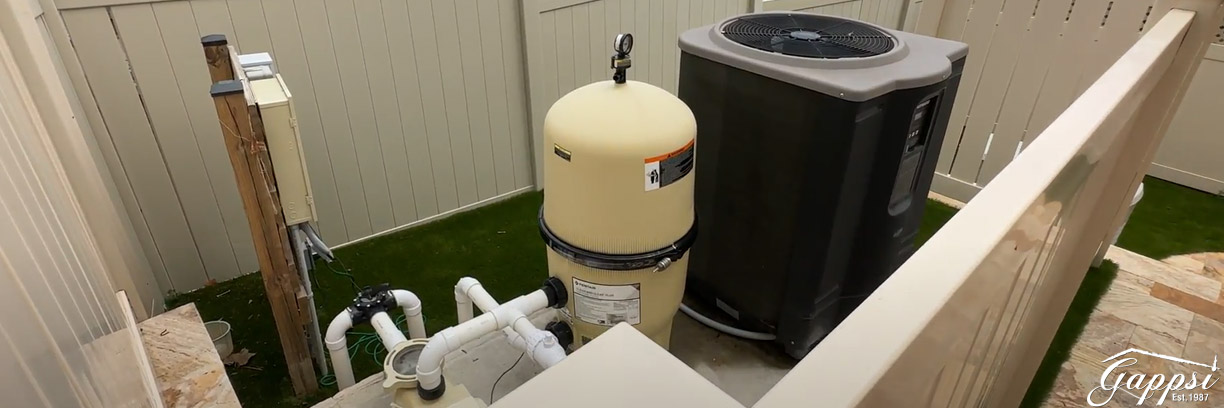
We installed new plumbing, new skimmers, new jets, and a new liner. In addition, the equipment was installed on the side, away from the living space.

There are many reasons to upgrade your pool plumbing system, including:

  • Water quality – Modern filters and pumps can improve water clarity and make it safer and healthier for swimming. They can also reduce the amount of chemicals needed to treat the water. For example, an ozone water purification system can neutralize bacteria and algae using natural minerals and low levels of chlorine.
  • Efficiency – Variable-speed pumps can be more efficient than single-speed pumps, using up to 90% less energy. They can also improve circulation, which helps the pool filter water more effectively.
  • Noise – Variable-speed pumps are quieter than single-speed pumps, which can make for a more peaceful pool experience.
  • Plumbing issues – Pool plumbing systems can deteriorate over time due to age and climate, and may develop issues like leaks or cracked pipes. PVC (polyvinyl chloride) is a recommended plumbing material for in-ground pools because it’s durable and resistant to corrosion. If your plumbing is made of PVC, you should replace it if it becomes brittle or warped, or if you notice pinhole leaks.

luxury-backyard-redesign-and-pool-renovation-dix-hills-ny5 We installed synthetic turf in all the remaining areas on both sides of the house.  Artificial turf is a great alternative to natural grass for busy homeowners who don’t have the time to maintain a traditional lawn. It’s also much more forgiving than real grass, so you won’t have to worry about brown patches or bald spots. Plus, it’s low-maintenance and looks great all year long! 
GAPPSI’S SYNTHETIC TURF OPTIONS

Artificial turf has all the great features of traditional grass but without all the hassle! Busy homeowners no longer have to worry about mowing, weeding, or fertilizing their lawn, because all that is required for artificial turf is the occasional hosing down. Keeping turf clean is a common concern for pet owners, so we designed our turf to be the best for your furry friends!

Planning Your Landscape Project

A beautiful landscape doesn’t happen by accident; it starts with a solid plan. Thinking through your project before breaking ground ensures the final result matches your vision and meets your family’s needs. A well-planned design considers not just aesthetics but also functionality, maintenance, and your property’s unique characteristics. Taking the time to map out the details will save you time and potential headaches down the road, leading to an outdoor space you’ll love for years to come. It’s the foundational step to creating a cohesive and inviting environment that truly feels like an extension of your home.

Define Your Budget and Scope

Before you start dreaming up elaborate water features and sprawling patios, it’s essential to ground your project in reality by defining your budget and scope. Knowing what you’re comfortable spending helps guide every decision, from the types of materials you choose to the scale of the installation. A clear budget allows your design team to suggest the best possible solutions that align with your financial plan. Similarly, defining the scope—what you absolutely want to include versus what would be nice to have—helps prioritize the most important elements of your new landscape design and ensures the project stays on track.

Essential Landscape Design Principles

Creating a stunning and harmonious landscape involves more than just picking out pretty plants. Professional designers rely on a few key principles to ensure the space feels balanced, unified, and visually interesting throughout the year. By incorporating these fundamental ideas into your plan, you can transform a simple yard into a thoughtfully curated outdoor retreat. These principles act as a guide, helping you make intentional choices that contribute to a cohesive and beautiful final look that complements your home’s architecture and your personal style.

Balancing Evergreens and Flowering Plants

A successful landscape design offers visual appeal in every season, and the key to achieving this is a thoughtful balance between evergreens and flowering plants. Evergreens provide the foundational structure and year-round color that act as the backbone of your garden, ensuring it never looks bare, even in the middle of winter. Flowering plants, on the other hand, inject seasonal personality with vibrant colors and textures. This combination creates a dynamic environment that evolves throughout the year, offering continuous interest and beauty from the first spring bloom to the last autumn leaf.

Considering Your Yard’s Unique Conditions

Every property has its own set of unique conditions, and a great landscape plan works with them, not against them. It’s crucial to discuss your goals and ideas with a designer who can assess your yard’s specific characteristics, such as sun exposure, soil type, drainage, and existing slopes. A plant that thrives in a sunny, dry spot might struggle in a shady, damp corner. By tailoring the design to your yard’s microclimate and topography, you ensure that your new plants will flourish and your hardscape elements, like a new masonry patio, are built to last.

luxury-backyard-redesign-and-pool-renovation-dix-hills-ny3Gappsi Natural Stone Collection – Fiorito Travertine G035
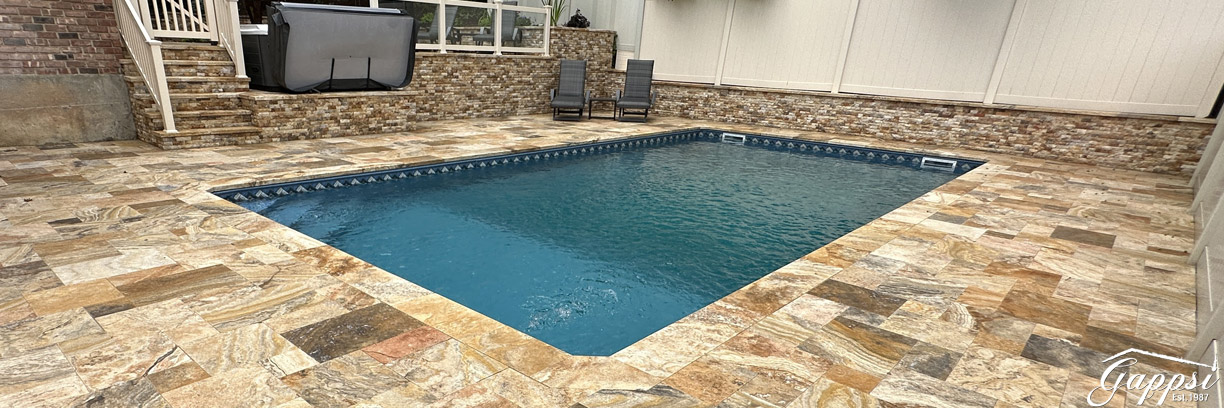
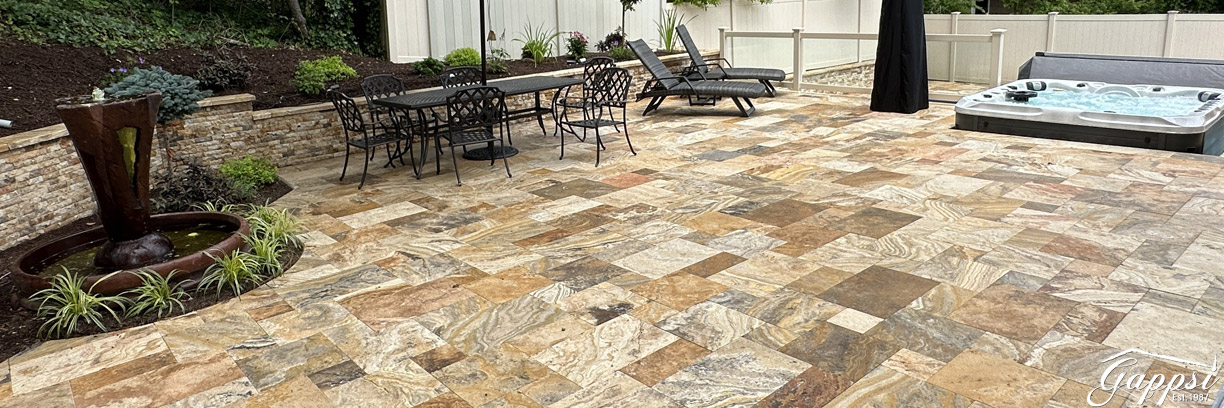
On the patio and pool coping we used G035 Fiorito Travertine selected from the Gappsi Natural Stone Collection.  The natural beauty of travertine makes it a popular choice for pool deck coping or as a decking material for the entire pool area. A travertine pool deck and travertine pool coping are great options for the following reasons:

  • It offers natural beauty with its earthy colors and interesting textures
  • It creates a non-slip surface
  • It isn’t hot to the touch, making it comfortable for bare feet
  • It’s durable enough to handle typical poolside activities
  • Luxury Backyard Redesign with Travertine

The same quality that makes travertine non-slip and comfortable to walk its porosity is the quality that makes it susceptible to staining. Because travertine is porous, it tends to soak up whatever spills on its surface, which can result in staining. Fortunately, there are ways to prevent stains from occurring:

  • Seal the surface.
  • Wash off spills as soon as they occur.
  • Choose a travertine that has less of a sponge-like texture, as it’s the holes and crevices that provide spots for things to seep into its pores.
  • If you have loose soil nearby that often gets onto the surface, make it a habit to spray dirt off the surface before it begins to stain.

Retaining Walls with Fiorito Travertine G035 – Luxury Backyard Redesign

We built a new retaining wall using cinder blocks, then veneered it with 2 inches of random-length Fiorito Travertine and coping to match the pool.  When it comes to retaining walls, also sometimes referred to as site walls, natural stone embodies the timeless look that most people associate with this type of application. Natural Stone Veneer offers a diverse range of colors, sizes, shapes, and textures to customize a stone veneer retaining wall to the exact aesthetic of the landscape.

luxury-backyard-redesign-and-pool-renovation-dix-hills-ny2Raised Excite Passion Spa

The Excite Passion Spa is a spacious spa that provides room for up to seven people. This top-of-the-line hot tub has a variety of massage experiences that will melt your stress away. The foot dome and volcano jet provide excellent therapy for your tired aching feet.

Gappsi is a dealer for Passion Spas. Passion Spas are sold through select dealers whose experience and commitment to quality and service match their own. 

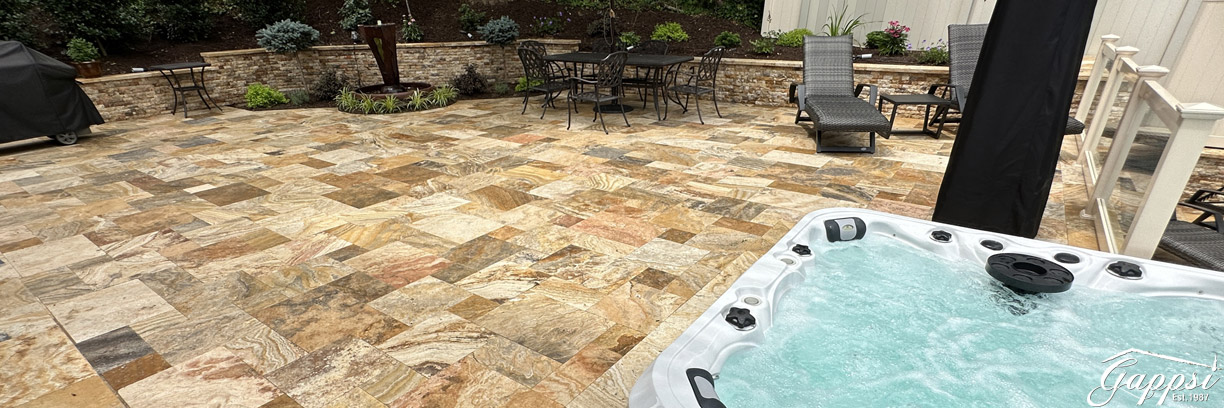
We raised the spa and built a platform to the second-level patio connected by the stairs.  The top patio was also paved with Fiorito Travertine in a French pattern and the walls were also finished with 2-inch veneers and coping was used to match all other wall caps in the backyard.

Choosing the Perfect Water Feature

Beyond the visual appeal of a well-designed backyard, the sounds of your space play a huge role in how it feels. The gentle trickle of water can mask neighborhood noise and create a peaceful atmosphere that’s hard to replicate. Adding a water feature is one of the best ways to introduce this calming auditory element, turning your yard into a true sanctuary. Whether you envision a grand, nature-inspired waterfall or a subtle, bubbling accent, there’s a water feature that can fit your space and style. The key is to choose one that complements your overall landscape design and meets your family’s needs.

From sprawling water gardens that become their own ecosystems to compact fountains perfect for a patio corner, the options are vast. Thinking about the scale of your yard, your maintenance preferences, and the overall aesthetic you want to achieve will help you narrow down the choices. A well-placed water feature can serve as a stunning focal point, drawing the eye and tying different areas of your backyard together. It’s an investment not just in your property’s beauty, but in the daily sense of tranquility you’ll get every time you step outside.

Koi Ponds and Water Gardens

If you dream of creating a serene, natural retreat, a koi pond or water garden is an incredible choice. These features are more than just decorative; they are living, self-sustaining ecosystems that bring a piece of nature right to your backyard. The combination of aquatic plants, fish, and the gentle movement of water creates a dynamic and beautiful environment. A well-designed pond can become a habitat for local wildlife like birds and dragonflies, adding another layer of life to your landscape. It’s the perfect spot to unwind, watch the fish swim, and enjoy a moment of peace.

Pondless Waterfalls and Streams

For those who love the sound and look of moving water but have concerns about an open pond, a pondless waterfall is the perfect solution. This design gives you the beauty of a cascading waterfall or a meandering stream without the pool of water at the bottom. Instead, the water disappears into a hidden underground reservoir, where it’s recirculated back to the top. This makes it an exceptionally safe option for families with small children or pets. It’s also ideal for smaller yards where a full pond might not be practical, allowing you to enjoy the soothing sounds of water in any space.

Decorative Fountains

You don’t need a large area to enjoy the benefits of a water feature. Decorative fountains, such as bubbling rocks, urns, or custom-built structures, can fit into almost any yard or patio design. These features are incredibly versatile and provide a delightful auditory element that enhances the ambiance of your outdoor living area. A simple fountain can transform a quiet corner into a point of interest. Using beautiful materials like those in the Gappsi Natural Stone Collection allows you to create a piece that is both a water feature and a work of art, perfectly matching your home’s style.

Fountain Focal Point

Focal points can be restful, dramatic, or even whimsical.  Fountains and other water elements immediately attract attention in the garden, drawing one’s eyes to the movement of water and one’s ears to the soothing sound.

We installed a beautiful fountain with its own pool and landscape area designed by Henri Studio in this luxury backyard redesign.  This company specializes in hand-poured fountains and other expertly crafted products made in America. Their designs range from classic to contemporary, expertly crafted with an eye for detail and a timeless sensibility.  

luxury-backyard-redesign-and-pool-renovation-dix-hills-nyTo complete the backyard we installed synthetic turf in the remaining areas of the house.  This is the latest backyard renovation by Gappsi in Dix Hills NY. The Fiorito Travertine has beautiful variations of colors that cannot be reproduced with any other concrete products.  A unique soft blend of beige, golden, grays, maroons, and many other natural patterns that you can only find in the Fiorito travertine is available in the Gappsi Showroom.  Visit our showroom today!   

How to Evaluate a Landscaping Company

Choosing the right team for your backyard transformation is a major decision. You’re not just hiring a contractor; you’re selecting a partner to bring your vision to life. A great company will listen to your ideas, respect your budget, and have the expertise to handle every detail of the project. To ensure you find a reliable and skilled professional, it’s important to look at a few key areas. Evaluating a company’s background, their business practices, and their standing in the community will give you the confidence that you’re making the right investment in your home.

Experience and Qualifications

When you’re vetting a landscaping company, their history is a great place to start. A company that has been in business for decades, like Gappsi’s 35+ years serving Long Island, has a proven track record of navigating complex projects and weathering economic shifts. This longevity speaks volumes about their stability and client satisfaction. Beyond just years in business, look at the team’s qualifications. Do they have designers with degrees in landscape architecture or certifications in specific areas like masonry and hardscaping? An experienced, well-trained team is better equipped to anticipate challenges and deliver a high-quality result that stands the test of time.

Guarantees and Business Practices

A trustworthy company will always stand behind its work. Before signing any contracts, ask about the guarantees or warranties they offer on materials and labor. For example, some companies provide a one-year guarantee on all plantings, which shows they are confident in the quality of their plants and their installation process. It’s also a good idea to review their portfolio of completed projects. Seeing real-world examples of their work, whether through a gallery on their website or videos on their YouTube channel, gives you a clear picture of their craftsmanship and style. This transparency is a hallmark of a professional and client-focused business.

Professional Memberships and Reputation

A company’s reputation is built on more than just beautiful photos. Look for affiliations with professional organizations, like local or national landscaping associations. These memberships indicate a commitment to upholding industry standards and staying current with the latest techniques and trends. Another significant advantage is finding a company that manages all aspects of the project in-house. When one team handles everything from the initial landscape design to the final installation of a pool or patio, it streamlines communication and ensures a cohesive final product. This integrated approach eliminates the headaches of coordinating multiple contractors and leads to a smoother, more efficient renovation experience.

SCHEDULE A MEETING TODAY WITH GAPPSI

View Gappsi’s YouTube Channel for Videos of the Cleaning and Sealing Concrete Pavers Process

https://youtu.be/ciH1lk0SxYQ

Frequently Asked Questions

Is travertine a high-maintenance material for a pool patio? That’s a common concern, but travertine is much easier to care for than you might think. Because it’s a natural, porous stone, the key is to have it sealed properly upon installation. This prevents spills from setting in and becoming stains. With a good sealer, routine care is as simple as sweeping it clean and rinsing off any spills quickly. It’s a small trade-off for a surface that stays cool underfoot and offers a beautiful, non-slip texture.

This project is beautiful but seems massive. Can I renovate my backyard in stages? Absolutely. A total backyard transformation doesn’t have to happen all at once. Many homeowners choose to phase their projects over time. The most important step is creating a comprehensive master plan from the start. This ensures that each stage, whether it’s the patio this year or the pool next, is designed to fit perfectly into the final vision, creating a cohesive and beautiful space in the end.

I love the idea of a water feature but have small children. What are the safest options? You can definitely enjoy the peaceful sound of water without worrying about safety. Pondless waterfalls are a fantastic choice because the water flows over rocks and disappears into a hidden underground reservoir, so there’s no open or deep water. Decorative fountains, like bubbling urns or rocks, are another great option. They provide that lovely ambient sound and a beautiful focal point while being completely safe for kids and pets.

My pool is old but seems to work fine. How do I know if it’s time for a major renovation? Look for signs beyond basic functionality. If you’re constantly dealing with plumbing leaks, your energy bills seem high from an inefficient pump, or the pool’s surface is cracked and worn, it might be time to consider an upgrade. A renovation isn’t just about fixing problems; it’s an opportunity to improve water quality, increase energy efficiency, and update the overall look and feel of your pool area.

Does synthetic turf really look and feel like real grass? Modern synthetic turf has come a long way from the bright green plastic of the past. Today’s high-quality options are designed to mimic the color variations, blade shapes, and soft texture of natural grass varieties. It provides a lush, green lawn all year without the constant mowing, watering, and fertilizing. It’s a practical and beautiful solution for creating a perfect-looking lawn with minimal effort.

Key Takeaways

  • Upgrade for a Better Experience: A full backyard renovation is the perfect time to improve functionality. Modernizing your pool’s plumbing enhances water quality and efficiency, while low-maintenance surfaces like synthetic turf give you more time to relax.
  • Unify Your Design with Consistent Materials: Using a single, high-quality material like natural travertine for your patio, pool coping, and retaining walls creates a cohesive and luxurious look that ties the entire space together.
  • Choose a Partner, Not Just a Contractor: The success of your project depends on the team you hire. Vet companies by reviewing their years of experience, looking at their portfolio of completed work, and asking about their guarantees to ensure a smooth process and a beautiful result.

Related Articles

Share this page:

Bocce Court Materials: What to Know Before You Build

A backyard bocce court is an amazing feature that offers endless hours of fun, but the thought of constant maintenance can be a deal-breaker for busy homeowners. Nobody wants to spend their weekends raking, weeding, or leveling a playing surface. The good news is that you don’t have to. The secret to a beautiful, hassle-free court lies in choosing the right surface from the start. While traditional sand courts require a lot of work, modern options provide a perfect playing experience with minimal effort. In this guide, we’ll explore the full spectrum of bocce court materials, helping you find the perfect balance between authentic gameplay and easy, year-round enjoyment.

Bocce-Ball-Court-Material---Nassau-County-NY1A new trend in backyards is to include the fun and relaxing game of Bocce Ball, let’s talk about Bocce Ball Court Material and how you can have one in your home. It’s a great use of empty space that provides hours of entertainment as well as an attractive aesthetic. Properly constructed Bocce Ball Courts consist of an oyster shell bed for proper texture & drainage.

Bocce Ball Court Materials For The Surface

Choose the best surface materials: A variety of materials are used to create playing surfaces, including grass, artificial turf, and clay. Professionals recommend using sand, crushed stone, or oyster blend. These materials allow the balls to roll fast and track straight.

Bocce ball is one of the oldest Italian lawn games and is now played widely throughout the world by people of all ages and skill levels. This simple game has grown in popularity over the years in the country, and many people now consider adding a bocce ball court to their bac Bocce-Ball-Court-Material---Nassau-County-NY2kyard and having fun with friends and family to make the most of the warm, sunny weather. Traditionally, bocce ball is played on even ground covered with sand or grass and wooden border siding. Homeowners mostly prefer artificial turf in their backyard bocce ball court due to its durability, longer lifespan, and minimal maintenance needs.

Bocce Ball Court Considerations 

A bocce ball court is easy to set up, as long as the backyard has a flat area, regardless of its size. However, homeowners need to consider a few things before installing a bocce ball court to ensure it adds beauty to the yard and the players enjoy the game to the fullest.

  • Size – A long, narrow court is ideal for a bocce game. Regulation bocce courts are 91 feet by 13 feet, and building a court close to these dimensions provides an authentic playing experience. (minimum of 70 feet by 10 feet)
  • Placement – Their long and narrow shape makes bocce ball courts suitable as a side-yard installation for occasional playing.
  • Design features – Plan shaded seating areas, fountains, pergolas, flower beds, shrubs, and other design features to beautify the yard.
  • Material – The top surface options include gravel, sand, crushed stone, ground oyster shells, and synthetic turf.
  • Drainage and Grading – It is essential to keep the bocce ball court as dry as possible.  One solution is to install French drains below the ground to prevent rainwater pooling. Grading is critical for site preparation.
  • Boundary – Choose a concrete or wooden border about six inches high nicely anchored to the ground around the court keeps the balls within the court boundary.

It is advisable to hire a professional sports game courts design and construction company for bocce ball court installation as the process is time-consuming. If anything goes wrong, the process can turn into a big hassle. It is essential to pay attention to small details for quality and long-lasting installation. Professional installation using quality materials ensures that you enjoy the game for years to come.

Choosing the Best Material for Your Bocce Court

When you’re planning your backyard bocce court, the surface material is one of the most important decisions you’ll make. It directly impacts how the balls roll, how the court drains, and how much time you’ll spend on maintenance versus actually playing. The right surface ensures a fast, straight track for the balls, giving you the best and most consistent playing experience for every game. Traditional options often include natural materials like sand, crushed stone, or a special oyster shell blend. Each has its own unique feel and set of benefits, so it’s worth thinking about what kind of court you envision for your family gatherings and friendly competitions.

For a truly authentic, professional-grade court, many enthusiasts turn to crushed oyster shell. This material is often considered the gold standard because it compacts to create a firm, smooth surface that locks together beautifully. This ensures the balls roll true and provides excellent drainage, which is key for keeping your court ready for action after a Long Island rain shower. While it provides an incredible playing experience and a classic aesthetic, it does require some occasional raking and upkeep to stay in top condition. This choice gives your court a timeless, tournament-style look that can beautifully complement a traditional landscape design.

If low maintenance is at the top of your priority list, synthetic turf has become an incredibly popular and practical choice for homeowners. It offers a perfectly consistent playing surface year-round without the need for watering, weeding, or raking that natural surfaces require. Modern turf and game courts are designed to drain exceptionally well and are built to withstand all kinds of weather, making them a durable and hassle-free option. We often recommend turf for bocce courts because it provides that perfect balance of great performance and minimal upkeep, letting you spend more time enjoying the game with family and friends instead of working on it.

A Detailed Comparison of Bocce Surface Materials

The surface of your bocce ball court is the single most important factor in how the game plays. It influences ball speed, roll, and overall enjoyment. The right material for your court depends on your budget, how much maintenance you’re willing to do, and the aesthetic you want for your backyard. From traditional oyster shells to modern synthetic turf, each option has its own unique characteristics. Understanding these differences is key to building a court that you and your family will love for years. Let’s explore the most common choices to help you find the perfect fit for your Long Island home.

Pros, Cons, and Costs of Common Surfaces

Choosing a surface isn’t just about looks; it’s about performance and upkeep. Some materials offer a professional-grade experience but require more care, while others provide a durable, all-weather solution with minimal effort. We’ll break down the benefits and drawbacks of each popular option, including synthetic turf, decomposed granite, oyster shells, and more. This will give you a clear picture of what to expect in terms of initial cost, long-term maintenance, and playing conditions, so you can make a confident decision for your custom game court.

Synthetic Turf

For a low-maintenance and consistently great playing experience, synthetic turf is an excellent choice. It provides a smooth, predictable roll and drains exceptionally well, meaning a little rain won’t sideline your game for long. This durability makes it a favorite for many Long Island homeowners who want a beautiful court without the constant upkeep of natural surfaces. While the upfront investment is higher than for materials like sand or gravel, the long-term savings on maintenance and its all-weather usability make it a fantastic value. At Gappsi, we specialize in designing and installing high-quality synthetic turf courts that look pristine year-round.

Decomposed Granite (DG)

Decomposed granite, or DG, creates a firm and stable playing surface that is both durable and affordable. This material consists of fine granite particles that compact tightly, resulting in a hard court that stands up well to frequent use and requires very little maintenance. Its natural, earthy appearance blends beautifully into landscape designs, complementing nearby stone patios or walkways. DG provides a classic feel with a reliable ball roll, making it a solid middle-ground option for those who want something more permanent than sand but less costly than synthetic turf. It’s a practical and attractive material for a backyard bocce court.

Oyster Shell: Crushed vs. Flour

If you’re aiming for an authentic, tournament-style court, crushed oyster shell is the professional standard. This material locks together to form a firm, smooth, and fast surface that allows the bocce balls to track straight and true. Often, you’ll see a top layer of finer oyster shell “flour” over a coarser base to achieve the perfect finish. While it delivers an unparalleled playing experience, it does require regular maintenance, including raking and watering, to keep it in top condition. This is the ideal choice for the true bocce enthusiast who wants to replicate the feel of a traditional Italian court in their own backyard.

Sand, Pea Gravel, and Clay

Sand and pea gravel are popular budget-friendly options that offer a very traditional, beach-like aesthetic. They are easy to install but are also the most high-maintenance, as they require frequent raking and leveling to prevent divots and ensure a fair playing surface. Clay is another traditional choice known for its toughness, but it comes with significant downsides. Clay surfaces drain poorly and can become rock-hard, leading to cracking and the need for constant loosening and repairs. While these materials can work, they require a commitment to upkeep that many homeowners find outweighs the initial cost savings.

Poured-in-Place Rubber

A modern and innovative option, poured-in-place rubber offers a unique combination of safety and durability. This surface is soft and forgiving, making it an excellent choice for families with children or for public and commercial spaces where safety is a top priority. It provides a consistent and true ball roll and is available in a wide variety of colors to match your backyard design. While it requires professional installation to ensure it’s set up correctly, a poured-in-place rubber court is extremely low-maintenance and built to last, offering a safe and reliable playing surface for years to come.

Understanding Bocce Court Construction

Building a bocce court that lasts for years and plays like a dream isn’t just about clearing a patch of grass. A truly great court is built from the ground up with a specific structure in mind. Think of it like a layer cake, where each component has a critical job to do. From ensuring rainwater drains away properly to providing a perfectly smooth surface for the balls to roll on, every step is important. This methodical approach prevents common issues like pooling water, an uneven playing field, and a surface that quickly deteriorates. When you get the construction right, you create a durable, low-maintenance feature that becomes a centerpiece of your backyard entertainment. A well-built court ensures a fast, straight roll, proper drainage, and long-term stability for countless games with family and friends.

The Three-Layer System for a Lasting Court

The secret to a professional-quality bocce court lies in its three-layer system. This structure is designed to handle everything from heavy rain to years of gameplay without losing its form. The first layer is the drainage base, which acts as the court’s foundation and keeps it from becoming a muddy mess. Next comes the leveling aggregate, which creates a stable and even plane. Finally, the top layer is the playing surface itself, the material you see and play on. Each layer must be properly installed and compacted before adding the next. Skipping a layer or rushing the process can lead to a court that is bumpy, holds water, and requires constant repairs. By following this proven method, you ensure your court remains a source of enjoyment rather than a maintenance headache.

Layer 1: The Drainage Base

The foundation of any good bocce court is its drainage base. This bottom layer is typically made of three to six inches of crushed rock or gravel. Its main purpose is to provide a stable footing for the entire court while allowing water to drain through and away from the playing surface. Without a solid drainage base, rainwater would pool, turning your court into a soggy pit and causing the surface materials to shift and become uneven. Proper site preparation, including this foundational layer, is something our masonry and construction teams handle with precision, ensuring your court is built on solid ground from the very start.

Layer 2: The Leveling Aggregate

Once the drainage base is in place and compacted, the next step is to add the leveling aggregate. Before you do, it’s essential to completely clear the area of any grass, plants, or topsoil that could decompose and create soft spots later on. This second layer is usually a finer material than the base, which helps create a perfectly flat and smooth plane for the playing surface. It fills in any minor imperfections in the base layer and provides a transitional zone that helps lock everything together. This meticulous preparation is key to achieving a court that offers a true and consistent ball roll.

Layer 3: The Playing Surface

The final layer is the playing surface, and this is where you can really customize the look and feel of your court. The best surfaces allow bocce balls to roll fast and straight with minimal bounce, and they should also drain well. Popular choices include decomposed granite, crushed oyster shells, sand, or even high-quality synthetic turf. The material you choose will affect the speed of the game and the amount of maintenance required. A professionally selected and installed surface ensures the best possible playing experience, turning your backyard into a premier spot for a friendly game of bocce.

Building a Solid Foundation

Beyond the three layers, a few extra steps in the foundation stage can make a huge difference in your court’s longevity and appearance. Think of this as the prep work that sets you up for success. Simple additions like a weed barrier can save you hours of tedious work down the line, while taking the time to properly compact each layer ensures the court remains level and smooth for years. These foundational details are what separate a DIY project that looks good for a season from a professionally constructed court that becomes a permanent and cherished feature of your home’s landscape. It’s this attention to detail that guarantees a high-quality, lasting result.

Weed and Pest Prevention

Nothing ruins the clean look of a bocce court faster than weeds poking through the surface. To prevent this, it’s a great idea to lay down a high-quality landscape fabric directly over the cleared dirt before you add the first layer of stone. This weed block fabric creates a physical barrier that stops unwanted growth from below without interfering with drainage. It’s a simple, effective step that protects your investment and keeps your court looking pristine with far less effort. This is a standard practice in our professional landscape design projects to ensure long-term beauty and reduced maintenance.

The Importance of Compaction

Compaction is arguably one of the most critical steps in building a bocce court. Each of the three layers—the drainage base, the leveling aggregate, and the top surface—must be thoroughly compacted, usually with a mechanical plate compactor. This process removes air pockets and locks the material particles together, creating a dense, stable base that won’t settle or shift over time. Proper compaction is crucial for achieving a smooth, hard surface that will stand up to regular use and changing weather conditions. It’s the key to a long-lasting court that plays consistently year after year.

Frame and Border Details

The frame, or border, of your bocce court does more than just keep the balls in play; it defines the court’s aesthetic and integrates it into your landscape. A well-chosen and properly installed border provides a clean, finished edge and adds to the overall durability of the structure. Whether you prefer the rustic look of wood or the permanence of stone, the frame is a key design element. It needs to be strong enough to withstand stray shots and securely anchored to prevent it from shifting or bowing over time. This finishing touch is what makes the court look like a deliberate and professional addition to your yard.

Choosing the Right Wood

For a classic and cost-effective border, pressure-treated wood is an excellent choice. Timbers or planks are relatively easy to work with and create a traditional look that complements many backyard designs. When selecting wood, it’s important to choose pieces that are straight and free of large knots or cracks to ensure a uniform and sturdy frame. While wood is a great option, it will require some maintenance over the years to protect it from the elements and keep it looking its best. It provides a nice visual boundary and effectively contains the playing surface materials.

Anchoring the Frame

A border is only effective if it stays in place. A frame that is simply laid on the ground will inevitably shift, allowing surface material to escape and compromising the court’s integrity. That’s why it’s essential to have a border that is nicely anchored to the ground. For wooden frames, this is often done with rebar stakes driven through the wood and into the ground. For a more permanent and upscale solution, a concrete or masonry border can be installed, offering unmatched durability and a sophisticated look that ties in beautifully with other hardscaping elements like patios and walkways.

How Materials and Climate Affect Gameplay

The performance of your bocce court is directly tied to the materials you choose and the climate you live in. A surface that works perfectly in a dry, arid region might become a maintenance nightmare in a place with frequent rain, like here on Long Island. Understanding how different materials react to moisture and temperature is key to building a court that is both enjoyable to play on and easy to care for. The texture of the surface material also has a major impact on the game itself, influencing how fast the balls roll and how they react upon landing. By considering these factors, you can select materials that are perfectly suited to your environment and your preferred style of play.

Maintenance for Natural Surfaces

Natural surfaces like crushed oyster shell or sand offer a traditional playing experience but require regular upkeep to stay in top condition. These courts often need to be watered, rolled, and raked to maintain a consistent and compact surface. Watering helps keep dust down and ensures the material binds together properly, while rolling smooths out any bumps or indentations from play. Raking helps to redistribute the surface material evenly. While this maintenance routine might sound like a lot, it’s a ritual that many bocce enthusiasts enjoy, as it keeps them connected to the game and ensures their court is always ready for a match.

How Climate Affects Material Choice

Your local climate should play a significant role in your material selection. In wetter climates, for example, it’s wise to choose materials with excellent drainage properties. A higher concentration of oyster shell in a surface blend can help facilitate drainage and prevent the court from becoming waterlogged after a storm. Conversely, in very dry climates, you might use a blend with less shell and more binder to help retain a bit of moisture and prevent the surface from becoming too loose and dusty. Tailoring your materials to the local weather patterns is a smart way to ensure better performance and reduce maintenance issues.

How Surface Material Affects Ball Speed

The size and texture of the particles in your top surface will determine the speed of your court. Finer materials, like finely ground oyster flour, create a harder, smoother surface that allows the balls to roll much faster. This is often preferred by more competitive players who enjoy a quick-paced game. Coarser materials, such as sand or larger crushed stone, will result in a slower roll, which can be more forgiving for casual, family-friendly games. Thinking about who will be using the court most often can help you decide whether a fast or slow surface is the right choice for your backyard.

Designing Your Perfect Bocce Court

Once you have the construction fundamentals down, you can focus on the design elements that will make your bocce court uniquely yours. This is where you can go beyond a simple playing rectangle and create a complete outdoor entertainment zone. Think about how the court will fit into your overall landscape, who will be using it, and at what times of day. Adding features like seating, lighting, and shade can transform the space from just a game court into a social hub for your family and friends. A thoughtful design considers not only the game itself but also the comfort and enjoyment of players and spectators alike.

Official Court Markings

If you’re a bocce purist or plan on hosting competitive games, you might want to build your court to regulation size. A standard court is 13.12 feet wide and 86.92 feet long, with specific lines marked for foul lines and pitching points. While many backyard courts are built smaller to fit the available space, adhering to these official dimensions provides the most authentic playing experience. Even if you opt for a custom size, incorporating the proper markings can add a professional touch and help players follow the official rules of the game, making every match feel a little more special.

Lighting and Shade Features

To get the most use out of your bocce court, consider adding features that make it comfortable to play at any time of day. The right lighting can extend your playing hours well into the evening, while a well-placed shade structure can offer a welcome escape from the hot afternoon sun. These additions not only improve the functionality of the court but also enhance the overall ambiance of your backyard, creating an inviting atmosphere for both players and guests. Thoughtful additions like these can turn a simple court into a true outdoor destination.

Playing After Dark with Court Lighting

Don’t let the sunset put an end to your game. Installing court lighting allows you to enjoy playing bocce on cool evenings, which is perfect for summer gatherings that last into the night. Strategically placed, low-voltage landscape lighting can illuminate the playing surface without creating harsh glare, ensuring visibility while maintaining a pleasant atmosphere. Adding lights makes the court more versatile and significantly increases the amount of time you can spend enjoying it, making it a worthwhile investment for anyone who loves to entertain outdoors.

Adding a Pergola for Shade and Style

A bocce court is a fantastic spot to gather, but the summer sun can be intense. Integrating a shade structure like a pergola not only provides relief from the heat but also adds a beautiful architectural element to your backyard. A pergola or pavilion can be positioned alongside the court to create a shaded seating area for spectators or a comfortable spot for players to rest between games. It helps define the space as a dedicated social area and can be customized with climbing plants, fans, or lighting to create the ultimate outdoor lounge.

Accessibility Considerations

When designing your court, it’s a great idea to think about making it welcoming and usable for everyone, including family members or guests with mobility challenges. This can be as simple as ensuring there is a smooth, level path leading to the court and that the surrounding area is free of obstacles. You might also consider a firmer playing surface or a border with a flush entry point to make access easier. Creating an inclusive space ensures that people of all ages and abilities can join in the fun, making your bocce court a place where everyone feels welcome.

Artificial Grass Bocce Ball Court Surfaces

Bocce ball has quickly become a fun game across many households that both adults and children enjoy playing. With an easy setup for a fun-filled game, many residential and commercial properties have added the game of bocce ball. Gappsi’s synthetic grass provides stunning court surfaces for both indoor and outdoor bocce ball courts. Our highly skilled artificial grass bocce ball installation professionals can install premium synthetic grass courts on a variety of surfaces. From concrete floors and patios, wooden decks, and right in your very own backyard!

Bocce-Ball-Court-Material---Nassau-County-NYAn Artificial Grass Bocce Court is Hassle-Free!

We provide highly durable maintenance-free playing surfaces that are unbelievably realistic. Once your synthetic grass playing court is installed, there is no need for watering, mowing, raking, or trimming. Thus, providing you with a clean enjoyable playing surface! Unlike regular grass, synthetic grass allows for use year-round. All without the worries of the court turning brown and becoming rough and uneven.

Gappsi’s bocce courts not only provide for just an excellent game of bocce ball but also can be used for the game of lawn bowling. Lawn bowling is a perfect game for all ages from the youngest to the oldest to enjoy! Our innovative technology allows for optimal ball roll with our smooth artificial turf courts. Artificial bocce ball courts and lawn bowling courts give you and your family yearly game time with our advanced drainage system. Rainwater quickly passes through the artificial grass court leaving a mud-free playing surface for your family and friends to enjoy. No more worries about canceling game night over a rainy day!

Are you ready to start playing on your very own synthetic grass bocce ball court? Our expert staff can install our high-quality synthetic grass bocce ball courts both indoors and outdoors for all your fun ball rolls with family and friends!

Bocce Ball Court Built in Sands Point

Gappsi designed and built this bocce ball court in Sands Point NY. The court base consists of a recycled concrete base and bluestone screening with bocce grass for the surface. Gappsi also utilized silica sand to fill in the pores of synthetic turf. The framing was done with pressure-treated lumber. In the surrounding area of the bocce court, we used synthetic turf. Very nice synthetic turf, and very natural looking. The clients are extremely happy. The latest bocce ball court construction was built by Gappsi in Sands Point Nassau County Long Island NY.

SCHEDULE A MEETING TODAY WITH GAPPSI

View Gappsi’s YouTube channel for videos of Bocce Ball Court Materials – Nassau County

Bocce-Ball-Court-Material---Nassau-County-NY-YoutTube-

Frequently Asked Questions

What is the most low-maintenance surface for a backyard bocce court? If your goal is to spend more time playing and less time working, synthetic turf is the clear winner. It gives you a perfectly smooth and consistent playing surface all year without any of the raking, watering, or weeding that natural surfaces require. Modern turf drains quickly after rain, so you can get back to your game without delay. It’s a fantastic “set it and forget it” option for busy homeowners.

Do I really need a regulation-size court in my backyard? Not at all. While a regulation court offers an authentic experience, it’s quite large and not practical for most residential spaces. The most important thing is to maintain the long, narrow shape of the court. We can easily design a custom-sized court that fits perfectly into your yard while still providing a fantastic playing experience for family and friends.

Why is the three-layer construction system so important? Think of the three-layer system as the essential foundation for a court that lasts. The bottom drainage layer prevents water from pooling, the middle layer creates a perfectly level base, and the top layer is your chosen playing surface. Building a court this way ensures it remains stable, drains properly, and won’t develop bumps or soft spots over time. It’s the professional method for guaranteeing a durable, high-quality court.

What other design features can make my bocce court better? A great bocce court can be the centerpiece of an entire entertainment area. Consider adding landscape lighting so you can enjoy games on cool summer evenings. A pergola or pavilion built alongside the court provides much-needed shade and a comfortable spot for guests to sit and watch the game. These features transform the court from just a playing field into a true social hub.

Is a traditional oyster shell court difficult to take care of? Oyster shell provides an incredible, professional-grade playing experience, but it does require a commitment to regular maintenance. To keep the surface firm, smooth, and fast, you will need to rake it, water it down occasionally to control dust, and roll it to keep it compact. For bocce enthusiasts who love the tradition, this upkeep is part of the ritual, but it is definitely more hands-on than a synthetic turf surface.

Key Takeaways

  • Prioritize Your Surface Material: Your court’s surface determines its playability and how much maintenance it needs. Synthetic turf provides a consistent, low-effort playing field, while materials like crushed oyster shell offer a classic, professional experience that requires regular attention.
  • Build a Strong Foundation: A durable court relies on a three-layer system for drainage, leveling, and the final playing surface. Properly compacting each layer is the key to preventing common problems like pooling water and an uneven field, ensuring your court lasts for years.
  • Create a Complete Outdoor Space: Think beyond the court itself by adding features like a pergola for shade, lighting for evening games, or comfortable seating. These elements transform the area into a true social hub, extending its use and making it more inviting for everyone.

Related Articles

Share this page:

Artificial Putting Green: Cost, Design & Turf Guide

When you think about upgrading your backyard, a pool or a patio might come to mind first. But what if you could add a feature that offers both sophisticated fun and a stunning visual centerpiece? A custom-designed artificial putting green is the perfect way to create a unique entertainment space for family and friends. It’s not just for serious golfers; it’s a source of endless fun for guests at your next barbecue or a relaxing activity for the kids. We’ll show you how this low-maintenance, high-impact addition can transform your outdoor living area into the most popular spot in the neighborhood.

Artifical-Turf-Putting-Green-On-Long-Island3Make your friends green with envy by installing artificial putting greens in your backyard! There’s no better way to improve your game than by being able to practice from the comfort of your home. Artificial putting greens have a natural look and give your ball a roll and bounce similar to that of a natural grass golf course. Yet, unlike a professional golf course, artificial putting greens from Gappsi have no divots, never need overseeding, and require very minimal maintenance and water usage, allowing you to save a hefty amount of time and money.

Our durable, high-quality artificial putting green turf is perfect putt putt, mini-golf, backyard putting greens, golf mats, or driving ranges.

We sell thousands of square feet of our top-tier quality artificial golf green per year and our superior design and installation crews have the knowledge and ability to help make even your grandest golf vision a reality.

Benefits Of Artificial Putting Greens

When asking what the benefits are of installing synthetic grass in your home or office, a better question to ask might be, what isn’t a benefit of artificial grass?:

  • Pet-friendly – muddy paws, pests, and an unkempt yard are often among the top complaints from pet owners with a natural grass lawn. With artificial grass from Gappsi, you’ll no longer have to worry about Fido becoming infected with ticks or tracking dirt and mud into your clean home.
  • Excellent for water conservation – for homeowners seeking ways to lower their consumption, synthetic grass is an excellent option, as it requires no regular watering. That’s an investment you can feel good about!
  • Free of allergens and pesticides – allergies are a thing of the past with synthetic grass, which leaves no trace of allergens. Additionally, there’s no need to apply harmful chemicals and pesticides, so you can feel safe letting kids and pets play on the lawn.
  • Low-maintenance – gone are the days when you constantly have to re-sod and add fertilizer to your lawn. With artificial grass, all you need is a leaf blower and a garden hose to remove dust and debris.
  • A smart investment – if a high return on investment is a top concern, it doesn’t get much better than artificial grass. Gappsi synthetic grass products possess a 10-15 year life expectancy, with no need to re-seed or water daily, as with traditional grass.

Artifical-Turf-Putting-Green-On-Long-Island2Creating a Putting Green That Is Fun & Functional

Do you like to entertain?  If you’re the house that always hosts holiday gatherings, Superbowl parties, and casual get-togethers, it’s worth it to put in a feature that everyone will love!

Everyone likes to practice right?  Whether you’re a long-time golfer or just starting out in the game, having a place to practice putts is essential to improving your technique. Imagine just stepping out into your backyard ready to putt!

But how does it look?  The aesthetics of the turf are a rich, green fiber that is highly realistic in appearance.  Gappsi’s synthetic turf offers a crisp aesthetic for your outdoor space that lasts, and everyone can enjoy.

Gappsi Will Help You Evaluate The Many Details Of A New Artificial Putting Greens

Putting greens for backyards is ideal for improving your short game, whether you’re a seasoned golfer or just getting into the sport. However, the putting green design you choose will be different based on your skill level, practice needs, and the logistics of your outdoor space. The putting green design process begins with our professional design team asking you a few basic questions, such as:

  • What putting material should be used?
  • Nylon versus Polypropylene?
  • How large should the green be?
  • Where to put undulations and hole locations?
  • What type of shots do you want to practice?
  • Are you trying to improve your short game?
  • How much Fringe / Chipping area should I have?
  • Do you want a border around the green?
  • Do you want landscaping features like boulders sand traps, grass bunkers, etc.?

Once we receive your input and provide recommendations, we will start the design process which includes turf product integration and installation guidelines for our team. Then the installers will get to work creating the putting green of your dreams!

Different Elements You Can Design Into Your Putting Green

With minimal upkeep (no watering, mowing, weeding, or re-seeding) your putting green will be in great shape year-round.  The versatility and durability of artificial grass mean that your green will stand up to consistent use for years to come.  But turf is far from the only element of your backyard golf green.  To add difficulty and visual interest, consider adding some of these features:

  • Breaks
  • Elevations
  • Moguls
  • Bunkers
  • Tee Boxes
  • Shape
  • Speed
  • Chipping Areas
  • Fringes

Artifical-Turf-Putting-Green-On-Long-IslandPutting Greens For Backyards and Front Yards Sands Point Long Island NY

Gappsi custom-built large putting greens for a front yard of a resident in Sands Point NY, located in Nassau County on Long Island. We built a putting green that included two sand bunkers. We used short grass for the center and a taller synthetic turf for the french of the putting green. In addition, Gappsi installed 4 putting holes and 4 flags. The design of the putting green is built in front of the home so as you drive up you can see it.  The natural grass is installed to grow right next to the synthetic turf and blends in seamlessly.

Check out our video showcasing Gappsi’s latest Sports Game Courts in Nassau County on Long Island NY.

Understanding the Cost of an Artificial Putting Green

When you decide to add a putting green to your backyard, one of the first questions you’ll have is about the cost. The price can vary quite a bit, depending on the path you choose and the features you want. The two main routes are professional installation and a do-it-yourself approach. While a DIY project might seem like a way to save money initially, a professional installation is an investment in quality, performance, and the overall value of your property. A professionally installed green is designed to fit your specific landscape, drain properly, and provide a true-to-life roll for years to come, making it the preferred choice for those serious about their game and their home’s aesthetic.

Professional Installation vs. DIY

Opting for a professional installation ensures you get a tour-quality green that’s built to last. Experts handle everything from site preparation and base construction to turf selection and final shaping, which is crucial for realistic play. According to industry experts, a professionally installed backyard putting green typically costs between $15 and $40 per square foot. This price reflects the expertise, high-quality materials, and specialized equipment required for a flawless finish. While DIY kits are available and cost less upfront, they often result in an uneven surface, poor drainage, and a less durable product. For a seamless integration into your landscape and a truly functional practice area, working with a team of professionals is the best way to achieve your vision.

Factors That Influence the Final Price

Several key factors will determine the final cost of your putting green project. The overall size is the most obvious—a larger green requires more materials and labor. However, the complexity of the design also plays a significant role. If you want custom shaping with challenging undulations, multiple cuts of fringe, or several holes, the price will increase. The condition of your existing yard is another consideration; if the site needs extensive grading or drainage solutions, that will add to the cost. Finally, any extra features you desire, like sand traps, chipping areas, or integrated landscaping, will be factored into the final quote. Understanding these elements helps you see where your investment is going and allows you to prioritize features that matter most to you.

Types of Artificial Putting Greens

Not all artificial putting greens are created equal. The market offers a range of options that cater to different needs, spaces, and budgets. Your choice will depend on whether you’re looking for a permanent, professional-grade practice area or a more temporary, casual solution. The main categories include professionally installed greens that become a permanent fixture of your landscape, portable mats that you can roll out anywhere, and interlocking tiles that offer a bit more customization than a simple mat. Each type has its own set of benefits and limitations, so it’s helpful to consider how you plan to use your green before making a decision.

Professionally Installed Greens

For the ultimate backyard golf experience, nothing beats a professionally installed putting green. These are custom-designed and constructed right in your yard, becoming a permanent and beautiful part of your landscape. At Gappsi, we specialize in creating these high-performance synthetic turf and game courts that offer a true ball roll and realistic feel. Because they are built from the ground up with a proper base, they provide excellent drainage and durability. This is the ideal solution for serious golfers who want to practice their short game on a surface that mimics a real course or for homeowners looking to add a unique, high-end entertainment feature to their outdoor living space.

Portable Putting Mats

Portable putting mats are a great entry-level option for those with limited space or who aren’t ready to commit to a permanent installation. These are typically long, narrow strips of turf that you can roll out in a hallway, basement, or on your patio for some quick practice. They are easy to store and move, making them a convenient choice for indoor or outdoor use. However, they have their limitations. Most mats only allow for straight putts and don’t offer the realistic feel of a professionally installed green. They are a good tool for working on your stroke, but they won’t help you practice reading breaks or chipping from different lies.

Interlocking Turf Tiles

Interlocking turf tiles offer a middle ground between a portable mat and a fully installed green. These modular squares connect to create a putting surface of a custom size and shape, which gives you more flexibility than a standard mat. They are relatively easy to assemble and can be taken apart for storage, making them a good option for indoor game rooms or temporary outdoor setups. While they are more versatile than a roll-out mat, the seams between the tiles can sometimes affect the ball’s roll, and they don’t provide the authentic undulations or fringe areas that make a permanent green so valuable for practice. They are best suited for casual, indoor use.

### Customizing Your Green’s Performance

One of the best parts of designing a personal putting green is that you can tailor its performance to match your skill level and practice goals. You’re not stuck with the conditions of a public course; you can create a surface that challenges you perfectly. This involves understanding a few key concepts that influence how the ball behaves, allowing you to create a green that’s not just beautiful but also highly functional for improving your game. A professional team can help you fine-tune these elements to get the exact experience you’re looking for, whether you want a lightning-fast surface for tournament prep or a more forgiving speed for casual family fun.

Understanding Stimp Rating and Ball Speed

The “Stimp” rating is a term golfers use to describe the speed of a putting green, or how fast the ball rolls across the surface. A higher Stimp number means a faster green. The great thing about artificial turf is that this speed is adjustable. The amount of infill—typically sand—added to the turf is the primary factor that controls the ball’s speed. Adding more infill will slow the green down, while using less will make it faster. This customization allows you to replicate the conditions of your favorite golf course or create a specific speed that helps you work on your putting stroke with consistency, right in your own backyard.

Choosing the Right Turf for Your Putting Green

Not all artificial turf is created equal, especially when it comes to a putting green. The material you choose will directly impact the look, feel, and durability of your practice area. The right turf provides a smooth, consistent roll that mimics the experience of playing on a high-end natural grass course. When you install a putting green, you’ll need to consider the type of fiber used, as well as technical specs like its weight and height. Making an informed decision here ensures your investment not only looks great but also stands up to years of practice and Long Island weather, giving you a reliable surface to perfect your short game whenever you want.

Turf Materials: What’s the Difference?

The type of plastic used to create the turf blades is the foundation of your putting green’s performance. The three main materials you’ll encounter are nylon, polyethylene, and polypropylene. Each has its own set of characteristics that make it suitable for different applications and environments. For example, some materials are better at resisting the sun’s UV rays, making them ideal for outdoor installations, while others offer a specific texture or stiffness. Understanding these differences is the first step in selecting a turf that will meet your expectations for playability and longevity, ensuring your green performs exactly as you envision it.

Nylon Turf

Nylon is an incredibly durable and resilient material for artificial turf. Its fibers have a stiffness that provides a very true and consistent ball roll, which is why it’s a popular choice for high-quality indoor putting greens. It’s also fire-retardant, adding a layer of safety for indoor applications. However, nylon’s biggest drawback is its tendency to fade over time with prolonged exposure to direct sunlight. For this reason, it’s generally recommended for indoor practice areas or covered outdoor spaces where it won’t be subjected to the sun’s harsh UV rays day after day.

Polyethylene and Polypropylene Turf

For outdoor putting greens, polyethylene and polypropylene are the go-to materials. Both are highly resistant to fading from sun exposure, so your green will maintain its vibrant color for years. Polyethylene is known for being the softest of the turf materials, giving it a more realistic feel that many golfers prefer. It’s also often made from recycled materials, making it an eco-friendly choice. Polypropylene is a bit stiffer and is also a very popular option for putting greens. Often, you’ll find turf that blends these materials to combine their benefits for the perfect balance of softness, resilience, and realistic play.

Technical Specifications to Look For

Beyond the type of material, a few technical specifications on the product sheet will tell you a lot about the turf’s quality and how it will perform. These details might seem minor, but they make a huge difference in the durability and playability of your putting green. Paying attention to metrics like face weight and pile height will help you compare different turf products effectively. This ensures you select a high-quality surface that can withstand frequent use and provide the consistent performance you need to seriously work on your short game.

Face Weight

Face weight refers to the weight of the turf fibers in one square yard, not including the backing. Think of it like thread count in sheets—a higher face weight means more material, which translates to a denser and more durable turf. For a quality putting green that will last, you should look for a face weight between 40 and 60 ounces. This density provides a lush appearance and ensures the surface can handle regular foot traffic and practice sessions without wearing down quickly, giving you a long-lasting and reliable green.

Pile Height

Pile height is simply the length of the turf blades, measured from the backing to the tip. For a putting green, you want a low pile height to ensure the ball rolls smoothly and consistently without any wobble. The ideal range is typically between 1/2 inch and 3/4 inch. This shorter height mimics the tightly mown grass of a real golf green and is crucial for accurate practice. A pile height that’s too long will cause the ball to sink and slow down unpredictably, defeating the purpose of a practice green.

What to Consider Before Installing

Before you break ground, there are a few practical considerations to think about. A backyard putting green is a fantastic addition to your home, but it’s an investment of both money and space. Thinking through the initial cost and understanding some of the environmental factors, like how the sun will affect the surface, will help you plan your project effectively. At Gappsi, we guide homeowners through these questions every day, ensuring the final result is a perfect fit for their property and lifestyle. A little bit of planning upfront ensures there are no surprises and that you’ll be happy with your new green for years to come.

Initial Investment

A professionally installed putting green is a significant home improvement project, and the cost reflects the quality of the materials and the expertise of the installation. On average, you can expect the price to range from $15 to $40 per square foot. This cost covers the high-quality turf, base preparation, infill, and labor required to create a perfectly smooth and functional surface. While it’s a notable investment, a backyard green adds value to your home and provides countless hours of enjoyment and practice. It’s a feature that enhances your lifestyle, especially for an avid golfer or a family that loves outdoor activities.

Surface Temperature in Direct Sunlight

One common question about artificial turf is whether it gets hot in the sun. The answer is yes, like many surfaces, it can absorb heat on a hot, sunny day. However, the benefits of having a maintenance-free, perfectly playable green year-round often outweigh this concern for most homeowners. The surface cools down quickly once it’s in the shade, and a light spray with a hose can also bring the temperature down if needed. Furthermore, the type of infill used can also influence surface temperature, so it’s a factor to discuss with your installation professional during the design phase.

SCHEDULE A MEETING TODAY WITH GAPPSI

VIEW OUR VIDEO OF PUTTING GREENS IN BACKYARDS & FRONTYARDS

https://youtu.be/Es6Ux87GSDc

Frequently Asked Questions

Is a putting green only for serious golfers? Not at all! While it’s an amazing tool for improving your short game, a backyard putting green is really a unique entertainment feature for everyone. It becomes a natural gathering spot during parties and barbecues, offering a fun activity for guests of all ages, whether they’ve ever held a club or not. Think of it as a sophisticated and interactive addition to your outdoor living space that your family and friends will love.

How much maintenance does an artificial putting green actually need? This is one of the best parts—the upkeep is incredibly minimal. Forget about mowing, watering, or fertilizing. Your main tasks will be using a leaf blower to clear off any leaves or debris and occasionally rinsing the surface with a hose to wash away dust. It’s a huge time-saver compared to maintaining a natural lawn, giving you more time to actually enjoy your yard.

Can a putting green be designed to fit my specific yard and skill level? Absolutely. A custom putting green is designed to work with your landscape, not against it. Whether you have a large, open space or a smaller, more unique area, the green can be shaped to fit perfectly. We can also tailor the difficulty by incorporating different slopes, undulations, and even features like sand traps or chipping areas to match your practice goals and create the exact experience you’re looking for.

How long can I expect my new putting green to last? A professionally installed putting green is a long-term investment in your home. With the high-quality, durable materials we use, you can expect your green to last for 10 to 15 years. It’s built to withstand consistent use and the changing Long Island seasons, so it will remain a beautiful and functional feature of your home for many years.

Will the turf get too hot for my kids and pets to use in the summer? It’s true that artificial turf, like any surface, can get warm in direct sunlight on a hot day. However, it’s a manageable issue. The surface cools down quickly in the shade, and a light spray from a garden hose can bring the temperature down instantly if needed. The materials are completely safe for both children and pets to play on.

Key Takeaways

  • Customize your green for function and fun: A personal putting green is more than just turf; it’s a design feature. You can tailor everything from the ball speed to the addition of bunkers and chipping areas to create a space that’s perfect for both serious practice and casual entertaining.
  • Prioritize the right turf specifications: For a green that performs like the real thing, focus on the technical details. Choose a turf with a low pile height (between 1/2 and 3/4 inch) for a smooth roll and a high face weight (40-60 oz) for durability that lasts season after season.
  • Opt for professional installation to protect your investment: The foundation of a great putting green is what’s underneath. A professional installation ensures proper site preparation and drainage, which is essential for a flawless, true-rolling surface that adds lasting value to your home.

Related Articles

Share this page:

Bocce Ball Sports Game Courts On Long Island

Bocce Ball Courts Company | Long Island NY

Bocce Ball Sports Game Courts On Long Island are an activity that the whole family can enjoy in the backyard.  The best part about the sport is that it can be played by people of all ages and skill levels.

Gappsi creates low-maintenance and appealing courts while also reducing risk and fall injuries.  Our synthetic sports game court turf products provide safe, comfortable, and high-performance artificial grass surfaces for a variety of recreational activities. Gappsi uses a rubberized underlay that meets ASTM Fall Height Standards.  The rubberized underlay used is to lessen the impact of an unexpected fall. In addition, Gappsi only uses the highest-grade synthetic turf for the most realistic and practical alternative to grass on the market today.

Improve The Look and Feel Of Your Bocce Ball Sports Game Courts!

Gappsi Bocce Ball Sports Game Courts are a great, maintenance-friendly synthetic grass approach to the sport of Bocce. Our courts provide true ball roll for your private residential courts or commercial development courts.

For those unfamiliar with the game of bocce, it is one of the world’s oldest sports, discovered over 5,000 years ago, starting with Egyptians, Greeks, and Romans.” An impressive pedigree like that is just one more reason to give bocce a chance, but here are a few more: it’s low-impact, multigenerational, can take place on a variety of surfaces, and it’s even a wheelchair-accessible sport.

Did you know that Bocce Ball or Italian lawn bowling as many know it is one of the most widely played games in the world?  It is also one of the oldest lawn or yard games. Best known in Italy, where you may see a group of retired Sicilians gathered in a town square for a daily afternoon game, bocce has been gaining popularity in the United States and other locations.

Regulation Bocce Court Mount Sinai Long Island NYBocce Ball Sports Game Courts On Long Island

Incorporating engaging outdoor activities at your brewery, apartment complex or workplace helps create community. When you have a thriving community that translates to higher sales, more long-term rentals, happier employees, or whatever your end goal for your facility is. It makes sense. But it’s tricky to choose just the right game.

Bocce Ball is just the right blend of intriguing and easy-to-play for a range of ages.  Finding the right outdoor game that doesn’t require much upkeep is perfect for a property manager. The sport of Bocce ball hits all the marks.  It is simple to learn, the surface is accessible for all levels, and it’s easy on your maintenance team.

Gappsi offers the design and complete installation of bocce ball courts. We offer many alternatives to our clients, from a basic package to a premium and deluxe bocce ball sports game courts option. Our Basic Bocce Ball Sports Game Court is constructed with 6×6 pressure-treated railroad ties, a brushed concrete base, and 2 inches of bluestone dust.  Constructing the Bocce Ball Court this way requires the most maintenance.  The bluestone-angled rocks trap flowers, needles, and leaves. Additionally, each year the bluestone dust requires respreading.

Gappsi is a bocce ball sports game courts company!  We have built many projects over the years.  Our experience enables us to create bocce ball courts to fit any budget. Our premium bocce courts are built with 6×6 pressure-treated railroad ties, a recycled concrete base, and standard synthetic turf. Building the Bocce Ball Court with these materials is more expensive than the Basic Court.  The cost is higher to build this court, but it is easier to maintain.  When leaves and other debris fall on the court the court can be easily cleaned off using a blower.

Bocce Ball | Courts | Designers | Builders | Suppliers | Long Island NYRegulation Size Bocce Ball Courts

Are you looking to build a Bocce Ball Sports Game Court?  Gappsi is the company that can build the best court in your backyard. Our deluxe bocce court is the ultimate experience and is at the level for professionals to use. Our exclusive bocce turf is made especially for Gappsi and provides the best game experience. It requires no maintenance and also comes with personalized engraved bocce balls.  In addition, the sports game court includes 2 putting green holes on each end of the court. The regulation size bocce court is 13 x 90, but a bocce court can be any size. We build some residential bocce courts to 10 x 60 ft long because of yard size. If you are in need of a bocce ball court company, Gappsi is the company for you.

Gappsi provides high-quality bocce courts with a low-maintenance synthetic turf surface. Since the bocce turf is installed on a concrete pad, it is playable throughout the year. The turf surface provides a consistent roll, never requiring raking or rolling. We offer residential and commercial Bocce Sports Game Courts solutions on Long Island NY. Gappsi bocce sports game courts construction is available in Nassau and Suffolk County on Long Island. We offer various base and surface materials for bocce court floors.  Flooring options include bluestone dust, synthetic turf, clay, and our own exclusive crushed marble dust. Gappsi Bocce Sports Game Courts are built to suit and satisfy any application criteria, and professional specifications for recreational activity.

SCHEDULE A MEETING TODAY WITH GAPPSI

View Gappsi’s YouTube channel for videos of Bocce Sports Game Courts Projects

We offer Bocce Sports Game Courts design and construction throughout LI.  The following areas of Eastern Long Island, Western Long, Island, and North and South Shore Long Island.  In addition, Suffolk County, Nassau County, Glen Cove, Hempstead, North Hempstead, Oyster Bay, Babylon, Huntington, Islip, Smithtown, and Brookhaven.  Southampton, Riverhead, East Hampton, Southold, Old Brookville, Old Westbury.  Mill Neck, Nissequogue, Lloyd Harbor, Muttontown, Coldspring Harbor, East Norwich, and both Nassau and Suffolk County.  In addition, Gappsi provides all the following products and services: Landscape DesigningSwimming poolsHome RemodelingSports Game CourtsOutdoor AppliancesPavingstone Cleaning and SealingHoliday LightsEpoxy FloorsShrink Wrap ServicesLandscapeMasonryNatural StoneGraniteMarbleTravertineLimestonePorcelain.

Share this page: