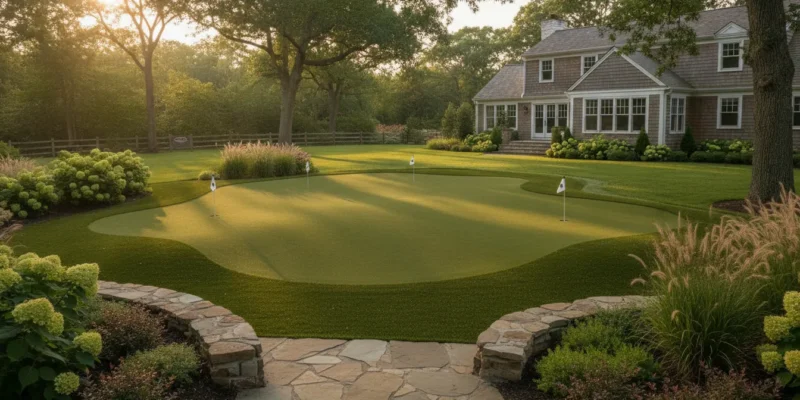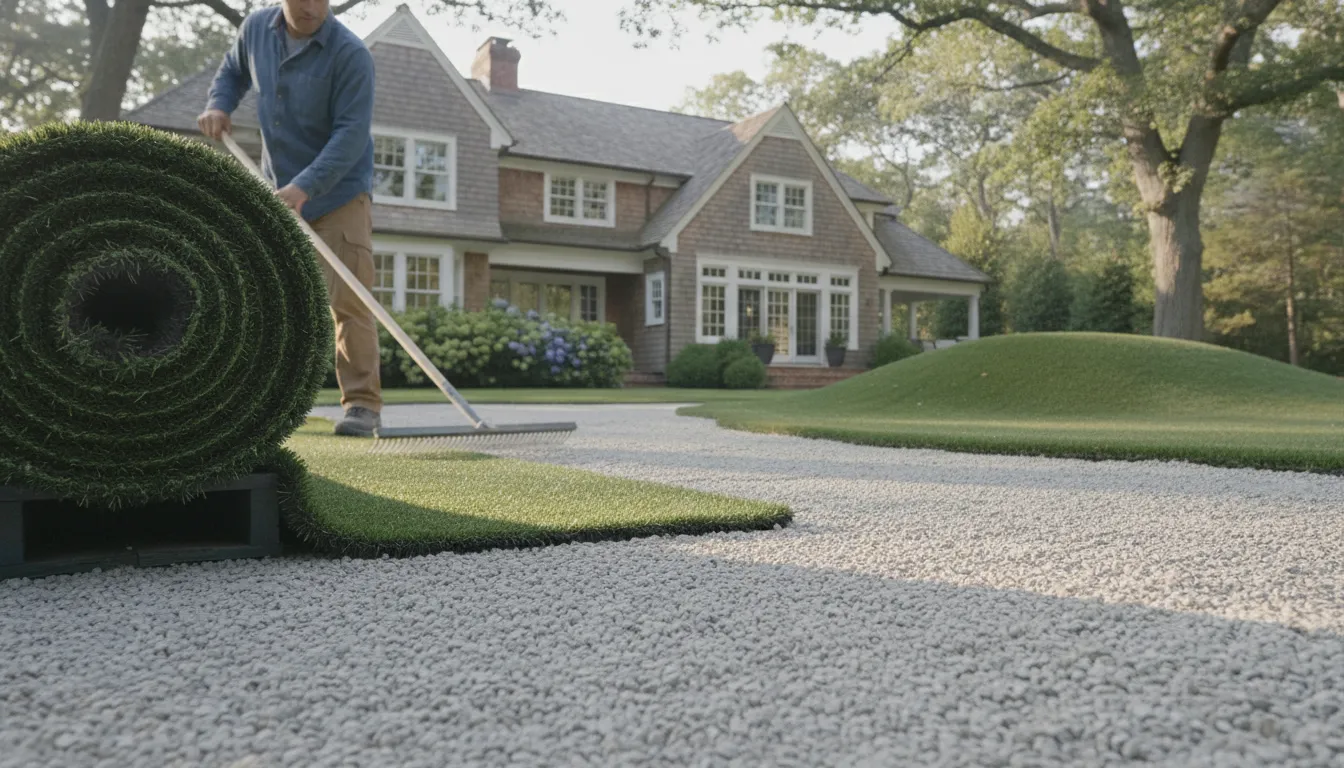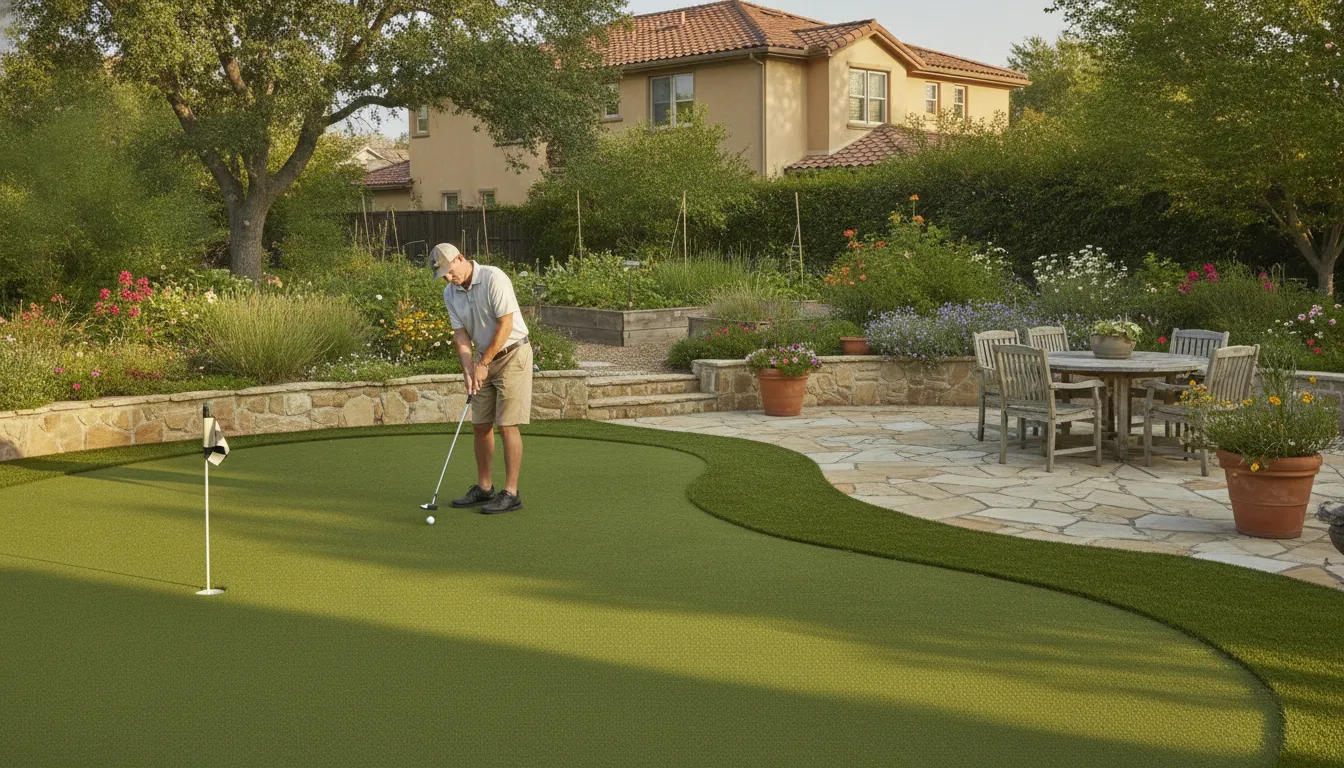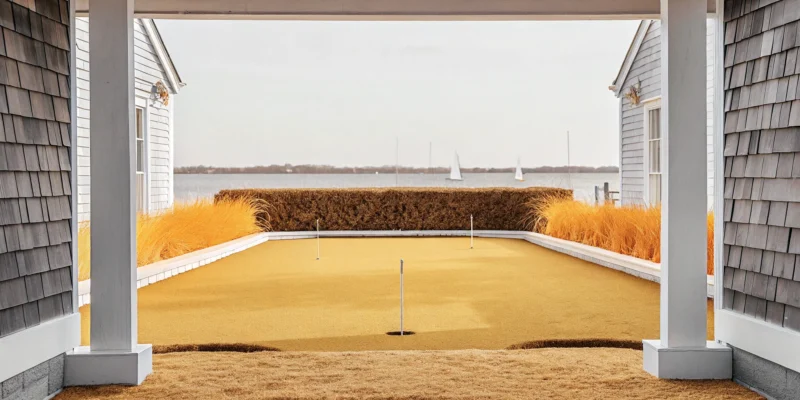
Contoured backyard practice putting green in a Long Island landscape

Putting Green Cost: Backyard Practice Green Guide

A backyard practice green is more than a rectangle of artificial turf. The final scope can change with the green’s size, contours, cup locations, fringe, base preparation, drainage, infill, and the equipment needed to reach the work area. On Long Island, those site details often matter as much as the surface material.

Call Gappsi Group at (631) 831-3177 to discuss your project.

Putting green cost depends on the complete installation, not turf alone. A simple material purchase may cover a basic surface. A professionally designed green can include grading, a stable aggregate base, shaped breaks, multiple cups, drainage, fringe transitions, and site restoration. Comparing proposals by total scope helps you distinguish a playable practice area from a basic turf installation.

Understanding what each part contributes makes it easier to evaluate a proposal and decide which design features fit your yard. Start by separating the visible turf from the construction and planning work beneath it.

What does putting green cost actually include?

Putting green cost is a scope question, not simply a turf price. Two projects with similar square footage can require very different work. A material-only purchase may cover rolls of low-pile synthetic turf, while a basic installation may add labor and straightforward ground preparation. A designed practice green can include grading, engineered contours, cups, fringe, drainage, base materials, infill, edging, and restoration around the work area.

Understanding these levels helps you compare proposals accurately and see when important construction items are listed separately.

Material-only turf

A material-only option generally starts with the playing surface product. Putting-green turf is different from standard lawn turf because its low pile is selected to support a truer golf-ball roll. Product selection may involve fiber type, pile height, density, and whether a separate fringe or transition material is needed. The homeowner or installer still needs to determine how the turf will be laid, secured, drained, and finished.

This approach can make sense for a small, simple area with suitable existing conditions. It does not automatically include excavation, disposal, aggregate base, grading, drainage corrections, cups, or the surrounding landscape work. Those omissions matter when comparing a turf product with an installed practice green.

Simple installation

A simple installation typically adds labor and a defined preparation scope. That may include removing existing grass, shaping the area, installing a compacted base, placing turf, securing edges, and completing basic finishing. The final scope depends on site access, existing grade, soil conditions, and the amount of preparation required. Published industry guidance identifies access, grading, site preparation, and landscaping demands as variables that can change installation requirements, rather than fixed components of every project.

It is important to ask whether drainage and disposal are included or treated as allowances. Limited access can also require more manual labor when equipment cannot reach the work area easily. These are site-specific questions, especially in established Long Island backyards.

Designed practice green

A designed practice green treats the area as part of the landscape, not just a patch of artificial grass. The scope can include multiple putting locations, intentional breaks, contours, fringe or fairway cuts, drainage integration, and transitions to patios or planting beds. Design and construction coordination can also affect how grading, irrigation, lighting, retaining elements, and adjacent hardscape are handled.

For more on backyard project decisions, review Gappsi Group’s backyard putting green guide. A complete proposal should identify each included layer, allowance, and exclusion so the quoted putting green cost reflects the finished scope. Gappsi Group evaluates these details through its Long Island design and construction process instead of assigning a universal price without reviewing the property.

How do size, contours, and cup count change the scope?

Square footage is only the starting point for planning a backyard practice green. A compact area may be enough for meaningful short-game practice. A larger layout can create room for several shot types and longer putts. Published industry guidance notes that a practice green can support a complete short game at a fraction of the area associated with PGA Tour greens. Those greens are roughly 5,000 to 6,000 square feet. The right size depends on how you plan to practice, the usable part of the yard, and the relationship between the green and surrounding landscape.

Size also affects more than the amount of turf. It influences excavation, base preparation, edging, fringe, drainage, and the amount of material that must be moved through the property. A small green with a straightforward outline may be efficient to build. A smaller green with several breaks, elevated edges, tight access, and multiple finish materials can require more detailed layout. It may also require more hand work than a larger, open rectangle. This is why a simple per-square-foot comparison can give homeowners an incomplete view of putting green cost.

Shape and contours determine how the green plays. A rounded or irregular outline can fit existing planting beds and patios, but it takes more precise layout than a basic rectangle. Gentle slopes and breaks can create realistic practice opportunities, yet each transition must be shaped, compacted, and finished so the ball responds predictably. Steeper changes in elevation may also affect drainage and the way the green meets adjacent lawn, pavers, walls, or planting areas.

Cup count is another scope decision. One cup creates a focused practice target. Two or more cups can support different distances and angles, but they require deliberate spacing and enough usable surface around each hole. The design should avoid placing cups where contours make one target impractical or where nearby fringe limits a normal stance. Multiple cups may also add layout, cutting, finishing, and coordination work.

Fringe and fairway cuts expand the playing surface beyond the putting area. They create visual separation and let you practice shots that are not made from the short putting surface. But they also introduce additional turf types, transitions, edging, and maintenance considerations. A proposal should identify which areas are putting turf, fringe, fairway, or surrounding landscape rather than grouping them into one vague square-foot figure.

Third-party cost guides consistently identify size, access, design complexity, and required craftsmanship as variables, but their published ranges are market context rather than a Gappsi quote. For a Long Island property, a site-specific review is the reliable way to connect the desired contours and cup layout with actual preparation and installation requirements.

Call Gappsi Group at (631) 831-3177 to discuss your putting green layout and project scope.

Which site preparation factors affect putting green cost?

The playing surface is only one part of the installation. Before turf, cups, or fringe can be added, the crew must understand how the proposed green will fit the property and how the site needs to be prepared. That is why a Long Island putting green requires a site-specific scope rather than a simple calculation based on square footage.

  1. Confirm equipment and material access. A backyard with a wide driveway or side entrance may allow equipment and materials to move efficiently. A narrow gate, steps, fencing, mature planting, or other obstacles can require more manual labor and additional handling. Access conditions can significantly affect installation scope, so they should be reviewed before the design is finalized.
  2. Measure excavation and disposal. Existing lawn, soil, roots, old hardscape, or unsuitable material may need to be removed before the base is installed. The amount of excavation depends on the proposed shape, elevation, and existing conditions. Disposal of grass or soil may also be required, and that work should appear clearly in the proposal rather than being treated as an assumed detail.
  3. Plan grading and contours. A practice green needs intentional slopes and breaks, but those contours must connect sensibly to the surrounding yard. Unexpected grading or site preparation can change the overall scope. A landscape design and construction provider can coordinate the green with adjacent planting beds, patios, walkways, and lawn areas. See Gappsi’s Long Island landscape design and construction services for the broader site-planning context.
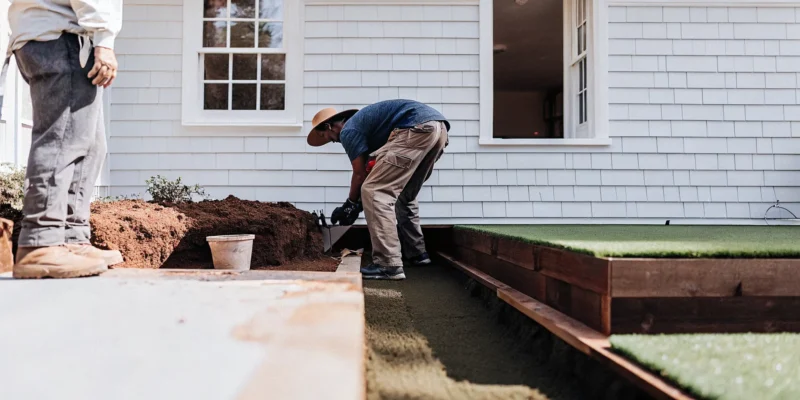
  4. Build the aggregate base correctly. After excavation and grading, the installation needs a stable, well-prepared base beneath the putting-green turf. The required preparation depends on the soil, drainage behavior, final elevations, and intended contours. A material-only turf purchase does not account for this construction scope.
  5. Resolve drainage and retaining needs. Water must move away from the playing surface without creating problems for the home, foundation, neighboring areas, or existing landscape. Drainage improvements, swales, collection points, or retaining work may be needed when the property has elevation changes or persistent water issues. Gappsi’s yard drainage solutions for Long Island provide useful context for why drainage belongs in the site review.
  6. Coordinate utilities and existing landscape. Irrigation, lighting, electrical lines, planting, trees, walls, and nearby structures can affect excavation and the final layout. The designer should identify what remains, what must be protected or relocated, and how the new green will transition into the yard. Nassau and Suffolk properties vary widely, so these conditions cannot be assumed from an aerial measurement alone.

When comparing putting green cost, ask whether the proposal includes access, excavation, disposal, grading, base preparation, drainage, retaining work, utility coordination, and landscape restoration. A complete scope makes the construction decisions visible before work begins.

How do turf, fringe, infill, and drainage affect value?

A practice green is not made from the same artificial grass used across a lawn. Putting-green turf has a low pile and tight surface so a golf ball can roll with more predictable speed and direction. Lawn turf is typically taller and fuller, which creates a softer visual transition but is not designed for putting performance. Selecting the correct turf therefore affects the use of the space, not just its appearance.

Density and pile height also influence how the surface feels underfoot and how consistently the ball travels. A dense, short-pile product can support a smoother roll, while the specific fiber and backing are part of the material decision. The right selection depends on whether the green is intended mainly for putting, includes chipping practice, or blends into a larger backyard recreation area. A proposal should identify the turf type rather than describe the surface only as synthetic grass.

Backyard putting green turf integrated with surrounding landscape

Fringe turf creates the visual and functional border around the putting surface. It can make the green look more natural within a Long Island landscape and gives homeowners a different surface for approach shots or short-game practice. Fringe width, shape, edging, and the transition to lawn, planting beds, patio materials, or other landscape features all add design and installation scope. The fringe should be planned with the green’s contours, drainage path, and surrounding grade, not added as an afterthought.

What does infill change?

Infill is placed between turf fibers to help support the blades and influence how the ball interacts with the surface. The amount and type selected can affect ball speed, friction, and the way the turf responds during use. That makes infill part of playability and maintenance planning, rather than a minor finishing detail. A homeowner should ask what infill is specified, where it will be installed, and what routine care is expected to keep the surface even.

Why does drainage belong in the scope?

Water management protects the usability of the area after rain and helps coordinate the green with the existing landscape. Grading, drainage layers, outlets, and nearby irrigation or planting areas may need to be considered together. Gappsi’s documented landscape services include grading, ground preparation, drainage, irrigation, and synthetic turf integration. For properties in Nassau or Suffolk County, a site review can identify whether access, existing grades, or surrounding construction changes the installation scope. The most useful measure of putting green cost is therefore a complete specification covering turf, fringe, infill, drainage, base preparation, and ongoing maintenance expectations.

What is the difference between professional design and simple turf installation?

A roll of artificial grass can cover a space, but a practice green must do more than look green. It needs a predictable ball roll, intentional breaks, usable cup locations, and a base that stays stable through Long Island weather. That is why a material-only purchase or basic turf installation should not be compared with a complete design-build project as though they were the same scope. When evaluating putting green cost, ask what is included in the finished playing surface, not only what the turf material costs.

Professional planning also connects the green to the surrounding landscape. Gappsi documents capabilities that include 3D landscape design, grading, ground preparation, drainage-related landscape coordination, and irrigation systems. Those services can matter when the green must fit a patio, planting bed, lawn area, or an existing grade. See this guide to artificial putting green design for additional design context.

Professionally contoured backyard putting green integrated with a Long Island landscape

Basic turf installation compared with a professionally designed practice green
Project element Scope comparison
Planning Material-only or basic installation: Uses a standard shape and limited site planning.
Professionally designed practice green: Maps the playing goals, yard, access, transitions, and surrounding landscape.
Base Material-only or basic installation: May include only the minimum surface preparation.
Professionally designed practice green: Builds and compacts a suitable aggregate base for a stable, consistent roll.
Contours Material-only or basic installation: Often follows the existing grade with few intentional breaks.
Professionally designed practice green: Plans slopes, contours, and breaks to create varied practice shots.
Cups Material-only or basic installation: May provide a single location or leave cup work to the owner.
Professionally designed practice green: Coordinates multiple cup locations with the design and intended practice.
Drainage Material-only or basic installation: Addresses drainage only if included in the limited installation scope.
Professionally designed practice green: Reviews runoff and coordinates drainage with grading and adjacent landscape work.
Turf and fringe Material-only or basic installation: May use a general turf product or a simple cut pattern.
Professionally designed practice green: Selects low-pile putting turf and plans fringe or fairway transitions for playability.
Finish Material-only or basic installation: Provides a functional covered area with fewer integrated details.
Professionally designed practice green: Coordinates edging, transitions, restoration, and a finished appearance.
Coordination Material-only or basic installation: The homeowner may manage separate site, turf, and landscape needs.
Professionally designed practice green: One coordinated scope can connect design, preparation, installation, and landscape elements.

The difference is not simply a question of choosing more expensive turf. Putting-green turf is low-pile artificial grass designed to let golf balls roll true, unlike thicker lawn turf. A professional scope accounts for how that surface interacts with base preparation, contours, cups, drainage, fringe, and access. It also identifies exclusions before work begins. A site-specific review is the reliable way to compare proposals and understand what your project includes.

What should a Long Island putting green proposal list?

A useful proposal should let you compare the complete construction scope, not just a turf product or a single square-foot figure. On Long Island, a backyard in Nassau County may require different preparation from a property in Suffolk County, depending on access, existing grades, drainage, and surrounding hardscape. Ask for each major assumption to be documented before you compare putting green cost.

  1. Measured area and layout: Confirm the proposed square footage, shape, perimeter, fringe or fairway-cut areas, and the location of every playing feature. The plan should show how the green fits the backyard rather than relying on a rough estimate.
  2. Access and existing conditions: The proposal should explain how crews and equipment will reach the work area. It should note narrow gates, steps, slopes, utilities, trees, or structures that affect the approach. Confirm whether the site review includes existing landscape and hardscape conditions.
  3. Demolition and disposal: Identify what will be removed, such as lawn, soil, roots, old edging, or existing paving, and state whether loading and disposal are included. Unlisted removal work can change the scope after construction begins.
  4. Excavation, base, and grading: Look for the planned excavation depth, aggregate or stone base, compaction method, finished elevations, and surface contours. The proposal should describe the breaks and slopes designed into the green, not simply say that the area will be leveled.
  5. Drainage and water management: Ask where runoff will go and whether the scope includes drainage systems, connections, swales, or adjustments around nearby planting beds. Gappsi’s landscape division coordinates grading, drainage, irrigation, and synthetic turf integration as part of broader outdoor construction planning.
  6. Cups and playing details: Confirm the number and placement of cups, the intended practice layout, and any changes in cut or elevation around them. These details affect both the design and the installation work.
  7. Turf, fringe, and infill: The specification should name the putting-surface turf, fringe material, color or cut transitions, seam approach, and infill type. Putting turf is not interchangeable with ordinary lawn turf, so the product description matters.
  8. Edging and restoration: Check the perimeter edging, transitions to patios or lawn, protection of adjacent areas, cleanup, soil replacement, planting restoration, and any irrigation or landscape repairs.
  9. Exclusions and maintenance: Require a clear list of items not included, such as permits, retaining work, electrical changes, tree removal, or repairs outside the green. The proposal should also explain recommended cleaning, brushing, infill care, and owner maintenance responsibilities without promising an unsourced lifespan or warranty.

A design-build provider should be able to connect the site plan, construction details, and finish selections in one document. Review this putting green contractor guide for additional questions to ask when comparing proposals.

Call Gappsi Group at (631) 831-3177

Frequently Asked Questions

How much does it cost to install a backyard putting green?

There is no reliable single price for every property. Putting green cost depends on several choices. These include area, shape, contours, cup placement, turf, infill, excavation, base preparation, drainage, edging, disposal, and equipment access. A simple turf application and a constructed practice green are different scopes, so a site-specific proposal is the best way to compare the actual work included.

How much space does a 700-square-foot putting green provide?

A 700-square-foot green can provide meaningful room for putting practice, but the usable layout depends on its shape and the surrounding yard. The same area can accommodate different combinations of breaks, slopes, cup locations, fringe, and approach space. Measure the intended footprint rather than relying on square footage alone, because layout and play features determine how the area functions.

What type of turf is used for a practice putting green?

Putting-green turf is a low-pile synthetic surface selected to support a consistent ball roll. It differs from lawn turf in pile, density, and intended use. A proposal should identify the putting surface, any fringe or fairway-cut turf, seam locations, infill, edging, and drainage approach. These details help you understand what you are receiving instead of comparing material labels alone.

Does infill affect the putting surface?

Yes. Infill is part of the system that supports the synthetic fibers and affects how the finished surface is maintained and played. The appropriate selection depends on the turf system, drainage design, intended use, and site conditions. Ask the installer to explain the selected infill and how it fits the complete construction scope, rather than treating it as an interchangeable add-on.

Why is a site-specific proposal needed before deciding?

A site review reveals conditions that cannot be priced accurately from a satellite image or square-foot estimate. Access, existing grass or soil, grading, drainage, utilities, slopes, retaining needs, and disposal can change the work. On Long Island, a detailed proposal should list the measured area, preparation, base, contours, cups, turf, infill, restoration, exclusions, and maintenance expectations so the scope is clear before construction begins.

Plan your backyard putting green with a complete scope

Putting green cost becomes easier to evaluate when the proposal reflects your property, intended layout, and full installation scope. Gappsi Group can discuss site conditions, preparation, drainage, turf selection, contours, and installation details for a backyard project in Nassau or Suffolk County.

Call Gappsi Group at (631) 831-3177 to discuss your Long Island putting green scope.

Share this page:
Backyard putting green with synthetic turf from a professional Long Island, NY builder.

How to Choose a Putting Green Builder on Long Island, NY

You love golf, but finding the time to get to the course can be a challenge. A personal putting green offers the perfect solution, letting you practice your chipping and putting whenever you have a spare moment. However, a poorly installed green can be more frustrating than helpful. The difference between a lumpy, uneven surface and a true-rolling practice area comes down to craftsmanship. This is where a professional Putting Green contractor builder Long Island NY proves their worth. They manage every detail, from site preparation to turf selection, ensuring your investment results in a beautiful, functional space that genuinely improves your game and your home.

Key Takeaways

  • Choose a Contractor Who Is a True Partner: The quality of your putting green depends on your builder’s expertise. Select a team with a strong local portfolio, experience with Long Island’s climate, and a commitment to using premium synthetic turf and materials.
  • Customize Your Green to Match Your Goals: The final cost is determined by size, complexity, and features like bunkers or lighting. Work with your contractor to design a green that fits your practice needs, your property, and your budget.
  • Do Your Homework Before Signing a Contract: Avoid costly mistakes by researching your options. Compare multiple quotes, check references, and review the contract to confirm it includes the project scope, timeline, and warranty details.

What Is a Putting Green Contractor?

A putting green contractor is a specialist who designs and installs artificial golf greens for your backyard. Think of them as more than just installers; they are craftsmen who create a personalized golfing experience right at your home. A professional contractor handles every step of the process, from initial design and site preparation to selecting the perfect turf and shaping the green for a realistic ball roll. They understand the specific challenges of Long Island’s climate and soil, ensuring your green has proper drainage and will last for years. Their expertise is crucial for creating a surface that not only looks great but also plays true, with consistent ball speed and response.

These experts, like the team at Tour Greens Long Island, focus on installing high-performance artificial golf greens and other recreational surfaces. A comprehensive builder can do more than just the green itself. They can integrate it into a complete backyard transformation, combining it with beautiful landscaping, patios, or even multi-sport Sports Games Courts. Choosing the right contractor means you’re not just getting a patch of turf; you’re investing in a dedicated professional who will bring your vision for outdoor recreation to life with precision and skill.

Designing and Installing Your Custom Green

The best part of building a home putting green is making it completely your own. A great contractor will work with you to create a design that is truly unique to your space and how you want to play. As the experts at Personal Putting Greens note, the focus should be on building a green that reflects the customer’s specific wishes. This collaborative process ensures the final product fits your skill level, whether you’re a casual putter or a serious golfer looking to shave strokes off your game. The design phase considers everything from the green’s shape and contours to its integration with your existing landscape design, making it a natural and beautiful addition to your yard.

Choosing the Right Size, Layout, and Turf

The size and layout of your putting green are key decisions that will shape your practice experience. You can opt for a small, simple practice green of around 600 square feet or go for a much larger, more complex layout. Some custom golf areas can be up to 3,000 square feet and include features like sand traps and chipping areas, giving you a more versatile practice space. The layout, including the number of holes and the subtle slopes (or breaks), should match your practice goals. Equally important is selecting the right synthetic turf, as different materials offer varying speeds and textures to mimic the feel of your favorite course.

Adding Features like Bunkers and Lights

To make your putting green feel like a true golf course experience, consider adding custom features. Many homeowners choose to include sand traps or bunkers to practice their short game. You can also add different cuts of fringe and rough around the green for chipping practice. As installers like Back Nine Greens demonstrate, the goal is to build a custom green that looks and feels like the real thing. For those who want to practice after sunset, incorporating landscape lighting is a fantastic option. A skilled contractor can seamlessly integrate these elements, creating a professional-grade practice area that complements your home’s masonry and overall outdoor aesthetic.

Why Should You Install a Putting Green?

A backyard putting green is more than just a fun feature, it’s a lifestyle upgrade that adds value, beauty, and entertainment to your home. Imagine stepping outside to practice your short game whenever you want, without having to book a tee time. It’s a unique addition that transforms your property into a personal retreat for recreation and relaxation. Whether you’re a serious golfer looking to lower your handicap or a family seeking a new way to enjoy your outdoor space, a custom putting green offers benefits that go far beyond the game itself. From enhancing your property’s appeal to providing year-round enjoyment, it’s an investment in your home and your happiness.

Upgrade Your Lifestyle and Recreation

Think of the convenience of having a personal putting green just steps from your back door. You can practice your chipping and putting for a few minutes before work or unwind with a friendly competition after dinner. It’s a fantastic way to introduce your kids to golf and create lasting family memories. A putting green also serves as a beautiful and functional centerpiece for outdoor entertaining, giving your guests a unique activity to enjoy. By installing a custom green, you’re not just adding a recreational feature, you’re creating a hub for fun and relaxation that perfectly complements your outdoor living space. It’s an everyday luxury that helps you make the most of your time at home.

Increase Your Property’s Value and Appeal

A professionally installed putting green is a standout feature that can significantly increase your property’s market value. For potential buyers, especially those who love golf, it’s a memorable amenity that sets your home apart from others on the market. It signals a commitment to quality and a luxury lifestyle, adding a unique “wow” factor that enhances curb appeal. This kind of specialized landscaping is an investment that pays off, not just in personal enjoyment but also in financial returns. When integrated thoughtfully into your overall landscape design, a putting green becomes a premium asset that makes your property more attractive and desirable.

Play All Year with Synthetic Turf

One of the biggest advantages of a modern putting green is the use of high-quality synthetic turf. Unlike natural grass, which requires constant watering, mowing, and fertilizing, artificial turf is incredibly low-maintenance, saving you time and money. Gappsi’s advanced synthetic turf is designed to withstand Long Island’s diverse weather, staying lush and green from the hottest summer days to the coldest winter months. This means your putting green remains perfectly playable all year round, without developing brown spots or becoming unusable after heavy rain. You get a consistently smooth and true roll every time you play, with none of the hassle of traditional lawn care.

How a Putting Green Can Benefit Your Business

Putting greens aren’t just for homes. They can be a powerful asset for commercial properties, too. Imagine offering a putting green as an amenity at your office park, hotel, or residential community. It’s a fantastic way to attract and retain clients, provide a unique recreational outlet for employees, or give residents a fun social activity. A small indoor green can be a great addition to a break room, while a larger outdoor installation can become a focal point for corporate events. You can see the wide range of Gappsi’s beautiful and functional project installations on our YouTube channel. It’s an investment in your brand that shows you care about creating an exceptional experience for your clients and staff.

How to Choose the Best Putting Green Contractor on Long Island

Finding the right contractor is the most important step in bringing your dream putting green to life. A great builder does more than just lay down turf; they partner with you to create a beautiful, functional, and long-lasting addition to your home. The quality of their work will determine how much you enjoy your green for years to come. With so many options on Long Island, it’s smart to do a little homework to find a team that has the right skills and experience. By focusing on a few key areas, you can confidently choose a contractor who will deliver a professional-grade putting green that exceeds your expectations and becomes a favorite feature of your backyard.

Look for Premium Synthetic Turf and Materials

The look, feel, and performance of your putting green all come down to the quality of the materials. A top-tier contractor will use premium synthetic turf designed to mimic the ball roll of a real golf course. Don’t hesitate to ask potential builders about the turf they use, where it comes from, and why they chose it. High-quality turf is more durable, holds its color better, and provides a more realistic playing experience. Beyond the turf, ask about the base materials, infill, and even the cups. A contractor who is proud of their materials will be happy to explain the benefits of what they use.

Insist on Advanced Drainage and Precision Grading

What’s underneath your putting green is just as important as the surface itself. Proper site preparation is essential for a green that lasts. A skilled contractor will prioritize creating a stable base with an advanced drainage system to prevent water from pooling and causing issues down the line. Precision grading is also critical for ensuring a true and consistent ball roll. A lumpy or uneven surface can be frustrating and defeats the purpose of practicing at home. An experienced landscape design team understands how to work with Long Island’s specific terrain to ensure your green performs perfectly in any weather.

Check Their Experience, Portfolio, and Local Reputation

Experience is a huge indicator of a contractor’s ability to deliver a quality product. Look for a company that has been designing and installing putting greens for many years and has a strong presence in the Long Island community. Ask to see a portfolio of their completed projects. Pictures and videos can give you a great sense of their design style and the quality of their craftsmanship. You can often find project galleries on their website or even on their YouTube channel. Finally, check online reviews and ask for local references you can speak with. A contractor with a solid reputation is one you can trust.

Confirm Warranty and Maintenance Support

Your relationship with your contractor shouldn’t end the day the installation is finished. A reputable builder will stand behind their work with a solid warranty. This protects your investment and gives you peace of mind. Be sure to ask what the warranty covers and for how long. It’s also a good idea to ask about ongoing maintenance support. While synthetic greens are low maintenance, they may need occasional brushing or infill adjustments to stay in top shape. Knowing your installer offers restoration services provides a convenient and reliable option for keeping your green looking and playing its best.

How Much Does a Putting Green Cost on Long Island?

Figuring out the budget for your dream backyard putting green is a common first step. On Long Island, the cost for a professionally installed putting green can range from around $3,000 to over $15,000. For larger, more complex designs with custom features, the investment can be $25,000 or more. Think of it less as a simple expense and more as a long-term investment in your home’s value, your family’s enjoyment, and your golf game.

The final price tag depends entirely on your vision. A simple, compact green for practicing your short game will naturally cost less than a sprawling, multi-hole course with sand traps and unique contouring. The key is to balance your desires with a realistic budget. Working with an experienced contractor allows you to explore different options and understand exactly where your money is going. They can help you design a green that fits your space and financial plan perfectly, ensuring you get the most value and enjoyment from your new backyard feature.

What Factors Influence the Price?

Several key elements determine the final cost of your putting green. The size and complexity of the design are the biggest drivers. Larger greens require more materials and labor, and intricate shapes or slopes add to the installation time. The materials you choose also play a significant role. High-quality synthetic turf has a higher upfront cost but saves you money on maintenance. Finally, preparing the site is crucial. If your yard needs significant grading or a specialized drainage system to handle Long Island’s weather, this will be factored into the project’s cost. Proper site preparation is essential for a long-lasting, high-performance green.

How to Budget for Additional Costs

When planning your budget, it’s smart to think beyond the initial installation. Consider the long-term costs of maintenance. While synthetic greens are low-maintenance, they still benefit from occasional cleaning to stay in top shape. You should also think about any extra features you might want. Fun additions like sand traps, chipping stations, or ambient lighting for evening practice will add to the total investment. A good rule of thumb is to set aside an extra 10 to 20 percent of your installation budget to cover these enhancements. This ensures you can create a complete and functional space without any financial surprises.

Common Mistakes to Avoid When Hiring a Contractor

Choosing the right contractor is the most important step in bringing your backyard putting green to life. To make sure your project goes smoothly from start to finish, it helps to know what common pitfalls to look out for. A great partnership with your builder is the foundation of a successful project, so avoiding these key mistakes will set you up for a stress-free experience and a green you’ll love for years.

Don’t Skip Your Research and Reference Checks

It can be tempting to hire the first contractor who gives you a quote, but taking time for research is a step you can’t afford to skip. Start by looking for a company with a strong local reputation and a portfolio of completed projects. Look for detailed reviews that mention specifics like skill, communication, and tidiness. Happy customers often point out that a team was helpful and that they would recommend the company to others. You can also watch videos of past projects to get a feel for a contractor’s craftsmanship and see the quality of their work firsthand before you even pick up the phone.

Take Your Time and Compare Your Options

Getting several estimates is about more than just comparing prices. It’s your chance to interview potential builders and understand their unique approach. Since Long Island has many installers, you have the power to find the perfect fit for your vision. When you compare offers, look beyond the bottom line. Ask about the quality of the synthetic turf and materials they use, their design process, and what’s included in their installation. A lower bid might mean lower quality materials or a less experienced team, so a detailed comparison is key to making an informed decision.

Factor in Long Island’s Climate and Drainage Needs

A beautiful putting green is only as good as the base it’s built on, especially with Long Island’s weather. Our region gets plenty of rain and snow, so your contractor must have a solid plan for drainage. Without it, water can pool on the surface or cause the base to shift, ruining your green. Ask potential builders how they prepare the ground and what drainage solutions they use to ensure your turf stays pristine all year. A professional will be able to explain their process for creating a stable, permeable foundation that can handle anything our climate throws at it.

Always Read the Contract Carefully

Before you sign on the dotted line, make sure you read and understand every word of the contract. This document is your protection, so it should clearly outline the entire scope of the project. Look for specifics like the total cost, a detailed payment schedule, the project timeline, and a list of all materials. It should also include warranty information, such as a five-year guarantee on the installation or turf. If anything seems vague or is missing, don’t hesitate to ask for clarification. A trustworthy home improvement company will be happy to walk you through the contract and ensure you feel completely comfortable before moving forward.

Related Articles

Frequently Asked Questions

How much space do I really need for a putting green? You might be surprised to learn that you don’t need a massive yard to install a functional and fun putting green. While larger spaces allow for more complex designs with multiple holes and chipping areas, a beautiful and effective green can be designed for a smaller, dedicated corner of your property. A skilled contractor can create a custom layout that makes the most of your available space, ensuring it feels like a natural and integrated part of your landscape, not just an afterthought.

How long does the installation process typically take? The timeline for installing a putting green can vary, but a standard project is often completed within a week. The total time depends on factors like the size of the green, the complexity of the design, and the amount of site preparation needed. Creating a stable, well-drained base is the most critical part of the process, so a professional team will take the necessary time to get that right before laying the turf.

Can I customize the speed of the green to match my home course? Absolutely. This is one of the best parts of designing a custom green. The speed, or “stimp,” is determined by the type of synthetic turf and the amount of sand infill used. During the design consultation, you can discuss your preferences with your contractor. Whether you prefer the faster greens of a championship course or a slightly slower speed for casual play, they can adjust the materials and installation technique to give you the exact playing experience you want.

What kind of maintenance is required for a synthetic putting green? While synthetic greens are known for being low-maintenance, they aren’t zero-maintenance. To keep your green in top condition, you will want to periodically remove leaves and other debris with a leaf blower. It’s also a good idea to occasionally brush the turf fibers to keep them standing upright, which ensures a consistent ball roll. This simple routine takes far less time and effort than caring for natural grass and keeps your green ready for play year-round.

Is a backyard putting green a good investment for my home? Yes, it’s an excellent investment in both your property and your lifestyle. A professionally installed putting green is a unique luxury feature that can significantly increase your home’s appeal and resale value, making it stand out to potential buyers. Beyond the financial aspect, it’s an investment in your own enjoyment, providing a convenient way to practice your golf game, entertain guests, and spend quality time with your family right in your own backyard.

Share this page:

Professional Putting Green Installation in Mount Sinai, NY

View Gappsi’s YouTube Channel to view Professional Putting Green Installation in Mount Sinai, NY

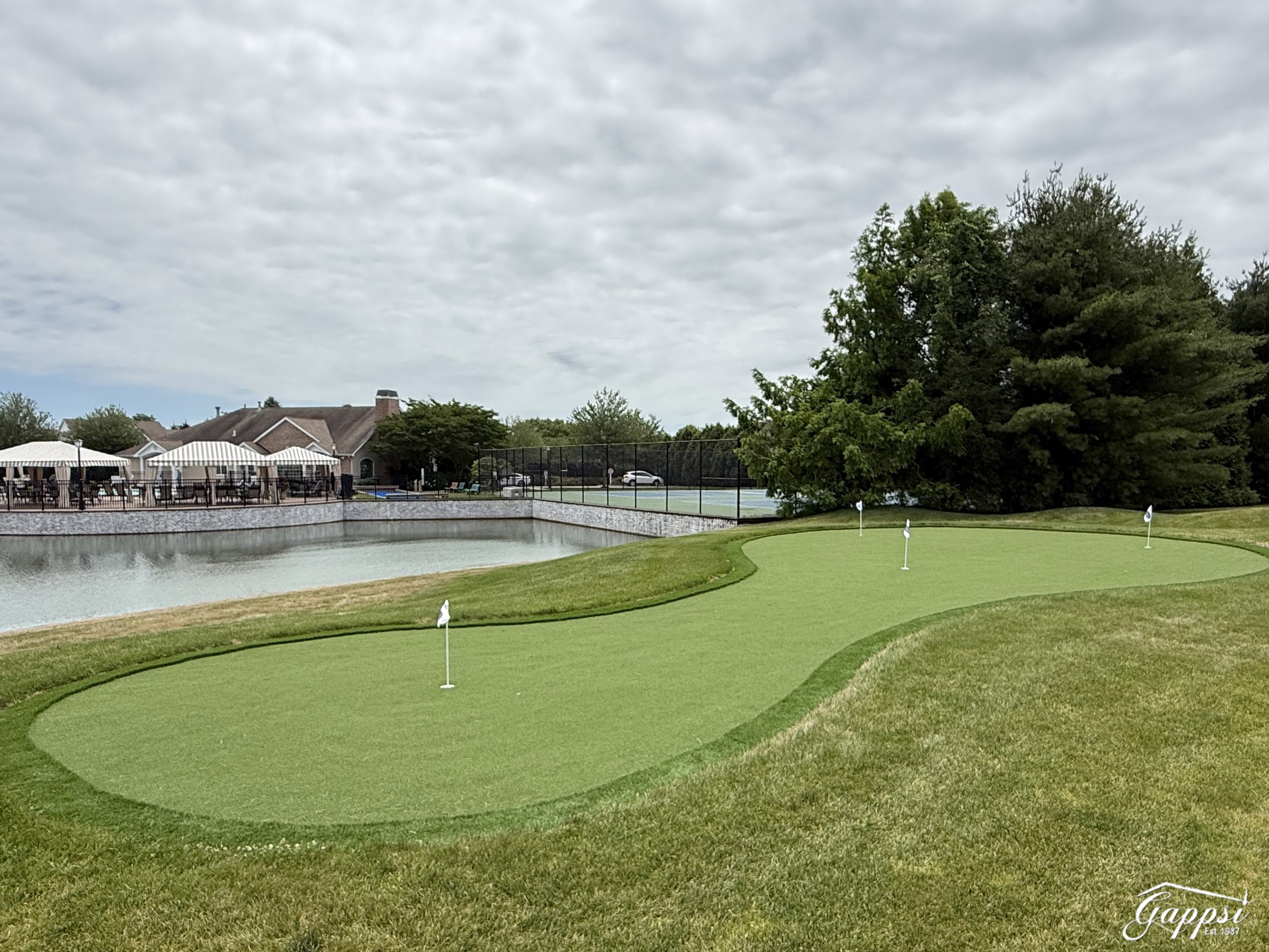
In the world of residential property management and community development, the amenities offered are often the defining factor in residents’ quality of life. Whether it is a swimming pool, a clubhouse, or walking trails, these spaces serve as the heartbeat of a community. Recently, Gappsi had the privilege of transforming a space in Mount Sinai, NY, into something truly special for the residents of the Plymouth Estates community: a professional-grade, custom-built putting green.

For many homeowners and community managers, the addition of a putting green is more than just a landscaping upgrade; it is an investment in recreation, social engagement, and property value. Let’s take a closer look at this recent installation and why it has become the latest highlight of our sports game court project portfolio.

Transforming the Landscape at Plymouth Estates

The Plymouth Estates community is known for its commitment to providing residents with high-quality living standards. When the community looked to revitalize their outdoor space, they wanted an amenity that was not only aesthetically pleasing but also highly functional for a wide range of skill levels.

Gappsi was brought in to design and install a premium putting green that would withstand the rigors of frequent use while maintaining the pristine look of a professional course. The project required careful site assessment, precise grading, and the selection of materials capable of withstanding the fluctuating weather conditions here on Long Island. The result is a stunning installation that has quickly become a focal point of the neighborhood.

Precision and Detail: The Anatomy of the Green

When installing a putting green, especially one meant for a community, the devil is in the details. A simple patch of artificial turf is not enough; true performance requires layers of engineering and a keen eye for landscaping design.

For the Plymouth Estates project, we focused on several key technical elements:

  • Premium Putting Turf: We installed high-performance putting green grass specifically engineered to mimic the speed and roll of natural bentgrass. This allows for realistic practice sessions, whether a resident is working on their short game or just enjoying a casual evening putt with neighbors.

  • The 12-Inch Fringe: One of the most important aspects of a professional-looking green is the “surround.” We created a 12-inch fringe around the entire putting surface. This fringe serves two purposes: it provides a distinct, manicured aesthetic that beautifully frames the green, and it offers a secondary area for chipping practice. The contrast between the turf fibers creates a clear visual boundary that elevates the look of the entire sports game court area.

  • The Four-Hole Layout: To ensure the green could accommodate multiple users simultaneously without congestion, we installed four strategically placed flags and cups. By placing four pins, we allow residents to play a small, varied “course” within the green, or simply ensure that even when the space is busy, there is always an open cup to aim for.

Why Communities Are Choosing Putting Greens

The feedback from the residents at Plymouth Estates has been overwhelmingly positive. But why have putting greens become such a popular choice for community installations?

1. Low Maintenance, High Reward

Unlike natural grass greens, which require constant mowing, specialized fertilization, and irrigation, modern synthetic putting greens are incredibly low-maintenance. They remain “tournament-ready” all year round, regardless of the season. For community associations, this means providing a luxury amenity without the headache of daily upkeep costs.

2. A Social Hub

Golf is inherently a social sport. By installing a putting green within the community, Plymouth Estates has created an organic meeting place. It is a space where residents can step out of their homes for ten minutes of practice, catch up with neighbors, or organize friendly putting competitions. It turns the outdoors into a social club right in their backyard.

3. Accessible Fitness

Staying active is a priority for many, and putting provides a low-impact, accessible form of exercise. It is a sport that can be enjoyed by all ages and skill levels, making it the perfect equalizer in a community setting. Whether you are a scratch golfer looking to refine your stroke or someone picking up a putter for the very first time, the putting green provides a welcoming environment for everyone.

professional-putting-green-installation-in-mount-sinai-ny-gappsi-sports-game-courts

The Gappsi Standard in Mount Sinai

At Gappsi, we pride ourselves on more than just “building a green.” We focus on creating a comprehensive sports and leisure experience. Our team understands the nuances of base preparation, drainage, and turf tension, all of which are critical to the longevity of the installation. A poor installation will ripple or bubble over time, but a Gappsi installation is built to last, ensuring that the residents of Plymouth Estates can enjoy their green for many years to come.

This project in Mount Sinai is the latest in our extensive lineup of sports game court installations. Each project we undertake is unique, tailored to the specific needs of the landscape and the community it serves. Whether it is a full-sized tennis court, a basketball half-court, or a putting green, our goal remains the same: to deliver excellence and enhance the way our clients live.

Seeing the residents of Plymouth Estates making so much use of their new putting green is the ultimate reward for our team. It confirms what we have always believed: outdoor spaces are not just about curb appeal; they are about fostering connections.

If your community or residential property is looking to add value, encourage physical activity, or simply revitalize an underutilized patch of lawn, a professional putting green might be the perfect solution. From the initial design phase to the final flag placement, Gappsi is here to ensure your vision becomes a reality.

We are proud to have left our mark on the Plymouth Estates community, and we look forward to continuing our work of transforming landscapes across Mount Sinai and beyond. If you are ready to upgrade your outdoor living space, it is time to experience the Gappsi difference.

Contact Gappsi Today

📍 Serving all of Long Island, NY — Nassau & Suffolk Counties
🌐 https://www.gappsi.com/
📞 Call now for a free consultation and estimate

SCHEDULE A MEETING TODAY WITH GAPPSI

Share this page:

Putting Green Installation in Patchogue, NY: A Smart Amenity for Apartment Communities

Today’s apartment communities are always searching for ways to improve life for residents, boost property value, and stand out from the competition. One popular new amenity is the on-site putting green. Gappsi recently finished a modern putting green for an apartment complex in Patchogue, NY, offering both fun for residents and long-term savings for the property.
This project shows how well-designed outdoor features can change shared spaces and give residents a unique, easy-to-care-for way to have fun, making the community more appealing.

Overview of the Patchogue Putting Green Installation

At this Patchogue apartment complex, Gappsi installed a putting green that looks good, works well, and lasts. The center uses high-quality turf that feels like a real golf green. Around the center, there’s a darker, taller turf that adds contrast and looks like a real golf course.
The putting green was installed on a compacted gravel base with a top layer of bluestone screenings, providing excellent drainage and stability. The putting green sits on a base of packed gravel topped with bluestone screenings, which improve drainage, stability, and longevity. This method keeps the surface even and strong, so it can withstand heavy use year-round. Residents get a top-quality, easy-to-maintain putting green they can use any time.d shows how apartment communities can improve shared outdoor spaces with functional luxury.

Why Apartment Communities Benefit from Putting Greens

A putting green offers more than just a place to play. It’s a community feature that attracts a wide range of residents, from casual golfers to those looking for a fun way to unwind.  A putting green encourages outdoor activity, social interaction, and stress relief. Residents can practice their short game, unwind after work, or enjoy friendly competition with neighbors. Unlike larger sports courts or playgrounds, putting greens are quiet, compact, and accessible to residents of all ages, rendering them perfect for shared residential environments.
Amenities like these improve residents’ daily lives. More people now look for communities that offer more than just a place to live; they want spaces that support health, fun, and social connections.
putting-green-installation-in-patchogue-ny-a-smart-amenity-for-apartment-communities

Cost Savings: In contrast to conventional Landscaping

A big advantage of adding a putting green is the savings it provides over time. Regular grass needs constant care like mowing, fertilizing, watering, and repairs, which can get expensive, especially for large areas.
A professionally installed putting green drastically reduces these costs. Synthetic turf does not require watering, resulting in substantial savings on water bills. There is no need for fertilizers, pesticides, or regular mowing, greatly lowering labor and maintenance expenses. Over time, these savings can counterbalance the initial installation cost, making the putting green a financially smart investment.
The gravel and bluestone base in the Patchogue project improves drainage and extends the green’s lifespan, reducing the need for repairs. When installed right, putting greens can look good and work well for years with little upkeep.

Increased Property Value as well as Market Appeal

Amenities help attract and keep residents, and a putting green can really set a property apart. Unique outdoor features often make a place seem more valuable, allowing owners and managers to charge higher rent.
A putting green boosts curb appeal and creates a resort-style atmosphere that appeals to prospective tenants. It photographs well for online listings, adds visual interest to common areas, and helps position the property as modern and lifestyle-focused.
For existing residents, attractive amenities contribute to satisfaction and retention. Residents who feel their community offers exceptional features are more likely to renew leases, reducing turnover and vacancy rates. Lower turnover translates into additional savings on marketing, cleaning, and unit preparation costs.

Low Maintenance, High Durability

Putting greens are engineered to endure frequent use without deteriorating.  Putting greens are built to withstand heavy use without wearing out. The synthetic turf in the Patchogue project is designed to resist fading from sunlight and remain consistent in all weather. The taller turf around the edges helps it last longer where people walk the most. The putting green remains usable after rain and throughout the year. This dependability makes it an ideal amenity for apartment complexes that want to deliver consistent value without ongoing maintenance requirements.

Environmental Benefits

Besides saving money, putting greens are good for the environment. Not needing irrigation reduces water use, which is helpful in areas with water restrictions or high utility costs. Skipping fertilizers and chemicals also reduces environmental impact, making putting greens a smart, eco-friendly option.  For apartment communities seeking sustainable solutions, synthetic putting greens fit well with green initiatives while still delivering visual appeal and recreational benefits.

A Lasting Investment for Apartment Communities

The Patchogue, NY putting green by Gappsi shows how good design and expert installation can turn a shared outdoor space into a standout feature. With quality turf, a contrasting edge, and a strong base, this project offers lasting performance, looks, and enjoyment for residents.  For apartment complex owners and property managers, installing a putting green is more than a luxury upgrade; it represents a wise investment. The combination of lower maintenance costs, increased property value, enhanced marketability, and improved resident satisfaction makes putting greens a smart addition to modern residential communities.
As more renters look for places that fit their lifestyle, features like putting greens help properties stay appealing, competitive, and profitable for the long term.

Contact Gappsi Today

📍 Serving all of Long Island, NY — Nassau & Suffolk Counties
🌐 www.gappsi.com
📞 Call now for a free consultation and estimate!

SCHEDULE A MEETING TODAY WITH GAPPSI

Share this page:

Long Island Putting Green Installation by Gappsi

View Gappsi’s YouTube Channel to view Long Island Putting Green Installation by Gappsi

Looking to bring the golf course home? Gappsi’s latest Long Island putting green installation showcases how a custom-designed synthetic turf green can transform any backyard into a golfer’s paradise. Whether for fun, practice, or visual appeal, our team delivers exceptional craftsmanship and lasting beauty.

A Custom Backyard Putting Green Designed for Golf Lovers

This stunning putting green installation in Long Island, NY, measures approximately 45 feet long by 25 feet wide. Gappsi’s professional team designed it to provide an authentic playing experience while complementing the property’s natural landscape.

The base of the green consists of a 1-inch gravel foundation, which ensures proper drainage and stability. On top, we installed ⅜-inch bluestone chips, creating a compact, even layer ideal for turf installation. These materials form the backbone of a smooth, durable, and resilient putting surface.

Realistic Performance with Synthetic Turf Technology

To achieve the perfect combination of realism and performance, Gappsi used multicolor synthetic turf for the putting surface. This premium turf looks and feels like real grass, offering the same smooth ball roll and consistent speed golfers expect from a professional green.

Around the perimeter, we installed a 1¼-inch taller fringe turf, adding visual contrast and functional play space for short chips and putts. The fringe creates a soft, natural border that enhances the putting area’s appearance while providing a realistic transition between green and landscape.

long-island-putting-green-installation-by-gappsiA Freeform Design That Feels Natural

Instead of a rigid rectangular shape, this Long Island putting green features a freeform design that blends seamlessly with the surroundings. The gentle curves and natural flow make it appear part of the landscape rather than a man-made addition.

We also incorporated natural slopes and subtle angulations to make play more challenging and dynamic. These features mimic the topography of real golf greens, giving golfers a more enjoyable and skill-enhancing experience at home.

Finishing Touches That Make a Difference

To complete the installation, Gappsi added three holes with flags, each strategically placed to encourage diverse putting practice and shot variety. The placement of the holes takes advantage of the natural slope and elevation changes across the green, making each shot unique.

Every element, from the base materials to the final brushing of turf fibers, was executed with precision. The result is a professional-quality synthetic putting green that performs beautifully and looks stunning year-round.

Long Island’s Leader in Sports Game Court Construction

Gappsi is proud to be recognized as Long Island’s premier sports game court designer and installer. With decades of hands-on experience, we specialize in custom outdoor and indoor recreation spaces for both residential and commercial clients.

Our expert team provides design consultation, site evaluation, and construction services, helping clients avoid costly mistakes while ensuring the finished project exceeds expectations. When you choose Gappsi, you’re investing in quality, performance, and long-term satisfaction.

Comprehensive Sports Game Court Options

In addition to putting greens, Gappsi designs and installs a wide range of sports game courts across Long Island, including:

  • Basketball courts
  • Bocce ball courts
  • Tennis courts
  • Volleyball and badminton courts
  • Shuffleboard courts
  • Soccer fields
  • Horseshoe pits
  • Pet and dog play areas

Our installations use the best materials available, including synthetic turf, Matflex tiles, asphalt, and concrete, depending on each project’s needs. We customize every court to match the client’s property layout, activity preferences, and design vision.

Synthetic Turf for Your Putting Green or Sports CourtWhy Choose Synthetic Turf for Your Putting Green or Sports Game Court

Synthetic turf has revolutionized modern landscaping and sports surface design. It offers the appearance of natural grass without the upkeep. Gappsi’s synthetic turf systems are UV-resistant, drain efficiently, and remain lush and green year-round.

Whether for backyard putting greens, sports fields, or dog runs, synthetic turf provides numerous advantages:

  • Low maintenance: No mowing, watering, or fertilizing.
  • Durability: Withstands heavy use and changing weather conditions.
  • Eco-friendly: Saves water and eliminates the need for chemicals.
  • Aesthetic appeal: Always looks perfectly manicured.

For pet owners, Gappsi also designs custom dog runs with American-made synthetic grass and safe chain-link fencing, providing a secure, comfortable space for pets to play and exercise outdoors.

Full-Service Design, Engineering, and Permitting

Gappsi offers more than just construction; we provide a complete design-to-build experience. Our team can help you obtain architectural and engineering drawings and expedite permits through our trusted local partners.

From concept to completion, Gappsi manages every step of the process to ensure your Long Island putting green installation or sports game court project is completed smoothly, on time, and to your satisfaction.

Visit the Gappsi Showroom

To explore our wide range of products and see our quality craftsmanship in person, visit the Gappsi showroom located on Long Island. You’ll find samples of our synthetic turf systems, sports court surfaces, and indoor sports tiles, all perfect for basement gyms and recreation areas.

Our showroom showcases the possibilities of modern design, innovation, and material technology, all backed by the Gappsi standard of excellence.

Full-Service Design, Engineering, and PermittingChoose Gappsi for Your Long Island Putting Green Installation

When it comes to Long Island putting green installation, Gappsi stands above the rest. Our passion for design, commitment to top-quality materials, and years of construction expertise make us the trusted choice for homeowners and businesses across Nassau and Suffolk Counties.

If you’re ready to take your golf game and your backyard to the next level, contact Gappsi today.

Contact Gappsi Today

📍 Serving all of Long Island, NY — Nassau & Suffolk Counties
🌐 www.gappsi.com
📞 Call now for a free consultation and estimate!

Choose Gappsi to Supply, Install, and Design Your Sports Game Court with Synthetic Turf Today!
Let our team bring professional design and construction expertise to your backyard or business, because at Gappsi, your vision is our blueprint.

SCHEDULE A MEETING TODAY WITH GAPPSI

Share this page: