


. .
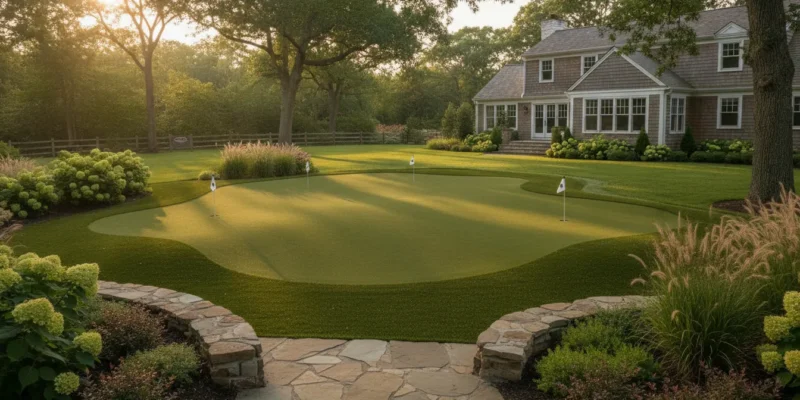
A backyard practice green is more than a rectangle of artificial turf. The final scope can change with the green’s size, contours, cup locations, fringe, base preparation, drainage, infill, and the equipment needed to reach the work area. On Long Island, those site details often matter as much as the surface material.
Contact Gappsi through our contact page
Putting green cost depends on the complete installation, not turf alone. A simple material purchase may cover a basic surface. A professionally designed green can include grading, a stable aggregate base, shaped breaks, multiple cups, drainage, fringe transitions, and site restoration. Comparing proposals by total scope helps you distinguish a playable practice area from a basic turf installation.
Understanding what each part contributes makes it easier to evaluate a proposal and decide which design features fit your yard. Start by separating the visible turf from the construction and planning work beneath it.
What does putting green cost actually include?
Putting green cost is a scope question, not simply a turf price. Two projects with similar square footage can require very different work. A material-only purchase may cover rolls of low-pile synthetic turf, while a basic installation may add labor and straightforward ground preparation. A designed practice green can include grading, engineered contours, cups, fringe, drainage, base materials, infill, edging, and restoration around the work area.
Understanding these levels helps you compare proposals accurately and see when important construction items are listed separately.
Material-only turf
A material-only option generally starts with the playing surface product. Putting-green turf is different from standard lawn turf because its low pile is selected to support a truer golf-ball roll. Product selection may involve fiber type, pile height, density, and whether a separate fringe or transition material is needed. The homeowner or installer still needs to determine how the turf will be laid, secured, drained, and finished.
This approach can make sense for a small, simple area with suitable existing conditions. It does not automatically include excavation, disposal, aggregate base, grading, drainage corrections, cups, or the surrounding landscape work. Those omissions matter when comparing a turf product with an installed practice green.
Simple installation
A simple installation typically adds labor and a defined preparation scope. That may include removing existing grass, shaping the area, installing a compacted base, placing turf, securing edges, and completing basic finishing. The final scope depends on site access, existing grade, soil conditions, and the amount of preparation required. Published industry guidance identifies access, grading, site preparation, and landscaping demands as variables that can change installation requirements, rather than fixed components of every project.
It is important to ask whether drainage and disposal are included or treated as allowances. Limited access can also require more manual labor when equipment cannot reach the work area easily. These are site-specific questions, especially in established Long Island backyards.
Designed practice green
A designed practice green treats the area as part of the landscape, not just a patch of artificial grass. The scope can include multiple putting locations, intentional breaks, contours, fringe or fairway cuts, drainage integration, and transitions to patios or planting beds. Design and construction coordination can also affect how grading, irrigation, lighting, retaining elements, and adjacent hardscape are handled.
For more on backyard project decisions, review Gappsi Group’s backyard putting green guide. A complete proposal should identify each included layer, allowance, and exclusion so the quoted putting green cost reflects the finished scope. Gappsi Group evaluates these details through its Long Island design and construction process instead of assigning a universal price without reviewing the property.
How do size, contours, and cup count change the scope?
Square footage is only the starting point for planning a backyard practice green. A compact area may be enough for meaningful short-game practice. A larger layout can create room for several shot types and longer putts. Published industry guidance notes that a practice green can support a complete short game at a fraction of the area associated with PGA Tour greens. Those greens are roughly 5,000 to 6,000 square feet. The right size depends on how you plan to practice, the usable part of the yard, and the relationship between the green and surrounding landscape.
Size also affects more than the amount of turf. It influences excavation, base preparation, edging, fringe, drainage, and the amount of material that must be moved through the property. A small green with a straightforward outline may be efficient to build. A smaller green with several breaks, elevated edges, tight access, and multiple finish materials can require more detailed layout. It may also require more hand work than a larger, open rectangle. This is why a simple per-square-foot comparison can give homeowners an incomplete view of putting green cost.
Shape and contours determine how the green plays. A rounded or irregular outline can fit existing planting beds and patios, but it takes more precise layout than a basic rectangle. Gentle slopes and breaks can create realistic practice opportunities, yet each transition must be shaped, compacted, and finished so the ball responds predictably. Steeper changes in elevation may also affect drainage and the way the green meets adjacent lawn, pavers, walls, or planting areas.
Cup count is another scope decision. One cup creates a focused practice target. Two or more cups can support different distances and angles, but they require deliberate spacing and enough usable surface around each hole. The design should avoid placing cups where contours make one target impractical or where nearby fringe limits a normal stance. Multiple cups may also add layout, cutting, finishing, and coordination work.
Fringe and fairway cuts expand the playing surface beyond the putting area. They create visual separation and let you practice shots that are not made from the short putting surface. But they also introduce additional turf types, transitions, edging, and maintenance considerations. A proposal should identify which areas are putting turf, fringe, fairway, or surrounding landscape rather than grouping them into one vague square-foot figure.
Third-party cost guides consistently identify size, access, design complexity, and required craftsmanship as variables, but their published ranges are market context rather than a Gappsi quote. For a Long Island property, a site-specific review is the reliable way to connect the desired contours and cup layout with actual preparation and installation requirements.
Contact Gappsi through our contact page
Which site preparation factors affect putting green cost?
The playing surface is only one part of the installation. Before turf, cups, or fringe can be added, the crew must understand how the proposed green will fit the property and how the site needs to be prepared. That is why a Long Island putting green requires a site-specific scope rather than a simple calculation based on square footage.
- Confirm equipment and material access. A backyard with a wide driveway or side entrance may allow equipment and materials to move efficiently. A narrow gate, steps, fencing, mature planting, or other obstacles can require more manual labor and additional handling. Access conditions can significantly affect installation scope, so they should be reviewed before the design is finalized.
- Measure excavation and disposal. Existing lawn, soil, roots, old hardscape, or unsuitable material may need to be removed before the base is installed. The amount of excavation depends on the proposed shape, elevation, and existing conditions. Disposal of grass or soil may also be required, and that work should appear clearly in the proposal rather than being treated as an assumed detail.
- Plan grading and contours. A practice green needs intentional slopes and breaks, but those contours must connect sensibly to the surrounding yard. Unexpected grading or site preparation can change the overall scope. A landscape design and construction provider can coordinate the green with adjacent planting beds, patios, walkways, and lawn areas. See Gappsi’s Long Island landscape design and construction services for the broader site-planning context.
- Build the aggregate base correctly. After excavation and grading, the installation needs a stable, well-prepared base beneath the putting-green turf. The required preparation depends on the soil, drainage behavior, final elevations, and intended contours. A material-only turf purchase does not account for this construction scope.
- Resolve drainage and retaining needs. Water must move away from the playing surface without creating problems for the home, foundation, neighboring areas, or existing landscape. Drainage improvements, swales, collection points, or retaining work may be needed when the property has elevation changes or persistent water issues. Gappsi’s yard drainage solutions for Long Island provide useful context for why drainage belongs in the site review.
- Coordinate utilities and existing landscape. Irrigation, lighting, electrical lines, planting, trees, walls, and nearby structures can affect excavation and the final layout. The designer should identify what remains, what must be protected or relocated, and how the new green will transition into the yard. Nassau and Suffolk properties vary widely, so these conditions cannot be assumed from an aerial measurement alone.
When comparing putting green cost, ask whether the proposal includes access, excavation, disposal, grading, base preparation, drainage, retaining work, utility coordination, and landscape restoration. A complete scope makes the construction decisions visible before work begins.
How do turf, fringe, infill, and drainage affect value?
A practice green is not made from the same artificial grass used across a lawn. Putting-green turf has a low pile and tight surface so a golf ball can roll with more predictable speed and direction. Lawn turf is typically taller and fuller, which creates a softer visual transition but is not designed for putting performance. Selecting the correct turf therefore affects the use of the space, not just its appearance.
Density and pile height also influence how the surface feels underfoot and how consistently the ball travels. A dense, short-pile product can support a smoother roll, while the specific fiber and backing are part of the material decision. The right selection depends on whether the green is intended mainly for putting, includes chipping practice, or blends into a larger backyard recreation area. A proposal should identify the turf type rather than describe the surface only as synthetic grass.
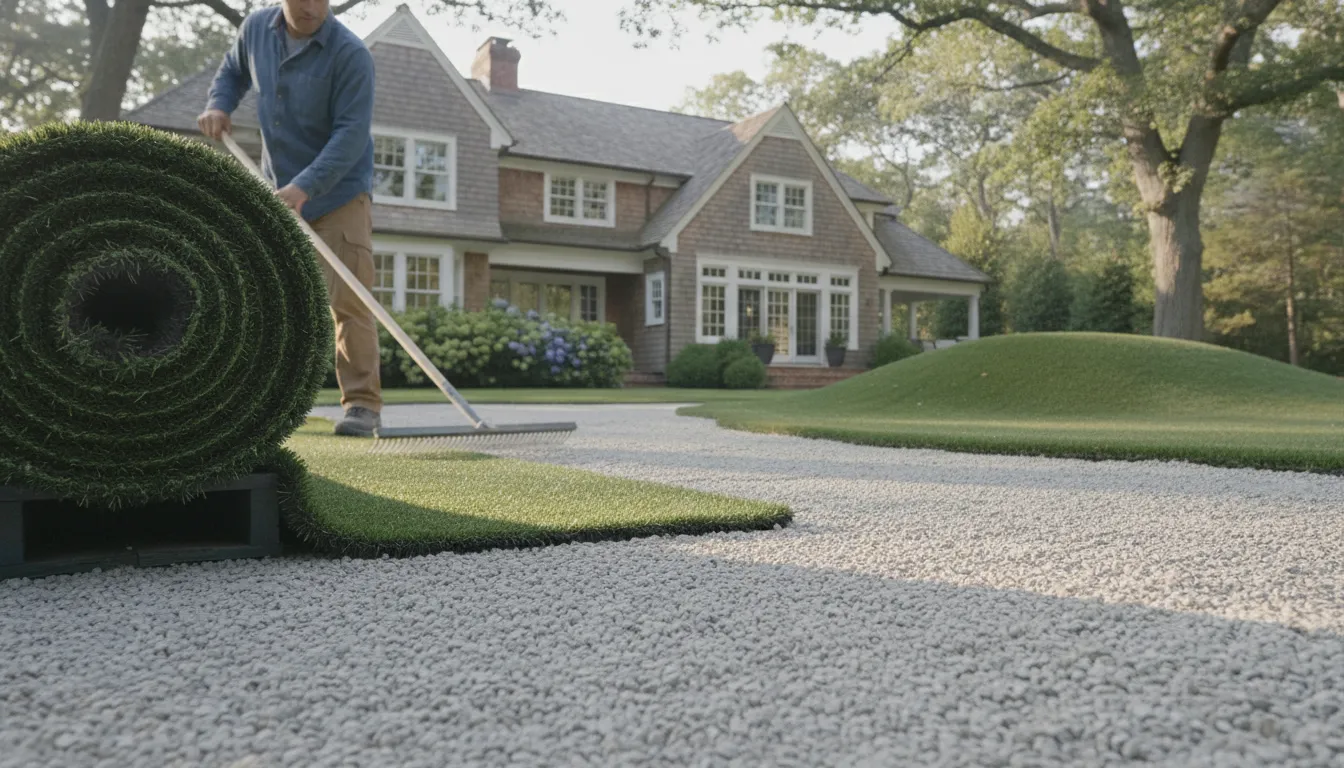
Fringe turf creates the visual and functional border around the putting surface. It can make the green look more natural within a Long Island landscape and gives homeowners a different surface for approach shots or short-game practice. Fringe width, shape, edging, and the transition to lawn, planting beds, patio materials, or other landscape features all add design and installation scope. The fringe should be planned with the green’s contours, drainage path, and surrounding grade, not added as an afterthought.
What does infill change?
Infill is placed between turf fibers to help support the blades and influence how the ball interacts with the surface. The amount and type selected can affect ball speed, friction, and the way the turf responds during use. That makes infill part of playability and maintenance planning, rather than a minor finishing detail. A homeowner should ask what infill is specified, where it will be installed, and what routine care is expected to keep the surface even.
Why does drainage belong in the scope?
Water management protects the usability of the area after rain and helps coordinate the green with the existing landscape. Grading, drainage layers, outlets, and nearby irrigation or planting areas may need to be considered together. Gappsi’s documented landscape services include grading, ground preparation, drainage, irrigation, and synthetic turf integration. For properties in Nassau or Suffolk County, a site review can identify whether access, existing grades, or surrounding construction changes the installation scope. The most useful measure of putting green cost is therefore a complete specification covering turf, fringe, infill, drainage, base preparation, and ongoing maintenance expectations.
What is the difference between professional design and simple turf installation?
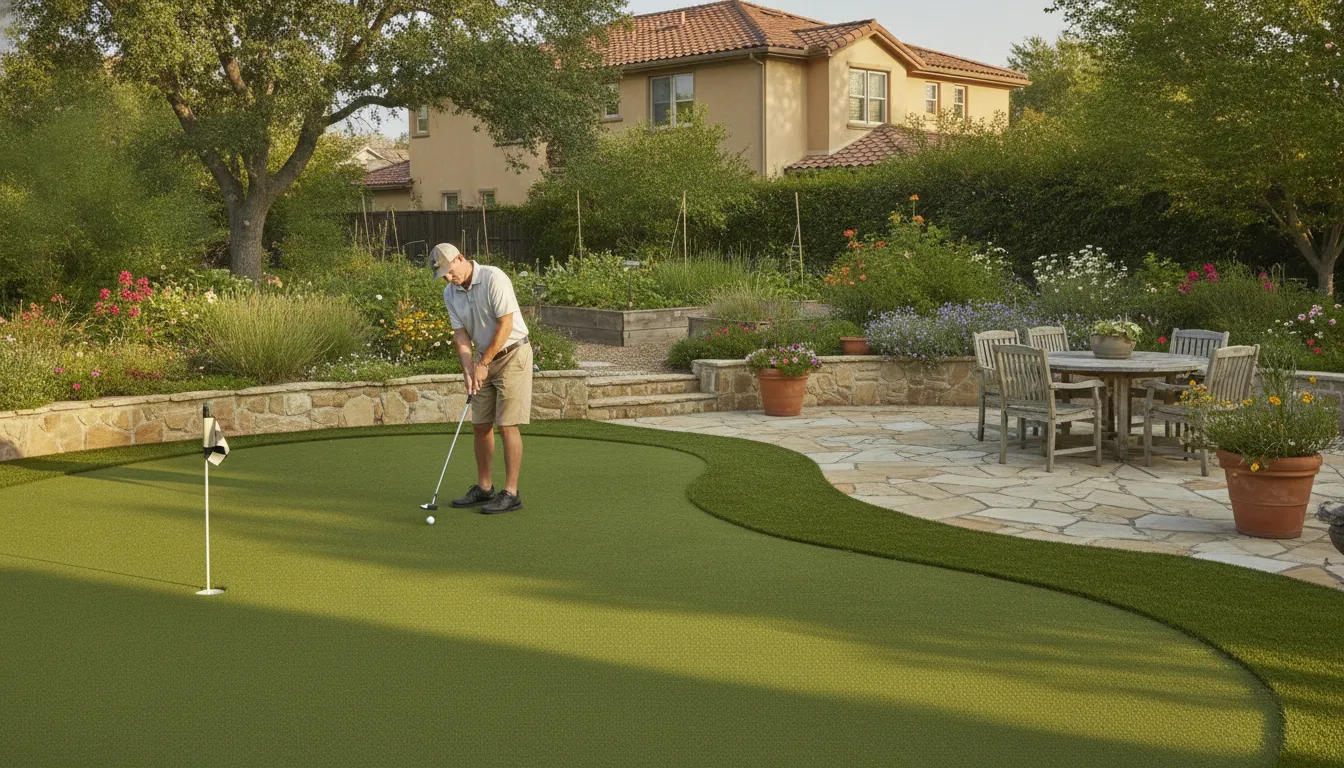
A roll of artificial grass can cover a space, but a practice green must do more than look green. It needs a predictable ball roll, intentional breaks, usable cup locations, and a base that stays stable through Long Island weather. That is why a material-only purchase or basic turf installation should not be compared with a complete design-build project as though they were the same scope. When evaluating putting green cost, ask what is included in the finished playing surface, not only what the turf material costs.
Professional planning also connects the green to the surrounding landscape. Gappsi documents capabilities that include 3D landscape design, grading, ground preparation, drainage-related landscape coordination, and irrigation systems. Those services can matter when the green must fit a patio, planting bed, lawn area, or an existing grade. See this guide to artificial putting green design for additional design context.
| Project element | Material-only or basic installation | Professionally designed practice green |
|---|---|---|
| Planning | Uses a standard shape and limited site planning. | Maps the playing goals, yard, access, transitions, and surrounding landscape. |
| Base | May include only the minimum surface preparation. | Builds and compacts a suitable aggregate base for a stable, consistent roll. |
| Contours | Often follows the existing grade with few intentional breaks. | Plans slopes, contours, and breaks to create varied practice shots. |
| Cups | May provide a single location or leave cup work to the owner. | Coordinates multiple cup locations with the design and intended practice. |
| Drainage | Addresses drainage only if included in the limited installation scope. | Reviews runoff and coordinates drainage with grading and adjacent landscape work. |
| Turf and fringe | May use a general turf product or a simple cut pattern. | Selects low-pile putting turf and plans fringe or fairway transitions for playability. |
| Finish | Provides a functional covered area with fewer integrated details. | Coordinates edging, transitions, restoration, and a finished appearance. |
| Coordination | The homeowner may manage separate site, turf, and landscape needs. | One coordinated scope can connect design, preparation, installation, and landscape elements. |
The difference is not simply a question of choosing more expensive turf. Putting-green turf is low-pile artificial grass designed to let golf balls roll true, unlike thicker lawn turf. A professional scope accounts for how that surface interacts with base preparation, contours, cups, drainage, fringe, and access. It also identifies exclusions before work begins. A site-specific review is the reliable way to compare proposals and understand what your project includes.
What should a Long Island putting green proposal list?
A useful proposal should let you compare the complete construction scope, not just a turf product or a single square-foot figure. On Long Island, a backyard in Nassau County may require different preparation from a property in Suffolk County, depending on access, existing grades, drainage, and surrounding hardscape. Ask for each major assumption to be documented before you compare putting green cost.
- Measured area and layout: Confirm the proposed square footage, shape, perimeter, fringe or fairway-cut areas, and the location of every playing feature. The plan should show how the green fits the backyard rather than relying on a rough estimate.
- Access and existing conditions: The proposal should explain how crews and equipment will reach the work area. It should note narrow gates, steps, slopes, utilities, trees, or structures that affect the approach. Confirm whether the site review includes existing landscape and hardscape conditions.
- Demolition and disposal: Identify what will be removed, such as lawn, soil, roots, old edging, or existing paving, and state whether loading and disposal are included. Unlisted removal work can change the scope after construction begins.
- Excavation, base, and grading: Look for the planned excavation depth, aggregate or stone base, compaction method, finished elevations, and surface contours. The proposal should describe the breaks and slopes designed into the green, not simply say that the area will be leveled.
- Drainage and water management: Ask where runoff will go and whether the scope includes drainage systems, connections, swales, or adjustments around nearby planting beds. Gappsi’s landscape division coordinates grading, drainage, irrigation, and synthetic turf integration as part of broader outdoor construction planning.
- Cups and playing details: Confirm the number and placement of cups, the intended practice layout, and any changes in cut or elevation around them. These details affect both the design and the installation work.
- Turf, fringe, and infill: The specification should name the putting-surface turf, fringe material, color or cut transitions, seam approach, and infill type. Putting turf is not interchangeable with ordinary lawn turf, so the product description matters.
- Edging and restoration: Check the perimeter edging, transitions to patios or lawn, protection of adjacent areas, cleanup, soil replacement, planting restoration, and any irrigation or landscape repairs.
- Exclusions and maintenance: Require a clear list of items not included, such as permits, retaining work, electrical changes, tree removal, or repairs outside the green. The proposal should also explain recommended cleaning, brushing, infill care, and owner maintenance responsibilities without promising an unsourced lifespan or warranty.
A design-build provider should be able to connect the site plan, construction details, and finish selections in one document. Review this putting green contractor guide for additional questions to ask when comparing proposals.
Contact Gappsi through our contact page
Frequently Asked Questions
How much does it cost to install a backyard putting green?
There is no reliable single price for every property. Putting green cost depends on several choices. These include area, shape, contours, cup placement, turf, infill, excavation, base preparation, drainage, edging, disposal, and equipment access. A simple turf application and a constructed practice green are different scopes, so a site-specific proposal is the best way to compare the actual work included.
How much space does a 700-square-foot putting green provide?
A 700-square-foot green can provide meaningful room for putting practice, but the usable layout depends on its shape and the surrounding yard. The same area can accommodate different combinations of breaks, slopes, cup locations, fringe, and approach space. Measure the intended footprint rather than relying on square footage alone, because layout and play features determine how the area functions.
What type of turf is used for a practice putting green?
Putting-green turf is a low-pile synthetic surface selected to support a consistent ball roll. It differs from lawn turf in pile, density, and intended use. A proposal should identify the putting surface, any fringe or fairway-cut turf, seam locations, infill, edging, and drainage approach. These details help you understand what you are receiving instead of comparing material labels alone.
Does infill affect the putting surface?
Yes. Infill is part of the system that supports the synthetic fibers and affects how the finished surface is maintained and played. The appropriate selection depends on the turf system, drainage design, intended use, and site conditions. Ask the installer to explain the selected infill and how it fits the complete construction scope, rather than treating it as an interchangeable add-on.
Why is a site-specific proposal needed before deciding?
A site review reveals conditions that cannot be priced accurately from a satellite image or square-foot estimate. Access, existing grass or soil, grading, drainage, utilities, slopes, retaining needs, and disposal can change the work. On Long Island, a detailed proposal should list the measured area, preparation, base, contours, cups. Turf, infill, restoration, exclusions, and maintenance expectations so the scope is clear before construction begins.
Plan your backyard putting green with a complete scope
Putting green cost becomes easier to evaluate when the proposal reflects your property, intended layout, and full installation scope. Gappsi Group can discuss site conditions, preparation, drainage, turf selection, contours, and installation details for a backyard project in Nassau or Suffolk County.