


 A traditional gunite pool renovation typically includes repairing or replacing the tile, coping, patio, skimmer, and pool surface. In Smithtown NY we rebuilt most of the Gunite swimming pool due to the wall’s deterioration. Often in New York, we face unique challenges due to the harsh regional climates, including severe freeze-thaw cycles and intense summer heat, which requires gunite pool resurfacing.
Your gunite pool is the heart of your backyard oasis. As a premier gunite pool builder in Smithtown, NY, we know you want it to stay perfect. But over time, you might notice issues like cracks, stains, or peeling plaster. This is a common concern for pool owners from Smithtown to Nesconset. Protecting your investment is key. The secret to a long-lasting pool isn’t just the initial build; it’s the details, like the flexible gunite pool mastic that protects your backyard beach entry and coping. Understanding the signs of deterioration is the first step to keeping your pool looking its best.
Factors that can cause deterioration include:
- Water chemistry: Aggressive water chemistry, such as pH levels that are too high or too low, can break down cementitious products over time.
- Poor water balance, such as low calcium hardness, can also cause pitting.
- Repetitive impact: Abrasion or impact to the surface coating can also cause deterioration
- Maintenance practices: The quality of the plaster and maintenance practices can also affect its lifespan.
Gappsi specializes in breathing new life into aging pools. Our commitment to sustainable practices ensures that every renovation extends your pool’s longevity and environmental footprint. Check out our swimming pool gallery today!
Negative Edge Trough
Gappsi rebuilt the entire trough including new negative edge tiles and a marble top. A negative edge is when only one side of the pool is lower than the deck level. The homeowners feel that the water is disappearing into nature from the house or deck. Of course, a visual effect. It is undoubtedly best known because it has a significant aesthetic impact. It reveals all its beauty on the ground with a slope, but it can create a beautiful effect on almost flat land.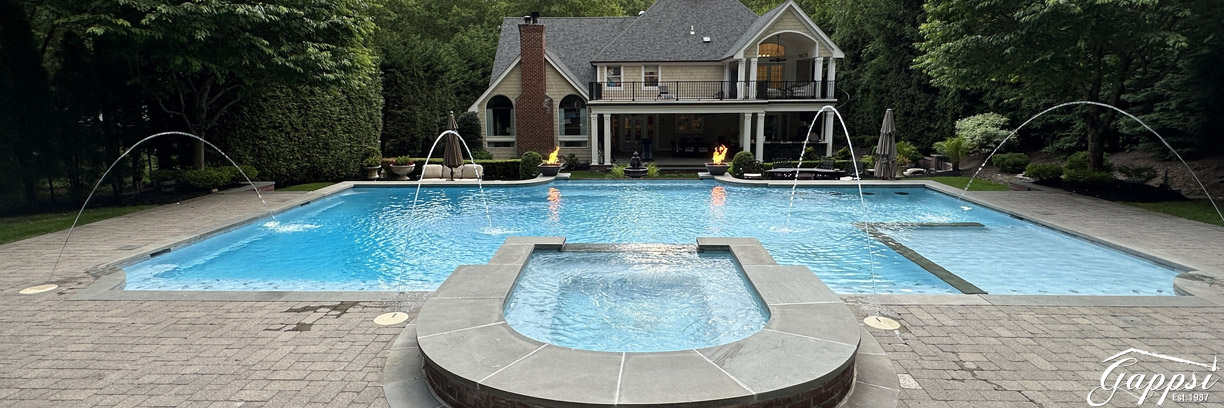 Porcelain Tiles for Waterline – Gunite Pool Renovation
Waterline tiles are a must-have for inground gunite pools, as they protect the perimeter and make it easier to remove buildup from hard water and other sources. They can also prevent a yellow ring from forming around the pool’s edge due to sunscreen, body oil, and other substances. Waterline tiles can also be used to customize the look of the pool with different designs. On this Gunite pool renovation, we installed new porcelain tiles on the waterline.
Porcelain tiles are a great choice for gunite pool waterlines because they are durable, non-porous, and resistant to water, chemicals, and UV rays. They are also easy to clean and come in many colors, patterns, and finishes. Porcelain tiles can be used submerged in the pool as well as at the waterline.
Hydrazzo Gulfstream Blue Finish
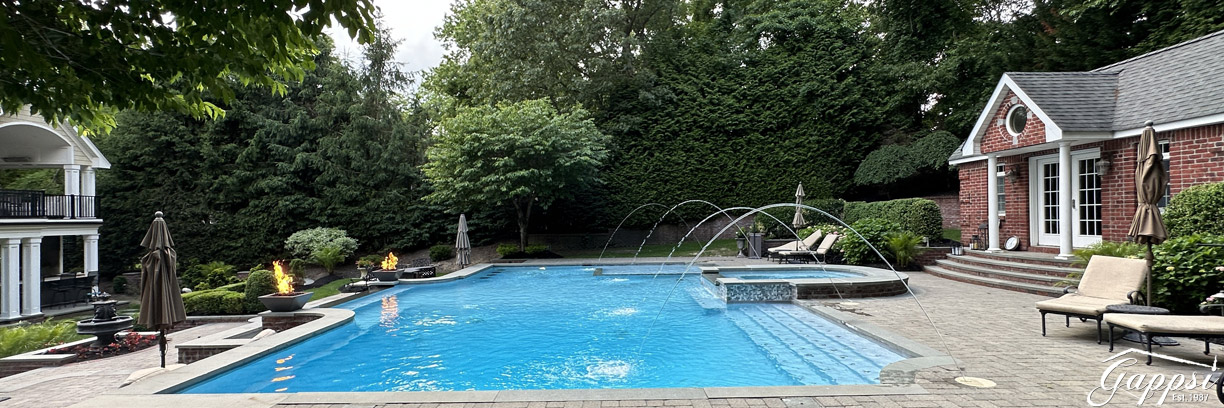
Hydrazzo Interior Finish is a silky smooth texture, combined with the proven durability of exposed aggregates, which are two prime features of this state-of-the-art pool finish. As part of the complete renovation for the gunite pool, we used Hydrazzo Gulfstream Blue finish. Hydrazzo Gulfstream Blue is a polished pool finish made from natural ingredients like marble, white Portland cement, and other performance-enhancing ingredients. It’s known for its smooth, luxurious texture and durability, and is resistant to stains, algae, and scale adhesion. Hydrazzo Gulfstream Blue is also easy to apply and polish and can be re-polished to look new at any time.
 Here are some other benefits of Hydrazzo Gulfstream Blue:
- Low maintenance
- Non-slip surface
- Friendly to swimsuits, toes, and fingers
- Life expectancy of 15–20 years
- Complements many pool designs
Pool Step Markers
We added step markers in the gunite pool renovation serving a dual roll in any pool. First and foremost is safety. Without step markers, the edges of steps, Baja shelves, and tanning ledges are difficult to identify beneath the water’s surface. This can ultimately create a fall or drowning hazard. The second role is more cosmetic. Step markers add a pop of personality to your pool. By choosing dolphins, turtles, starfish, or any other variety of markers you can add a bit of character while making your pool safer for all.
MagicStream Laminars – Arcs of Illuminated Water
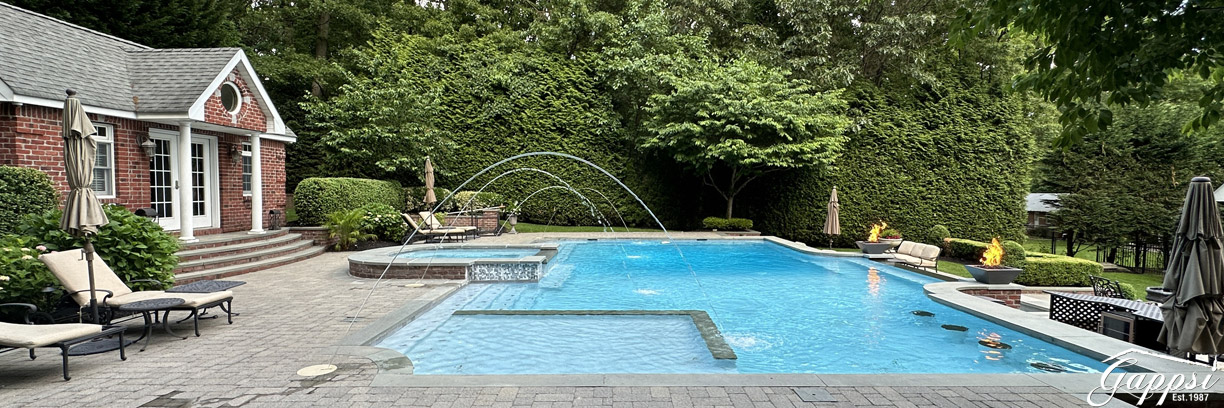
We added to the pool renovation 4 MagicStream Laminars. They offer an elegant, dramatic arc of water into the pool. MagicStream Laminars with 100% synchronization with IntelliBrite 5g LED color and white lights create clear, uniform arcs of moving water that originate from either a pool deck or the surrounding landscape. At night, these translucent streams are brilliantly colored, creating a water effect that adds elegant entertainment to your poolscape. It is fully compatible with the IntelliBrite 5g line of LED pool lights, the optional Color Sync™ Controller for Pentair Color LED Pool Lights, and the EasyTouch® or IntelliTouch® Automation Systems. Custom program and control light show using an indoor control panel, wireless remote, and the ScreenLogic® Interface using your smartphone, computer, or mobile digital device.
 Pool Spa with Bluestone Coping
In our latest renovation, we rebuilt the spa and replumbed it for better efficiency. We added a bluestone coping also. Bluestone makes perfect pool coping due to its non-slip properties. Elevate your pool spa design with our premium bluestone coping. Pool coping protects the pool shell and brings the swimming pool level with the pool deck. Coping also adds a decorative touch to your pool perimeter, and keeps your pool or spa cool to the touch and safe for individuals getting in or out. Whether you are designing your new pool or renovating the coping on an existing pool, our team is available to answer any questions you have about pool and spa coping.
Heat Up Your Pools Design with Fire
We installed two gas fire features. Turn up the heat and make a splash by adding a fiery twist to your pool design with a fire bowl. Not only do pools with fire bowls pack a visual punch, but they also amp up the atmosphere and make your pool the place to be. Elevate your poolside paradise with mesmerizing fire pits, adding a splash of luxury and turning your backyard into a lavish resort-like dream!
From rustic charm to contemporary chic, these enticing flame features radiate warmth and allure for your outdoor festivities while also boosting the value of your house!
This is the latest Gunite pool renovation done by Gappsi in Smithtown NY.
What is a Gunite Pool?
If you’re dreaming of a custom backyard pool, you’ve likely come across the term “gunite.” So, what exactly is it? A gunite pool is a type of concrete pool renowned for its durability and design flexibility. The name comes from the construction method, where a dry mix of cement and sand is shot through a high-pressure hose. Water is added at the nozzle, creating a concrete material called gunite. This mixture is then sprayed over a steel reinforcement grid, or rebar, that has been shaped into your desired pool design. This process creates a dense, strong, and monolithic pool shell that can be molded into virtually any shape or size you can imagine.
Unlike pre-molded fiberglass pools, gunite construction happens right in your backyard, allowing for a truly bespoke creation. Whether you envision a freeform lagoon, a classic rectangle, or a complex design with built-in waterfalls and spas, gunite makes it possible. After the gunite shell cures, it’s finished with a smooth layer of plaster, pebble aggregate, or tile, which waterproofs the structure and gives the pool its final, beautiful appearance. This combination of a reinforced steel core and a concrete shell results in an incredibly robust and long-lasting swimming pool that becomes a permanent, valuable addition to your home.
How Gunite Pools Are Made
Building a gunite pool is a meticulous process that transforms your backyard from a blank canvas into a stunning oasis. It all starts with a detailed design phase where every curve and feature is planned. Once the design is finalized, the area is excavated to the specified shape and depth. Next, a complex web of steel rebar is installed, forming the structural skeleton of the pool. This framework is crucial as it provides the tensile strength to support the concrete shell. Plumbers then strategically install all the necessary piping for filtration, jets, and any water features before the gunite application begins.
The magic happens when the gunite crew arrives. They expertly spray the concrete mixture over the rebar cage, building up the walls and floor to the required thickness. This application method creates a single, seamless structure with incredible strength. After the gunite is applied, it needs to cure for several weeks, a critical step for ensuring maximum durability. Finally, a waterproof finish like plaster or an aggregate is applied, along with coping and tile, completing the transformation. It’s a detailed construction project that requires true expertise, which is why partnering with an experienced builder is essential for a successful outcome.
The Gunite Shell and Waterproofing
A common misconception about gunite pools is that the shell itself is waterproof from the moment it’s sprayed. In reality, the raw gunite structure is porous. During the curing process, it’s normal to see some water seepage if it rains, but this is not a cause for alarm. The structural integrity comes from the dense concrete and rebar combination, but the waterproofing comes from the final interior finish. This finishing layer, typically plaster, pebble aggregate, or tile, is applied after the gunite shell has fully cured and hardened. It acts as a waterproof membrane, preventing water from penetrating the concrete shell and the ground beneath it.
This final surface does more than just hold water; it also defines the pool’s aesthetic and texture. A smooth plaster finish provides a classic look, while an aggregate finish offers a more textured, natural feel and can come in a variety of colors. The quality of this final layer is just as important as the gunite shell itself. A properly applied finish ensures your pool remains beautiful and leak-free for years, protecting the significant investment you’ve made in your backyard retreat. It’s the crucial last step in creating a durable and watertight swimming environment.
Pros and Cons of Gunite Pools
When deciding on the perfect pool for your home, it’s important to weigh the benefits and drawbacks of each type. Gunite pools are a top choice for many homeowners, especially those seeking a custom, high-end look. Their biggest selling point is unparalleled design freedom. You aren’t limited to standard shapes or sizes; if you can dream it, a skilled builder can likely create it with gunite. This makes them ideal for integrating unique features like tanning ledges, built-in seating, and intricate water features. Furthermore, gunite pools are exceptionally durable. The steel-reinforced concrete shell is built to last for decades, withstanding ground movement and the harsh Long Island climate better than many alternatives.
However, these benefits come with a few considerations. The initial cost of a gunite pool is typically higher than that of vinyl liner or fiberglass options due to the extensive labor and materials involved. The construction process is also longer, often taking several months from excavation to the first swim. Gunite pools also require more hands-on maintenance. The porous nature of the plaster finish can be a breeding ground for algae if water chemistry isn’t carefully managed. Over time, the pool will also need to be resurfaced, an expense to plan for down the road. Understanding these factors helps you make an informed decision that aligns with your budget, timeline, and lifestyle.
Advantages of Gunite Pools
The primary advantages of choosing a gunite pool are rooted in its strength and versatility. Homeowners who want a pool that is a true centerpiece of their backyard landscape often find that gunite is the only option that meets their creative vision. Because they are built on-site, gunite pools can be tailored to fit any space, accommodate complex designs, and seamlessly incorporate surrounding features like patios and landscaping. This level of customization ensures your pool is not just a place to swim but a unique reflection of your personal style. The robust construction also means you are investing in a permanent home improvement that adds significant value to your property.
Design Flexibility
The single greatest advantage of a gunite pool is the limitless design flexibility it offers. Unlike fiberglass pools that come in predetermined shapes, a gunite pool is a custom-built structure. This allows you to design a pool that perfectly fits the contours of your yard and your family’s needs. You can create sweeping curves, sharp angles, multiple levels, and varying depths. It’s also easy to integrate luxurious features directly into the pool’s structure, such as a vanishing edge, a relaxing spa, a shallow beach entry for kids, or even a swim-up bar. This creative freedom extends to the finish, where you can choose from a wide array of porcelain tiles, stones, and colored aggregates to achieve the exact look you desire.
Durability
When it comes to strength and longevity, gunite pools are in a class of their own. The combination of a steel rebar framework and a thick, sprayed concrete shell creates an incredibly strong and durable structure. This robust construction makes them highly resistant to damage from ground shifts and the extreme freeze-thaw cycles we experience here on Long Island. While other pool types might be susceptible to punctures or warping, a well-built gunite pool is engineered to last for generations. This inherent toughness means you are investing in a permanent feature of your home that, with proper care, will provide enjoyment for many decades to come.
Disadvantages and Risks of Gunite Pools
While gunite pools offer incredible benefits, it’s equally important to be aware of the potential downsides. The very nature of their custom, on-site construction leads to a higher price tag and a more extended installation timeline compared to other pool types. The maintenance requirements are also more intensive, as the plaster surface needs regular brushing and careful chemical balancing to prevent staining and algae growth. Finally, the quality of the final product is heavily dependent on the skill of the installer, making it crucial to choose a reputable and experienced pool builder to avoid potential long-term issues.
Higher Initial Cost
There’s no getting around it: gunite pools are a significant investment. The initial cost is generally higher than for vinyl liner or fiberglass pools. This price difference is due to the intensive labor, specialized equipment, and raw materials required for construction. From the detailed excavation and intricate steelwork to the professional application of the gunite and plaster, every step is a custom job. While the long-term durability can offset some of this cost over the pool’s lifetime, you need to be prepared for a larger upfront expense when planning your budget for a gunite pool project.
Longer Construction Time
Patience is a virtue when building a gunite pool. The construction process is not a quick one and can take anywhere from three to six months, or sometimes longer, depending on the project’s complexity and weather conditions. Each stage requires time, from excavation and plumbing to installing the rebar. The most significant waiting period is the curing phase, where the gunite shell must sit and harden for about 28 days before the final interior finish can be applied. This extended timeline is necessary to ensure a strong, durable final product, but it’s a factor you must consider when planning for your new pool.
Maintenance Needs
A gunite pool requires consistent and diligent maintenance to keep it looking its best. The plaster or aggregate surface, while durable, is porous. This means it can be susceptible to algae growth and staining if the water chemistry is not properly maintained. Regular brushing of the pool surface is necessary to remove any potential buildup. Additionally, because of the cement-based surface, you may need to use more chemicals to keep the pH levels balanced. Over a decade or more, the surface will eventually need to be acid washed or completely resurfaced, which is a significant maintenance expense to anticipate.
Installation Risks
The success of a gunite pool project rests almost entirely on the expertise of the builder. An inexperienced contractor can make critical errors during any phase of construction, from improperly shaping the rebar cage to applying the gunite unevenly. These mistakes can lead to serious structural problems down the line, including cracks, leaks, and “pop-ups,” where the pool shell can lift out of the ground. This is why it is absolutely essential to vet your pool builder carefully. Choosing a company like Gappsi, with a long-standing reputation for expert masonry and pool construction, minimizes these risks and ensures your investment is built to last.
How Long Do Gunite Pools Last?
One of the most compelling reasons to invest in a gunite pool is its incredible lifespan. A well-built and properly maintained gunite swimming pool can easily last for 50 years or more, with many lasting for a century. The structural shell itself, composed of steel and concrete, is built to be a permanent fixture. While the pool’s structure is incredibly long-lasting, the interior surface, such as the plaster or aggregate finish, has a shorter lifespan. Typically, a plaster finish will need to be redone every 10 to 15 years, depending on maintenance and water chemistry. This resurfacing process revitalizes the pool’s appearance and restores its waterproof seal, essentially giving it a new life.
The longevity of your gunite pool is directly tied to the quality of its construction and the consistency of its maintenance. Regular care, including balanced water chemistry, routine cleaning, and timely repairs to equipment and fixtures, will protect your investment. Addressing small issues before they become large problems is key. For example, maintaining the mastic joint around the pool’s edge can prevent costly water damage to the pool’s structure and surrounding deck. With diligent upkeep, your gunite pool will not only provide a lifetime of memories but will also remain a valuable and beautiful asset to your property for generations.
The Importance of Pool Mastic
When you look at a swimming pool, you probably notice the water, the tile, and the surrounding patio. But there’s a small, often overlooked component that plays a huge role in protecting your entire pool structure: the mastic. Pool mastic is the flexible, waterproof sealant that fills the expansion joint between your pool coping (the stone or concrete edge of the pool) and the pool deck. This joint is intentionally designed to allow the pool shell and the deck to expand and contract independently with temperature changes, preventing them from cracking or pushing against each other. The mastic acts as a flexible bridge in this gap, keeping everything sealed and protected.
Without functional mastic, this expansion joint becomes a channel for water. Rainwater, splashes from the pool, and water from cleaning the deck can seep into the gap and get underneath your coping and deck. Over time, this water can erode the soil supporting the pool’s structure, leading to shifting, cracking, and potentially catastrophic damage to the pool shell itself. In a climate like Long Island’s, this is especially critical. During the winter, any trapped water will freeze and expand, exerting immense pressure that can crack tiles, dislodge coping stones, and damage the pool’s bond beam. In short, that small strip of sealant is your first line of defense against very expensive structural repairs.
What is Pool Mastic and Why is it Important?
Pool mastic is a specialized, commercial-grade sealant, typically made of polyurethane, designed to be both flexible and durable. Its primary job is to create a watertight seal in the expansion joint around your pool’s perimeter. This seal is crucial because it prevents water from penetrating the ground beneath your pool deck and behind your pool wall. If water gets into this area, it can cause soil erosion, which can lead to the deck sinking or cracking and can even compromise the structural integrity of the pool itself. The mastic’s flexibility allows it to stretch and compress as the deck and pool shell expand and contract with changing temperatures, ensuring the seal remains intact year-round.
Pool Mastic Maintenance and Replacement
Pool mastic is not a lifetime product; it’s a maintenance item that needs to be inspected regularly and replaced periodically. Generally, mastic has a lifespan of about five to ten years. Exposure to UV rays, pool chemicals, and constant temperature fluctuations will eventually cause it to dry out, crack, and pull away from the sides of the joint. You should visually inspect your mastic at the beginning and end of each pool season. Look for any signs of cracking, peeling, or gaps. If you see any deterioration, it’s time to have it replaced. Delaying this simple repair can lead to much more complex and costly problems, making mastic replacement one of the most important preventative maintenance tasks for any pool owner.
Gunite Pool Renovation and Upgrades
Even the most well-built gunite pool will eventually show its age. After a decade or more, the plaster surface may become stained or rough, tiles can crack, and the overall look might feel dated. The great thing about gunite pools is that they are completely renewable. A full renovation can transform an old, tired pool into a modern masterpiece that looks and feels brand new. At Gappsi, we specialize in breathing new life into aging pools, handling everything from simple resurfacing to complete structural makeovers. A renovation is the perfect opportunity to not only restore your pool’s beauty but also to add features you’ve always wanted.
Upgrades can range from cosmetic enhancements to functional improvements. You might choose to replace your old waterline tile with modern porcelain, switch to a durable and beautiful aggregate finish, or replace worn coping with elegant natural stone. This is also the ideal time to add exciting new features. Imagine incorporating a relaxing spa, a dramatic waterfall, or energy-efficient LED lighting to create a stunning nighttime ambiance. You could also add a tanning ledge for lounging or deck jets for a playful touch. A professional renovation allows you to update your pool to match your current style and enhance your family’s enjoyment for years to come. You can explore our swimming pool gallery to see how we’ve transformed pools across Long Island.
SCHEDULE A MEETING TODAY WITH GAPPSI
View Gappsi’s YouTube Channel for Videos of Gunite Pool Renovation | Smithtown NY
https://youtu.be/7zC5f2igfgw
Frequently Asked Questions
How can I tell if my gunite pool needs a full renovation instead of just a simple repair? Look for signs that go beyond a single cracked tile. If the surface feels rough like sandpaper on your feet, has stains that chemicals won’t remove, or you see widespread cracking (often called crazing), it’s likely time to consider a renovation. These issues indicate the interior finish is nearing the end of its life. A renovation addresses the core surface, ensuring the pool is properly sealed and looks brand new again.
A gunite pool sounds expensive. Is the long-term value really worth the initial cost? It’s true that the upfront cost is higher, but it’s helpful to think of it as a permanent home investment. Because of their steel-reinforced concrete structure, gunite pools last for generations. Their durability in Long Island’s climate is unmatched. This longevity, combined with the complete freedom to create a custom design that adds significant value to your property, makes the initial investment pay off over the many decades you’ll enjoy it.
My pool’s surface is in decent shape, but the style feels outdated. Can I just upgrade the features? Absolutely. This is one of the best things about having a gunite pool. You don’t always need a complete overhaul to make a big impact. You can modernize your space by adding new features like dramatic fire bowls, elegant waterfalls, or energy-efficient LED lighting. Updating the waterline tile or replacing old coping with a beautiful natural stone are also fantastic ways to refresh your pool’s entire look without the time and expense of a full resurfacing.
What is the most important maintenance task I should focus on to protect my gunite pool? Besides keeping your water chemistry balanced to protect the interior finish, the most critical task is inspecting your pool mastic. That’s the flexible sealant between your pool edge and the patio. If you see it cracking or pulling away, get it replaced. This simple step prevents water from seeping underneath your deck and compromising the pool’s entire structure, saving you from incredibly expensive repairs down the road.
How long does a major gunite pool renovation typically take to complete? The timeline really depends on the scope of the project. A straightforward resurfacing with new tile might take a few weeks. However, if your renovation involves significant changes like rebuilding a spa, adding new plumbing for water features, and redoing the patio, it could take a couple of months. Weather also plays a role, but a professional team will give you a clear schedule based on your specific project.
Key Takeaways
- Embrace Customization with a Plan: Gunite pools provide unmatched design flexibility and long-term durability, but they require a larger upfront investment and a longer build time. Acknowledge this trade-off by planning your budget and schedule carefully to create a truly custom backyard oasis.
- Modernize Through Renovation: Your gunite pool is completely renewable. Use a renovation to not only replace dated surfaces with new tiles and finishes but also to incorporate modern upgrades like a spa, fire features, or energy-efficient lighting to transform your entire outdoor space.
- Protect Your Investment with Key Maintenance: A gunite pool’s structure can last for generations, but its surfaces need care. Focus on two key tasks: periodically replacing the mastic sealant to prevent water damage and planning for resurfacing every 10 to 15 years to keep your pool beautiful and watertight.

