


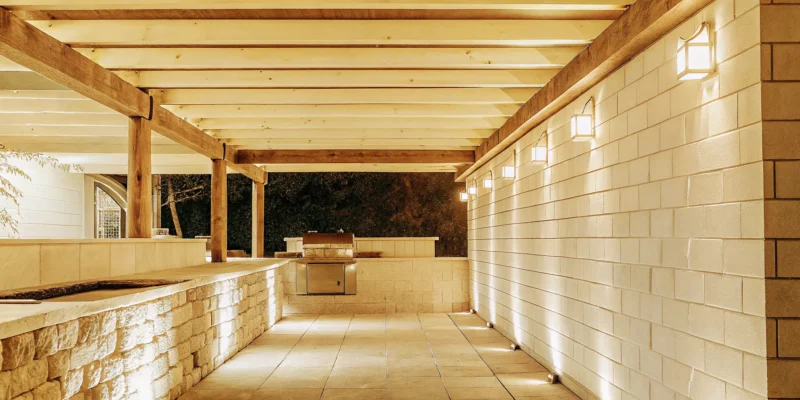
A great outdoor kitchen starts with a layout that fits how your family actually uses the yard.
An outdoor kitchen near me should help Long Island homeowners compare local design, materials, and installation experience before they commit to a build. The right layout connects cooking, prep, seating, shade, and foot traffic, so the space works for weeknight dinners and larger gatherings. For Nassau and Suffolk homes, a local design-build team can also plan around yard size. Coastal weather, utilities, masonry, and the way the kitchen will connect to patios, pools, and pavilions. Gappsi brings that planning into one process with 3D design, showroom material selection, and installation experience across Long Island.
If you are searching because you want a real plan, not just grill photos, start with the provider and the layout. The first step is understanding how to choose an outdoor kitchen near me on Long Island. Here’s how to compare the options with confidence.
How to choose an outdoor kitchen near me on Long Island
Choose an outdoor kitchen near me by comparing local design-build experience, showroom access, material knowledge, and examples from similar Long Island properties. The best fit should explain layout, utilities, masonry, appliances, and installation before you approve the project.
Local search intent
Searching for an outdoor kitchen near me is usually the first step, not the full plan. A useful local search should lead to a provider who can assess the property and explain the build process. For Nassau and Suffolk homeowners, local knowledge also makes early planning more practical.
Start by looking beyond a photo gallery. Review the provider’s custom outdoor kitchen designs to see whether the work includes more than a grill island. Look for layouts that fit the yard and connect with nearby patios, pools, or pavilions.
The planned use matters. According to Realtor.com guidance on outdoor kitchens, a functional kitchen needs a cooking area, refrigeration, and a sink. Ask how each item will fit the way your household cooks and hosts guests.
A design-build process
An outdoor kitchen is part of the property, not a stand-alone appliance purchase. The right provider should discuss layout, materials, appliances, masonry, and installation before construction starts. Ask whether one team can coordinate these parts from the first design meeting through the final checks.
Three-dimensional planning can make that discussion easier. It lets homeowners review counter placement, seating space, work zones, and the kitchen’s fit within the yard before installation. Ask to see the proposed layout from several angles. Also confirm how the plan accounts for access paths and the wider outdoor living area.
A strong plan should answer practical questions early. Where will guests sit while someone cooks? How will the kitchen relate to the house and other outdoor features? Clear answers help the project move from an idea to an organized build.
Showroom access and installation experience
Materials should be judged in person when possible. Countertops, stone facades, cabinet finishes, and paving materials can look different in a small online image. A chance to visit a Long Island showroom helps homeowners compare surfaces and make a more informed choice.
Installation experience matters as much as design. Ask who will prepare the site, build the structure, fit the selected materials, and manage the final details. A provider should explain the sequence in plain terms. The answer should make clear who is responsible at each stage.
- Ask to review a three-dimensional layout before approving the build.
- Compare countertop, facade, cabinet, and paving materials in person.
- Confirm who manages site work, masonry, appliance placement, and final checks.
- Request examples that reflect the scale and style of your own yard.
For Long Island homeowners, the best local fit is a provider with a clear process and visible materials. Showroom access, detailed planning, and hands-on installation experience make it easier to compare options before work begins.
Best outdoor kitchen layouts for Long Island yards
The best outdoor kitchen layout depends on yard size, traffic flow, and how close the cooking area sits to patios, pools, pavilions, or the house. Straight-line, L-shape, U-shape, island, and pavilion-adjacent layouts all work when they match the way the family cooks and hosts.
Match the layout to the yard
The best layout starts with the way the yard is used. A straight-line kitchen can fit a narrow patio or deck without taking over the seating area. An L-shape adds prep space while keeping the cook connected to guests. For larger yards, a U-shape can create a more defined cooking zone.
An island layout works well when guests gather around the cook. Pavilion- or pergola-adjacent kitchens can add shade and support seasonal use. A poolside kitchen can serve swimmers and hosts, but it needs a clear path that does not cross the cooking area. Gappsi’s custom outdoor kitchens on Long Island show how a kitchen and pavilion can share one outdoor living plan.
| Layout | Best fit | Planning note |
|---|---|---|
| Straight-line | Narrow patio | Keeps walkways open. |
| L-shape | Medium patio | Separates prep and seating. |
| U-shape | Large yard | Creates a defined cook zone. |
| Island | Open entertainment area | Invites guests to gather. |
| Pavilion-adjacent | Covered outdoor room | Adds shelter for mixed weather. |
Plan utilities and exposure first
Before choosing a shape, map the grill, sink, refrigeration, lighting, and storage. Place each utility line before masonry begins. This helps avoid awkward appliance gaps or costly changes later. If the kitchen sits far from the house, decide whether the distance improves the yard enough to justify longer utility runs.
A functional outdoor kitchen needs more than a grill. A guide to outdoor kitchen planning notes that the minimum includes a cooking area, refrigeration, and a sink. Wind matters too. Avoid placing the cooking surface where smoke will drift toward dining seats, doors, or open windows.
Shade also needs a plan. A pavilion or pergola can make the space more useful during hot afternoons and light rain. For a homeowner searching for an outdoor kitchen near me, local yard conditions matter as much as the kitchen shape.
Keep hosting zones connected
Plan a simple route from the house to the kitchen, dining table, pool, and lounge area. The cook should not stand in the main walkway. Guests also need a place to gather without blocking a refrigerator door or prep counter. Use nearby seating to keep the kitchen social, then leave enough open space for safe movement.
Seasonal use can guide the final choice. Long Island homeowners who host through spring and fall may prefer a sheltered cooking and dining zone. Those focused on pool season may favor a poolside layout with direct access to drinks and serving space. Zillow research on outdoor kitchens found that these features can help homes sell for more than expected.
What should your outdoor kitchen include?
A practical outdoor kitchen should include a cooking zone, durable counter space, weather-ready storage, safe circulation, and seating that lets guests stay near the cook without blocking prep work. Refrigeration, sinks, shade, and lighting can be added when the property and budget support them.
A useful outdoor kitchen starts with the way you host. Some homeowners cook for a few guests, while others serve large family meals. Plan zones for cooking, prep, serving, and cleanup before choosing finishes. The NIH environmental wellness toolkit notes that your daily surroundings can affect your health.
Cooking zone essentials
Start with a grill sized for your usual gatherings. Add side burners or a specialty appliance only if you will use them often. A refrigerator keeps drinks and ingredients near the grill. A sink gives you a place to rinse produce, wash hands, and handle cleanup.
These items form the practical core of the space. Realtor.com notes that an outdoor kitchen needs a cooking area, refrigeration, and a sink at minimum. Put the refrigerator away from the hottest part of the grill. Keep the sink close enough for easy prep.
Prep space and durable surfaces
Leave clear counter space beside the grill and sink. This gives you room for trays, ingredients, and finished food. A masonry base helps the kitchen feel tied to the patio. Stone or porcelain surfaces add a polished finish and suit a custom layout.
Weather protection also matters on Long Island. A pavilion, pergola, or well-placed roof can shade the prep area and make outdoor meals more comfortable. Task lighting over the grill and counters supports evening use. For a built example, review this custom outdoor kitchen on Long Island.
Seating and storage choices
Storage should match how you serve food. Use drawers near the prep area for tools, utensils, and towels. Add cabinets for dishes, serving trays, and supplies that stay outside. Keep trash storage close to the sink, but away from bar seating.
Bar seating works best along an outer edge or raised counter. Guests can talk with the cook without crowding the work zones. If you often host larger groups, leave open space between stools and nearby paths. When comparing results for an outdoor kitchen near me, look for a plan that fits your real hosting habits.
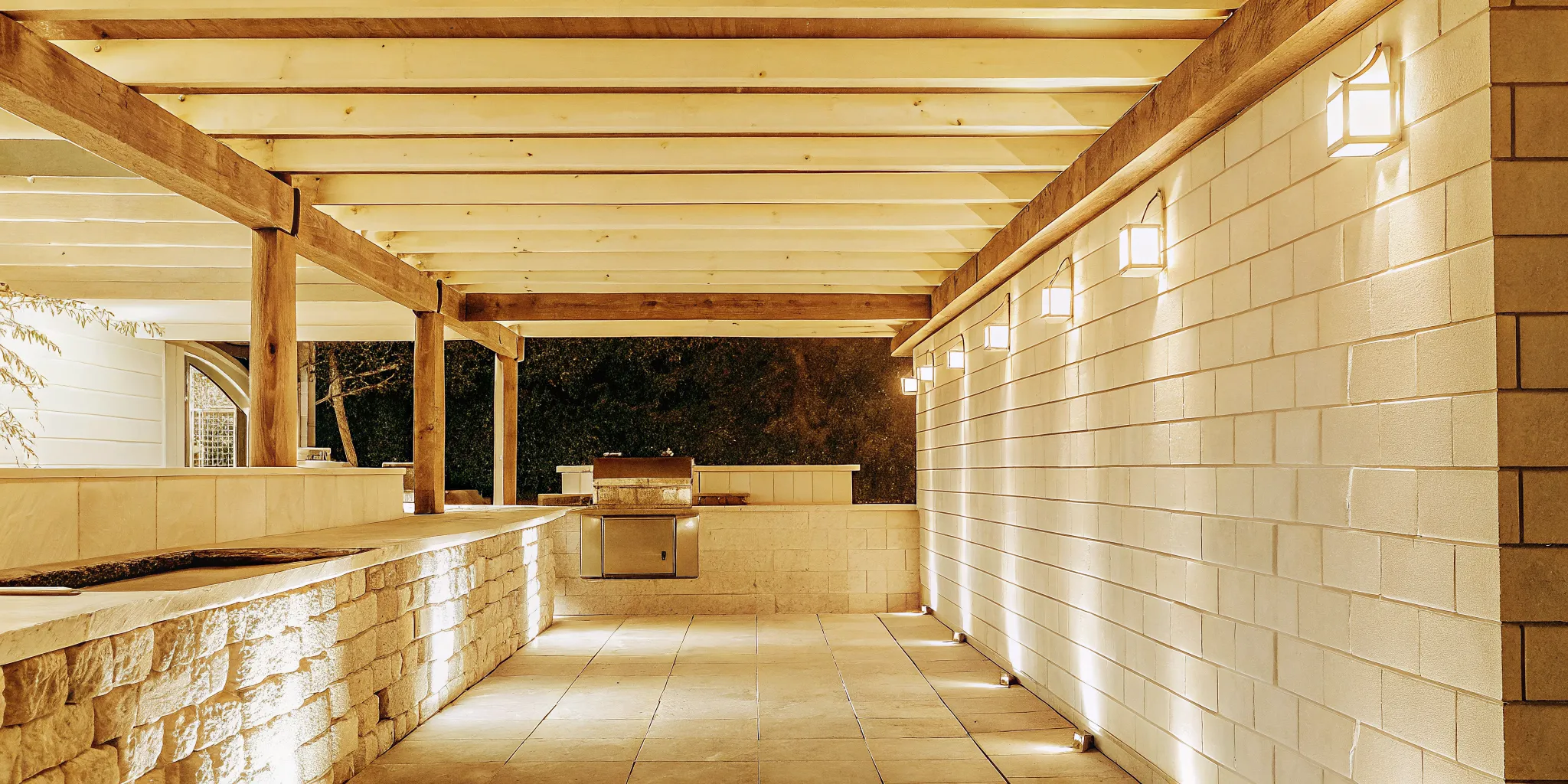
Outdoor kitchen materials that hold up in Nassau and Suffolk
Long Island outdoor kitchens need materials that can handle freeze-thaw cycles, salt air, sun exposure, and regular entertaining. Masonry bases, porcelain or natural stone surfaces, stainless appliances, and compatible pavers help the kitchen stay durable and consistent with the rest of the yard.
Material choice shapes how an outdoor kitchen looks, feels, and ages. In Nassau and Suffolk, the plan should account for coastal exposure, winter cold, and freeze-thaw cycles. Start with surfaces made for outdoor use, then compare colors and textures in person.
A durable masonry base
Masonry gives an outdoor kitchen a solid foundation and a built-in look. Natural stone, porcelain, and concrete can each suit the facade or nearby hardscape. The right mix depends on the home, patio, pool area, and desired finish.
Pavers also matter because the kitchen sits within a larger outdoor room. Choose a surface that supports foot traffic, seating, and the path between cooking and dining zones. For a local example, see this Merrick project featuring one of Gappsi’s custom outdoor kitchens on Long Island.
Ask how each exposed surface fits the setting and seasonal care plan. A coastal property may call for a different material review than a more sheltered yard. The base, facade, counter, and pavers should work as one system.
Counters and appliance finishes
A counter needs enough work space for prep, serving, and cleanup. Ask which natural stone, porcelain, or concrete options are intended for exterior use. Also review the edge, seams, and color beside the selected facade rather than as a separate sample.
Stainless steel is a practical finish to consider for grills, doors, drawers, and refrigeration. Appliance placement still needs careful thought. It should support the cooking flow while leaving clear room for guests, seating, and service access.
- Compare facade materials beside the planned counter.
- Review pavers with the kitchen, patio, and pool setting in mind.
- Check appliance sizes before the masonry layout is final.
- Discuss seasonal care for every exposed surface.
A local material review
When searching for an outdoor kitchen near me, look beyond a catalog image. Gappsi is a direct importer of premium stone and materials, with options for kitchen counters and facades. Its custom outdoor kitchen designs can pair those materials with the full layout.
Outdoor kitchens can also support resale appeal. Zillow reports that homes with outdoor kitchens can sell for as much as 3.1% more than expected. That makes a durable, cohesive plan more useful than chasing one trendy finish.
A showroom visit makes the choice more concrete. Compare stone, porcelain, concrete, stainless finishes, and pavers together before the final design is set. This helps align the kitchen with the home’s style and the wider outdoor space.
How does the design-build process work?
A design-build outdoor kitchen process usually moves from consultation and site review to 3D layout, material selection, utility planning, construction, and final walkthrough. One coordinated team helps the kitchen fit the patio, pool, pavilion, and wider outdoor living plan.
From site review to a working plan
A well-planned outdoor kitchen starts with the property, not a standard package. Gappsi’s full-service design-build contractor approach keeps layout, materials, utilities, and installation connected from the first meeting. This helps the finished space fit the home, patio, and way the family cooks outside.
For a homeowner searching for an outdoor kitchen near me, the process should answer practical questions early. The team needs to know where people gather, how food reaches the grill, and which views should remain open. It also needs to account for existing hardscape, access paths, and nearby structures.
- Consultation and site review. The process begins with a discussion of cooking habits, seating needs, appliances, and style. A site visit then checks the available space, the flow from the house, and access for construction.
- Layout and 3D design. The team maps the kitchen footprint and places the main work zones. A 3D design helps the homeowner review counter runs, appliance locations, seating areas, and nearby features before installation begins.
- Material and appliance selection. The homeowner chooses the facade, countertop, cabinets, and cooking equipment. These choices should suit the home and planned use, while also standing up to Long Island weather.
- Utility planning. The design team plans gas, electric, water, drainage, and lighting needs around the approved layout. This step keeps appliance locations practical and limits changes once masonry work is underway.
- Masonry and kitchen installation. The crew builds the base, installs the selected finishes, and sets the appliances. The work can also connect the kitchen with patios, walkways, walls, or other expert masonry and hardscaping features.
- Final walkthrough. The homeowner reviews the completed outdoor kitchen with the team. This is the time to confirm the finished details, appliance placement, work areas, and care needs for the selected surfaces.
One team for connected decisions
Outdoor kitchens work best when each choice supports the next one. The counter layout affects appliance placement. Appliance placement affects utility runs. Utility runs affect the masonry base, so these decisions should not be handled as separate tasks.
A single design-build team can keep those details aligned and reduce handoffs between contractors. Homeowners can also review a completed outdoor kitchen design-build experts project to see how a kitchen can fit an existing deck and outdoor setting.
A plan shaped around the property
The final plan should support more than cooking. It should make the yard easier to use for meals, guests, and time outside. A research review indexed by NCBI found associations between greenspace exposure and several health measures, including lower heart rate and diastolic blood pressure.
That does not mean every yard needs the same layout. A compact patio may call for a focused grill station. A larger property may need separate cooking, dining, and lounge areas linked by matching masonry and clear walking paths.
What is the average cost for an outdoor kitchen?
Outdoor kitchen cost varies by size, appliances, masonry, counters, utilities, shade structures, and site conditions. Instead of relying on a generic estimate, Long Island homeowners should define the layout and feature list first, then request a scoped consultation.
Cost depends on scope
The average cost for an outdoor kitchen depends on what the space must do. A simple grill station has a very different scope than a full masonry kitchen with refrigeration, storage, lighting, and seating. For that reason, a reliable local estimate should start with a site review and a layout discussion.
Homeowners searching for an outdoor kitchen near me often want a quick number. The better question is what drives the final investment. Size, appliances, utility runs, stone or porcelain choices, countertop length, patio work, shade structures, and access to the work area can all change the scope.
Features that change the budget
A cooking-only station usually needs less counter space and fewer utility decisions. A kitchen built for hosting needs more prep room, guest seating, storage, refrigeration, and lighting. If the kitchen connects to a pool patio, pavilion, retaining wall, or new paver area, those details should be planned together.
Appliances also shape the budget. Built-in grills, side burners, pizza ovens, ice makers, sinks, and outdoor refrigerators each need space and support. Some features may also need gas, electric, water, or drainage planning. A design-build team can help decide which items are worth including now and which can wait.
How to plan without pricing surprises
The best way to control cost is to define the layout before selecting finishes. Start with the way your family cooks and entertains. Then set priorities for the grill area, prep space, seating, storage, and weather protection. This keeps the design focused on use, not impulse upgrades.
Gappsi’s guide to outdoor kitchen installation cost is a helpful next step for homeowners who want to understand pricing factors in more detail. Use it with an in-person consultation, so the estimate reflects your actual Long Island property.
- Decide whether the kitchen is for daily cooking, weekend hosting, or both.
- Choose the core appliances before finalizing counter runs and cabinet space.
- Review utility needs before masonry work begins.
- Compare material samples in person when possible.
A good estimate should explain what is included, what is optional, and what may change after site review. That level of detail helps you compare outdoor kitchen options without relying on vague package pricing.
Frequently asked questions about outdoor kitchens
Does an outdoor kitchen add value to a house?
An outdoor kitchen can add value when it is well planned, built with durable materials, and matched to how buyers use the yard. On Long Island, the strongest value often comes from a complete outdoor living plan, not a stand-alone grill island.
What is the cheapest way to build an outdoor kitchen?
The cheapest approach is usually a compact layout with fewer built-in appliances and a clear utility plan. Still, low cost should not mean weak materials. A smaller masonry kitchen with the right grill, counter space, and storage can work better than an oversized design with poor flow.
What is the best outdoor kitchen layout?
The best layout depends on yard size, cooking habits, and guest flow. Straight-line kitchens suit compact patios. L-shaped and U-shaped layouts add more prep and serving space. Island layouts work well when guests gather around the cook.
How close should an outdoor kitchen be to the house?
Many outdoor kitchens work best close enough for easy access to the indoor kitchen, but far enough to manage smoke, heat, and foot traffic. A design-build review should account for doors, windows, utilities, seating, and safe movement through the yard.
Schedule your Long Island outdoor kitchen consultation
If you are ready to compare outdoor kitchen layouts for your Nassau or Suffolk County home, Gappsi can help you move from ideas to a buildable plan. Visit the Smithtown showroom to review materials, discuss appliances, and see how a 3D design can connect your kitchen with the rest of your outdoor living space.
Call 631-543-1177 to schedule a 3D design consultation or plan your showroom visit with Gappsi.
If you are moving from initial ideas to a permanent layout, use our built in outdoor kitchen planning guide to compare location, materials, utilities, appliances, and weather-ready details before construction.