


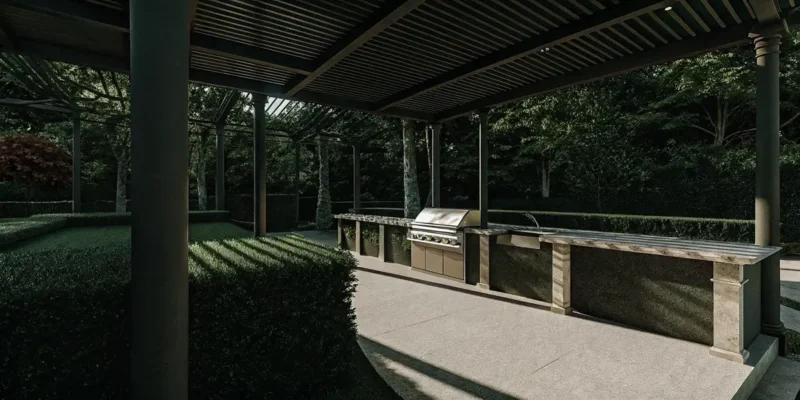
Long Island homeowners often waste patio space by using a small, portable grill that lacks prep room. A built in outdoor kitchen provides dedicated counters, storage, and cooking equipment in a permanent layout designed around the way you entertain.
Request an outdoor kitchen design consultation with Gappsi
A built in outdoor kitchen is a fixed cooking space that includes a grill and a sink to handle all your meal prep needs outside. Planning this space requires choosing a layout that keeps your cooking and social zones set apart for safety and comfort for you and your guests. You must also check local rules for setbacks and permits, as these structures often require a site plan and survey to meet all building codes. Based on Prosper, Texas guidelines, a real outdoor kitchen must have a sink, while a station without one is simply a grilling area. Thinking about gas lines and power outlets early in the design process helps you avoid costly changes and ensures the setup adds value to your home.
Designing the perfect cooking area starts with a clear plan for your backyard goals and hosting needs. You need to decide if you want a small spot for family meals or a large zone for big events. The first step in your planning journey is to
Built In Outdoor Kitchen: Start with how you will use the space
Your plan for a built in outdoor kitchen should start with how you live. Think about your cooking habits and how often you host guests. Long Island homeowners often need a space that handles both small family meals and large group parties. If you host many people, you will need a bigger grill and more counter space. The right built-in outdoor kitchen design balances these needs with the size of your yard.
Map out the traffic flow
The best layout makes it easy to move between the house and the yard. Place your kitchen near the main back door to help with carrying food and supplies. You should also think about where people will sit. A good plan keeps guests close to the cook but out of the main work area. You can add countertop overhangs for bar stools to create a social dining spot. This helps keep the space tidy and safe while you use the grill.
Plan for comfort and safety
Safety is a top priority for any permanent structure. Local laws often say that a grilling station must sit at least 3 feet from your property line. You also need to follow fire safety rules from the maker of your grill. On Long Island, many people add a patio cover or a pavilion to stay out of the sun. If you put a grill under a roof, you must have good airflow to stop smoke from building up. Proper vents and clear paths make the space much better for everyone.
Think about seasonal needs
A built in outdoor kitchen on Long Island must stand up to the weather. Our cold winters and hot summers can be hard on stone and metal. You should choose stainless steel appliances that do not rust. It is also smart to think about how you will close the kitchen for the winter. Planning for utility lines early in the design phase saves time and money later. This includes gas pipes, water for a sink, and wires for outdoor lights.
How should you choose the location and layout?
Finding the best spot for your built in outdoor kitchen is the key first step. You need a place that feels easy to reach and stays close to your house. A good plan makes cooking outside as simple as it is in your main kitchen. It should also account for the sun, wind, and how water flows through your yard. You want to make sure the site is level so the base is strong and stays in place for years.
Pick a smart spot
A common mistake is putting the kitchen too far from the home. You want a short path between your indoor food area and your new outdoor space. This makes it easy to carry plates and tools back and forth. If you have to walk too far, you may find that you use the space less often. You should also make sure there is enough room for people to walk past the chef without getting in the way.
Watch the wind and sun
The way the wind blows through your yard can change how you use your built in outdoor kitchen. You do not want smoke from the grill to blow right into the faces of your guests. It is also wise to check where the sun hits during the late day. A hot sun can make it hard to cook or eat. You might need to add a roof or a tall wall to block the wind or sun. This keeps the space cool and keeps the air clear while you grill.
Check local rules
Before you start, you must talk to your local town office. Most towns treat a built in outdoor kitchen as a fixed structure. This means you will need to show a site plan and get a permit. Local building codes also have rules for how far your kitchen must be from your fence. For example, some towns want a minimum setback of three feet from any property line. Using these safety and zoning codes helps you avoid fines later. It also ensures your project meets the fire safety rules for your area.
Plan your design
Your layout should focus on an easy flow. This links the grill, the fridge, and the sink into a tight shape. A well-built built in outdoor kitchen has enough flat space for prep work and serving. You can also view a built-in outdoor kitchen design to see how a pro layout fits into a real yard. Think about how you will move from the grill to the dining table. A good design keeps the chef part of the party while they work.
- Check your property lines to make sure your kitchen is in a legal spot.
- Find the way the wind blows so smoke does not blow into your home or dining area.
- Mark where gas, water, and power lines will run from your home to the new site.
- Make sure the ground is flat and has a way for water to drain away from the base.
- Set the plan to include its own zones for hot cooking, cold storage, and prep work.
Choose materials made for Long Island weather
Long Island has a tough climate for any outdoor project. Salt air from the coast and heavy winter snow can damage weak materials. A high-end **built in outdoor kitchen** needs parts that can stand up to these shifts. Picking the right stone and metal ensures your project lasts for decades.
Solid framing and masonry bases
The base of your kitchen is its most vital part. Many builders use concrete block or steel studs to form the frame. Concrete block is very strong and handles the weight of heavy stone counters well. It also resists the wet soil found in Nassau and Suffolk counties. Using masonry allows for a custom look with natural stone veneer. This style matches the local landscape and adds a high-end look to your home. When you plan your layout, make sure to follow local building codes for setbacks. A solid base keeps your kitchen level as the ground freezes and thaws each year.
Durable prep and dining surfaces
Prep areas face the most stress from sun and rain. Granite and marble are top picks for an outdoor kitchen installation on Long Island. These stones are dense and do not fade under the summer sun. They also stay cooler than darker man-made materials. Porcelain is another smart choice for modern designs. It is non-porous, so it does not absorb water or stains. This prevents the stone from cracking when it gets very cold. You can see many of these stone types at a local retail showroom before you decide. Picking the right surface makes cleaning up after a large party much easier.
| Material Category | Climate Benefit | Ideal Application | Life Span |
|---|---|---|---|
| Natural Stone | UV and Heat Resistant | Countertops and Veneer | 30+ Years |
| 316 Stainless Steel | Salt Air Protection | Cabinets and Grills | 25+ Years |
| Concrete Block | Freeze-Thaw Stable | Island Structure | 50+ Years |
| Marine-Grade PVC | Waterproof | Cabinet Boxes | 20+ Years |
| High-Density Stone | Stain Resistant | Flooring and Pavers | 30+ Years |
Hardware for coastal air
The air on Long Island is often damp and salty. This mix can cause low-grade metals to rust and pit in just a few months. When you build a custom built-in outdoor kitchen, always ask for 316-grade stainless steel. This metal contains molybdenum. It helps fight off rust from the sea air. You also need to think about how water moves away from your kitchen. Proper drainage prevents puddles from forming near the base of your storage units. In the winter, you must clear the lines and cover the units to keep out ice. Using high-end hardware means you spend less time on repairs and more time cooking outside.
Which appliances and utilities belong in the plan?
The grill is the main focus of a built in outdoor kitchen. You should pick a size that fits how many people you plan to feed. Gas grills are fast and easy to start, which makes them a top pick for many. If you want a smoky taste, a wood-fired grill or a smoker might be better. Some high-end builds include a pizza oven. These ovens reach high heat and cook pizzas in just a few minutes. You should also think about cold storage. A small fridge keeps raw meat and cold drinks near the grill. This saves you from walking back to the house many times. Adding custom outdoor kitchen features like an ice maker can also make hosting much easier. Having ice on hand is great for keeping seafood fresh or making cold drinks.
Grilling and cooling tools
A built in outdoor kitchen needs more than just a place to cook. Side burners are helpful for boiling water or cooking sauces while the main meal is on the grill. You can also add a warming drawer to keep food at the right heat until it is time to eat. For those who love to bake, a pizza oven adds a fun touch to any yard. These tools let you cook a full meal without using your indoor stove. It is best to choose tools made of high-grade steel. This helps them stand up to rain and snow on Long Island. Picking the right mix of tools makes your yard more useful for all types of meals.
Sinks and cleaning zones
Adding a sink turns a simple grill area into a full kitchen. It lets you wash your hands, rinse food, and clean tools on the spot. Local building codes often use the sink to tell the two types of spaces apart. In some towns, a spot without a sink is called a “grilling station” instead of a kitchen. You should talk to local fire and health officials to learn the rules in your area. Storage is another key part of this zone. You will need drawers for tongs, brushes, and cleaning rags. Having a trash bin built into the space keeps the area tidy and keeps pests away.
Power, gas, and safety lines
You must plan for power, gas, and water lines before the first stone is set. Every tool needs a power source or a gas feed. Outlets are a must for fridges, blenders, and phone chargers. You will also need bright lights over the grill and soft lights for the dining spot. If you build your kitchen near a wall or under a roof, safety is the top goal. You must follow all rules for clearance to burnable materials to prevent fires. A vent hood is often needed to clear out smoke and heat. It is also wise to put in shutoff valves for gas and water. This lets you stop the flow fast if you find a leak. Most plans for a built in outdoor kitchen should include these key utility points:
- Natural gas or propane lines for the grill and side burners.
- Water lines and a drain for the sink and ice maker.
- Set power lines for fridges and large tools.
- Low voltage wires for accent and task lighting.
- Main shutoff valves for gas and water in a handy spot.
These steps help you build a space that is both fun and safe for your family. Planning for these items early helps your project stay on track and meets all local rules.
Plan for comfort, safety, and year-round durability
Building a built in outdoor kitchen needs a deep focus on safety and long-term care. You want a space that feels cozy in the sun but stays strong during a Long Island winter. A great plan starts with following the rules set by your local town or county. Many areas have strict setback laws that keep fixed structures a set distance from your property lines. Before you dig, check with your local building office to see what permits you need for gas, water, and power lines.
Fire safety and stable surfaces
Fire safety is the most vital part of any kitchen plan. You must leave plenty of space between your grill and any walls made of wood or vinyl. Heat from the grill can melt or burn these surfaces if they are too close. Always check the guide that came with your tools to find the right gap. If you want to place your grill under a pavilion or roof, you must think about smoke. High heat and grease can build up fast under a ceiling. Adding a vent hood keeps the air clean and prevents fires. This setup also keeps your guests from breathing in heavy smoke while you cook.
You should also think about the ground you walk on. Outdoor cooking areas often get wet or greasy from spills. Choosing stones with a rough grip helps stop slips and falls. Many homeowners choose custom masonry that looks good and provides a safe surface. You can explore different stone types at a local outdoor kitchen showroom to see which one fits your style. A flat floor makes it easy to move hot pans or heavy trays from your home to your prep station.
Integrated lights and utility access
Good lights make your built in outdoor kitchen safer and more fun to use after the sun goes down. You need two types of lights for the best results. Task lights should shine directly on the grill and prep counters so you can see your food clearly. Soft lights should go near the dining seats to set a nice mood. All of your plugs must be safe for outdoor use. Experts suggest using GFCI outlets to prevent power shocks in wet weather. It is also smart to hide these outlets under the counter lip to keep them dry and out of sight.
Utility access is another key part of a good design. You will need to reach your gas valves and water shut-off points easily. Most builders add small doors in the kitchen base for this reason. These panels allow you to turn off the water or gas without tearing apart your stone walls. Expert outdoor kitchen setup ensures that all these lines are buried deep enough to stay safe from yard work or shifting soil. Planning for these needs now will save you from making big changes later.
Winter care for Long Island
Our cold winters in Nassau and Suffolk counties mean you must plan for frost. Before the first freeze, you need to drain all the water from your outdoor pipes and sink. If water stays in the lines, it will turn to ice and crack the pipes. You should also turn off the power to any outdoor fridges and clean them out. Using heavy-duty covers for your grill and other tools stops snow and ice from hurting the metal parts. These covers keep your built in outdoor kitchen looking new even after a big storm.
Steady cleaning is the final step for a long life. Even high-grade stainless steel can rust if it is near the salt air of the coast. You should use a soft cloth and a special metal cleaner to wipe down your tools once a month. This removes dust, salt, and grease that can eat away at the finish. Caring for your stone counters is just as easy. A quick rinse with a hose and mild soap keeps the stone bright and clean. With the right care, your built-in space will be ready for many years of summer fun and family meals.
What does the design-build process include?
Choosing a design-build model for your built in outdoor kitchen project makes the path from start to finish easy. This method joins the planning and build phases under one team. It helps you avoid the stress of dealing with many different trade workers. On Long Island, Gappsi handles every step in-house to ensure high quality and a smooth result.
Consultation and 3D design
The journey starts with an on-site review of your land in Nassau or Suffolk County. Our experts look at your yard’s layout and how you plan to use the space. We then create a built-in outdoor kitchen design using 3D tools. This step lets you see exactly how the final kitchen will look before we start any work. You can check the flow between your house and the dining area to make sure it fits your life.
Selection and utility prep
Once you approve the plan, you can visit our retail showroom to pick out your stone. Seeing natural stone and appliance options in person helps you make the best choices for your home. During this stage, we also plan for all gas, water, and power needs. We ensure that every custom built-in outdoor kitchen meets local safety rules. This includes following local building codes that require specific gaps from property lines and structures.
Building and finishing
Our skilled masonry team builds the core of your kitchen island with weather-proof stone or concrete block. We handle all utility hookups and install high-grade stainless steel appliances that resist rust. The process ends with a final walk-through and a punch list to ensure every detail is perfect. By using one provider for the whole project, you get a tough space that adds real value to your home. If you are ready to start, contact us today for a full property review.
Finalize the plan before construction begins
Planning your project is the first big step. Before you dig or pour stone, you must know what you want. A built in outdoor kitchen is a long-term part of your home. If you change your mind later, it can be hard and costly to fix. You should take time now to think about how you will use the space. Decide which parts are most needed for your home. A good plan will help you avoid mistakes that can slow down the work.
Pick your layout and features
You need to decide if you want a full kitchen or just a place to grill. A true outdoor kitchen has a sink and a place to cook. A grilling station does not have a sink. You may also want to look at a built-in outdoor kitchen design with a pizza oven or a small fridge. Think about the “work triangle” between your grill, prep area, and sink. This layout makes cooking fast and easy. You can also add countertop overhangs to give your guests a place to sit. This turns your cooking area into a social spot for your friends and family.
When picking tools, choose stainless steel for your grill and fridge. This metal holds up well against rust and the salt in the air on Long Island. You should also think about storage. Drawers and cabinets will keep your tools dry and clean. Make sure to use parts that can stand up to the sun and rain. Real stone is a great pick for the counters because it is strong and looks good. These choices will ensure that your kitchen lasts for many years.
Map out utility lines and rules
Utility lines are the bones of your build. You must plan for gas, water, and power before you start. All gas lines need a pro to put them in so your home stays safe. For power, you must use GFCI outlets to avoid shocks in the rain. You will also need task lights over the grill and soft lights for the dining area. This makes it safe to cook and eat once the sun goes down. Good lighting also helps set a nice mood for your outdoor space.
You should also check local rules for things like setbacks. Many towns have laws that say how close a grill can be to a fence or a wall. Most towns need you to submit a site plan and a permit. This proves that your kitchen is safe and in the right spot. You must also plan for drainage to keep water from pooling at the base. A slight slope in the patio will help keep the area dry and safe. Following these rules now will save you from fines or more work later.
Set your budget and timeline
A big project needs a clear budget. List your “must-have” items first. If the cost is too high, you can build your kitchen in steps over a few years. You might start with the grill and the island. Then, you can add a sink or a fridge the next year. This helps you manage your money while still getting the space you want. It also lets you use the kitchen while you save for the next part of the build.
It is also wise to save about ten to twenty percent of your budget for extra costs. This fund will help if you find a problem under the ground or need to change a part. For example, you might find old pipes that need to be moved. You should also think about when you want to start. In New York, it is best to build in the spring or summer. This ensures that the ground is not frozen and the weather is good for the crew. By planning for these things now, you can avoid stress once the work starts.
Talk to Giuseppe about planning your Long Island outdoor kitchen
Frequently Asked Questions
How much does a built in outdoor kitchen cost to build?
Building a custom cooking space varies in price based on size and gear. A basic setup often starts at about five thousand dollars. More big designs with top-tier stone work can cost over twenty thousand dollars. For an exact price, you should visit a local showroom to pick your supplies. This helps you find the total cost for your own project and plan.
Do I need a permit for a built in outdoor kitchen on Long Island?
Yes, most towns on Long Island need a permit for these units. You must often send a site plan and building drawings to your local town office. Based on zoning rules, you may also need to keep the kitchen at least three feet from your land line. Expert builders can help you file these papers to make sure your work follows all safety laws.
Which materials are best for a built in outdoor kitchen on Long Island?
Stainless steel is the top choice for cooking gear because it stops rust in salty air. For the base, many owners use concrete block or steel frames for long life. Countertops made of real stone or tile work well in our climate. These items stand up to heat and cold through the year. Picking the right stone makes sure your kitchen stays in good shape for many years.
Is a built in outdoor kitchen worth the price?
Yes, a built in outdoor kitchen adds value to your home and helps your yard. These fixed units last much longer than cheap grills. They offer a custom look and high strength that fits the style of your house. As said by Gappsi, they provide a clean look and let you pick your own layout. This makes your backyard a great place for friends and family to meet and eat.
Ready to request an outdoor kitchen consultation?
Delaying your build can lead to higher costs for stone and long wait times for parts at your Long Island home. If you book your plan now, you avoid the rush and save your spot on our schedule. Starting today makes sure your new custom built-in outdoor kitchen is ready for the first warm spring days.
Ready to request an outdoor kitchen consultation? Visit our website to request an outdoor kitchen consultation today. Our expert team will work with you to pick the best stone and layout to fit your own back yard. You can also view our recent projects to see how we help Long Island families build the best spot for parties and meals.