


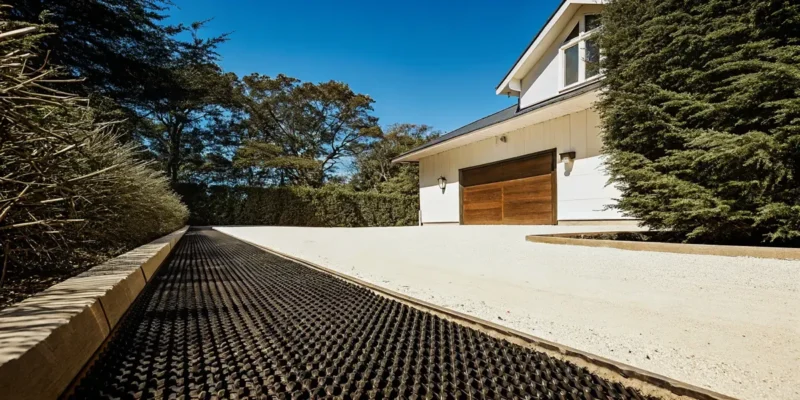
Maintaining a flat gravel driveway on Long Island requires constant raking and stone refills. A gravel driveway grid locks stones into a frame to stop shifting. This choice offers a clean look that survives harsh coastal weather.
A gravel driveway grid is a tough paving system made of linked panels that hold loose stone in place. These honeycomb cells keep gravel from moving to prevent ruts and sinking even under heavy trucks. This system creates a porous surface that lets rain soak into the ground rather than running off into drains. According to the EPA, these systems help filter out waste before it reaches the water table. Homeowners choose this method because it offers the look of stone with the long life of a solid paved path. The grids work well with local freeze and thaw cycles and ensure a smooth surface for walking or driving all year.
If you want a drive that blends natural style with modern design, you should learn how this system works. Many Long Island homeowners are curious about the parts that make these paths so strong. We should look at What Is a Gravel Driveway Grid System? The path begins with.
What Is a Gravel Driveway Grid System?
A gravel driveway grid is a base made of tough plastic panels. These panels look like a honeycomb with many small cells. When you fill these cells with stone, they lock the gravel in place. This stops the stone from moving when cars drive over it. It creates a flat and hard surface that feels as firm as a paved road. Common loose gravel driveways often get ruts or messy spots over time. Using gravel driveway grid systems keeps your stones where they belong.
How the Honeycomb Design Works
The core of this system is the grid panel. Most of these grids use tough recycled plastic. These pre-made grids filled with sand or gravel create a stable surface for walking or driving. You can find more about how these flexible paving systems work through school research. The panels snap together to cover your entire driveway area. This creates one large mat that spreads the weight of heavy cars across the whole ground.
The walls of the honeycomb cells hold each small stone. This stops the stones from sliding sideways. Without a grid, loose gravel moves under the weight of tires. This is what causes deep tracks and low spots in a normal gravel path. The grid acts like a skeleton for your driveway. It gives the loose stones the structure they need to stay flat and even for many years.
Water Flow and Weight Limits
One major plus of a grid system is how it handles water. These panels are a key part of permeable pavement systems. Based on the EPA, these systems allow rain and snowmelt to soak into the ground. This helps stop water from pooling on your driveway. It also keeps runoff from flowing into the street or sewer. This natural drainage is good for the soil and helps prevent flooding in your yard.
These grids also make your driveway much stronger than a loose stone path. A thin layer of gravel in a grid can hold a lot of weight. In fact, a one-inch layer of gravel in a grid is as strong as three or four inches of loose gravel. This means you can use less stone to get a better result. You save money on stones while getting a surface that can handle heavy trucks and SUVs without sinking.
Gappsi Gravelfix Pro and Smart Systems
At Gappsi, we offer two main types of grid panels to fit your needs. Our Gravelfix Pro system is built for the toughest jobs. It has a high weight limit that makes it perfect for driveways and parking lots. This system also has a special fabric on the bottom. This fabric keeps weeds from growing through the stones. It also helps with drainage and keeps the panels from sinking into the dirt over time.
For paths and patios, we often use the Gravelfix Smart system. This panel is lighter and easier to cut into unique shapes. It works great for garden walks or areas where you only have foot traffic. Both systems help you build a beautiful and green driveway. They give you the look of a classic stone path with the strength of modern tools. Our team at Gappsi can help you pick the best grid for your Long Island home.
The Benefits of Honeycomb Gravel Stabilization on Long Island
Standard gravel driveways often struggle with mud and deep ruts. This is a common issue for Long Island house owners after a heavy rain or snow. Without a firm frame, stones shift when cars drive over them. This causes the path to look messy and uneven.
A permeable gravel grid technology system uses honeycomb cells to lock the stones in place. According to the EPA, these permeable pavement systems let rain soak into the ground. This grid stops the gravel from moving or sinking into the soil.
Solving Mud and Ruts
By using a gravel driveway grid, you create a firm surface that feels like a paved road. It can hold heavy cars and trucks without getting hurt. The grid keeps the stones level and spread out across the whole area. This means you do not have to rake the path or fill in low spots as often.
Using this system saves you time and money on upkeep. The grid also stops weeds from growing through the stones. This keeps your home looking clean and well-kept for many years to come. It is an easy way to turn a basic gravel path into a luxury feature.
The support panels are made of high-quality plastic that is very strong. These cells handle the weight of cars without bending or breaking. When the cells are filled with gravel, they form a solid mat. This mat spreads the weight of the car across a large space to stop tires from digging in.
Durable in Freeze-Thaw Cycles
Long Island weather can be hard on old-style driveways. The ground freezes and thaws many times each winter. This cycle often causes asphalt or concrete to crack and break. But grid systems are more flexible than solid slabs and last longer.
According to Oregon State University, these surfaces can last longer than solid pavement in cold spots. The pores in the system give water a place to expand when it turns to ice. This trait stops the surface from breaking up when the seasons change.
A gravel driveway grid does not trap water on top where it can freeze. Since the water flows through, it does not build up and push against the driveway from below. This makes the system a smart choice for the local weather in Nassau and Suffolk counties.
Managing Stormwater Runoff
Heavy rain on Long Island can lead to big puddles and flooding. Solid driveways push water into the street or toward your home. This can flood local sewer systems and cause damage. A grid system works in a new way by letting the water through.
It allows rain to soak back into the earth on its own. Research from the University of Vermont shows that these driveways help recharge groundwater. This helps prevent local floods and keeps water away from your house base.
By letting water pass through, the grid keeps the path dry and safe to walk on. It also helps filter out dirt and oil before they reach the water table. This makes your home more earth-friendly while solving a real drainage problem. Many towns now ask owners to use these items to protect the local area.
Comparing Gravel Grids with Traditional Driveway Materials
Choosing the right option for your driveway is a big task for any homeowner. You must weigh the cost, how it looks, and how long it will last. Most people on Long Island use asphalt or concrete because they are common. However, modern gravel driveway grid systems are a tough and green choice. These systems offer perks that old methods simply cannot match for local homes.
Water flow and nature
A major plus of a grid system is how it handles rain. Hard paths like asphalt do not let water pass through them. In a heavy storm, this leads to large puddles and runoff. This runoff can wash away your soil or flood your yard. A permeable gravel grid technology fixes this by letting rain soak right into the soil. It turns your driveway into a part of the natural water cycle.
This process helps the earth in a few ways. First, it keeps the local water table full by letting rain reach the ground. Second, the soil acts as a natural filter. These systems can filter out pollutants like oil and salt before they reach local ponds (EPA). This makes grids a top choice for protecting the local water supply on Long Island. It keeps the land healthy while giving you a firm place to park.
Strength and local weather
The weather on Long Island can be very hard on your paths. The ground freezes and thaws many times every year. This cycle causes concrete to crack and asphalt to break apart. A gravel grid is more flexible than those hard surfaces. The small cells can move slightly with the soil as it shifts. This stops the large cracks that ruin other types of driveways during a cold winter.
Grid systems also hold weight very well. Once you fill the cells with stone, they form a solid base for cars and large trucks. They do not get the deep ruts that you often see in loose gravel. You get the soft look of stone with the strength of a paved road. This keeps your home looking sharp for many years to come without the need for constant fixes. It is a stable surface that handles daily use with ease.
Upkeep and savings
Upkeep is another area where grids perform well. Concrete needs seals to stop stains from oil or dirt. Asphalt needs new black coats every few years to stay dark. Both are hard and costly to fix when they fail. A gravel grid needs very little work once it is in place. You might need to rake the stone once in a while, but that is all. It saves you both time and stress over the years.
These systems can also save you money over time. They reduce the need for road salt during the winter months (EPA). Since water drains away so fast, less ice forms on top of the stones. You also save on the cost of pipes and drains because the driveway handles the rain itself. This makes it a smart buy for the long run. It cuts down on the bills for yard work and repairs.
| Feature | Gravel Grids | Concrete | Asphalt |
|---|---|---|---|
| Lifespan. | 25 to 30 years. | 25 to 50 years. | 15 to 20 years. |
| Water Flow. | High. | None. | None. |
| Upkeep. | Very Low. | Medium. | High. |
| Green Impact. | Excellent. | Poor. | Poor. |
| Winter Safety. | Good. | Low. | Medium. |
Step-by-Step: How a Permeable Gravel Grid Is Installed
Installing a gravel driveway grid takes careful work and a clear plan. A strong base is the first step to a long life for your driveway. Our team starts by looking at the soil and the slope of the land. We want to make sure water moves away from your home. Gappsi uses a design-build style to get the best results for every home.
Setting the Base
The work begins by digging out the old surface. We must remove all dirt, grass, and soft mud to reach firm soil. The depth of the hole depends on how much weight the driveway will hold. A car needs a thinner base than a heavy truck. Once we reach the right depth, we level the spot and get ready for the stone layer.
A solid base is key for soil strength below the ground. These geogrids are often used in big building jobs to keep the ground from moving. We use a heavy shaking plate to pack down the base stone. This makes a hard surface that will not sink or rut over the years. This firm layer is the core of your new gravel driveway grid.
- Digging Out the Area. We dig the site to a depth of six to eight inches to clear away soft soil and old grass.
- Packing the Base. Our crew adds a layer of crushed stone and uses a machine to pack it down tight.
- Weed Cloth Barrier. We lay a thick fabric over the base to stop weeds and keep the soil away from the gravel.
- Locking the Grids. The plastic grid sheets snap into place to form one large, flat mat that will not move.
- Filling the Cells. We fill the grid with clean stone and level it off to the top of the cells.
Laying the Grid Panels
After the base is set, we lay down a weed cloth. This cloth lets water pass through but keeps roots from growing up. It also stops the clean gravel from mixing with the dirt below. This keeps your driveway looking neat for a long time. We make sure the cloth covers the whole spot with no gaps.
Next, we place the grid panels on top of the cloth. The permeable gravel grid technology allows each panel to lock to the next one. This makes a single mat that will not shift or slide. We trim the edges of the grid to fit the shape of your path or driveway. The panels are light but strong once they are full of stone.
Finishing the Surface
The last step is to fill the cells with stone. We use a clear type of stone for the best results. The grid base needs clean, crushed gravel that is about one-quarter to one and a half inches in size. This size allows the stones to lock together inside the cells. It also leaves enough space for water to drain into the ground below.
Finally, we spread the gravel and sweep it into all the holes. We leave a thin layer of stone on top of the grid so the plastic is not seen. This gives you a real stone look with the strength of a hard road. These gravel driveway grid systems need little care once they are in place. You get a fine driveway that stays flat and dry in any weather.
Key Limitations: When Are Gravel Grids Not Recommended?
While a gravel driveway grid is a good tool for many homes, it is not a fix for every site. These systems work by holding stones in place to stop them from moving under tires. This creates a firm path that allows water to pass through into the soil. But certain land features and vehicle types can make these grids fail over time.
Steep slopes and hills
One major limit for these systems is the steepness of the land. If your drive has a sharp slope, the grids may not stay in place as well as they do on flat ground. Most experts suggest that a gravel driveway grid is not the best choice for slopes that go over 25%. On such steep hills, the force of a car starting or stopping can put too much stress on the honeycomb cells.
For these steep areas, you might need to look at other ways to keep your drive safe and stable. Oregon State University notes that ready-made grids create stable surfaces, but they are best for level or low-slope lots. On a hill, the gravel inside the cells can slowly shift down during heavy rain or when tires spin.
Heavy machines with tracks
Another point to think about is the type of vehicles that will use the path. Standard cars, trucks, and SUVs work great on these grids. But heavy machines with tracks, such as large tractors, are a different story. These vehicles use a lot of torque. This is a twisting force that can rip the plastic cells apart. If you plan to move heavy, tracked gear over your drive often, a different surface might be better.
Soil and site needs
The success of the grid also depends on what is under it. Plastic grids reduce runoff by letting water soak into the ground, but they need a good base to work right. If the ground is very soft or muddy, the grids could sink or tilt. You must prepare the site well before you put the grids down. Without a solid layer of clean stone below, even the best grid will not last.
If you are not sure if your site is a good fit, you should talk to an expert. You can learn more about permeable gravel grid technology to see if it meets your needs. At Gappsi, we help you find the best way to build a drive that lasts for many years on Long Island.
Frequently Asked Questions
How do gravel grids stop gravel from moving?
Plastic grid systems use a honeycomb shape to lock stones in place. These cells keep the gravel from sliding when cars drive over the surface. This design stops deep ruts and thin spots from forming over time. According to WA Rock, a one-inch layer of gravel in a grid provides the same strength as four inches of loose stone.
What kind of stone should I use in a driveway grid?
Most grid systems work best with clean, crushed gravel. You should choose stones that range from one-quarter inch to one and a half inches in size. Avoid using rock with lots of fine dust, as it can block water flow. Using the right stone keeps the surface stable and lets rain soak through easily. Experts at WA Rock suggest clean rock for the best results.
How much weight can a gravel grid driveway hold?
High-quality plastic grids are very strong and can support heavy vehicles. When filled with gravel, these systems spread weight across a wide area to prevent sinking. This makes them safe for standard cars, SUVs, and delivery trucks. Research in the NCBI database shows that geogrid systems are routinely used for soil reinforcement in large building projects. They offer a stable base that resists shifting under pressure.
How long do gravel driveway grids last?
When you install and care for them the right way, porous grid systems can last for many decades. These surfaces often outlive old asphalt or concrete driveways. The flexible plastic cells allow water to expand when it freezes without cracking the material. According to Oregon State University, these systems are very tough in areas with frequent freeze-thaw cycles. They stay stable and work well through many years of heavy use.
Are gravel grids a good choice for Long Island weather?
Yes, gravel grids are a great choice for the local climate in Nassau and Suffolk Counties. The porous design allows heavy rain to drain fast into the sandy soil of Long Island. This prevents puddles and flooding during large storms. According to the EPA, these systems also filter out pollutants like oil before they reach the groundwater. They handle the cold winters well because the flexible cells do not break from frost.
Ready to upgrade your Long Island driveway with a gravel grid?
If you wait to fix your loose stone driveway, you will face messy ruts and high repair bills that grow after every heavy rain storm. Each time it pours, loose rocks wash away and turn your once clean path into a muddy mess that is very hard to walk on. You can stop this waste of your hard earned money today by choosing a stable grid system that keeps your yard looking great. This simple step protects your home and saves you from the stress of constant yard work that comes with loose gravel paths on Long Island.
Ready to get started? Call 631-543-1177 to visit our showroom in Smithtown, New York or schedule a consultation today to see our products.