


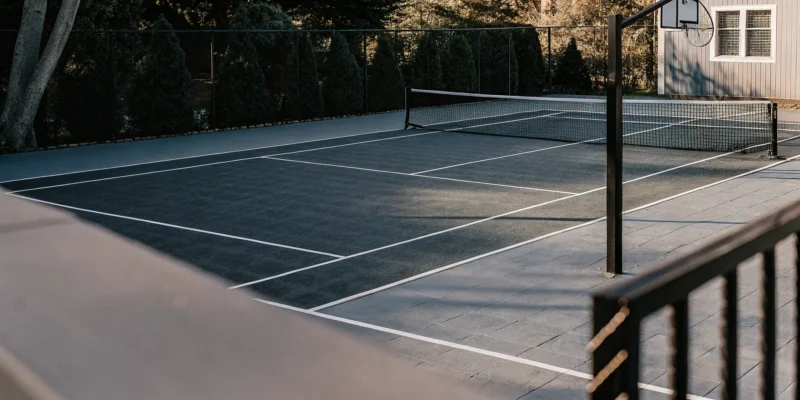
Homeowners on Long Island often struggle to fit multiple sports into a single backyard layout. Standard dimensions for basketball and pickleball require specific clearance zones to ensure safe play for the whole family.
Sports Games Courts provide a special area for basketball, pickleball, and volleyball. These multi-sport areas let you combine several games into one spot by using crossed lines and movable nets. Experts at EVstudio note that a half-court for basketball needs about 2,350 square feet. A pickleball court fits in a much smaller 880 square foot area. Choosing the right size depends on your open lawn space and the sports you play most.
A flat base of concrete or asphalt serves as the floor for the project. We finish this base with Matflex tiles or synthetic turf to create a smooth surface. Proper planning ensures you have enough buffer space for safe play during fast games on your new backyard court.
Determining how much room you have is the first step. You must factor in the dimensions of the court plus the clearance zones for player safety. Space Requirements for Your Backyard Sports Games Courts will vary based on your property size and the games you choose.
Space Requirements for Your Backyard Sports Games Courts
Fitting a court into your yard starts with your goals. Most yards in Nassau and Suffolk County can fit a multi-use area if you plan the layout well. You must think about the size of the play zone and the space around it. These game court designers help you map out these zones to match your property lines and local rules.
Small to medium property layouts
A court size of 30×60 feet works well for most small to medium yards. This footprint gives enough room for a standard pickleball court while leaving space to move safely. Gappsi built a court of this size for an East Islip project using Snap Sports tiles on a concrete base. As shown by USA Pickleball, the standard court is 20×44 feet, so a 30×60 layout adds a helpful buffer for safe play.
Medium to large yard options
If you have more room, a 36×60 foot layout is a great choice. This size adds extra buffer space which is helpful for tennis or half-court basketball. For homes with very large lots, a 50×100 foot area can fit a full tennis court. These large setups often include paths made of Nicolock Stone Ridge pavers around the edge to keep the area clean and easy to reach.
Safety and clearance buffers
Every court needs a safety zone beyond the play lines. These buffer zones keep players from hitting walls, fences, or plants during a fast game. Most plans need at least 5 to 10 feet of clear space around the main court lines. Experts at EVstudio note that total space needs must include these safe zones to prevent injury. Gappsi checks these zones during the design phase to make sure your court is both fun and safe for all ages.
Standard Court Dimensions for Popular Sports
To plan for backyard sports games courts, you need a clear map of your space. Each sport has its own size. Knowing these sizes helps you pick the right plan for your yard on Long Island. Gappsi has built many multi-sport setups in Nassau and Suffolk County. We recently finished a 30 by 60 foot court in East Islip. This size is a great choice for mid-sized yards.
Basketball and tennis needs
Basketball is a top choice for multi-sport plans. A full pro court is 94 feet by 50 feet. Most people pick a half-court to save space. A standard half-court is 47 feet long and 50 feet wide. If your yard is small, you can still play with a 30 by 30 foot area. This size fits a three-point line and gives you room to shoot. It is a smart way to add value to your home.
Tennis needs the most room of any home sport. The play area for doubles is 78 feet by 36 feet. But you must add extra space to move around. A full tennis court usually needs a total space of 120 feet by 60 feet. Game court experts can help you fit these large courts into your yard. They use smart grading and stone walls to make the land flat and ready for play.
Pickleball and net games
Pickleball is a fast-growing sport for home sports games courts. The court size is 44 feet by 20 feet. This is much smaller than a tennis court. It makes the game a great fit for yards in towns like Smithtown. The 44 by 20 foot size also works for badminton. Using one area for both games is a smart way to get more use from your yard. You can swap nets in just a few minutes.
Volleyball needs a bit more room than pickleball. A standard court is 60 feet by 30 feet. When you plan for volleyball, remember to leave extra room to serve. Playing these sports keeps your family active and fit. The CDC says that adults need at least 150 minutes of exercise each week. Having a court at home makes it easy to hit that goal without leaving your house.
Comparing popular game plans
| Sport | Court Size (Feet) | Total Space Needed (Feet) |
|---|---|---|
| Full Basketball | 94 x 50 | 100 x 56 |
| Half Basketball | 47 x 50 | 52 x 56 |
| Pickleball | 44 x 20 | 60 x 30 |
| Tennis (Doubles) | 78 x 36 | 120 x 60 |
| Volleyball | 60 x 30 | 80 x 50 |
When you mix sports, you can save space with lines that overlap. A combined basketball and tennis court often needs about 94 feet by 60 feet. This plan uses a net you can take down. You can switch from hoops to a tennis game quickly. Gappsi uses tough tiles like Matflex to make sure the surface works well for every game you play. This modular surface is easy to keep clean and looks great for years.
Expert setup makes sure your court is flat and drains well. Good base prep is the most vital part of any sports games courts job. Gappsi brings years of local skill to every build on Long Island. We handle the 3D design and the permits so you can just enjoy the play. Our team works with you to pick the best spot and size for your needs.
Choosing the Right Surface Material for Your Sports Games Courts
The base and top layers you pick for your backyard define how the game feels and how well water drains. For homeowners on Long Island, the local weather makes drainage a top priority. Most Sports Games Courts services start with a solid base like concrete or asphalt before they add the final play surface. Concrete provides a flat and permanent floor that lasts for decades but has a higher upfront cost. Asphalt is a common choice for a budget-friendly base, but it may need more care over time to prevent cracks from winter freezes.
Synthetic Turf and Grass Options
Synthetic turf is a top choice for a soft feel and easy upkeep. Gappsi uses the Italgreen line to give you a pro-level experience at home. Homeowners interested in making the switch can read about the 10 key benefits of synthetic turf on Long Island. You can choose from types like the Soccer 52 Double X for active games or the Green HD 17 for tennis. These surfaces allow for fast play while being easy on your joints.
Many homeowners also add a Golf or Putting Green section to their sports games courts for more variety. Synthetic turf helps with outdoor water use because it does not need a hose to stay green. It also drains well after a heavy storm in Nassau County.
Interlocking Tiles and Modular Systems
Modular tiles offer a versatile and fast way to finish your court. Products like Matflex tiles or Snap Sports polypropylene tiles are popular because they snap together over a hard base.
In a recent project in East Islip, NY, Gappsi Inc used Snap Sports tiles on a recycled concrete base to build a 30×60 foot court. These tiles are made to grip well even when they get wet. They come in many colors, which helps you mark lines for different sports. You can also mix in Nicolock Stone Ridge pavers around the court edge to create a clean look that matches your patio.
Performance and Maintenance Needs
Each material has a different trade-off between how it plays and how you care for it. Hard surfaces like concrete or asphalt provide a fast ball bounce that is great for basketball. Tiles add a bit of cushion which helps protect your knees during a long game of pickleball.
If you want a court that works for many sports, a mix of tiles and turf is often the best path. No matter which you pick, a professional setup ensures the ground is level. This stops water from pooling and keeps your game court designers happy with the final result. Proper care keeps the court safe for your family for many years.
Designing a Multi-Sport Layout for Maximum Versatility
A smart layout lets you play many games in a small space. By using one area for basketball, volleyball, and tennis, you get the most out of your yard. The key is to plan how each game fits on the same floor. You can use different colors for the lines so players know where to look. This makes your multisport court guide easy for everyone to use.
Marking multiple sports
You can fit a lot of fun on one surface with the right lines. Most people use a solid color for the main sport, like basketball. Then, you can add dashed lines for other games. Use one color for pickleball and another for badminton. This helps players stay in bounds without getting mixed up. Different colors make each game clear even when they overlap on the court floor.
It is helpful to follow rules from groups like USA Pickleball when you plan. They list the right sizes for courts and zones. When you know the exact space you need, you can fit more games into your plan. This helps you avoid mistakes and keep the play fair for all who use the area. Precise measurements from a map or survey help you fit everything in.
Adjustable gear and nets
Good gear makes it easy to switch between sports. Use hoops that you can raise or lower for different ages. Removable nets are also a must for a multi-use area. You can take them down for soccer or basketball and put them up for tennis in minutes. This keeps the space open and safe when you do not need the net for a specific game.
For an East Islip project, we used top gear to give the owners full use of their space. Strong posts can hold nets for many games. Some posts have holes at different heights for volleyball or tennis. This setup means you do not need many extra parts in your yard. One set of posts does the work of three.
How to plan your layout
Setting up your sports games courts takes a few clear steps. You must think about space and gear before you start to build. Here is a simple path to follow:
- Measure your yard to see how much room you have for the court.
- Pick which sports you want to play most to set the main size.
- Plan a striping scheme using colors that stand out from each other.
- Select gear like adjustable hoops and net posts that fit many games.
- Mark the lines on the surface once the base and floor are ready.
Planning the right way ensures you do not waste space or funds. A good design keeps the court fun for years as your family grows. If you need help, professional game court designers can find the best fit for your home.
Planning Your Sports Games Courts Installation on Long Island
Building Gappsi Inc sports games courts in your backyard takes careful work and a clear plan. We have helped people on Long Island for over 38 years to create play spaces. Gappsi’s complete sports games courts services cover every part of the job from start to finish. We work across both Nassau and Suffolk Counties from our main office in Smithtown.
Initial site review and 3D design
The first step is a full check of your yard to see what will work best. We look at the space you have and the slope of the land. We use 3D tools to show you how the court will look in your yard before we start. This helps you find the best spot for play and see how it fits with your home. You can also visit our showroom in Smithtown to see the court parts in person. Our 12 divisions work as one team to handle the court, walls, and lights all at once.
During the design phase, you can choose the sports you want to play most. Some owners want a space for basketball and tennis. Others may want a smaller spot for a pickleball court or volleyball games. We help you pick the right size for your yard and your needs. A good plan at the start saves time and helps you get the most out of your new space.
Permits and base prep
Most towns on Long Island need a permit before you build sports games courts. Rules vary between Nassau and Suffolk, but Gappsi and our team help with the papers. We provide the drawings and data needed for town sign off. This ensures everything follows local laws. Once we have the permit, our team starts the site work. This is a key part of the build that ensures the court lasts for many years.
Site prep starts with clearing the land and grading the soil. We level the ground so water drains away from the court area. Good drainage is vital on Long Island to prevent pools of water after a storm. Then, we put down a firm base made of asphalt or concrete. This solid floor acts as the spine of the court. It keeps the surface flat and stops it from sinking over time. A strong base is the best way to keep your court safe and fun for decades.
Surface installation and line markings
When the base is set, we add the top play surface. You can pick from Matflex tiles or synthetic turf for your court. These materials help stop slips and protect your joints during play. Our team fits the pieces together with care to ensure a smooth finish. After the surface is down, we paint the lines for your chosen sports. We use bright, long-lasting paint that stays clear through many seasons.
We can make a half-court for basketball or a space for three or four other games. Our East Islip project is a great case of a 30×60 ft court that fits a yard well. Once the lines are dry, we set up the hoops and nets so you can start playing.
How to Budget for Your Sports Games Courts Project
Building a custom area for play involves several cost factors that homeowners should consider early. The total price for sports games courts depends mostly on the size of the court and the materials you choose for the base and surface. Proper planning helps you avoid hidden costs while ensuring your new court lasts for decades.
Primary cost factors for construction
The size of your project is the biggest driver of the final price. Larger courts need more raw materials and more labor for grading. For example, a half-court basketball setup may range from $8,600 to $38,000 depending on the size and site needs. You also need to budget for professional site prep. This includes grading and drainage to keep the court level and dry. According to the EPA, managing runoff with proper drainage is vital for any large paved surface to prevent local water issues.
Choosing your base and surface materials
Your choice of base material impacts your budget. Concrete is a permanent and tough option but usually costs more than asphalt. A synthetic turf surface over a gravel base is another path to consider. For the top layer, many homeowners choose modular Matflex tiles or Snap Sports polypropylene tiles. These materials handle the local climate in Nassau County and Suffolk County while they help protect players from hard falls.
Permits and professional design value
Working with a full-service firm like Gappsi helps simplify the process. We manage the drawings and plans needed to get permits in your local town. Our team has served Long Island since 1987. We provide clear 3D designs so you see the value before work starts. You can reach our Smithtown showroom at 631-543-1177 to discuss a plan that fits your backyard and your budget.
Frequently Asked Questions About Sports Games Courts
How much does a backyard sports games court cost?
Cost depends on court size, base material, and surface type. A half-court basketball layout (30×30 ft) on an asphalt base costs less than a full-size multi-sport surface (50×100 ft) with synthetic turf and multiple striping. Your site conditions, grading needs, and permitting also affect the final price. A professional consultation provides an accurate estimate based on your specific property.
What is the best surface for a multi-sport court?
The best surface depends on the sports you play most. Synthetic turf from Italgreen offers excellent drainage and low maintenance while supporting basketball, pickleball, and volleyball. Matflex polypropylene tiles provide a modular, cushioned surface that handles multiple sports well. Concrete and asphalt offer the most durability for basketball-heavy use but lack the shock absorption of turf or tiles.
How much space do I need for a backyard sports games court?
A versatile court starts at 30×60 ft, which fits a regulation pickleball court with room for half-court basketball and volleyball. For tennis or full-court basketball plus other sports, plan for at least 50×100 ft. You also need buffer space around the court for safe movement. Gappsi offers free site evaluations to measure your available space and recommend the best layout.
Can you put a sports games court on a sloped yard?
Yes. Professional grading and drainage solutions can transform sloped properties into level court foundations. Gappsi’s design-build team includes excavation and grading expertise as part of every project. And the company’s landscape division handles any retaining walls or drainage systems needed to prepare your site.
How long does it take to install a sports games court?
Most residential installations take 1 to 3 days depending on complexity. For a detailed walkthrough of the installation process, check out our detailed installation and maintenance guide for synthetic turf courts. A simple synthetic turf court on prepared ground may be installed in one day. Courts requiring concrete or asphalt base work, extensive fencing, or custom striping and equipment may take longer. Gappsi provides a clear timeline during the design phase.
What sports can I play on a single multi-sport court?
A well-designed multi-sport court can accommodate basketball (full or half court), pickleball, volleyball, badminton, tennis, bocce, shuffleboard, and soccer practice. Color-coded line markings and removable nets and hoops let you switch between sports in minutes.
Ready to Build Your Sports Games Courts?
Turn your backyard into a year-round destination for fun and fitness. Gappsi Group has been designing and building Sports Games Courts for Long Island homeowners since 1987. From the first site evaluation to the final line markings, our team handles every detail.
Call (631) 543-1177 or stop by our showroom at 1015 West Jericho Turnpike, Smithtown, NY 11787 to see material samples and discuss your project. Let us build a court your family will enjoy for decades.