


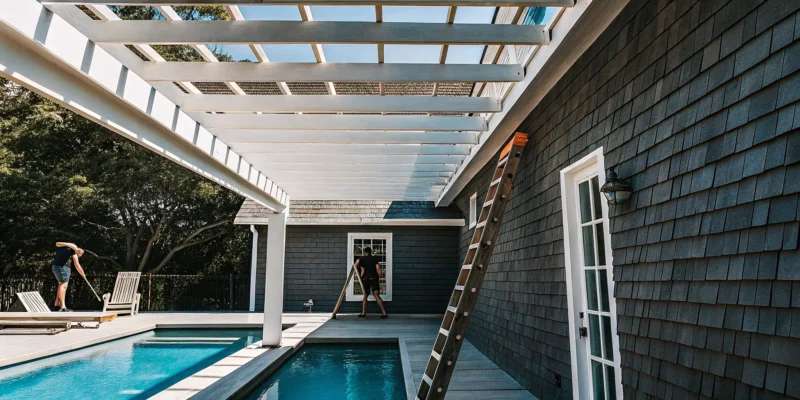
Adding a pergola is a wonderful investment in your home and your lifestyle, creating a perfect spot for making memories. But a quality investment requires a quality process, and that process takes time. Many of our clients wonder how long does pergolas take to install in Long Island, hoping for a quick transformation. While the physical assembly can be surprisingly fast, a truly durable and beautiful installation involves careful planning, securing the right permits, and preparing a solid foundation built for our coastal weather. We believe in transparency, so let’s break down the typical timelines for both standard and custom projects so you can plan your backyard upgrade with complete confidence.
Key Takeaways
- Set Realistic Timeline Expectations: Your total project time includes more than just the 1 to 3 day construction; design complexity, site preparation, and the crucial permit approval phase can extend a custom project to several weeks.
- Plan for Permits from the Start: A pergola almost always requires a permit on Long Island, a process that adds time but ensures safety and compliance. A professional team handles the complex paperwork so your structure meets all local codes without the headache.
- Choose Materials for Longevity and Climate: Your material choice affects both appearance and future upkeep. To combat Long Island’s coastal weather, consider durable, low-maintenance options like vinyl or aluminum that will last for years with minimal effort.
What Affects Your Pergola Installation Timeline?
Thinking about adding a pergola to your Long Island backyard is exciting, but it’s natural to wonder how long you’ll have a construction crew on your property. The truth is, the timeline can vary quite a bit. A simple, straightforward installation might only take a day, while a more complex project could take several weeks from start to finish. Several key factors influence the schedule, including the design you choose, the materials you select, the condition of your yard, and even our unpredictable Long Island weather. Understanding these elements will give you a much clearer picture of your project’s timeline.
Size and Design Complexity
The most significant factor influencing your installation timeline is the pergola’s size and complexity. A standard, pre-fabricated kit on a prepared site can often be assembled by a professional team in just one to three days. However, if you’re dreaming of a large, custom-designed structure with intricate details like built-in lighting, adjustable louvers, or a unique shape that fits a tricky corner of your yard, the process will take longer. These more elaborate pavilions and pergolas require more precise measurements, cutting, and assembly, potentially extending the physical installation to three to five days or more.
Your Choice of Materials
The materials you choose for your pergola affect not only its appearance and durability but also the installation time. Traditional wood pergolas, for example, may require on-site cutting and staining, adding to the labor involved. In contrast, vinyl or aluminum pergolas often come in pre-finished kits designed for quicker assembly. Your material choice is critical for handling Long Island’s weather, from humid summers to snowy winters. We can help you select the right materials that match your home’s style and are built to last, ensuring your new outdoor structure is both beautiful and resilient. The foundation is also key, and our masonry experts can create the perfect base.
Site Conditions and Prep Work
Before any assembly can begin, your site needs to be properly prepared. The condition of the installation area plays a huge role in the project’s timeline. If the ground is already level and you have an existing patio, the process is much faster. However, if the site is on a slope, is uneven, or requires clearing, that prep work adds time. Our landscape design team will evaluate your property to determine what’s needed, whether it’s grading the land or installing concrete footings for a secure foundation. This professional evaluation is essential for a safe and stable installation that will stand strong for years.
Local Weather and Potential Delays
Here on Long Island, we know the weather doesn’t always cooperate with our plans. Heavy rain, strong winds, or even a sudden snowstorm can cause unavoidable delays in an outdoor construction project. For safety reasons, our team cannot work in poor weather conditions, which can push the timeline back a day or two. The coastal salt air and humidity also influence how we build and what materials we recommend. We always plan with potential weather delays in mind and communicate openly with you, ensuring the final structure is built to withstand our specific climate and that you’re kept in the loop every step of the way.
Will You Need a Permit for Your Pergola?
The word “permit” can make any homeowner a little nervous, but it does not have to be a roadblock to getting the backyard of your dreams. For most pergola projects on Long Island, getting a permit is a necessary step to ensure your new structure is safe, stable, and compliant with local codes. Think of it less as red tape and more as a quality check that protects your investment and your family. The process involves submitting your design plans to your local town or village for approval before any construction begins.
The good news is you do not have to go it alone. A seasoned professional will handle the entire permitting process for you, from preparing the paperwork to communicating with the building department. At Gappsi, we manage all the details so you can focus on the exciting parts, like choosing the final touches for your new pavilion or pergola. Understanding the requirements ahead of time helps set clear expectations for your project’s timeline.
Understanding Local Permit Rules
Before any work begins, it is important to understand local building requirements, which can vary quite a bit between towns in Nassau and Suffolk County. While the specific rules differ, there are some common guidelines. For example, smaller, freestanding pergolas under a certain size (often around 120 square feet) might not need a permit. However, larger structures or any pergola that attaches directly to your house almost always requires one. This ensures the foundation and construction are sound and meet all safety standards. An experienced local builder will know the exact codes for your specific area, taking the guesswork out of the equation.
Checking HOA and Zoning Regulations
Beyond your town’s building department, you might also have Homeowners Association (HOA) or specific zoning rules to consider. These regulations can influence everything from where you can place your pergola to its maximum height and even its color. For instance, zoning laws often include “setback” requirements, which dictate how far a structure must be from your property lines, your house, or other buildings. Your HOA may have its own set of aesthetic guidelines to maintain a cohesive look throughout the neighborhood. A professional pergola builder for Long Island will help you review these rules early in the design phase to ensure your project gets a smooth approval.
How Long Does the Permit Process Take?
This is one of the most common questions we get, and the honest answer is: it varies. The permit process is not instant and can easily add several weeks to your project’s overall timeline. After submitting the application and plans, the town’s building department needs time to review everything thoroughly. Sometimes they may have questions or require small adjustments before giving their approval. While this waiting period can feel slow, it is a crucial part of the process. An experienced team knows how to prepare accurate submissions to minimize delays and will manage all the follow-up, keeping your project moving forward as efficiently as possible.
How Long Does Pergola Installation Really Take?
So, you’ve decided a pergola is the perfect addition to your backyard. Great choice! One of the first questions that probably comes to mind is, “How long will this actually take?” The answer really depends on what kind of pergola you have in mind. A straightforward, standard design has a much different timeline than a fully custom structure that’s integrated into your landscape. Let’s break down the typical timeframes so you know exactly what to expect for your Long Island home.
Standard Pergolas: A 1–3 Day Project
If you’re opting for a standard pergola design, you’ll be happy to know the physical installation is quite fast. For most professional teams, a standard build takes just one to three days to complete. This timeline assumes the site is clear and ready to go. These projects move quickly because the designs are pre-planned and the materials are readily available. While it sounds simple, having a professional handle the assembly ensures your pergola is structurally sound, perfectly level, and safely anchored, giving you peace of mind to simply enjoy your new outdoor space.
Custom Pergolas: A 2–4 Week Project
When you want a pergola that’s truly one-of-a-kind, the timeline naturally extends. A custom project is a creative partnership, and the entire process, from our first conversation to the final walkthrough, typically takes between two and four weeks. This longer timeframe accounts for the detailed design phase, ordering or fabricating special materials, and securing any necessary permits. This is where we can perfectly match the pergola to your home’s architecture or integrate it with other features like an outdoor kitchen or a beautiful stone patio. The extra time is well worth it for a structure that feels like it was always meant to be there.
When Is the Best Time to Schedule an Installation?
The best time to schedule your installation is as soon as you start dreaming about it. Planning ahead is key, especially if you want your pergola ready for a specific season, like summer. Spring and fall are popular times for outdoor construction on Long Island, so our schedule can fill up quickly. Booking in advance gives us plenty of time for the design and permitting phases without feeling rushed. It also provides a buffer for potential weather delays. Proper planning helps your entire home remodeling project run smoothly from start to finish.
The Installation Process, Step by Step
Seeing your pergola come to life is exciting, and understanding the process makes it even more so. While the actual construction can be surprisingly fast, a professional installation involves several key stages to ensure your new structure is beautiful, safe, and built to last. We handle every detail from start to finish, but here’s a look at what you can expect when you work with our team.
Step 1: Design and Material Selection
This is where your vision starts to take shape. We’ll work closely with you to design a pergola that fits your home’s style and your family’s needs. You’ll choose the size, shape, and materials, whether you prefer classic wood, low-maintenance vinyl, or a modern aluminum frame. This initial design phase is crucial, as your choices will guide the entire project. Our team can help you explore a wide range of options and find the perfect fit for your backyard oasis. We’ll create a detailed plan that ensures your new pavilion or pergola is exactly what you’ve dreamed of.
Step 2: Site Prep and Permitting
Before any construction begins, we need to prepare the site and handle the paperwork. Navigating local building requirements in Nassau and Suffolk County can be complex, as rules can vary from one town to the next. This is a critical step that we manage for you, ensuring your project is fully compliant with all local codes and zoning laws. We’ll secure any necessary permits, which saves you the time and headache of dealing with municipal offices. Our experience with Long Island regulations means your project will start on the right foot, without any unexpected delays or compliance issues down the road.
Step 3: Marking Utilities and Preparing the Foundation
Safety and stability are our top priorities. Before we dig, we arrange for all underground utility lines to be professionally marked. This prevents any dangerous or costly surprises. Once the area is confirmed to be safe, we prepare the foundation. A solid foundation is essential for a long-lasting pergola. We install concrete footings that anchor the structure securely to the ground, providing the stability needed to withstand Long Island’s coastal weather. Our expertise in masonry and construction ensures this foundational work is done right, giving you peace of mind for years to come.
Step 4: Setting Footings and Assembling the Frame
This is the stage where you’ll see your pergola rise from the ground. With the footings cured and ready, our team will set the posts and begin assembling the main frame. You’ll be amazed at how quickly the structure takes shape. For most standard designs, the assembly process itself takes just one to three days. Our skilled crew works efficiently to construct the beams, rafters, and support system according to the design plan. You can watch the progress and see your outdoor living space transform right before your eyes. We document many of our projects, and you can see our team’s craftsmanship on the Gappsi YouTube channel.
Step 5: Finishing Touches and Optional Features
Once the main structure is built, we add the finishing touches that make your pergola unique. This can include anything from decorative post caps and lattice screens to integrated lighting, ceiling fans, or retractable canopies for added shade. If your pergola is part of a larger project, this is when we integrate it with surrounding elements like a new patio or an outdoor kitchen. This final step is all about personalizing the space to fit your lifestyle. We’ll ensure every detail is perfect, leaving you with a beautiful, functional, and complete outdoor room ready for you to enjoy with family and friends.
How to Prepare for Your Pergola Installation
A smooth installation begins long before our crew arrives at your home. Thoughtful preparation is the key to a seamless project and a beautiful pergola that you’ll enjoy for decades. Taking the time to think through a few key details ensures the final result perfectly matches your vision and lifestyle. It also helps prevent surprises, making the entire process feel more organized and less stressful.
Before we break ground, it’s helpful to consider how your new pergola will fit into your life and your landscape. Think about where you’ll place it, what materials will stand up to the Long Island weather, and how much maintenance you’re prepared to handle down the road. Answering these questions upfront helps us design and build a structure that’s not just an addition to your home, but a true extension of it. Proper preparation helps prevent issues later on, so your focus can remain on enjoying your new outdoor retreat. Let’s walk through the simple steps you can take to get ready for your installation.
Assess Your Space and Sunlight
First, think about how you want to use your pergola. Will it be a cozy spot for your morning coffee, an elegant outdoor dining area, or a shady lounge next to your swimming pool? The function will help determine the best location. Consider how the structure will connect with the rest of your backyard and affect foot traffic. You’ll also want to observe how sunlight moves across your property throughout the day. If you want shade during hot afternoons, you’ll want to place it accordingly. This initial assessment is a crucial part of a thoughtful landscape design and ensures your pergola serves its purpose beautifully.
Choose the Right Materials for Our Climate
Living on Long Island means dealing with a unique climate that includes high humidity, heavy snow, and salty coastal air. These elements can be tough on outdoor structures, which is why material selection is so important for your pergola’s longevity. While traditional wood is beautiful, it requires regular maintenance to prevent rot and weather damage. Modern materials like aluminum and vinyl, on the other hand, offer incredible durability with minimal upkeep. We can help you explore all the options for pavilions and pergolas to find a material that not only matches your home’s style but is also built to withstand our specific weather challenges for years to come.
Plan for Future Maintenance
Your choice of materials will directly influence the amount of future maintenance your pergola will need. It’s wise to be realistic about how much time you want to spend on upkeep. A natural wood pergola, for example, will likely need to be stained or sealed every few years to protect it from the elements. In contrast, an aluminum pergola might only require an occasional cleaning with soap and water to look its best. By planning for maintenance now, you can select a material that fits your lifestyle. This foresight ensures you won’t face unexpected work later, and Gappsi even offers restoration and sealing services to keep your outdoor spaces pristine.
Why a Professional Installation Is Worth It
While a DIY pergola project might seem like a good way to save money, it often comes with hidden costs, from unexpected challenges to time spent away from your family. A professional installation ensures your new outdoor structure is beautiful, safe, and built to last. When you partner with an experienced team, you’re not just paying for labor; you’re investing in peace of mind and a final product that truly enhances your home.
Ensure Safety and Durability in Coastal Weather
Long Island’s weather is a key factor in any outdoor construction project. Our humid summers, salty air, heavy rains, and winter snows all put stress on outdoor structures. A professional installer understands how to build a pergola that can withstand these specific conditions. They will help you select the right materials to prevent rust and rot and use construction techniques that ensure your pergola remains stable and secure through high winds and heavy snow loads. This expertise is crucial for creating a durable structure that you can enjoy safely for many years.
Stay Compliant with Local Building Codes
Most towns on Long Island require a permit to build a pergola, and the rules can vary significantly between Nassau and Suffolk counties. Navigating these regulations involves submitting architectural drawings, site plans, and other detailed paperwork. A professional installer is familiar with these local requirements and can manage the entire permitting process for you. This not only saves you from the headache of dealing with the town building department but also ensures your project is fully compliant, avoiding potential fines or problems down the road.
Save Time and Avoid Costly Mistakes
What might take a homeowner several weekends to complete, a professional team can often finish in just a few days. They have the right tools, a streamlined process, and the experience to work efficiently without sacrificing quality. More importantly, a professional installation prevents common DIY errors, like setting improper footings or misaligning the structure, which can compromise safety and lead to expensive repairs. By hiring experts, you get the job done right the first time, saving you both time and money in the long run.
Why Long Island Homeowners Trust Gappsi
For decades, Long Island homeowners have trusted Gappsi to create stunning and durable outdoor living spaces. Our team handles every detail, from initial design to final installation. We have deep experience working with local building departments across Nassau County, Suffolk County, and Southampton, and we manage the entire permitting process as part of our service. We build pavilions and pergolas designed specifically for the coastal climate, ensuring your investment is as long lasting as it is beautiful. Our commitment to quality craftsmanship means you can relax and look forward to enjoying your new backyard retreat.
Related Articles
- What You Should Know About Pergolas on Long Island
- PVC Pergolas and railings | Long Island, NY
- Pergolas Archives – Gappsi Group
- Custom Pavilions, Pergolas & Gazebos in Long Island, NY
Frequently Asked Questions
How far in advance should I plan if I want my pergola ready for summer? That’s a great question. To be safe, I recommend starting the conversation in the late winter or early spring. The physical installation is quick, but the design and permitting stages take time. Planning ahead gives us plenty of room to perfect your design, secure any necessary permits from your town without feeling rushed, and get you on the schedule before the busy season is in full swing.
My yard has a slight slope. Can I still get a pergola? Absolutely. An uneven yard is a very common situation on Long Island, and it’s not a barrier to getting a beautiful pergola. Our installation process always begins with site preparation. Our team will professionally grade the area and install secure concrete footings to create a perfectly level and stable foundation for the structure. This foundational work is critical for ensuring your pergola is safe and lasts for decades.
You mentioned handling permits. What does that mean for me? It means you can relax. Navigating the permit process can be a real headache, so we take it completely off your plate. Our team prepares all the required drawings and paperwork, submits the application to your local building department, and handles all the communication. Your only involvement is typically signing the documents. We manage the entire process to ensure your project is fully compliant, saving you time and stress.
Why does a custom pergola take weeks to build, while a standard one takes just a few days? The difference comes down to process. A standard pergola installation is mostly assembly, using a pre-planned design and materials. A custom project, however, is a creative partnership from the ground up. The longer timeline includes a detailed design phase to create something unique, the time it takes to source or fabricate special materials, and the careful work of integrating the structure perfectly with your home and landscape.
What is the most durable, low-maintenance pergola material for Long Island’s weather? For our coastal climate, aluminum and vinyl are fantastic low-maintenance choices. They stand up incredibly well to humidity, salt air, and snow without rusting, rotting, or needing to be repainted. They generally just need an occasional cleaning to look their best. While classic wood is beautiful, it does require regular sealing or staining to protect it from the elements. We can walk you through all the options to find the right balance of style and upkeep for your lifestyle.