


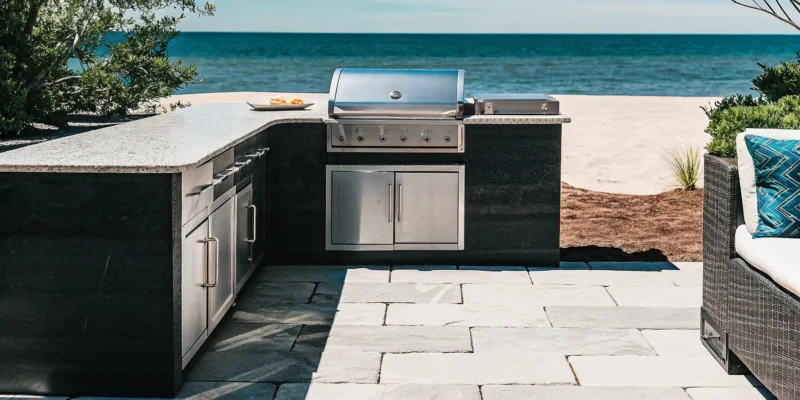
Salt air from the Atlantic Ocean can corrode low-grade metal fixtures within a single humid summer. For Nassau and Suffolk County homeowners, choosing the wrong backyard setup leads to warped frames and rust. Contact Gappsi through our contact page
How do you find the right setup that stays beautiful and functional against salty ocean air and freezing snow? Start by understanding why Long Island weather demands weatherproof outdoor kitchen cabinets, then compare the materials that stand up to this climate before you plan your backyard build.
Why Long Island Weather Demands Weatherproof Outdoor Kitchen Cabinets
Building a cooking space in your backyard is a great way to enjoy the warm months on Long Island. But Nassau and Suffolk Counties have a harsh coastal climate that puts huge stress on your home. To make your space last, you must choose durable materials over style alone. Finding outdoor kitchen cabinets that can survive the salty wind, wet air, and freezing winters is critical.
The toll of salt air and high humidity
If you live near the water, you know how tough coastal air can be. The outdoor kitchen services we offer help you choose products that can stand up to these conditions. High moisture is common across Long Island, and this wet air is full of ocean salt. This harsh salt-air environment is a major cause of rust and corrosion on standard metals. Standard metals will quickly rust, flake, and fall apart without proper care. Cheap wood or thin plastic will also warp and peel when the humidity stays high for weeks. For example, standard wood composite panels require special resins and wax to stay stable. But research from the Oklahoma State University Extension shows they still swell and rot in wet outdoor settings.
Freeze-thaw cycles and winter weather
Summer is not the only season that can damage your backyard setup because Long Island winters are cold, wet, and windy. The ground and your backyard structures go through many freeze-thaw cycles every year. When water gets into small cracks in your cabinets, it turns to ice and expands. This constant expansion can split cheap wood, crack stone, and pull cabinet joints apart. Your doors and drawers can also become hard to open. Standard hardware like hinges and slides will quickly rust or bind when exposed to these cold, wet months. To keep your kitchen working well, you must invest in corrosion-resistant hardware made from high-grade steel or tough polymer. These parts are made to move smoothly even after years of winter snow and ice.
Weather resistance over style choices
When you design your space, it is easy to focus on style. You might want a look that matches your indoor kitchen. But you must prioritize weather resistance over aesthetic preference to prevent your kitchen from failing too soon. Standard indoor cabinets will rot, mold, and break down within a year if left in the open wind and rain. Choosing strong, durable products is the only way to protect your investment. When you use materials like marine-grade polymer, thick stone, or top-grade stainless steel, your kitchen stays strong for decades. It will keep its shape, keep your tools dry, and look great season after season. Starting with the right weather-proof cabinet choices will save you time, money, and stress in the future.
What Is the Best Outdoor Kitchen Cabinets Material for Coastal Air?
Choosing materials for outdoor kitchen cabinets on Long Island is a task of style and science. Salt air and high moisture can soon destroy standard indoor parts. To build a space that lasts, you must find how cabinet options stand up to coastal weather. Our local shore environment demands materials that resist salt rust and winter freeze cycles.
Material durability comparison
This overview shows how the four main families of cabinet materials perform in our local climate. Each material has distinct strengths and weaknesses when exposed to salt water and winter freezes.
| Material | Salt-Air Resistance | Freeze-Thaw | Maintenance | Best For |
|---|---|---|---|---|
| Marine-grade polymer | Excellent | Excellent | Very low | Coastal homes |
| Stainless steel (304/316) | Good to excellent | Excellent | Low to medium | Sleek modern looks |
| Sealed concrete | Excellent | Excellent | Low | Stone design matching |
| Wood and PVC | Poor to moderate | Moderate | High | Sheltered spots |
Not sure which family of outdoor kitchen cabinets fits your yard best? Contact Gappsi through our contact page
Marine-grade polymer performance
Many homeowners choose marine-grade polymer for their coastal kitchens. This plastic is fully non-porous, so it will not crack, swell, or rot in damp air. It is made to resist bad weather and needs very little care to keep its clean look. If you want a stress-free setup, you can learn more about weatherproof outdoor kitchen cabinets that use this plastic. Because the color goes all the way through the material, scratches do not show easily. You can clean these cabinets with a simple spray from a garden hose.
Stainless steel and sealed concrete strength
Metal cabinets offer a sleek look and withstand high heat. But stainless steel can rust in salty coast air if you do not care for it or if you use the wrong grade. To stop rust, you must use 304 or 316 stainless steel. These exact grades give the best shield against salt-water rust on the shore. Adding a powder coat is another wise choice. A powder coat baked onto the metal seals the surface and blocks salt air. If you prefer a stone look, sealed concrete is a strong choice. When sealed the right way, concrete stands up to wet air and is highly heat-resistant. It gives your cooking space a bold look that does not wear down from cold winter freezes. You can also cover the concrete base with a stone veneer. This natural stone veneer ties the kitchen style into your yard paving and masonry.
Wood and PVC challenges
Natural wood and PVC plastics present key trials in coastal areas. Teak wood resists rot because of its natural oils, but it still needs constant oiling to keep its color and stop splits. On the other hand, PVC is cheap and resists water, but it can warp when exposed to intense summer sun. Over time, high heat makes cheap PVC sag and lose its form. This warping can prevent the doors from closing tightly, which lets damp sea breeze reach your stored items. Standard indoor wood composites are even worse for outdoor use. Research from Oklahoma State University shows that wood composite panels like particleboard need special glue and wax to keep their shape. Even with these binders, these panels absorb moisture and swell up, which leads to quick cabinet ruin when placed near the ocean. Using indoor grade panels outside is a mistake that leads to costly repairs.
Marine-Grade Polymer vs Stainless Steel: Which Lasts Longer?
Indoor cabinets often use wood composite substrates. Standard wood boards need wax and resin to stay stable, as shown in Oklahoma State University research. But outdoor spaces face much harsher conditions. For a coastal backyard, you need materials that are completely waterproof and rustproof. Marine-grade polymer and stainless steel are the two top choices for outdoor kitchen cabinets. Both resist water, but they handle salt air and heat in very different ways.
The strength of marine-grade polymer
Marine-grade polymer is a dense plastic that cannot absorb water. Because it is non-porous, it will not crack, swell, or rot when exposed to snow and rain. This material has UV blockers to stop fading from the sun. Salt air on Long Island will not corrode polymer cabinets. You can clean them with a quick hose-down. They do not need painting, staining, or sealing. For homeowners who want a clean look with minimal work, this material is hard to beat.
The limits of stainless steel in coastal air
Stainless steel offers a sleek, modern look. It is very strong and stands up to hot grills and heavy use. But coastal air is tough on metal. Salt can cause rust on steel cabinets if you do not clean them often. To prevent rust, you must choose the right grade of metal. High-end brands like Danver build their doors and boxes from 304-grade stainless steel, and they offer 316-grade stainless steel for coastal homes. These high-grade metals resist rust, but they still need to be wiped down to remove salt buildup.
Warranty and maintenance differences
Warranties often show how long a material will last. For example, Danver offers a lifetime warranty on their outdoor cabinets, and a five-year limited warranty on their powder-coat finishes. Marine-grade polymer cabinets also come with long warranties because they do not decay. When it comes to care, polymer is the clear winner. You only need mild soap and water to keep polymer clean. Stainless steel is more demanding. It must be wiped down with special cleaners to prevent tea staining and rust spots near the ocean.
How to choose the right look
Both options can look great in your yard. Stainless steel gives a bright, commercial kitchen feel. Polymer can be made in many colors and door styles to match your home. If you want to see these choices in person, you can visit the Gappsi showroom in Smithtown, New York. Our team can help you compare both options to find the best fit for your yard.
Do Stone and Masonry Cabinets Hold Up to Freeze-Thaw Cycles?
Long Island winters bring harsh cold and deep frost. If you build your outdoor kitchen cabinets with the wrong materials, they will not last. Stone and masonry are the oldest building methods for a reason. When built with care, these materials can easily survive many seasons of freezing and thawing.
The freeze-thaw threat on Long Island
Freeze-thaw cycles happen when water gets into a material and freezes, expanding to put huge pressure on the structure. As shown in research on wood composite panels, indoor wood needs wax and resin to stay strong. But these wood products still fail fast in wet, freezing air. If water enters tiny cracks, ice will push the pieces apart. Proper masonry resists this damage because stone does not soak up water easily. Solid stone and brick structures form a shield against wet weather. Gappsi brings authentic Italian masonry craftsmanship to every build to ensure your outdoor kitchen stays dry and tight. Since we started in 1987 in Smithtown, we have designed kitchens that stand up to the local weather.
Weatherproof core construction
The secret to a durable masonry kitchen is a strong core. We construct the frame of the cabinets using concrete block or poured concrete. As noted on the Gappsi outdoor kitchen page, sealed concrete is highly durable and heat-resistant for outdoor kitchen cabinet structures. This solid core does not warp, rot, or burn when you cook. To keep water out, we apply a waterproof seal over the concrete base. We also use the right type of mortar to fill any gaps where water might pool. Without this seal, freezing water would crack the mortar and loosen the structure over time. We seal the joints with strong sealants that do not shrink or pull away.
Stone veneer and natural finishes
Once the core is built, we apply the outer finish. Stone veneer can be used to clad outdoor kitchen cabinets to match your existing landscape design. You can choose natural stone veneer, brick, or concrete pavers. These outer layers protect the core and give your yard a classic look. Working with masonry allows you to create a unified outdoor space. Our team blends the kitchen walls with your patio pavers and pool decks. We combine our masonry and paving craftsmanship to build a space that lasts for decades. You can see these stone options at our local showroom to find the perfect fit.
How Should Outdoor Kitchen Cabinets Be Ventilated and Laid Out?
Planning the setup of outdoor kitchen cabinets requires more than just choosing materials. To make a space that is safe and works well, you must focus on air flow and layout. Proper setup stops heat buildup and protects your cooking area.
Ventilation for gas safety
Safety is the first step in any outdoor setup. Gas grills and cooktops produce heavy fumes and heat that can build up inside enclosed spaces. If you use gas appliances, you must make sure that all cabinet designs include enough ventilation to comply with local safety codes. Vents on the sides or back of your outdoor kitchen cabinets let these gases escape. Without proper vents, gas can collect under your grill and create a fire hazard. You must also plan clearances around your grill. Heat from cooking can damage your countertops or cabinets if they sit too close. Leave enough space between the grill and other units to keep the surfaces cool. Using fireproof materials like concrete or stone veneer can also help prevent heat damage.
Functional workspace layouts
A good layout makes outdoor cooking much easier. The classic work triangle connects your grill, prep area, and sink. Placing these parts in a smooth sequence keeps your cooking workflow easy. You should have enough counter space next to your grill to plate food and prep meals.
- Confirm appliance clearances first so heat and flame stay away from cabinetry and countertops.
- Route plumbing and electrical before framing, leaving service access panels for future repairs.
- Balance the work triangle so the grill, sink, and prep area form a short, efficient path.
- Seal every joint between cabinets, walls, and appliances to keep wind, pests, and water out.
Plumbing and electrical lines need a clear plan before you set up any cabinets. Your sink cabinet must have easy access for pipe repairs. Water can collect under the sink because of small leaks or humidity. To protect your storage, you should use a rubber under-sink mat with a lip to catch any spills. This simple step prevents water damage and keeps your stored items dry through the humid coastal months.
Gaps and hardware details
Outdoor setups often have gaps between the cabinets and the nearby structures. Wind, dirt, and pests can get into these spaces if you leave them open. You should use filler and closure panels to close spaces between cabinets and walls or other appliances. These panels give your kitchen a finished look and block dirt from piling up in hard-to-reach areas. Lastly, you must choose the right hardware for your doors and drawers. Coastal air can quickly damage standard metal parts. You should avoid basic steel hinges that rust and bind after a few months. Instead, choose stainless steel or polymer-coated hardware for all drawers and hinges to keep them working smoothly. This hardware is tough against salt air and damp weather. If you want to see these tough materials in person, you can visit our showroom to explore your options.
How Much Do Weatherproof Outdoor Kitchen Cabinets Cost on Long Island?
Building a kitchen outside on Long Island is a big project. You might want to know the cost of outdoor kitchen cabinets first. This cost is not fixed. It changes based on the size of your yard and the materials you pick. But choosing the right material is more important than how it looks. When planning your layout, choosing durable outdoor kitchen cabinets is the best way to prevent early cabinet failure.
Factors driving the upfront investment
The total price of your project depends on your specific choices. A small setup with few doors costs less than a large, curved island. Materials also play a major role in the initial price. For instance, standard indoor wood cabinets are cheap but will rot fast outside. They use low-cost wood composite sheets that fail in wet air. These cheap panels often rely on urea-formaldehyde glue, which cannot handle moisture. You can read about how wood composite sheets are made for indoor use. To build a kitchen that lasts, you must invest in outdoor materials. Materials like marine-grade polymer or 304 stainless steel have a higher upfront cost, but they are built to last.
Why durable materials save money over time
Long Island has a harsh coastal climate. The salt air accelerates corrosion, which quickly ruins cheap metal hinges and drawers. In winter, the freeze-thaw cycles crack weak plastics and split standard wood. If you choose cheap cabinets, you will have to replace them in just a few years. That means you pay for parts and labor twice. Investing in strong, weatherproof materials costs more on day one, but it saves you from constant repairs. These specialized materials do not rust, warp, or crack under the sun and snow. By choosing tough products, you protect your wallet for decades to come.
The Gappsi design-build advantage
When you plan an outdoor kitchen, you often have to deal with many contractors. One person designs the space, another pours the concrete, and a third sets up the plumbing. This can lead to costly mistakes and delays. Gappsi offers a seamless design-build process that handles everything from start to finish. Since 1987, Gappsi has been designing and building custom outdoor living spaces on Long Island. We start with a 3D design so you can see your kitchen before we build it. Then, our own team carries out the work. This keeps your costs clear and prevents errors. You do not have to pay multiple fees to different workers. To get started on your custom yard layout, you can Contact Gappsi through our contact page. Still deciding between marine-grade polymer, stainless steel, and masonry for your coastal yard? Contact Gappsi through our contact page
Frequently Asked Questions
Which outdoor kitchen cabinets are best for salt air?
Marine-grade polymer and grade 304 or 316 stainless steel are the best choices for coastal areas. Marine-grade polymer is non-porous and does not rust, crack, swell, or rot. Stainless steel resists rust but needs regular cleaning. The Gappsi outdoor kitchen guide explains that salt air speeds up metal rust, which makes these materials necessary.
Can I use wood for outdoor kitchen cabinets on Long Island?
You can use teak wood, but it needs a lot of care. Teak resists rot because of its natural oils, but it will turn gray unless you oil it regularly. Other wood products, like particleboard, will fail fast. According to an Oklahoma State University study, standard wood-composite panels need special wax and resins to hold their shape and are meant for indoor cabinets.
Do stone and masonry cabinets hold up to freeze-thaw cycles?
Yes, masonry and stone cabinets are highly durable against freezing weather. Gappsi uses stone veneer to clad outdoor cabinet bases, which matches your home landscape. Concrete cabinets must be sealed properly to protect them from water and temperature swings. Choosing these tough materials helps prevent cracks during the cold Long Island winters.
Does outdoor kitchen cabinetry need ventilation?
Yes, proper ventilation is vital for safety. This is especially true for cabinets that hold gas appliances. Vents stop gas and heat from building up inside the cabinet spaces. You must use vents that meet local safety codes. Investing in stainless steel or polymer-coated hinges keeps your doors working in the humid air.
Ready to build your weatherproof outdoor kitchen?
Winter freeze and coastal salt air will quickly warp and rust cheap outdoor kitchen cabinets. Delaying your custom kitchen project means you miss out on cooking outside with your family this season. If you start planning now, Gappsi can design and build your new weatherproof space before the next big holiday. Our Smithtown team has designed and built custom outdoor spaces on Long Island since 1987. We use durable materials like marine-grade polymer and stainless steel to make sure your setup lasts. We invite you to visit our local showroom to see these rugged materials in person. Do not let another warm month go by with an empty or bare backyard patio. Ready to get started? Contact Gappsi through our contact page to schedule a free outdoor kitchen consultation.