


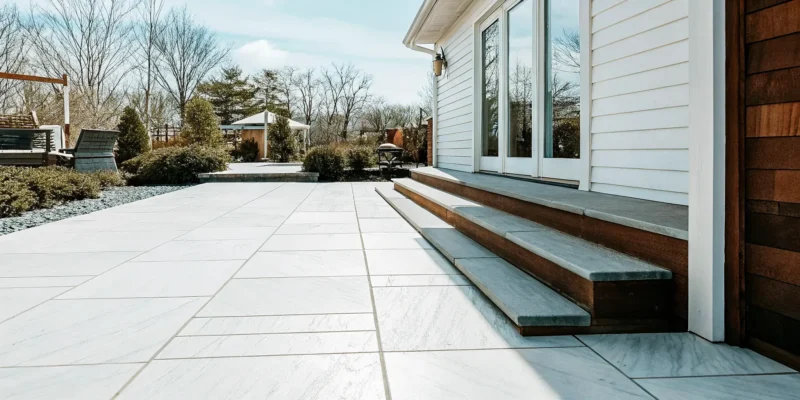
Selecting the right hardscape material for your Long Island home is a major decision that influences both your property value and your daily outdoor enjoyment. Homeowners in Nassau and Suffolk Counties face unique environmental challenges, including intense winter freeze-thaw cycles, humid summer heat, and high-traffic demands on driveways and patios.
When evaluating porcelain vs natural stone pavers for your upcoming hardscaping project, understanding how each material performs in our specific coastal climate is essential. While natural stone has been a traditional choice for decades, Italian-manufactured porcelain has emerged as a formidable alternative, offering engineered durability and consistent styling.
Let’s compare these two popular hardscape materials across durability, maintenance, aesthetics, and cost, helping you make an informed investment for your home.
Porcelain vs Natural Stone Pavers: Understanding the Fundamentals
Porcelain and natural stone pavers differ fundamentally in how they are made and how they perform. Porcelain is an engineered product manufactured by pressing ultra-fine clay, silica, and feldspar under extreme pressure and firing it at temperatures between 2,200 and 2,400 degrees Fahrenheit. This vitrification process fuses the materials into an exceptionally dense, glass-like structure that is virtually waterproof and uniform in size and color. Natural stone pavers are quarried directly from the earth as solid blocks of bluestone, travertine, limestone, marble, granite, or sandstone. Each stone is naturally unique, offering distinctive veining, color variation, and texture that cannot be replicated by manufacturing. Because natural stone is organic, it contains microscopic pores that absorb moisture and requires professional sealing to maintain its appearance over time.
To make the best comparison, we must define what these materials are and how they are sourced. Natural stone pavers are cut from solid blocks of geological formations quarried directly from the earth. These materials include natural bluestone, travertine, limestone, marble, granite, and sandstone. Because they are organic, natural stone pavers offer unique textures, mineral veining, and color variations. No two stones are identical, providing a classic, weathered character that integrates beautifully with natural landscapes. Gappsi carries an extensive selection across its Smithtown showroom, allowing homeowners to hand-select the exact stones for their project. For a broader overview of the options available, see Gappsi’s guide on stone patio materials for Long Island.
In contrast, porcelain pavers are engineered hardscape products manufactured by pressing ultra-fine porcelain clay mixed with silica and feldspar under intense pressure and firing them in kilns at temperatures from 2,200 to 2,400 degrees Fahrenheit. This industrial vitrification process fuses the raw materials into a highly dense, glass-like structure. The resulting pavers are extremely hard, uniform in size, and virtually waterproof, allowing manufacturers to print highly realistic stone-look, concrete-look, or wood-look textures directly onto the surface. Porcelain pavers are increasingly popular for modern Long Island landscapes precisely because they deliver the aesthetic of premium natural materials without the maintenance demands. To learn everything about this material, explore Gappsi’s comprehensive porcelain pavers guide.
Is Porcelain Paving Better Than Natural Stone for Long Island Patios?
Yes, porcelain pavers generally outperform natural stone on Long Island patios for homeowners who prioritize low maintenance and long-term durability. But natural stone remains the superior choice for those who value an organic, one-of-a-kind appearance underfoot.
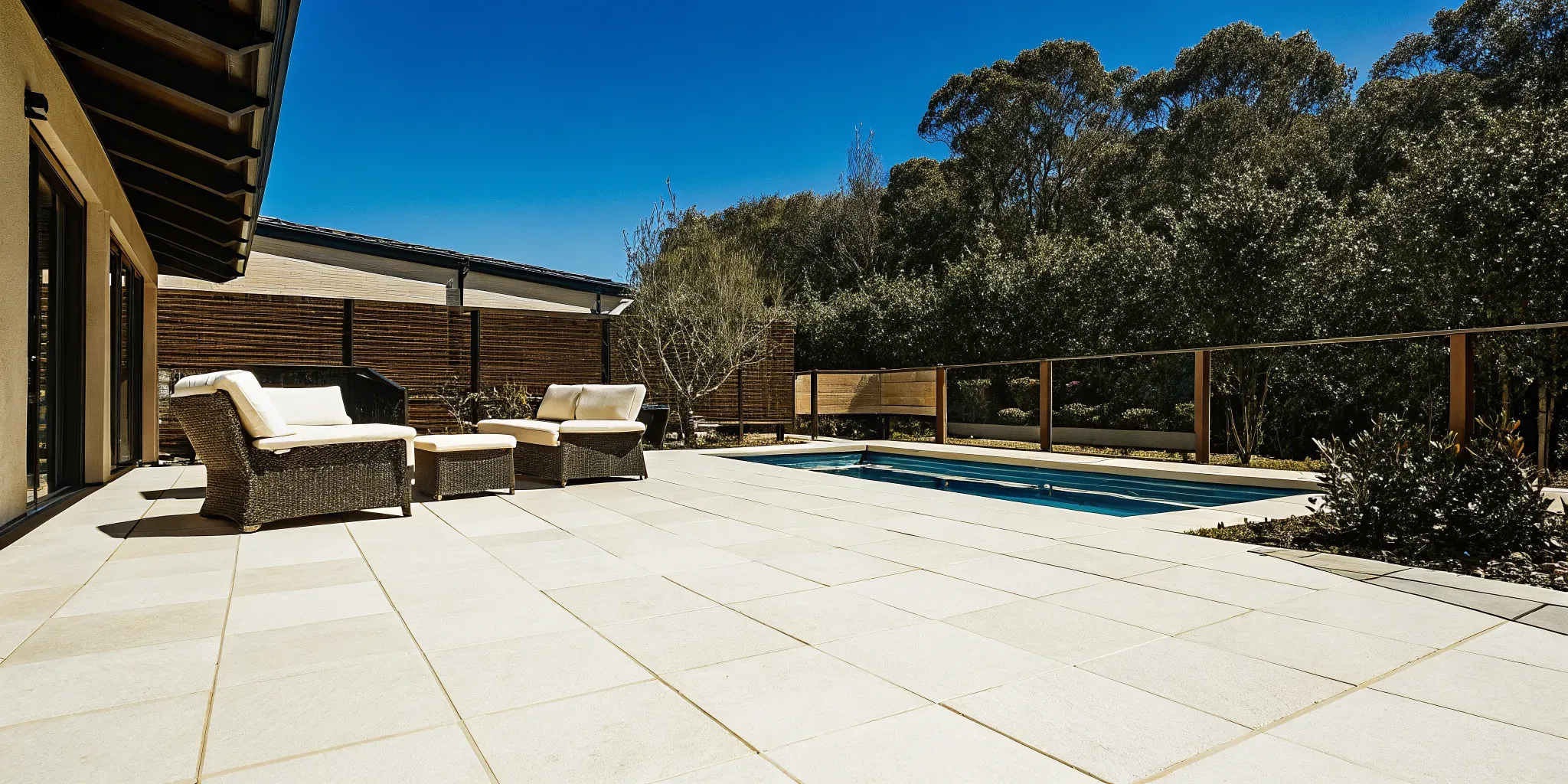
For backyard patios, pool decks, and outdoor living rooms, the choice of hardscape material directly impacts safety, comfort, and ongoing maintenance. Patios are exposed to pool chemicals, spilled drinks, heavy patio furniture, and direct sunlight. One of the most critical factors for Long Island patios is moisture management. Natural stone is naturally porous, containing microscopic voids that absorb water. During cold winters, absorbed water freezes and expands, which can cause natural stones like limestone or sandstone to spall, flake, or crack over time. According to the Tile Council of North America (TCNA) standards, porcelain pavers must maintain a water absorption rate of less than 0.5 percent under the ASTM C373 vacuum test method. This makes porcelain virtually waterproof and highly resistant to frost damage, preventing cracking during our freezing Nassau and Suffolk County winters.
Another major consideration is slip resistance and heat absorption. Natural stone like light-colored travertine and marble is highly regarded because it reflects sunlight and stays cool underfoot even on hot July days while offering excellent slip resistance when wet.
Porcelain pavers, being dense and vitrified, can absorb more heat than natural stones if darker colors are selected. However, choosing light-colored, textured porcelain pavers designed specifically for outdoor use resolves this issue, providing an anti-slip rating of R11 or higher and comfortable walking temperatures.
In terms of cleaning and maintenance, porcelain is the clear winner for patios. Its non-porous structure resists oil stains, food spills, mold growth, and moss. Spilled wine or barbecue grease can be wiped away with water, and the pavers do not require annual chemical sealing.
Natural stone, particularly bluestone and travertine, is susceptible to staining and acid damage from acidic foods or cleaners. To protect its appearance, natural stone must be chemically sealed every two to three years. For a deeper look, you can explore Gappsi’s guide on bluestone vs pavers for patio installations.
How Do Porcelain Pavers Compare to Natural Stone for Heavy-Duty Driveways?
For residential driveways, thick-format porcelain pavers are the more practical choice because they offer complete chemical resistance and tire-mark resistance. While natural stone driveways deliver unmatched rugged elegance but remain vulnerable to staining and require ongoing maintenance.
Driveways demand much higher load-bearing capacity and impact resistance than patios. Heavy passenger vehicles, SUVs, and delivery trucks exert immense pressure on hardscape surfaces, and tires can leave dark scuff marks. Additionally, driveways are highly exposed to automotive fluids like oil, grease, and brake fluid. To handle vehicular loads, material thickness is crucial. Standard natural stone pavers are typically 2 inches thick, while concrete pavers are 2.375 or 3 inches thick. Historically, porcelain pavers were only available in a 2cm (0.75-inch) thickness, which was ideal for sand-set or pedestal patios but too thin for vehicular driveways. Today, Gappsi supplies advanced 3cm (1.125-inch) thick Italian porcelain pavers engineered specifically for residential driveways. When installed over a reinforced concrete base with high-strength mortar or an engineered sand base, these thick porcelain tiles can easily handle heavy vehicular traffic without cracking.
Natural stone driveways offer unmatched rugged elegance, but they are vulnerable to chemical staining. Motor oil, transmission fluid, and leaf tannins can penetrate deep into natural limestone, sandstone, or granite, creating permanent dark spots that are difficult to remove. Porcelain’s vitrified surface is completely chemical-resistant and stain-proof. Oil drips can be cleaned easily with standard dish soap and water. Furthermore, porcelain is highly resistant to tire marking, preserving a pristine, clean appearance for your driveway. For a detailed breakdown, read Gappsi’s analysis of natural stone vs porcelain pavers for driveways and the buyer’s guide to the best porcelain pavers for driveways.
Detailed Material Comparison Matrix
The following table outlines the key technical and practical differences between outdoor porcelain and quarried natural stone pavers for Long Island applications. Helping you evaluate each material’s strengths side by side:
| Feature / Metric | Outdoor Porcelain Pavers | Natural Stone Pavers (Bluestone, Travertine) |
|---|---|---|
| Water Absorption | Virtually waterproof (under 0.5% per ASTM C373) | Porous (typically 2% to 8% absorption) |
| Freeze-Thaw Resistance | Exceptional; immune to frost cracking | Variable; prone to flaking and cracking over time |
| Required Sealing | Never required | Recommended every 2 to 3 years |
| Stain and Oil Resistance | Complete resistance; easily wiped clean | Porous; easily stained by oil, rust, and leaf tannins |
| Color Fading | Completely fade-resistant and UV-stable | Can fade or change color under direct UV exposure |
| Thickness Options | 2cm (0.75-inch) for patios; 3cm (1.125-inch) for driveways | Typically 1.25-inch to 2-inch thickness |
| Size and Shape Consistency | Perfect; rectified edges for tight joints | Variable; requires sorting and custom stone cutting |
| Typical Formats | Up to 48×48 inches and large 48×96-inch slabs | Standard dimensional sizes (12×12 to 24×36 inches) |
| Slip Resistance | R11 or higher with textured outdoor finishes | Naturally slip-resistant when cleft or tumbled |
| Installation Speed | Faster due to rectified edges and uniform thickness | Slower; requires hand-sorting and custom cutting |
What is More Expensive: Porcelain or Natural Stone Pavers on Long Island?
Natural stone can be either more affordable or significantly more expensive than porcelain depending on the specific stone type. But porcelain delivers a lower total cost of ownership over the life of the installation because it eliminates recurring sealing and maintenance expenses.
When analyzing the cost of a hardscaping project, homeowners must look beyond the initial price per square foot of the raw material. The total cost of an installed hardscape includes material purchase, site preparation, base construction, specialized masonry labor, and long-term maintenance expenses.
In terms of raw material cost, natural stone has a wide pricing spectrum. Common local stone like natural cleft bluestone or basic limestone can be highly affordable. However, imported travertine, marble, or premium granite slabs can be very expensive. Porcelain pavers are manufactured in Italy and imported, placing them on par with mid-to-high-end natural stones. Because Gappsi imports porcelain directly, Nassau and Suffolk County homeowners benefit from competitive pricing on Italian porcelain collections.
Where the cost comparison shifts dramatically is in installation labor and long-term maintenance. Natural stone is irregular in thickness and shape. Professional stone masons must sort, hand-cut, and dry-fit every stone, making the installation process highly labor-intensive and slow.
Porcelain pavers are industrially rectified with absolute geometric precision and uniform thickness, allowing for a faster, more predictable layout that can reduce labor costs. Additionally, because porcelain never requires sealing or deep chemical cleaning, you save thousands of dollars in maintenance over the lifetime of your patio or driveway. For homeowners considering specific paver sizes, see Gappsi’s overview of 24x24x2 pavers for driveways and patios to compare format options.
Best Design and Style Trends for Long Island Homes
Both porcelain and natural stone offer distinct design strengths for Long Island homes. With natural stone providing timeless organic character for traditional architecture and porcelain enabling sleek, modern designs with large-format flexibility and minimal grout lines.
Whether your home features a classic Hamptons shingle style, a traditional colonial, or a modern architectural design, your hardscape should complement your home’s exterior aesthetic. Natural stone provides an organic, high-end feel that is difficult to replicate. Natural cleft bluestone offers a rustic, textured surface ideal for traditional Long Island homes. Travertine and limestone provide warm, sandy tones that evoke Mediterranean elegance, which are highly popular for custom swimming pool surrounds. Gappsi carries an extensive selection of natural stones, including bluestone, granite, limestone, and marble, all displayed at our Smithtown showroom. To learn more about selecting stone types, view Gappsi’s guide on natural stone pavers in Nassau County.
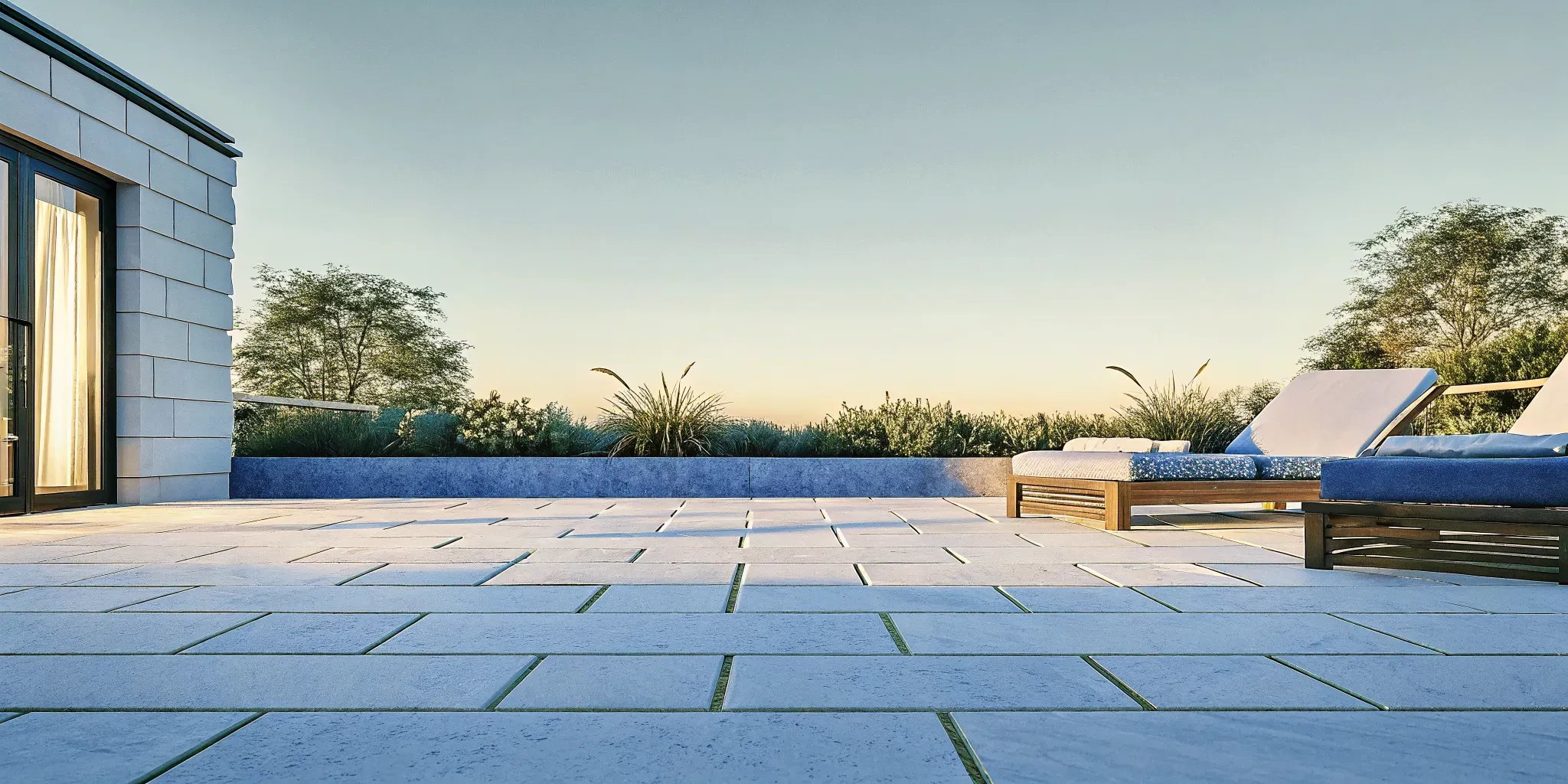
Porcelain offers incredible style versatility. Because the textures are printed, you can achieve the look of rare marble, distressed oak wood, polished concrete, or dark basalt without any of the maintenance drawbacks. Porcelain also allows for massive large-format sizes up to 48×96 inches with a slim 3/4-inch thickness, creating sleek, modern patios with minimal grout lines. It is also available in unique shapes, including hexagon tile and wavy-sided pavers, allowing for creative, modern hardscape designs. For homeowners planning a driveway installation, the ultimate guide to porcelain slabs on Long Island provides additional inspiration.
Summary and Key Hardscape Takeaways
To summarize, both materials have their perfect place in Long Island outdoor living designs. Porcelain pavers are the right choice when you want a sleek, modern aesthetic, large-format sizes. Complete stain resistance, minimal maintenance, and zero frost cracking without ever needing to seal the surface. Natural stone pavers are the right choice when you value the organic, one-of-a-kind variation of natural earth products. Want light-colored materials that remain cool underfoot under direct sun, and appreciate the rustic, weathered charm of natural bluestone or travertine. Either material, when installed by an experienced hardscape contractor like Gappsi, will elevate your Long Island property’s outdoor living experience.
Frequently Asked Questions
Do porcelain pavers get hot in the Long Island sun?
Yes, porcelain pavers can absorb heat under direct sunlight because they are highly dense. However, heat absorption is primarily determined by color rather than material. Dark grey or charcoal porcelain pavers will get hot, whereas light-colored porcelain pavers, such as cream, light beige. Or white marble-look finishes, reflect sunlight and remain highly comfortable to walk on even during hot summer days on Long Island.
Do porcelain pavers crack during Long Island’s freeze-thaw winter cycles?
No, outdoor porcelain pavers are exceptionally resistant to cracking from freezing temperatures. Because they have a water absorption rate under 0.5 percent (tested under ASTM C373), moisture cannot penetrate the dense vitrified body. Without water absorption, there is no internal expansion when temperatures drop. Making them immune to the freeze-thaw cracking that often damages concrete and natural stones like sandstone or limestone.
Do porcelain pavers require sealing?
No, outdoor porcelain pavers never require sealing. Because they are non-porous and vitrified, they resist oil, grease, acid, rust, and leaf stains naturally. Applying a sealer to porcelain is not recommended, as the sealer cannot penetrate the vitrified surface and will simply peel off, leaving a cloudy residue. This eliminates the recurring maintenance cost of sealing associated with concrete or natural stone.
Can you use porcelain pavers for a residential driveway?
Yes, porcelain pavers can be used for residential driveways, but you must select the correct thickness. While standard 2cm (0.75-inch) porcelain is suitable for pedestrian patios, residential driveways require Gappsi’s advanced 3cm (1.125-inch) thick Italian porcelain. When installed over a reinforced concrete slab base with a professional mortar bed, 3cm porcelain provides incredible compressive strength and easily handles vehicular loads without cracking.