


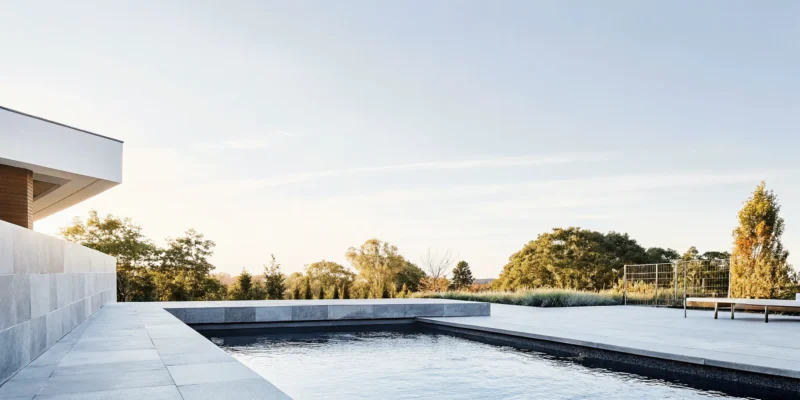
A Long Island backyard can feel entirely different when moving water becomes part of the landscape. The sound of a bubbling fountain near a patio, a pondless waterfall beside natural stone. Or a pool spillway framed by plantings can add movement and a stronger connection between the home and its outdoor spaces.
Gappsi Group approaches these projects through an integrated design-build process, considering the structure, circulation, materials, plumbing, and surrounding landscape together. That planning helps each feature feel intentional rather than added as an afterthought. Start by comparing the forms, scale, and atmosphere created by the most popular water feature options. Ready to explore water feature options for your property? Call Gappsi Group at Contact Gappsi through our contact page for a consultation.
What Types of Water Features Enhance Long Island Landscapes?
The right water feature should fit the property’s architecture, available space, and the way the family uses the backyard. Gappsi Group designs and installs several options across Nassau and Suffolk Counties, from compact masonry fountains to natural-looking waterfalls and pool details. Together, fountains, ponds, and waterfalls can become an integral part of a custom outdoor living plan rather than an isolated decoration.
Custom masonry fountains for patios and entertaining areas
A fountain works well when a homeowner wants sound and movement without dedicating a large portion of the yard to a pond. Wall fountains can anchor a patio or frame an outdoor kitchen, while urn fountains suit an entry garden, courtyard, or smaller terrace. Tiered fountains create a stronger vertical focal point for a broad patio or formal landscape. Gappsi’s masonry work can coordinate the fountain with bluestone, travertine, or other natural stone already used around the home. Fountains are also practical masonry elements for outdoor kitchens and patios, and bubbling fountains can provide a calm focal point near a seating area. 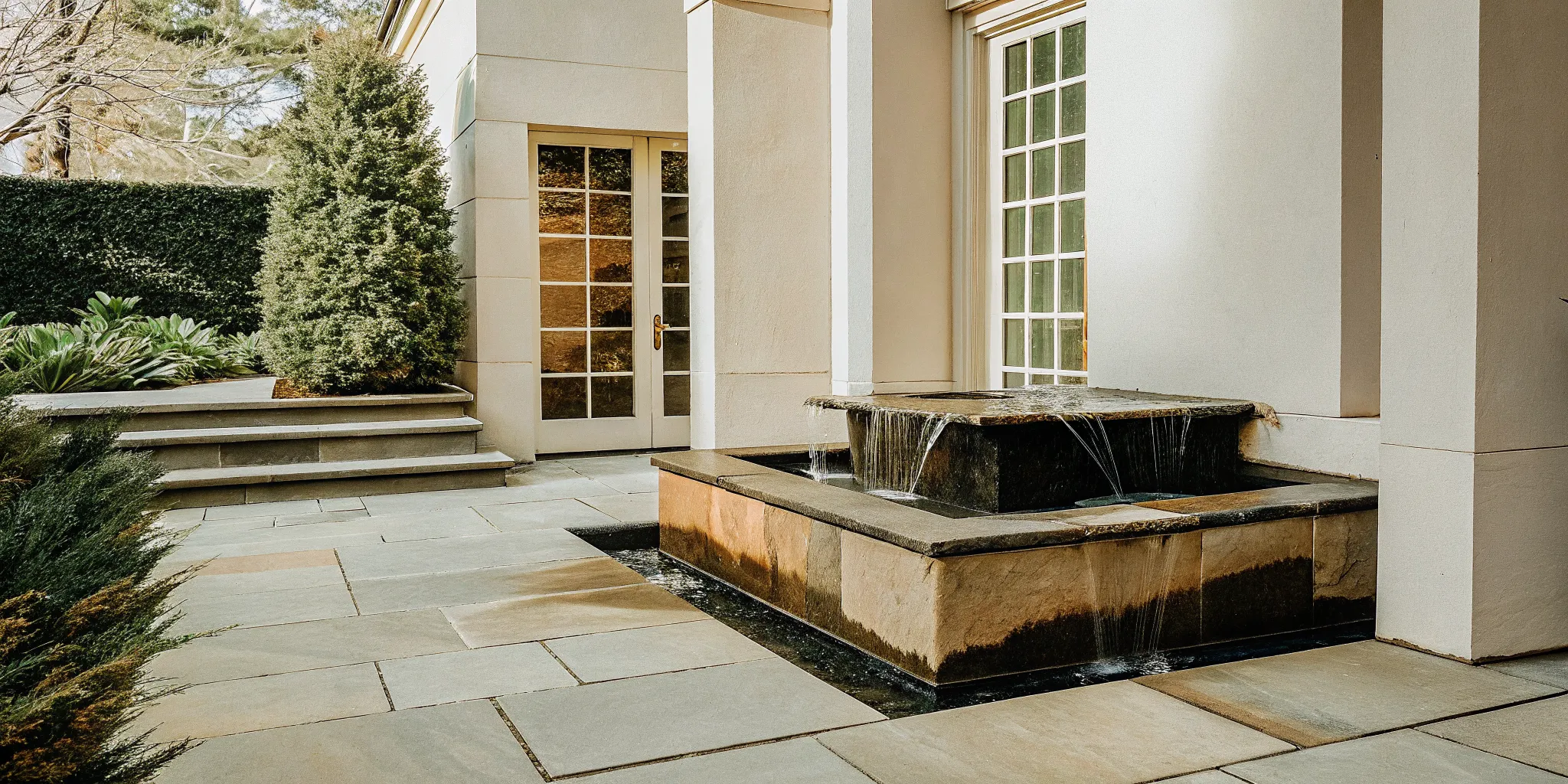
Natural stone waterfalls and ponds
For a property with a slope, garden transition, or larger natural area, a waterfall can make changes in elevation feel intentional. A pondless waterfall recirculates water through a concealed basin, making it a useful choice for a suburban yard where homeowners want the sound of moving water without an open pond. See Gappsi’s work with pond-less waterfall designers for a related Long Island project. A pond-based waterfall is better suited to a larger landscape where the pond itself can support aquatic planting and become a destination. Natural Long Island boulders can help the installation transition into surrounding plantings. 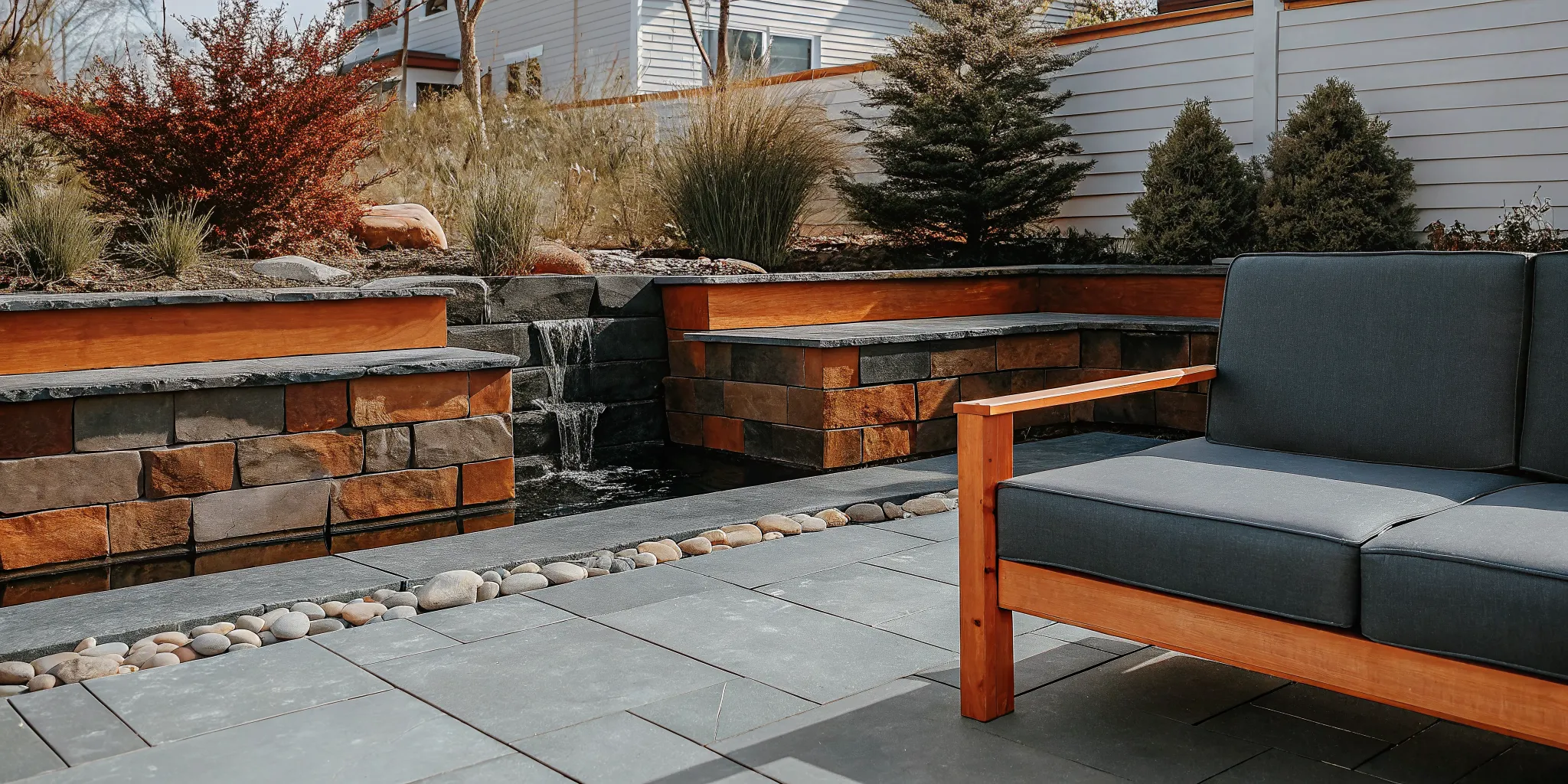
Koi ponds and reflecting pools
A koi pond gives a dedicated garden space a living focal point and can be paired with bridges, stepping stones, or a quiet seating area. It requires thoughtful placement for access and long-term care. A reflecting pool takes a more formal approach, using a clean water surface to mirror trees, masonry, or the lines of the house. It can suit an estate-style property, a straight architectural garden, or a courtyard where visual simplicity matters more than a natural pond edge.
Pool-integrated water features
Homeowners planning a pool can incorporate water into the structure itself. Deck jets arc into the pool from the surrounding deck, bubblers add movement to a shallow tanning ledge, and sheer descents create a smooth sheet from a raised wall. These features add visual and auditory interest to poolscapes, particularly when coordinated with coping, steps, and nearby planting beds. Browse the Landscape Design & Water Features Gallery to compare approaches for different Long Island properties.
| Type | Best Location | Space Needed | Maintenance | Materials Used |
|---|---|---|---|---|
| Masonry Fountain | Patios, outdoor kitchens, entry gardens | Small to medium | Low | Bluestone, travertine, concrete pavers |
| Pondless Waterfall | Suburban yards, garden transitions | Small to medium | Low to medium | Natural boulders, bluestone |
| Koi Pond | Dedicated garden spaces | Medium to large | Medium to high | Natural stone, liner, gravel |
| Reflecting Pool | Formal landscapes, courtyards | Medium to large | Medium | Concrete, stone coping |
| Pool Waterfall | Gunite pool raised walls | Integrated with pool | Low | Bluestone, natural stone |
| Deck Jets | Pool deck perimeters | Integrated with pool | Low | Stainless steel |
How Does Gappsi Integrate Water Features with Pool and Patio Designs?
A water feature works best when it is planned with the spaces around it, not added after the pool, patio, or planting plan is complete. Gappsi Group approaches each project as a connected outdoor living design, coordinating structure, circulation, plumbing, lighting, and planting from the beginning. This design-build approach helps ensure that a waterfall, fountain, or bubbling element feels intentional and supports how your family uses the yard.
Pool features designed into the structure
Gappsi installs custom Gunite, Vinyl Liner, and Fiberglass pools, with Gunite offering particular flexibility for built-in water features. A Gunite pool can incorporate an integrated waterfall along a raised wall, bubblers on a shallow sun shelf. Deck jets that arc into the basin, or a sheer descent set into masonry. These details can become both a visual focal point and a source of movement and sound within the poolscape. Waterfalls, in particular, add an auditory and visual element to the pool area. Feature placement also affects daily operation. The design should account for splash, circulation, access to pumps and controls, and the relationship between the water feature and surrounding paving. Where appropriate, a gutter or grate system can capture splashed water and return it to the pool or feature, supporting more efficient water use. Explore Gappsi’s custom swimming pool installation services to see how the pool and its surrounding elements can be planned together.
Patios, outdoor kitchens, and fire-water balance
Water features can extend the experience beyond the pool. Within a masonry patio or outdoor kitchen, a wall fountain, basin fountain. Or compact bubbling feature can establish a focal point without taking over the dining and cooking areas. Gappsi’s masonry scope includes outdoor kitchens, fireplaces, fire pits, and fountains, making it possible to coordinate materials, proportions, and sightlines across the entire entertaining space. A fireplace or fire pit next to a fountain creates a deliberate fire-and-water combination. The contrast can define separate zones while keeping the patio visually connected. Stone selection, coping details, drainage, and specialized water plumbing should be resolved as one plan. Learn more about Gappsi’s masonry design and construction services.
Plantings that frame the feature
Landscape planting completes the transition between hardscape and water. Gappsi can position plants to frame a view, soften a raised wall, or create separation from a seating area while preserving access for maintenance. On Long Island, regionally appropriate plant choices, healthy soil, and careful grading help the surrounding landscape thrive with less intervention. Plants that shed excessive leaves or debris directly into the water should be avoided, since thoughtful selection can reduce cleaning demands. With one team guiding the project from concept through completion, Gappsi Group can coordinate the pool, masonry, plumbing, and landscape details. That is how Long Island water features feel like part of the property rather than an isolated installation.
What Materials Work Best for Long Island Water Features?
Material selection affects how a water feature looks, drains, and holds up through Long Island’s changing seasons. Gappsi plans the visible finish together with the masonry base and water plumbing, since professional fountain installation requires both structural masonry and specialized plumbing for reliable operation.
Bluestone for Spillways and Waterfall Coping
Bluestone creates a clean, substantial edge for a spillway or waterfall coping. Its blue-gray color works with pool coping, patios, and planting beds. A properly installed, sloped piece directs water where it belongs instead of allowing it to collect behind the feature. The joints, substrate, and drainage details matter as much as the stone itself. Those details help limit damage when wet surfaces freeze and thaw.
Natural Boulders for Rock Waterfalls
For a more natural composition, Gappsi can use Long Island fieldstone boulders to build a rock waterfall. Large stones establish the structure, while smaller stones and planting soften the transitions into the surrounding landscape. Natural stone is well suited to Long Island weather when it is selected, set, and drained correctly. This approach also gives each waterfall an irregular profile, so the water moves over ledges rather than appearing as a manufactured sheet.
Travertine, Concrete Pavers, and Stainless Steel
Travertine veneers are useful around fountain surrounds because their warm color and textured surface connect the water feature to nearby masonry. For adjoining patios and walkways, concrete pavers provide a coordinated, serviceable surface with replaceable units if access to plumbing is ever needed. Homeowners comparing patio finishes can review Gappsi’s natural stone pavers options as part of the planning process. For contemporary designs, stainless steel works well for sheer descents, narrow spillways, and modern fountain elements. It provides a crisp visual line against stone or concrete and can be detailed to keep water flowing evenly. Across all material choices, freeze-thaw performance depends on proper bases, positive drainage, durable joints, and plumbing that can be winterized. Gappsi’s design-build process coordinates those elements so the finish supports the feature rather than becoming an isolated decorative layer.
How to Maintain Water Features Through Long Island’s Seasons
A seasonal checklist keeps fountains and ponds reliable without turning them into a constant chore. Properly designed water features can remain manageable when planting, circulation, access points, and drainage are considered from the beginning. EPA guidance also supports water-efficient design choices that reduce maintenance demands over time.
- Restart the system in spring. Once freezing weather has passed, remove winter covers, clear leaves and sediment, and inspect the basin for cracks or shifting. Check pump housings, intake screens, plumbing connections, and electrical components before restarting circulation. For a fountain, confirm that the pump delivers an even flow and that splash stays within the basin. A professional installation must coordinate the masonry foundation with specialized water plumbing, so any leak or movement deserves prompt attention. See this luxury custom outdoor water fountain for an example of how the feature can be integrated into an outdoor design.
- Keep summer operation balanced. Monitor water levels during hot, windy periods and add water when necessary to protect the pump from running dry. Choose plants around the feature carefully. EPA guidance recommends selecting vegetation that does not contribute excess debris, which helps reduce cleaning and filtration work. Strategic planting and physical barriers can also reduce wind exposure and evaporation. If splashing is a concern, a gutter or grate system can catch water and return it to the pool or feature. These details support efficient operation while helping prevent algae-promoting buildup from excessive debris and stagnant water.
- Prepare for fall debris. Skim leaves regularly before they sink and decompose. Install netting or a fitted cover over pond-based systems when leaf drop increases, and remove accumulated debris from basins, skimmers, filters, and pump intakes. Pondless waterfalls generally require less seasonal work because they do not have an open pond surface, but their reservoirs and pump vaults still need inspection and cleaning.
- Winterize before sustained freezing. Follow the equipment manufacturer’s instructions for draining and protecting fountain pumps. Disconnect, clean, and store removable pumps where appropriate. For pond systems, remove vulnerable equipment, clear plumbing where required, and protect exposed components from ice damage. Do not assume a pondless system is maintenance-free. Its pump, reservoir, and circulation lines still need winter protection suited to the installation.
With the right plant selection, splash control, and seasonal inspections, Long Island water features can stay attractive and functional through changing weather. The goal is not to eliminate maintenance, but to design a system where each task is predictable and proportionate to the feature.
Designing a Water-Efficient Landscape with Fountains and Ponds
Water efficiency should be part of the landscape plan before excavation begins. For Long Island water features, the goal is not simply to use less water. It is to direct water where it can do the most work, limit avoidable loss, and select plantings that can thrive in Nassau and Suffolk County conditions.
Group plants by water needs
Hydrozoning groups plants with similar water requirements, so irrigation is not applied uniformly to a landscape with different needs. Place moisture-tolerant plants closer to a pond or recirculating basin. Drier areas can use plants such as inkberry holly, switchgrass, eastern red cedar, or beach grass where the site allows. Flowering perennials such as black-eyed Susan and bee balm can add seasonal color without turning every planting bed into a high-demand zone. Regionally appropriate plant choices and properly sized turf areas are recognized components of a water-efficient landscape by the U.S. Environmental Protection Agency. EPA landscape guidance also emphasizes healthy soil, appropriate grading, mulch, and hydrozones. Healthy soil supports infiltration and root development. Grading should direct runoff away from structures while keeping useful water in planted areas. Rather than allowing it to collect against masonry or wash out soil around the feature.
Reduce evaporation and recapture splash
A properly selected layer of organic mulch helps retain soil moisture and reduces how often surrounding beds need irrigation. Low, carefully placed planting and masonry barriers can also reduce wind exposure and evaporation. Around fountains and pond edges, a gutter or grate system can capture splash and drag-out, returning that water to the feature instead of sending it into adjacent paving or turf. This is especially important where a fountain has a strong jet or a waterfall crosses a busy patio edge. Gappsi Group’s design-build approach coordinates grading, drainage, masonry, plumbing, irrigation, soil preparation, and planting from the beginning. That integration makes efficiency part of the construction plan, not a retrofit after runoff, splash, or excessive irrigation has already become a problem. The result is a water feature that works with the landscape around it and remains practical to maintain.
Frequently Asked Questions
What types of water features are best for Long Island landscapes?
The best choice depends on the yard, architecture, and maintenance goals. Custom masonry fountains suit patios and outdoor kitchens, while pondless waterfalls provide movement and sound without a large open basin. Ponds, reflecting pools, pool waterfalls, bubblers, and sheer descents can also be planned as part of a cohesive landscape design.
Can I install solar-powered water features on Long Island?
Solar operation can be considered for a small or remote feature when the location receives enough direct sunlight. A designer should evaluate the feature’s pump requirements, daily operating schedule, and placement before selecting the system. Wired recirculating equipment may be more practical for larger fountains, ponds, or pool-integrated elements.
What maintenance is required for ponds in Long Island’s climate?
Ponds generally need seasonal attention, including debris removal, pump inspection, water-level checks, and winter preparation. Thoughtful plant selection can reduce leaves and other debris entering the water. Pondless waterfalls typically have less open water to manage, but their basin, pump, and filtration components still require regular inspection.
Do I need a permit for a pond or fountain on Long Island?
Permit requirements can vary by municipality and by the feature’s size, depth, plumbing, electrical work, and relationship to a pool or property improvements. Before construction, confirm requirements with the local building department and have the design-build team coordinate any necessary applications. This review helps identify site and utility requirements early.
Ready to Plan Your Long Island Water Feature?
A thoughtful water feature can give your landscape a defined focal point and connect patios, planting areas, and outdoor living spaces. Gappsi Group can help you evaluate the right direction for your property, whether you are considering a fountain, pond, or waterfall. Contact Gappsi Group for a water feature consultation: Contact Gappsi through our contact page.