


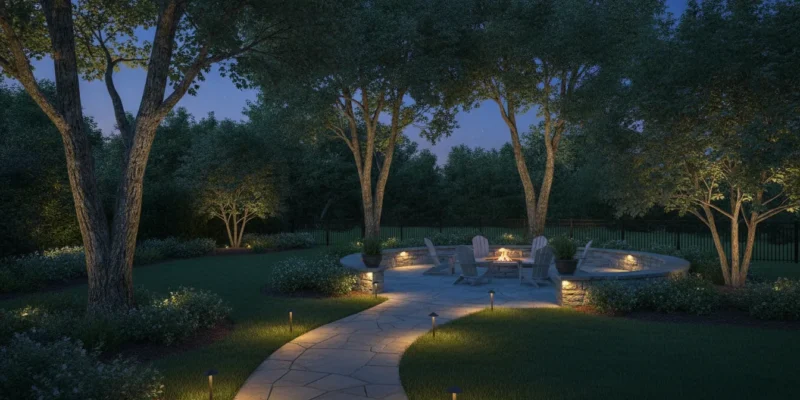
Outdoor spaces on Long Island change character after sunset. A front walk, patio, planting bed, retaining wall, or pool approach can lose the structure that makes it useful during the day. A thoughtful plan restores visibility while preserving comfortable darkness and the character of the property.
Call Gappsi at Contact Gappsi Group to discuss your landscape lighting plan.
Landscape lighting uses carefully positioned, low-voltage LED fixtures to guide movement, highlight architecture and planting, and extend the practical use of outdoor living areas. Gappsi plans these systems around light distribution, fixture placement, hardscape details, controls, and maintenance rather than treating lighting as a collection of isolated fixtures.
This guide explains how low-voltage systems work, which fixture types serve common outdoor spaces, how to plan a layout, what affects installation cost, and how lighting can be coordinated with patios, walls, pools, and planting.
What Is Low-Voltage Landscape Lighting and Why Use It?
A low-voltage landscape lighting system uses a transformer to supply outdoor fixtures with reduced electrical voltage. It commonly powers efficient LED lamps along paths, planting beds, walls, patios, steps, and other exterior features. The system should be designed around how people use the property, not placed wherever an outlet happens to be available.
The result depends on matching the light source, fixture position, beam direction, and control schedule to each task. A walkway may need soft, even guidance. A mature tree may need a narrower accent. A retaining wall may benefit from a controlled wash that shows texture without shining into nearby windows. The National Park Service explains that choosing the task area, fixture height, and light distribution helps limit glare and unwanted spill through its outdoor lighting principles.
How can landscape lighting improve safety and security?
Thoughtful lighting can make steps, changes in grade, walkways, and entry transitions easier to read during evening use. It can define the route from a driveway to a front door and make a patio or pool approach easier to navigate. It can also make the exterior of a home more visible from the approach. These effects can support a safer-feeling arrival, but lighting alone does not guarantee security.
Gappsi’s existing landscape lighting design guidance describes the relationship between safety, security, and appearance. The practical goal is balanced visibility, not maximum brightness.
Why choose LED and an integrated design?
LED fixtures use energy efficiently and can provide focused output for paths, trees, walls, and gathering areas. Responsible placement also reduces unnecessary light trespass. A professional plan considers the home’s facade, mature planting, masonry, circulation routes, and evening routines together. Lighting can be coordinated with Gappsi hardscaping and masonry services so steps, seat walls, patios, and retaining walls support the same nighttime composition.
Call Gappsi at Contact Gappsi Group for a Long Island landscape lighting consultation.
Which Fixtures and Techniques Work Best?
The best fixture is the one that serves a clear purpose in the layout. Path lights should orient people without creating a bright runway. Uplights can give a tree or column more height. Downlights can illuminate a walking surface from above. Accent fixtures can draw attention to a specimen plant or textured masonry, while wall washes spread softer light across broader surfaces.
- Path lights: Guide walkways, steps, and planting-bed edges with controlled illumination.
- Uplights: Aim a managed beam into a tree canopy, column, or architectural feature to add depth.
- Downlights: Cast light toward steps, paving, seating, or paths from an elevated position.
- Accent lights: Focus attention on a specimen tree, planting group, or stone detail.
- Wall wash fixtures: Spread light across a facade or retaining wall instead of creating a hot spot.
- Well lights: Sit flush with the ground where an in-ground fixture can illuminate a tree or wall discreetly.
- Hardscape lights: Fit beneath caps, benches, ledges, or steps to add concealed illumination.
- Shielded fixtures: Limit direct views of the lamp and help keep light out of windows, seating areas, neighboring properties, and the sky.
Technique matters as much as hardware. Uplighting should reveal the branching structure of a tree without aiming glare toward guests. Downlighting is useful for a walking surface because the beam follows the task area. Wall washing works best when the fixture distributes light evenly. A narrower accent can create contrast on textured stone or a focal plant.
Glare control should guide every decision. Hide fixtures behind planting where practical, shield the light source, and use the lowest output that serves the area. This lets the eye move between lit features and darker areas. Gappsi can coordinate fixture placement with Long Island landscape design, patios, masonry, planting, and circulation routes.
How Should You Plan a Landscape Lighting Layout?
A successful layout begins before fixtures are selected. Walk the property after sunset and identify where light supports a real activity, guides movement, or reveals a feature worth seeing. The task-first approach described by the National Park Service is useful on Long Island properties where paths, planting beds, patios, and masonry share a limited footprint.
- Map task areas. Mark the front walk, driveway edge, steps, patio, outdoor kitchen, seating area, pool approach, and routes between the house and backyard. Make changes in elevation easy to read without shining fixtures toward a person’s eyes.
- Choose focal points. Identify the tree, specimen planting, retaining wall, entry, architectural detail, or masonry feature that should anchor the nighttime view. Add softer nearby illumination so the composition does not become one bright spot surrounded by darkness.
- Connect architecture and planting. Consider the facade, columns, rooflines, trees, shrubs, and beds as one composition. Account for future plant growth, views from interior rooms, and sightlines from outdoor seating.
- Find dark zones and control glare. Look for abrupt gaps near gates, steps, paths, and transitions between hardscape and lawn. Fill only the areas that need visual continuity. Keep light away from bedrooms, roads, neighboring properties, and the sky.
- Plan the transformer and load. Count fixtures by type and group them by zone. Paths, architectural accents, entertaining areas, and security-oriented locations may need separate controls or schedules.
- Test the design at night. Inspect the property from the sidewalk, driveway, patio, and primary interior viewpoints. Move or shield anything that causes glare, hot spots, or unwanted spill before final positions are fixed.
For a Long Island project, Gappsi can coordinate the layout with existing or planned outdoor construction. Homeowners can also review the landscape design and construction guide when planning a larger outdoor environment.
How Much Does Landscape Lighting Installation Cost?
There is no responsible one-size-fits-all price for landscape lighting installation. A professional estimate is site-specific because the scope depends on the property, desired nighttime use, access, and how the system must work with existing or planned construction. Gappsi evaluates the layout before recommending equipment, wiring, and controls rather than presenting an unsupported generic range.
The number of fixtures is one cost driver, but it is not the only one. A small group of path lights may require less labor than a broader design with uplighting. Wall washing, stair illumination, concealed hardscape fixtures, multiple zones, and restoration around established planting or paving can also change the scope. See Gappsi’s professional low-voltage LED landscape lighting service.
| Cost driver | Planning question |
|---|---|
| Fixture count and type | Which paths, trees, walls, steps, beds, or gathering areas need light, and what effect should each fixture create? |
| Transformer and wiring | Will the transformer support the planned load, and can wiring be routed efficiently while keeping connections protected? |
| Trenching and access | Will installation cross established planting, lawn, paving, masonry, or areas requiring careful restoration? |
| Hardscape coordination | Should lighting be planned with a patio, retaining wall, outdoor kitchen, pool edge, or steps before construction? |
| Controls and maintenance | Do you need timers or zones, and who will clean lenses, check connections, and adjust fixtures? |
Scope matters more than a fixture count alone. Planning lighting with masonry and planting can reduce disruptive rework and produce a more consistent result. Shielded fixtures and appropriate distribution direct light toward the task area while limiting glare and spill. A consultation can connect lighting priorities with existing conditions and future outdoor plans.
How Can Lighting Be Integrated Into Patios, Walls, and Pools?
Lighting works best when planned with the hardscape rather than added after construction. A patio, retaining wall, outdoor kitchen, pergola, or pool edge already has lines, steps, material changes, and gathering points that can guide fixture placement. Gappsi’s hardscaping and masonry work can be coordinated with low-voltage lighting so the finished backyard remains useful after sunset.
Patios and outdoor kitchens need layers that match each activity. Low-profile fixtures can provide subtle illumination beneath a seat wall, counter edge, or step. A covered patio may need a separate source for a dining table or food-preparation surface. Wall-mounted fixtures can define entries, while accent lights can reveal stone, brick, or stucco texture without flooding the area.
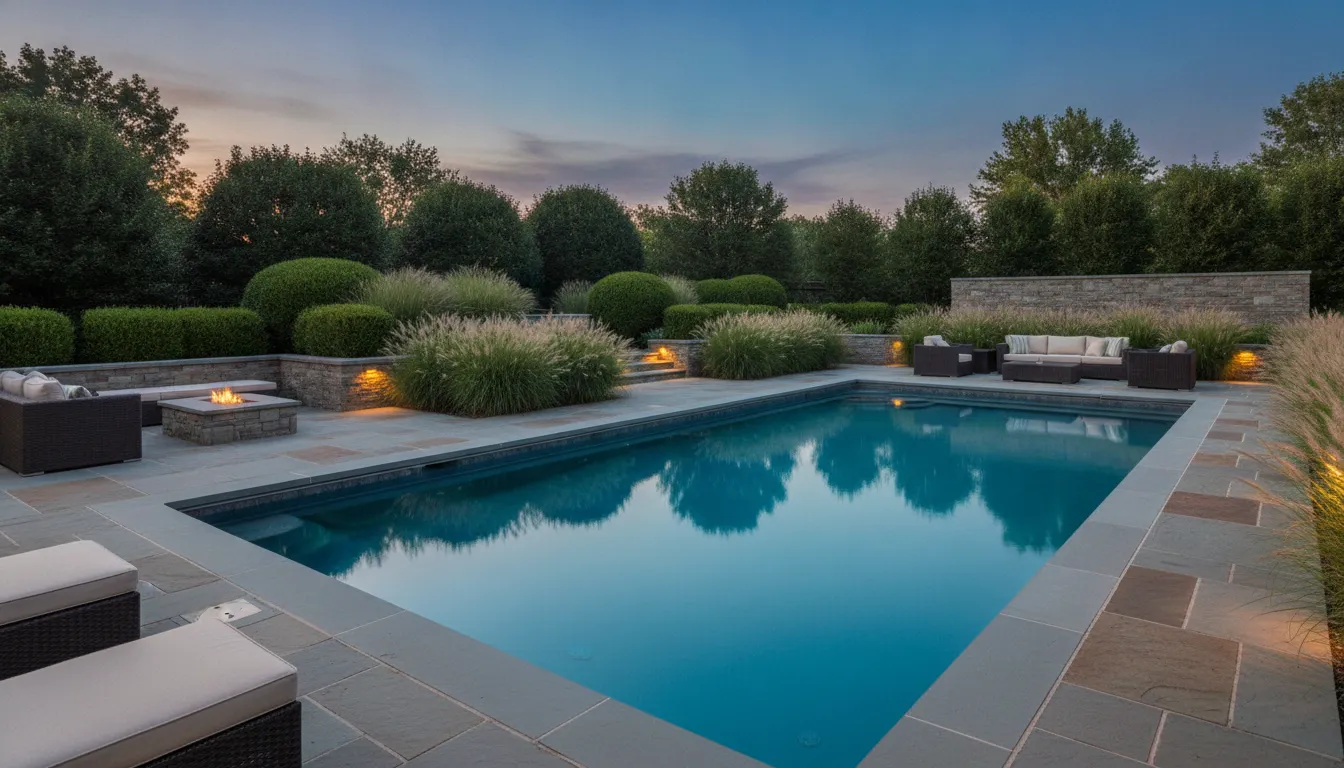
Walkways, steps, and retaining walls require attention to transitions. Small indicator or path fixtures can mark an edge without creating a bright line of evenly spaced lamps. Concealed hardscape fixtures under caps and steps can show changes in elevation while preserving the material’s daytime appearance. A wall wash can reveal texture, but the fixture must not shine directly into nearby windows or seating.
Pool edges and planting beds should be designed as one visual composition. Lighting can support movement around the deck, identify a change in grade, and highlight selected planting without creating reflections across the water. The plan should account for views from the house, seating areas, and paths. See the Gappsi swimming pool service for broader pool-project context.
What Maintenance Does Landscape Lighting Need?
Outdoor lighting needs periodic attention because fixtures live among soil, pollen, leaves, salt residue, irrigation, and changing plants. Maintenance should be part of the original plan. Clean lenses and housings, check connections, and confirm that fixtures still point toward their intended task area.
- Clean lenses and housings: Remove dirt, pollen, leaves, and residue that reduce useful output.
- Check alignment: Re-aim fixtures after planting grows, soil shifts, or seasonal work changes the view.
- Inspect wiring: Look for damage, loose connections, or areas exposed by erosion or digging.
- Review controls: Adjust timers and zones as sunset times change or outdoor routines evolve.
- Manage planting: Trim growth that blocks a beam or causes unwanted shadows.
Long Island properties may need attention after storms, heavy rain, landscaping work, and winter conditions. A maintenance check is also a useful time to reassess glare, light trespass, and whether the original layout still matches how the property is used.
Frequently Asked Questions
What is the cost of professional landscape lighting installation?
Professional landscape lighting installation is priced by site and scope. Fixture types, fixture count, transformer capacity, wiring routes, access, trenching, controls, hardscape coordination, and restoration all affect the estimate. Gappsi reviews the property and intended nighttime use before recommending a project-specific system.
What are the benefits of low-voltage landscape lighting?
Low-voltage landscape lighting can improve visibility on paths and steps, highlight architecture and planting, and extend the use of patios and other outdoor areas after dark. LED fixtures can provide focused output, while shielding and careful placement help limit glare and unwanted spill.
How do you choose the right outdoor lighting fixtures?
Choose fixtures by task, not by appearance alone. Path lights guide movement, uplights add height, downlights illuminate surfaces from above, accent lights focus attention. Wall washes spread light across broad surfaces, and hardscape fixtures add concealed illumination to steps or caps.
Can landscape lighting be integrated into existing hardscapes?
Yes. Existing patios, walls, steps, outdoor kitchens, pergolas, and pool edges can be assessed for discreet fixture placement and safe wiring routes. The installer should account for material protection, access, sightlines, and glare before cutting, trenching, or attaching fixtures.
What is the typical maintenance requirement for outdoor lighting?
Maintenance usually includes cleaning lenses, checking connections, re-aiming fixtures, adjusting timers, inspecting wiring, and managing plants that block the light. Frequency depends on the landscape, weather, irrigation, salt exposure, and how much the planting changes.
Call Gappsi at Contact Gappsi Group to plan landscape lighting for your Long Island property.