


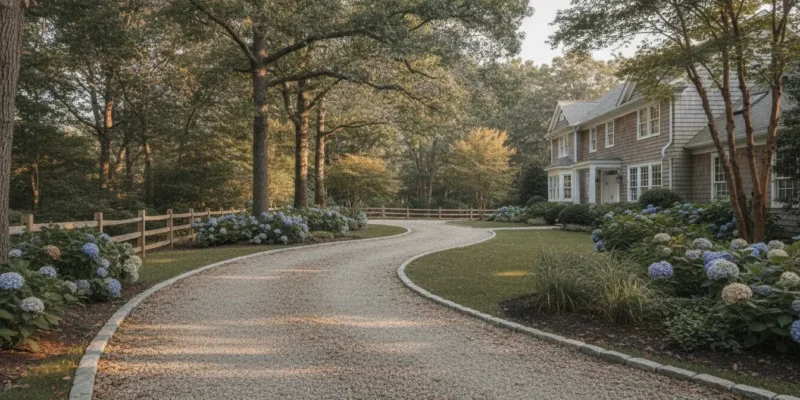
Choosing a driveway material is not only an appearance decision. The right surface must handle vehicle traffic, heavy rain, freeze-thaw cycles, snow removal, and the way your property drains. These gravel driveway pros and cons can help Long Island homeowners decide whether loose stone is a practical fit, or whether a more structured surface makes better sense.
Contact Gappsi through our contact page
What Are the Main Gravel Driveway Pros and Cons?
In brief: Gravel is often a flexible, permeable, and visually natural driveway material that can suit long drives and properties where stormwater movement matters. Its tradeoffs are recurring raking, stone migration, weeds, dust, and more difficult snow removal. Performance depends on the aggregate, base, slope, edging, drainage, and maintenance plan.
| Potential advantage. | Potential drawback. | What changes the outcome. |
|---|---|---|
| Permeable surface. | Can wash or rut. | Grading, base preparation, and runoff control. |
| Natural color and texture. | Loose stone can track. | Angular aggregate, edging, and driveway layout. |
| Flexible to ground movement. | Needs periodic top-dressing. | Traffic volume, drainage, and maintenance timing. |
| Works well on long drives. | Snow removal needs care. | Plow technique, equipment, and edge restraint. |
This is why a gravel driveway should be evaluated as a complete surface system, not just as a truckload of stone. A well-planned base and controlled edges can prevent many common problems. Poor grading or a shallow, unprepared base can make even attractive gravel frustrating to own.
Why Can Gravel Be a Good Choice for a Long Island Driveway?
Gravel can be a good choice when a homeowner values permeability, a natural look, flexible repairs, and a surface that works across a long or irregular driveway. It can also be useful where tree roots, changing grades, or stormwater patterns make a rigid surface less practical. The material still needs proper site preparation.
- Drainage potential: Open spaces between stones allow water to move through the surface instead of shedding all runoff to one edge.
- Flexible appearance: Gravel can complement wooded properties, traditional homes, and informal landscapes with several aggregate colors and textures.
- Spot repair: A damaged area can often be graded and replenished without replacing the entire surface.
- Adaptability: Loose aggregate can respond to modest ground movement more easily than a rigid slab.
- Long-driveway practicality: The material can make sense for extended approaches where a continuous hard surface would require more extensive construction.
- Traction: Angular stone with a well-compacted base can provide useful grip for vehicles in wet conditions.
Those benefits are most meaningful when the driveway has a defined drainage path and the stone is selected for the way the property will be used. Rounded decorative gravel may look appealing but can move more readily under tires. Angular crushed stone generally interlocks better, especially when the driveway receives frequent traffic.
Homeowners considering the construction side can review Gappsi Group’s gravel driveway installation service page for a better understanding of how design, preparation, and installation fit together.
What Are the Main Disadvantages of a Gravel Driveway?
The main disadvantages are movement, maintenance, dust, weeds, and winter care. Gravel can migrate toward lawns and roads, form ruts under repeated traffic, and collect organic debris. These issues are manageable, but they require more attention than many homeowners expect when they first focus on the material’s lower-maintenance reputation.
- Ruts and potholes: Concentrated tire paths, soft subgrade, and poor drainage can create low spots that hold water.
- Stone migration: Tires, rain, snowmelt, and plows can move aggregate beyond the driveway edges.
- Weed growth: Windblown soil and leaves can create enough organic material for weeds to establish over time.
- Dust and tracking: Fine particles may be visible in dry weather, while loose stones can reach nearby walkways or garage floors.
- Uneven walking: Loose aggregate is less comfortable for people using strollers, wheelchairs, carts, or mobility aids.
- Snow removal challenges: A plow set too low can collect stone, damage edges, or push gravel onto landscaping.
The most important question is not whether gravel has drawbacks. Every driveway material does. The question is whether the homeowner is willing to maintain the surface and whether the site can be designed to control the predictable problems.
Contact Gappsi through our contact page
Which Type of Gravel Is Best for a Driveway?
For most driveways, angular crushed aggregate that can compact and interlock is more stable than very round, loose stone. The best selection still depends on the desired appearance, traffic, slope, drainage, and how comfortable the surface needs to be for walking. “Gravel” describes a family of materials, not one uniform product.
Angular crushed stone and quarry process
Angular particles fit together more securely than rounded particles. A blend containing smaller fines can compact into a firmer driving surface, while larger aggregate may provide drainage and visual texture. The right blend should be selected with the base and surface layers in mind, not as an isolated color choice.
Pea gravel and rounded decorative stone
Rounded stone can create a softer, more decorative appearance, but it is more likely to shift under tires and foot traffic. It may be appropriate for a lightly used lane or a landscape border, yet it is not automatically the best top layer for a frequently used driveway.
Stabilized gravel systems
Where rutting, erosion, steep grades, or heavy traffic are concerns, a grid or other restraint system can hold aggregate in place. Gappsi’s gravel driveway grid system guide explains how stabilization can support drainage and reduce movement. It is a solution to a defined site condition, not a requirement for every gravel driveway.
How Do Long Island Weather and Drainage Affect Gravel Driveways?
Long Island weather makes drainage and grading central to gravel driveway performance. Heavy rain can expose low spots, while freeze-thaw movement can loosen weak areas. Snow removal can displace aggregate at the edges. A permeable surface helps only when water has somewhere to go and the underlying layers remain stable.
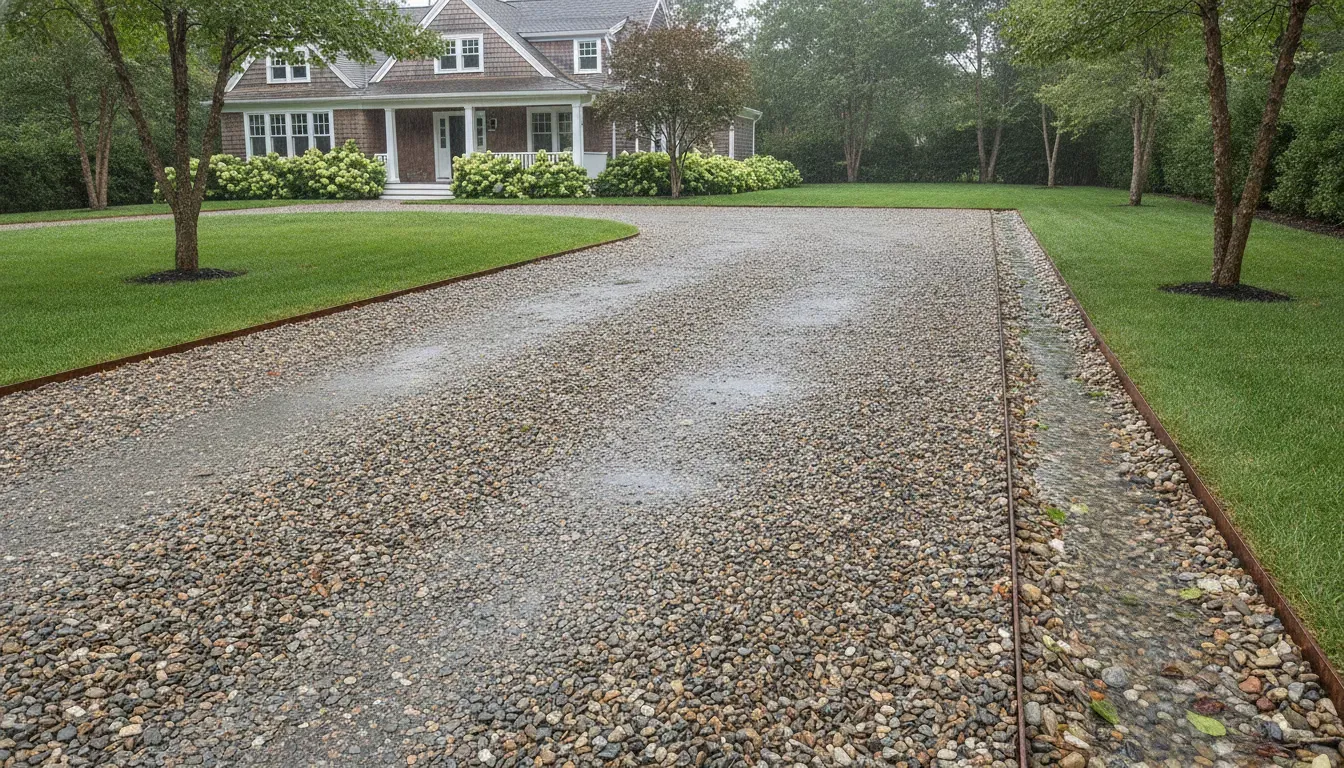
Before choosing gravel, look for low points, roof runoff, uphill drainage, driveway crossings, and soil that stays wet. A driveway can be permeable and still experience washout if water is concentrated in one channel. Depending on the property, solutions may include adjusted grading, swales, drains, stabilized shoulders, or a redesigned connection to the street.
Coastal exposure and sandy or shifting soils can also change the recommendation. These conditions do not automatically rule out gravel, but they increase the importance of a compacted base, edge restraint, and a maintenance plan that addresses migration before it becomes a larger repair.
For a local example, Gappsi’s Long Island gravel driveway installation example shows why a steep, heavily used approach may need more than loose stone placed over existing ground.
When Do You Need Edging, a Grid, Gabion, or Retaining Work?
Edging is useful when the driveway borders lawn, planting beds, walkways, or a drop in grade. Grid, gabion, or retaining work becomes more relevant when the site has concentrated runoff, a steep slope, erosion risk, or a need to hold back soil. These features solve different problems and should not be treated as interchangeable decorations.
- Edging: Defines the driving lane and helps keep surface stone from spreading into planting areas.
- Grid restraint: Locks aggregate into cells to reduce rutting and migration on selected slopes or high-traffic areas.
- Gabion work: Uses stone contained in wire baskets to support a bank, manage erosion, or create a durable transition at a grade change.
- Retaining work: Holds back soil where a driveway cut or slope would otherwise move material toward the lane.
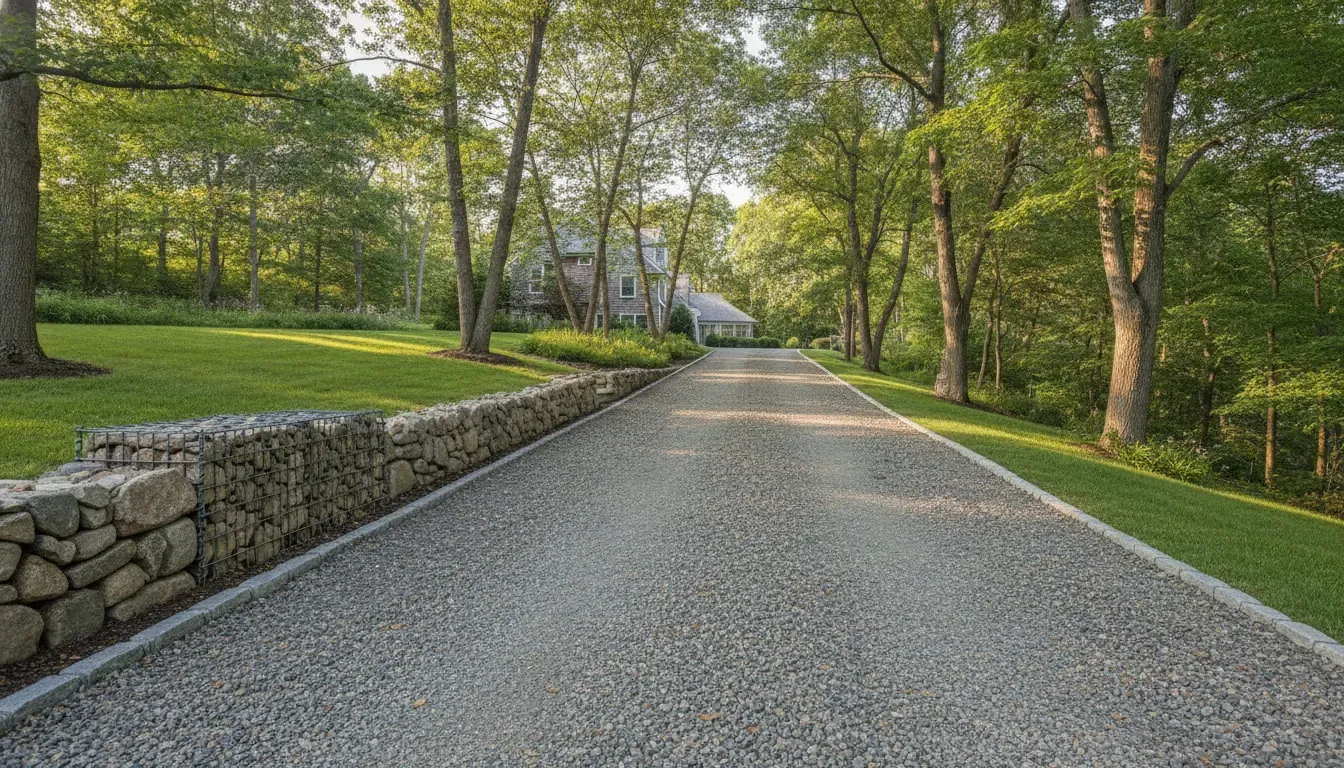
A property may need only simple edging, or it may need a coordinated grading, drainage, and retaining plan. Warning signs include repeated washouts after storms, soil sliding into the driveway, water crossing the lane, exposed base material, or a slope that cannot be safely maintained with ordinary equipment.
How Much Maintenance Does a Gravel Driveway Need?
Gravel driveways need periodic inspection and surface maintenance, especially after major rain, snowmelt, and winter plowing. The exact schedule depends on traffic and site conditions. The goal is to correct small changes before they become deep ruts, broad washouts, or edge failures that require substantial regrading.
- Walk or drive the surface after major storms and note standing water, channels, and displaced stone.
- Repair potholes while they are small instead of filling only the visible depression with loose stone.
- Rake displaced aggregate back into the driving lane and keep shoulders clear.
- Remove leaves and organic debris before they decompose into a soil layer that supports weeds.
- Control vegetation at the edges without sending soil or mulch into the driveway.
- Plan periodic top-dressing or regrading when the surface becomes thin, uneven, or difficult to drain.
Snow removal deserves a separate plan. A snow blower can throw gravel, and a plow can push it into the lawn. Operators may need to raise the blade slightly, mark the edges, and leave a protective layer rather than scraping directly against the surface. If snow service is contracted, discuss the driveway material before winter begins.
Gappsi’s Gravelfix gravel driveway stabilization system article is a useful next read when recurring ruts, migration, or washout are the deciding concerns.
How Does Gravel Compare With Pavers, Asphalt, and Concrete?
Gravel generally offers a more informal appearance and a flexible, permeable surface, while pavers, asphalt, and concrete provide a firmer and more predictable driving and walking experience. The better option depends on the desired appearance, maintenance tolerance, drainage plan, traffic, snow routine, accessibility needs, and the property’s grade.
| Surface. | Often suits. | Tradeoff to consider. |
|---|---|---|
| Gravel. | Long drives, natural landscapes, flexible drainage goals. | More movement and routine surface care. |
| Pavers. | Defined patterns, structured curb appeal, easier individual-unit repairs. | Requires a carefully built base and joint maintenance. |
| Asphalt. | Smooth vehicle travel and familiar snow clearing. | Less informal, with its own weathering and repair needs. |
| Concrete. | Firm surface and clean edges. | Rigid material can show cracking and requires deliberate drainage planning. |
For readers comparing a firm surface with loose aggregate, Gappsi’s paver driveway installation guide covers a different construction approach. A separate paver driveway cost guide for Long Island can help frame the questions to ask about base preparation, access, materials, and site work without treating one project as a universal quote.
Contact Gappsi through our contact page
Frequently Asked Questions
What are the biggest advantages of a gravel driveway?
The biggest advantages are permeability, design flexibility, a natural appearance, adaptability to some ground movement, and the ability to repair or replenish sections. Gravel can be especially practical for long drives or properties where a softer landscape character matters. It still needs suitable aggregate, a prepared base, controlled runoff, and defined edges.
What are the biggest disadvantages of a gravel driveway?
The main disadvantages are ruts, potholes, stone migration, weeds, dust, uneven walking, and careful snow removal. These problems are more likely when the base is weak, water crosses the lane, the stone is too rounded, or the edges are not contained. Routine inspection and timely regrading can reduce the severity of many issues.
Is gravel good for drainage?
Gravel can support drainage because water can pass through open spaces between stones. It does not solve drainage by itself. The driveway still needs a stable base, appropriate slope, and a plan for water arriving from roofs, hillsides, or adjacent pavement. Low spots and concentrated runoff can cause pooling or washout on any surface.
What type of gravel is best for a driveway?
Angular crushed aggregate that compacts and interlocks is usually more stable for vehicle traffic than very rounded stone. The correct blend depends on the driveway layers, traffic, slope, appearance, and drainage goals. A material that looks attractive in a sample may perform poorly if it does not match the base or the property’s grade.
Can a gravel driveway handle snow removal?
Yes, but snow removal requires more care than on a smooth rigid surface. Mark the edges, avoid scraping too deeply, and use equipment settings that reduce stone displacement. Plan for replenishment near the shoulders after winter. A steep or heavily used driveway may benefit from additional edging, stabilization, or a different surface.
When should I consider a retaining wall or gabion structure?
Consider retaining or gabion work when the driveway cuts into a slope, soil is moving toward the lane, water is eroding the shoulder, or a grade change cannot be managed with surface gravel alone. The correct solution depends on soil, drainage, height, and site conditions. Have the full slope and runoff relationship evaluated before construction.