


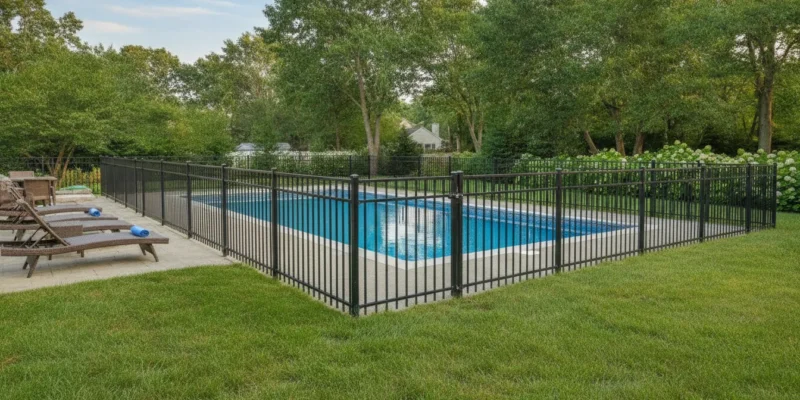
When you ask what happens when you fall into a swimming pool, the most important answer is practical: a person can become disoriented, struggle to stay above water, and need immediate help. A fall can also happen silently, especially when a child is involved. The right response is to raise the alarm, use a safe rescue method, and call emergency services for a suspected drowning.
Contact Gappsi through our contact page
After a fall into a pool, tell others to call 911, keep the person in sight, and use a reach or throw rescue method without entering the water if you can help from the deck. Once the person is out, follow emergency dispatcher instructions and begin CPR if trained. Prevention combines close supervision, a four-sided barrier, alarms, water competency, and a pool layout that makes safe entry and exit easier.
What happens when you fall into a swimming pool?
A pool fall is not always a dramatic splash followed by an immediate cry for help. The person may be startled, unable to find the wall, or struggling to orient themselves after going underwater. Clothing, poor visibility, cold water, fatigue, alcohol, a medical event, or an unexpected change in depth can make the situation more dangerous.
Drowning is a process, not a single moment. A person in trouble may not wave or call out, so watching the water matters more than waiting for a noise. The American Red Cross recommends layers of protection that include water competency, supervision, barriers, and safe rescue knowledge. Its water-safety guidance also emphasizes the reach-or-throw, do-not-go approach for emergencies.
That does not mean every fall leads to drowning. A capable swimmer may regain footing or reach a wall quickly. The problem is that bystanders cannot safely predict how a person will react, so every unexpected fall deserves immediate attention.
Contact Gappsi through our contact page
What should you do immediately after someone falls into a pool?
Act in a clear sequence. Keep your own safety in mind while getting help. If the person is underwater, cannot respond, or appears to be struggling, treat it as an emergency.
- Point to the person and call for help. Give a specific instruction such as, “You call 911,” so someone takes responsibility for contacting emergency services.
- Keep the person in view. Note where they are and whether they are moving toward a wall, steps, or shallow water.
- Reach or throw before you go. Extend a rescue pole, shepherd’s crook, pool skimmer, or other long object from a stable position. If the person can grasp it, pull them toward the wall. You can also throw a flotation device that they can hold.
- Do not jump in unless you are trained and can do so without becoming another victim. An untrained rescuer can be pulled under by a panicked person.
- Get the person out only when it is safe. Once they are on deck, check responsiveness and breathing, and follow the 911 dispatcher instructions.
- Use CPR and an AED when appropriate and available. If you are trained, begin the emergency care directed by the dispatcher. Do not delay the call to emergency services to search for instructions or supplies.
The Red Cross summarizes the safer rescue principle as reach or throw, do not go. A pool owner should keep rescue equipment visible and accessible, not stored behind a locked door or beneath a pile of deck furniture.
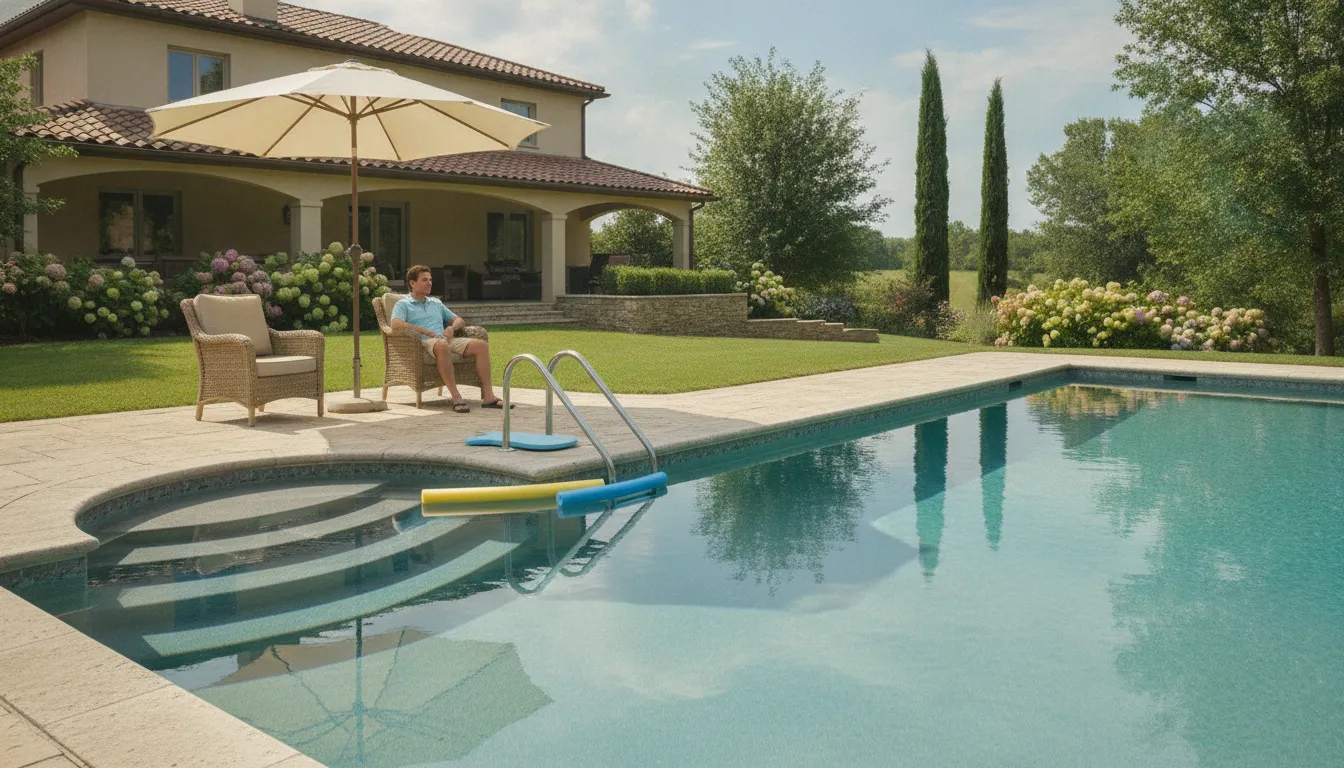
When should you call emergency services for a pool fall?
Call 911 immediately when a person is unresponsive, has trouble breathing, was submerged, cannot be removed safely, or may have suffered a head or neck injury. Also call when you are uncertain about the person’s condition. A person who appears alert after a water emergency can still need prompt medical evaluation, particularly if they were underwater, inhaled water, or have concerning symptoms.
Do not diagnose a drowning injury at home. Do not rely on a person saying they are fine if they were submerged or are coughing, confused, unusually sleepy, or having difficulty breathing. Tell the dispatcher what happened, how long the person may have been underwater if known, and whether the person is responsive and breathing normally. Follow the dispatcher’s instructions until responders arrive.
After an emergency, write down what happened while the details are fresh. Review who was supervising, whether the gate or alarm worked, where the person entered the water, and whether the deck created a clear path to the exit. That review is not about assigning blame. It identifies the next prevention improvement.
Which pool safety features help prevent an unexpected fall?
Prevention works best as a system rather than a single product. The CDC recommends close supervision, swimming and water-safety skills, CPR training, and a four-sided pool fence with a self-closing, self-latching gate. The fence should separate the pool from the house and yard so a child cannot reach the water simply by walking through an open back door.
- Four-sided barriers: Use a fence or other barrier that limits access from the house, yard, and neighboring areas.
- Self-closing and self-latching gates: Check that the gate closes and latches every time, and keep the latch out of reach of young children.
- Door and gate alarms: Alarms can add an alert when a protected access point opens. They support supervision but do not replace it.
- Water and surface alarms: These can provide another notification layer when movement is detected, depending on the product and pool conditions.
- Visible rescue equipment: Keep a reaching device and flotation aid near the pool, where an adult can grab them quickly.
- Clear deck organization: Remove toys and clutter that attract children or obstruct a fast route around the pool.
- Lighting and visibility: Make sure the pool, steps, gate, and deck remain visible during evening use.
- Water competency: Swimming lessons and practice with floating, turning, and exiting can improve a person’s response, but skills never eliminate the need for supervision.
Gappsi can help Long Island homeowners think through pool placement, circulation, coping, steps, handrails, fencing coordination, and the relationship between the pool and the rest of the backyard. A design consultation is the right place to identify these decisions before construction begins.
Contact Gappsi through our contact page
How can supervision reduce the risk of a pool fall becoming a drowning?
Supervision means an attentive adult is close enough to see and reach the water, not simply somewhere on the property. Put phones, books, food preparation, and other distractions aside while a child or weak swimmer is in or near the pool. For group gatherings, assign one adult to watch the water for a defined period, then make a deliberate handoff to another adult.
A responsible supervisor should know who is in the pool, who is near the water, and where the exits are. Do not assume that swim lessons, flotation toys, an older child, or a lifeguard at another location removes the need for active attention. When alcohol, fatigue, or medication affects an adult’s alertness, another sober and attentive supervisor should take over.
Use a simple household rule: the pool is closed when no designated adult is watching. Store toys away from the water after use, close and latch the barrier, and verify the alarm before gatherings. These small habits reduce the chance that an unexpected fall goes unnoticed.
How should pool entry and exit areas be designed?
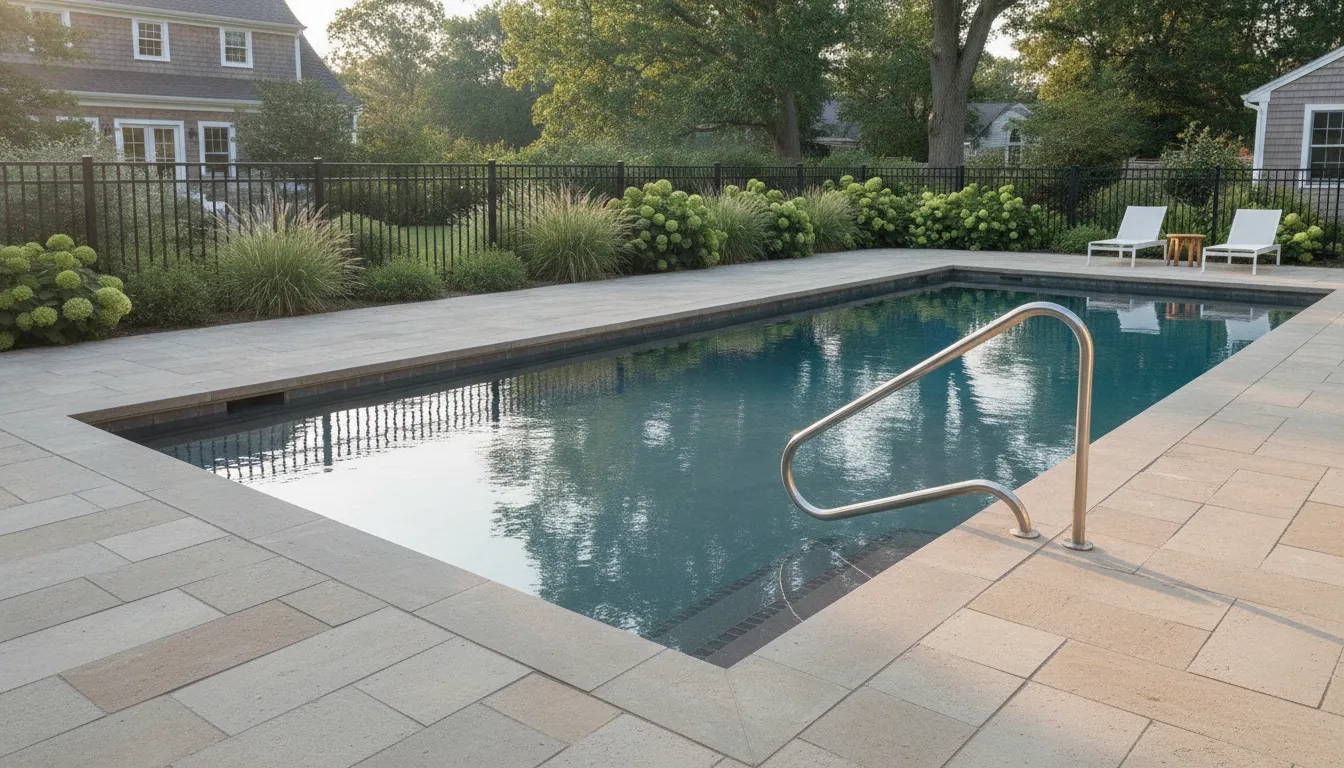
Pool design cannot guarantee that nobody will fall, but it can make orientation and exit easier. A clear path around the pool, visible steps, a stable handrail, and a well-defined shallow entry can help a person locate a safe way out. The entry should be planned around the people who will use the pool, including children, older adults, and anyone with limited mobility.
Discuss depth changes, steps, ledges, handrails, coping, lighting, and deck surfaces during the design process. Avoid creating a confusing transition where a person cannot tell where the shallow area ends. Keep the area around ladders and steps free from furniture, toys, hoses, and decorative items.
Gappsi designs and builds custom gunite, vinyl, and fiberglass swimming pools for Long Island properties. The company’s pool service page describes design support, permitting guidance, equipment choices, safety covers, lighting, coping, and deck materials. Homeowners can also review Gappsi’s Long Island swimming pool design and construction services before a consultation.
| Planning area | Safety question to ask |
|---|---|
| Access control | Can a child reach the pool from the house or yard without crossing a secured barrier? |
| Supervision | Where can an adult sit or stand with a clear view of the entire pool? |
| Entry and exit | Are steps, ladders, handrails, and shallow areas easy to see and use? |
| Emergency response | Can someone reach the phone, rescue equipment, and pool exits quickly? |
| Visibility | Will lighting and landscaping preserve a clear view after sunset? |
What pool planning mistakes can make prevention harder?
Safety problems often come from how several small decisions interact. A gate that is technically present but propped open does not control access. An alarm that is installed but ignored because of frequent false alerts does not provide dependable protection. A beautiful deck crowded with furniture can make a reaching rescue harder. A pool that is hidden from the main living area can make supervision less practical.
During planning, consider the whole route from the house to the water. Gappsi’s design-build process can help homeowners coordinate the pool, patio, coping, landscaping, lighting, fencing, and outdoor living areas rather than treating each element as an isolated purchase. For a broader project conversation, homeowners can also review the Gappsi swimming pool project gallery and the company’s porcelain and natural stone options for pool surrounds and outdoor surfaces.
Choose surfaces and transitions that support stable movement, maintain clear sightlines, and fit the maintenance needs of the household. Gappsi’s light ivory travertine pavers are one example of a pool-surround material homeowners may review with the design team. Confirm that proposed features, equipment, barriers, and electrical work will be reviewed for local requirements by the appropriate professionals. A safety-first design is not only about adding hardware. It is about making the safe action the easy action.
When you are ready to review a property, use Gappsi’s contact page to request a consultation and discuss the pool’s access, visibility, and exit plan.
Contact Gappsi through our contact page
Frequently Asked Questions
What should you do if a child falls into a pool?
Call for help, direct someone to call 911, keep the child in sight, and use a reach or throw rescue method from a stable position when possible. Do not enter the water if doing so could put you in danger. Once the child is out, follow the emergency dispatcher’s instructions and seek medical help for any concerning symptoms or submersion.
Can a person drown after falling into a swimming pool?
Yes. A person may become disoriented, unable to reach the wall, or too fatigued to keep their airway clear. Drowning can happen quickly and quietly, which is why immediate supervision, barriers, water skills, and an emergency plan matter.
Do pool alarms replace adult supervision?
No. Alarms can add another alert when a door, gate, or water surface changes, but they can be delayed, disabled, or affected by conditions. Use alarms as one layer alongside a secured barrier and close, attentive supervision.
Is it safe to jump in to rescue someone from a pool?
Entering the water can put an untrained rescuer at risk, especially if the person in trouble grabs or pulls them under. The Red Cross recommends reaching or throwing assistance instead of going into the water when possible. If you cannot rescue safely, call 911 and follow dispatcher instructions.
What pool design features make exiting easier?
Visible steps, a stable handrail, a clearly defined shallow entry, good lighting, uncluttered deck space, and a clear route to the pool edge can make orientation and exit easier. Gappsi can discuss these choices with homeowners during a swimming pool design consultation.
Contact Gappsi through our contact page
Safety information in this article is general education, not medical advice. In an emergency, call 911 and follow the dispatcher’s instructions.
Sources: American Red Cross water safety guidance and CDC drowning prevention guidance.