


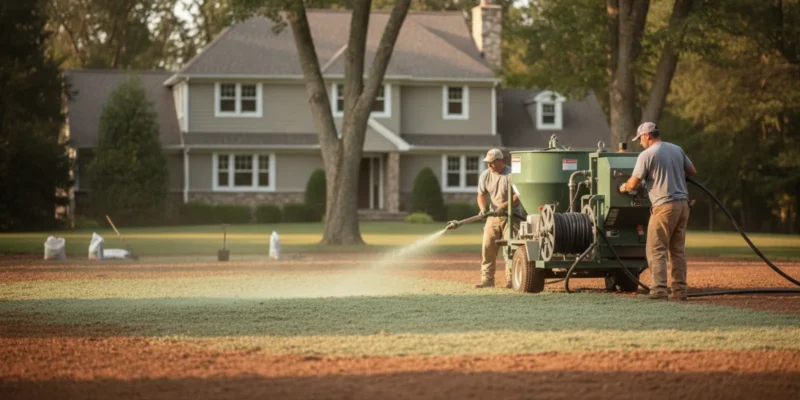
Choosing hydroseeding equipment is not simply a matter of matching a tank size to a lawn. The right setup has to mix and apply seed slurry evenly, reach the whole work area, and suit the site’s access, slope, soil, and preparation. For Long Island property owners, asking how the equipment fits the actual site can make it easier to compare proposals and understand what the work includes.
Contact Gappsi through our contact page to discuss your outdoor project
Posted by Gappsi Group
What does hydroseeding equipment do?
A hydroseeder combines water, seed, and selected slurry materials in a tank, then uses a pump and hose or spray outlet to distribute the mixture over prepared ground. The mixture commonly includes mulch, and may include amendments selected for the project. The equipment is designed to keep the mix moving and apply it in a reasonably consistent layer. It does not replace sound grading, soil preparation, or follow-up watering.
Think of the machine as one part of a process. First, the site is assessed and prepared. Then the operator selects a mixture and application method, loads and mixes the slurry, applies it, and explains care after installation. If any of those steps are skipped, a large or powerful machine alone will not create a good seedbed.
Which hydroseeding equipment components matter most?
Equipment names and specifications vary, but a useful review starts with the parts that affect mixing, delivery, and control. Ask the contractor to explain the actual machine they plan to use and why it fits the property rather than relying on a capacity figure by itself.
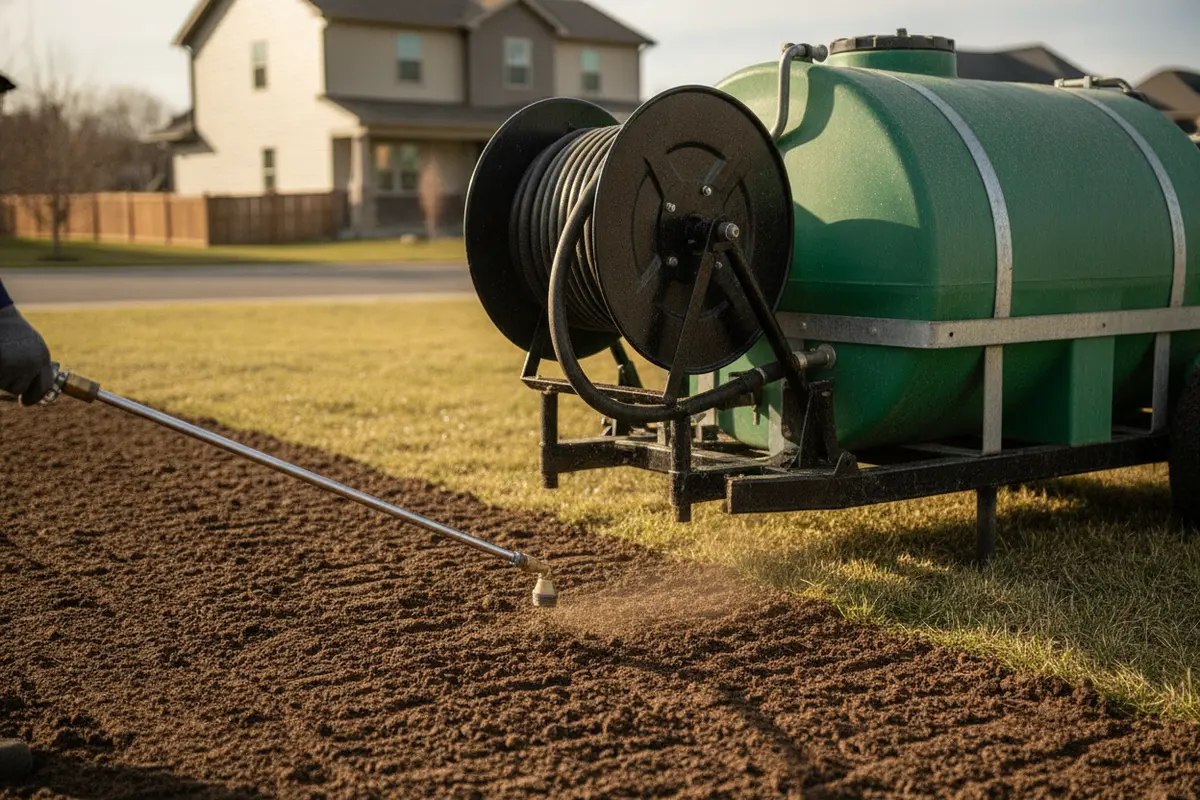
- Tank and agitation system: The tank holds the slurry. Agitation keeps seed and mulch distributed while the mixture is prepared and applied. Systems may use mechanical paddles, water movement, or a combination. Ask how the operator prevents settling and keeps the mix moving during application.
- Pump: The pump moves slurry from the tank through the delivery system. Its compatibility with the planned mix and hose setup matters. The contractor should be able to describe how the pump supports the intended application, not just quote a model name.
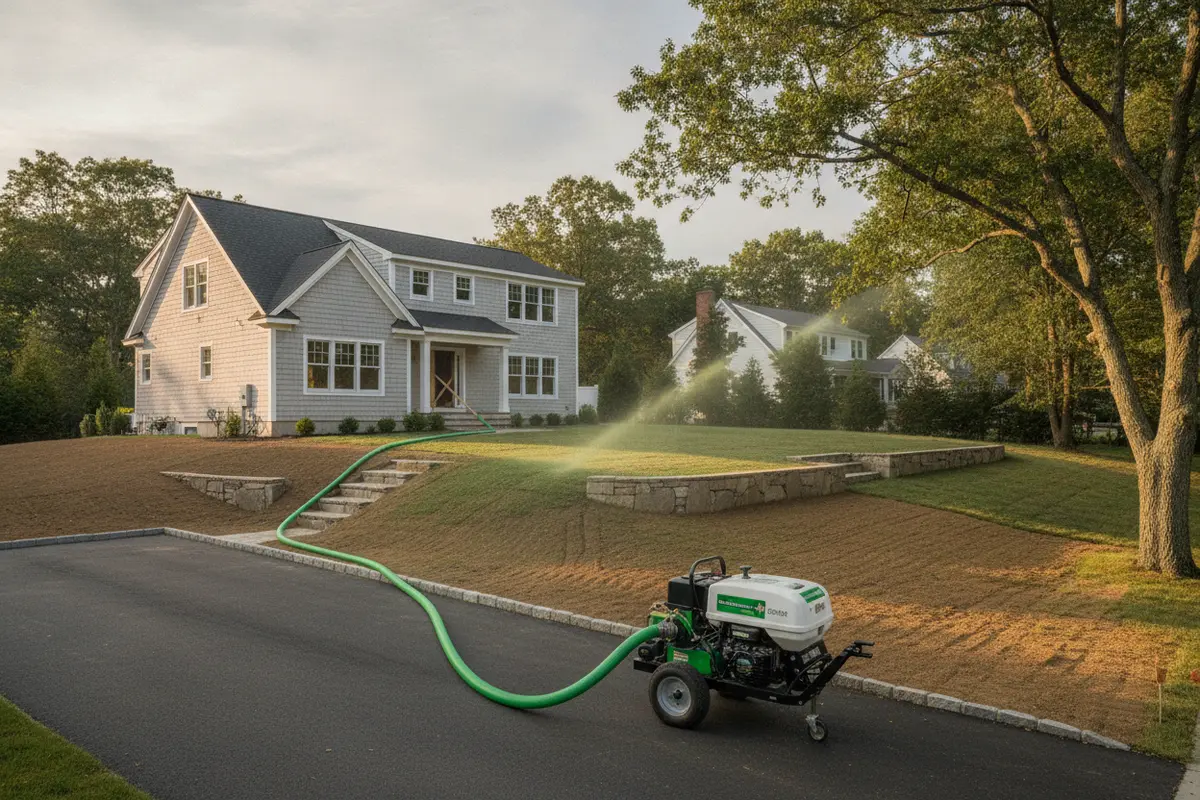
- Hose, reel, and connections: A hose lets the operator reach areas the machine cannot drive into. Length, diameter, bends, and elevation changes can affect practical reach and handling. Confirm that the planned hose route can cover the farthest areas without damaging existing surfaces or plantings.
- Spray wand or discharge outlet: The application tool gives the operator control over where the slurry lands. A wand can help direct material around edges and obstacles, while the right outlet and application technique depend on the machine and site.
- Loading and cleanout provisions: Safe loading, access to water, and a workable cleanout plan influence setup and completion. Ask where equipment will be parked, how water will be supplied, and how the crew will protect paving and drainage areas.
Equipment should be considered alongside the slurry recipe. Seed type, mulch, tackifier, and any added material should be selected for the site and the contractor’s method. Ask for the product names and application plan if you want to understand what is being placed on your property. Avoid assuming that every hydroseeding mix is identical.
Ask Gappsi about the right next step for your outdoor project
How should you compare hydroseeding equipment types and capacity?
Hydroseeders range from compact units suited to smaller or access-limited jobs to larger machines designed for higher volume work. A larger tank may reduce the number of refills, but it may also require more room for parking and maneuvering. Capacity is only useful when it matches the site, the crew’s workflow, water access, and the volume of slurry required.
| Equipment consideration | What it affects | Questions to ask |
|---|---|---|
| Tank capacity | Batch size and how often the machine may need refilling | How does the planned capacity fit the area and the crew’s application sequence? |
| Agitation design | How the slurry stays mixed during loading and application | How will the operator keep seed and mulch distributed throughout the job? |
| Pump and delivery setup | Moving the selected mixture through the hose or outlet | Is the pump and hose setup appropriate for the slurry and the farthest application point? |
| Machine footprint and access | Where the unit can park and how it reaches the work zone | Can it enter, turn, and remain on a suitable surface without crossing sensitive areas? |
| Hose reach and handling | Coverage around buildings, slopes, and landscape features | What route will the hose take, and can it reach every planned section? |
For a small back or side yard, access and hose handling may matter more than tank volume. For a broad open area, capacity and refill logistics may deserve more attention. A steep or irregular property may require a different application plan from a level, unobstructed lawn. Ask the contractor to relate each equipment choice to a condition on your property.
Hydroseeding should also be compared fairly with other ways of establishing a lawn. Soil condition, project scale, timing, access, and how quickly the area needs to be usable can all affect the decision. For example, synthetic turf is a different surface approach, not a hydroseeding machine or seed method. Review the goals for the space before treating equipment specifications as the whole decision.
What site conditions shape equipment choice on Long Island?
Property layouts across Long Island vary. A tight side passage, a pool area, mature planting beds, a long driveway, or a sloped section can affect where a machine can go and how slurry is delivered. A site visit should identify the access route, work boundaries, water availability, drainage paths, and areas that need protection.
- Access width and turning space: Measure gates and narrow passages, and note steps, retaining walls, and other obstructions. Confirm whether the machine stays on the driveway or needs another route.
- Hose path: Trace how the hose will reach the work zone. Consider corners, elevation changes, and crossings over paving, planting, or pool-related surfaces.
- Slope and runoff: Discuss how the crew will apply material on slopes and around low points. The plan should account for where water naturally moves and avoid directing slurry toward drains or neighboring areas.
- Existing landscape features: Identify trees, garden edges, irrigation components, lighting, and recently finished surfaces that need to remain clear of equipment and overspray.
- Water and staging: Confirm the source and availability of water, the location for loading, and a cleanout location that will not create an unwanted discharge.
For general soil and conservation information, property owners can consult the USDA Natural Resources Conservation Service. A contractor still needs to evaluate the specific site, soil, and project scope. The agency’s homepage is a starting point for general resources, not a substitute for a site assessment or local requirements.
What should you confirm before hiring a hydroseeding contractor?
The equipment conversation is useful because it reveals how thoroughly a contractor has planned the work. You do not need to operate a hydroseeder or compare every machine model. You do need a clear description of the site preparation, planned application, materials, access, and aftercare.
- Ask what preparation is included. Clarify whether the proposal covers clearing, rough or final grading, topsoil work, and removal of debris. Do not assume that seeding equipment includes those tasks.
- Ask what the slurry contains. Request a plain-language explanation of seed selection, mulch, tackifier if used, and any other additions. The selection should be tied to the site and the intended use.
- Ask why the machine suits the property. Have the contractor explain capacity, access, hose reach, and any areas that may need a different sequence or method.
- Confirm boundaries and protection. Mark the areas to seed and identify surfaces, plantings, drains, and neighboring property that should not receive material.
- Get an aftercare plan. Ask how and when to water, what to avoid during establishment, and whom to contact if weather or site conditions change the plan. Follow the contractor’s directions for the selected seed and materials.
- Compare complete scopes. When reviewing proposals, compare preparation, materials, area covered, access assumptions, cleanup, and aftercare instructions. A machine size alone is not a meaningful comparison.
Keep a copy of the scope and any product details. If the property is part of a larger backyard project, coordinate the seeding sequence with other planned work. A landscape project may involve grading, planting, paving, or other elements that should be sequenced to avoid disturbing a newly seeded surface.
Should you rent hydroseeding equipment or hire a crew?
Renting can appear straightforward, but hydroseeding calls for more than operating a pump. The operator needs to prepare a suitable slurry, keep it mixed, manage hoses, apply a consistent layer, and understand the surface and site constraints. Equipment rental may also involve transport, water logistics, cleanup, and safe operation. Before renting, ask the supplier what training and support are included and whether the machine is intended for the materials you plan to use.
Hiring a contractor can make sense when the site is large, access is difficult, grading is involved, or you want the application and preparation managed as a coordinated scope. It is still important to understand what is included. A contractor’s proposal should state the work area, preparation responsibilities, material plan, equipment access assumptions, and aftercare guidance.
For a do-it-yourself decision, consider the full sequence rather than just the rental day. Can you prepare the soil to the needed condition? Can you source and load the materials? Is there a practical water supply? Can you reach each area without creating ruts or overspray? Do you have time to apply the mix and then maintain the site as directed? If several answers are uncertain, getting a professional assessment can help clarify the options before committing.
How do weather and timing affect an equipment plan?
Weather affects site access and what happens after application. Wet ground can be difficult to drive on and may be more vulnerable to disturbance. Heavy rain can move loose material or expose drainage problems. Hot, dry, or windy conditions can make follow-up care more demanding. Equipment does not remove these risks, so scheduling should account for the condition of the soil and a realistic care plan.
Ask the contractor how they decide whether conditions are suitable on the scheduled day. Find out what happens if the ground is too wet, the forecast changes, or the site cannot be prepared as expected. Also confirm whether water access is available for the care period and who is responsible for watering after the crew leaves.
Long Island homeowners planning several outdoor improvements can coordinate the lawn work with a broader backyard renovation. It may be practical to complete heavy equipment access, grading, and construction before establishing seeded areas. The correct order depends on the layout and scope, so identify all planned work before scheduling application.
What warning signs should you watch for?
Be cautious if a proposal focuses only on the size of the machine, promises a uniform outcome without inspecting the site, or leaves soil preparation and aftercare unclear. Other questions to resolve include:
- Does the contractor explain how equipment will reach every section?
- Are the work boundaries, included preparation, and materials written down?
- Is there a plan for water, drainage, hose routing, and surface protection?
- Are weather delays and changes in site conditions discussed?
- Does the aftercare guidance match the selected materials and actual site?
A clear answer does not need to include technical jargon. It should connect the equipment and work plan to the property. If a contractor cannot explain the basics in terms you can follow, ask for clarification before approving the scope.
Explore backyard project ideas if hydroseeding is one piece of a larger plan, and use a site discussion to clarify which work is relevant to your property. For more on Gappsi’s outdoor project offerings, visit the Gappsi website or speak with the team about your goals.
Contact Gappsi to discuss your Long Island outdoor project
Frequently Asked Questions
What is the most important part of hydroseeding equipment?
No single component determines whether a project is suitable. The tank and agitation system, pump, hose, and application tool need to work as a coordinated setup for the slurry and the site. Site preparation and aftercare matter just as much as the machine.
Does a larger hydroseeder always work better?
No. A larger tank may reduce refill frequency, but it also needs enough space for access and staging. A compact machine with a practical hose route may suit an access-limited area better. Ask how the capacity and machine footprint fit your property.
Can a hydroseeder reach a sloped or hard-to-access lawn?
A hose can let an operator apply slurry in areas the machine cannot enter, but the actual reach and application plan depend on the equipment, slope, distance, and obstacles. Have the contractor inspect the route and explain how the crew will protect the surrounding landscape.
What should a hydroseeding quote include?
Look for the work area, site preparation, materials, equipment and access assumptions, cleanup, and aftercare instructions. Ask what is excluded and who handles grading, water, or other work that may be needed before application.
Is hydroseeding equipment enough to establish a lawn?
No. The machine distributes slurry, but it does not by itself prepare the soil or maintain the seed afterward. A successful plan addresses ground preparation, suitable materials, even application, weather, and the care instructions for the site.
Ready to plan your outdoor project?
Contact Gappsi through our contact page to discuss your project
Bring your site questions, access concerns, and project priorities to the conversation so you can identify the right next step for your property.