


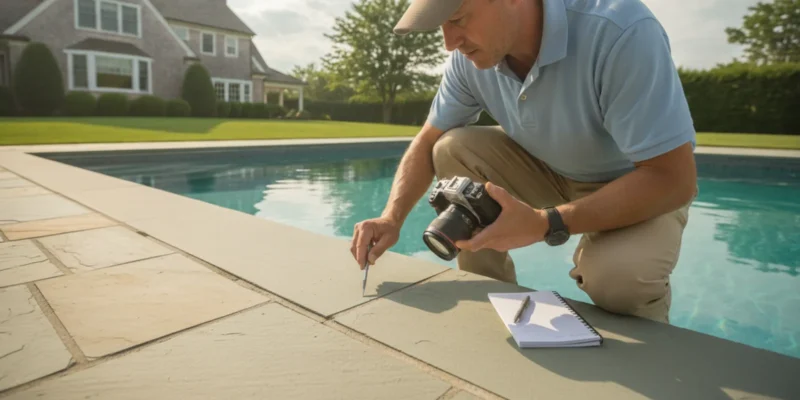
When you spot a crack in a pool, it is natural to wonder whether it is limited to the finish or points to a larger concern. Gunite pool crack repair Long Island homeowners consider should begin with evaluation, not a quick patch: the location, pattern, history, and surrounding conditions all help determine what should be inspected next. A visible line alone cannot confirm what layer is affected or why it appeared.
Contact Gappsi through our contact page to discuss a pool evaluation
This guide explains how a professional may approach that evaluation, what information is useful to gather, and how to compare a proposed repair with the findings. It is not a remote diagnosis. Pool construction, site conditions, and maintenance history vary, so an on-site review is needed before selecting a repair method.
How is a gunite pool crack evaluated on Long Island?
A useful evaluation starts by identifying exactly where the crack is and what surface it crosses. The visible line could be in the interior finish, close to a fitting, at a step, near a corner, or on the deck or coping. Those locations are not interchangeable. The evaluator considers the visible surface and the transitions around it, rather than treating every mark as a shell defect.
Next, the professional records the crack’s path, approximate length and width, branching, and any visible displacement. They may look at nearby tile, returns, drains, steps, coping, joints, and the deck. They also ask whether the pool was full, partly drained, or empty when the condition was observed. This context can affect what is visible and what can safely be examined.
History matters, too. Share when you first noticed the crack and whether dated photos show a change. Mention recent resurfacing, repairs, draining, nearby construction, deck work, unusual water-level changes, or equipment changes. These details are clues to investigate, not proof of a cause. For an overview of broader pool renovation considerations, see Gappsi’s gunite pool renovation guide.
For homeowners comparing related project examples, the site’s pool remodeling articles can provide context on pool work beyond a single crack. The inspection itself should still be based on the conditions at your pool.
What can a crack’s location and pattern tell you?
Appearance gives an evaluator a starting point, but not a definitive diagnosis. A short, fine line confined to a finish may call for a different discussion from a crack that crosses a fitting or a material transition. A line that seems to change in dated images, visible offset, or several cracks in connected areas may call for closer assessment. None of these observations alone proves structural movement.
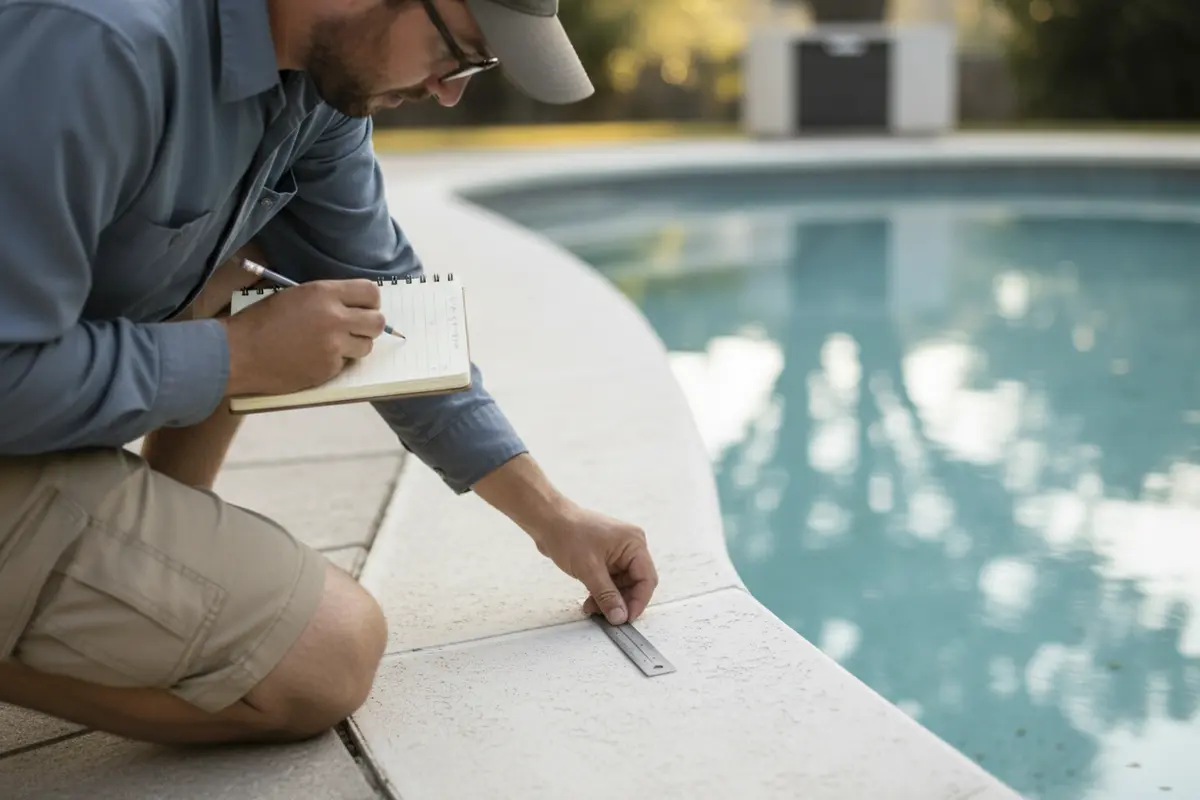
Pay attention to what is adjacent to the line. A crack beside a return fitting, drain, light niche, step, or corner gives the inspector a specific interface to examine. A crack near coping or paving also makes the surrounding materials relevant, without establishing that the pool and deck have the same problem. Gappsi’s pool patio articles offer related context for the area around a pool.
Conditions can make a line hard to interpret. Water, glare, shadows, mineral deposits, and surface texture may hide its edges. If a photograph makes the mark look different from what you see in person, tell the evaluator rather than choosing one version as definitive. Take a wide image to show location and a close image to show detail, using consistent angles when you document changes.
| What you observe | What it may indicate | Useful next step |
|---|---|---|
| A fine line apparently limited to the interior finish | A finish condition is possible; appearance cannot establish the layer involved. | Photograph it with context and ask whether the finish or underlying surface needs assessment. |
| A crack beside a fitting, step, or corner | An interface or detail deserves attention. | Show the full nearby feature in photos and identify its exact location. |
| A line appears different in dated photographs | The condition may have changed, though photo angle and lighting can also differ. | Share images taken from similar angles and note the dates. |
| A crack is accompanied by a water-level change | Several explanations are possible; a level change alone does not identify a leak or its source. | Record conditions consistently and report equipment use, weather, and refilling. |
| Cracks appear across pool and deck areas, or there is visible displacement | A broader condition may need on-site evaluation. | Ask for an assessment of the connected areas before choosing a repair scope. |
How do you separate a finish crack from a broader concern?
The distinction depends on which layer is affected and whether related conditions are present. A finish is the visible interior surface, while the pool shell and fittings are below or within it. A photo taken from the deck usually cannot show how deep a crack extends. Nor does a line in the deck, by itself, establish that the shell has cracked.
Ask the evaluator to explain what material or layer the recommendation addresses and what observations support that conclusion. If the proposed work is limited to a finish, ask what makes that scope appropriate and what it cannot resolve. If the crack is near an opening or a transition, ask whether that interface needs additional inspection. A clear explanation should distinguish what was observed from what remains uncertain.
Water loss deserves careful interpretation. Water levels can change through evaporation, splash-out, maintenance, backwashing, or a leak in a component or plumbing line. A crack and a level change occurring together do not prove that one caused the other. If the pool’s system includes visible features such as a sheer descent or a shallow play area, note its operation and location when reporting symptoms; the point is to provide the full context, not to assume it explains the crack.
Similarly, when equipment or circulation changes occurred around the time a concern began, write them down. Pool owners looking for background on pool equipment can browse Gappsi’s pool pump-related articles, but a post or equipment description cannot replace the inspection of a specific pool.
What should you document before an inspection?
Prepare a concise record rather than trying to diagnose the pool. Good documentation helps the evaluator find the area, understand how it has changed, and ask more useful questions. Avoid grinding, scraping, sealing, or resurfacing over the crack before it is documented, since altering the surface may obscure what was visible.
- Take an establishing photo. Show where the crack sits in relation to the pool, steps, fittings, or deck.
- Take close-ups. Photograph the line from more than one angle. Include a scale nearby, without scratching or otherwise changing the surface.
- Record the date and pool condition. Note whether the pool was full, partly drained, or empty, and whether the surface was wet or dry.
- Track water observations consistently. Write down the water level, refills, rain, pool use, and equipment operation. Do not compare readings taken under very different conditions as if they were a controlled test.
- Collect available history. Include approximate dates of resurfacing, prior repairs, equipment work, or nearby construction.
- List other symptoms separately. Note damp areas, loose tile, a change at coping, or a deck crack without assigning a cause.
Water-level tracking may help frame the conversation, but it does not isolate a leak source. For example, if the level drops after a day of swimming, note that splash-out may have occurred; if the pump was off, record that too. The evaluator can decide whether further checks are useful. Do not drain the pool solely to expose a crack without professional guidance. Empty-pool conditions can affect the pool and surrounding ground, and safe access depends on the site.
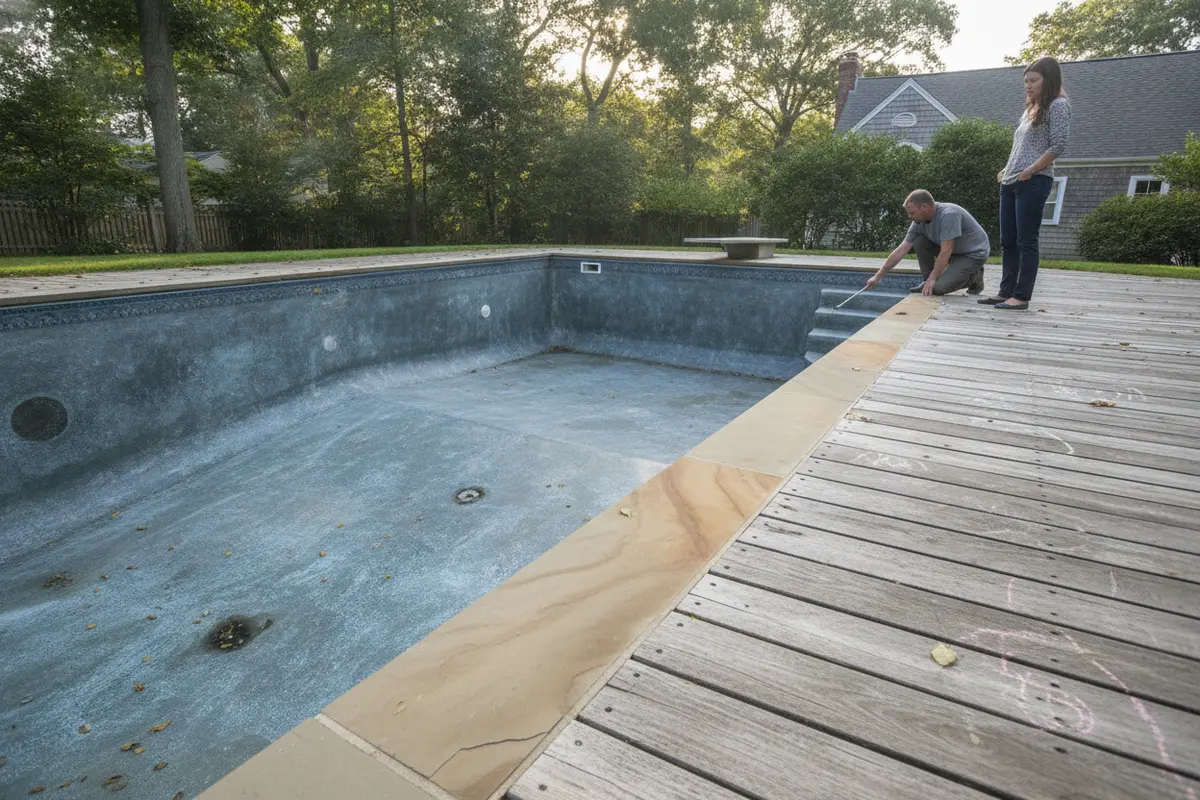
Keep the images in order and make a simple timeline: first noticed, subsequent photos, and any changes in use or maintenance. If you have a prior written scope or photographs from a previous repair, bring those as well. Related Gappsi pool restoration articles may help you recognize the kinds of work homeowners discuss, but your own notes and site conditions should guide the inspection.
What should a repair recommendation explain?
A useful recommendation connects what was observed, what work is proposed, and what that work is intended to address. The written scope should identify the location and the material involved. It should also explain preparation, the repair method at an appropriate level, any limitations, and what findings could change the scope once work begins. If the recommendation is uncertain, that uncertainty should be stated rather than hidden behind a generic repair label.
Ask questions such as:
- Which surface or layer does the proposed repair address?
- What observations support this scope, and what has not been established?
- Is the area near a fitting, step, corner, coping, or deck transition included?
- Would further inspection or testing change the recommendation?
- What preparation is required, and will the pool need to be drained or taken out of use?
- How may the repaired area look beside the existing finish?
- What conditions discovered during preparation could require a revised scope?
- What follow-up should I watch for, and whom should I contact if the condition changes?
Compare proposals by location, preparation, materials, included areas, assumptions, and exclusions, not just by the repair name. For example, two proposals that both say “repair crack” may cover different surfaces or stop at different boundaries. Ask each provider to describe the area in plain language and to identify whether coping, tile, fittings, or deck work is separate. If a project involves planning beyond the immediate defect, Gappsi’s pool-area project articles can be explored as a separate topic, rather than treated as evidence about the crack itself.
Contact Gappsi through our contact page to discuss the pool and its repair questions
When should you arrange an on-site evaluation?
Seek a closer assessment when dated observations suggest a change, when the crack crosses a fitting or transition, when you see displacement, or when there are other unexplained symptoms. These conditions do not establish a structural defect. They do make it important to have someone assess the pool in person before selecting a cosmetic patch or a broader renovation.
If a loose fragment or sharp edge could injure someone, keep people away from that spot until it can be checked. For general pool-area safety information, consult the U.S. Consumer Product Safety Commission’s pool and spa safety resources. This is general safety guidance, not a method for diagnosing cracks or deciding on a repair.
A stable-looking mark with no obvious related changes still deserves clear documentation. You can arrange an evaluation at a practical time and avoid altering the area until it has been seen. If you use a pool safety cover, mention whether installation or removal has affected access to the area, but do not assume the cover caused a crack. The goal is to give the evaluator useful context and keep people safe while the next step is planned.
Request a conversation with Gappsi about evaluating your pool crack
Frequently Asked Questions
Does every crack mean the gunite pool shell is damaged?
No. A visible line may be limited to the interior finish, but a surface view cannot confirm the layer involved. Location, pattern, history, and related symptoms help determine what needs closer inspection.
Can a photograph tell me what caused the crack?
A photograph can show location and visible pattern, especially if it includes scale and surrounding features. It cannot reliably establish the cause or full repair scope without an assessment of the pool and its setting.
Should I drain the pool before an inspection?
Do not drain it just to expose a crack without professional advice. The appropriate access depends on the pool and site conditions, and an empty pool can be affected by surrounding ground conditions.
What should I do if the crack seems to be getting longer?
Take dated photos from similar angles, note the pool’s condition and any related symptoms, and arrange an on-site evaluation. Avoid sealing or covering the line before it has been documented.
How can I compare two repair proposals?
Compare the exact location and layer, preparation, materials, included and excluded areas, assumptions, and follow-up. Ask each provider what the proposal does not address and what findings could change the work.
Posted by Gappsi Group
Plan an informed next step
Contact Gappsi through our contact page to discuss an evaluation
Careful records and a clear explanation of repair scope can help you understand what a crack may involve before deciding how to proceed. An on-site evaluation is the practical next step when the cause or extent is not clear.