Shuffleboard Court Dimensions: A Complete Guide

Shuffleboard court designers
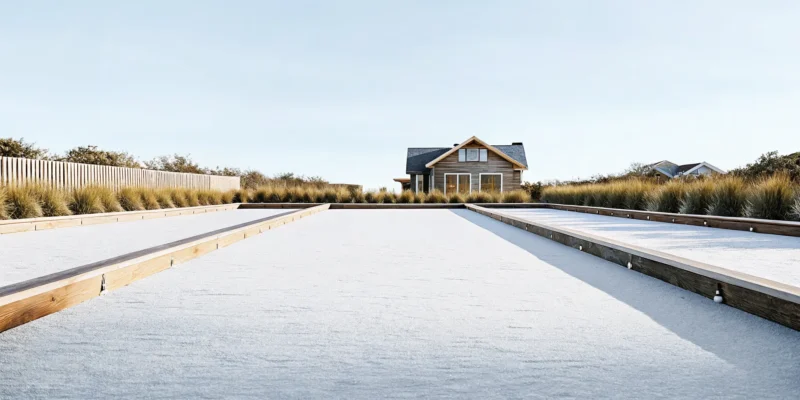
An outdoor shuffleboard court by Gappsi

So, you’re thinking about adding an outdoor shuffleboard court to your backyard? It’s a fantastic way to bring some classic, active fun right to your home. But before you start, the most important step is planning your space. Getting the dimensions shuffleboard court right is crucial for a great playing experience. Whether you need the official shuffleboard court dimensions or a custom size, Gappsi’s seasoned designers can help install high-quality custom sports game courts. Let’s first cover the basics of what shuffleboard is.

What Is Shuffleboard?

Shuffleboard or shovelboard is a sport where you shove disks with a stick or hand to land them inside a scoring area on the shuffleboard court or table. This game gained popularity in England in the early 15th century. Back then, the aristocracy called it shovegroat or shovel-penny. An iteration of shuffleboard, shove-ha’penny is a table game still operational in English pubs.

While there is no consensus on the origin of shuffleboard, earlier iterations of it are from England. This sport continued to evolve and reached the American colonies. As shuffleboard grew in popularity, its rules and form of play continued to evolve. It was introduced in Florida in 1913 as a sport played on land. It became so popular that it spread throughout the U.S. and gained the most traction in retirement communities.

Today, people play an overhauled version of this old indoor game on ocean liners and cruises as a deck game. It employs courts of custom designs marked on the ship deck. They also have multiple lined sessions for play. Players play modern shuffleboard in two forms – outdoor and indoor shuffleboard. They have varied rules for play and scoring.

The National Shuffleboard Association adopted the rules of outdoor shuffleboard. Moreover, the association defined the court size and shape. The courts are 6 by 52 feet, and the wood disks are 1 by 6 inches. Typically, the shuffleboard courts have a concrete or terrazzo construction. Two or four people can play the sport as singles or doubles.

Gappsi Has Expert Shuffleboard Court Designers

Gappsi has years of experience in sports game court construction. We design custom courts based on our client’s specifications and the zoning laws in their neighborhood. Our contractors have designed multiple basketball, volleyball, badminton, bocce, and shuffleboard courts in Nassau & Suffolk County, Long Island, NY.

Shuffleboard court designers
An outdoor shuffleboard court by Gappsi

Standard Shuffleboard Court Construction

A standard shuffleboard court is rectangular and 52 feet long by 6 or 10 feet wide. Both ends feature a baseline and a triangle with five segments, and we mark each section with a specific number of points. The court also has an area toward both ends. It is marked “10 off.” The middle section of the court is usually 12 feet long. Each player or doubles gets a set of colored disks, usually black and yellow, but red and black are popular choices. Every player also gets a cue, which can be 6 feet long. Gappsi’s shuffleboard court designers can install this standard court on your property.

Why Choose Gappsi for Your Shuffleboard Court Installation

When selecting a shuffleboard court contractor, always ensure they are licensed for new construction in your neighborhood. Gappsi operates regularly in all neighborhoods across Long Island, NY. Our shuffleboard court suppliers and installers are meticulous about the design, installation, specs, and other details.

Moreover, our court contractors have the expertise to design all types of custom sports game courts for residential and commercial properties. Whether you need a court for your home, school, gym, park, office, recreational club, etc., we will design the shuffleboard court per your specifications.

Additionally, the professionals at Gappsi are always ready to answer your questions and appease your queries. We base our designs on your request, location, court size, and other specifications. Our shuffleboard court designers will include you throughout the process and construct the court as quickly as possible.

At Gappsi, we can adjust the size of the shuffleboard court to suit your particular needs while maintaining accurate play. We can design the court to give you more freedom for movement. Furthermore, our court installers will ensure the surface has a slight slope on either side. It will ensure water does not remain on the playing surface and can drain away quickly. Lastly, we will ensure the court is installed on time and that the installation cost is within your budget.

FAQs About Our Shuffleboard Court Construction

Here are some popular questions we get from clients interested in our shuffleboard court design service:

Shuffleboard court installer

A shuffleboard court by Gappsi in Long Island, NY

What Dimensions Should I Choose for My Shuffleboard Court?

Official shuffleboard courts in the U.S. are 52 feet long and 6 feet wide. However, you are free to choose the dimensions that suit your landscape. If you select us for shuffleboard court construction, we will assess your space and provide you with appropriate court dimensions.

What Materials Do You Use to Construct the Court?

Typically, our shuffleboard court designers excavate the surface for shuffleboard construction. Then, we have a level concrete subsurface to suit your chosen dimensions. Concrete is the ideal hard surface needed for optimal shuffleboard performance. We will also prime, paint, and seal the surface. It will protect the playing area so that you can use it for years. The finish will ensure the court remains weather-resistant for a long time.

How Do You Apply the Court Lines?

We use a stencil and bright acrylic paint to apply the lines after priming the concrete. Even though white is the standard color for court lines and the court surface is typically green, you can choose a custom color combination.

What Sort of Maintenance Will the Court Require?

You must clean the concrete court with power washing when it’s too dirty. However, regular mopping with mild soapy water will keep it clean. If your court has damaged parts, we can repair them quickly before the rest of the court caves or cracks.

Schedule your professional shuffleboard court construction consultation today, contact Gappsi today!

Understanding Shuffleboard Court Dimensions

Before you can start sliding pucks, you need to get the layout right. The size and markings of your shuffleboard court are crucial for authentic gameplay. While there’s an official regulation size, one of the best parts of adding a court to your backyard is the ability to customize it to fit your space perfectly. A professional designer can help you adapt the classic layout to your property’s unique dimensions, ensuring you get the most out of your new favorite game. Whether you have a sprawling lawn or a more compact patio area, there’s a shuffleboard court design that can work for you, blending seamlessly with your existing landscape and entertainment spaces.

Detailed Court Dimensions and Layout

A regulation shuffleboard court has very specific measurements that dictate the flow and scoring of the game. The overall playing surface is 52 feet long and 6 feet wide. This length includes two 6.5-foot shooting areas at each end, leaving a 39-foot playing surface between the baselines. These dimensions provide ample space for players to strategize and execute their shots. Understanding this standard layout is the first step, even if you plan to build a smaller version. It helps you grasp the proper scale and proportions needed for a court that not only looks right but also plays right, providing a genuine shuffleboard experience for family and friends.

Regulation Playing Surface

The playing surface itself is where all the action happens. It’s a long, narrow rectangle meticulously marked to guide the game. The court is symmetrical, with identical scoring zones at each end, allowing for play in both directions. The lines must be crisp and clear to avoid any confusion during a match. At Gappsi, our game court specialists ensure every line is painted with precision, from the baselines to the scoring triangles. This attention to detail is key to creating a professional-quality court that stands up to years of competitive fun right in your own Long Island backyard.

Scoring and Penalty Zones

The scoring zones are what make shuffleboard so exciting. At each end of the court, you’ll find a large scoring triangle that is 9 feet long. This triangle is divided into different point sections. The tip of the triangle is the highest-scoring area. Just beyond the triangle is the “10-off” zone, a penalty area that subtracts points from your score if your disk lands there. These carefully measured zones create the game’s risk-and-reward dynamic. Properly laying out these scoring and penalty areas is essential for fair play and is a hallmark of a well-constructed court.

Space Requirements and Alternative Court Sizes

While a 52-foot regulation court is the gold standard, not everyone has the space for one. The good news is that shuffleboard is easily adaptable. You can scale down the court’s dimensions to fit the available area without sacrificing the fun. The key is to maintain the correct proportions of the scoring zones relative to the overall length. This ensures the game still feels balanced and challenging. When planning your court, consider not just the playing surface but also the surrounding space needed for players to move around comfortably and for spectators to watch the action.

Compact and Junior Courts

For smaller backyards, compact or residential courts are a fantastic option. These typically range from 28 to 40 feet long and can be anywhere from 3 to 6 feet wide. If you want to get the kids involved, you can even build a junior court, which is usually around 15 feet long and 3 feet wide. These smaller versions make the game accessible for all ages and spaces. At Gappsi, we specialize in creating custom court designs that maximize your available space, so you can enjoy shuffleboard no matter the size of your property.

Choosing the Right Surface for Your Court

The surface of your shuffleboard court is just as important as its dimensions. It affects how the pucks glide, how the court weathers over time, and even player comfort. The traditional choice is concrete, known for its durability and smooth finish. However, modern materials offer compelling alternatives that can provide better drainage, more cushioning, and easier installation. When selecting a surface, think about your local climate, your budget, and how much maintenance you’re willing to do. The right material will ensure your court provides a consistent and enjoyable playing experience for years to come.

Concrete Court Construction and Finishing

A poured concrete slab is the foundation for a classic shuffleboard court. Achieving the perfect playing surface requires careful preparation and execution. The concrete must be poured correctly to create a perfectly level and smooth base, which is critical for the pucks to slide true. After the concrete is poured, it needs time to cure properly before any finishing touches can be applied. This patience pays off in the form of a durable, long-lasting court that can withstand the elements and countless games. It’s a process that combines precision masonry with a deep understanding of the game’s requirements.

Curing and Sealing

Patience is a virtue in concrete work. After the concrete slab is poured, it must be left to cure for at least 30 days. This crucial drying period allows the concrete to reach its maximum strength and ensures that any paint or sealant will adhere properly. Rushing this step can lead to peeling paint and a compromised surface down the line. Once cured, the court should be sealed to protect it from moisture, stains, and weather damage. This protective layer is essential for maintaining the court’s appearance and playability, especially in the variable Long Island climate.

Achieving a Smooth Finish

The final step in creating a top-tier concrete court is the finish. After the slab has cured, we prime, paint, and seal the surface to create a smooth, slick playing area. This multi-layer process not only provides the vibrant colors and crisp lines of the court but also protects the underlying concrete. A high-quality finish ensures the pucks glide effortlessly and consistently, shot after shot. This professional finishing touch is what transforms a simple slab of concrete into a true shuffleboard court, ready for years of enjoyment and friendly competition.

Alternative Surface Materials

If a permanent concrete installation isn’t the right fit for your space or budget, there are excellent alternative materials to consider. Modern options like polymer tiles offer a different set of benefits, including easier installation and enhanced player comfort. These materials are designed specifically for sports courts and can be a great way to add a shuffleboard court to your backyard with less construction time. They often come in a variety of colors, allowing you to customize the look of your court to match your home’s aesthetic perfectly.

Polymer Tile Courts

Polymer tile courts are a popular and practical alternative to concrete. These courts are made of interlocking tiles that snap together, making installation quick and straightforward. Many of these tile systems come with the lines pre-painted, which simplifies the process even further. The tiles are designed to be durable and weather-resistant, and their perforated surface allows for excellent drainage, meaning you can get back to playing sooner after it rains. This modular approach provides a high-performance playing surface without the lengthy curing time associated with concrete.

Player Safety and Comfort

A great shuffleboard court isn’t just about dimensions and materials; it’s also about the people who use it. Thinking about player safety and comfort during the design phase can make a huge difference in how much the court is enjoyed. Factors like the surface’s impact on joints, its temperature on hot sunny days, and its grip underfoot all contribute to the overall experience. Choosing materials that are more forgiving and stay cooler can extend playing time and make the game more accessible and enjoyable for players of all ages and physical abilities.

Impact on Joints

While concrete is durable, its hard, unforgiving nature can be tough on players’ joints, especially during long matches. For those concerned about comfort, alternative surfaces like polymer tiles can be a better choice. These materials often have a bit of give, which helps to absorb impact and reduce stress on the knees and ankles. This can make a significant difference for older players or anyone with joint sensitivities, ensuring that everyone can enjoy the game comfortably for hours on end. It’s a small detail that can have a big impact on the long-term usability of your court.

Surface Temperature and Grip

On a hot summer day in Long Island, a concrete court can absorb a lot of heat, making the surface uncomfortably warm. Some modern court surfaces are designed to stay cooler in direct sunlight. Additionally, player safety is enhanced by surfaces that provide good grip. Specialized flooring products are often designed with textures that prevent slipping and have drainage systems to keep the playing area dry. This ensures a safe and stable footing for players, allowing them to focus on their shots without worrying about losing their balance, even if there’s a bit of morning dew on the ground.

SCHEDULE A MEETING TODAY WITH GAPPSI

VIEW OUR VIDEO OF A BASKETBALL AND SHUFFLEBOARD SPORTS GAME COURTS

https://youtu.be/7nG_9k3qxJ0

Key Takeaways

  • Customize Your Court Dimensions: You don’t need a massive yard for a shuffleboard court. The standard 52-foot design can be scaled down to fit your available space, as long as you maintain the correct proportions for balanced and enjoyable gameplay.
  • Choose the Right Surface for Your Needs: Your court’s surface affects playability and comfort. Poured concrete offers a classic, durable finish, while modern polymer tiles provide a joint-friendly alternative with faster installation and excellent drainage.
  • Prioritize Professional Construction Details: The quality of your court is in the details. A perfectly level base, proper concrete curing time, and precise line painting are essential for creating a smooth, long-lasting surface that guarantees a great game.

Related Articles

Gray Travertine Pool Deck: A Complete Guide

The best days are spent relaxing by the pool with family and friends, and the last thing you want to worry about is safety. Slips and falls are a real concern on wet surfaces, which is why material choice is so important. Travertine is a top choice for families because its natural texture provides excellent grip, even when splashed with water. This inherent slip resistance offers peace of mind that other materials can’t. A beautiful gray travertine pool deck provides a safe playground for kids and a secure surface for all your guests, letting you focus on making memories.

Fiorito-Travertine-Patios-and-Pool-Coping2Travertine Patios and Pool Coping are the perfect stone material to use on Long Island NY for your outdoor living space.  Travertine is a natural stone,  created in shallow bodies of water.  The residue of lime settled and built up over millions of years in a massive thick block. The colors of the travertine derive from soil and minerals that contaminated the ground in the area where lime settled. Fossils trapped between the bodies of travertine accumulate and become the exposed holes you see in the travertine surface.

Formed beneath the hot springs over millions of years Travertine is a gorgeous stone material. When geothermal groundwater heats up, water shoots up, thus creating the pits and unique character on the surface of each stone.  The holes on the travertine pavers may appear to be a defect to some people, but it’s not. It is just a natural occurrence that has happened over millions of years during the stone structure formation. The holes and imperfections of travertine surfaces can never be mistaken with any other stone; it is unique and timeless.

The History of Travertine in Architecture

The timeless quality of travertine isn’t just a feeling; it’s a fact proven by centuries of architectural history. This beautiful and strong stone was a favorite of the ancient Romans, who used it to construct some of the world’s most enduring structures. If you’ve ever marveled at the Roman Colosseum, you’ve witnessed the incredible longevity of travertine firsthand. Its durability and classic aesthetic made it the go-to material for everything from grand public buildings to outdoor plazas. This long history is a testament to its ability to withstand the elements while maintaining its elegance, which is why it remains a top choice for high-quality natural stone projects today. The unique patterns and warm, earthy tones that defined classical architecture can bring that same sense of established beauty to your own home.

It Stays Cool On Those Hot SUMMER Days!

Travertine is very cool on hot summer days due to the fact that the body structure of travertine is pure lime and contains no minerals or iron.  If you could hire Michelangelo to custom paint your patio I am pretty sure he would not be able to create such a remarkable color pattern as you see in this Fiorito Travertine Stone. This particular Fiorito travertine stone is one of the oldest travertine formations due to the multicolor variation and the line of onyx crystallization that appears on the surface of the stone.

Travertine Pool Decks – What Is It?

Ever so popular, travertine remains one of the most favorable stone tiles because of its unique aesthetics and functionality where it is also used as indoor, patio, and path walk tiles for both residential and commercial use.

A travertine pool deck is an outdoor decking system that utilizes the unique natural beauty and function of travertine tiles. Travertine pool decks offer a rustic appearance, but with the color variations available, you will find that travertine tiles as versatile options that can work on any style you are aiming for.

Color variations include but are not limited to white, gray, beige, silver, rustic black, ivory, walnut, and cream. Travertine tiles give a homey feel to your pool deck area and the subtle differences in the color of each stone will surely make your pool area stand out.

Fiorito-Travertine-Patios-and-Pool-Coping1A beautiful weathered look. Travertine tiles are undeniably gorgeous. Investing in a travertine pool deck will add curb value to your property. You can easily create a comfortable, cozy-looking pool deck with travertine tiles as the graining and primary tile colors have a warm natural color tone.

An attractive quality of Travertine is that it can last a lifetime. With proper care, and correct installation, and is not subjected to extreme wear and tear, average-grade travertine tiles could last over 100 years.

Easy workability. Travertine tiles are easy to cut and shape in any design you want. This advantage makes it easy to work with, especially with uneven surfaces and irregular layouts of pool decks.

Easy and low maintenance. You do not need a little more effort in maintaining your travertine tiles compared to ceramic or marble. See examples of marble pool decks here.

Multicolor Travertine Patio and Coping G035 Fiorito

G035 Travertine Fiorito is a natural stone exclusively produced for Gappsi. It is a unique stone with a large range of color variations created together by Mother Nature. The combination of beige, brown, maroon, gray, gold, peach and many other shades and colors are all in this stone. The finish on this travertine is tumbled and honed. The tumbled finish gives the edges of every stone a rustic look and the honed finish gives a matte and smooth texture, enough to give the top of the stones a comfortable surface when walked on.

It is still considered one of the easiest floor surfaces to maintain. Regular sweeping and light setting on your power wash for removing stubborn dirt.

Fiorito-Travertine-Patios-and-Pool-CopingFiorito Travertine Pavers and Pool Coping In Islip NY

Gappsi recently designed a backyard and installed a pool for a residence in Islip NY. We built a 20×40 vinyl pool with concrete walls. The pool is 5 inches in the shallow area to 66 inches in the deep-end water height. We installed a 2 inches coping and patio with G035 travertine selected from the Gappsi stone collection throughout the backyard, surrounding the pool up to the backyard sliding door.

Gappsi also created 3 sided steps leading to the backyard. We built a pool house with a sitting area to the outside connecting to the indoors with a window to pass through all trimmed with Azek. The floor was carried throughout the inside of the pool house. A bar area was designed including a refrigerator and storage cabinet with a gas fireplace too! We created an open bean look all painted to match the white trim moldings throughout the pool house. Very beautiful functional layout including a bathroom with many details especially in the columns.  Gappsi built pillars below the swimming pool, they are equipped with an auto cover too.

Why Choose Travertine for Your Pool Deck?

When you’re planning the perfect poolside retreat, the material you choose for your deck is one of the most important decisions you’ll make. It needs to be beautiful, safe, and able to withstand the elements. That’s where travertine comes in. This natural stone is a top choice for swimming pool decks for several compelling reasons. It offers a unique blend of timeless elegance and practical functionality that few other materials can match. From its ability to stay cool under the hot summer sun to its natural, non-slip texture, travertine provides a luxurious and secure surface for your family and guests. It’s not just about looks; it’s about creating a durable, long-lasting outdoor space that enhances your home and lifestyle for years to come.

Natural Slip Resistance for Safety

Safety is always the top priority around a pool, and this is an area where travertine truly shines. One of its biggest benefits is its porous nature, which allows it to absorb water quickly. This means less standing water on the surface, reducing the risk of slips and falls. Finishes like tumbled or honed travertine have a matte, slightly textured surface that provides excellent grip, even when wet. Unlike some polished stones or smooth concrete surfaces that can become slick, travertine offers peace of mind. This makes it an ideal choice for families with children or for anyone who loves to host pool parties, ensuring everyone can enjoy the water safely.

How Finishes Affect Grip

The finish you choose for your travertine pavers plays a significant role in their slip resistance. A tumbled finish, which gives the stone a rustic, weathered look with rounded edges, is one of the most popular and safest options for pool decks. The process of tumbling creates a naturally textured surface that offers fantastic grip. A honed finish is also a great choice; it’s smooth and matte but not glossy, so it doesn’t become slippery. It’s best to avoid polished travertine for outdoor pool areas, as its slick surface can be hazardous when wet. At Gappsi, we can show you samples to help you feel the difference and choose the perfect, safe finish for your project.

Technical Specifications for Performance

While you don’t need to be a stone expert, it’s helpful to know that the slip resistance of a tile is measured by its Dynamic Coefficient of Friction (DCOF) rating. Industry standards recommend a DCOF of 0.42 or higher for surfaces that will be walked on when wet. Most travertine pavers, especially those with a tumbled or honed finish, easily meet or exceed this standard. This technical specification confirms what you can feel with your own hands and feet: travertine provides a reliable, non-slip surface that is engineered for safety in wet environments like a pool deck, patio, or outdoor shower area.

Durability and Weather Resistance

Investing in your outdoor space means choosing materials that will last. Travertine is an incredibly durable natural stone that can handle Long Island’s diverse weather, from hot, sunny summers to freezing winters. Because it’s formed by nature over thousands of years, it’s inherently strong and resistant to wear and tear. With proper installation and basic care, a travertine pool deck can last for decades—some sources even say over 100 years. It resists cracking from freeze-thaw cycles better than many other materials, making it a smart, long-term investment for your home. Its color is also naturally resistant to fading from UV exposure, so your deck will look beautiful for years.

Designing with Travertine Pavers

One of the best parts of working with travertine is the sheer variety of design possibilities it opens up. This isn’t a one-size-fits-all material. Travertine comes in a stunning range of natural colors, from creamy ivories and beiges to rich walnuts and silvery grays. This allows you to create a look that perfectly complements your home’s architecture and your personal style. Whether you’re aiming for a rustic Mediterranean vibe or a sleek, modern aesthetic, there’s a travertine option that will fit your vision. The different finishes, sizes, and patterns available give you the creative freedom to design a truly custom masonry masterpiece for your backyard.

Popular Finishes and Textures

The finish of your travertine pavers determines their final look and feel. Each finish offers a different texture and interacts with light in a unique way, influencing the overall character of your pool deck. The most common options for outdoor spaces are honed and tumbled, as they provide the best combination of beauty and slip resistance. However, other finishes like leathered or sandblasted can create even more distinct, textural surfaces. Exploring these different options is a key step in the design process, allowing you to tailor the stone to your exact preferences for both aesthetics and functionality.

Honed and Tumbled Finishes

Honed and tumbled are the go-to finishes for travertine pool decks. A honed finish is created by grinding the stone to a smooth, flat, matte surface. It’s elegant and refined without being slippery. A tumbled finish, on the other hand, is achieved by tumbling the cut pavers in a drum with gravel and water. This process softens the edges and creates a slightly pitted, aged appearance that is very forgiving and hides minor dirt or debris. Both are excellent choices that provide a safe, comfortable surface for bare feet while showcasing the stone’s natural beauty.

Leather and Sandblasted Finishes

If you’re looking for something with a bit more texture, leathered or sandblasted finishes are fantastic options. A leathered finish is created using diamond-tipped brushes to produce a soft sheen and a pebbly, textured surface that feels wonderful underfoot. It highlights the stone’s natural contours and is great at hiding water spots and footprints. A sandblasted finish involves blasting the stone with sand at high pressure, which creates a uniformly textured, slip-resistant surface with a slightly muted color. Both of these finishes add a unique tactile quality to your pool deck design.

Common Sizes and Patterns

Travertine pavers are available in a wide range of sizes, from small 6×12 inch rectangles to large 24×24 inch squares. This variety allows for incredible design flexibility. You can use a single size for a clean, uniform look or mix multiple sizes to create more intricate patterns. The pattern you choose can dramatically affect the overall feel of your space. A simple running bond or stacked layout can feel modern and orderly, while more complex patterns can add a sense of movement and classic charm to your pool deck and surrounding patio areas.

Understanding the French Pattern

The French pattern, also known as the Versailles pattern, is a classic and highly popular choice for travertine decks. This pattern uses a specific combination of four different-sized pavers to create an interlocking, seemingly random design that is both elegant and visually interesting. It breaks up the monotony of a single-sized layout and is excellent for covering large areas. The French pattern is prized for its ability to create a sophisticated, old-world feel, making it a perfect match for the timeless beauty of travertine stone.

The Manufacturing Process

Understanding how travertine is processed can help you appreciate its unique qualities. After being quarried in large blocks, the travertine is cut into slabs and then into individual pavers. During this process, the natural pits and voids that characterize the stone become visible. At this stage, a decision is made whether to leave these voids as they are (unfilled) or to fill them with a grout-like compound (filled). This choice affects both the appearance and the maintenance requirements of the final product, so it’s an important factor to consider for your project.

Filled vs. Unfilled Travertine

Unfilled travertine is left in its natural state, with all the pits and holes exposed. This creates a very rustic and textured look that many people love, especially for outdoor settings. The voids can help with water drainage and provide extra texture for slip resistance. Filled travertine has its natural voids filled with a special resin or grout and then smoothed over. This creates a more uniform, solid surface that is easier to clean, as dirt and debris can’t get trapped in the holes. The choice between filled and unfilled often comes down to personal aesthetic preference and the desired level of maintenance.

Travertine vs. Concrete Pool Decks

When deciding on a pool deck material, the most common comparison is between travertine and concrete pavers or poured concrete. While concrete can be a functional choice, travertine offers several distinct advantages that make it a superior option for a luxury outdoor living space. The differences in heat absorption, appearance, and long-term value are significant. A concrete deck might serve its basic purpose, but a travertine deck transforms your poolside into an elegant oasis. Understanding these key differences will help you make an informed decision that you’ll be happy with for many years.

Heat Absorption on Sunny Days

One of the most celebrated benefits of travertine is its ability to stay remarkably cool to the touch, even in direct sunlight. On a hot Long Island summer day, concrete or brick pavers can become scorching hot, making them uncomfortable and even dangerous for bare feet. Travertine’s natural composition and light color options allow it to reflect heat instead of absorbing it. This means you and your kids can walk comfortably around the pool without worrying about burning your feet. This single feature is often the deciding factor for homeowners choosing a material for their family’s recreational spaces.

Appearance and Aesthetic Appeal

While stamped concrete can mimic the look of stone, it can’t replicate the authentic, natural beauty of travertine. Each piece of travertine is unique, with its own subtle variations in color, veining, and texture. This creates a rich, layered look with a depth and character that manufactured products simply can’t match. Concrete is uniform and man-made, whereas travertine offers a timeless, organic elegance that connects your outdoor space to the natural world. The luxurious appeal of real stone adds significant aesthetic and property value that concrete cannot.

Long-Term Durability and Maintenance

Both travertine and concrete are durable, but they wear differently over time. Poured concrete is prone to cracking due to ground shifts or freeze-thaw cycles, and repairs can be obvious and difficult to blend. Travertine pavers, being individual units, are more flexible and resistant to cracking; if one paver is damaged, it can be easily replaced. While travertine needs to be sealed periodically, its maintenance is straightforward. Concrete often requires more intensive cleaning to prevent mildew and staining, and its color can fade over time, whereas travertine’s color is part of the stone itself and will not fade.

Comparing Cost and Installation

Initially, the cost of a travertine pool deck is typically higher than a basic concrete one. This is because you are investing in a premium, natural stone product. However, it’s important to consider the long-term value. Travertine’s durability, timeless appeal, and the value it adds to your home can make it a more cost-effective choice over its lifespan. Installation for both materials requires a professional touch to ensure proper drainage and a stable base, but the process for laying pavers can be more forgiving on uneven ground than pouring a large concrete slab.

Installation and Maintenance for Travertine Decks

To ensure your travertine pool deck looks stunning and lasts a lifetime, proper installation and maintenance are key. While travertine is a forgiving and durable material, following best practices from the start will protect your investment and keep it looking its best. This involves preparing the base correctly, using the right setting materials, and committing to a simple but important sealing and cleaning routine. A professional installation by an experienced team, like the landscape construction experts at Gappsi, is the best way to guarantee your deck is built to last and will handle everything from poolside splashes to winter storms without issue.

Best Practices for Installation

A successful travertine installation starts from the ground up. A solid, well-compacted base of crushed stone is essential to prevent shifting or settling over time. Pavers can be dry-set on a sand bed or wet-set on a concrete slab with mortar. The method chosen often depends on the specific site conditions and local climate. Ensuring proper slope and drainage away from the pool and your home’s foundation is also critical. These foundational steps are crucial for the longevity and stability of your deck, preventing issues like uneven pavers or water damage down the road.

Choosing the Right Setting Material

The material used to set your travertine pavers is just as important as the pavers themselves. For a dry-set application, coarse sand provides a stable yet flexible bed that allows for drainage. For a wet-set application over a concrete base, a high-quality polymer-modified thin-set mortar is recommended. This provides a strong bond and has some flexibility to accommodate minor movements. Using the correct jointing sand between the pavers is also important to lock them in place and prevent weed growth. An expert installer will know exactly which materials are best suited for your specific project.

The Importance of Sealing Travertine

Sealing your travertine deck is one of the most important steps in protecting it. Travertine is naturally porous, and while this helps with slip resistance, it also means it can absorb spills and stains if left unsealed. A good quality impregnating sealer penetrates the stone’s surface to block out water, pool chemicals, and potential stains from things like leaves or spilled drinks. Sealing also helps to prevent mold and mildew growth and can enhance the natural color of the stone, making the beautiful patterns and tones even more vibrant.

How Often to Re-Seal Your Deck

How often you need to re-seal your travertine deck depends on the type of sealer used and the amount of traffic and sun exposure it gets. As a general rule of thumb, most high-quality sealers will last between 3 to 5 years for an outdoor pool deck. A simple way to check if it’s time to reseal is to sprinkle some water on the surface. If the water beads up, the sealer is still working. If it soaks into the stone, it’s time to apply a new coat. Regular sealing is a simple task that provides powerful protection, and it’s a service we can help with through our restoration and sealing division.

Cleaning and Chemical Sensitivity

Maintaining your travertine deck is surprisingly easy. Regular sweeping to remove debris and occasional rinsing with a garden hose is usually all that’s needed. For a deeper clean, use a pH-neutral stone cleaner and a soft brush. It’s very important to avoid using acidic or harsh chemical cleaners, including vinegar or lemon juice, as they can etch and damage the stone’s surface. Be mindful of pool chemicals as well; try to rinse off any splashes of chlorine or other harsh chemicals from the deck surface promptly to prevent potential discoloration or damage over time.

Tips for Ordering Travertine

Once you’ve decided that travertine is the right choice for your pool deck, the next step is ordering the material. This part of the process can feel a little intimidating, but a few key tips can make it smooth and successful. Being prepared and knowing what to expect will help you get exactly what you want and ensure you have enough material to complete your project without any costly delays. Working with a knowledgeable supplier who can guide you through the selection and ordering process is invaluable, ensuring you account for everything from color variation to overage.

Why You Should Get Samples First

Because travertine is a natural product, no two tiles are exactly alike. There will be variations in color, tone, and veining from one piece to the next, and even from one shipment to the next. Photos online or in a brochure can give you a general idea, but they can’t capture the true character of the stone. That’s why it is absolutely essential to get physical samples. This allows you to see and feel the stone’s texture and color in your own backyard, next to your pool and home, in natural daylight. It’s the only way to be sure you’ll love the final result.

Understanding Crates and Minimum Orders

Travertine pavers are heavy and are shipped on pallets or in crates. It’s important to understand how much material comes in a crate and if there are minimum order quantities. When calculating how much you need, always add 10-15% for overage. This extra material accounts for cuts, waste, and any pieces that might get damaged during shipping or installation. Having a little extra on hand is also great for any future repairs. A professional at the Gappsi Store can help you accurately calculate your needs to ensure your order is just right for your project.

SCHEDULE A MEETING TODAY WITH GAPPSI

VIEW OUR VIDEO OF TRAVERTINE PATIOS AND POOL COPING

https://youtu.be/J7xOqBCuNJs

Gappsi Is A Name You Can Trust 

For more than 35 years, Gappsi has renovated residential and commercial pools in Long Island New York.

Our commercial customers usually renovate their pool and spa to attract new members and retain existing customers at their health clubs or private community.

Frequently Asked Questions

Is travertine really a safe, non-slip surface for a pool deck? Absolutely. Travertine’s natural porous texture is one of its greatest strengths for poolside safety. It allows water to be absorbed quickly instead of pooling on the surface, which significantly reduces slipperiness. Finishes like tumbled or honed travertine enhance this effect by providing a matte, slightly textured surface that offers excellent grip for wet feet, giving you peace of mind when kids are playing or guests are walking around the pool.

Will the natural holes in travertine trap dirt and be difficult to keep clean? This is a common question, but maintenance is surprisingly simple. You can choose “unfilled” travertine, which has the natural pits exposed for a rustic look, or “filled” travertine, where those voids are filled in for a smoother surface. Either way, regular sweeping and rinsing with a hose handles most of the upkeep. For a deeper clean, a pH-neutral stone cleaner is all you need to keep it looking great without damaging the stone.

How does a travertine deck hold up during harsh Long Island winters? Travertine is an incredibly resilient stone that performs very well in climates with freeze-thaw cycles. Because it’s a dense natural stone, it’s less susceptible to the cracking that can plague materials like poured concrete. When installed correctly with a proper base for drainage, travertine pavers can shift slightly with the ground, preventing widespread damage and ensuring your deck remains beautiful for decades.

Travertine seems more expensive than concrete. Is it worth the extra cost? While the initial investment for travertine is higher than for basic concrete, it’s important to think about the long-term value. Travertine offers superior durability, a timeless and luxurious appearance that concrete can’t replicate, and it stays much cooler on hot summer days. Plus, if a single paver ever gets damaged, it can be replaced easily, unlike a large, cracked concrete slab which requires a more obvious and costly repair.

Since every stone is unique, how can I be sure I’ll like the final look? The natural variation in color and pattern is what gives travertine its unique character. The best way to ensure you love the final result is to get physical samples. Seeing and feeling the stone in your own backyard, in natural light, allows you to see how its colors complement your home and landscaping. This step is essential for making a confident choice and guaranteeing the finished deck matches your vision.

Key Takeaways

  • Create a safer, more comfortable pool area: Travertine offers a naturally slip-resistant surface that provides excellent grip when wet, and it stays cool to the touch, making it ideal for families and hot summer days.
  • Invest in timeless beauty and long-term value: Each piece of travertine is unique, offering an authentic, high-end look that concrete pavers cannot match. Its durability ensures your pool deck will withstand the elements and add lasting value to your home.
  • Plan for a successful and lasting installation: The right finish, such as tumbled or honed, is key for both safety and style. Proper installation and periodic sealing are essential to protect the stone from stains and ensure it looks beautiful for decades.

Related Articles

  • g035 travertine Archives – Gappsi Group
  • Pool Archives – Gappsi Group

Horseshoe Courts 101: A Homeowner’s Guide

Horseshoe courts designers
A horseshoe court designed by Gappsi

Horseshoe courts are making a huge comeback, and not just in local parks. More families are adding them to their backyards for some classic, competitive fun. But a great horseshoe court is more than just two stakes in the ground. Proper horseshoe court construction is key to creating a space that lasts and plays perfectly. From nailing the backyard regulation horseshoe pit dimensions to blending it with your landscape, every detail matters. Our designers are well-versed in your needs when it comes to constructing one.

Speaking of healthy competition, why not use your backyard for something other than storing useless tools? Sometimes, a good game of horseshoe is all you need to lift your mood.

Want a horseshoe court in your backyard too? At Gappsi, our brilliant designers will not only make one for you, but they will also customize it based on your needs. Getting a personal horseshoe court is no longer a dream in Nassau and Suffolk County, Long Island, NY. Read on to learn more about the construction process.

What is Horseshoes Game?

This lawn game usually facilitates two players or two teams of two players. The game revolves around taking turns and throwing two horseshoes each. However, the stakes should be 40 feet apart.

Your goal is to get your horseshoe closer to the stake. The closest you are, the better your points. One complete set of throws serves as one “inning.”

While the official game consists of 25 innings, you can customize the rules based on your needs. Our horseshoe courts designers can build a highly functional court that benefits both beginners and experts.

What Does a Basic Horseshoe Court Consist Of?

A fairly level ground is the first requirement of playing the game. However, with our suppliers, you will not need to settle for the bare minimum. At Gappsi, we believe in building spectacular courts regardless of where they are.

Since there should be a space of 40 feet, our installer will make sure to keep the stakes at a reasonable distance from each other. Ideally, the stakes should be 15 inches above ground while they lean towards the court’s center.

Our team will also ensure that the horseshoes stay in place after construction. Furthermore, if needed, our horseshoe courts designers can also mark the pitching locations for your family members. A good horseshoe court leaves a lasting impression on your opponents, no matter who they are.

Benefits of Hiring Our Horseshoe Courts Designers

Why settle for a basic horseshoe court when you can have a fully functional one? Here are some benefits you can enjoy by hiring our professionals:

Secured Stakes

Horseshoes are quite heavy. This means that you’ll want them in place once the game begins to advance. However, drilling holes isn’t an easy job and certainly not a safe one.

Our team’s craftsmanship is such that your court won’t need retouching even years later. By using concrete, they will ensure that your stake doesn’t move for a long time.

Using the Right Material for the Pit

Building horseshoe courts in Nassau and Suffolk County isn’t as easy as it sounds. You can go wrong with a number of things such as dimensions and materials.

This is where you’ll need our designers to step in and create a pit that lasts for years. However, the process requires quality materials, and our suppliers are well-versed in what a good horseshoe court needs. From keeping your court square and even to keeping the pit material from mixing with dirt, our designers will make sure to finish the job well.

Installing Pitching Platforms Where Required

Based on the size that fits the deal, our horseshoe courts designers will build sturdy pitching platforms. The top-notch quality of our wood and concrete will surely leave you in awe. While the exact size should be 16’ long and 18” wide, our professionals will determine what size fits your backyard best.

History of the Horseshoes Game

The origins of the game go back many centuries ago. However, it wasn’t until the 20th century that authorities finally made standard rules for it. Disagreements and variations still exist among different regions, but most standard rules are pretty much the same.

In 1920, during a horseshoe tournament in Chicago, a peg that stood eight inches above the ground was used. Throughout the course of history, many notorious performances have taken place. However, it wasn’t until 1921 that an association was finally formed.

Horseshoe court designers
Horseshoe court designed by Gappsi

The NHPA (National Horseshoe Pitchers Association) began organizing events and competitions and also outlined game rules for them. Even today, the association oversees official events, membership, and rules. The games facilitate people from all walks of life. From the elderly to the juniors, the games are open to various groups from across the country.

So, are you also planning to participate in the upcoming NHPA-sanctioned games? Finding a horseshoe court to practice on can be exhausting. Imagine simply having one at home, so you do not have to waste your energy and fuel reaching somewhere miles away. Once you’ve specified your needs to our contractors, they will ensure to connect you to the best teams at Gappsi.

Factors That Affect Horseshoe Pitching In Nassau and Suffolk County, Long Island, NY

Clay

The unusual hardness of the clay isn’t conducive to good pitching. You want to make sure to keep it moist. However, using too much water is also not recommended as it turns the clay liquidy. Ensuring the right amount of moisture is imperative before you play the game. Good clay will not harden nor be unusually soft and liquid-like.

Our horseshoe courts designers will make sure to provide you with adequate information to maintain your court and material. For one, you want to make sure that the clay is in excellent condition throughout the course of the game. When you’re done using the court, sprinkle a little water and cover it to prevent evaporation.

Sand

You want to make sure to dress your sand-filled pits nearly every inning. You can do it by leveling and kicking the sand by foot. If your sand is moist, it will make it harder for a player to knock it out of the pit.

How to Play: Rules and Scoring

Now that you have a beautiful court ready for action, it’s time to learn the game. Horseshoes is simple to pick up but offers enough nuance to keep you challenged for years. The game is played between two players or two teams of two, and the main objective is to toss a horseshoe so it lands as close as possible to a metal stake. It’s the perfect backyard activity for creating some friendly competition and lasting memories with family and friends. Whether you’re hosting a summer barbecue or just enjoying a quiet afternoon, a game of horseshoes brings everyone together. Let’s walk through the rules and scoring so you can get your first game started.

Pitching Distances and Basic Gameplay

The basic setup involves two stakes planted in the ground, 40 feet apart. Each player or team takes turns throwing two horseshoes at one of the stakes, trying to get them as close as possible. A complete round, where both players have thrown their two horseshoes, is called an “inning.” Your goal is to have your horseshoe land closer to the stake than your opponent’s. While official games often consist of 25 innings, the great thing about having your own court is that you can customize the game length to fit your schedule. Ensuring your court meets the right official court specifications from the start guarantees a fair and enjoyable game every time.

Common Scoring Methods

When it comes to tallying points, you have a couple of options. The two most common ways to score are the “cancellation” system and the “count-all” system. The cancellation method is the standard for tournaments and adds a layer of strategy, as only one player can score per inning. The count-all system is a bit more straightforward, making it an excellent choice for beginners or for a more relaxed, casual game where you want everyone’s effort to be rewarded. Understanding both will let you switch up the gameplay depending on who is playing and what kind of challenge you’re looking for. It’s always good to have options to keep the game fresh and fun for everyone involved.

The Cancellation System

This is the traditional way to score, and it’s all about direct competition. After an inning is complete, you figure out who gets the points. A shoe must be within six inches of the stake to count. The player with the single shoe closest to the stake earns 1 point. If that same player has the two closest shoes, they get 2 points. A “ringer,” which is a horseshoe that completely encircles the stake, is worth 3 points. The “cancellation” rule is key here: if both players throw a ringer, they cancel each other out, and no points are awarded for them. The scoring then moves to the next closest shoes, which adds an exciting strategic element to every throw.

The Count-All System

If you want a faster-paced game where everyone feels involved, the count-all system is a fantastic choice. In this version, every point matters, and both players can score in the same inning. It’s a simple and encouraging method, especially for kids and new players. The rules are direct: you get points for any of your shoes that are in a scoring position. A ringer is worth 3 points, and any shoe within six inches of the stake is worth 1 point. This means a player could potentially score 6 points in a single inning by landing two perfect ringers. It keeps the energy high and the scoreboard moving.

Understanding Fouls and Ringer Percentage

To keep the game fair and fun, there are a few basic fouls to know. The most common one is stepping over the foul line during your pitch. Another important rule is that if a horseshoe lands outside the pit area first and then bounces in, it’s considered a dead shoe and is removed from play for that inning. As you hone your skills, you might want to start tracking your “ringer percentage.” It’s a simple formula (total ringers thrown divided by total shoes pitched, multiplied by 100) that serves as a great indicator of skill. It’s used in official rankings and is a fun way to track your own progress. For a complete guide, you can always consult the National Horseshoe Pitchers Association for official rules.

Official Stake Specifications

The stakes are the heart of your horseshoe court, and their placement is a matter of precision. According to the National Horseshoe Pitchers Association (NHPA), each stake should be a one-inch diameter steel rod. For a regulation court, they must be positioned 40 feet apart. The real key to proper setup is ensuring they extend 15 inches above the ground and lean slightly toward each other, about three inches off vertical. This slight inward tilt is a small detail that makes a big difference, as it helps to catch the horseshoes and prevent them from bouncing off. When we design and build a court, we make sure these stakes are anchored securely in concrete, so they remain stable and perfectly angled through years of gameplay.

Pit and Backboard Dimensions

Each stake sits in the center of a “pit,” which is designed to contain the thrown horseshoes and provide a soft landing. The official court construction guidelines allow for some flexibility here, with the pit box measuring between 43 and 72 inches long and 31 to 36 inches wide. While many backyard courts use sand, the preferred material for serious play is moist blue clay because it holds the horseshoes exceptionally well. A wooden backboard at the end of the pit helps stop overthrown shoes. Our team at Gappsi can construct a durable pit box using high-quality materials that integrate beautifully with your overall landscape design, ensuring it not only plays well but looks great too.

Pitcher’s Platforms and Foul Lines

To ensure every player has a firm, level place to stand, a proper horseshoe court includes pitcher’s platforms. These are typically raised surfaces on either side of the pit, about six feet long and 18 inches wide. They provide a consistent spot for players to throw from, which is essential for developing an accurate pitch. Foul lines are also critical for fair play. The main foul line is marked 37 feet from the opposite stake for adults, but a shorter foul line is marked at 27 feet for junior players and some adult divisions. This makes the game accessible and enjoyable for the entire family, a detail we always consider when planning your custom backyard court.

Regulation Horseshoes

While we focus on building the perfect court, the game isn’t complete without the right equipment. You can’t just use any old shoe from a nearby stable. The game is played with special pitching horseshoes that are specifically designed for balance and flight. A regulation horseshoe weighs about 2.5 pounds and has an opening no wider than 3.5 inches between the two ends. Using standardized horseshoes ensures that every game is fair and allows players to truly hone their skills. Once your court is ready, investing in a quality set of regulation horseshoes is the final step to getting the most out of your new favorite backyard activity.

Proper Anchoring Techniques

Horseshoes have some serious weight to them, so the last thing you want is a wobbly stake ruining your game. Securing the stakes properly is one of the most critical parts of building a court that lasts. While it might seem simple, setting stakes correctly is a tough job and not the safest DIY project. Our team’s expert masonry craftsmanship ensures your court is built right the first time and won’t need fixing up down the road. Following guidelines for proper court construction, we use concrete to anchor the stakes, guaranteeing they won’t budge for a very long time. This professional approach provides a superior playing surface and saves you from a difficult task.

Durable Lighting and Safety Barriers

To get the most out of your new court, consider adding lighting so you can play well into the evening. Good lighting isn’t just about brightness; it should be even across the entire playing area. For the best setup, lights are placed on tall, sturdy poles outside the courts and aimed across them, not shining from directly behind the pitching areas. This prevents glare and ensures clear visibility. Safety is another key consideration, especially if your court is near a patio or other activity zones. We can incorporate subtle safety barriers to protect players and spectators from stray horseshoes. Our team handles all these details, integrating durable lighting and safety features seamlessly into your overall landscape design for a complete and secure entertainment space.

Watering and Maintenance Tips

Keeping your horseshoe court in prime condition is straightforward with a few simple habits. For clay pits, the key is achieving the right moisture balance. You want the clay to be damp enough to hold a horseshoe but not so wet that it turns to mud. A light sprinkle of water after you play, followed by covering the pit, is a great way to prevent it from drying out and cracking. For sand pits, you’ll want to level the surface after each game and keep the sand slightly moist. This prevents the horseshoes from scattering the sand outside the pit and ensures a consistent playing surface for every throw.

Beyond the pit, regular upkeep of the entire court area is important for safety and enjoyment. This includes checking that the stakes are secure and clearing any leaves or debris from the pitching platforms. Proper care is a key part of enjoying any backyard feature, from a horseshoe court to a stone patio. If you ever need professional help with the upkeep of your outdoor surfaces, Gappsi offers comprehensive restoration and sealing services to keep your entire backyard looking its best. Following these simple maintenance steps ensures your court will be ready for a friendly game whenever the mood strikes.

Keeping Your Sand Pit Level

To keep the game fair and fun, you’ll want to maintain your sand-filled pits. It’s a good practice to dress the pit almost every inning by simply kicking the sand with your foot to level it out. A level surface ensures that each throw has an equal chance of landing well, without unpredictable bounces from holes or mounds. If you keep the sand slightly moist, it becomes heavier and more compact. This makes it more difficult for a horseshoe’s impact to displace a large amount of sand, helping the pit stay in better condition throughout the game and making your maintenance job a little easier.

Fun Game Variations

While the NHPA has official rules for tournament play, one of the best parts of having a horseshoe court in your Long Island backyard is the freedom to create your own house rules. Bending the rules can make the game more accessible for younger players or add a unique challenge for seasoned pros. You might decide to shorten the pitching distance for kids or create a point system that rewards different types of throws. Your custom court becomes the perfect stage for these family traditions to unfold, creating memories that last a lifetime. It’s all about bringing people together for some friendly competition and outdoor fun.

Having a dedicated space for games like horseshoes, or even other activities like bocce or a custom synthetic turf area, transforms your yard into a hub of entertainment. You can easily adapt the gameplay to suit the occasion, whether it’s a casual weekend afternoon or a larger family gathering. One popular adaptation is the three-handed game, which is perfect for when you have an odd number of players and want to keep everyone involved in the action. It’s a simple twist on the classic format that changes the strategy just enough to keep things interesting for everyone.

The Three-Handed Game

The three-handed game is a popular backyard variation that, while no longer in the official rulebook, is perfect for an odd number of players. In this version, three people play against each other. The key difference comes in the scoring. If two of the three players throw a ringer but the third player does not, the third player is eliminated from scoring in that inning. The two players with ringers then score against each other using the standard cancellation rules. If only one person gets a ringer, or if no one does, the normal scoring rules apply among all three players. It’s a simple change that keeps the game competitive and engaging.

The Horseshoe and Good Luck: Which Way Should It Hang?

Beyond the game itself, the horseshoe has a long and storied history as a symbol of good luck. You’ve probably seen them hanging over doorways, but did you know there’s a debate about the “right” way to hang one? The most common belief is that a horseshoe should be hung with the open end facing up. This way, it acts like a cup, catching all the good luck that comes its way and holding it for the home’s inhabitants. It’s a tradition rooted in the idea of collecting and storing good fortune, which is why you’ll often see them displayed this way in homes and barns.

On the other hand, another tradition suggests hanging the horseshoe with the open end facing down. The logic here is that the horseshoe releases its good luck, letting it flow down and out over everyone who passes underneath it. This interpretation focuses on sharing good fortune with all who enter the home. There’s no right or wrong answer; it’s a matter of personal belief and what you want the symbol to represent for your family. Whether you’re aiming to collect luck or share it, adding a horseshoe court to your backyard is a surefire way to create a space for fun and connection.

Contact Our Expert Designers in Nassau and Suffolk County

At Gappsi, our team is always available to guide you through the process and answer your queries about it. From getting the right supplies to installing them, our professionals are equipped to deal with any challenge that comes their way.  Check out our Sports Court Gallery to be inspired by design ideas.

Frequently Asked Questions

How much space do I need for a regulation horseshoe court? A regulation court requires a fair amount of space. The two stakes need to be 40 feet apart. You also need clear areas around the pits for the pitcher’s platforms and for safety. A good rule of thumb is to have a level rectangular area that is at least 50 feet long and 10 feet wide to comfortably fit everything.

What’s the difference between using sand and clay in the pits? Sand is a common and low-maintenance choice for backyard courts. It provides a soft landing but needs to be leveled frequently. Clay, specifically moist blue clay, is the preferred material for serious play because it grips the horseshoes exceptionally well, preventing them from bouncing or sliding. Clay requires a bit more upkeep to maintain the right moisture level, but it offers a superior playing experience.

Can you build a court that works for both adults and kids? Absolutely. While the official pitching distance for adults is 40 feet (with a foul line at 37 feet), we can easily incorporate a shorter foul line at 27 feet for younger players. This makes the game accessible and fun for the entire family, allowing everyone to play together from a distance that’s comfortable for them.

Do I need to worry about the stakes coming loose over time? Not when they are installed professionally. A key part of our construction process is anchoring the stakes securely in concrete. This ensures they remain stable, perfectly angled, and won’t wobble or shift, even after years of heavy horseshoes hitting them. This provides a consistent target and a durable court that is built to last.

Besides the court itself, what other features should I consider? To make your court a complete entertainment area, you might think about adding lighting for evening games. We can also integrate subtle safety barriers if the court is near a patio or walkway. Incorporating these features into the overall landscape design ensures your new horseshoe court is not only fun but also safe and beautifully blended with your backyard.

Key Takeaways

  • Proper construction is key for longevity: A great horseshoe court requires more than just stakes in the ground. Professional installation ensures the stakes are securely anchored and the pit materials are correct, creating a durable and safe playing surface that lasts for years.
  • Know the rules to maximize enjoyment: Understanding the basics of gameplay, including pitching distances and different scoring methods like “cancellation” or “count-all,” allows you to tailor the game for both serious competitors and casual family fun.
  • Simple maintenance preserves your court: Regular upkeep is essential for a great playing experience. Keeping clay pits properly moist and sand pits level will ensure your court remains in prime condition and ready for a game at any time.

Related Articles

Travertine Pool Coping And Spillover Gunite Spa

Travertine-Pool-Coping-And-Spillover-Gunite-SpaWhat Is Travertine Pool Coping & Spillover Gunite Spa?

Travertine is a natural stone that is harvested from quarries in Europe and Asia. This material is widely used for making tiles and pavers for interior and exterior floorings. They are used to make pool copings, too. Did you know that Travertine pool coping remains one of the finest choices in the market for enhancing the look and functionality of the pool area?

Travertine is available in different textures, shapes, and colors, giving homeowners the flexibility to create unique pool copings. If the pool is rectangular, our designers may recommend using travertine drop face pavers. But if your pool is round and curvy, then travertine bullnose pavers may be more appropriate.  Travertine is ready for use in a variety of sizes, finishes, and styles, including roman walnut, coral-stone, ivory, ivory swirl, tumbled bullnose, silver, and other finishes that make your pool area look genuinely outstanding.

Does Travertine Make A Good Pool Coping?

Travertine pool coping remains one of the finest choices in the market for enhancing the look and functionality of the pool area.

Tumbled and honed pavers are often the choice for travertine pool coping because they are rough yet not too harsh on the skin. They also make the surface safer even when wet because they offer friction. This means that you can walk barefoot on wet coping without fear of slipping. Travertine is an ideal material for pool coping for a couple of reasons. The first reason is this stone is cooler to the touch when compared to other stones. The second reason is it offers a high level of slip-resistance, making it safer for wet feet of all ages.

You will often see travertine coping in hotels and resorts because of their enduring beauty and grandeur. Why not bring the same luxuriousness to your home’s outdoor area? Gappsi offers high-quality travertine pavers at great prices.

Give Your Pool A Unique Look With Travertine Pavers

Natural stone pavers are commonly installed in pool areas of luxurious homes because of their beauty and their practicality. Travertine pavers are particularly popular. They are available in a variety of colors and shapes, offering design flexibility. There’s something about a travertine pool deck that is understatedly elegant. Aside from its enduring beauty, travertine also offers many other benefits.

Since this natural stone absorbs water, it keeps the pool area safe. Accidents like slipping can be minimized.  Travertine pavers can keep themselves cool even when they are exposed to heat.  In fact, they are 20% cooler than concrete pavers and other natural stones.

Travertine, like marble, is durable and strong. With proper care, its color and slip resistance capability will remain the same for a long time, thus preserving the elegance and safety of your pool area.

Compare Marble To Travertine & Travertine Wins For Being Less Expensive To Buy & Maintain!

The key to keeping your travertine pavers in excellent condition is proper and regular care. Clean the deck at least once a year using a pressure washer. You can also scrub the pavers with a brush. However, avoid using harmful cleaners that can damage the integrity of the natural stone.  Gappsi offers Cleaning and Sealing services for Paving Stone Patios, Driveways, and Retaining Walls.

Travertine-Pool-Coping-And-Spillover-Gunite-Spa1Are You Considering Adding A Spa To An Existing Inground Swimming Pool?

Even if your pool’s already in the ground, you can add a spa to it. Are you thinking of adding a spillover spa that will be an add-on to your existing pool? Its outer edge will at least be partly in the pool, which is why it’s called a spillover.  The water from your spa might flow into your pool as people get in and out of it.

The spillover spa looks clean and fits right into your existing pool design. Alternatively, you might consider installing an in-ground spa separate from your pool. This option can be designed to blend into the natural landscape with rocks, plants, and trees.

You might prefer a naturalistic, standalone spa, but keep in mind that it may end up costing more than the spillover spa.

The Spillover Gunite Spa is the Easier Option

Your spillover spa will be built into your existing pool. That means you won’t need to buy a second pump to keep your spa clean. Instead, both it and the pool can run on the same pump, saving you money and time on spa maintenance.

Cost isn’t the only thing that makes a spillover spa more appealing. Many people who have installed a spillover spa love the convenience of it. They can jump from the warm waters to the cool waters for a refreshing dip that segues into a relaxing float.

With a spillover spa, you get all of the benefits of having a hot tub, too. It helps you relax and relieve stress and adds value to your property. Why wouldn’t potential buyers want to have a pool-and-spa combo in their backyard?

Finally, a spillover spa looks excellent, too. It’s a streamlined addition to your pool, and it makes the setup appear that much more luxurious. You, your family, and your guests will love using it for years to come.

Travertine Coping And Spillover Gunite Spa In Yaphank NY

Gappsi’s latest home improvement was in Suffolk County Long Island in Yaphank.  The spa was built in gunite and the pool was built using a vinyl liner. We installed an automated control for the heat.  The homeowner can even control the flow of the spa from an iPhone or a smartphone. HOW COOL!  The spa was built between the pool and the pavilion. The homeowner can use the spa and also friends can see from the pavilion creating a congregating area between the spa and the pavilion sitting area. We installed stools wrapped with the liner on one side. Steps to get into the pool. And the pool is a gradual slope with a straight wall that goes from 45 inches in the shallow area to 66 inches in the deep end.

SCHEDULE A MEETING TODAY WITH GAPPSI

VIEW OUR VIDEO OF TRAVERTINE POOL COPING AND SPILLOVER GUNITE SPA

Pros of a Gunite Swimming Pool | Construction and Renovation

Gunite Swimming Pool
A customized gunite swimming pool by Gappsi

Refreshing juices by the poolside are the highlight of summer. If you want to construct or renovate a pool on your premises, our Gappsi Home Improvement Company team can help. We can build pools from materials like gunite, concrete, fiberglass, and more. Gunite pools are quite common these days, so this blog will explain everything about a gunite swimming pool and its construction in Nassau and Suffolk County.

What is Gunite?

In simple words, gunite is a form of concrete.

More precisely, it is a gooey material consisting of water, sand, and cement. Builders spray layers of this material on vertical or horizontal frameworks with a compressed air gun or a high-pressure hose. Once the gooey liquid dries, it turns into a thick, rock-hard structure. Builders usually use gunite to construct pools, roads, and tunnels.

Why is gunite better than standard concrete?

The reason is simple; standard concrete is denser than gunite and solidifies quickly after application, making it difficult to handle. Also, gunite structures made through spraying with a hose or gun don’t develop or sustain any seams like traditionally-poured concrete. Gappsi can build a top-quality gunite swimming pool in your courtyard to make your summer super fun.

Advantages of a Gunite Swimming Pool

Durability

Gunite’s excellent durability makes it a worthy choice for the construction of residential and commercial swimming pools.

Firstly, gunite swimming pools don’t require wooden structures to set their shape. Instead, the structure of gunite is steel-reinforced. This makes the construction of gunite pools simpler and more robust than the standard concrete ones. They can withstand high stress and pressure from external forces and last longer due to their high tensile strength.

Another reason a gunite swimming pool lasts longer is the shifting ground phenomenon.

The soil below and around the pool doesn’t stay still. It keeps shifting due to factors like water intrusion, compaction, freezing, thawing, or drought. Hence, the pool shell should be made from a material that is tough and solid but expands and contracts without cracking. Gunite has this dual quality that makes it an excellent choice for building long-lasting pool structures.

Benefits of Gunite Swimming Pools
An asymmetric gunite swimming pool in Nassau County

Versatility

Another great quality of gunite is its versatility. Our professional masons and contractors can customize your pool in any shape, depth, and size you want. You can enjoy your personal aquatic sanctuary built according to your lifestyle, budget, and style preferences.

A gunite swimming pool can also fit well in any landscape and space. You can choose from an endless list of possible designs, including ones with sharp angles, smooth curves, or both. Moreover, there are multiple options for the pool’s finishing, including plasters, pebbles, tiles, and glass.

Gunite also allows you to install different design amenities in the pool that match your landscape and raise the pool’s overall appeal. Some cool design amenities include water benches, tanning ledges, and barstools. You can also add spas and waterfalls for a natural vibe.

Other alternatives to a gunite swimming pool include standard concrete, vinyl, and fiberglass ones. Although pool construction and renovation with these materials are quicker and cheaper, they offer limited design options compared to gunite. In short, gunite pools are a perfect fusion of fun, fitness, comfort, and visual appeal.

Easy Maintenance

Gunite pools are worth every buck you spend on their construction and renovation. This is because they don’t need relatively extensive repairs and maintenance like pools of other materials.

Basically, a gunite swimming pool retains its shape over a long time because of its steep-supported framework, unlike pools of fiberglass, vinyl, and other materials.

However, you must keep it clean and shiny with the right chemicals to prevent algae and keep its durability intact. You may also have to refinish the pool after a while if it starts showing signs of wear.

Important Considerations for Gunite Pools

●       Be careful with Pool Draining

Gunite can expand and contract due to several environmental factors. A high groundwater table due to improper draining can raise the pool off the ground and cause considerable damage. Hence, you must learn the right way to drain the pool.

●       Scrub, Clean, and Add Chemicals

Gunite’s porous nature makes it prone to algae growth. You must scrub, brush, and use additional chemicals to keep the pool clean and prevent algae growth.

The pool shell’s alkaline pH level regularly raises the water’s pH levels. This requires you to neutralize the water’s pH levels by adding acids.

●       Construction May Take Time

Builders and masonry contractors can usually build a gunite swimming pool from scratch within approximately 2 to 3 months or even more.

Gunite Pool Construction
A backyard gunite swimming pool by Gappsi

Construction of a Gunite Swimming Pool in Nassau and Suffolk County

The first step in gunite pool construction is digging the hole for the pool.

After that, builders install iron and steel bar framework around the pool’s perimeter. The core purpose of this grid-like framework is to reinforce the pool’s structure. This iron framework is suspended in the air on concrete blocks to prevent it from touching the soil, leaving enough space to fill in fresh gunite at the bottom surface.

Then comes the time to spray gunite with high pressure and velocity around and onto the iron bars. This is how builders make the pool’s dense floor and walls. After spraying gunite across the entire pool, they smooth the material and leave it to set and dry.

The next step is to add a finishing material that matches your landscape. You can opt for plaster as the finishing material because it comes in many colors. For a more extravagant or luxurious look, you can consider colored quartz, pebbles, or tiles.

The final steps include leveling and paving the ground around the pool and installing a pool coping. Pool coping separates the pool shell from the surrounding surface area and prevents the water from leaving the pool shell.

Since your pool is ready at this point, you can now ask plumbers and electrical handymen to install the water pump, any additional water features, and light fixtures.

Want an exclusive swimming pool in your backyard, school, or recreational center? Schedule Your Free Consultation Today with Gapssi Home Improvement Company for gunite swimming pool renovations and new construction in Nassau and Suffolk County, Long Island, NY.

SCHEDULE A MEETING TODAY WITH GAPPSI