


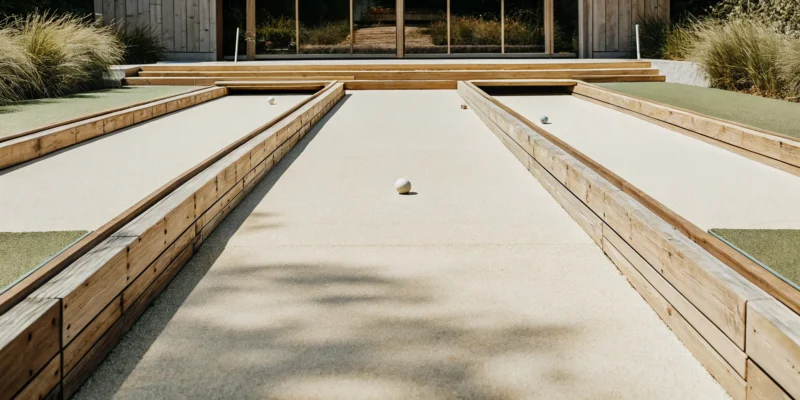
Here on Long Island, our backyards face it all: hot summer sun, heavy rain, and freezing winter nights. Your bocce court surface needs to handle these conditions without becoming a soggy, uneven mess. Drainage is everything. A material that holds water will quickly become unplayable and can lead to long-term damage. This is why selecting the best bocce courts floors materials for long island ny is about more than just looks; it’s about smart, weather-ready engineering. We’ll explore durable, all-weather solutions that stay ready for play year-round, making your court a practical and lasting addition to your home.
Key Takeaways
- Match your court surface to your lifestyle: Consider how you plan to play and how much upkeep you want to perform. Synthetic turf is ideal for low-maintenance family fun, while natural surfaces like oyster shell offer a classic experience for those who enjoy the traditional care routine.
- Prioritize a professional foundation: The secret to a lasting court is what’s underneath. A properly built base with excellent drainage is crucial for preventing an uneven, soggy playing surface and for handling Long Island’s diverse weather.
- Balance your budget with long-term upkeep: The cheapest material upfront is not always the most cost-effective choice. Factoring in future maintenance costs and time will help you see the value in a more durable, low-effort surface that fits your budget over time.
What Are the Best Materials for a Bocce Court?
Choosing the right surface for your bocce court is one of the most important decisions you’ll make. The material you pick affects everything from how the balls roll to how much time you spend on upkeep. It’s a choice that defines not just the game, but the entire look and feel of your outdoor space. Your court is more than just a place to play; it’s a feature of your backyard landscape, an extension of your home. The right surface will complement your home’s style while giving you the perfect playing experience. Think about what you want from your court. Are you looking for the classic, traditional feel of an Italian courtyard? Or do you prefer a sleek, modern surface that requires almost no maintenance? The good news is, there’s a material that fits your vision. From the authentic crunch of oyster shells to the smooth consistency of synthetic turf, each option offers a unique set of benefits. Let’s walk through the most popular options for Long Island backyards to help you find the perfect foundation for your new favorite pastime. Gappsi offers a wide selection of materials for building custom sports games courts that are both functional and beautiful, ensuring your new court is a perfect match for your lifestyle.
Synthetic Turf for Easy Upkeep
If you’d rather spend your weekends playing bocce than maintaining your court, synthetic turf is an excellent choice. This surface gives you a consistently smooth and level playing field without the constant work of natural grass. You can forget about watering, mowing, or weeding. Plus, modern synthetic turf is designed with superior drainage, so a little rain won’t sideline your game for long. It’s a durable, all-weather solution that stays green and ready for play year-round, making it a practical and attractive addition to any Long Island home. It’s all the fun with none of the fuss.
Crushed Oyster Shell for a Classic Feel
For the bocce purist, nothing beats the traditional feel of a crushed oyster shell court. This is the surface used in classic Italian courts, and it provides an authentic playing experience, complete with the satisfying crunch underfoot. Oyster shells drain well and offer a firm surface for a true ball roll. However, this classic charm comes with a commitment to maintenance. You’ll need to rake the court regularly to keep it level and clear of debris. It can also be a bit messy, but for those who love the game’s history, the extra care is a small price to pay for an authentic experience.
Decomposed Granite for a Natural Look
Decomposed granite, or DG, strikes a great balance between a natural aesthetic and a stable playing surface. This material is essentially fine gravel that compacts tightly to create a firm, smooth court that’s perfect for bocce. Its earthy tones blend seamlessly into almost any landscape design, giving your court a subtle, organic look. DG is also a durable and relatively low-maintenance option. Once it’s properly installed and compacted, it holds up well to foot traffic and weather. It’s a fantastic choice if you want a reliable court that feels like a natural part of your backyard.
Poured-in-Place Rubber for a Modern Touch
A poured-in-place rubber surface brings a modern, clean, and highly functional touch to your bocce court. This option is incredibly durable, low-maintenance, and provides a perfectly consistent ball roll every time. One of its biggest advantages is safety; the soft, cushioned surface is forgiving, making it a great choice for families with children. Poured rubber also comes in a wide range of colors, allowing you to customize the court to match your patio, pool deck, or home exterior. It’s a versatile and long-lasting material that combines high performance with contemporary style for your outdoor entertainment space.
How to Choose the Right Bocce Court Surface
Picking the right surface for your bocce court is about more than just aesthetics. It’s the single most important decision you’ll make for the quality of your game and the longevity of your court. The material underfoot dictates how the balls roll, how much maintenance you’ll be doing on weekends, and how well your court holds up to Long Island’s weather. Getting this choice right means more time playing and less time worrying about repairs or poor drainage.
Think of it as the foundation for years of fun. A surface that’s perfect for a casual player might not suit a competitive family, and a material that works in a dry climate might not be the best choice for our coastal weather. You want a court that not only looks great in your yard but also plays consistently and withstands everything from summer barbecues to autumn rain. It’s a significant part of your outdoor living space, so it’s worth taking the time to understand your options. To find the perfect fit, you need to balance three key elements: how you want to play, our local climate, and how much you plan to use the court. Let’s walk through what you need to know to make a choice you’ll be happy with for years to come.
Compare Playability and Ball Roll
The surface you choose is critical to the performance of your bocce court. Each material offers a unique playing experience, so it’s helpful to think about what kind of game you want. Are you looking for fast, competitive matches or a more relaxed, casual roll? Synthetic turf, for example, provides a consistent and smooth surface, allowing for a faster and more predictable game. It’s a great option if you want a professional feel right in your backyard.
On the other hand, natural surfaces like crushed oyster shell or decomposed granite offer a more traditional, classic feel. The ball roll might be slightly slower and less uniform, which many players feel adds to the authentic charm and challenge of the game. The choice really comes down to personal preference and how you envision using your court for backyard entertainment.
Consider Long Island’s Climate
Here on Long Island, we get a little bit of everything: hot summer sun, heavy rain, and chilly winters. Your bocce court surface needs to be able to handle it all. Drainage is the most important factor. A surface that holds water will quickly become a soggy, unplayable mess. Materials like crushed oyster shell are popular for a reason; they provide an ideal playing surface that drains exceptionally well, making the court ready for a game soon after a storm.
Properly installed synthetic turf and decomposed granite with a solid base layer are also excellent choices for managing moisture. The key is ensuring the entire court system, from the base to the surface, is designed to handle our specific weather patterns, preventing puddles and protecting your investment through every season.
Match Durability to How Often You’ll Play
How often do you see your family and friends gathering for a game? Your answer will help determine the best material for your lifestyle. If you anticipate frequent, high-energy matches with kids and neighbors, you’ll want a surface that can stand up to heavy foot traffic. While artificial turf is incredibly durable, a significant tear or imperfection could require a larger replacement.
For those who play often, a surface like crushed oyster shell is not only durable but also easy to maintain and patch yourself. Natural stone or porcelain pavers can also be used to create a highly durable, low-maintenance border or playing area. By matching the material’s resilience to your expected use, you ensure your court remains a beautiful and functional part of your landscape for the long haul.
What’s the Budget for a Bocce Court?
Figuring out the budget for your bocce court is a key step in bringing your backyard vision to life. The total cost depends on several factors, including the size of the court, the materials you choose, and whether you hire a professional for installation. Think of it as an investment in your home that adds a fun, social element to your outdoor space. While there’s a range of price points, understanding the breakdown helps you make a choice that fits your wallet and your long-term plans for your yard. From simple, classic surfaces to premium, low-maintenance options, there’s a solution for every budget.
Breaking Down Material Costs
On average, you can expect a professionally installed bocce court to cost between $30 and $40 per square foot. This price can shift based on a few important variables. The final size of your court is the biggest factor, but site accessibility also plays a role; a hard-to-reach backyard might increase labor costs. The materials you select, whether it’s natural stone or synthetic turf, will significantly influence the price. Finally, any custom features like built-in lighting, surrounding patios, or benches will add to the total project cost.
Weighing Upfront Cost vs. Long-Term Value
When budgeting, it’s smart to think about the long-term value, not just the initial price tag. For instance, synthetic turf has a higher upfront cost, but it’s the only surface that offers a truly low-maintenance experience. You won’t spend your weekends raking, weeding, or replenishing materials. Other surfaces like crushed stone or oyster shell might be more affordable to install, but they require consistent upkeep to stay in top playing condition. Investing more initially in a durable, easy-care surface can save you time, effort, and money over the years.
Find Quality, Budget-Friendly Options
You don’t need a massive budget to build a beautiful and functional bocce court. There are several excellent materials that offer great performance without the premium cost. Crushed stone and decomposed granite are popular choices that create a classic, firm playing surface. Another fantastic option is using oyster shell, which is not only affordable but also one of the most DIY-friendly surfaces available if you’re looking to save on installation. These materials prove that you can create a high-quality court that provides endless fun for family and friends while staying within a comfortable budget.
How Much Maintenance Does Each Surface Need?
The amount of time you spend maintaining your bocce court depends almost entirely on the surface you choose. Some materials offer a set-it-and-forget-it experience, while others require regular attention to stay in top playing condition. Understanding these differences will help you pick a surface that fits your lifestyle, ensuring you spend more time playing and less time working on your court. Let’s break down the typical upkeep for the most popular options.
Caring for Synthetic Turf
If you’re looking for the lowest maintenance option, synthetic turf is your answer. Modern synthetic turf is designed to be incredibly durable and clean. It requires no watering, mowing, or weeding, and its excellent drainage system means you can get back to playing quickly after it rains. You won’t have to worry about dust or displaced material, either. The most you’ll typically need to do is occasionally remove leaves or other debris with a leaf blower. This makes it a perfect choice for busy homeowners who want a beautiful, ready-to-use court all year round.
Maintaining Natural Surfaces
Natural surfaces like crushed oyster shell and clay offer a traditional aesthetic but come with more hands-on maintenance. Crushed oyster shell, a classic choice, provides great drainage but needs frequent raking and replenishing to keep the surface level and clean. It can also be a bit messy, with shells getting tracked into your home. Clay courts are tough and resist dents, but they drain poorly. This means you’ll need to manage water carefully and work to prevent the surface from becoming too hard or cracking, especially with Long Island’s variable weather.
Plan for Seasonal Upkeep
Regardless of your chosen surface, every bocce court benefits from some seasonal attention. The most important task is simply keeping it clean by clearing away fallen leaves, twigs, and other debris that can interfere with play or clog your drainage system. A solid base and proper drainage are the foundation of a low-maintenance court, preventing grooves and standing water from forming. Before winter, a final sweep and check of the perimeter will help ensure your court is in great shape when the playing season returns in the spring.
Avoid These Common Bocce Court Material Mistakes
Building a bocce court is an exciting project, but a few common missteps can turn your dream court into a maintenance headache. Choosing the right material involves balancing aesthetics, playability, and your budget. By thinking through your options and avoiding these frequent mistakes, you can create a beautiful, long-lasting court that your family will enjoy for years. It’s all about making informed decisions from the ground up.
Don’t Choose Based on Cost Alone
It’s tempting to pick the most affordable material and call it a day, but this approach can cost you more down the road. Cheaper materials often require more frequent maintenance, repairs, and even full replacement sooner than you’d expect. Think of your bocce court as an investment in your home. High-quality surfaces like professionally installed synthetic turf or properly sourced oyster shell blends offer better durability and performance. Spending a bit more upfront for a resilient material means less time and money spent on upkeep and more time playing.
Never Overlook the Base and Drainage
The success of your bocce court lies in what’s underneath. A solid base and a good drainage system are absolutely essential for preventing problems. Without proper drainage, your court can hold water after it rains, making it unplayable and leading to ruts or soft spots. A poorly constructed base will cause the surface to become uneven over time, ruining the game. A professional installation ensures the ground is properly excavated, graded, and layered to create a stable foundation that can withstand Long Island’s weather and keep your court in top shape.
Understand How Each Surface Plays
Not all bocce court surfaces are created equal when it comes to gameplay. The material you choose directly affects how the balls roll. For example, a crushed oyster shell court offers a traditional, slower roll, while synthetic turf provides a faster, more consistent playing experience. Decomposed granite falls somewhere in between. Before you decide, think about who will be using the court. Are you hosting competitive matches or enjoying casual family games? Understanding the unique playability of each surface helps you select one that matches your style.
Make Sure It Complements Your Landscape
Your bocce court should feel like a seamless part of your backyard, not something that looks out of place. Consider the overall aesthetic of your outdoor space. A natural surface like decomposed granite or crushed oyster shell can blend beautifully with lush gardens and stone patios. A modern synthetic turf court might be the perfect addition to a sleek, contemporary design. The goal is to choose a material that not only performs well but also enhances your home’s landscape design.
What Does Bocce Court Installation Involve?
Building a bocce court is more than just picking a surface and spreading it out. A proper installation is a multi-step process that ensures your court not only looks great but also plays perfectly and lasts for years. Think of it like building a tiny, specialized patio. The real magic happens underneath the surface, where a solid foundation and smart preparation prevent future problems like uneven spots, poor drainage, and pesky weeds.
From the ground up, every layer has a purpose. It starts with creating a stable base that can handle Long Island’s weather, followed by preparing the area to keep it low-maintenance. Finally, the finishing touches, like borders and surrounding landscaping, tie the court into your backyard’s design. Each step is crucial for creating a professional-quality court that becomes a favorite gathering spot for family and friends. At Gappsi, we handle every detail of our Sports Games Courts installations to ensure a flawless result.
Building the Right Base and Drainage
The secret to a long-lasting bocce court is a solid foundation. Without a proper base, your court can develop ruts, hold water, and become uneven over time. A well-built base provides stability and, most importantly, excellent drainage. This typically involves excavating the area and installing a system like a French drain buried in a layer of gravel. This setup ensures rainwater flows away from the playing surface, preventing puddles and protecting the court materials. Over the gravel, a special stabilizing fabric and rigid base panels create a perfectly level and durable foundation for years of play.
Preparing the Surface and Preventing Weeds
Before the final surface material goes down, a little prep work goes a long way in keeping your court looking its best. One of the most important steps is laying down a high-quality weed barrier. This special fabric is placed underneath the base layers to stop weeds and grass from growing up through your court. It’s a simple but effective solution that drastically cuts down on future maintenance. This proactive approach is a core part of any good landscape design, ensuring your new bocce court remains a beautiful, hassle-free feature in your yard.
Integrating Borders and Landscaping
The borders, or sideboards, are what officially define the playing area and keep the surface material contained. They are typically about six to eight inches high and can be built from a variety of materials to match your home’s aesthetic. Wood offers a classic, rustic look, while concrete or landscape wall blocks provide a more permanent and polished finish. The right border not only serves a practical purpose but also helps integrate the court seamlessly into your backyard. You can use beautiful natural stone pavers to create a border that complements a nearby patio or walkway.
Key Factors to Guide Your Decision
Choosing the right material for your bocce court is about more than just looks. It’s about creating a space that fits your family’s lifestyle, stands up to the local weather, and complements your home’s design. Thinking through a few key factors will help you land on the perfect surface that you’ll enjoy for years to come. Let’s walk through what you should consider before you break ground.
How You’ll Use the Court
First, think about who will be playing. Are you planning casual weekend games with the kids, or are you a serious player looking to host competitive matches? The answer will point you toward the right surface. For family fun, a forgiving material like synthetic turf is a great choice because it’s soft, consistent, and handles a lot of activity. If you’re aiming for tournament-level play, a traditional surface like crushed oyster shell or decomposed granite offers a classic, fast roll. The choice of material is critical to the court’s performance, so matching it to your playing style is the first step to building a court you’ll love.
Long Island’s Weather
We all know Long Island weather can be unpredictable. From humid summer days to freezing winter nights, your bocce court needs to handle it all. Materials like sand can become a headache, compacting too much in the rain or getting too loose when it’s dry. A professionally installed court with a proper base and drainage system is essential to prevent heaving and cracking. Surfaces like synthetic turf and poured-in-place rubber are designed to drain efficiently and withstand our freeze-thaw cycles, making them durable, year-round options for your backyard.
Your Commitment to Maintenance
Be honest with yourself about how much time you want to spend on upkeep. Natural surfaces like crushed oyster shell and decomposed granite look beautiful but require regular maintenance. You’ll need to rake, water, and roll them to keep the surface smooth and playable. If you’d rather spend your time playing than maintaining, a low-maintenance option is your best bet. Artificial turf, for example, only needs occasional rinsing and brushing to stay in top shape. Thinking about long-term care now will save you a lot of work later and ensure your court always looks its best.
Your Backyard’s Overall Design
Your bocce court should feel like a natural extension of your home and landscape. The material you choose plays a big role in the overall aesthetic. Do you have a rustic, naturalistic backyard? Decomposed granite or crushed stone might blend in perfectly. If your home has a more modern or manicured look, the clean lines and consistent color of synthetic turf can create a polished feel. We can help you integrate your court into a cohesive landscape design that includes surrounding patios, walkways, and plantings for a truly seamless outdoor living space.
Where to Find Bocce Court Materials and Installers in Long Island
Once you have a vision for your bocce court, the next step is finding the right materials and the right team to bring it to life. For homeowners on Long Island, this means looking for a local partner with proven expertise in outdoor construction and access to high-quality supplies. A great bocce court is more than just a playing surface; it’s a well-engineered space that requires a solid foundation, proper drainage, and durable materials that can handle both gameplay and the local weather. Partnering with a company that understands these details is the key to building a court you’ll enjoy for years to come.
Why Choose Gappsi for Your Bocce Court
When it comes to creating custom bocce courts on Long Island, Gappsi is a specialized designer and builder for both homes and commercial properties. We handle every detail of the installation, offering a personalized service that matches your specific vision. You can choose from a wide variety of high-quality surfaces, including classic bluestone dust, low-maintenance synthetic turf, clay, or even our unique crushed marble dust. We work with you to design a court that fits your needs perfectly, whether you’re planning for casual family games or more competitive play. Our goal is to give you a range of excellent choices in materials and design so the final result is exactly what you imagined.
Finding Local Material Suppliers
The surface you choose is critical to your court’s performance and appearance. While you can find suppliers for common materials like crushed stone or oyster shells, sourcing the best options requires a good understanding of what makes a great playing surface. You have to think about playability, aesthetics, durability, and the level of maintenance you’re willing to commit to. Instead of spending your time vetting different suppliers, working with an established installer simplifies the process. We source a wide selection of premium porcelain and natural stone pavers and other materials, ensuring you get top-tier quality without the headache of coordinating multiple vendors.
Partner with a Professional Installer
Building a bocce court correctly is a complex project that requires real expertise. A professional installation ensures the court is built to last, giving you a durable and high-performing playing area. The most critical steps, like preparing a solid base and creating an effective drainage system, prevent future problems like ruts or water damage. A professional team will handle the essential site preparation and add the right edging to protect the court’s structure. With our deep experience in masonry design and construction, we build bocce courts with a solid foundation, ensuring stability and function for the long haul.
How to Make Your Bocce Court Last
A bocce court is a fantastic addition to your backyard, a place for fun, laughter, and friendly competition. To keep the games going for years to come, a little bit of care goes a long way. The longevity of your court starts with a solid, professional installation, but consistent maintenance is what truly protects your investment. By following a few simple steps, you can ensure your court stays smooth, level, and ready for play, no matter the season. It’s all about being proactive and understanding what your specific court surface needs to stay in top condition for endless enjoyment.
Keep Up with Regular Cleaning
Many homeowners find that keeping a bocce court clean and level is easier than they imagined, especially when they choose the right material from the start. For instance, a court made with synthetic turf simply needs regular brushing to clear away leaves and debris. A quick rinse with a hose can wash away dust, and using a stiff brush keeps the fibers standing tall for a perfect roll. If you have a natural surface like decomposed granite or oyster shells, regular raking is your best friend. This simple task removes debris and keeps the surface perfectly even, preventing low spots where water might collect. A little routine cleaning goes a long way in preventing bigger issues down the road.
Prevent Common Maintenance Problems
The best way to handle maintenance problems is to stop them before they start. A proper base and drainage system are crucial for preventing ruts and ensuring water drains away correctly, which is why professional installation is so important. Some surfaces, like crushed oyster shell, require regular maintenance like raking, watering, and rolling to stay in top shape. This keeps the surface compact and smooth for consistent play. It’s also a good idea to periodically inspect your court’s borders. Well-built masonry or wood borders should remain stable, but catching any shifting early can prevent bigger problems. For natural surfaces, staying on top of any weeds that pop up will keep your court looking pristine.
Protect Your Court Through the Seasons
Long Island weather brings a mix of everything, from sunny summer days to snowy winters, and your court needs to be ready for it all. Materials like synthetic turf have excellent drainage, so water doesn’t pool on the surface, and you can get back to playing soon after it rains. For any court type, proper grading and a well-designed drainage system are key to managing rainwater effectively. During the winter, you might consider covering a natural surface court to protect it from erosion. If you have a turf court, be sure to remove snow gently to avoid damaging the fibers. A little seasonal attention ensures your court can handle whatever the weather brings and remains a beautiful feature of your yard.
Related Articles
- bocce court contractors Archives – Gappsi Group
- bocce court construction in Long Island Archives – Gappsi Group
- Bocce Ball Court Archives – Gappsi Group
- bocce court installers Archives – Gappsi Group
- bocce courts in Long Island Archives – Gappsi Group
Frequently Asked Questions
Which bocce court surface is truly the easiest to take care of? If your goal is to spend more time playing and less time working, synthetic turf is the clear winner. It requires almost no upkeep beyond occasionally clearing off leaves and debris. Unlike natural surfaces such as crushed oyster shell or decomposed granite, you will not need to rake, water, or roll it to keep it level. It provides a consistently clean and ready-to-play surface year-round.
How important is the base of the court? Can I skip it to save money? The base is the most critical part of your entire bocce court. Skipping or cutting corners on the foundation is a mistake that will lead to costly problems later. A professionally installed base provides essential stability and drainage, preventing the surface from becoming uneven, developing ruts, or holding water after it rains. It is the key to a long-lasting court that plays well for years.
What’s the best surface for a family with kids and pets? For a busy backyard with lots of activity, you need a surface that is both durable and safe. Synthetic turf is an excellent choice because it can withstand heavy foot traffic and constant play without developing bare spots. Another great option is a poured-in-place rubber surface, which provides a soft, cushioned feel that is very forgiving and helps minimize scrapes from falls.
Can a bocce court fit in a smaller Long Island backyard? Absolutely. While there are regulation dimensions for competitive play, a backyard court can be customized to fit the space you have available. You don’t need a massive yard to enjoy the game. We can design a beautiful, functional court that works with your landscape’s specific size and shape, ensuring it feels like a natural part of your outdoor living area.
How long does the installation process usually take? The timeline for installing a bocce court can vary depending on the size, chosen materials, and the specific conditions of your property. A professional installation is a thorough process that includes excavation, building a proper base and drainage system, and carefully laying the final surface. Generally, you can expect the project to take several days to a couple of weeks to ensure every step is completed correctly for a durable, high-quality result.