


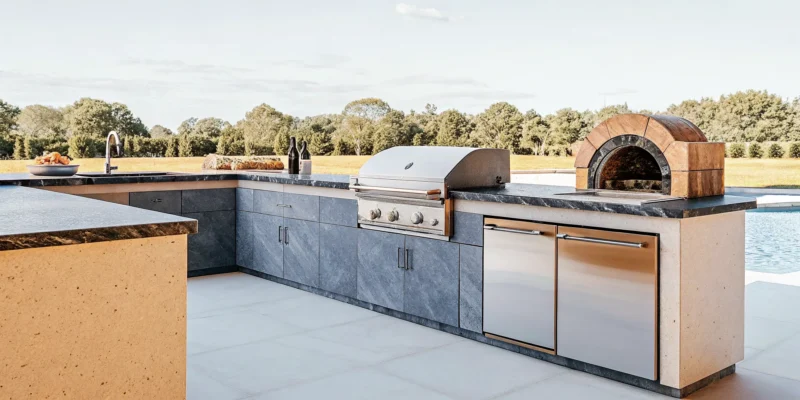
Outdoor kitchen appliances turn a patio cooking area into a practical place to prepare meals and host guests. Plan the built-in grill, outdoor-rated refrigerator, burners, sink, and specialty equipment before construction so every cutout, utility line, ventilation detail, and work zone fits the way you cook.
Schedule an outdoor kitchen design consultation with Gappsi.
Start with the outdoor kitchen appliances you will use most
Planning your outdoor cooking space begins with how you want to spend your time. Most people want a spot that makes it easy to grill, eat, and talk with friends. You should think about which outdoor kitchen appliances will serve your daily needs. It is best to focus on the items you will use every time you step outside.
A good plan helps you avoid buying things you do not need. Start by looking at your current habits. If you love to host large groups, you might need a large grill. If you just want quick meals for two, a smaller setup is better. Getting the right size for your planning your outdoor kitchen layout will make the space more useful.
The center of your cooking area
The grill is often the most used part of any setup. It acts as the heart of the kitchen where you will do most of your work. You can find many high-quality outdoor kitchen appliances that fit into custom stone islands. A built-in model offers a clean look and long-lasting strength.
Choose a grill that offers the heat and space you need for your top foods. Some models have side burners for sauces or searing. Others include rotisserie kits for slow cooking. Think about how many people you often feed. This helps you pick a unit that can handle the load without wasting fuel.
Cold storage for drinks and food
Keeping food at the right heat is key for safety and fun. You do not want to run back and forth to your indoor kitchen all day. Having reliable outdoor kitchen refrigerators keeps cold drinks and raw meat close to the grill. This makes the whole work much smoother.
Outdoor-rated units are built to handle the sun and rain. They use heavy insulation to keep things cold even on hot Long Island summer days. Many units also have locks to keep items safe when you are not there. These small details make a big change in how you use your deck or patio.
Fresh air and better health
Cooking outside does more than just give you more room. It can also help keep the air inside your home cleaner. Indoor stoves, mostly gas ones, can release chemicals like carbon monoxide into your rooms. These pollutants can get trapped without a strong vent. Moving your cooking outside allows these gases to blow away in the wind.
Studies show that outdoor cooking can reduce indoor pollutants by keeping smoke and heat away from your living areas. This choice makes your home a safer place for your family. It also helps you stay close to nature. Being near greenspaces is linked to a lower risk of health issues like heart disease and diabetes.
Think about your power and gas lines early in the work. You will need gas lines for your grill and power for your fridge. Running these lines before you finish your masonry saves time and money. Gappsi helps you plan these steps so your outdoor kitchen appliances work well from the first day.
Which cooking appliances earn their space?
The appliances that earn their space are the ones matched to your regular menu and hosting style. Most kitchens start with a built-in grill, then add a side burner, griddle, pizza oven, or smoker only when that appliance will be used often enough to justify its counter space and utility needs.
Good planning your outdoor kitchen layout starts with the right tools. You want to pick tools that fit your style and how you like to cook. Choosing high-quality outdoor kitchen appliances helps you make great food for your friends and family. They also help keep your home safe. Indoor gas stoves can fill your home with harmful gases like nitrogen dioxide. By moving your cooking out of the house, you keep these fumes from getting trapped in your living rooms. This makes your air much cleaner for everyone inside.
Think about how often you will use each unit before you buy it. Each choice takes up room on your counter and in your budget. You must balance the cost with how much joy and use the tool will bring. A well-set-up space makes it easy to host and cook at the same time. You will spend less time in the house and more time with your guests.
The core of your outdoor kitchen
The main tool in most yards is the built-in grill. This unit is the workhorse of your space. You can pick a gas grill if you want to start cooking fast. A charcoal grill takes more time but gives the food a deep smoke taste. Many top models have three or more zones. This lets you sear meat on one side and cook slow on the other. Look for a grill made of thick stainless steel. This metal will not rust when it rains or snows on Long Island.
Flat top griddles are also common now. They are great for making a full breakfast or thin burgers. You can cook eggs, bacon, and pancakes all at once. The flat surface gives you a lot of room to move food around. It is easy to clean and fun to use for a large crowd. Many chefs like to have both a grill and a griddle to cover all their needs. This setup lets you cook almost anything you can think of in your yard.
Add more ways to cook
Side burners are small but helpful. They let you boil a pot of corn or heat up a sauce right at your grill. You do not have to walk back and forth from the house. This saves you steps and keeps you in the mix. Some high-heat burners can even be used for a large wok or a deep fry pot. These units are easy to add to a small space. They give you a lot of power without taking up much room.
A pizza oven can change the way you host. These ovens get much hotter than the one in your house. They can bake a fresh pizza in just two or three minutes. The high heat makes the crust crisp and the cheese bubbled. You can also use them to roast meat or bake bread. They come in many sizes, from small table units to large built-in stone ovens. It is a great way to make mealtime a fun thing for kids and adults.
Keep things cool and close
Having reliable outdoor kitchen refrigerators is a must for any big plan. You need a place to keep raw meat and cold drinks near your grill. A good fridge is built to handle the heat of a Long Island summer. It will have a strong seal and a motor that can work in high temps. This keeps your food at a safe level so it does not spoil. It also keeps you from having to go in and out of the house all day long.
Storage is the other part of a good plan. You need drawers and doors to hold your tools and fuel. This keeps your space clean and ready to use. Keep your tongs, brushes, and trays in the island so they are always at hand. Use doors that seal tight to keep out bugs and dust. When everything has a place, you can cook with less stress. You will find that you use your yard much more when it is easy to set up and clean up.
| Appliance Type | Best Use | Space Needed | Fuel Source |
|---|---|---|---|
| Built-in Grill | Main meals and searing | Large | Gas or Charcoal |
| Side Burner | Sauces and boiling | Small | Gas |
| Pizza Oven | High-heat baking | Medium | Wood or Gas |
| Flat Top Griddle | Breakfast and burgers | Medium | Gas |
| Power Burner | Large pots and frying | Small | Gas |
Talk with Gappsi about the appliance mix and utility plan for your Long Island outdoor kitchen.
Plan refrigeration and beverage service early
A great outdoor space needs a way to keep food and drinks cold. When you plan your layout, think about where your guests will sit and where you will cook. Adding the right cooling tools saves you from many trips back and forth to the house. It also makes your backyard feel like a full living space where you can relax for hours.
Pick the right outdoor-rated units
You must choose outdoor kitchen appliances that can handle the local weather. Standard indoor fridges are not built to stay outside in the sun or rain. They may fail if the heat level drops too low or gets too high. Units made for the outdoors have better seals and stronger parts to resist rust and wear.
Most experts suggest looking for a UL rating for outdoor use. These units use high-grade steel that holds up well against salt and damp air. Using reliable outdoor kitchen refrigerators keeps your food cold and safe even on hot days. This setup also helps keep smoke and heat out of your house while you host. By moving your cooking and cooling outside, you help keep your house air clean. This vents gas and heat into the open air instead of trapping it inside (source).
Keep drinks cold and ready
Beverage centers are a top choice for those who love to host. They often have glass doors so you can see what is in stock at a glance. You can also add an ice maker to ensure you never run out of ice for drinks or sodas. These tools make it easy for guests to help themselves without getting in the way of the cook.
Consider how much storage you need for different items. Some units have zones with different heat levels for wine and beer. You might also want a small drawer for fresh fruit or snacks. Having these items close by helps you stay part of the party instead of spending your time in the house.
Layout for easy hosting
Where you put your fridge and ice maker matters just as much as what you buy. Put them near the prep area. Keep them far enough from the grill so they do not get too much heat. It is also wise to place the beverage center near the edge of the kitchen. This lets people grab a drink without walking through the main cooking zone.
Make sure you plan for power needs early in the build. Running electric lines is much easier before you lay down the patio or build the island. Talk to your builder about where the plugs should go so they stay dry and out of sight. A well-planned layout keeps your workspace clear and your guests happy.
Build a practical prep and cleanup zone
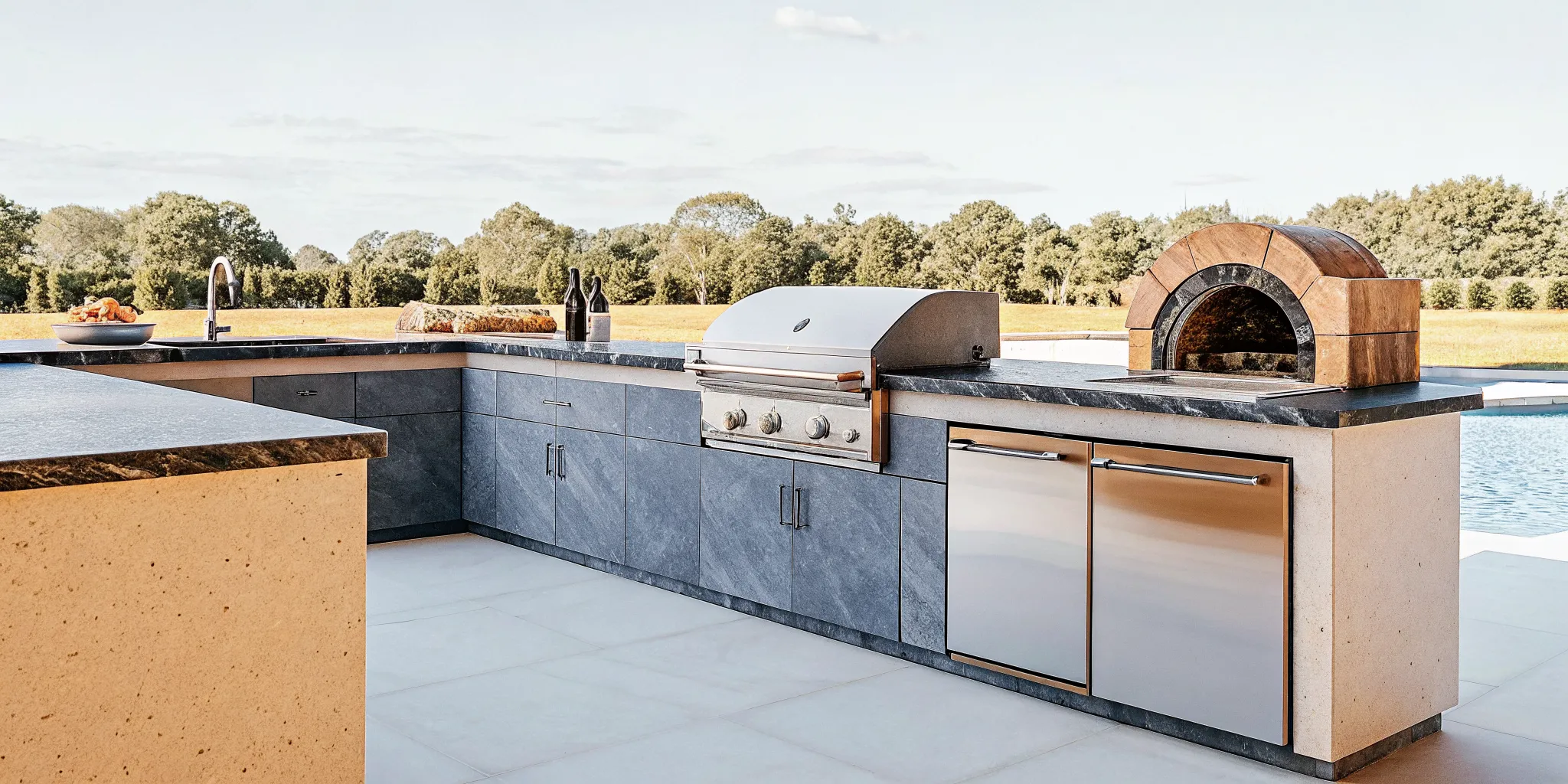
A great outdoor cooking area needs more than just a grill. To keep the flow smooth, you must plan for prep and cleanup. Shifting your food tasks outside helps keep your home clean. It also stops you from running back and forth to your indoor kitchen. Research from the National Institutes of Health shows that cooking outside can lower indoor air risks by moving heat and smoke away from your living rooms.
Include a sink and prep space
A sink is the heart of a cleanup zone. It lets you wash your hands, rinse fresh produce, and clean up small spills without going inside. You will need a cold water line at the very least. If you plan to wash greasy pans, consider adding a hot water line too. Pair your sink with a wide counter. This gives you plenty of room to chop food or set down heavy plates near your high-quality outdoor kitchen appliances. At Gappsi, we often use natural stone or porcelain for these tops because they handle the Long Island weather well.
Manage trash and storage
Trash can be a big problem if you do not have a place for it. A pullout trash bin keeps waste out of sight and stops pests from getting in. You should also add sealed storage for your tools. This keeps your tongs, brushes, and wipes dry and ready to use. Using reliable outdoor kitchen refrigerators nearby also helps. You can keep raw meat and cold drinks right where you need them. This setup makes your prep work much faster and safer.
Plan your prep and cleanup steps
To get the best results, follow these steps to set up your zone:
- Pick a spot near your grill for the sink and prep counter.
- Install a deep sink that can handle large pots and pans.
- Set up a pullout trash drawer below the prep counter.
- Add task lighting above the sink for safe use at night.
- Check all utility lines like water and gas before you finish the masonry.
Good lighting is a must for any cleanup spot. You need to see clearly when you use sharp knives or clean the grill. We suggest LED lights that point down onto the counter. This keeps the glare out of your eyes while you work. When you plan your outdoor kitchen layout, think about the distance between each station. A tight work triangle will save you time and energy on every meal.
What makes an appliance suitable for a Long Island backyard?
A suitable Long Island outdoor appliance is explicitly rated for outdoor use, built from corrosion-resistant materials, and installed according to its ventilation and utility specifications. It also needs a seasonal care plan for humid summers, coastal salt exposure, freezing temperatures, and winter precipitation.
Long Island weather can be tough on your home gear. Between the salt air from the coast and the humid summers, you need parts that last. Picking the right high-quality outdoor kitchen appliances is the first step to a long-lasting space. You should look for units made to handle the local climate in Nassau and Suffolk County. Choosing the right gear ensures your yard stays fun and useful all year.
Tough metals for coastal weather
When you pick gear for your yard, look for high-grade stainless steel. Type 304 stainless steel is a top choice because it resists rust well. This is key if you live near the water. Salt and damp air can eat through cheap metal fast. Good steel keeps your grill and fridge looking new for many years. Gappsi helps you choose these parts from our store. We pick gear that works well with our custom stone walls and masonry.
You also want to find units with thick doors and tight seals. These help keep dust and rain out of the inner parts. For example, good outdoor rated fridges use extra foam to keep food cold even on a hot July day. These items are built to work in a wide range of outdoor temps. Our team knows how to fit a pizza oven or a large grill into a custom brick island for a clean look.
Outdoor safety and fuel needs
Safety is a big part of planning your outdoor kitchen layout. Indoor stoves can trap bad gases like nitrogen dioxide inside your home. Using a grill or stove in your backyard helps move these risks outside where the air flows freely. This makes your cooking space safer for everyone. We make sure your gas or electric lines are safe and meet all local codes in your town.
Proper airflow is still needed for your outdoor gear. If your grill is set into a stone wall, it must have a vent. This lets heat and gas escape safely. Always check the rules from the maker to keep the right space around each unit. This stops fires and helps your gear work the right way. Gappsi can also help with permits so you do not have to worry about the forms for your new project.
Winter care for your gear
Long Island winters can be very cold and snowy. Most outdoor gear needs a little help to stay safe during the winter. You should use a cover for your grill and pizza oven when you are not using them. This keeps ice from building up in small spots. It also stops rain from getting into the gas lines. Our team often suggests using covers that fit your gear to get the best fit and safety.
Before the first freeze, you must turn off the water to your outdoor sink. Drain the lines so they do not burst or crack. If you have a fridge, you may want to turn it off and clean it out for the season. Some people leave their fridges on, but you should check if yours is rated for freezing weather. Taking these steps helps your yard stay ready for the first warm day of spring. Having one team handle the design and the build makes this care easy to plan.
Why should appliances be selected before construction?
Select appliances before construction because each model has exact cutout, clearance, ventilation, fuel, electrical, water, and drainage requirements. Final specifications let the design-build team place utilities correctly and build masonry or cabinetry around the selected equipment, reducing the risk of expensive changes later.
Planning a cooking space in your yard needs a clear path from the start. You must choose your outdoor kitchen appliances before any masonry or gas work begins. This choice sets the size and spot for every utility line. If you wait until after the base is built, you may face costly changes. Selecting items early ensures that your stone or wood frames match the exact needs of your gear.
Accurate utility and gas lines
Every grill, burner, and fridge has unique needs for power and fuel. For example, a built-in grill like the high-quality outdoor kitchen appliances from Hestan needs specific gas line spots. Some units use natural gas while others need a tank. Water lines for sinks and drains also must be set in the base before the stone is laid. Shifting these lines after the build starts is hard and adds to your bill.
Proper airflow is also vital for safety and performance. Gas units can emit nitrogen dioxide and other pollutants that need to clear the area quickly. Research shows that cooking with gas can release hazardous chemicals if the space is not set up right (NCBI). By picking your gear first, your team can plan for vents and open paths that keep the air safe for your family and guests.
Seamless masonry and cabinetry fit
Outdoor cabinets and stone islands are built to fit the gear they hold. Most high-end units need a precise cutout to stay level and secure. When planning your outdoor kitchen layout, even a small error in size can ruin the look of your custom masonry. Pre-selecting your items lets your builder use the actual specs for the cutouts. This step ensures that your fridge and grill sit flush with the counter for a clean finish.
A unified design-build process helps you avoid these common pitfalls. You can visit a showroom to see and measure the gear in person. This lets you confirm the finish and style of your reliable outdoor kitchen refrigerators before the first stone is set. When your builder has the specs in hand, they can craft a kitchen that looks and works as you planned from day one.
How do you choose the right appliance mix?
Choose the right appliance mix by ranking what you cook, how many people you host, and which tasks should happen outside. Then compare available space, workflow, utility capacity, maintenance, and storage. Prioritize frequently used equipment first, and reserve specialty appliances for cooking methods you genuinely enjoy.
Choosing the best set of tools for your space is a big part of a great home project. You want to pick items that fit your life and how you like to cook. It is not just about the biggest grill. It is about how each part works with the others to make your yard a fun place to be.
Know your cooking habits
Think about what you make most often. If you love a good steak, you will need high-quality outdoor kitchen appliances like a large built-in grill. If you prefer home-made pizza, you might want to add a stone oven. Gappsi offers top brands like Giotto and Moderno to help you get the best crust every time.
Some people want a full outdoor bar while others just need a spot to keep drinks cold. Your choice should match your style. Do not buy a lot of gear you will not use. Focus on the tools that will make your time outside better and more fun.
Consider your guest count
Think about how many people you usually host. A small family needs less space than a large crowd. If you have big parties, you may need a second sink or a larger fridge. Having reliable outdoor kitchen refrigerators keeps food fresh and safe without you having to run inside all day.
Using these outdoor tools can also help your home stay clean and safe. When you cook outside, you keep heat and smoke away from your indoor rooms. Shifting these tasks to your yard helps lower the level of trapped air pollutants like carbon monoxide inside your house.
Plan for layout and utilities
The spot where you put your gear matters. You must think about gas lines, water pipes, and power outlets early in the process. When you are planning your outdoor kitchen layout, you should keep the most used items close together to save steps.
- Place your grill where the wind will carry smoke away from guests.
- Keep cold storage away from high-heat areas to save energy.
- Make sure you have enough counter space near the stove for prep work.
- Plan for light so you can see what you are doing after the sun goes down.
You should also think about how easy it is to clean your new space. Choose materials that can stand up to the local weather on Long Island. Stone and high-grade steel are good choices because they last a long time. They keep your kitchen looking new for many years with very little work.
See how appliance planning fits into a complete outdoor kitchen design, from the cooking island and counters to utilities and entertaining zones.
Visit the Gappsi showroom or request a consultation before finalizing your appliance list.
Frequently Asked Questions
Can outdoor kitchen appliances stay outside during winter?
Yes, most top-tier units can stay in your yard all year. You should look for tools made of high-grade steel. This metal stops rust and damage from salt air on Long Island. During the cold months, it is smart to use a tight cover to keep out snow. You must also drain all water lines for sinks or ice makers. This stops the pipes from freezing and breaking when it gets very cold.
Do I need a vent hood for my outdoor kitchen appliances?
You need a vent hood if your grill is under a roof. This fan pulls smoke and grease away from your house. It keeps your ceiling clean and safe from fire. Shifting your cooking tasks outside can also keep your indoor air fresh. As shown in a study in Environmental Health Perspectives, moving these tasks outside cuts indoor fumes like carbon monoxide. A hood makes sure these fumes do not drift back inside your home.
What is the best way to clean outdoor stainless steel appliances?
You should wipe your tools with a soft cloth and warm, soapy water. Always rub with the grain to avoid marks. For tough spots, use a cleaner made just for steel. Do not use steel wool as it can harm the surface. Wiping your items after each use stops grease and salt from building up. This keeps your yard space looking new and helps your tools last for a long time. It is a simple way to protect your buy.
How do I choose between gas and electric outdoor kitchen appliances?
Pick the one that fits the power lines in your yard. Gas tools like grills and burners heat up fast. They are great for high-heat cooking. Electric items like fridges and some ovens are easy to plug in and use. You should think about the cost of adding gas lines versus using more power. Both types work well if they are built for the weather. Talk to a pro to see which setup is best for your home and budget.
Start Planning Your New Outdoor Kitchen Today
Waiting to start your project might cause you to miss the best weather because top gear often has long wait times during the busy season. If you start your design now, we can help you get the right permits and choose high-quality gear so your kitchen is ready for summer. Choosing a single team for your design and build needs saves you time and ensures your high-end gear fits perfectly into your new stone island. By taking action today, you avoid the stress of last-minute changes and can look forward to hosting friends in a space built just for you.
Ready to get started? Schedule an outdoor kitchen design meeting with our experts to build your dream space now for your home.