


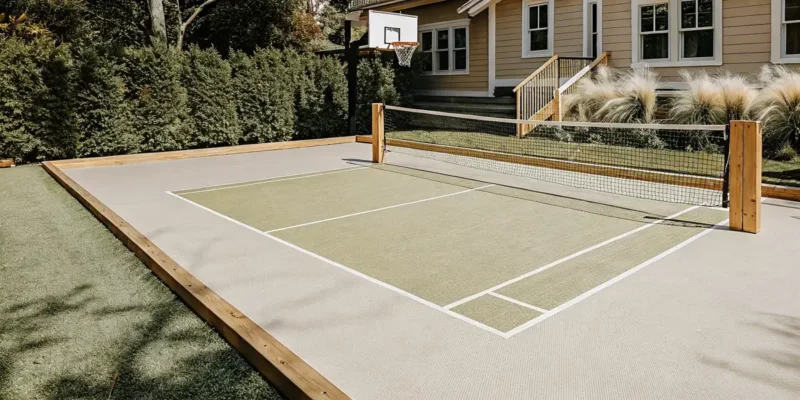
Long Island properties often lack the space for two separate outdoor game areas.
Contact Gappsi to plan your combined basketball and pickleball court.
A basketball and pickleball court combined layout allows you to enjoy two popular games in a single space. This design uses a standard basketball area and adds the right lines needed for pickleball play. Since both games work well on hard surfaces like concrete or asphalt, you do not need to change the base type to switch sports. Homeowners on Long Island often choose this option to save space while making the most of their backyards. Gappsi Group provides complete design-build service for Sports Games Courts that includes 3D design, site prep, and final building. By using one court for many games, you can avoid the high cost and land use of building two other areas. This approach ensures your yard remains open and useful for other family fun through the year.
Many people worry that mixing two sports might ruin the play for both. You need to know if one surface can truly handle the needs of every player. We will address these concerns and answer the big question: Can basketball and pickleball share one court? The path begins with…
Basketball And Pickleball Court Combined: Can basketball and pickleball share one court?
Yes, these two top sports can share the same space with ease. A basketball and pickleball court combined is a smart choice for many homes. This setup lets you play both games without needing twice the land. It works well on Long Island where yard space is often tight. Families can enjoy both sports in one area.
Planning a joint game space
To make this work, you need the right floor. You can use asphalt, concrete, or tiles like Matflex. These parts give a firm and even bounce for both balls. Picking a tough floor is key to keeping the area safe for years. Top parts help ensure your playing surface stays tough through all types of weather. This choice is vital for long-term use.
Gappsi does the full build for these areas. They offer a complete design-build service that starts with a 3D plan. This helps you see how the court fits in your yard before work starts. Their team also takes care of permits and site prep like grading and drainage. Having one team for the whole job saves time and stress for the owner.
Court size and layout
Pickleball and basketball have their own needs for size. An official pickleball court is 20 feet wide and 44 feet long for both singles and doubles. Basketball needs can vary, but most home courts are smaller than a pro floor. When designing a combined basketball and pickleball court, you must plan for both sets of lines. Good layout ensures that one game does not get in the way of the other. This makes the court useful for all.
You can use a multi-sport net that is easy to move. Some nets can move up for games like tennis and down for pickleball. For basketball, the hoop stays at one end or on the side. This smart design makes the most of every square inch of your land. It allows for a fast switch between sports when you want to play a new game.
Surface care and lines
The lines on a multi-use court use bold colors to help players. This makes it clear which line belongs to which sport. It prevents a mix-up during fast play. Good paint or colored tiles make the court look organized and polished. You can pick colors that match your home or your best team.
Keeping the court in good shape is vital for safety. Frequent cleaning and care will help the floor last a long time. Experts suggest that proper court construction and care are the best ways to protect your value. A well-built backyard multi-sports game court adds value to your home. It gives your family a place to stay active right at home. Gappsi uses their years of skill to build these Sports Games Courts for Long Island families.
- Full turn-key design and build.
- Tough Matflex, concrete, or asphalt floors.
- Custom line colors for clear and easy play.
- Expert site prep including grading and drainage.
- Local Long Island service since 1987.
Choose a court footprint that fits your property
Picking the right size for a basketball and pickleball court combined takes smart planning. You need to look at how much land you have and how you will use it. A standard pickleball court is 20 feet by 44 feet for both singles and doubles play. While a pro court is 94 feet by 50 feet, most Long Island homes use custom sizes to save space. Gappsi helps you find a mix that fits your yard and meets your play needs.
Small and mid-size court plans
If you have a small yard, a tight court is often the best choice. These plans often focus on one hoop and a full pickleball area. This lets you have a combined basketball and pickleball court without taking up the whole lawn. A 30 by 60 foot plan is a top mid-size pick on Long Island. It gives you enough room for a three-point line and a full pickleball match. Using designing a combined basketball and pickleball court steps helps you use every inch of your land well.
Zoning and safety rules
Before you build, you must think about local rules and safe play zones. Setbacks are the gaps needed between the court and your fence or house. Water flow and drainage are also key, mostly on Long Island where soil types change. Gappsi handles all Sports Games Courts permits and site work to ensure your project meets town laws. Safe play zones add a few extra feet around the edge to stop hits or falls. This extra space helps keep players safe if they run off the main court surface.
Comparing common court sizes
Different yard sizes need different plans for the layout. The table below shows common sizes used for home projects. Keep in mind that these are just ideas, and Gappsi can build any custom size you want.
| Court Size | Best Use Case | Main Benefit |
|---|---|---|
| 25′ x 45′ | Small backyard spots | Fits in most standard lots |
| 30′ x 60′ | Normal home yards | Includes three-point line |
| 44′ x 64′ | Large estate lands | Full pickleball with runoff |
| Custom | Odd yard shapes | Matches property lines well |
Using good materials is the best way to make sure your surface lasts. Quality materials and installation help keep the playing surface safe and durable for years. Whether you pick a 30 by 60 plan or a small layout, the goal is to have the most fun. Gappsi offers a multisport game court project plan that covers everything from 3D design to final lines.
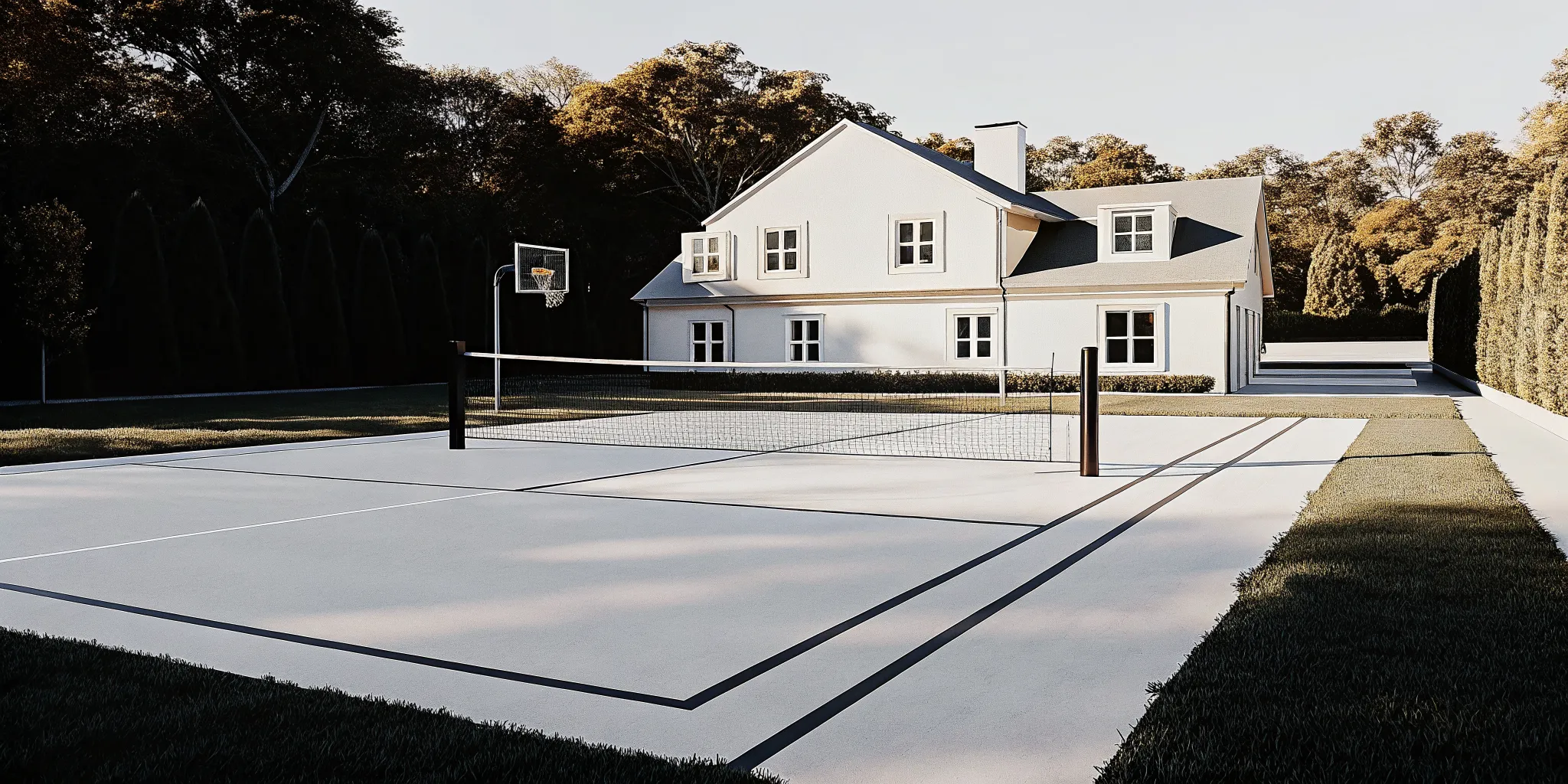
Plan the base, drainage, and playing surface
You can start designing a combined basketball and pickleball court for your yard today. It starts with a good plan for what goes under the top layer first. A strong base keeps the court flat and safe for many years of play. Whether you use stone, asphalt, or tiles, the base must hold up the weight of the players. Gappsi helps you choose the right base for your yard.
Choosing the right base type
Most people choose a concrete slab or an asphalt base for their Sports Games Courts. Concrete gives you a very firm floor that does not move. It is a great choice for a court that needs a true ball bounce. Asphalt is a bit more flexible and can cost less at first. But it may need more care as the years go by.
Some yards work better with a thick stone base. This can be a good pick if you want a court that is easy to fix later. Gappsi looks at your land to see which base will work best. They take care of all the hard work to make sure your base is ready for the game.
Site prep and drainage ways
Long Island has many types of soil. Some areas have sand, while others have more clay. This changes how you build a court. Sand drains well, but it can shift if it is not packed down. Clay holds water, which can be a problem in the winter. Expert site work includes moving the topsoil to reach the firm ground below. This keeps the court from sinking or tilting. Gappsi uses the best tools to test the soil on your property. They make sure the ground is stable before they pour any concrete.
Water is the biggest enemy of a new court. Heavy rain and snow can make deep pools or ice if the court does not drain well. This stops water from sitting under the base. Water under the base can cause the floor to crack or sink. Good water flow involves the land around the court too. You want the water to move away from the playing space. Gappsi looks at the slope of your yard to find the best way to move water. Proper site prep is a key step because it keeps your cost low in the long run. Using the right materials helps the court stay strong for everyone.
Surface grip and player comfort
The top layer of the court changes how it feels to play. A combined court must handle the fast bounce of a basketball and the soft hit of a pickleball. Many players like special layers because they offer better grip. This helps you move fast without a slip, which is vital for quick games.
Comfort is also a major point for your body. Hard floors can be tough on your knees and feet over time. Tile floors or special paints can add a bit of flex to the court. This makes it easier to play long games with less pain. Pros will make sure the floor meets the rules for both sports while keeping the game fun.
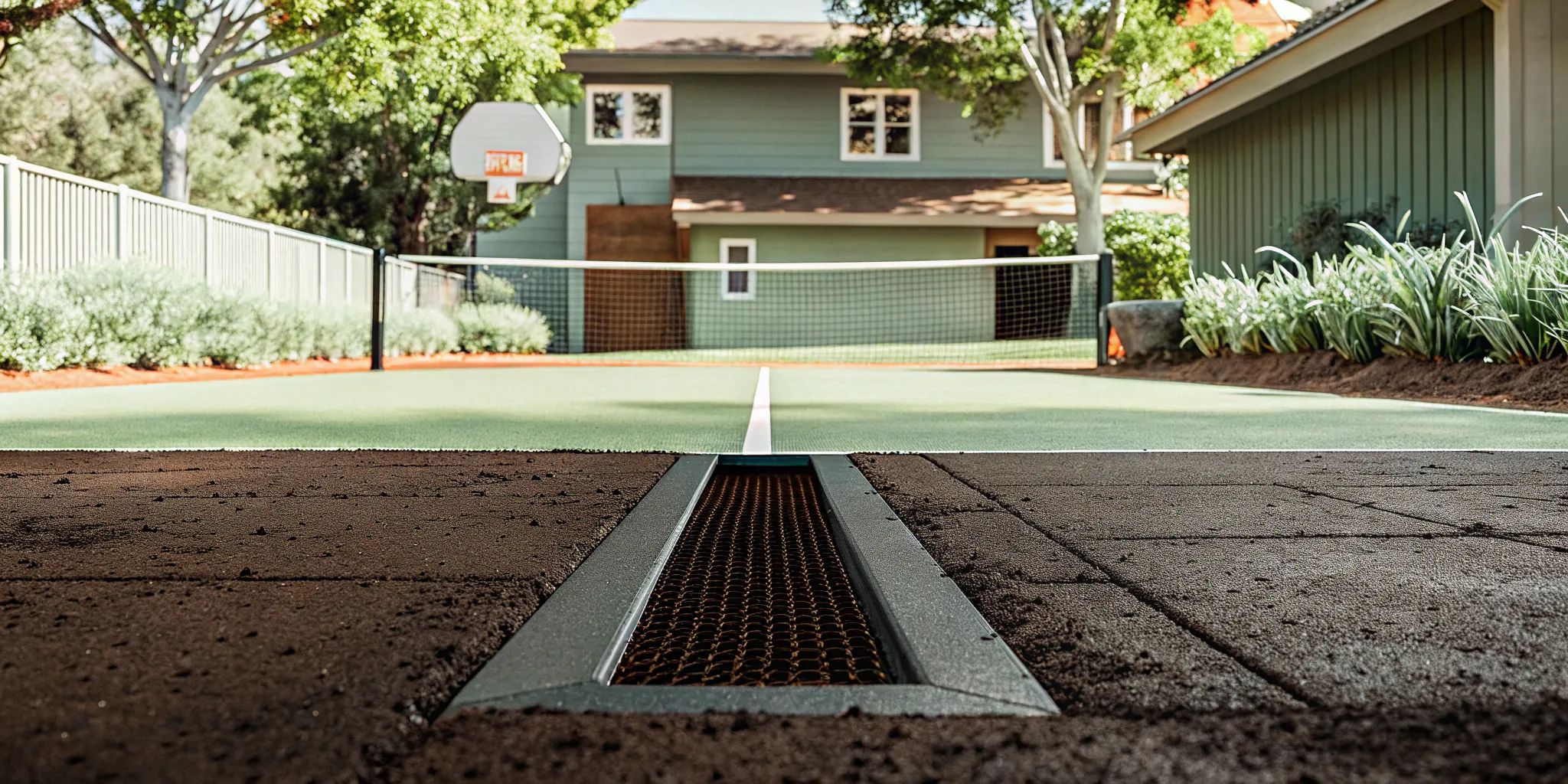
Coordinate lines, hoops, nets, fencing, and lighting
High-contrast line systems
Designing a basketball and pickleball court combined starts with the layout of the surface. To make the space easy to use, we apply a clear system of lines. Each sport needs its own set of bounds. Using other colors helps players stay in the game. We often use a high-contrast color like white for the main sport lines. For the second sport, we pick a shade that stands out but does not clash. This visual order keeps the court from looking messy. It also ensures that players can see their lines even during quick moves.
The choice of paint for these lines is also vital. We use expert-grade paints that grip the surface to prevent slips. These paints are made to last through sun and rain without fading. On Long Island, weather can be tough on outdoor surfaces. By using proper construction practices, we make sure your court stays bright and useful for a long time. Clear lines make it simple to switch from a basketball game to a pickleball match in seconds.
Adjustable basketball hoops and net options
The gear you choose defines how you use your court. For the basketball part, we suggest hoops with heights you can change. These allow players of all ages and skill levels to enjoy the game. You can lower the rim for children or set it at the standard ten-foot height for adults. We often place the hoop at the center of one end. This spot works best for both foul shots and three-point play. It also keeps the main hoop out of the way of the pickleball zone.
For pickleball, the net setup is a major choice. Some homeowners prefer a fixed net system with poles set into the ground. These are very strong and always ready for play. Others like portable nets that have wheels. You can move a portable net to the side when you want the full court for basketball. Removable net systems offer a good middle ground. They provide the strength of fixed poles but let you clear the court when needed. According to the standard sizes, a pickleball court measures 20 feet by 44 feet. We plan your space to fit these bounds fully.
Enclosures and lighting for night play
Fencing and gates are needed for ball control and safety. A tall fence keeps basketballs and pickleballs from rolling into your yard or pool. We offer many types of fencing that blend with your home’s look. Chain-link is a common choice, but we also have other options. We can add gates at useful spots so you can enter and exit the court easily. These gates also provide a path for moving large gear or upkeep tools. A well-placed fence turns a simple slab into a true pro arena.
To get the most use out of your court, you should think about lighting. LED lights are the best choice for outdoor Sports Games Courts. They give off a bright, clear light that acts like the sun. This allows you to play late into the evening during the summer months. Modern LED systems also save power and do not create much glare. We mount these lights on tall poles to cover the entire area with even light. This setup prevents shadows that could trip up players or hide the ball.
Finally, consider adding storage for your gear. We can build benches with hidden bins to hold balls, nets, and rackets. This keeps your outdoor space neat and keeps your gear safe from the weather. Gappsi provides a full answer for Sports Games Courts on Long Island. We handle every step from the first 3D design to the final coat of paint. Our team makes sure every part of your court works well together.
How to plan a combined court on Long Island
Building a new court at your home is a big choice. A combined basketball and pickleball court is a smart way to add value to your house. On Long Island, we often deal with small lots and close neighbors. You need a team that knows how to fit a big court in a small space. Gappsi Group has worked in towns like Smithtown and Huntington for years. We know how to plan every part of your new space.
Set your court goals
Start by thinking about how you will play. Do you want a full court or a half court? A combined basketball and pickleball court works well for families. You can play hoops in the morning and have a match later that day. Using high quality surfaces makes the court safe for everyone. A careful site plan and quality materials help create a space that lasts for many years. You should also think about the colors you want for your yard.
Review local town rules
Before you dig, you must check the laws. Some places in Nassau County have strict rules on water runoff. In Suffolk County, you might need a soil test before you build. Our team handles the technical plan and the permits. We make sure your court does not cause floods or issues for your neighbors. We also check on noise rules for your area. This keeps your project on track and out of trouble. A site-specific layout helps balance court dimensions, setbacks, drainage, and neighboring properties.
Pick the right court surface
The surface you choose affects how the ball bounces. A combined basketball and pickleball court needs a base that works for both sports. Matflex tiles are a top choice because they stay cool in the sun. They also drain fast after a Long Island rain storm. Asphalt and concrete are other options that offer a firm feel. Choosing the right base keeps your court from cracking as the years go by. We help you pick the best one for your yard and your budget. This choice is key to how much you will enjoy your games.
Gappsi Group provides a full plan for your home. We follow these steps to make sure your project is a success.
- Pick the best spot in your yard. You want a flat area that is away from trees and power lines.
- Choose your court surface. We offer Sports Games Courts with Matflex tiles, asphalt, or concrete to fit your budget.
- View your 3D design. We create a map of your yard to show you how the court fits with your pool or patio.
- Submit for permits. Our experts fill out all the forms and meet with town boards to get your project moving.
- Prepare the site. We use heavy machines to move dirt, level the ground, and set up a solid base for the court.
- Build the court. We pour the base and install the top layer. Then we paint the lines for both sports.
- Final walkthrough. You join us to look at the court and make sure every hoop and net is just right.
Gappsi Group is the only provider you need to hire. From the first sketch to the last coat of paint, we are there. We can add custom lights for night play and strong fences to keep the balls in your yard. Our goal is to give you a space you love. You will have a professional court that looks great and works well for all your favorite games.
Design the court around how your family will play
When you start to plan, think about who will use the space most. A combined basketball and pickleball court is a great choice for your home. Kids often want a place to shoot hoops. Adults might prefer the fast pace of pickleball or a space for low-impact exercise. By looking at how you play now, you can pick the best parts for your yard.
Layout choices for multiple players
The best way to start is to map out the main games you want to play. For a full game of basketball, you might need a large area. A standard NBA court is 94 feet long and 50 feet wide, but most home courts are much smaller. If your main goal is designing a combined basketball and pickleball court, you can overlap the lines to save space.
Pickleball is very common because it fits well in smaller yards. A standard court for both singles and doubles play is 20 feet by 44 feet. Putting these two games in one area is a smart way to use your land. This setup lets you switch from one sport to the next without needing extra builds. This is a big help for people on Long Island where yard sizes can vary.
Future growth and simple upkeep
You should also think about how your family might change in a few years. Younger kids will grow into teens who need a tough surface for fast play. Choosing a high-grade surface from the start ensures your Sports Games Courts stay in good shape. Parts like Matflex tiles or hard concrete are strong and handle the weather well.
A long life is key when you spend money on your home. Research shows that good build steps and often doing upkeep are vital for the life of your court. You want a surface that stays flat and safe as the seasons change. Gappsi acts as a single provider to help with the first build and long-term care. This makes it easy to keep the space in top shape without calling many workers.
Matching your court with home style
A court should not just be a flat slab in your yard. It should look like a part of your whole landscape. You can add low walls, custom fencing, and green plants to make the area feel private. Gappsi can handle all these steps, from the first 3D design to the final stone work. This “one-provider” model means every part of the project fits together.
Good lights are also a big part of the design. They let you play late into the evening after the sun goes down. You can also add high-grade fencing to keep balls in the court area. This keeps the rest of your garden safe and makes the game more fun. By thinking about these extra details, you create a space that adds real value to your home. If you are ready to plan your build, you can call Gappsi at 631-543-1177 for an expert talk.
What affects the scope of a combined court project?
Planning a basketball and pickleball court combined takes careful thought. Many factors change how big or small the project will be. The work starts with your land and ends with the final parts you pick. Gappsi handles the whole process to make sure your new space fits your needs and your yard. They offer a one-provider value for homeowners on Long Island.
Checking the land and making the site ready
The state of your yard is the first big factor. A flat yard is easier to work on than one with steep hills. Proper site work is a vital step in any court project. This work includes grading the soil and setting up the right drainage plans to keep the area dry. If the ground is not level, the team must move dirt to create a flat base.
Building a court also requires checking local rules. Most towns in Nassau and Suffolk counties need permits for these types of projects. As a full-service team, Gappsi handles the 3D design and the permit process for you. Getting these papers in order before the work starts helps avoid delays. It ensures that your Sports Games Courts project follows all local codes.
Picking the right surface parts
The parts you choose for the base and the top layer change the scope. Different surface parts work well for multi-sport use. You may pick modular Matflex tiles, asphalt, or concrete. Concrete is very strong and provides a smooth surface for many years. Asphalt is a common choice but may need more care over time. Each choice affects how you use the space and how long it lasts.
Picking the top layer is also a key part of planning a combined basketball and pickleball court. Set pickleball courts use a standard size of 20 feet by 44 feet for games. These dimensions provide a practical starting point for the site plan. Using quality parts helps make sure your Sports Games Courts stay safe for all types of play. High-quality building ways are vital for the long life of any playing surface. You can learn more about court standards from the National Institutes of Health.
Adding custom features and tools
The final scope depends on the added items you pick. A simple court might just have lines and a hoop. But many homeowners want to add more to make the space better. Proper lighting and fencing are great ways to finish the area. Lights let you play after the sun goes down. Fences keep the ball from leaving the yard and hitting other things.
The type of hoop and net system you pick also matters. You can choose a hoop that adjusts in height for younger players. For pickleball, you will need a net that is easy to move or set up. Adding these items to your Sports Games Courts plan makes the space more useful for everyone. These choices help turn a basic court into a full center for your home. Gappsi handles every step from the first plan to the final build.
Frequently Asked Questions
Can you combine pickleball and basketball on one court?
Yes, you can simply combine these two sports into one layout to save space. A Sports Games Courts design uses clear line colors to mark both areas on the same surface. This plan works well for Long Island homes where land is often scarce. By sharing the space, you get more value and fun out of your backyard. As Gappsi says, combining sports is the best way to use your yard to save space.
What is the best size for a combined basketball and pickleball court?
A full basketball court is 94 feet by 50 feet, while a pickleball court only needs 20 feet by 44 feet. Most homeowners choose a half-court layout that fits a full pickleball court inside it. This mostly needs a space of about 30 feet by 60 feet. A standard pickleball court is 20 feet wide and 44 feet long for both singles and doubles play.
What surface types are best for a Sports Games Court?
The best surface depends on your goals for speed and safety. Many Long Island owners choose tiles like Matflex because they provide good grip and drain water fast. Asphalt and concrete are also strong choices for a Sports Games Courts project. These types last a long time even with heavy use and changing weather. High-grade tiles and proper installation help the court remain safe and durable through years of use.
Can I convert a current backyard court into a pickleball and basketball combo?
Yes, you can often update an old court to include more sports. A pro can clean the surface, fix any cracks, and add new lines for pickleball. If the old surface is worn out, adding tiles is a great way to fix the space without a full teardown. Good care is key for these surfaces. Proper construction and routine care help the playing area last longer.
Set up your custom Sports Games Courts today
Home court projects take time to plan and build the right way if you want them to last. If you wait too long to start, you might miss out on a full year of fun with your family. Starting your project now lets you skip the rush and secure your spot on our build list for next year. You will be able to enjoy your new court as soon as the warm weather returns to Long Island. Our team handles each step from the first 3D design to the final paint lines on the court. Do not let one more year go by without the backyard space you have always wanted for your home. You can learn more about designing a combined basketball and pickleball court to see what is possible.
Ready to build? Contact our team to request a consultation or visit the Smithtown showroom.