


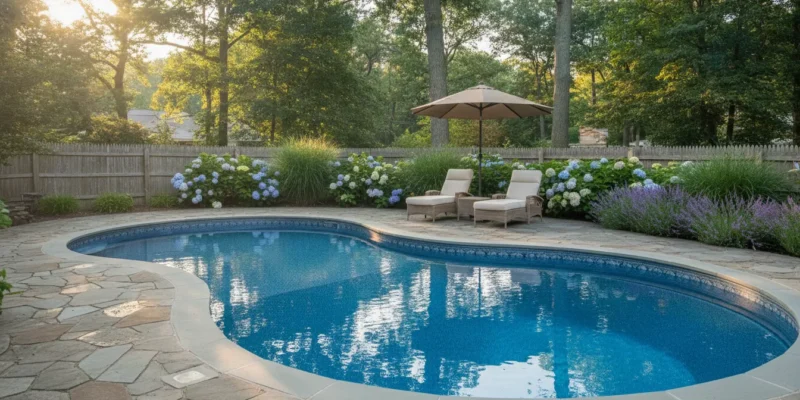
Planning an inground pool on Long Island starts with a realistic budget, not a catalog price. The final number depends on the pool’s dimensions, depth, shape, excavation, access, equipment, decking, drainage, and the structure supporting the liner. A careful estimate should also account for future liner replacement and routine water care. Contact Gappsi through our contact page
Gappsi handles the design-build process, including the underlying concrete work for vinyl liners. That makes it easier to evaluate the complete project rather than comparing liner prices alone. The next step is to examine what a typical Long Island installation includes and why two pools with similar dimensions can have very different totals.
What Is the Average Vinyl Pool Cost on Long Island?
For a typical Long Island installation, a realistic vinyl pool cost is often about $40,000 to $70,000, including the pool installation. That range is consistent with published vinyl pool pricing from Leisure Pools USA, while other industry estimates place basic vinyl liner pools between $25,000 and $65,000. Broader installation estimates can reach $45,000 to $100,000 when the project includes more complex site work, upgraded equipment, difficult access, or extensive surrounding construction. Sources: Leisure Pools USA, Thursday Pools, and River Pools. That makes vinyl the lowest-upfront-cost option among the three common inground pool types, ahead of fiberglass and concrete in many projects. Gappsi’s customer guidance identifies vinyl liner pools as a cost-effective choice for many Long Island homeowners. The important distinction is that the lowest initial quote is not automatically the best value. The pool shell, wall construction, excavation, circulation equipment, coping, steps, permits, and site conditions all affect what you receive for the price.
What would a 20×40 vinyl pool cost?
A 20×40-foot pool covers roughly 800 square feet of water surface, making it a useful example for comparing estimates. A project of this size may fall within the $40,000 to $70,000 installed range. But the final proposal can move higher or lower based on depth, shape, access for excavation equipment, soil conditions, and the selected finishes. A simple rectangular design with straightforward access generally has fewer construction complications than a pool with multiple elevations, specialty steps, retaining walls, or extensive masonry. When comparing proposals, ask whether each quote includes the same scope. Confirm the excavation, structural walls, liner, pump and filtration equipment, electrical work, coping, permits, startup service, and any required site restoration. Gappsi provides the underlying concrete work for vinyl liners as part of an integrated design-build service, which helps keep the structural and finish decisions coordinated. Review custom vinyl pool designs before choosing a layout, then compare complete scopes rather than headline prices alone.
What Factors Drive the Price of a Vinyl Liner Pool?
A 20×40 pool is a useful reference point, but its dimensions do not determine the entire estimate. The final vinyl pool cost reflects the amount of excavation, structural work, equipment, finish materials, and site preparation required for that specific property. Two Long Island homes can choose the same pool size and receive very different project totals. Working with an experienced Long Island vinyl pool builder helps you compare those project totals on scope rather than a single line price.
How do size, depth, and shape change the estimate?
Pool size and surface area affect excavation, wall materials, liner dimensions, plumbing, coping, and the amount of water the equipment must circulate. A 20×40 pool generally requires more of each than a smaller rectangle. Depth adds cost as well because a deeper basin means more soil removal, taller walls, additional structural considerations, and potentially larger circulation equipment. Shape also matters. A straightforward rectangle is usually simpler to lay out, excavate, reinforce, and fit with a liner. Freeform designs can require more detailed engineering and additional liner seams, corners, steps, benches, or specialty features. Those design choices can be worthwhile, but they should be priced as part of the initial plan rather than treated as minor additions.
What site and structural conditions affect vinyl pool cost?
Excavation and site conditions can shift the budget quickly. Tight access for machinery, difficult soil, groundwater, buried utilities, rock, drainage requirements, and the need to remove excess soil all influence labor and disposal. A property with easy equipment access may require less site work than a similar pool behind a narrow home or through a constrained side yard. The wall build type is another important decision. Steel, concrete, and other structural systems have different material and labor requirements. The wall supports the liner, so the lowest initial bid is not automatically the best value. Gappsi performs the underlying concrete work for vinyl liner pools and manages the project through an integrated design-build process, reducing the need to coordinate separate contractors.
How does finishing change the total?
Finishing choices include coping, steps, benches, lighting, automation, decking, drainage, fencing, and landscaping. These features can represent a substantial portion of the completed project. For context, Long Island gunite pools run roughly $90,000 to $140,000 at baseline, while fiberglass pools commonly fall around $55,000 to $100,000. Vinyl is generally lower for a comparable size, but a detailed site-specific plan is still necessary to explain the difference.
Why Concrete Wall Builds Matter for a Vinyl Liner Pool
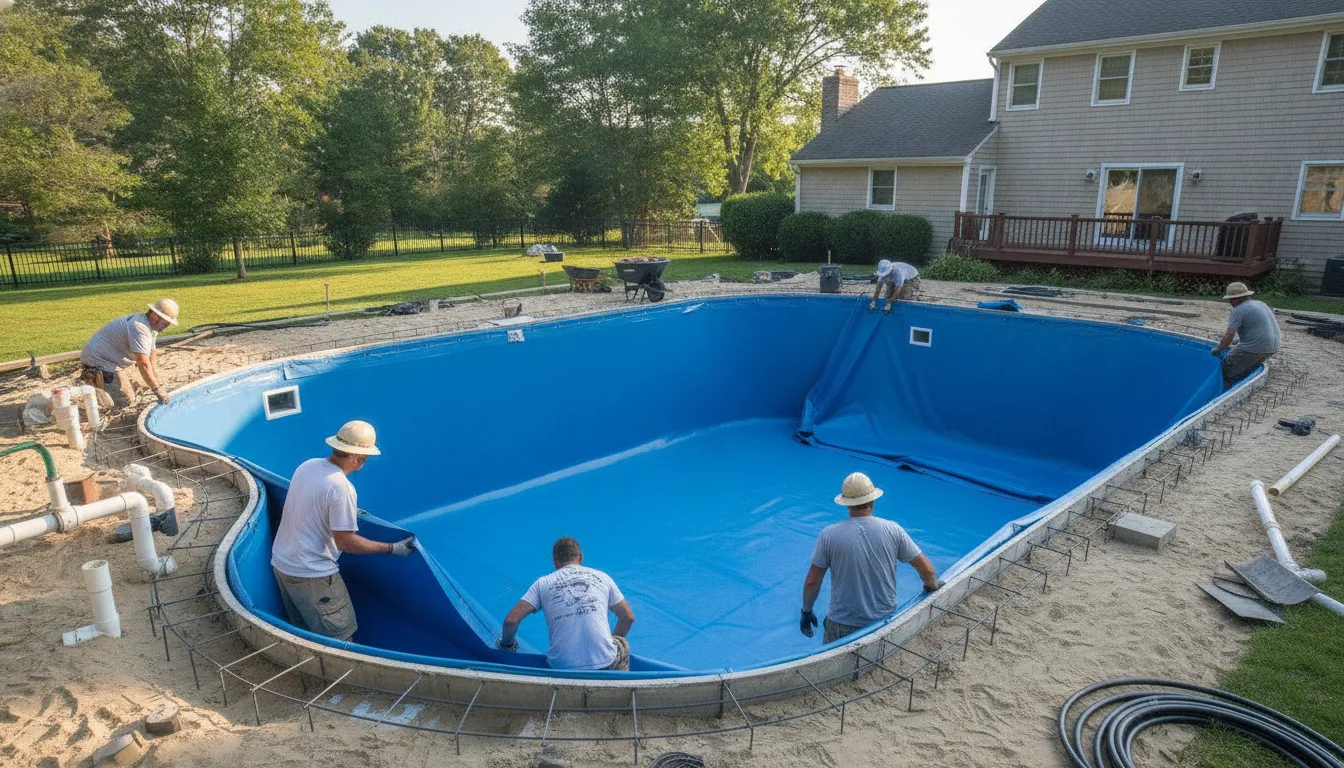
A vinyl liner is the visible interior surface, but the walls behind it carry the shape and pressure of the pool. That means the structure deserves as much attention as the liner pattern, steps, coping, and surrounding patio. When comparing vinyl pool cost, ask what wall system is included in the proposal, how it will perform on your property, and who is responsible for the underlying construction. Wall materials affect installation requirements, long-term maintenance, and how easily the pool can be adapted to a challenging Long Island site. The right choice depends on the design, soil conditions, access, drainage plan, and scope of the project, not simply the lowest initial quote. Reviewing Gappsi’s pool construction services shows how the concrete wall build and the liner installation are handled as one accountable scope of work.
| Wall build | Cost position | Durability considerations | Long Island suitability |
|---|---|---|---|
| Steel wall | Often a lower-cost starting point, depending on engineering, excavation, and site work. | Requires appropriate corrosion protection, drainage, and installation details. The complete assembly matters more than the panel material alone. | Can suit many standard layouts when the site preparation and water management plan are properly executed. |
| Structural polymer wall | May carry a different upfront cost than steel, based on the system and design. | Resists certain moisture-related concerns, but performance still depends on correct bracing, backfill, and drainage. | Useful for selected designs and site conditions when specified and installed by an experienced contractor. |
| Poured concrete wall | Typically represents a more substantial structural investment. | Highly customizable and capable of lasting for decades, often more than 50 years with proper maintenance, according to Latham Pool’s comparison of pool construction types. | Well suited to customized shapes, reinforced structural work, and demanding site conditions when engineered and built correctly. |
Concrete wall construction does not turn a vinyl liner pool into a gunite pool. Instead, it provides a robust, customizable structure beneath the replaceable liner. This approach can support unusual dimensions, integrated steps, benches, and design details that require more than a basic rectangular shell. Gappsi handles the underlying concrete work for vinyl liners as part of its pool construction services. Its integrated, one-stop design-build model also reduces the need to coordinate separate contractors for related outdoor work. That accountability matters because excavation, wall construction, drainage, liner installation, and finish work must function as one system. A clear proposal should identify the wall build, structural scope, and site conditions before you compare the final project price.
How Much Does It Cost to Replace a Vinyl Pool Liner?
A vinyl liner is not a one-time purchase. It is a planned maintenance expense that should be included in the long-term vinyl pool cost from the beginning, especially for a larger pool such as a 20×40. Current industry estimates place replacement at approximately $5,000 to $7,500 every 8 to 10 years, according to Leisure Pools USA. Other published estimates show a wider range. Thursday Pools lists replacement at roughly $3,000 to $7,500 every 5 to 15 years, while River Pools estimates approximately $5,000 to $8,000 every 5 to 9 years. These figures are useful planning ranges, not a fixed quote for every Long Island property.
What affects the replacement price?
The final cost depends on the pool’s size, shape, depth, liner pattern, wall condition, and access for the installation crew. A standard rectangular pool may have a different labor requirement from a freeform design with steps, benches, coves, or other fitted features. Before installing a new liner, the contractor should also inspect the structure and identify issues that could affect fit or performance. Deciding between a vinyl liner and a concrete build is easier when you see how the full structure is assembled, including walls and coping. For a 20×40 pool, replacement should be treated as a real budget line item rather than an unexpected repair. A lower initial installation price can still lead to avoidable expense if the liner is damaged early or the supporting structure is not properly prepared. Gappsi provides the underlying concrete work for vinyl liners as part of an integrated design-build service, helping keep the construction and replacement considerations connected.
Can maintenance extend liner life?
Yes. Proper maintenance can extend liner lifespan and reduce total ownership costs. Keeping the water clean, maintaining balanced chemistry, preventing algae and slime, and addressing small problems before they worsen all help protect the liner. Sun exposure, pool use, water conditions, and climate also influence how long the material lasts. Planning for replacement while maintaining the liner carefully gives Long Island homeowners a more accurate picture of the pool’s total cost over time.
What Does Long-Term Maintenance Cost for a Vinyl Pool?
Plan on approximately $1,000 to $2,000 per year for routine vinyl pool maintenance, based on the range reported by Thursday Pools. Your actual vinyl pool cost over time will depend on pool size, equipment, water conditions. How often the pool is used, and whether you handle routine care yourself or hire a service company. The annual figure generally reflects recurring water treatment, cleaning, inspections, and equipment care. It does not replace the need to budget separately for eventual liner replacement or larger repairs. Water chemistry is the first line of liner care. Test the water regularly and adjust it before an imbalance becomes a surface or equipment problem. Guidance from the University of California, Riverside recommends keeping pH between 7.2 and 8.0, with a preferred range of 7.4 to 7.6 for protecting pool surfaces and equipment. The same guidance states that free chlorine residual without stabilizer should remain at 1.0 ppm or higher. See the complete pool water quality guidance for the supporting standards.
Routine cleaning also protects the liner. Remove debris, brush appropriate surfaces, empty baskets, and watch for slime or algae before buildup becomes difficult to correct. Avoid harsh cleaning methods that can damage the liner. Keeping the water clean and balanced helps reduce unnecessary chemical corrections, while regular filtration and equipment checks can identify small issues before they become expensive repairs. Liner care has a direct effect on total ownership cost. Gappsi’s customer guidance emphasizes that proper maintenance and clean water conditions can extend liner life, which is a major part of the long-term budget. A neglected liner may require replacement sooner, while consistent care can help you get more useful years from the same installation. In practical terms, the annual maintenance budget should cover both everyday service and a reserve for future liner work. When comparing estimates, ask what is included in ongoing service. A clear plan should identify water testing, chemical balancing, cleaning, filter care, equipment checks, and seasonal opening or closing. That detail gives you a more realistic view of the total cost of ownership than comparing installation prices alone.
How to Get the Best Value on a Long Island Vinyl Pool
The lowest bid is not always the lowest vinyl pool cost over the life of the project. A durable pool depends on the structure beneath the liner, accurate coordination between trades, and a realistic plan for future maintenance. Use these steps to compare proposals on value rather than price alone.
- Choose one accountable design-build team. Work with a contractor that can coordinate excavation, the concrete wall build, liner installation, coping, decking, and finishing as one project. Gappsi provides an integrated, one-stop design-build service, reducing the need for a homeowner to manage several separate contractors. Its pool construction services include the underlying concrete work for vinyl liners. Explore vinyl liner pool construction services before requesting proposals. When comparing contractors side by side, the service comparison in our best Long Island pool companies roundup is a practical starting point.
- Verify the wall construction before signing. Ask exactly what forms the pool walls, what reinforcement is included, and who is responsible for preparing the structure before the liner goes in. A proposal that lists only a liner and excavation may leave out the work that affects long-term durability. Request a written scope, material specifications, drainage details, and warranty responsibilities. Compare those details, not just the subtotal.
- Price the full ownership cycle. Include water care, equipment service, repairs, and eventual liner replacement in your planning. Published estimates commonly place liner replacement in the several-thousand-dollar range, with timing varying by liner quality, use, and maintenance. Proper liner care and clean water conditions can help extend its service life, making maintenance part of the value calculation rather than an afterthought.
- Prioritize durable construction and clear communication. A coordinated team should explain which choices affect the initial budget and which protect the pool over time. Review the finished design, access requirements, schedule, allowances, and change-order process together. Then compare the complete scope with your intended use and budget. Contact Gappsi through our contact page
Explore Gappsi vinyl pool construction services, from concrete wall builds to liner installation.
Frequently Asked Questions
How much does it cost to put in a vinyl pool?
On Long Island, a typical vinyl liner pool project often falls in the $40,000 to $70,000 range before unusual site conditions, extensive hardscaping, or special features. Published industry estimates vary from about $25,000 to $65,000 for basic installations and $45,000 to $100,000 for broader installation scopes. So the design and inclusions behind each quote matter. Industry comparison data supports the $40,000 to $70,000 range.
Can I get an inground pool for $30,000?
A basic pool package may approach that figure, but a complete Long Island installation at $30,000 is unlikely once excavation. Structural work, equipment, permits, coping, decking, and site access are included. Request an itemized proposal so you can distinguish the pool shell and liner from the surrounding work that makes the project usable.
Is a vinyl pool cheaper than concrete?
Vinyl usually has a lower initial installation cost than concrete, but the comparison should include liner replacement and maintenance over time. Long Island gunite pools commonly run about $90,000 to $140,000 as a baseline on Gappsi’s published site, while a vinyl pool generally requires a future liner replacement. The best choice depends on the design, structure, and ownership horizon.
How much does it cost to replace a vinyl pool liner?
Replacement commonly costs about $5,000 to $8,000, depending on pool size, liner pattern, site access, and labor. Liners often last roughly 5 to 9 years, although water chemistry, sunlight, cleaning practices, and use can change that timeline. River Pools reports these replacement and lifespan ranges.
Ready to Plan Your Vinyl Liner Pool?
A realistic estimate starts with your backyard, pool dimensions, site conditions, and the construction details that affect long-term value. Gappsi can help you review those factors and plan a vinyl liner pool that fits your Long Island property and goals. Reach out through our Contact Gappsi through our contact page or Call Gappsi at Contact Gappsi through our contact page to schedule a consultation and get a realistic vinyl pool cost estimate.