


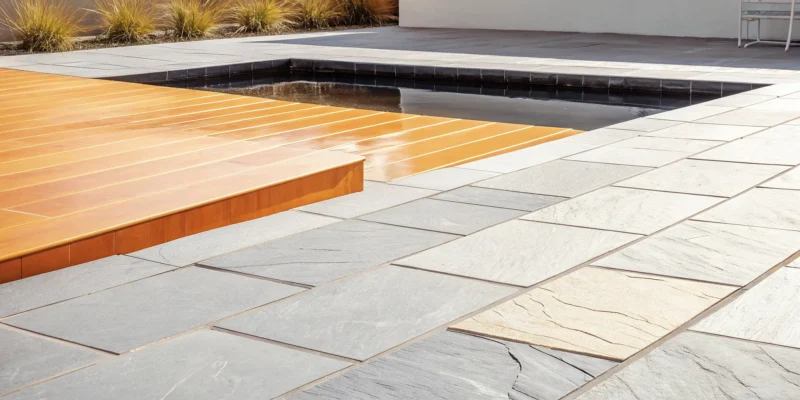
A pool deck has to do more than frame the water. On Long Island, it must handle wet feet, strong sun, freeze-thaw cycles, salt exposure, and the visual demands of the surrounding landscape. The surface, base, drainage plan, and coping detail all affect how the deck performs over time. Schedule a free pool deck consultation with Gappsi Group.
Before comparing each material. It helps to understand why pavers are so widely used around pools and which installation decisions protect the finished surface from shifting, standing water, and unnecessary wear.
Why Long Island Homeowners Choose Pool Deck Pavers
For a pool area in Nassau or Suffolk County, the surface has to handle standing water, bare feet, furniture, sunscreen, and repeated seasonal use. Pool deck pavers give homeowners a durable, modular surface that can be selected for texture, drainage, color, and the surrounding landscape. Pool walkway guidance also emphasizes materials that are durable, slip-resistant, easily cleanable, and nonabsorbent, which makes material selection a practical safety decision, not just a design choice. Gappsi’s outdoor paving and installation services can help coordinate those choices with the pool, coping, and site conditions. Call Gappsi at (contact page to schedule a free pool deck consultation.
A surface designed for wet conditions
Water changes how a deck performs. A suitable paver system should provide dependable traction when swimmers leave the pool and should not absorb water in a way that creates avoidable maintenance problems. Texture, joint design, surface finish, and the material itself all matter. The goal is a walking surface that remains comfortable and predictable around the water, including during rain and routine splash-out.
Repairs without removing the entire deck
Pavers are installed as individual units rather than as one continuous slab. If a section is damaged by a dropped object, settlement, or a future utility repair. The affected units can generally be lifted and replaced without demolishing the entire pool surround. That modular construction also makes it easier to blend repairs into an existing pattern, provided matching material remains available.
Drainage starts below the surface
Base preparation is non-negotiable. A well-compacted, properly drained crushed-stone base supports long-term stability and helps limit shifting, low spots, and trapped water. The walkway should also be planned to slope away from the pool, with pool-walkway guidance specifying a slope away from the water for at least four feet. Pervious paver systems offer another drainage option because their open joints and supporting structure can allow water to infiltrate and help reduce stormwater runoff. These benefits depend on correct excavation, compaction, grading, edge control, and installation. A paver deck can look finished on the day it is installed, but its long-term performance is determined largely by the work beneath it.
Travertine vs. Bluestone vs. Granite vs. Porcelain vs. Concrete
The right pool deck material depends on how the surface feels under bare feet. How much maintenance you want to handle, and how the deck should look beside the home and pool coping. The comparison below gives a practical starting point. For a broader discussion of pool deck pavers vs porcelain and travertine, review the material-specific details before choosing a finish.
| Material. | Slip resistance. | Heat retention. | Sealing need. | Relative cost level. |
|---|---|---|---|---|
| Travertine. | Very good when wet, especially with a suitable textured finish. | Low; its porosity helps the surface stay cool. | Recommended; porous stone needs stain care and protection. | Moderate to high. |
| Bluestone. | Excellent when the natural texture is retained. | Moderate to high in direct sun. | Recommended to help prevent staining. | Moderate to high. |
| Granite. | Good with a properly textured or flamed finish. | Moderate to high. | Usually limited, depending on the stone and finish. | High. |
| Porcelain. | High when a pool-rated, slip-resistant product is selected. | Moderate; color and exposure influence surface warmth. | None; dense porcelain does not require sealing. | Moderate to high. |
| Concrete pavers. | Good when the texture and installation are suited to wet areas. | Moderate to high. | Optional but useful for color and surface protection. | Low to moderate. |
Travertine is valued for a cooler walking surface and dependable wet grip, but spills should be cleaned promptly because its porous surface can stain. Bluestone brings a classic, textured appearance and excellent traction, while sealing helps protect its natural surface. See the travertine pool deck guide for more detail on that material’s finish and care requirements. Granite is the hardest option in this comparison and resists scratches and heavy use, though its weight and cost can affect installation planning. Porcelain is dense, resistant to stains, fading, and pool salt, and can offer high slip-resistance ratings without sealing. Concrete pavers are cost-effective and customizable in color, shape, and texture. If left unsealed or made with an inferior mix, they may fade over time and can become warm in direct sun. The best pool deck paving materials depend on balancing these performance factors with the home’s architecture, drainage plan, and maintenance expectations. 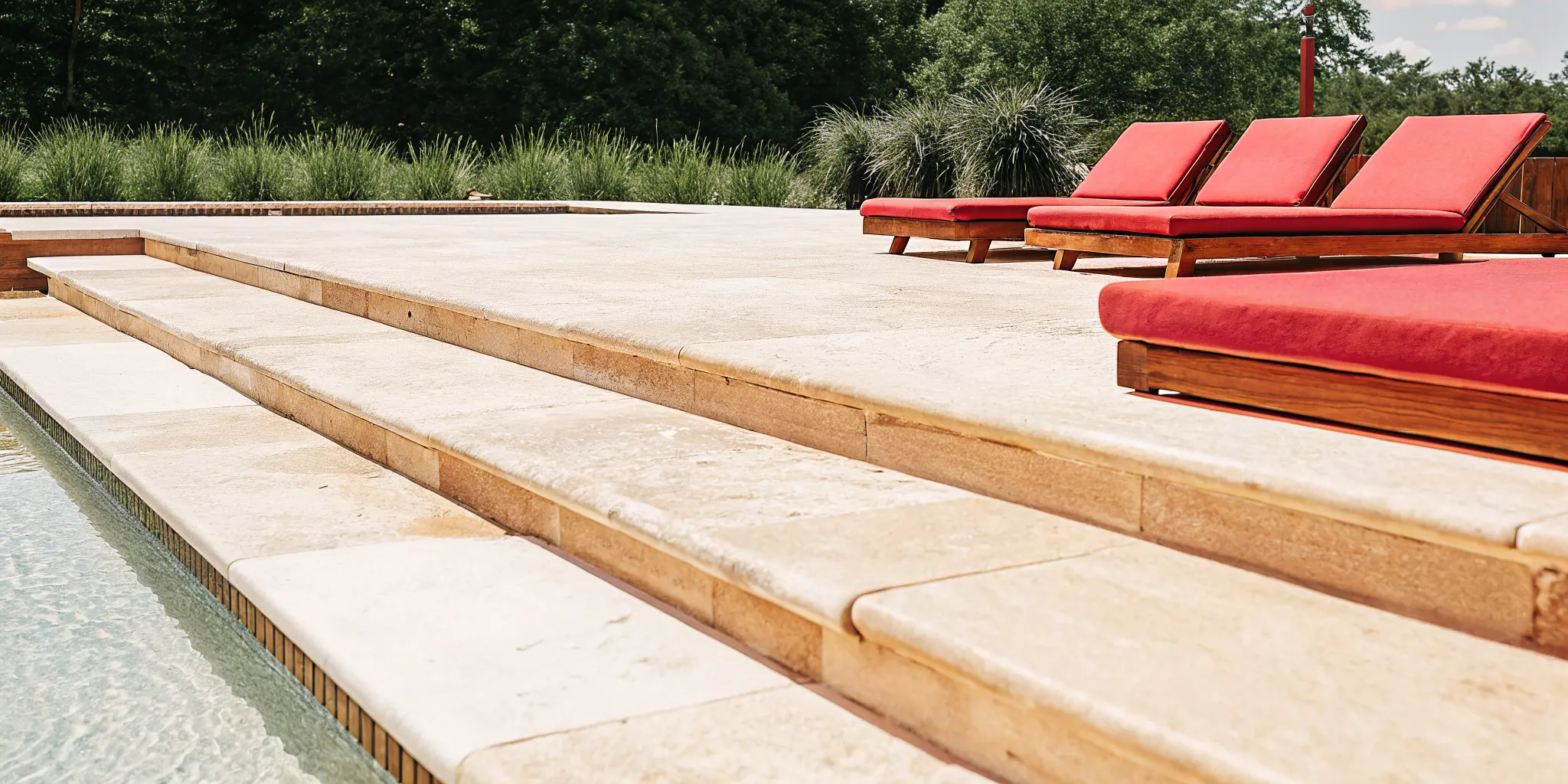
How Much Do Pool Deck Pavers Cost on Long Island?
The cost of a pool deck depends on more than the square footage. Material selection, demolition, excavation, base preparation, drainage, borders, coping, access to the property, and installation details all affect the final proposal. For that reason, a responsible estimate should be built around your site rather than copied from a generic online price list. Concrete pavers are generally the most budget-friendly material. They are available in many colors, shapes, and textures, so a lower material cost does not require a one-size-fits-all appearance. Their modular installation can also simplify future repairs because an individual damaged paver may be lifted and replaced without removing the entire deck. Material and labor costs still vary, but concrete is often the practical starting point for homeowners balancing design flexibility and budget. Porcelain pavers and manufactured options typically occupy a middle position. Porcelain is dense and resistant to staining, salt, and fading, while its installation requires careful handling and a properly prepared base. Some manufactured products offer a stone-inspired appearance with more predictable sizing, but the product, structural requirements, and installer experience should be evaluated together. Travertine, bluestone, and granite usually sit at the higher end of the material spectrum. Natural stone costs more because of the stone itself, selection, cutting, layout, and skilled installation. Travertine can provide a cooler walking surface in summer. Bluestone offers a textured, classic appearance and needs appropriate sealing. Granite is exceptionally hard and resistant to scratches and heavy traffic. Those characteristics may justify the added investment, but they should be matched to how your family uses the pool. Keep the hardscape as a separate line item in the overall project budget. Gappsi’s published guidance places a gunite swimming pool on Long Island at a baseline of approximately $90,000 to $140,000. The paver deck is an additional scope, not an amount that should be folded into or confused with the pool shell, equipment, and construction costs. A site-specific consultation can show how each material changes the total.
Are Pool Deck Pavers Slip-Resistant When Wet?
Yes, but safety depends on more than choosing a material labeled for pool use. A pool surround should combine durability, slip resistance, and low water absorption, while the installation must move water away from areas where people walk. Pool walkway guidance commonly calls for surfaces that are durable, slip-resistant, easily cleanable, and nonabsorbent. Review the referenced pool walkway requirements for the underlying safety language.
Which surfaces provide reliable grip?
Bluestone is a strong choice when grip is the priority. Its naturally textured surface provides excellent traction around a swimming pool, even when the stone is wet. The finish still matters, so homeowners should compare samples rather than selecting solely by color or pattern. A textured, brushed, or water-worn finish is generally more appropriate near the waterline than a highly polished surface. Bluestone may require careful sealing to help prevent staining, as described in Gappsi’s natural stone paver guidance. Travertine is another practical option for a Long Island pool deck. Its porous structure absorbs water quickly, helping the surface stay cooler under direct sun while retaining slip resistance when wet. Its finish and installation quality should be reviewed together, because a stone’s performance depends on how it is textured, set, and maintained. Porcelain pavers offer a denser alternative. Many products carry high slip-resistance ratings and meet or exceed standards commonly used for commercial pool decks. Ask for the manufacturer’s test rating for the specific porcelain selected, rather than assuming every product performs the same way.
How does drainage affect traction?
Even a textured surface can become hazardous if water remains on it. The deck should slope away from the pool, with the surrounding grade and joints planned to direct runoff toward suitable drainage points. One referenced pool-walkway standard specifies a slope away from the pool for at least four feet. Proper base preparation and careful grading help prevent puddles, settlement, and uneven transitions. In practice, the safest selection is a textured, water-shedding surface paired with an installer who understands both material behavior and pool-deck drainage.
Do Pool Deck Pavers Need to Be Sealed and Maintained?
A maintenance plan starts before the first paver is installed. The surface may look finished, but its long-term performance depends on the base, drainage, joints, material selection, and the products used to protect the finish. Follow these steps to keep the deck stable, clean, and ready for regular pool use.
- Build the foundation correctly. Require a well-compacted, properly drained crushed-stone base beneath the pavers. The base supports the surface and helps limit settlement caused by water and seasonal movement. Install durable edge restraints, such as a ribbon curb where appropriate, to keep the perimeter from spreading or shifting. Natural stone also brings inherent thickness variation, so the installer must understand how to adjust the base for a level, seamless surface. This is one reason an experienced natural-stone installer matters. See Gappsi’s stone installation guidance for more detail.
- Match sealing to the material. Porous natural stones such as travertine and bluestone should be sealed with a product suited to the stone, then resealed periodically as the protective layer wears. Sealing helps reduce staining and makes routine cleaning more manageable. Porcelain pavers do not require sealing because their dense, non-porous surface resists absorption. For concrete, use a good-quality sealer selected for outdoor exposure. Options include a natural matte finish or a deeper wet-look finish, depending on the appearance you want. Read more about concrete paver sealers before choosing a product.
- Clean spills promptly. Sweep away loose debris, rinse ordinary dirt, and address spills as soon as possible. Travertine’s natural porosity makes it especially vulnerable to marks from acidic or oily liquids, including wine and cooking oil, when they remain on the surface. Avoid letting a spill sit until it penetrates the stone. Use a cleaning method recommended for the specific material and sealer rather than applying an aggressive household chemical.
- Refresh the joint sand when needed. Inspect joints for erosion, weeds, ants, or areas where sand has washed out. Replenishing polymeric joint sand helps limit weed growth, reduces insect activity, and stabilizes the pavers against erosion. The joints should be clean and dry before new sand is installed, and the product must be activated according to its instructions. This maintenance protects the interlocking pattern and helps prevent individual units from shifting.
- Choose materials and products carefully. Higher-grade bluestone generally offers more consistent coloring and fewer inclusions, creating a more uniform appearance across the deck. Concrete pavers can lose color over time when they are inferior or poorly sealed, even though prolonged sun exposure may still cause gradual fading. Select a sealer designed for the paver type, confirm the desired finish, and keep the product information for future maintenance. Careful choices at installation make every later cleaning and resealing step more effective.
How Do You Coordinate Pool Deck Pavers With Your Pool Coping?
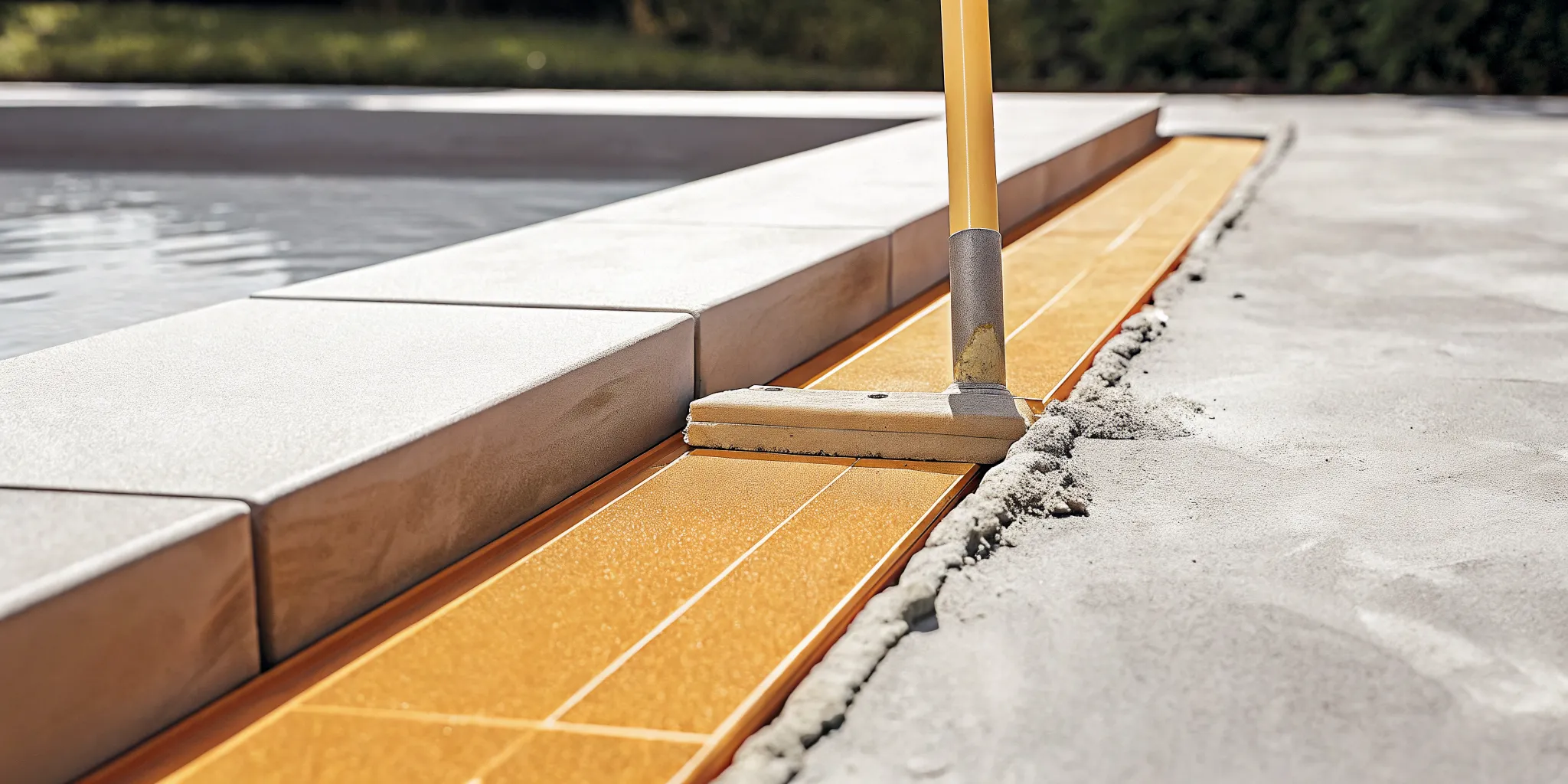
Pool coping is the finished edge installed around the pool shell. It frames the water, protects the pool structure, and creates the visual transition between the coping and the surrounding deck. When these two surfaces are selected together, the pool surround reads as one deliberate line rather than a collection of unrelated materials. A practical approach is to match the coping and deck closely, or choose materials with a clear relationship. Travertine coping with travertine pavers creates a continuous, light-toned surround and keeps the surface comfortable under summer sun. Bluestone coping can coordinate with bluestone pavers for a classic, textured appearance, while granite brings a harder, more structured edge to a granite deck. Porcelain and concrete pavers can also be paired with coping that repeats their color, texture, or border pattern. The goal is not necessarily an exact match. It is a consistent palette and finish that makes the edge look intentional. Installation details matter just as much as material selection. A well-compacted crushed-stone base provides the foundation for long-term paver stability, while an edge restraint, such as a ribbon curb, helps prevent the outer pavers from shifting. These restraints are especially important along the pool perimeter, where movement can make the coping and deck line separate visually and physically. Proper base preparation is a core requirement for a stable paver installation, as Gappsi explains in its paver installation guide. Pay close attention to finished elevations. Natural stone can vary in thickness, so the installer must adjust the base height before setting the coping and deck. If this step is overlooked, one material may sit higher than the other, creating an uneven transition, a trip point, or a broken-looking border. An installer experienced with natural stone can account for those variations and keep the surfaces aligned. For help coordinating materials, elevations, and edge details, schedule a pool design consultation with Gappsi.
Frequently Asked Questions
Which material is best for a pool deck on Long Island?
There is no single best choice for every property. Travertine is a strong fit when a cooler surface and natural texture matter. Bluestone offers a textured, classic appearance, while granite prioritizes hardness and resistance to wear. Porcelain is dense, stain-resistant, fade-resistant, and does not require sealing. Concrete pavers provide the widest range of colors, shapes, and textures at a more accessible material cost. The right selection depends on heat, maintenance, drainage, appearance, and budget. See Gappsi’s best pool deck paving materials guide for more comparison details.
Do pool deck pavers get hot in direct sunlight?
Some can, especially darker concrete pavers that absorb more solar heat. Travertine generally stays cooler under summer sun because its porous structure absorbs water quickly, while color, finish, shade, and installation conditions also affect comfort. Request material samples and compare them outdoors before choosing a surface for bare feet. Source: Gappsi’s Long Island travertine paver guidance.
Do all pool deck pavers need to be sealed?
No. Porcelain pavers are non-porous and typically do not require sealing. Bluestone and travertine may benefit from a sealer selected for the stone and exposure conditions. Concrete pavers can be sealed for added protection and a matte or wet-look finish. Travertine is porous, so spills containing oil or acidic ingredients should be cleaned promptly to reduce staining. Source: Gappsi’s porcelain paver maintenance guidance.
Can pavers be installed over an existing concrete pool deck?
Sometimes, but the existing slab must be evaluated first for cracks, drainage, elevation, structural condition, and the finished height around coping, doors, and steps. A sound slab may support an overlay system, while settlement or drainage problems usually require removal and proper rebuilding. In either case, a stable, well-compacted base and appropriate edge restraints are essential to limit movement. Source: Gappsi’s paver installation guidance.
Ready to Plan Your Pool Deck?
Choosing between travertine, bluestone, granite, porcelain, and concrete pavers is easier when the material, pool coping, drainage, and installation details are considered together. Gappsi Group can help you compare practical options for your Long Island property and define the next steps for your project. Schedule a free pool deck consultation: Contact Gappsi through our contact page.