


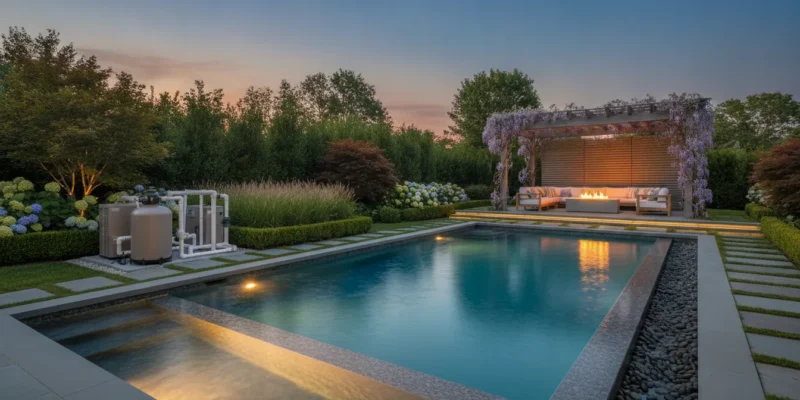
Pool equipment rarely operates as a single unit. Pumps, filtration, heaters, lights, valves, and water features each have different schedules and electrical demands. So controlling them separately can make daily use harder than it needs to be. The right control plan starts with the equipment already installed, the way your household uses the pool, and the upgrades you may want later.
Contact Gappsi through our contact page
A pool automation system is a centralized control layer that coordinates connected pool equipment. It schedules run times, adjusts settings, and may provide remote monitoring through a phone or other interface. It can improve convenience and help avoid unnecessary equipment operation, but it does not replace water testing, inspections, winterization, or professional service.
For Long Island homeowners, the most useful question is not simply whether automation is available. It is which components can work together reliably, what the installation requires, and how the controls will support the pool over time. That starts with understanding exactly what the system can control.
What Does a Pool Automation System Actually Control?
At its core, a pool automation system is a centralized control layer for the mechanical and electrical equipment that keeps a pool circulating, comfortable, sanitary, and usable. Instead of operating each component from a separate switch or timer, the system coordinates connected equipment through a central controller. The exact capabilities depend on the controller, equipment, wiring, and sensors selected for the project.
A properly planned system can bring several functions together in one operating interface:
- Pumps and filtration: Set circulation schedules and coordinate filtration equipment with the pool’s daily operating needs.
- Heaters: Manage temperature settings and call for heating when the connected equipment and controls are compatible.
- Sanitizing equipment: Coordinate compatible chemical dispensing or salt-based systems while supporting remote oversight of water-related settings.
- Valves and water features: Direct water to a spa, cleaner, spillway, fountain, or other feature according to programmed settings.
- Lights: Schedule pool and landscape lighting, and adjust compatible lighting modes from the control interface.
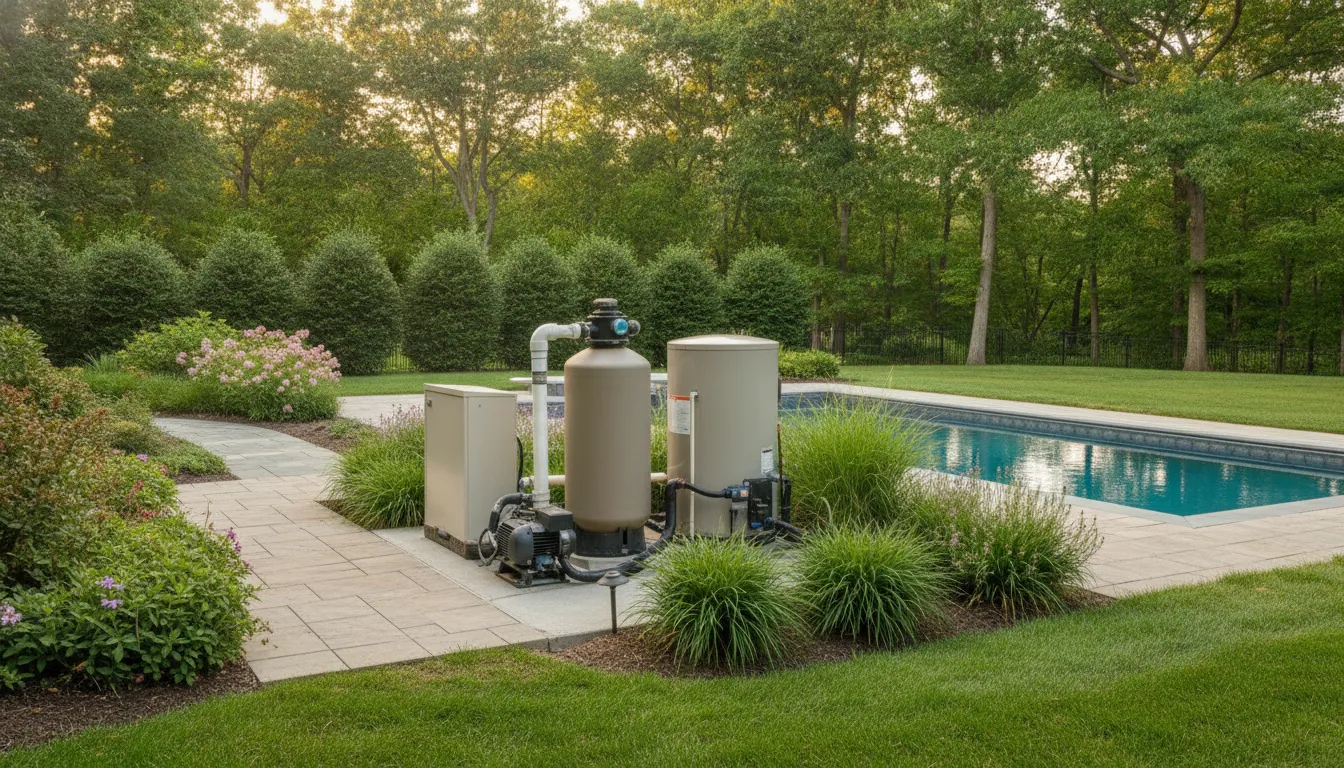
The controller acts as the decision point, but it does not make every pool component interchangeable. A pump, heater, salt system, light, or valve must have the right electrical connections, communication protocol, and control support. That compatibility review matters especially when an automation system is added to an existing pool. Gappsi can evaluate the equipment pad, electrical requirements, and desired features as part of a broader pool design or upgrade plan.
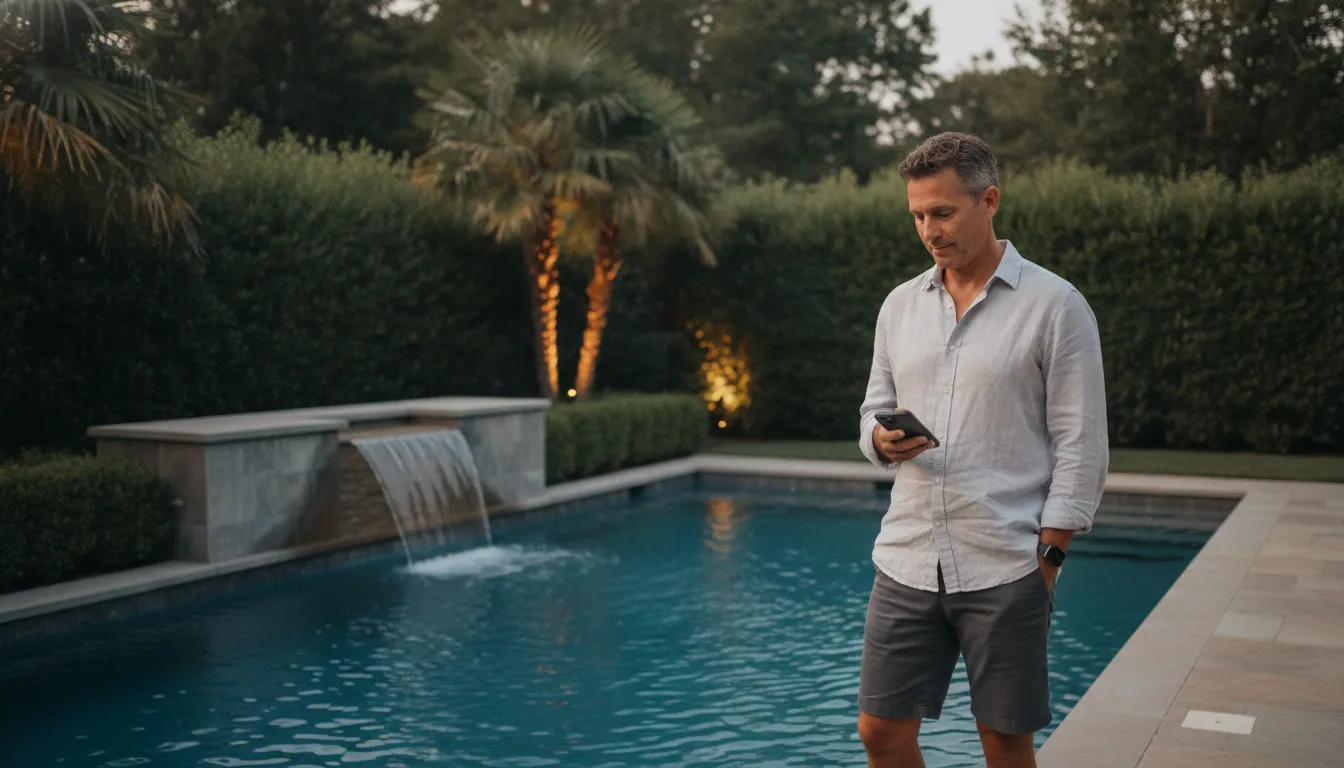
Many current systems also offer app-based access. Depending on the equipment package, a homeowner may be able to view operating status. Change a temperature setting, adjust a schedule, or activate a light or water feature from a smartphone. Research on connected pool controls describes remote management of filtration, heating, chemical dispensing, and maintenance schedules, while connected pump standards address scheduling and energy management. Centralized pool controls can coordinate filtration, heating, and water-quality equipment, but remote access should be treated as a management tool, not a substitute for physical inspection or water testing.
Gappsi approaches automation as one part of a complete installation. The controller, equipment pad, plumbing layout, electrical service, and future features should be planned together so the system remains understandable and serviceable over time.
Which Pool Features Benefit Most From Automation?
The most useful automation upgrades are the ones that operate on a predictable schedule or require frequent small adjustments. Circulation, heating, lighting, water features, and an automatic cover can each be controlled separately, then coordinated through one central interface. That makes daily pool care more consistent without suggesting that equipment can run unattended forever.
Circulation and filtration are often the foundation. A controller can schedule pump operation around the pool’s use, filtration needs, and other equipment. Connected pumps may also support energy management and off-peak scheduling, which can help avoid unnecessary runtime. Although actual energy use depends on the pump, settings, weather, and household habits. The U.S. Environmental Protection Agency’s connected-pump criteria describe scheduling during off-peak hours as one potential energy-management strategy.
Heating benefits from scheduled temperature settings. Instead of starting a heater manually before every swim, homeowners can coordinate heating with expected use and let the system maintain a selected range. A pool automation system can also prevent heating from operating when circulation is not available, provided the equipment and safety controls are properly configured. That convenience does not eliminate the need to inspect the heater, confirm adequate flow, or make seasonal adjustments.
Lighting and water features are practical candidates because they are used for defined periods. Pool lights can be programmed for evening hours, while bubblers, deck jets, waterfalls, and similar features can operate only during gatherings or swim time. Scheduling these loads keeps the equipment from being left on accidentally and makes it easier to create a consistent evening setting. Controls can also coordinate valves and pumps, but the installation must account for the equipment’s electrical loads and communication requirements.
Automatic covers add another layer of convenience when they are integrated with the pool’s operating sequence. The cover can be closed when the pool is not in use and opened before circulation, heating, or swimming, subject to the manufacturer’s controls and required safety practices. A cover is not a substitute for supervision, inspections, or proper maintenance. It should be selected as part of the overall pool design rather than added without checking clearances and access.
For a closer look at pumps, heaters, filtration, and related equipment, review Gappsi’s pool equipment guide for Long Island inground pools. Gappsi can evaluate how the equipment pad, controls, and desired features should work together before installation.
Contact Gappsi through our contact page
Can You Add Automation to an Existing Pool?
Yes, many existing pools can be upgraded with automation, but a retrofit is not simply a matter of attaching a phone app to the equipment pad. The installer first needs to assess how the pump, heater, filter, salt system or other sanitizer, lights, valves, and water features communicate. A compatible pool automation system must also work with the pool’s electrical infrastructure and the equipment already installed.
Start with the age and condition of the equipment. A relatively recent variable-speed pump or heater may integrate cleanly with a new controller. While older equipment may use incompatible communication protocols or lack the terminals needed for two-way control. In some cases, relays can switch basic on-and-off loads even when full digital communication is unavailable. That approach still requires correct wiring, adequate electrical load capacity, proper bonding and grounding, and protection suited to a wet outdoor environment.
| New pool | Existing pool |
|---|---|
| Controller, equipment, conduit, and wiring can be planned as one coordinated installation. | Existing equipment, conduit paths, panel space, and wiring must be inspected before selections are made. |
| Communication protocols and control points can be matched from the beginning. | Compatibility may be limited by equipment age, manufacturer, relays, or unavailable communication connections. |
| Sensors for temperature, flow, and water conditions can be located during construction. | Sensors may require new fittings, wiring, or space at the equipment pad, and their readings still need professional interpretation. |
| Future features, service access, and electrical capacity can be reserved in the design. | Replacement of outdated components may be more practical than adding adapters to a failing or crowded system. |
Sensors deserve special attention. Temperature, flow, pressure, and water-level inputs help the controller schedule equipment and identify abnormal conditions. Safety interlocks can help prevent operation when a critical condition is detected, but they do not replace inspections or maintenance. An installer should confirm that sensors are correctly positioned, calibrated, and supported by the selected controller.
Replacement may make more sense when the pump, heater, wiring, or control panel is near the end of its service life. When the equipment pad has no room for safe expansion, or when several components use incompatible systems. Gappsi can review the complete installation rather than treating automation as an isolated accessory. That assessment helps determine whether a focused controller upgrade, selected equipment replacements, or a broader equipment-pad redesign will provide the most serviceable result.
How Does Automation Affect Maintenance and Energy Use?
A pool automation system can make routine operation more consistent by coordinating equipment schedules, monitoring selected conditions, and communicating alerts. Instead of relying entirely on manual switches, a homeowner can set circulation, heating, lighting, and water-feature schedules from a central controller. Connected pump controls may also support off-peak scheduling and energy management, although actual results depend on equipment, settings, weather, and pool use. The U.S. Department of Energy’s ENERGY STAR program describes connected pool pumps as capable of scheduled operation during off-peak hours. Read the ENERGY STAR connected-pump criteria.
Scheduling reduces avoidable runtime. A properly configured system can run circulation for planned periods instead of leaving a pump or water feature operating longer than needed. It can coordinate heating with the times a family expects to use the pool. While lighting and water features can remain off when they are not serving a purpose. This does not guarantee a specific percentage or dollar reduction. An installer must account for pump speed, pipe design, heater type, filtration needs, and local operating conditions.
Monitoring adds another layer of control. Depending on the equipment and sensors installed, the system may track water-quality functions, equipment status, flow conditions, or scheduled maintenance. Remote access can help a homeowner notice an alert before a small operating issue becomes a larger disruption. Safety interlocks may also prevent equipment from running when sufficient flow is not detected or when another critical condition is present. These safeguards support awareness and diagnostics, but they are not a substitute for hands-on evaluation.
What maintenance still requires human attention?
Automation manages commands and reports conditions. It does not physically remove debris, verify water balance with an independent test, inspect components for wear, or repair a leak. A practical maintenance routine should still include:
- Test and adjust water chemistry according to the pool’s treatment system and service recommendations.
- Empty baskets and clean surfaces so debris does not restrict circulation.
- Inspect filters, pumps, valves, heaters, and wiring for damage, noise, leaks, or unusual operation.
- Confirm sensors and alerts are working and that schedules still match seasonal conditions.
- Arrange professional service and winterization when the equipment or climate requires it.
Early alerts can help identify maintenance needs sooner, which may reduce the risk of severe equipment damage, but only when someone responds to the alert. Gappsi can review the equipment pad, controls, electrical requirements, and service access together so the automation plan remains useful after installation, not just convenient on opening day.
How Should Long Island Homeowners Plan a Pool Automation System?
Plan automation as part of the pool design, not as an accessory added after the concrete, plumbing, and electrical work are complete. On Long Island, the right approach accounts for the pool shell, equipment layout, seasonal winterization, and the way your household expects to use the space. A thoughtful plan also leaves room for service access and future upgrades.
- Start with the pool type and intended features. Identify whether the project will use a gunite, vinyl liner, or fiberglass pool, then list the equipment and features that need coordination. Pumps, filtration, heaters, sanitizing equipment, valves, lights, water features, and an automatic cover may each have different control and wiring requirements. Gappsi designs and installs all three major pool types, so the automation discussion can begin with the construction plan rather than a generic equipment package. Review the options for custom swimming pool design and installation before selecting controls.
- Design the equipment pad around the system. Reserve enough space for the controller, pump, filter, heater, sanitizer, transformers, valves, and service clearances. Keep connections organized and label the equipment so a technician can trace each circuit later. A compact pad is not useful if it makes repairs, replacement, or winter preparation difficult.
- Confirm electrical capacity and communication compatibility. Have the installer verify available load, circuit protection, bonding, conduit routes, and outdoor-rated components. The controller must also communicate with the selected pumps, heaters, lights, sensors, and chemical equipment. Existing hardware may require compatible relays, adapters, or replacement before a retrofit can work reliably.
- Choose controls that match daily use. Decide which functions should run on schedules and which should remain manual. Centralized controls can coordinate circulation, heating, lighting, and water features, while connected access may allow monitoring and adjustments from a phone. Scheduling can reduce unnecessary equipment runtime, but it does not remove the need for water testing or professional inspection.
- Plan for Long Island winterization. Ask how the controller, sensors, plumbing, heater, and chemical systems will be shut down, protected, and restarted each season. Automation should support the winterization plan, not replace the technician who confirms that water has been removed or equipment is safe for freezing conditions.
- Protect service access and future capacity. Keep panels, disconnects, valves, and equipment reachable without dismantling unrelated components. If you may add a heater, lights, water feature, cover, or monitoring sensor later, discuss spare capacity and compatible pathways now. Gappsi can align those decisions across design, construction, and installation, helping the finished system remain serviceable as your needs change.
What Are the Limits of Pool Automation?
A pool automation system coordinates connected equipment, but it does not turn the pool into a self-maintaining appliance. It can follow schedules, receive sensor readings, and send alerts. It still needs a homeowner or service professional to interpret conditions and take physical action.
Automation cannot repair equipment
A controller may identify an unusual flow condition, temperature change, or communication problem, depending on the equipment and sensors installed. It cannot replace a failed pump motor, clear a blocked line, repair a leaking valve, or correct damaged wiring. Treat an alert as a prompt to investigate, not as a diagnosis. Continuing to run equipment that is making abnormal noises or showing repeated fault messages can make a small problem worse.
Water quality still requires judgment
Automation can support dosing, circulation, and monitoring when the system is designed for those functions. It cannot account for every factor affecting water quality. Heavy rain, high bather loads, debris, algae growth, inaccurate probes, and a depleted chemical supply may require testing and adjustment. Test the water according to the equipment manufacturer’s guidance, and do not assume an app reading replaces a properly maintained test routine.
Code compliance and seasonal work remain human responsibilities
Connected controls do not make an installation compliant with electrical, plumbing, barrier, or local building requirements. Equipment placement, bonding, disconnects, drainage, and access must be planned and inspected appropriately. A qualified installer should coordinate these details rather than relying on an automation platform to identify every code issue.
Winterization is another clear limit. In Long Island’s climate, the pool may need physical preparation, including lowering water where appropriate, clearing lines, protecting equipment, and securing the cover. Automation cannot make those decisions for a particular pool or perform the work. It also cannot choose the best layout, sightline, finish, equipment-pad location, or future feature plan. Those decisions require design judgment and an understanding of the property. Gappsi can help homeowners weigh those practical limits while planning a pool and its control system together.
Contact Gappsi through our contact page
Frequently Asked Questions
Can I add automation to an existing pool?
Often, yes, but a retrofit starts with a compatibility review. The installer should check the controller, pump, heater, sanitizer, valves, lights, wiring, electrical load, sensors, and communication protocols. Older equipment may need adapters or replacement before the controls can operate reliably.
Can I control my pool automation system from my phone?
Many current systems support app-based control through a compatible network connection. Depending on the equipment and installation, a homeowner may be able to adjust schedules, temperature settings, lighting, valves, and water features remotely. Confirm which functions are supported before selecting a controller.
Does automation eliminate pool maintenance?
No. Automation can schedule circulation, heating, lighting, and other equipment, while alerts may help identify flow or equipment issues sooner. It does not replace water testing, cleaning, inspections, physical repairs, professional service, or seasonal winterization.
Does a pool automation system save energy?
It may support more efficient operation by coordinating schedules and avoiding unnecessary equipment run time. Actual energy use depends on the pump, heater, filtration demands, weather, pool cover, settings, and usage. Treat efficiency as a planning goal, not a guaranteed percentage or dollar saving.
How do I choose the right system for my pool?
Start with the equipment you have or plan to install, then match the controller to the pump, heater, sanitizer, lights, valves, sensors, wiring, and future features. Also consider service access, electrical capacity, winterization, and whether the system can be supported locally over time.
Ready to Plan Your Pool Automation System?
A well-planned pool automation system can help coordinate equipment around how your household uses the pool, while keeping compatibility and future service needs in view. Gappsi can review your goals for a new or existing Long Island pool and help identify a practical next step. Contact Gappsi through our contact page to discuss your pool automation project.