


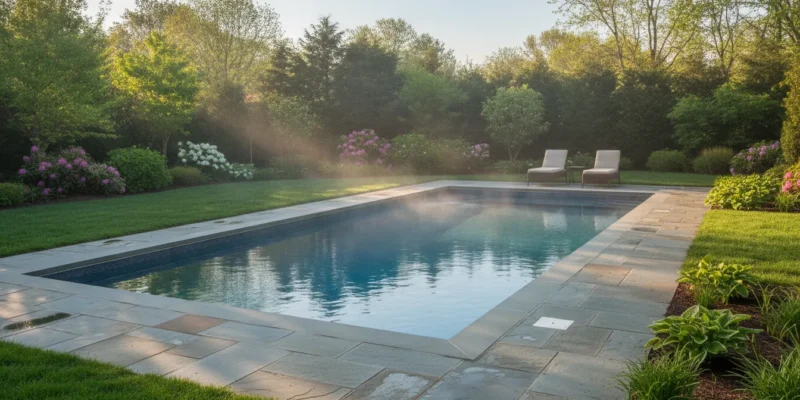
Long Island pool season is shaped by more than the calendar. Cool nights, wind, water loss, and pool size all affect comfort. They also affect how long your family can use the water. Choosing the right heating approach means balancing desired temperature, swimming schedule, available utilities, and the way the pool fits into the property.
Contact Gappsi through our contact page
A pool heater raises or maintains water temperature so a Long Island pool can be more comfortable during spring, fall, and cool summer evenings. Gas systems heat water quickly, while air-source heat pumps move heat from outdoor air into the pool. Solar collectors can support seasonal heating, but each option must be matched to the pool’s surface area, local conditions, and planned use.
Before comparing equipment, it helps to separate heating from circulation and understand what the system contributes to the rest of the pool equipment. That foundation makes later decisions about sizing, installation, and seasonal operation more practical.
What Does a Pool Heater Do for a Long Island Pool?
A pool heater adds controlled warmth to swimming-pool water so your family can use the pool beyond the hottest part of summer. It works with the circulation system, but it does not replace the pump, filter, or sanitizer. Instead, water moves through the heater, gains heat, and returns to the pool. That distinction matters when planning a complete system. For broader equipment context, review Gappsi’s essential pool equipment guide.
Contact Gappsi through our contact page
On Long Island, heating can make the difference between an unused pool and one that supports more of your outdoor schedule. The need often appears during the shoulder seasons, such as late spring and early fall. Sunny afternoons can still give way to cold evenings. A heater can help bring the water to a comfortable temperature before use, then maintain that temperature while the system is operating.
Heating demand is not determined by the calendar alone. The pool’s surface area exposes water to the surrounding air, and a larger exposed surface generally creates more opportunity for heat loss. Wind can carry warmth away from the water, while humidity and cool night temperatures also affect the outdoor-pool heating load. These factors should be considered alongside the pool’s shape, location, and expected use.
Heating is different from circulation
The circulation system keeps water moving through filtration and treatment equipment. The heater addresses water temperature. Both functions need to be coordinated so heated water reaches the pool efficiently and the controls match how you use the space. A pool used for occasional weekend gatherings may need a different operating approach from one used every evening.
That is why there is no single best heater for every Long Island pool. Gas heaters can heat water quickly, while heat pumps transfer heat from outdoor air and depend more on air temperature. The right direction depends on your preferred swimming schedule, pool size, available utilities, wind exposure, and whether you plan to use a cover. Considering those details during design or an equipment upgrade helps create a system that supports actual use instead of adding capacity without a clear purpose.
Which Pool Heater Type Fits Your Swimming Schedule?
The right pool heater depends less on a universal ranking and more on when you swim, how quickly you want the water to warm, and how consistently you want to hold a set temperature. A family that uses the pool on occasional weekends may value fast recovery. A household that swims several times each week may prioritize steady operation and seasonal efficiency.
Contact Gappsi through our contact page
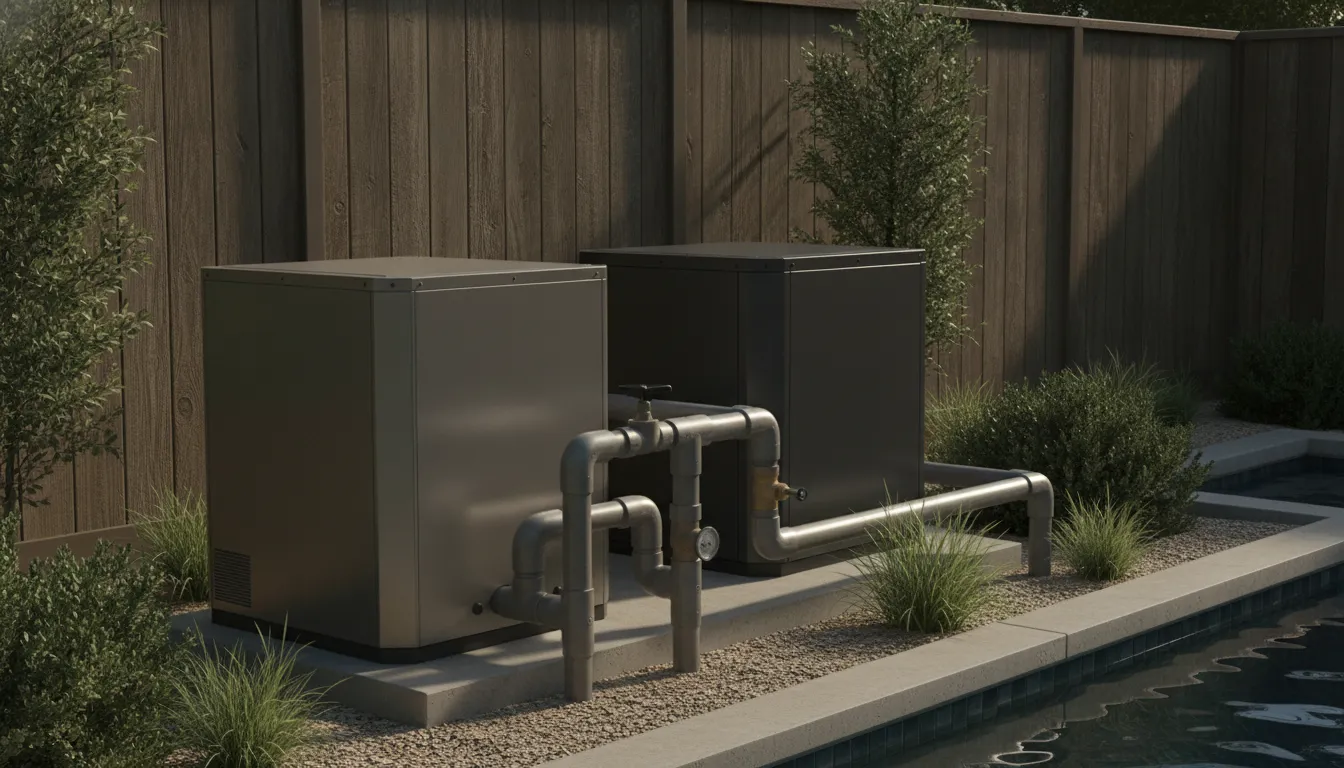
| Pool heater type | How it works | Best fit | Important tradeoff |
|---|---|---|---|
| Gas heater | Uses gas to heat pool water directly. | Periodic use, quick warm-up, and weather-independent temperature control. | It is a strong choice for fast heating, but the system should be sized and integrated carefully for the pool and intended schedule. |
| Air-source heat pump | Transfers heat from outdoor air into the pool water using electricity. | Frequent swimming and homeowners who want a measured, ongoing heating approach during suitable weather. | Performance is strongest when outdoor air is above 50 degrees Fahrenheit, so cooler conditions can affect the heating experience. |
| Solar pool heating | Uses solar collectors to capture energy for pool heating. | Season extension where collector placement, sunlight, and a flexible swimming schedule align. | Output depends on available sunlight and correct collector sizing. It is less predictable than gas when weather changes. |
When does a gas heater make sense?
A gas system suits swimmers who want to warm the pool for specific occasions rather than maintain one temperature every day. Gas pool heaters are commonly used for quick heating and periodic use. Gas can also maintain a desired temperature in changing weather, which matters during cool Long Island evenings or a short-notice swim day.
Why choose a heat pump or solar system?
An air-source heat pump moves existing heat from outdoor air into the water instead of generating heat directly. It can be a practical match for a household that uses the pool regularly and plans operation around the warmer portion of the season. Solar heating can also support season extension with very low annual operating costs. Its results depend on collector area and location, so the system needs to be planned around the pool’s surface area and available solar exposure.
Schedule matters as much as equipment. Occasional swimmers often benefit from rapid heating, while frequent swimmers may prefer a system designed for consistent, planned operation. A pool cover can help retain heat with any heating method, and proper sizing should account for surface area, average air temperature, wind exposure, humidity, and cool nights.
How Do You Size a Pool Heater Correctly?
Choosing a pool heater by equipment label alone can produce disappointing results. The right size reflects how much water is exposed to heat loss, how warm you want the pool, and when you plan to swim. Sizing begins with the pool’s surface area and the difference between the water temperature and average air temperature.
Start with the pool’s exposed surface
Water loses heat across its surface, so a broad pool, attached spa, tanning ledge, or other open water feature can increase the heating demand. A designer should review the complete water layout rather than sizing from the main pool dimensions alone. The intended water temperature also matters. A larger difference between the desired water temperature and the surrounding air creates a greater load for the heater to overcome.
Account for Long Island weather and your season
Average air temperature is only a starting point. Wind exposure, humidity, and cool night temperatures also affect the heating load for an outdoor pool, according to the Department of Energy. An exposed pool may need a different approach from a sheltered pool, even when their surface areas are similar. Explain whether you want occasional warm weekends, regular spring and fall use, or a longer swimming season. Your schedule helps determine how quickly the system needs to recover heat and how consistently it will operate.
Do not overlook the cover and equipment system
A pool cover is one of the most effective ways to reduce heating costs, regardless of the heating system selected. When the pool is covered between uses, less heat is lost from the water surface. That can change the practical sizing discussion, but it does not eliminate the need to evaluate the pool’s exposure and desired temperature.
Sizing should also be coordinated with the existing or planned gas, electrical, plumbing, and control capacity. These components must work together with the heater, pump, filter, and any automation. For broader equipment context, review this guide to essential pool equipment.
Practical sizing checklist:
- Measure the pool’s total exposed water surface, including connected features.
- Identify the preferred water temperature and the average air conditions during use.
- Note wind exposure, humidity, and cool nighttime conditions.
- Define the swimming season and how quickly you expect the pool to warm.
- Confirm whether a pool cover will be used consistently.
- Review gas or electrical service, plumbing, controls, and equipment compatibility.
A qualified pool professional can use these details to compare heater options and recommend a system that fits the actual pool and schedule. Rather than relying on a one-size-fits-all assumption.
What Should You Plan Before Pool Heater Installation?
A successful installation begins with the space around the heater, not just the heater itself. Decide where the equipment pad will sit so technicians can service the unit, connect it to the pool plumbing. And route gas or electrical service without creating conflicts with walkways, planting beds, doors, or future improvements. The location should also account for manufacturer-required clearances and safe airflow. Exact clearance requirements vary by equipment, so they should be confirmed for the selected model rather than guessed.
Plan the utility connection early. A gas heater may require a suitable gas supply, while a heat pump needs electrical service and adequate airflow around the outdoor unit. Your installer should review the available capacity, connection route, shutoffs, and controls before equipment is ordered. This avoids discovering late in construction that the planned location or service path will not support the selected pool heater.
How Will the Heater Connect to the Pool System?
Heating depends on more than the cabinet on the pad. The plumbing layout must provide a clear path through the filter, heater, and return system, with valves and unions positioned for maintenance. Controls should be selected at the same time. Automation can coordinate filtration, heating, temperature settings, and scheduling, but the equipment must be compatible with the control system and wired correctly.
Also plan for drainage and operating conditions. Water from maintenance or equipment discharge should not collect beside the pad or flow toward the home. Gas-heater exhaust and heat-pump airflow can affect nearby walls, windows, fences, and seating areas. Discuss operating noise and airflow with the installer, especially when the pad is near a bedroom, patio, or property line.
What Changes When the Pool Is New?
For a new pool, heater planning belongs in the complete construction sequence. Coordinating each stage helps the plumbing, electrical or gas route, equipment pad, drainage, cover, deck, and landscape plan work together. It is easier to reserve service access and conceal utilities during design than after concrete and hardscape are finished.
- Design: Set the pool dimensions, equipment location, cover strategy, and utility routes.
- Permits and excavation: Confirm the project requirements before the site is opened.
- Steel, plumbing, and finishing: Build the pool shell and connect the planned circulation path.
- Equipment and startup: Install the heater and controls, then check the complete system before use.
Gappsi can coordinate heating decisions with a custom swimming pool design for homeowners in Nassau and Suffolk counties. Bring your expected swimming schedule, preferred controls, pool cover plans, and any concerns about noise or utility access to the design conversation. Those details help shape an integrated system instead of treating the heater as an afterthought.
How Can You Extend the Pool Season Efficiently?
Extending a Long Island pool season is less about running a heater continuously and more about controlling when heat is added and when it is allowed to escape. Start with the pool cover. The U.S. Department of Energy identifies a pool cover as one of the most effective ways to reduce heating costs, regardless of which heating system you use. Cover the water whenever the pool is not in use, especially overnight and during windy conditions. This limits heat loss at the surface and reduces the effect of evaporation.
Weather should guide the operating schedule. Wind exposure, humidity, and cool night temperatures all affect the heating load for an outdoor pool. On a calm, mild day, you may need less heating than after a cool night or a stretch of windy weather. A practical schedule can prioritize heating before planned use instead of maintaining the same temperature around the clock. The right approach depends on the pool’s construction, cover, equipment controls, and how often your household swims.
Solar heating can also be considered as a seasonal or supplemental option. Solar pool heaters can have very low annual operating costs, but their performance depends on available sunlight and proper collector sizing. The required solar collector area is calculated from the pool’s surface area and a factor based on geographic location, according to the Department of Energy. A pool professional can evaluate roof or ground placement, orientation, shading, and how solar collection would work with the rest of the equipment.
Maintenance supports consistent operation throughout the shoulder seasons. Keep the cover clean and functioning, maintain water chemistry, inspect visible plumbing connections, and follow the heater manufacturer’s service recommendations. A dirty filter or restricted flow can affect the overall system, while neglected equipment may be harder to evaluate when temperatures drop. For broader planning, review this guide to essential pool equipment and how the heating system fits into the complete pool setup.
- Cover the pool when it is not in use, with particular attention to overnight periods.
- Adjust the schedule for wind, cool nights, weather, and planned swimming times.
- Evaluate solar based on sunlight, collector area, shading, and geographic location.
- Maintain the system with clean filters, balanced water, and recommended inspections.
These steps help you use a pool heater as part of a coordinated system rather than treating it as the only tool for extending the season.
When Should Long Island Homeowners Replace or Upgrade a Pool Heater?
A pool heater does not need replacement simply because it is no longer new. The better question is whether it still heats reliably, suits the way your household uses the pool, and can be serviced safely. A professional inspection can separate a repairable fault from a broader equipment mismatch.
Slow heating is one reason to investigate. If the water takes substantially longer to reach the desired temperature, the cause may involve the heater. Sizing, water flow, a control setting, wind exposure, or heat loss from an uncovered pool. Heater sizing depends partly on pool surface area and the difference between water and average air temperatures, while wind, humidity, and cool nights also affect the heating load. See this guide to essential pool equipment for more system context.
Repeated faults or shutdowns deserve more than repeated resets. Ask the technician to document the fault code, inspect connections and water flow, and identify whether the problem is isolated or recurring. Visible corrosion, cracking, leaking, or damaged wiring should also prompt a timely inspection. Do not open gas components or electrical covers yourself. Safety concerns can change the decision from repair to replacement.
Has your pool use changed?
An equipment upgrade may make sense when your schedule is different from the one the original system was selected for. A gas heater can be useful when you heat the pool quickly for periodic use and can maintain a desired temperature in changing weather. A heat pump transfers heat from outdoor air into the water and may better fit a homeowner seeking a different operating approach. Although it works most efficiently when outdoor air is above 50 degrees Fahrenheit. These tradeoffs should be evaluated alongside your season, preferred water temperature, available utilities, and cover use.
Parts availability is another practical consideration. If a heater requires obsolete components, repairs may become slower, less predictable, or dependent on a substitute part. That does not automatically make replacement necessary, but it is a reason to compare the cost and reliability of continued repairs with a correctly integrated new system. A pool contractor can also check whether the existing plumbing, controls, gas service, or electrical capacity suit the proposed equipment.
Quick diagnostic checklist
- Is heating noticeably slower than before?
- Are fault codes or shutdowns happening repeatedly?
- Do you see corrosion, leaks, cracks, or unusual noises?
- Are replacement parts difficult to source?
- Does the heater match your current pool schedule and desired season?
Bring these observations to an inspection rather than choosing a replacement by brand name alone. The right recommendation should account for the pool, equipment pad, cover, utilities, and how your family actually uses the water.
Planning a Pool Heater With a Custom Pool Project
A pool heater works best when it is planned as part of the entire swimming pool system. It should not be added after the deck and equipment areas are finished. During a new project, the pool’s dimensions, surface area, cover strategy, and expected season of use all help determine the heating approach. The same decisions also affect plumbing routes, utility connections, controls, and the space required around the equipment.
Planning a custom pool? Contact Gappsi through our contact page
Coordinate the heater with the pool and equipment pad
The pool’s size and shape should be considered before selecting a heater. A larger water surface can require a different heating capacity than a compact pool. While a planned cover can reduce heat loss when the pool is not in use. Wind exposure, cool nights, and the location of surrounding structures also belong in the design conversation.
The equipment pad should have enough room for the heater, pump, filter, valves, controls, and future service access. Its location should be coordinated with the home’s gas or electrical service, the plumbing run, drainage, and the outdoor areas where equipment sound may be noticeable. These choices are easier to resolve on paper than after a deck, retaining wall, or planting bed has been installed. For broader system planning, review Gappsi’s guide to essential pool equipment.
Include the deck, landscape, and cover in the layout
A heater is one part of a larger outdoor living plan. Deck elevations and pathways need to leave practical access to the equipment pad. Landscape screening can improve the appearance of the installation, but it should not prevent ventilation, inspection, or maintenance. The cover system should also be considered alongside coping, automatic-cover components, storage, and the finished pool edge.
Gappsi’s design-build process can connect these decisions before construction begins. Homeowners can explore custom swimming pool design and review the planning considerations involved in gunite swimming pool design. This coordination helps align the pool shell, plumbing, equipment, hardscape, and landscape rather than treating each installation as a separate project.
Plan permits, installation, and startup as one sequence
For a new Gappsi pool project, the work can proceed through design, permits, excavation, steel and plumbing, finishing, equipment installation, and startup. Heater decisions should be made early enough to support the plumbing and utility plan, rather than waiting until the final construction stage. At startup, the system can be checked as a complete installation, including circulation, controls, water flow, and the heater’s relationship to the rest of the equipment.
Serving Nassau and Suffolk counties, Gappsi can help homeowners evaluate the pool heater alongside the pool design, site layout, and intended use. The right plan is the one that fits the pool’s physical requirements and the way the household expects to use it.
Contact Gappsi through our contact page
Contact Gappsi through our contact page
Frequently Asked Questions
Which heater is best for occasional pool use?
A gas heater is often a practical choice when you swim periodically and want the water warmed quickly before use. Gas heaters are commonly used for intermittent swimming because they can heat water quickly.
Will a heat pump work during a cool Long Island spring?
It can operate in cool weather, but its efficiency decreases as the air gets colder. Heat pumps are most efficient when outdoor air is above 50 degrees Fahrenheit. Seasonal use, desired water temperature, and operating schedule should guide the decision.
Is solar pool heating a good option for my property?
Solar heating can help extend the swimming season with very low annual operating costs, but its performance depends on available sun and correctly sized collectors. Collector area is based on pool surface area and a factor for geographic location. The roof or ground layout needs to be evaluated before installation.
What information is needed to size a pool heater?
Start with the pool surface area, the desired water temperature, and the difference between pool water and average air temperatures. Wind exposure, humidity, cool nights, pool-cover use, and the length of your swimming season also affect the heating load.
Does a pool cover really improve heating performance?
Yes. A cover helps retain heat and is useful with gas, heat pump, and solar systems. A pool cover is one of the most effective ways to reduce heating costs, making it an important part of the overall heating plan.
Talk With Gappsi About Your Pool Heating Plan
A pool heater works best when its capacity, controls, plumbing, cover, and overall pool design are considered together. Gappsi can help you discuss the right approach for your Long Island project. Whether you are planning a new pool or improving an existing system in Nassau or Suffolk County.
Contact Gappsi through our contact page to discuss a custom pool heating plan.