


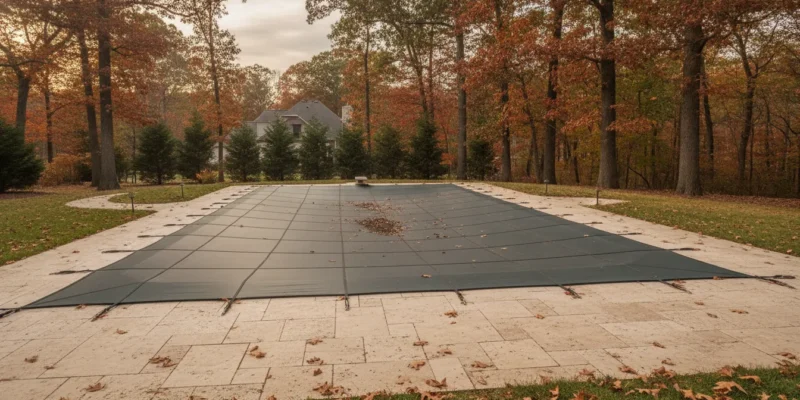
Choosing a pool cover is not simply a matter of picking the heaviest material or the most convenient mechanism. The right option must match your pool’s shape, surrounding deck, winter conditions, daily use, and the way your household controls access to the water.
A pool cover can reduce exposure to leaves, snow, sunlight, and open water, while some safety covers provide another physical barrier when properly fitted and used. It cannot replace a four-sided fence, a self-closing and self-latching gate, alarms, or close, constant adult supervision. The CPSC and CDC both emphasize that layered protection matters, especially around children.
That distinction makes the comparison more practical: first define what protection you need, then weigh mesh, solid, and automatic designs against installation requirements, maintenance, storage, and everyday habits. The limits of each option are the best place to begin.
What does a pool cover protect against, and what can it not do?
A pool cover serves two related purposes: it helps manage the pool when it is not in use and can contribute to a broader plan for limiting access. The exact protection depends on the cover type, its fit, its anchoring, and how consistently it is used. A winter cover and an electric safety cover are not interchangeable products. The decision should begin with how your household uses the pool, what seasonal conditions it faces, and what other safeguards are already in place.
For maintenance and weather exposure, a properly selected cover can help keep a closed pool separated from falling debris and seasonal conditions. It may also reduce the amount of work involved when the pool is reopened. Those benefits do not remove the need to follow the manufacturer’s instructions for installation, cleaning, inspection, and storage. A cover that is loose, damaged, incorrectly fitted, or left unsecured should not be treated as a reliable protective measure.
For access control, a power safety pool cover can be another barrier option, according to guidance from the Washington State Department of Health. That guidance also says the safety cover must meet ASTM F1346-91. Verify the product’s specifications with the manufacturer before treating a particular model as a safety cover, and ask your local building department whether additional barriers are required. Requirements can depend on the property and jurisdiction.
- A cover can support a layered safety plan and help limit access when correctly installed and secured.
- A cover cannot replace a four-sided fence that is at least four feet high, where that safeguard is recommended for the pool.
- A cover cannot replace self-closing, self-latching gates or other access controls.
- A cover cannot replace close, constant supervision by a responsible adult when children are near water.
- A cover cannot replace alarms, safe behavior, or an emergency-readiness plan.
The U.S. Consumer Product Safety Commission guidance describes a cover as one part of a safety plan, not a substitute for supervision, barriers, alarms, or responsible behavior. It also emphasizes that barriers can never replace adult supervision. The CDC recommends a four-sided fence at least four feet high and self-closing, self-latching gates. A responsible adult should supervise closely and constantly whenever children are in or near the water.
Think of the cover as one layer within a coordinated system, not as permission to relax the other layers. The right choice should account for your pool and installation context, the way your family accesses the yard, and the safeguards you can maintain every day.
Contact Gappsi through our contact page
How do mesh and solid winter covers compare?
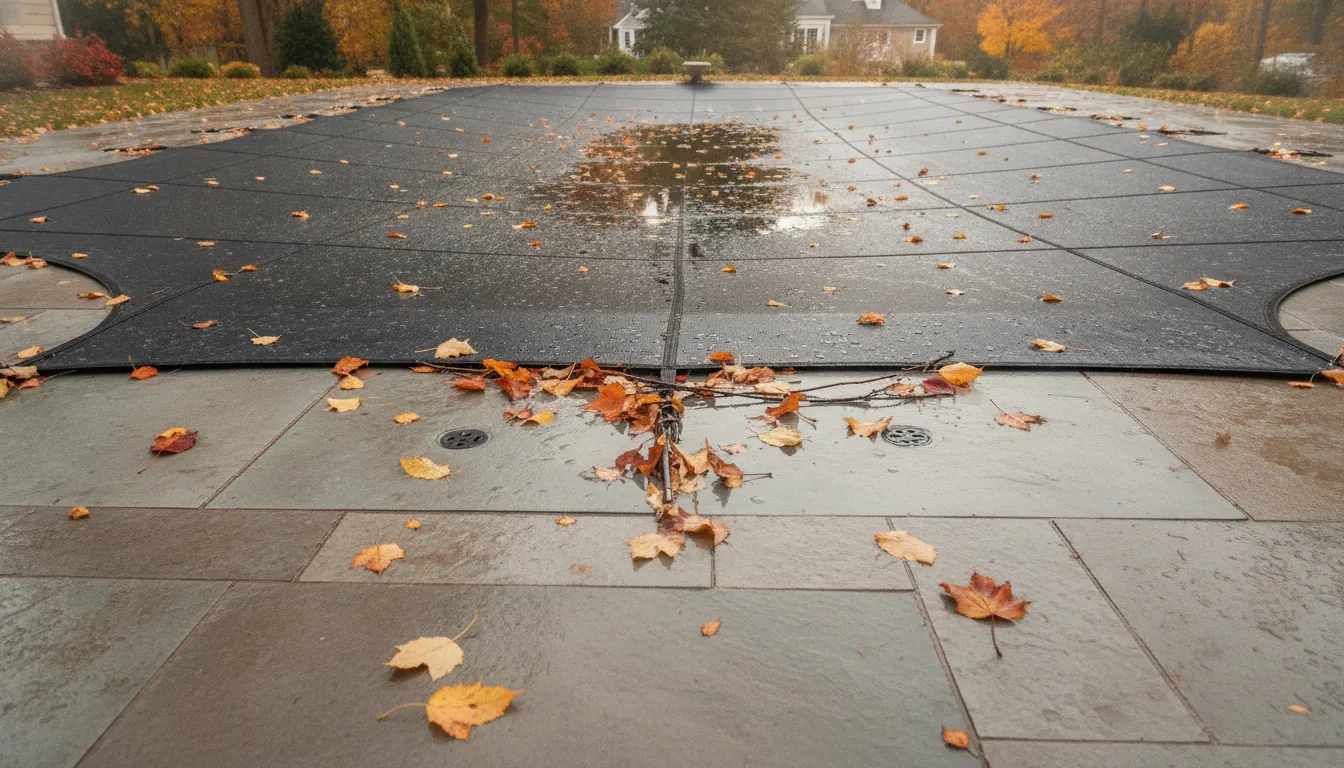
Both cover types help protect a pool from cold-month elements, but they manage water and debris differently. A mesh pool cover allows rain and melted snow to drain through the fabric while catching much of the larger debris. A solid cover creates a more complete barrier over the water, so accumulated rain, snow, or ice must be managed from the cover surface.
That difference affects pump use, spring cleaning, sunlight exposure, and how much attention the cover needs after a storm. Product specifications vary, so the figures below are examples from published comparisons, not universal guarantees for every model.
| Cover type | Water and debris behavior | Operating considerations | Best fit |
|---|---|---|---|
| Mesh winter cover | Drains rain and melted snow through the fabric while keeping leaves and larger debris out. One supplier describes mesh designed to drain standing water, melted snow, or ice, but performance depends on the product. | Usually does not require a pump on top. Sunlight can pass through to some degree, and the pool may need more spring cleaning than with an opaque cover. | Homeowners who want passive drainage and a lighter seasonal maintenance routine, with appropriate anchoring and inspection. |
| Solid vinyl winter cover | Blocks sunlight and is intended to keep out both water and debris. Water that collects on top must be removed rather than allowed to accumulate. | Requires a cover pump in the cited comparison. Snow and ice loads still need monitoring, and the cover should be cleaned, dried, and stored carefully before reuse. | Homeowners prioritizing a more opaque barrier over the pool and willing to manage water on the cover surface. |
Published comparisons offer useful planning examples. One describes a standard tarp winter cover as needing a pump, blocking sunlight and light debris, and lasting one to three seasons. The same comparison describes mesh security covers as not needing a pump on top, keeping out debris but not water, and lasting 10 to 15 years. These are competitor-specific examples, not promises about a particular pool cover. Confirm the actual fabric, warranty, service life, and maintenance instructions with the manufacturer.
Solid vinyl covers can reduce leaves, light, and water entering the pool, but they are not maintenance-free. The cited comparison says they require a pump and keep out water and debris. Heavy snow also deserves special attention. Another comparison warns that a cover can cave in under heavy snow even when it carries a substantial weight rating. Homeowners should follow the product instructions and avoid treating a rating as permission to walk on the cover or ignore accumulating snow.
Storage matters for either style. Remove debris without dragging sharp objects across the fabric, allow the cover to dry fully, and store it where rodents, standing moisture, and chemicals cannot damage it. Before the next installation, inspect the fabric, straps, anchors, seams, and pump equipment. For a Long Island pool, choosing between mesh drainage and solid coverage should account for the pool’s shape. Surrounding trees, winter water management, and the practical maintenance routine your household can maintain.
Sources: winter-cover guidance, mesh-cover specifications, and cover comparison examples.
When is an automatic safety pool cover the better fit?
An automatic safety cover can make sense when the pool is used often and the homeowner wants a practical way to cover it between swims. With a powered system, opening and closing the cover becomes part of the normal pool routine rather than a job that requires lifting. Folding, and storing a large material panel. That convenience can be especially useful for families who use the pool on changing schedules, or for anyone who wants the pool surface secured promptly after swimming.
Gappsi identifies winter mesh covers and electric safety auto-covers as two pool-cover categories. The better choice depends on how the pool is used, how it is shaped, and how the cover will fit into the surrounding construction. An automatic system is not automatically the right answer for every pool, so product-specific capabilities and limitations should be confirmed with the manufacturer.
Shape is one reason to investigate an automatic system. Manufacturer information describes automatic covers custom fabricated for rectangular, freeform, swim-spa, and vanishing-edge designs. That does not mean every system fits every layout without design work. Steps, raised walls, tanning ledges, attached spas, waterfalls, and other obstacles can affect the housing, track path, and final fit. A careful site review should address those conditions before a product is selected.
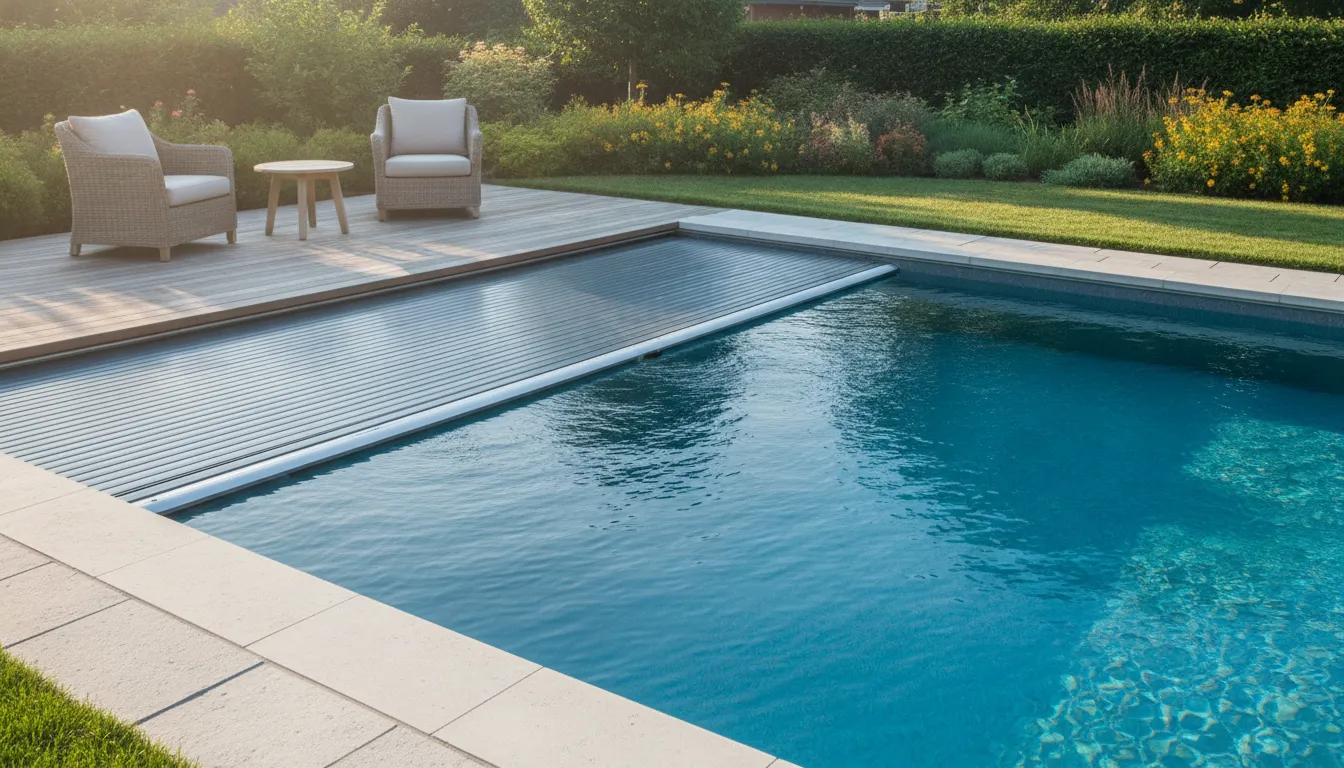
Concealed housing can also influence the decision. Depending on the design and product, the cover mechanism may be integrated into a compartment at the pool end or another planned location. This can help coordinate the cover with the deck and surrounding finishes, but the housing still needs adequate access for service and inspection. It should be addressed during pool and deck planning, not added as an afterthought.
Power is another practical consideration. An automatic cover requires a compatible power plan, controls, and equipment location. Confirm the electrical requirements, weather protection, access for maintenance, and any installation conditions with the manufacturer and qualified installer. Gappsi recommends verifying product-specific specifications rather than assuming that one system’s operating method or safety rating applies to another.
Routine care remains part of ownership. Keep the cover and surrounding tracks or housing clear of debris, follow the manufacturer’s cleaning instructions, and inspect the system before reuse. Winter conditions, water management, storage needs for removable components, and professional installation should all be included in the planning conversation. A cover can provide another barrier option, but it does not replace fencing, alarms, responsible access control, or close adult supervision. Read more about electric automatic safety covers before comparing systems.
Contact Gappsi through our contact page
How should you choose the right pool cover for your pool?
Start with the pool itself, not with a cover color or a product label. Gappsi works with custom gunite, vinyl liner, and fiberglass pools, and each construction type has its own edge details, equipment layout, and installation context. A cover should be planned alongside the pool and surrounding space, not treated as an afterthought. Review the options as part of your swimming pool design and installation plan.
Next, identify the pool’s shape and everything around it. A simple rectangle may accommodate a different system than a freeform pool, a swim spa, or a pool with raised walls. Note steps, benches, attached spas, waterfalls, ladders, handrails, diving equipment, raised bond beams, and nearby plantings. These obstacles affect the cover’s travel path, attachment points, and clearances. Automatic systems also need an appropriate power plan and room for the mechanism. Do not assume that a standard cover will fit an unusual outline.
Fit and anchoring deserve careful attention. Product listings may provide sizing examples, but they are not universal rules. For example, one listing specifies a one-foot overlap on each side, while another describes common rectangular covers fitting corners up to a two-foot radius. A winter-cover label may also be three to six feet larger than the pool dimensions, depending on the shape. Treat those figures as examples from cited products, then confirm the actual measurements and specifications with the manufacturer and installer.
Ask what the cover is designed to do. Gappsi’s pool materials distinguish between winter mesh covers and electric safety auto-covers. A seasonal cover may emphasize cold-month protection and water or debris management, while an automatic safety cover may be selected for frequent operation and access control. The right choice depends on how you use the pool, how often it is opened, and whether the installation can support the required anchoring and power connections.
For a safety-oriented system, request the applicable certification or performance standard in writing. Washington State guidance identifies ASTM F1346-91 for a safety cover, but requirements can vary by jurisdiction and product. Check the manufacturer’s documentation, and contact your local building department about additional fencing or barrier requirements before relying on any cover. A cover remains one part of a safety plan. It does not replace supervision, alarms, secure access, or responsible behavior.
Finally, discuss installation and ownership beyond the initial fit. Confirm who will measure and anchor the system, how power will be connected. How standing water or snow will be managed, and where the cover can dry and be stored. Plan for routine inspection before reuse and follow the manufacturer’s maintenance instructions. These details help ensure the selected pool cover works with the pool, the property, and the responsibilities that come with owning it.
What happens during installation, storage, and seasonal changeover?
A well-managed pool cover is part of an ongoing system, not a product that disappears after installation. The process should account for the pool’s fit, anchoring, shape, nearby obstacles, power requirements when applicable, winter water and debris management, cleaning, dry storage, and inspection before reuse. Installers should follow the manufacturer’s instructions for the specific cover and hardware, while homeowners should confirm that the cover is in suitable condition before anyone uses the pool.
- Measure and review the installation area. Confirm the pool dimensions and shape, then identify coping, raised walls, ladders, steps, waterfalls, furniture, landscaping, and other obstacles that may affect fit or anchoring. The installation context matters as much as the pool opening itself.
- Plan the anchoring and operation. The installer should match the cover and anchoring approach to the pool design. If the system uses automatic operation, review the available power requirements and the location of controls or equipment. Verify product-specific specifications with the manufacturer rather than assuming that one setup applies to every pool.
- Install and test according to the product instructions. Professional installation helps coordinate the cover, anchors, surrounding surfaces, and operating components. Before the cover is put into regular service, review how it opens, closes, secures, and handles the pool’s intended seasonal use.
- Clean the cover before putting it away. Remove accumulated debris using the method recommended for that product. Cleaning reduces what is carried into storage and makes it easier to identify wear, damaged hardware, or other conditions that need attention.
- Dry it fully and store it properly. Fold or roll the cover only as the manufacturer directs, then place it in a dry storage location protected from avoidable damage. Do not put a damp cover into storage, since retained moisture can create maintenance problems and make the next installation less predictable.
- Inspect before winter changeover and opening. Check the cover, seams, straps, anchors, fasteners, guides, and operating components for visible damage or unusual wear. Address concerns before relying on the cover for the next season. When reopening, follow the product instructions and use this pool opening and cover removal guide as a seasonal reference.
Seasonal changeover is also a useful time to reassess whether the current cover still suits the pool’s shape, surrounding obstacles, and storage conditions. A cover that fit one installation may need review after changes to the deck, equipment, landscaping, or access area. Keep the manufacturer’s documentation available, and make inspection a required step before reuse rather than an afterthought.
Long Island pool-cover planning with Gappsi
For homeowners in Nassau and Suffolk Counties, choosing a pool cover is easier when it is considered alongside the pool, surrounding hardscape, equipment, and maintenance plan. Gappsi’s documented Long Island service area includes both counties, and its pool materials identify winter mesh covers and electric safety auto-covers as two available categories. The right choice depends on how the pool is used, its shape, the installation conditions, and the responsibilities the homeowner can manage.
That coordinated approach starts with the pool itself. A custom gunite pool, vinyl liner pool, or fiberglass pool may present different details around the edge, coping, ladders, steps, and equipment access. Those conditions affect fit, anchoring, operation, and inspection. Gappsi can connect the cover discussion with pool design and equipment planning, so the cover is not treated as an afterthought. Product-specific specifications should still be verified with the manufacturer before a final selection.
The surrounding space matters as well. Coping lines, deck materials, drainage paths, landscaping, and access points can influence where anchors, controls, or service areas belong. Reviewing the cover together with pool decks and surrounds helps identify conflicts before installation and keeps the finished pool area practical to clean and maintain. Equipment layouts and power requirements also deserve attention when an automatic system is being considered.
Gappsi combines design, construction, material supply, and maintenance, giving Nassau and Suffolk homeowners one coordinated conversation about selection, installation, seasonal care, and inspection. That does not mean a cover eliminates every safety responsibility. Homeowners should follow the manufacturer’s instructions and maintain appropriate barriers, supervision, alarms, and access controls around the pool. For project-specific guidance, contact Gappsi with the pool type, dimensions, shape, surrounding materials, and intended use.
Contact Gappsi through our contact page
Frequently Asked Questions
What is the best pool cover to get?
The best option depends on how you use the pool, its shape, surrounding obstacles, anchoring points, power access, and whether winter water management is a priority. Gappsi offers winter mesh covers and electric safety auto-covers. Verify the cover’s fit, operating requirements, and product-specific safety specifications with the manufacturer before choosing.
Is it better to cover a pool or leave it open?
Covering a pool when it is not in use can help limit exposure to debris and seasonal weather. But a cover is only one part of a safety plan. The CPSC guidance says barriers do not replace adult supervision. Continue using appropriate fencing, secure gates, alarms, and responsible access control.
What is the cheapest way to cover a pool?
There is no universally cheapest choice once fit, anchoring, installation, storage, maintenance, and replacement needs are included. A basic winter cover may have different equipment and seasonal handling requirements than a mesh security cover or automatic system. Compare the complete ownership requirements rather than selecting by purchase price alone.
How do you choose between an automatic and winter pool cover?
Choose based on the pool’s daily use and the work you want to manage. An electric safety auto-cover may suit homeowners who want integrated operation for frequent opening and closing. A winter mesh cover is designed for cold-month protection and seasonal storage. Review pool shape, power requirements, water and debris management, and installation conditions before deciding.
Ready to plan the right pool cover?
The right cover depends on your pool’s shape, how you use it, seasonal conditions, and the safety measures around it. Call Gappsi to discuss pool cover selection, installation, and seasonal planning for your Long Island pool. Contact Gappsi through our contact page to review your options and next steps.