



A patio in Nassau or Suffolk County has to do more than look attractive in a material sample. Its surface, pattern, base, drainage plan, and maintenance needs all affect how it handles everyday use and Long Island’s seasonal weather. Choosing the right system starts with the site, not just the color or texture.
Contact Gappsi through our contact page.
The best patio pavers for a Long Island home depend on the property’s soil, grade, drainage, intended use, and design goals. Concrete pavers provide modular flexibility, porcelain pavers offer defined sizes and finishes, and natural stone such as bluestone or travertine brings distinctive variation. Each option can perform well when matched to proper preparation and installation.
A thoughtful comparison also considers how water moves through and away from the patio. The surface must respond to seasonal movement. Individual units should also be maintainable or replaceable. Those criteria provide a practical starting point for comparing materials and planning a patio that fits the home.
Which patio pavers work best for Long Island homes?
The best patio pavers depend on how you use the space and how the material fits your home. The site must also handle water through seasonal weather. Long Island projects in Nassau and Suffolk County can call for different solutions based on soil. Existing grades, sun exposure, drainage, and the connection between the patio and the rest of the property. Start with those conditions rather than choosing a color from a sample alone.
Contact Gappsi through our contact page
Concrete pavers are a practical choice when you want modular units and defined shapes. Individual pieces can potentially be replaced if a localized area settles or becomes damaged. They are available in varied colors, textures, and patterns, so they can support both traditional and contemporary designs. Ask how the selected system will work with the proposed base, edge restraints, joints, and drainage plan. The paver itself is only one part of the finished surface.
Porcelain pavers can suit homeowners who want a crisp architectural appearance, consistent sizing, and a range of formats and finishes. They require an installation approach appropriate to the product and the site. Especially where the patio must manage runoff or transition to steps, lawn, a pool area, or an outdoor kitchen. Review porcelain and natural stone pavers alongside the proposed construction details, rather than evaluating appearance separately from installation.
Natural stone gives each patio a distinct surface through variations in color, veining, texture, and edge character. Bluestone, travertine, limestone, granite, and other stones can create different visual effects and suit different design goals. The right selection depends on the desired finish, placement, exposure, and how the stone will coordinate with walls, plantings, steps, or pool coping. A physical sample or showroom review can reveal variation that a small digital image cannot.
Brick or clay pavers offer a recognizable, warm appearance that works well with traditional homes, garden paths, and restrained border details. Their color and texture should be considered with the home’s facade and nearby masonry. As with any material, the long-term result depends on proper site preparation, water management, compatible components, and reasonable maintenance. No material should be treated as universally maintenance-free or immune to movement.
A useful selection process compares four things together: appearance, site performance, maintenance expectations, and design coordination. Gappsi Group provides design, construction, material supply, and maintenance services for outdoor projects, with a showroom where homeowners can review materials. Its porcelain and natural stone work is one documented part of that service portfolio. Keep the decision broad enough to account for the complete patio, while using the property’s actual conditions to narrow the options.
How should you compare concrete, porcelain, and natural stone pavers?
The right material depends on how several project criteria work together. Appearance alone is not enough: a patio that looks right in a sample may require a different base, drainage plan, joint detail, or maintenance routine than another material. Compare the surface with the conditions below it and the way you expect to use the space.
| Material | Appearance and fit | Base, drainage, and freeze-thaw planning | Maintenance considerations |
|---|---|---|---|
| Concrete pavers | Available in varied colors, shapes, textures, and modular sizes. A practical fit when you want flexible patterns, defined borders, and the option to replace individual units. | Still depends on a properly excavated and compacted base, edge restraint, and a drainage plan. Permeable interlocking concrete pavement is a separate system with open-graded aggregate layers, not simply standard pavers with wider joints. | Sweep regularly and watch joints, edges, stains, and settlement. If a unit moves or becomes damaged, repair can be localized when matching material remains available. |
| Porcelain pavers | Offer a controlled, clean look with consistent color and patterns that can coordinate with contemporary architecture. Review texture and surface finish in person, especially for exposed outdoor areas. | Installation details must match the selected system and site. Plan the base, slope, drainage, and transitions before choosing the format. Freeze-thaw performance depends on the product, substrate, water management, and installation quality, not the label alone. | Generally calls for routine sweeping and prompt attention to spills, with cleaning methods selected for the surface finish and joint system. Avoid assuming every cleaner or sealer is suitable. |
| Natural stone | Bluestone, travertine, and other stones bring natural variation in color, texture, and pattern. That variation can be an asset when the design should feel less uniform. | Choose thickness, finish, joint details, and base construction for the intended use and exposure. Water still needs a deliberate path away from the patio, and freeze-thaw planning should account for the stone, bedding, joints, and site drainage together. | Expect material-specific cleaning and sealing decisions. Natural variation means replacement pieces may not look identical, so retain extra material when practical. |
| Brick or clay pavers | Create a traditional, warm appearance and work well with running bond, basket weave, and other structured patterns. Color variation should be reviewed across multiple pieces. | Use the same disciplined approach to excavation, compaction, slope, edge restraint, and joints. Water management matters during cold weather because saturated assemblies are more vulnerable to movement. | Routine sweeping and occasional cleaning help preserve the pattern. Address loose units, eroded joints, and drainage issues before small changes spread. |
For drainage-sensitive sites, the EPA explains that permeable pavement allows stormwater to infiltrate through the surface, while the supporting crushed-stone layers provide the working structure. Low-infiltration soils may need additional drainage measures, and sediment can reduce infiltration over time. These details make the material choice a site-planning decision, not a simple finish selection.
Start with use, grade, soil, water movement, and desired maintenance level. Then compare samples and layouts. Gappsi’s guide to porcelain and natural stone pavers can help narrow the surface options before the full patio design is developed.
What base preparation and drainage do patio pavers need?
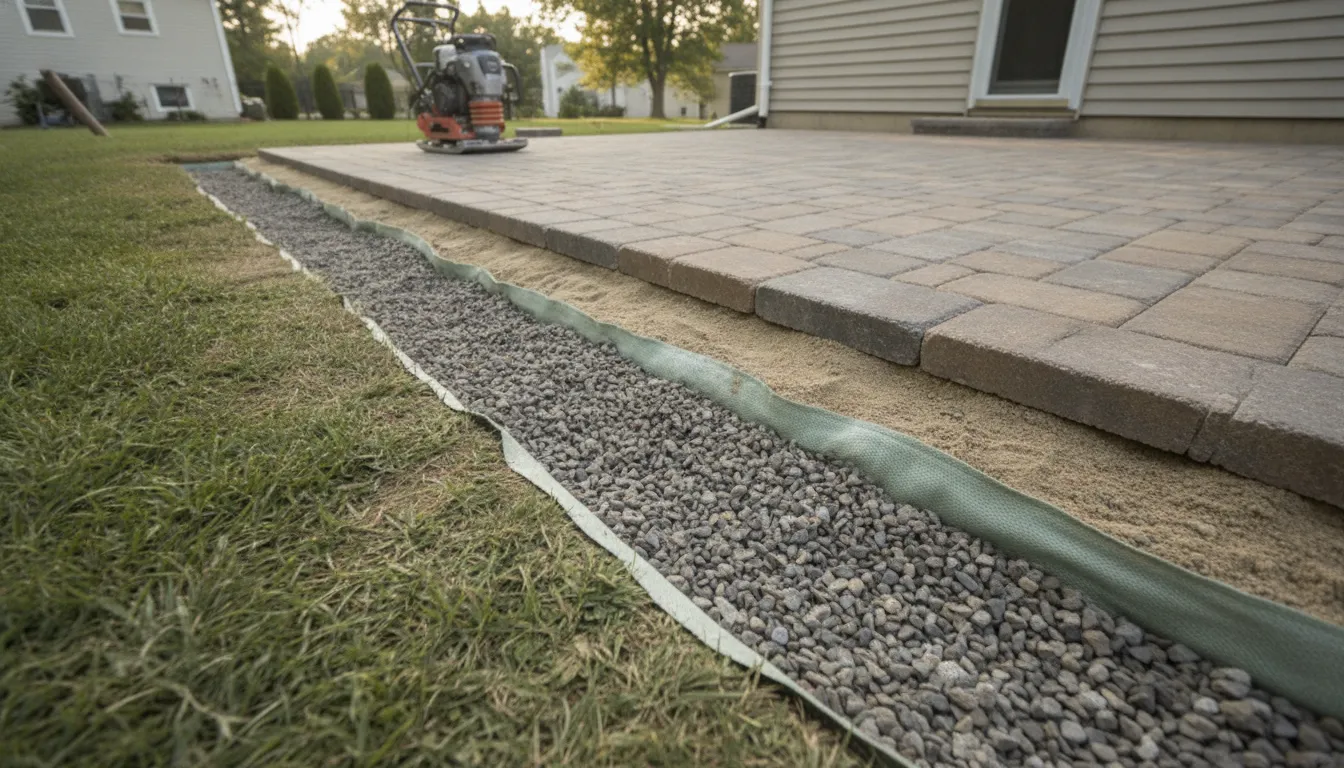
A durable patio begins below the visible surface. Excavation, soil assessment, grading, and compaction determine whether the finished surface stays stable when soil holds water, settles, or moves through seasonal changes. The correct preparation depends on the existing grade, subgrade condition, intended use, and how runoff should move through the property. A qualified installer should evaluate those conditions rather than apply one universal layer depth to every site.
Contact Gappsi through our contact page
Drainage planning is part of the foundation, not an afterthought. Conventional patio systems need a controlled slope that directs water away from the home and prevents ponding. Where infiltration is appropriate, permeable pavement can allow stormwater to move through the surface into the ground below, as described by the EPA guidance on permeable pavements. These systems use crushed stone bedding and base layers. An open-graded base or subbase can also act as a temporary reservoir, storing water before it infiltrates into the subgrade or exits through underdrains, according to the Federal Highway Administration.
Soil matters. Clay or another low-infiltration subgrade may need a planned outlet, such as perforated drain pipes, rather than relying on water to disappear through the soil. The design should also account for roof runoff, downspouts, nearby planting beds, pool areas, and the patio’s relationship to door thresholds. Edge restraints hold the perimeter in position, while properly filled joints help keep individual pavers from shifting laterally. The exact restraint and joint material should match the selected paver system and site conditions.
- Assess the site. Confirm the patio footprint, existing grades, soil behavior, utilities, access, runoff paths, and expected loads.
- Excavate and shape the subgrade. Remove unsuitable material, establish the planned elevation, and prepare a surface that can support the base without trapping water.
- Build and compact the aggregate foundation. Install the specified crushed stone base in controlled stages, compacting it so the foundation is consistent rather than loose or uneven.
- Install the bedding layer and pavers. Place the appropriate bedding material, set the pavers to the planned pattern and slope, and maintain clean transitions at steps, doors, and adjoining surfaces.
- Secure the perimeter and finish the joints. Install edge restraint, add the selected joint material, and inspect the surface for alignment, drainage, and stable transitions.
For a closer look at the project sequence, review Gappsi’s paver patio installation steps. The goal is not simply a level-looking patio. It is a coordinated base, slope, and drainage system that supports the design over time.
How do patterns, scale, and borders change a patio design?
The layout of patio pavers affects more than appearance. It guides the eye, defines activity areas, and changes how a patio relates to the home’s architecture. Start with the way people will use the space, then choose a pattern that supports those movements rather than selecting a pattern in isolation.
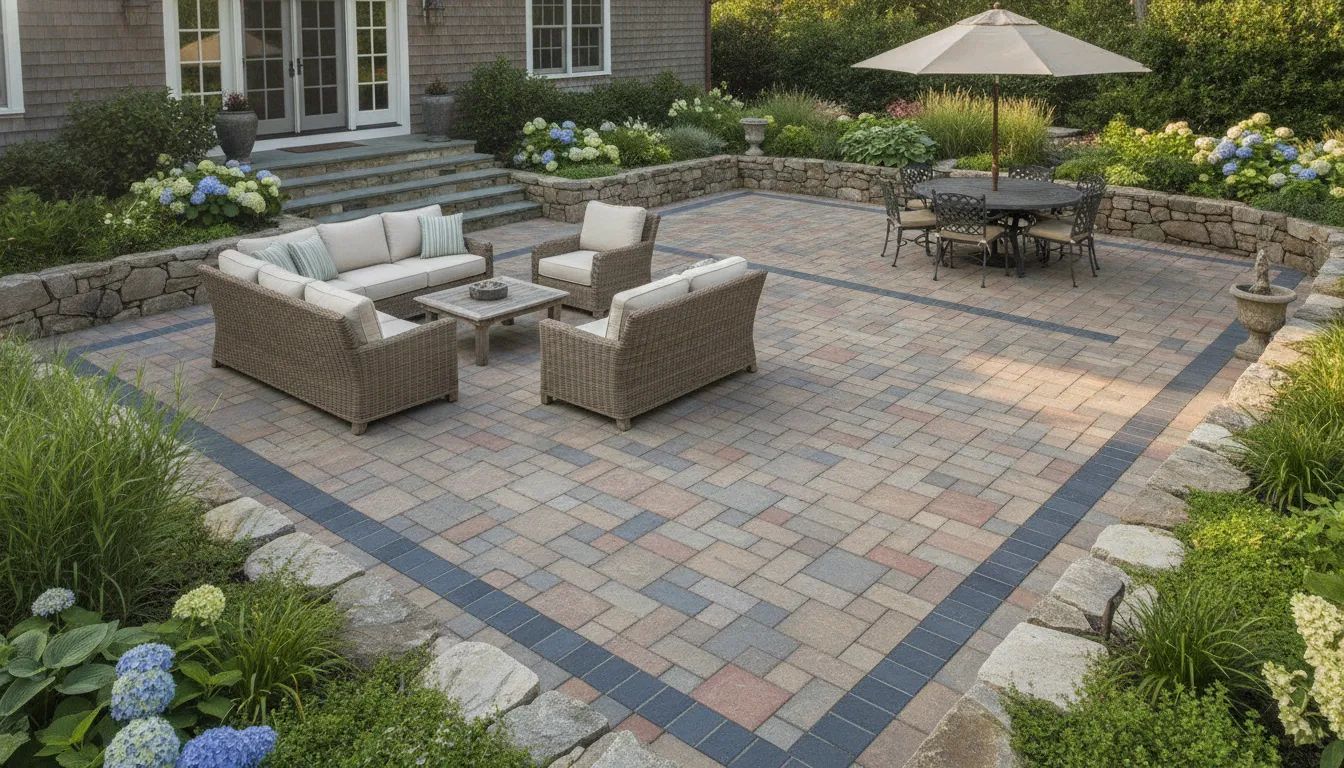
A running bond arrangement creates orderly lines and can make a narrow area feel longer. A basket weave brings a more traditional, textured character and can work well around classic masonry or garden settings. Herringbone introduces stronger diagonal movement and visual energy. Its directional lines can also help distinguish a dining area, walkway, or entry zone from the main field of the patio.
Modular layouts combine different paver sizes within a planned repeat. This approach can make a broad surface feel more layered without relying on several unrelated materials. The repeat should be selected with the actual patio dimensions in mind. A pattern that looks balanced on a sample may require awkward cuts at the edges when it is extended across a real space.
What does a border add?
A border gives the main field a clear stopping point and can reinforce the shape of the patio. A contrasting size, color, or material may frame a seating area, echo a home’s trim, or separate the patio from a planting bed. Borders are especially useful where a patio transitions into steps, a pathway, pool coping, or another hardscape surface. Keep the transition intentional: align key joints where possible, and avoid introducing so many lines that the design becomes visually busy.
Furniture scale matters just as much. Large sectionals and dining sets need enough uninterrupted paving to feel settled, while small seating groups may benefit from a tighter pattern or a defined inset. Marking furniture footprints during planning helps reveal whether the pattern will be hidden, interrupted, or emphasized by the finished arrangement.
For additional examples of coordinated layouts and material combinations, review Gappsi’s patio layout ideas. The strongest design usually uses one dominant field pattern, one supporting border or transition, and proportions that leave practical room for movement.
How do Long Island freeze-thaw cycles affect patio pavers?
Long Island patios experience repeated changes in temperature, precipitation, and ground moisture. When water enters joints, bedding layers, or weak points beneath the surface, freezing can expand that moisture and contribute to movement. Thawing then reveals the problem through rocking units, uneven edges, open joints, or areas that hold water. That does not mean every patio paver system performs the same way. Material selection, drainage, base preparation, and installation quality work together.
Why water management matters
The most important question is often not simply which paver looks best, but where water will go after a storm. A conventional patio should be designed with appropriate surface slope, stable edge restraint, and a base that does not remain saturated. In some locations, a permeable pavement system may be worth evaluating. The Federal Highway Administration explains that these systems use an open-graded base or subbase reservoir to temporarily store water before it infiltrates into the subgrade or moves through underdrains. The reservoir typically contains about 30 percent void space between aggregates, according to the FHWA guidance on permeable pavements.
Soil conditions still matter. The FHWA notes that low-infiltration soils, including clay, may require perforated drain pipes to move excess water. A contractor should inspect the existing grade and soil rather than assume that a permeable surface alone will solve drainage. The design may need a different base profile, an underdrain, or another way to direct runoff away from the home and patio.
How material choice and movement affect repairs
Concrete pavers, porcelain pavers, bluestone, travertine, and other natural stone products each have different thicknesses, textures, edge details, and installation requirements. Choose a product suited to the intended application and confirm its cold-climate specifications with the supplier. Gappsi’s guide to porcelain and natural stone pavers can help homeowners compare those material categories before selecting a sample.
One advantage of a properly installed segmental system is localized repairability. If movement occurs, individual units can potentially be lifted, the underlying base corrected, and the surface reset instead of removing the entire patio. That benefit depends on accurate installation and having compatible replacement material available. A poorly compacted base or missing edge restraint can allow movement to spread regardless of the paver chosen.
What should you ask a contractor?
- How will you manage surface water and runoff at this property?
- What base and bedding materials are recommended for the soil and drainage conditions?
- Does the selected product have documentation appropriate for freeze-thaw exposure?
- Where will edge restraint, joint material, and transitions be placed?
- How would you remove and reset a unit if a localized repair becomes necessary?
Cold-climate research from the University of New Hampshire includes dedicated analysis of maintenance and thermal performance in a permeable interlocking concrete pavement test facility. That reinforces the practical point: freeze-thaw performance is a system question, not a label that can be assigned to every patio paver equally. Ask for a drainage plan, a base specification, and a clear repair approach before work begins.
What maintenance keeps a paver patio looking consistent?
A consistent patio surface depends on small checks performed before minor issues become visible repairs. Start with routine sweeping to remove leaves, soil, and grit from the pavers and joints. Pay extra attention after storms, landscaping work, or periods when nearby planting beds shed sediment. On permeable sections, this habit matters for performance because sediment and debris can collect in the surface and reduce infiltration over time. The Federal Highway Administration notes that timely maintenance can help minimize or restore reduced permeability.
Contact Gappsi through our contact page
Check joints, edges, and drainage paths
During a seasonal inspection, look across the patio from a low angle. Loose or missing joint material, separated edge pavers, and small areas that hold water can reveal movement or drainage concerns. Check where the patio meets steps, walls, planting beds, and walkways. Edges that shift can allow surrounding soil into the joints, while blocked drainage paths can keep moisture in the system longer than intended. Addressing the cause is more useful than simply adding joint material over an unstable area.
Respond to stains before they spread
Blot oil, food, and beverage spills promptly rather than allowing them to soak into a porous surface. Use a cleaning method suited to the specific paver material, since concrete, natural stone, and porcelain do not have identical care requirements. Avoid aggressive pressure or acidic products unless the material manufacturer or a qualified professional confirms that approach. Testing a cleaner in an inconspicuous area can help prevent uneven color or surface damage.
Decide whether sealing fits the patio
Sealing is a maintenance decision, not an automatic requirement. It may be considered when the goal is to simplify stain response, influence the appearance, or support a particular material-care plan. The right product and finish depend on the paver, joint material, exposure, and drainage design. Review the basics in this paver sealer maintenance guide before choosing a product. A sealer should not be used to hide settled edges, poor drainage, or failed joints.
Professional restoration is useful when cleaning alone does not resolve inconsistent color, joint loss, recurring stains, settled areas, or water that repeatedly collects in the same location. A careful assessment can separate a surface-cleaning issue from a base, edge-restraint, or drainage problem, then identify the least disruptive repair. That approach keeps patio pavers looking intentional while protecting the function of the installation.
How do you plan patio pavers before requesting a design?
Start with how you expect to use the space, not with a color or pattern. Note whether the patio will hold a dining table, lounge furniture, a grill, an outdoor kitchen, or a path to the pool. Mark the doors, steps, gates, property lines, and areas where furniture must move. This gives a designer useful constraints before material selection begins.
Contact Gappsi through our contact page
Measure the space and observe the site
Record approximate length and width, then sketch the shape rather than assuming it is a perfect rectangle. Photograph the existing grade, downspouts, retaining walls, trees, and nearby structures. Pay attention to where water collects after rain. Grade and drainage influence the layout, elevation, and base planning, so they should be discussed before a final footprint is chosen. If the patio connects to a doorway, pool deck, lawn, or walkway, identify each transition and the height you need to preserve.
Track sun, shade, and daily comfort
Observe the area at breakfast, midday, and evening. A patio that is comfortable at one time of day may be exposed at another. Note mature trees and possible future shade structures, since they affect material color, furniture placement, leaf collection, and maintenance. Think through circulation as well. Leave practical room around seating, cooking areas, and doors instead of using every available inch for paving.
Bring material questions and a realistic budget
Ask to compare physical samples in the conditions where they will be viewed. Gappsi offers porcelain and natural stone options, including multiple styles that can be evaluated through its porcelain and natural stone pavers services. Compare texture, color variation, edge detail, slip considerations, and how each sample relates to the house siding, stonework, or pool finish. A showroom visit can make these differences easier to judge than a screen.
For the budget conversation, provide the approximate dimensions, intended use, access limitations, demolition needs, drainage concerns, borders, steps, lighting, and desired material range. Avoid treating a generic square-foot estimate as a project price. Soil, grade, base work, transitions, and site access can change the scope. For more preparation questions, review Gappsi’s paver patio installation planning guide before requesting a design.
Contact Gappsi through our contact page
Frequently Asked Questions
Can patio pavers be installed directly on dirt?
Usually, no. A durable patio needs an evaluated subgrade, a properly prepared aggregate base, a setting layer, controlled slope, and edge restraint. The correct assembly depends on soil, existing grade, drainage, and expected use. For permeable systems, the EPA describes installation over crushed stone bedding and base layers, rather than directly on soil (EPA guidance).
Are pavers cheaper than a poured concrete patio?
There is no universal answer. The comparison depends on the patio size, excavation, base work, drainage, material, access, pattern, edges, and site conditions. Pavers may require more material and installation planning, but their modular construction can allow individual units to be repaired or replaced. Compare complete project scopes instead of comparing only the surface material.
What is the best patio paver material for a Long Island home?
The best choice depends on how you use the space and which appearance, maintenance routine, and installation requirements fit the property. Concrete pavers offer modular design options, natural stone provides variation, and porcelain offers specific sizes and finishes. Drainage and base preparation matter as much as the visible material, especially where seasonal moisture and freezing affect the site.
How should I plan drainage before installing patio pavers?
Start by reviewing where roof, yard, and patio water currently moves. Then confirm finished elevations, surface slope, soil infiltration, transitions, and any need for collection or discharge measures. Permeable pavement can let stormwater infiltrate through the surface, but low-infiltration soils may require perforated drain pipes or another designed outlet (FHWA guidance).
Ready to plan your Long Island patio?
Material, pattern, base, and drainage decisions work best when they are considered together. Gappsi Group can help you plan a patio design that fits your home, site conditions, and outdoor living goals. Contact Gappsi through our contact page