


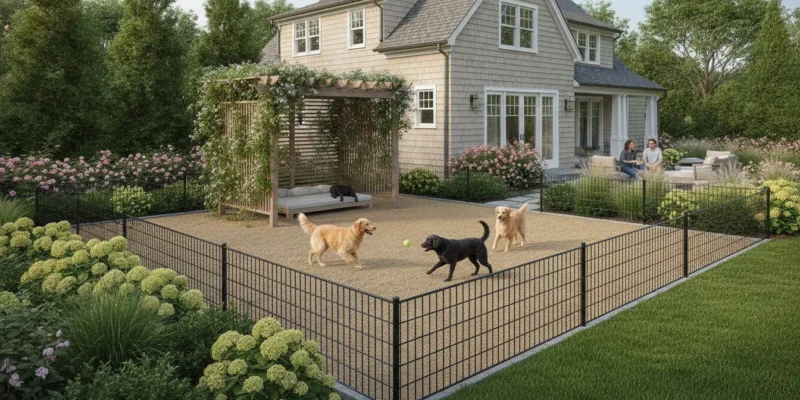
A backyard pet area works best when it is planned as part of the landscape, not added as an isolated pen. Existing grades, wet spots, fence lines, sunlight, and the route from the house all shape how comfortable and manageable the finished space will be. Call Gappsi Group at (631) 831-3177 to discuss your site.
A well-planned dog run combines a suitable location, controlled drainage, secure fencing, a practical surface, shade, a reliable gate, and a maintenance routine. On Long Island, the right balance depends on the property, including its soil, slopes, seasonal weather, and available space.
The first decision is where to place it. A careful look at access, water movement, sun exposure, and nearby planting can prevent avoidable problems before excavation or material selection begins.
Where should a dog run go in a Long Island backyard?
Start with the route your dog will use every day. A dog run works best when it connects conveniently to a door, mudroom, or other outdoor access point. So letting the dog out does not require crossing a patio, garden bed, or busy entertaining area. The location should also be easy for people to reach for feeding, cleaning, waste removal, and gate checks.
Look at the existing grade before choosing a straight line along the property edge. A yard that appears flat may still direct stormwater toward the house, a neighboring property, or a low area where the surface stays wet. Note where water collects after rain, where downspouts discharge, and whether the proposed run would cross a slope. Grading means shaping the ground so water moves in a planned direction. Ground preparation and drainage should be resolved before selecting the finished surface.
Long Island properties vary across Nassau and Suffolk Counties, so there is no universal placement. A site evaluation can account for soil, existing grades, drainage, utilities, fences, and the relationship between the run and the rest of the landscape. Gappsi’s Long Island landscape design and construction services include topsoil grading, ground preparation, drainage, irrigation, planting, and synthetic turf integration.
Track the sun at different times of day and through the seasons. A location with some shade can give a dog relief during hot weather, while a fully shaded, poorly drained corner may stay damp after rain. Consider whether a tree, house, pergola, or planned shade feature can provide relief without placing roots, falling debris, or maintenance work inside the active area.
Protect existing planting by separating the run from delicate beds and keeping irrigation access in mind. Plants near the boundary may be exposed to running, digging, and repeated watering. Leave a practical route for trimming, repairs, and surface cleaning rather than forcing maintenance through the dog area.
Call (631) 831-3177 to discuss your dog-run site layout
Before finalizing the location, review access, grade, drainage, sun, shade, planting, and seasonal maintenance together. That connected view helps the dog run function as part of the backyard instead of becoming an isolated enclosure that creates new drainage or upkeep problems.
How should drainage and surfacing work together?
A dog run is a complete ground system, not just a surface product. Grading, the shaping of the ground to guide water, should be planned before the finished material is selected. On a Long Island property, the right approach depends on existing soil, low areas, nearby structures. Rainfall patterns, the number of dogs using the space, and how water currently moves through the yard.
Start with the drainage path. The site should be evaluated for standing water, downspout discharge, compacted soil, and areas where runoff could collect near a foundation, fence, planting bed, or walkway. The finished grade should direct water toward an appropriate dispersal or drainage feature rather than leaving it to find its own route. Gappsi’s landscape division supports grading, drainage, irrigation, planting, and synthetic turf integration as connected parts of a landscape plan. You can review its broader Long Island landscape design and construction services for more context.
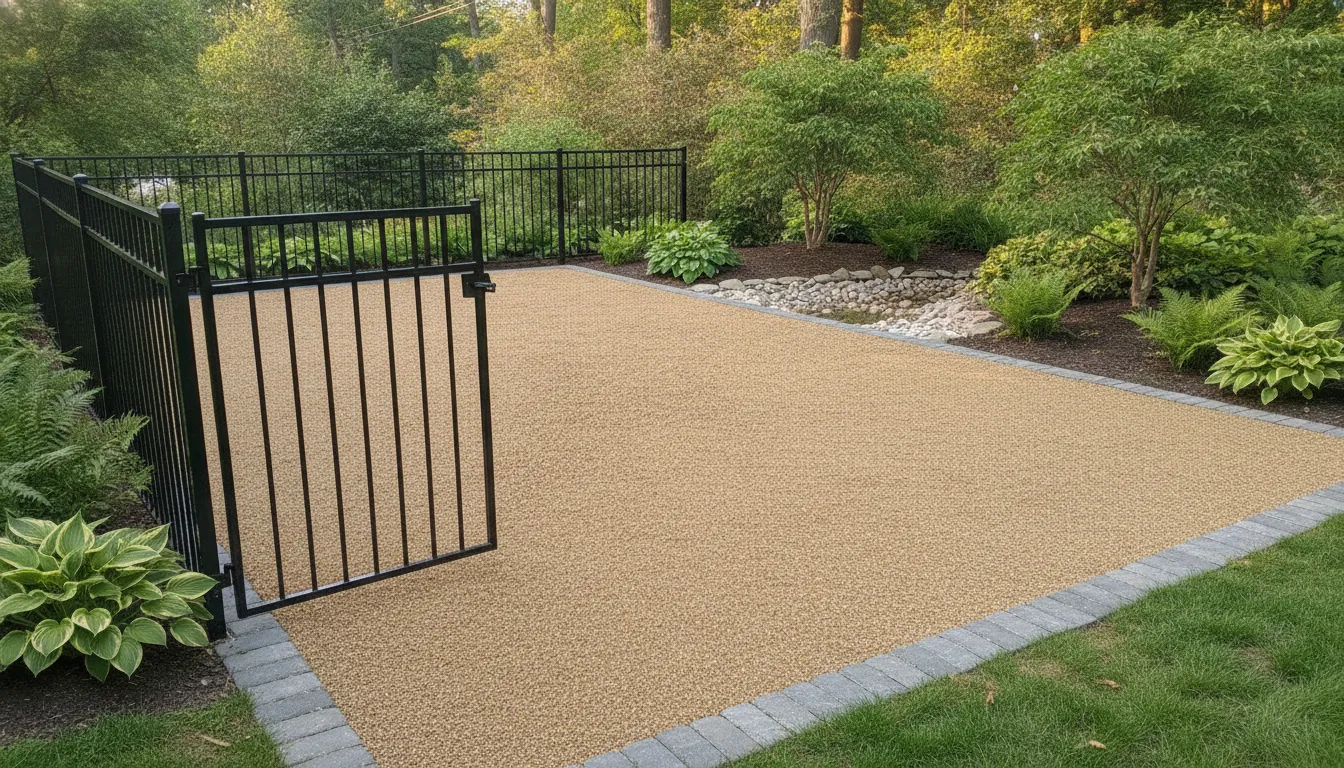
Prepare the base before installing the surface. A suitable base creates a stable foundation and helps manage water moving through the system. Ground preparation may involve removing unsuitable organic material, shaping the subgrade, placing appropriate aggregate, and compacting the base. The exact construction depends on site conditions and the selected surface. A surface installed over a soft or poorly graded area may not address settling or water collection below it.
Surface choices should be evaluated by how they handle regular use, cleanup, weather, and transitions to the rest of the property. Natural grass, synthetic turf, compacted aggregate, and other landscape materials each involve different maintenance and drainage considerations. No single surface is automatically right for every dog, household, or backyard. Synthetic turf can be part of a practical design, but its backing, base, edging, seams, and drainage route need to work together. The existing artificial grass for dogs drainage and care guide covers those turf-specific decisions in greater detail.
Plan transitions as carefully as the main surface. A dog run may meet pavers, a patio, natural lawn, planting beds, or a gate threshold. These junctions should be easy to cross, stable underfoot, and accessible for sweeping, scooping, rinsing, and repairs. Edging can define the boundary, while careful seam placement can reduce maintenance concerns in turning or high-traffic areas. Keep irrigation heads, planting, fencing, and gate swings from creating obstacles or directing water into the run.
Sanitation access belongs in the design from the beginning. Solid waste still needs prompt removal, and the area may require rinsing or system-specific cleaning. Provide a practical route for a hose and cleaning tools, while ensuring wash water does not flow toward a foundation, neighboring property, or sensitive planting. Outdoor pet areas create distinct water and waste-disposal challenges, so drainage should support the cleaning routine rather than depend on it to correct poor grading. Avoid promises that a surface will be odor-free, cool, or pet-safe in every condition. The complete system, including its maintenance plan, determines how the space functions over time.
What fencing and gate details make a dog run safer?
A dog run needs a perimeter that fits the dog’s behavior, the property’s layout, and the way people use the yard. Start by tracing the boundary from the house, not just outlining an open patch of lawn. A convenient connection to a rear or side door can make daily access easier. While a route that crosses a planting bed, pool area, or service zone may create avoidable conflicts.
Fence transitions deserve particular attention. Where the dog run meets an existing fence, wall, hedge, deck, or gate. Look for changes in surface, gaps, corners, and places where a dog could push, squeeze, or dig. The transition should feel continuous from the dog’s point of view. A new section that stops short of an older boundary can leave an opening even when the main run appears enclosed. It is also worth considering how the perimeter will meet the ground, especially on a sloped Long Island property where grading can change the gap beneath a fence.
Place gates for routine access
Gate placement affects more than entry. Locate the gate where a person can approach, open, and close it without stepping into a tight corner or blocking a walkway. If the run connects directly to the house, consider whether the gate should serve everyday pet access, maintenance access, or both. A wider service opening may help with tools and surface upkeep, while a separate pedestrian gate can reduce unnecessary movement through the space.
Choose a latch that adults can operate consistently and that remains out of the dog’s reach. The exact hardware depends on the gate design, nearby structures, and the dog’s habits. Check the swing path as well. A gate should not open into a location where it can strike a wall, interfere with a path, or create a momentary escape route.
Balance visibility with separation
Fencing can provide containment without making the run feel disconnected from the yard. Open sections may help people see the dog and monitor activity from the house. Privacy screening can be useful where the run faces a neighboring property or a busy area. But solid panels can change airflow, sightlines, and the way the space relates to the rest of the landscape. Use the boundary style to support both supervision and the desired level of separation.
Gappsi can coordinate boundary materials, gates, and the surrounding landscape as part of a broader plan. Review Long Island fencing options alongside grading, planting, paths, and access so the dog run functions as part of the yard rather than as an isolated enclosure.
How can shade, planting, and comfort improve the space?
A dog run should support more than movement. It also needs places where a dog can pause, drink, and settle away from direct sun. Long Island’s summer heat, changing sun angles, wind, rain, and winter conditions all affect how comfortable the area feels through the year. Plan shade and rest areas as part of the layout instead of adding them after the fencing and surface are complete.
Use a combination of natural and built shade where the site allows. Existing trees may provide useful relief, while a canopy, covered rest area, or other structure can create more predictable shelter. Keep the water station in a convenient location that people can reach without stepping through the entire run. A hose connection or nearby cleaning access can also make routine rinsing easier. But drainage should be considered so water does not collect at the resting area or run toward the home.
Planting can define the edges of the dog run and soften views from the house. Low-maintenance beds, screening plants, or a planted buffer may help separate the activity area from patios, walkways, and neighboring properties. Plant selection should be reviewed for the specific site and for how the dog uses the yard. Do not assume that every attractive plant is appropriate for every pet. Leave enough space between planting beds and the active route for pruning, inspection, and cleanup.
Visibility matters for both comfort and maintenance. Position the run so it can be seen from a frequently used room or outdoor seating area, while preserving privacy where needed. Avoid placing dense planting where it hides a gate, water station, or corner that needs regular inspection. A clear path to the enclosure also helps with waste removal, seasonal cleanup, and bringing supplies into the area.
Gappsi’s Long Island landscape design and construction services include planting, irrigation, grading, drainage, and seasonal maintenance. Coordinating those elements during planning helps the shade, comfort, and upkeep decisions work with the rest of the dog-run system.
Dog run ideas: temporary setup or installed landscape feature?
| Planning factor | Temporary portable pen or cable setup | Planned installed dog run |
|---|---|---|
| Best use case | Useful for short-term needs, trial layouts, travel, rentals, or a property where permanent work is not yet practical. | Better suited to a household that expects regular, long-term use and wants the area coordinated with the backyard. |
| Site preparation | Usually relies on the existing lawn or ground surface, so uneven areas, mud, and worn paths remain site concerns. | Can include topsoil grading and ground preparation based on the property’s soil, grades, access, and surrounding features. |
| Drainage | Does not correct low spots or create a deliberate route for rainwater and cleanup water. Water management remains a property-level issue. | Allows grading, drainage, and surfacing to be planned as one system. The area’s size, number of dogs, surface, and weather all affect drainage and durability. |
| Fencing | A portable pen creates a defined boundary, while a cable setup depends on its attachment points and the dog’s movement. Supervision and configuration remain important. | Can coordinate the perimeter, gates, privacy screening, and connections to the house, patio, planting beds, or existing fence. |
| Comfort | Offers limited control over shade, surface condition, transitions, and access to water unless those features are added separately. | Can incorporate a shaded resting area, practical water access, planting, and a surface selected for the intended use. No single surface is right for every property. |
| Maintenance | Requires frequent inspection of the pen, cable, attachment points, ground condition, and waste or mud buildup. | Still requires waste removal, cleaning, drainage observation, vegetation care, and fence or gate inspections, but those tasks can be considered during design. |
| Flexibility | Easy to move or remove as household needs change, but the usable area and layout are constrained by the temporary equipment. | Less movable, but it can be designed around circulation, maintenance access, future landscape work, and the way the family uses the yard. |
A temporary arrangement makes sense when you are testing where your dog prefers to move, need a short-term containment option, or cannot alter the property yet. Treat it as a use solution, not as a substitute for correcting standing water, worn soil, poor access, or a boundary that does not fit the yard. For cable systems in particular, follow the equipment instructions and check local requirements rather than assuming a general setup is appropriate.
An installed dog run is worth considering when the area will receive daily use or must work with existing grading, drainage, fencing, planting, irrigation, and hardscape. Gappsi’s landscape scope includes these connected site decisions across Nassau and Suffolk Counties. Review the options for dog run installation on Long Island alongside the broader landscape plan before choosing a surface or boundary.
The practical choice depends on the property, the dog’s habits, and how long you expect the space to serve the household. Start by observing the current route, low spots, shade, cleanup access, and fence connections. Those observations will show whether a portable setup is enough or whether a coordinated landscape feature would solve more of the daily problems.
What should a dog run maintenance plan include?
A dog run stays easier to use when maintenance is planned alongside the layout. The routine should cover waste removal, rinsing, surface transitions, fencing, gates, planting, and drainage. On Long Island, seasonal weather can change how often each task is needed, so inspect the area after heavy rain, winter freeze-thaw cycles, spring growth, and summer heat.
Remove waste and rinse the surface regularly
Remove solid waste promptly with a scoop that will not drag across the surface or disturb seams. Check corners, gate areas, fence lines, and the places your dog uses most often. After removal, rinse the area when the surface and drainage system are designed for it. Direct the rinse water through the planned drainage path, not toward a foundation, neighboring property, or a low spot that already holds water.
Clear leaves, soil, and other debris with a soft rake or another method suited to the installed surface. Organic material can collect along edges and transitions, where it may hold moisture or interfere with cleaning. Use only cleaning products approved for the specific turf, edging, or other surface materials. If odor remains after routine removal and rinsing, investigate the drainage path and sanitation routine instead of simply applying stronger chemicals.
Inspect the enclosure and surface transitions
Walk the perimeter regularly to check fence sections, posts, gate alignment, hinges, and latches. Confirm that the gate closes securely and that its swing does not scrape the surface or create a difficult corner. Look for gaps, loose hardware, damaged screening, or vegetation pushing against the fence. A small issue is easier to address before repeated use or a storm makes it worse.
Inspect transitions where the dog run meets pavers, planting beds, natural lawn, or a patio. Watch for lifted edges, open seams, exposed fasteners, erosion, or abrupt changes that collect dirt. Keep planting controlled around the enclosure, while preserving practical access for cleanup and repairs. Seasonal pruning may be necessary where roots, branches, or fallen leaves enter the run.
Check drainage after rain and reassess the design when conditions change
After a significant rain, look for standing water, muddy edges, washed soil, clogged inlets, or new runoff paths. Note how long wet areas remain and whether water is moving toward the house or gate. Do not assume additional rinsing will solve a drainage problem. A landscape professional can review grading, drainage, planting, and surface integration as one connected system.
Reassess the design if the number of dogs changes, access becomes difficult, the surface repeatedly fails, or the maintenance routine no longer fits the household. The goal is not to preserve a fixed layout at all costs. It is to keep the dog run clean, accessible, enclosed, and compatible with the rest of the Long Island property.
How much planning does a dog run project need?
A well-planned dog run starts with the property, not a product. On Long Island, an evaluation should review the available space, existing grades, soil and drainage conditions, access from the house, and how the area will be used. The number and size of dogs, daily activity, waste cleanup, shade, and maintenance access all affect the layout.
Start with the site and the daily routine
The first step is to identify practical goals. Should the run connect directly to a back door? Does it need room for play, a resting area, or a convenient route for cleaning? A site review can also identify low areas, water flow, tree roots, planting zones, and nearby utilities or property features. Gappsi’s landscape services include Long Island landscape design and construction, including topsoil grading, ground preparation, drainage, irrigation, and planting.
Coordinate the layout, surface, and enclosure
Grading and drainage should be reviewed before choosing a surface. The enclosure, gates, and walking approach should then be laid out together so the gate opens safely. The dog has usable space, and people can enter for cleaning or maintenance. Material decisions may include surfacing, edging, fencing, privacy screening, and any shade or water features. These elements work as one system rather than as separate purchases.
Move from design to a clear proposal
After the site evaluation, the design-build process can move through design concepts or 3D planning, material selection, construction details, a written proposal, and scheduling. The proposal should clarify the planned work, selected materials, site preparation, drainage approach, fencing and gate scope, and maintenance responsibilities. Gappsi can combine site evaluation, design, construction, and maintenance through one provider, while the exact scope remains specific to the property.
Ask local building-department questions early
Before construction, ask the building department serving the property whether any local requirements apply to the proposed work. New York’s Department of State explains the role of local jurisdictions in administering questions related to the Uniform Code and Energy Code: New York building-code FAQs. This is a reason to confirm details with the appropriate city, town, village, or county office. Not an assumption that every dog run needs a permit or that approvals are guaranteed.
Call (631) 831-3177 before planning your Long Island dog run.
Frequently Asked Questions
What is a dog run?
A dog run is a defined outdoor area where a dog can move, explore, and spend time safely within a controlled boundary. A well-planned run combines fencing and a gate with suitable surfacing, drainage, shade, access to water, and a maintenance plan. It can be attached to a home or placed elsewhere in the yard, depending on the property layout.
Are dog runs good for dogs?
They can be useful for fresh air, movement, and supervised outdoor time, especially when the space matches the dog’s size, behavior, and activity level. A run does not replace walks, training, social interaction, or veterinary care. Shade, secure containment, clean water, a comfortable surface, and regular waste removal are important parts of responsible use.
What is the 7-7-7 rule for dogs?
The 7-7-7 rule is a popular training and socialization guideline, not a universal veterinary standard. Different versions describe introducing a puppy to several new experiences during early development. Treat it as a flexible idea rather than a rigid schedule, and adjust activities for the dog’s age, health, temperament, and guidance from a veterinarian or qualified trainer.
How much does a dog run cost?
There is no reliable one-size-fits-all price. Cost drivers include the run’s size, excavation and grading, drainage, fencing, gates, surfacing, access conditions, and the amount of site preparation required. A site evaluation can clarify which elements your Long Island property needs before a project is priced.
What should I consider before building a dog run?
Review the yard’s grades, drainage patterns, sunlight, relationship to the house, fence connections, gate access, surface maintenance, and seasonal conditions. In Nassau or Suffolk County, also ask the applicable local building department whether any project-specific requirements apply. Planning these decisions together helps avoid treating a fence, turf product, or portable pen as the entire solution.
Ready to Plan Your Dog Run?
A site evaluation can help connect the dog run to your property’s grading, drainage, fencing, and everyday access needs. Gappsi Group can discuss practical design options for your Long Island home and help you decide which details belong in the plan.
Call Gappsi Group at (631) 831-3177 to discuss your dog-run design.