


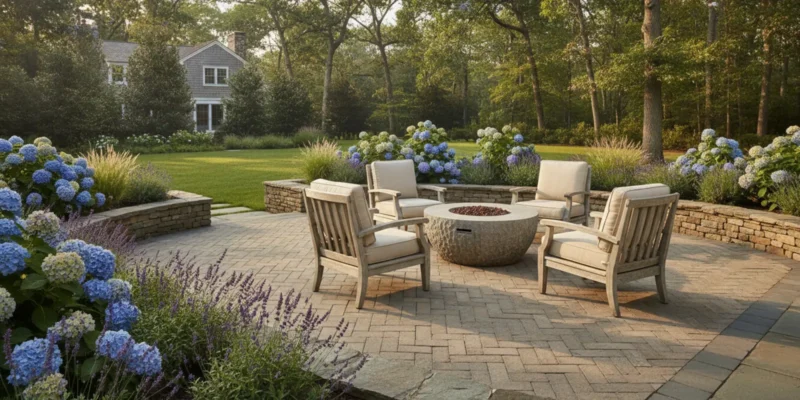
How long do pavers last in Long Island? A well-planned paver patio, walkway, or driveway can remain useful for many years, but there is no single lifespan that applies to every installation. The answer depends on the paver material, the prepared base, drainage, edge support, expected traffic, weather exposure, and maintenance. In other words, the visible units are only one part of the system.
Long Island homeowners should think about paver longevity as a process rather than a number. A surface that is correctly planned for its location can be cleaned, inspected, and repaired in sections as it ages. A surface with poor water management or an unstable foundation may show movement much sooner, even when the pavers themselves appear attractive and sound. This guide explains what to evaluate before installing new paving and what to look for when an existing area needs attention.
What determines how long pavers last on Long Island?
The most important factors work together. Material selection matters, but a durable product cannot compensate for a base that settles or a layout that sends water toward the home. Long Island weather adds repeated exposure to rain, summer heat, freezing temperatures, and thawing. Those changes can reveal weaknesses in grading, joints, edges, and the layers below the surface.
- Base preparation: The foundation beneath the pavers must be appropriate for the soil, project type, and expected loads. It should be prepared and compacted in a way that helps limit uneven settlement.
- Drainage and grading: Water needs a deliberate path away from the house and away from areas where it can remain trapped. Repeated puddling can contribute to movement, joint loss, staining, and slippery conditions.
- Edge restraint: A stable perimeter helps prevent the paving from spreading outward. This is especially important along open lawn edges, slopes, and areas that receive regular foot or vehicle traffic.
- Traffic and loading: A front walk, outdoor seating area, pool surround, and driveway do not experience the same demands. Construction details should match the intended use.
- Installation details: Joint material, transitions, steps, borders, and connections to other surfaces can all affect how the area performs over time.
- Maintenance: Sweeping, appropriate cleaning, joint observation, and prompt attention to small problems can help keep minor issues from becoming broad failures.
The U.S. Environmental Protection Agency explains that managing stormwater where it falls can reduce runoff and help protect water quality. That broader principle also matters when planning a paved area: the design should account for where rainwater goes instead of treating drainage as an afterthought. Review the EPA’s green infrastructure information for background on approaches that manage rainfall at the site.
How should you compare a patio, walkway, and driveway?
Begin with use. A patio normally needs a comfortable, usable surface for people, furniture, and outdoor activities. A walkway needs safe transitions and a surface that is comfortable to cross. A driveway has to handle vehicle loads, turning, edge pressure, and runoff. These distinctions affect the base, thickness, layout, and details selected for the project.
| Project area | Primary conditions to evaluate | Planning questions | Why the details matter |
|---|---|---|---|
| Patio | Furniture, foot traffic, shade, drainage, and connection to the home | Where will people sit, walk, and gather? Where will rainwater go? | A comfortable layout and sound grading help the space stay useful and reduce standing water. |
| Walkway | Slopes, steps, transitions, surface texture, and frequent foot traffic | Does the route drain safely? Are edges and changes in level easy to navigate? | Small changes in level or movement can affect comfort and safe passage. |
| Driveway | Vehicle weight, turning movements, edge support, and runoff | What vehicles will use it, and how will water leave the surface? | Higher loads and repeated turning require a plan suited to those demands. |
| Pool or entertainment area | Wet conditions, furniture, transitions, cleaning, and surrounding grades | How will the surface connect to the surrounding landscape and structures? | Drainage, texture, and maintenance all influence how the area functions. |
| Existing paving | Settlement, loose units, open joints, cracks, and drainage history | Is the issue localized, or does it repeat across the area? | The answer helps distinguish a targeted repair from broader reconstruction. |
Material appearance is also part of the decision. Concrete pavers, natural stone, and porcelain products can create different visual effects and may have different care requirements. Compare the available stone and porcelain options alongside the actual site conditions. A color or pattern that looks good in a sample should still be evaluated for the intended use, exposure, drainage, and upkeep.
For more design context, browse Gappsi’s hardscaping projects and backyard work. These resources can help you identify preferred layouts, borders, material combinations, and connections between a patio and the rest of the property.
How does the base affect paver lifespan?
The base is not visible after installation, which makes it easy to overlook during a design conversation. It is also one of the main reasons two similar-looking paved areas can age differently. The base supports the surface and helps distribute loads. If the soil or foundation shifts unevenly, the pavers above may dip, rock, separate, or create low spots where water collects.
A proper evaluation should consider existing soil, grade, access, the intended use, and connections to walls, steps, structures, or other paving. It should also identify areas where water may move beneath or across the surface. Simply adding a new visible layer over an unresolved problem may conceal the symptom without correcting the cause.
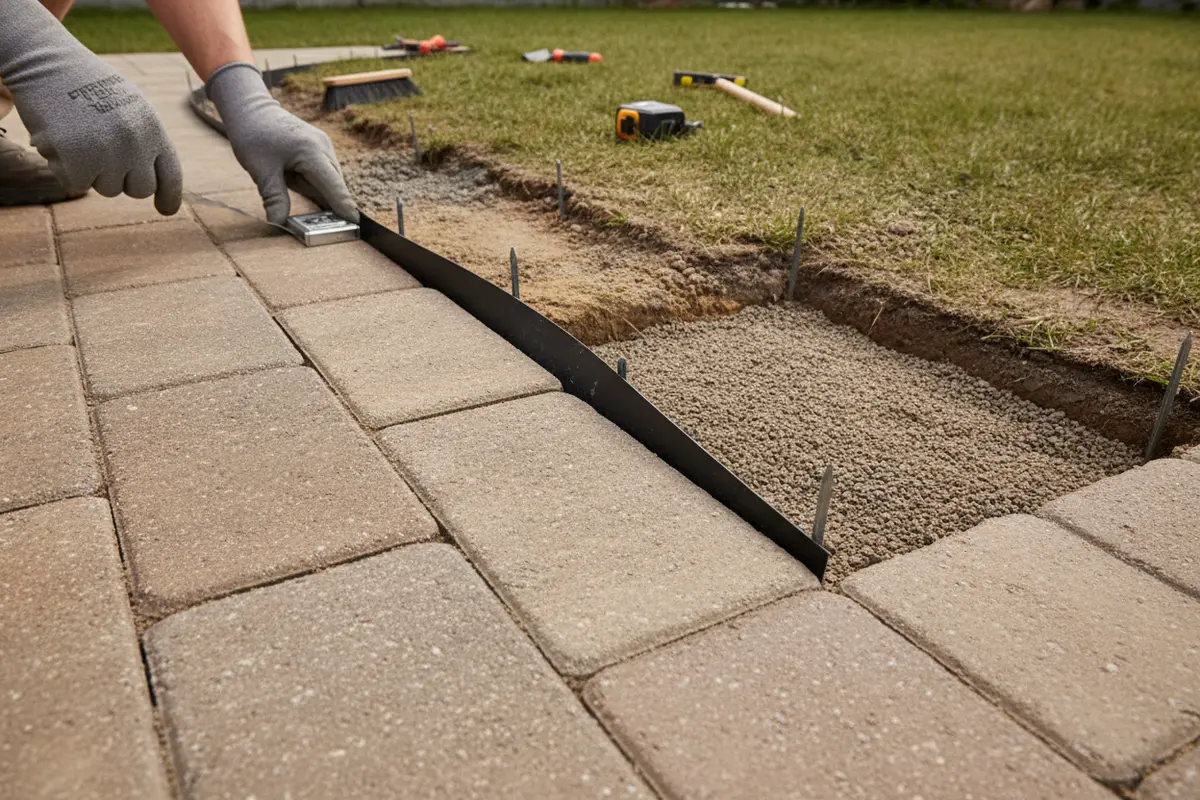
Edge support deserves equal attention. When the perimeter is weak, regular use and seasonal movement can push units outward. The result may be widening joints, a wavy edge, or a border that no longer holds its line. During a consultation, ask how the proposed edge will be supported and how it will meet planting beds, lawn, steps, or a driveway.
Which warning signs mean an existing paver area needs attention?
Inspect the whole area rather than focusing on one stained or damaged unit. A single mark may be cosmetic, while a repeating pattern of movement may point to a base or drainage concern. Walk the surface at different times and observe it after rain. Note whether the issue is confined to one location or appears along a route, edge, or low point.
- Persistent puddles or damp areas remain after surrounding surfaces have dried.
- The paving slopes toward the house or allows runoff to collect beside a wall or doorway.
- Individual pavers rock underfoot, sit lower than their neighbors, or no longer meet evenly.
- Joints are widening, losing material, or repeatedly filling with weeds and debris.
- An outside edge appears to be spreading, sinking, or separating from adjacent ground.
- A dip returns after a previous spot repair or becomes larger after seasonal weather.
- Cracked or damaged units appear in a pattern connected to a transition, drain, tree root, or loaded area.
Take photographs from several angles and record when the problem is most visible. This information can make a site discussion more useful. It can also prevent a rushed decision based only on the most obvious surface defect.
What routine care can help preserve pavers?
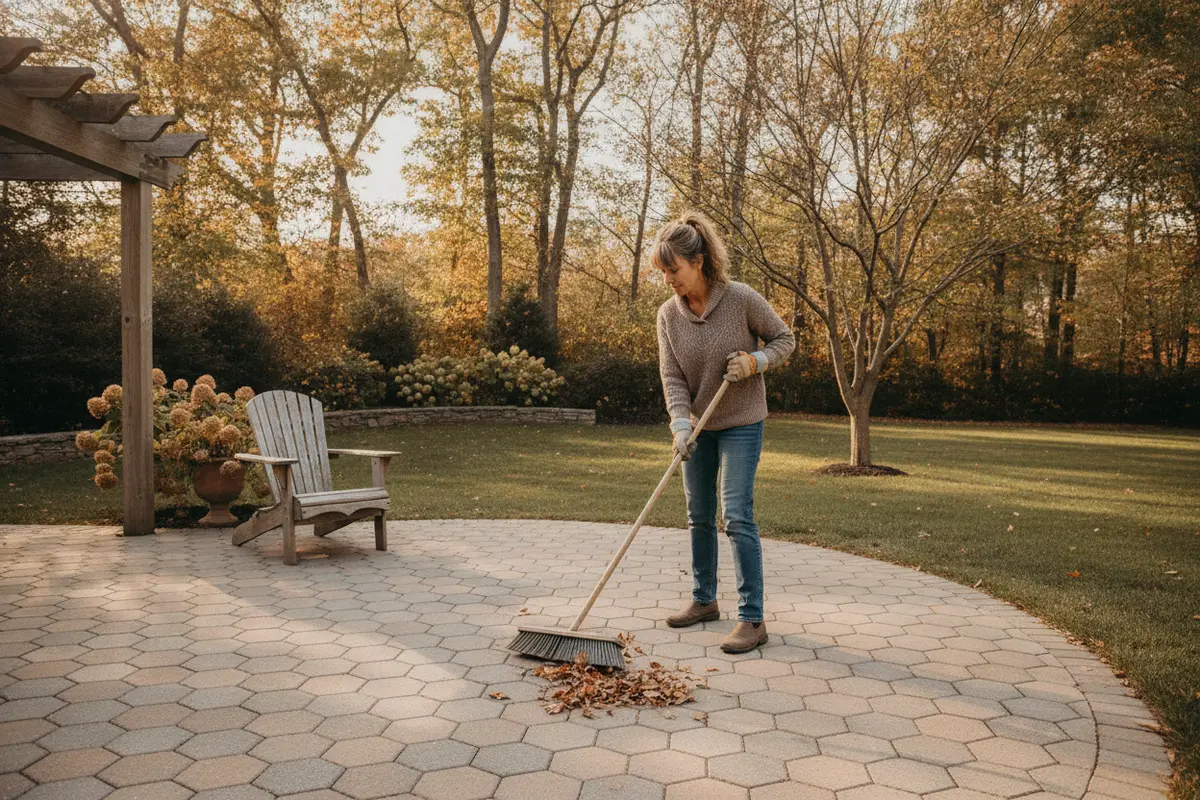
Routine care starts with observation. Sweep leaves, soil, and other organic debris before they accumulate in the joints. Clean spills with a method suited to the installed material, and avoid assuming that a stronger chemical or more aggressive pressure is always better. Product instructions should guide the cleaning approach, particularly for natural stone, porcelain, colored concrete, or treated surfaces.
- Inspect after heavy rain. Look for standing water, runoff toward the home, soil erosion at an edge, or newly exposed joints.
- Keep the surface clear. Remove leaves and debris so moisture and organic material do not remain concentrated in the joints.
- Check for movement. Notice rocking units, uneven transitions, open joints, and small depressions before they become trip hazards or larger drainage issues.
- Address stains carefully. Identify the material and the source of the stain before choosing a cleaner or treatment.
- Review joint condition. Missing or displaced joint material can make a surface look unfinished and may allow movement or weed growth.
- Schedule timely repairs. A localized problem is easier to evaluate when its cause is still visible and the surrounding surface remains stable.
- Ask about sealing. Sealing may suit some materials and desired finishes, but it is not a substitute for sound drainage or an adequately prepared base.
If you are considering treatment, review the paver sealing services information and ask what preparation, product, finish, and future upkeep apply to your surface. A maintenance plan should be based on the actual material and site rather than a generic schedule.
When is repair better than replacement?
Repair can be a practical choice when the affected area is limited, the surrounding pavers remain stable, and the cause can be corrected. A contractor may be able to lift units, inspect the underlying area, correct a localized problem, and reset or replace the surface. This approach can preserve more of an otherwise serviceable installation.
Broader work may be appropriate when settlement extends across the area, water repeatedly collects, edges have lost support, or the existing layout no longer works for the property. Replacement may also be considered when the material is extensively damaged or the homeowner wants to change the use, appearance, or grade of the space.
Ask for the reasoning behind the recommendation. A useful proposal should identify the affected area, explain the suspected cause, describe whether pavers will be lifted and reused, and outline any base, drainage, edge, or transition work. It should also state what is included in preparation and cleanup. Related examples can be found in Gappsi’s blue limestone patio projects and gravel stabilization information.
How can you plan a longer-lasting paver project?
Before choosing a pattern or final color, map how the space will be used. Mark doors, steps, seating, planting beds, downspouts, pool areas, and vehicle paths. Think about where snow, leaves, and rainwater will go. Consider whether furniture may move, whether a driveway will need a turning area, and whether future landscaping could affect the edge.
Then ask the installer to explain the construction sequence in plain language. The discussion should cover site preparation, grading, base work, surface material, joint treatment, edge restraint, and connections to existing features. Ask how the plan changes for a patio compared with a driveway, and how the finished grades will protect the house and nearby structures.
- What site and drainage conditions were identified?
- What preparation is planned for the soil and base?
- How does the construction match the area’s expected foot or vehicle traffic?
- How will the edges be supported beside lawn, planting beds, steps, or other paving?
- How will water be directed away from the home and handled across the property?
- Which paver care instructions apply to the selected material?
- If a unit moves later, how would it be lifted, inspected, and reset?
- Which portions of the work are included in the proposal, and which are separate options?
Gappsi’s masonry projects, driveway work, and showroom and product information can help you organize ideas before a site conversation. You can also review the Gappsi home improvement services to see how outdoor design, construction, material selection, and maintenance may fit together.
Frequently Asked Questions
Do all pavers last the same amount of time?
No. Material, base preparation, drainage, edge support, traffic, weather exposure, and maintenance all influence performance. The site and construction details matter as much as the appearance of an individual paver.
Can a paver patio be repaired without replacing the whole surface?
Sometimes. A targeted repair may be suitable when movement or damage is localized and the surrounding base is stable. The cause should be identified first, especially when water, settlement, or edge movement is involved.
Does sealing make pavers last longer?
Sealing may be appropriate for certain materials and goals, but it does not correct poor grading, trapped water, or an unstable foundation. Ask about preparation, product suitability, finish, and future maintenance for the specific surface.
How do I know whether my patio has a drainage problem?
Observe the area during and after rain. Persistent puddles, water directed toward the house, recurring wet spots, or erosion along an edge are reasons to have grading and drainage reviewed.
What is the first step if I am unsure whether to repair or replace?
Document the symptoms and arrange an assessment that considers the surface and the layers below it. A recommendation should explain the likely cause and why the proposed scope addresses it.
The best way to extend the useful life of Long Island pavers is to match the material and construction to the site, watch how water behaves, and address small changes before they become larger surface problems.