


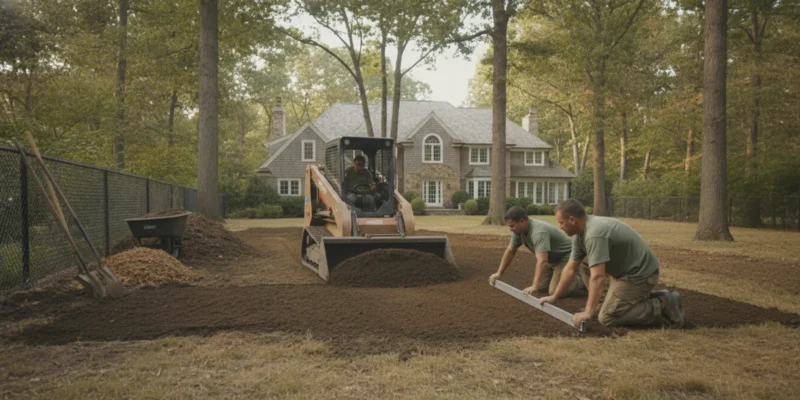
Planning topsoil delivery and grading is about more than ordering soil and spreading it. The site needs to be assessed, the finished elevations need to be considered, and delivery and earthwork need to fit the rest of the project. A clear plan helps homeowners and property managers avoid extra handling, protect access areas, and prepare a stable surface for the next landscape or construction step.
Contact Gappsi through our contact page to discuss your site plan
Posted by Gappsi Group
This guide focuses on planning decisions rather than quoting a fixed quantity or price. Soil needs vary with the area, the depth required, existing grades, access, and the intended finish. Use the steps below to organize those decisions before you schedule a delivery or approve grading work.
What should topsoil delivery and grading accomplish?
Topsoil delivery brings soil to the property; grading shapes the ground to the elevations and contours the project calls for. They are related, but they are not interchangeable. A delivery of good soil cannot correct an unsuitable base or a drainage problem on its own. Likewise, grading existing material may not provide the growing medium or final surface that a landscape plan needs.
Start by writing down what the prepared area is meant to support. A lawn, planting bed, driveway edge, pool surround, and broad backyard renovation may need different finish surfaces and coordination. The desired result also affects how much material is useful. For planting, the soil layer should suit the planting plan. For a surface that will receive paving or another built feature, the work may need a different base and should not be treated as a topsoil-only installation.
Define the limits of the work on a simple site sketch. Mark the house, existing trees, walkways, driveways, fences, drains or visible low points, and areas that are not to be disturbed. Note where trucks or equipment can enter and where material may be placed temporarily. This gives the person planning the work a practical starting point and makes it easier to identify questions that a site visit must resolve.
How do you assess a site for topsoil delivery and grading?
Walk the property after ordinary weather and look at how water behaves. Note where it collects, where it flows, and whether any areas stay soft longer than nearby ground. Look for abrupt transitions between the lawn, patio, driveway, and planting areas. These observations do not replace a professional grade assessment, but they help explain the problem you want solved.
Check the existing surface and what lies beneath it. Construction debris, compacted fill, roots, old landscaping material, or a layer of unsuitable soil can affect preparation. If a new soil layer is placed over a problem without addressing it, the finished surface may not perform as intended. The right preparation depends on actual site conditions, so avoid assuming that every yard needs the same removal depth or treatment.
Record the approximate length and width of each area and identify changes in elevation. A measured plan is more useful than ordering by a vague description such as “a few loads.” Where the site has slopes or irregular shapes, divide it into smaller sections and note their approximate dimensions. Have the installer or supplier confirm the volume calculation and account for the intended compacted or settled finish, rather than relying on a rough estimate alone.
Review your soil quantity and site plan with Gappsi
Also check access. A delivery vehicle needs a safe route and an appropriate place to unload. Gates, overhead branches, soft ground, narrow turns, parked vehicles, utility covers, and finished paving can all affect the method. If a truck cannot reach the intended area, soil may require additional movement by equipment or in smaller batches. Discuss that plan before delivery day, especially if the property has limited access or neighboring areas must remain clear.
Gappsi provides landscaping services and works on broader outdoor projects. If the grading is part of a larger yard plan, describe the full scope rather than treating soil delivery as an isolated task. That context can help determine which work should happen first and which areas should remain undisturbed until later phases.
Discuss your landscape and grading scope with Gappsi
How should you estimate the amount of topsoil?
Use area and planned depth as the starting point. For a simple rectangular section, multiply its length by its width to find the area, then multiply by the planned layer depth to estimate volume. Convert all measurements to the same units before calculating. Irregular areas should be split into manageable shapes, and each section should have its own estimate.
The calculation is only a planning estimate. Actual needs may change when the existing grade is surveyed, soft or unsuitable material is removed, or the surface is shaped. A sloped area may require more material at one end than another. A border or transition may also need careful shaping so the new surface meets a path, curb, patio, or planting bed cleanly.
Before confirming an order, ask who is responsible for measuring, who verifies the planned depth, and how the delivery quantity is adjusted if site conditions differ from the estimate. Confirm whether material will arrive in one delivery or several, where each load will be placed, and whether the crew will spread it as part of the same scope. Those details reduce the chance of soil being dropped where it blocks access or needs to be moved twice.
Do not use an arbitrary depth across the entire property simply to simplify the order. The required depth depends on the use, existing soil, final elevations, and adjacent features. Raising the ground too much near a building or hard surface can create an unwanted transition. A project plan should identify the target grades and the limits of new soil before a quantity is finalized.
Which soil and placement decisions matter?
Ask what material is being delivered and whether it is suitable for the intended use. “Topsoil” is a general label, not a full description of texture, source, or screening. Discuss whether the project needs screened soil, planting soil, or another specified blend, and request a clear description of what the supplier is providing. Avoid assuming that a dark color alone proves that soil is suitable.
Make sure the material plan matches the planting or lawn plan. A prepared lawn area and a bed intended for shrubs may call for different preparation details. If a landscape design specifies soil or amendments, share those requirements before the delivery is booked. For a larger installation, ask how the delivered material will be checked and where any excess will go.
Plan the stockpile location with care. It should be accessible to equipment without blocking a driveway, covering drains, pressing against structures, or damaging trees and existing work. Limit unnecessary movement across the pile and the area that has already been prepared. New York’s restoration guidance notes that grading of a topsoil stockpile should be limited and minimized to help prevent compaction; see the New York topsoil stockpile guidance for that specific point.
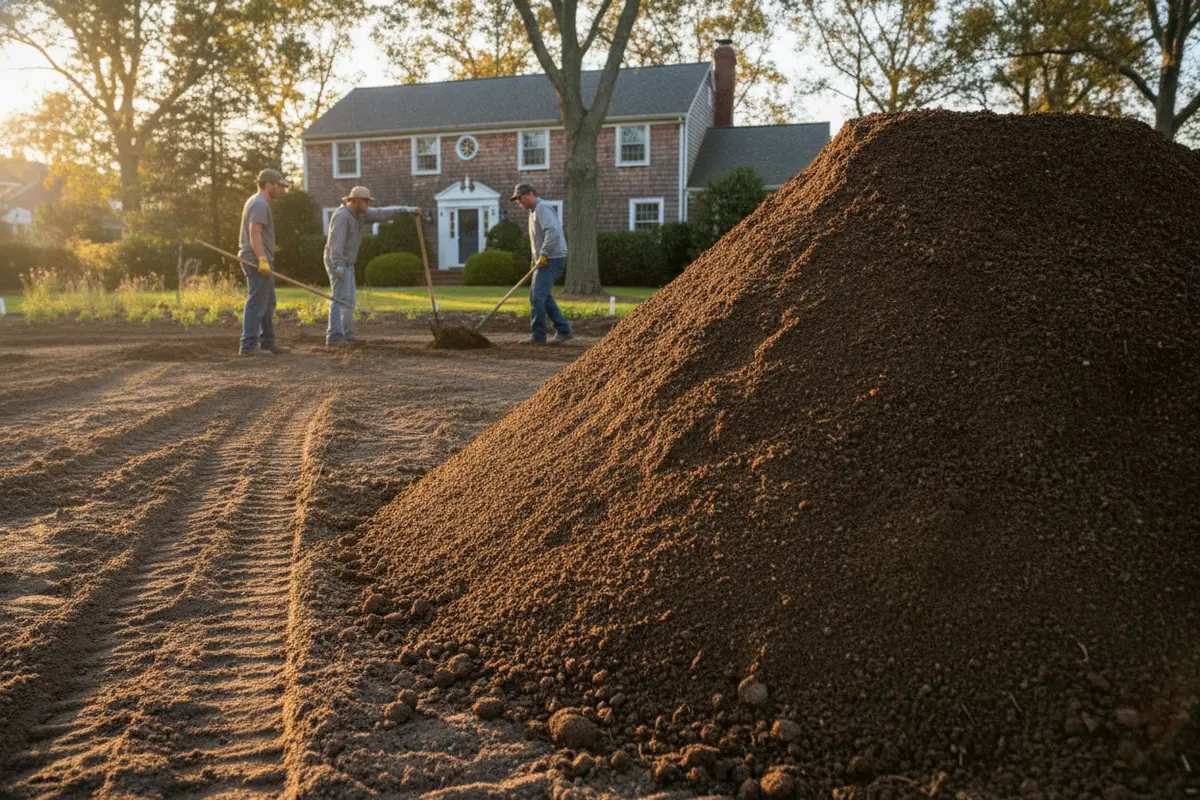
Ask how the crew will keep delivery and equipment traffic off areas that are already finished. Soil handling can leave ruts or compact ground, especially if equipment crosses the same route repeatedly. A designated access path and unloading location make the work easier to manage. If the ground is wet or soft, ask whether the schedule should change rather than allowing heavy traffic to damage the site.
How does grading affect drainage and finished elevations?
Grading changes the shape of the land, so it should be coordinated with the house, paving, planting areas, and other fixed features. The goal is not simply to make every part of the yard flat. A plan needs to consider where surface water should move, how the ground meets buildings and hardscape, and whether transitions remain usable and visually coherent.
Identify the intended high and low points before soil is placed. Ask how water will move across the finished surface and whether the plan changes an existing flow path. Avoid directing runoff toward a foundation, a neighbor’s property, or a location where water already collects. If the site has persistent standing water, an unknown drain, or a complicated grade change, do not assume that adding topsoil alone will solve it. The condition may need a separate assessment and an appropriate drainage plan.
Check proposed elevations against doors, steps, window wells, utility covers, fences, and the edges of patios or driveways. The finished grade must meet those features without burying them or creating an awkward step. For a pool project, coordinate the surface with the pool deck, access routes, and landscape plan rather than changing the surrounding grade independently. Gappsi’s swimming pool projects are one example of work where surrounding surfaces and project sequence should be discussed together.
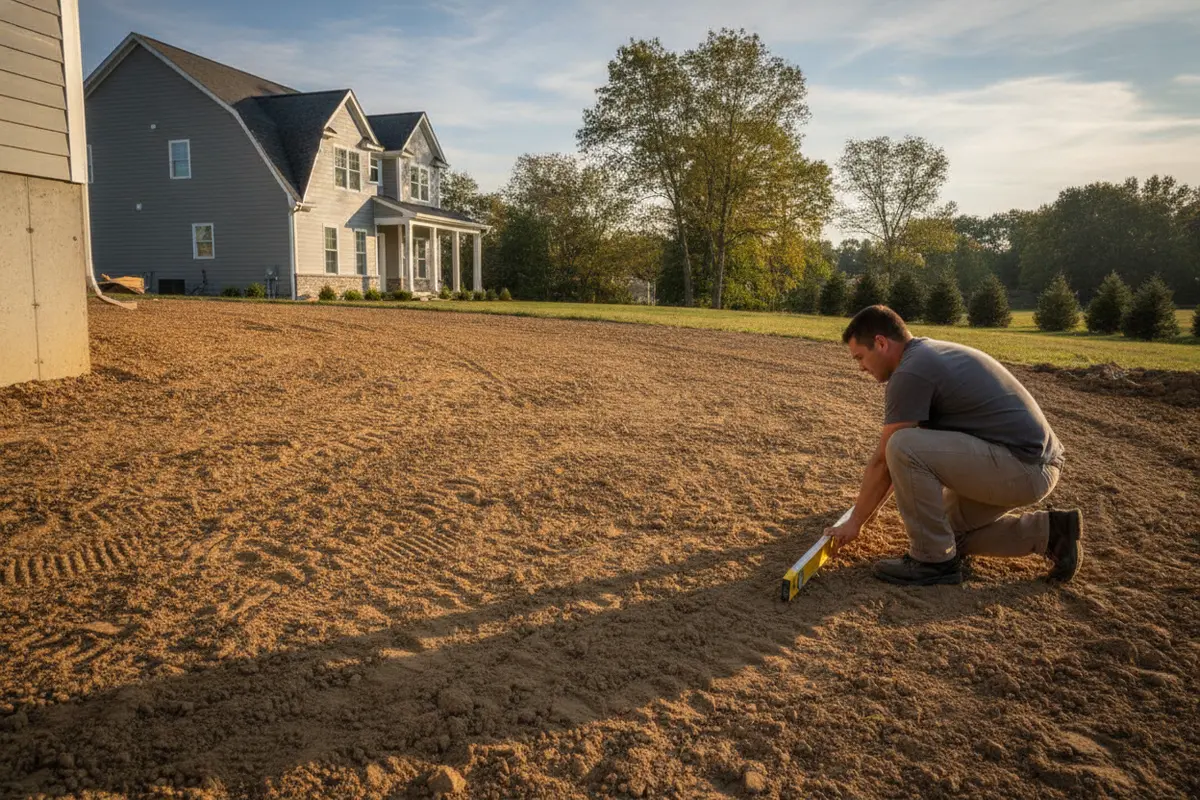
Use a drawing, marked stakes, or other clear reference to communicate the planned elevations. Ask who will check the grade during the work and what the review process is before the next trade begins. If a landscape or construction plan already exists, compare the grading scope with it. Resolving mismatches before soil arrives is easier than reworking a finished surface later.
What should happen before, during, and after delivery?
A simple sequence helps different parts of a project work together. The exact order depends on the site, but the following checkpoints can guide the conversation.
- Before scheduling: define the work area, intended use, target grades, material type, access route, and stockpile location. Confirm which party measures and who is responsible for any site preparation.
- Before unloading: walk the delivery route, move vehicles and movable obstacles, protect surfaces that should remain untouched, and reconfirm where material is to be placed. Check weather and ground conditions.
- During spreading: compare the evolving surface with the agreed plan. Keep equipment movement controlled, maintain transitions around fixed features, and flag unexpected fill, debris, or soft areas before they are covered.
- Before the next phase: review the shape, drainage direction, edges, and connection points. Confirm that any planting, turf, paving, or other planned installation can proceed on the prepared surface.
Do not rush to cover a surface that has not been checked. If the project includes a lawn, discuss what preparation is needed before seeding or installing turf. For an artificial grass area, coordinate the base and finish levels with the turf scope; see Gappsi’s synthetic turf work as a related project route. For a driveway, the grading and base requirements differ from a planted area, so coordinate with the driveway scope rather than using a topsoil specification as a substitute.
How do common planning approaches compare?
The best approach depends on the goal and the condition of the site. Use this comparison to identify the questions to settle before approving the work; it is not a substitute for a site-specific design.
| Approach | Useful when | Key planning question | Main caution |
|---|---|---|---|
| Spread topsoil over a prepared area | The existing grade is suitable and a planting or lawn surface is needed | What material and finished depth does the plan call for? | Do not cover unsuitable material or ignore existing drainage. |
| Regrade before adding soil | The shape or elevations need adjustment before the finish layer | Where should high and low points be, and how will runoff move? | Confirm transitions at buildings, paths, and neighboring areas. |
| Remove and replace unsuitable material | Existing fill, debris, or poor surface conditions are identified | What material is removed, and what replaces it? | Scope and quantity can change after the underlying area is exposed. |
| Coordinate grading with a larger project | Landscaping, paving, pool, turf, or other work is planned | Which trade sets the elevations and what is the work sequence? | Independent scopes can conflict if grade references are not shared. |
When comparing proposals, look beyond the soil quantity. A useful scope explains preparation, material description, delivery placement, spreading, finish grade, disposal if applicable, access, and the point at which the work will be reviewed. If any of those items are excluded, ask who will handle them and whether the exclusion affects the next phase.
What should you confirm in a grading proposal?
Ask for a written description of the work area and intended outcome. A proposal should make clear what the crew is expected to do, rather than leaving “grade yard” open to several interpretations. Confirm whether the work includes only shaping existing material, topsoil supply, spreading, removal of unsuitable soil, or some combination. Clarify what is not included as well.
- Measurements: Who is responsible for area and volume calculations, and what assumptions are used?
- Material: What type of soil is included, and how is it described or checked?
- Elevations: What reference establishes the finished height and slope?
- Water: Where should surface runoff travel, and what happens if an unexpected low area is found?
- Access: Where may trucks and equipment travel, and what surfaces or plantings need protection?
- Sequence: Which work happens first, and what condition must be met before another contractor or phase begins?
- Changes: How will the team handle extra excavation, hidden debris, or a quantity that differs from the estimate?
Also discuss site boundaries and neighboring properties. Confirm that the crew understands where work stops and that the planned grade will not shift water toward an adjacent lot. Keep a copy of the site sketch or plan with the proposal so both sides are referring to the same areas and features.
If the soil work is one part of a wider backyard improvement, compare the sequence with the intended hardscape and planting work. Gappsi’s hardscaping project information can help route a reader exploring connected outdoor work. For a broader layout, the backyard project category is another relevant starting point. The point is to coordinate scopes, not assume every project requires the same package.
Request a conversation about your grading and landscape plans
Frequently Asked Questions
Can topsoil correct a drainage problem?
Not by itself in every case. Topsoil changes surface height, but the underlying grade, soil condition, drainage features, and runoff path all matter. Identify where water collects and ask for the cause to be assessed before deciding that adding soil is the solution.
How much topsoil should I order?
Estimate from the measured area and planned depth, then have the project team verify the quantity against actual grades and site conditions. Slopes, irregular shapes, removal, and the intended finish can change the amount. Avoid ordering based only on a general description of the yard.
Should grading happen before landscaping?
Major shaping and elevation decisions generally need to be coordinated before finish planting or lawn work. The sequence for a particular property depends on its plan and the other installations involved. Agree on the target grades and handoff point so later work does not undo the prepared surface.
What should I do before a soil delivery arrives?
Confirm the unloading point, equipment access, material description, delivery quantity, and the areas that must be protected. Move vehicles and loose obstacles, and discuss soft ground or wet conditions. Make sure the crew knows where not to place or spread soil.
Can I grade a yard without making it completely flat?
Yes. A finished yard can have intentional contours and slopes. The important point is that elevations support the intended use, transitions, and water movement. Ask the project team to explain the planned high points, low points, and connections to nearby features.
Ready to plan your site work?
Start with the area, its intended use, and the grade or drainage concern you want addressed. A clear sketch, a few site observations, and questions about access and sequence can make the first project conversation more productive.
Contact Gappsi through our contact page to discuss your project
Careful planning helps topsoil delivery and grading fit the property and the work that follows.