


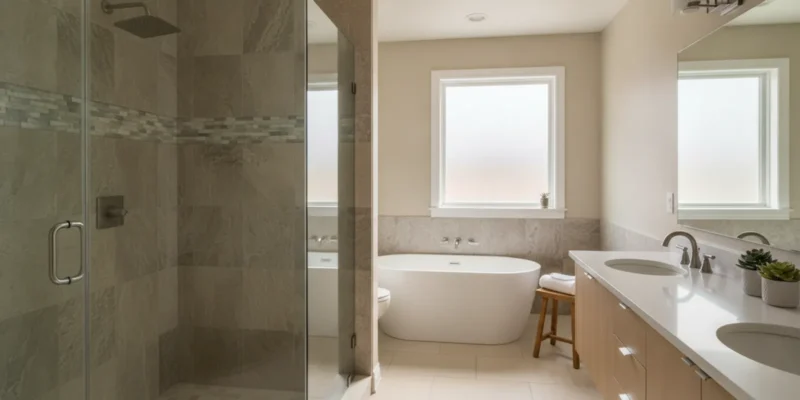
Bathroom tile materials Long Island homeowners choose should match the location: a shower floor, a shower wall, and a dry bathroom floor have different demands. Porcelain, ceramic, natural stone, and mosaic tile can all be suitable in the right application. The useful questions are where the tile will go, how it will be installed, and how much ongoing care fits the household.
Contact Gappsi through our contact page to discuss your bathroom project
Begin by mapping the room into surfaces: main floor, shower floor, shower walls, vanity splash, niche, and any dry-area feature wall. Then compare each candidate tile by intended use, finish, size, texture, appearance, and care instructions. This keeps an attractive sample from being chosen for a location it is not intended to serve. Homeowners can also review Gappsi’s shower-related project information while preparing questions about their own layout.
Bathroom tile materials Long Island homeowners should compare: Which options fit?
Porcelain is a versatile option for many bathroom surfaces because products are available in varied sizes, colors, finishes, and patterns. Some imitate stone; others create a more uniform look. Ceramic offers a broad range of colors and decorative forms and is often considered for walls and accents. Natural stone brings individual veining and color variation, while mosaic tile can add detail or make it easier to follow a sloped surface. These are starting points, not blanket approvals for every application.
The tile itself is only one part of the finished surface. The substrate, waterproofing, mortar, grout, joints, slope, drainage, and workmanship all contribute to how the assembly functions. Ask the installer to confirm the product’s intended use and the suitability of the entire installation system for the specific area. A tile that looks robust is not automatically right for a shower floor, and a water-resistant tile does not replace waterproofing behind it.
| Material or format | Common bathroom uses | Questions to resolve before selection |
|---|---|---|
| Porcelain | Floors, shower walls, and selected shower floors | Is this product rated for the location? How do finish, texture, size, and care instructions fit the use? |
| Ceramic | Walls, backsplashes, and selected floors | Does the manufacturer identify it for the intended surface and expected exposure? |
| Natural stone | Floors, walls, accents, and suitable shower applications | What sealing, cleaning, and routine care does this particular stone require? |
| Mosaic | Shower floors, niches, borders, and accents | Is the surface appropriate underfoot, and how will the added grout joints be maintained? |
Contact Gappsi through our contact page to review your bathroom tile options
How should you choose tile for bathroom floors and showers?
For a main bathroom floor, start with intended use and the surface underfoot, not just the color. Review the manufacturer’s information about the specific product and ask the installer how its finish behaves in the planned location. Think about cleaning, the room’s traffic, and the relationship between tile size and the floor plan. Large-format tile can create a quieter visual field, but it needs a layout that works around doorways, plumbing, and changes in plane. Smaller formats create more joints and can accommodate more detailed layouts.
A shower floor brings several decisions together. The drain position and slope influence the layout, and the format must work with the geometry of the base. Small mosaics are often considered because their smaller pieces can follow a slope, but the selected product still needs to be suitable for the wet floor. Ask how the installer plans cuts around the drain, how grout joints will align, and how the finished surface will direct water toward the drain.
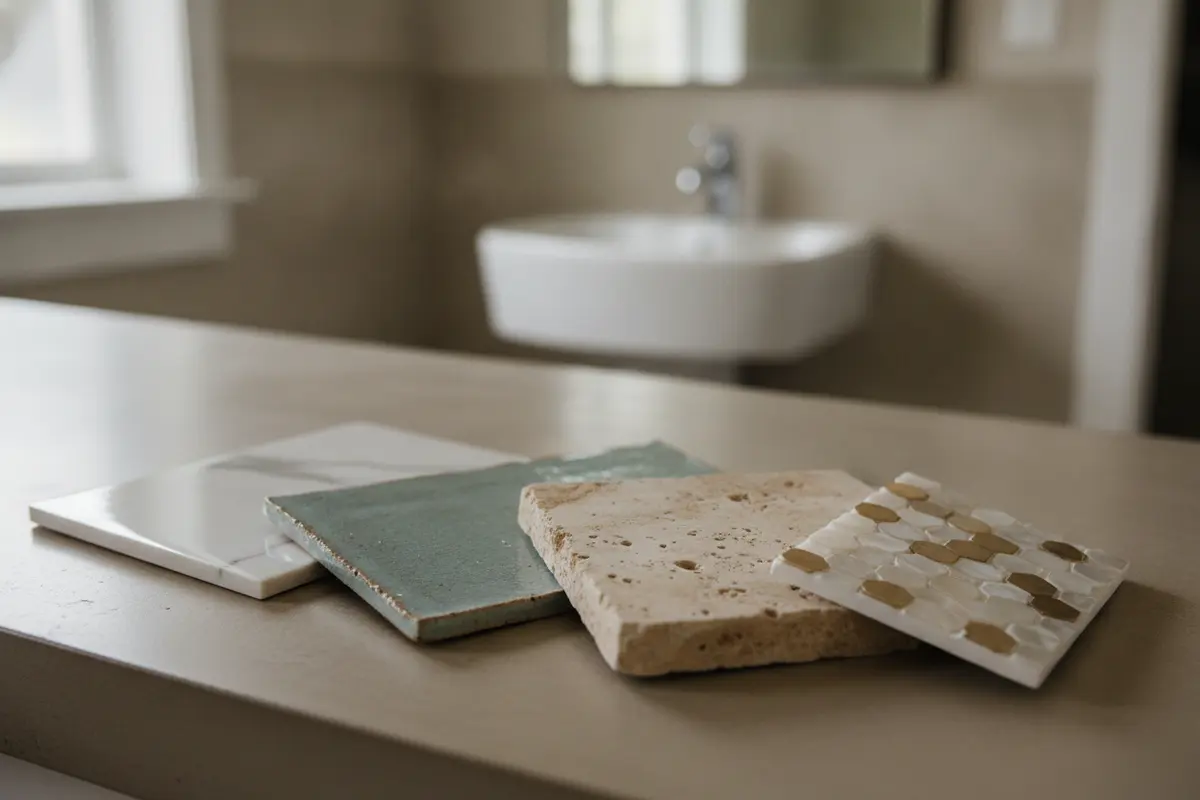
Shower walls can often accommodate larger pieces, which may reduce the number of grout joints and make a compact area appear less busy. Before choosing a format, consider niches, corners, plumbing fixtures, and the height at which tile will end. A layout plan can show whether those details create narrow cuts or awkward transitions. Gappsi’s shower-base project references and shower-pan topics can help frame questions about how the base and wall tile meet.
Water control depends on the complete installation, rather than tile alone. Ask what waterproofing system will be used behind or beneath the tile, how corners and pipe penetrations will be treated, and how the shower base will drain. New York City housing guidance includes specifications for ceramic and porcelain tile; use it as a reference point, then confirm product and project details with the installer: NYC ceramic and porcelain tile specification.
What are the trade-offs between porcelain, ceramic, and stone?
Porcelain is a practical candidate when you want a wide choice of looks and formats. It may have a consistent appearance or a pattern intended to resemble another material. Compare the exact product’s surface, intended application, dimensions, and care guidance. If choosing a patterned tile, request enough pieces to understand how the pattern repeats and whether the finished room will look balanced.
Ceramic can be useful where color, shape, and surface character are central to the design, particularly on walls. If considering it for a floor or a wet location, confirm that the exact product is intended for that use. Edge profiles and trim pieces matter too. Ask how exposed edges will be finished and whether compatible trim is available before finalizing a selection.
Natural stone offers variation that manufactured patterns cannot reproduce exactly. That variation also means one small sample may not represent the full order. View several pieces, if possible, and ask what sealing and cleaning routine applies to the specific stone. The answer can differ by material and finish. Consider your willingness to follow the recommended care before using stone in a shower or a frequently used floor.
Mosaic tile can introduce color, a border, or a smaller-scale pattern. It is often considered for shower floors because small pieces can follow a sloped surface. Yet the number of grout joints is a real maintenance factor, and surface texture and product suitability still need review. A sample board or a dry layout helps show how a small mosaic repeats when it covers a larger area.
How do finish, size, and grout affect the result?
Tile size affects both the visual rhythm and the installation plan. Large pieces can reduce visual interruption, but they need careful placement around corners, niches, and plumbing. Smaller pieces can follow curves or slopes and create a decorative field, but they increase the amount of grout line in view. A good layout considers where full tiles begin and end, whether cuts will be visible, and how lines relate across adjacent surfaces.
Finish is a practical decision. A glossy wall tile reflects light and may be simple to wipe. A textured or matte surface has a different look and feel. For any floor, especially a wet one, check the manufacturer’s stated application and ask the installer to assess the specific finish. Do not infer performance from a photo or from the material category alone.
Grout color changes the appearance of the whole field. A contrasting shade emphasizes the grid; a closer match makes it less prominent. Think about how visible soil may be in a high-use area, and ask which grout product and joint width suit the selected tile and location. Cleaning and sealing requirements vary by product and material, so get instructions for the actual combination rather than applying one rule to every surface.
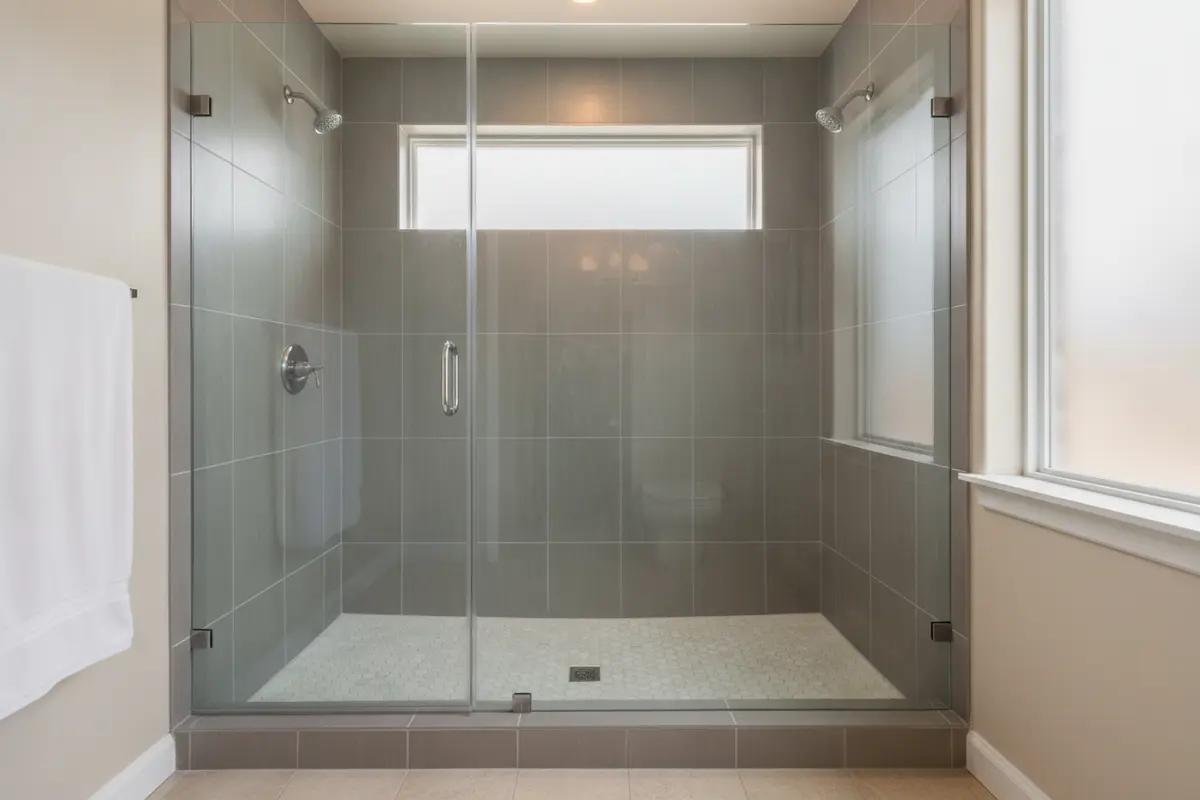
Which tile combinations suit different bathroom layouts?
In a small bathroom, visual continuity can keep the room from feeling divided into too many separate zones. One approach is to use a main floor tile, a related shower-wall tile, and a restrained accent in a niche. The materials need not match exactly; they should work together in tone and scale. Bring samples into the room and view them under its lighting, beside the vanity, fixtures, and paint colors.
A family bathroom may call for surfaces whose care fits the household routine. A guest bath may leave more room for a decorative wall or feature floor. In a primary bathroom, comfort, cleaning, and the way tile relates to lighting and fixtures may take priority. These are design priorities, not fixed rules. Consider who uses the room, how often it gets wet, and which surfaces are likely to need frequent wiping.
For a long, narrow room, consider how a tile’s direction and grout lines influence the view from the doorway. A repeated pattern can draw the eye along the room, while a strong contrast between floor and walls can make the boundaries more pronounced. In a compact shower, examine whether a large tile leaves very narrow strips at the corners or around a niche. For an open shower, think about how the floor’s slope and transition will be handled without creating a visually abrupt seam.
Homeowners comparing specific looks can use porcelain tile references as inspiration, not as a substitute for checking a new product’s specification. A wider renovation may also involve wall preparation and finish transitions; interior remodeling references and tile-setting topics can prompt useful questions to bring to a project discussion.
How can you plan a tile layout before ordering?
Make a simple room schedule so every selection has a clear destination. Include each surface, product name, size, finish, grout, trim, and any care note. Then ask for a layout review before ordering. This step can expose conflicts early, such as a tile size that creates narrow cuts, a trim detail that is unavailable, or a pattern whose repeats do not line up as expected.
- Measure and label each surface. Record the main floor, shower floor, shower walls, niche, vanity splash, and any accent area separately.
- Confirm intended use. Check the product information for each location and have the installer confirm it fits the project.
- Review the installation assembly. Discuss substrate, waterproofing, drainage, slope, mortar, grout joints, edge treatment, and transitions.
- Test the layout. Identify starting points, prominent edges, cuts at corners, and how patterns meet at thresholds or niches.
- Check quantities and ordering details. Ask how the quantity accounts for cuts, pattern matching, and possible future replacement needs.
- Write down care instructions. Keep cleaning and sealing guidance for the tile, stone, and grout with the project records.
Before approving an order, look at more than one piece when the product has visible variation. Check the color and surface in lighting similar to the finished room. Ask what happens if different cartons vary, and how the installer will blend pieces during placement. Keep product labels and any leftover material information; those details make it easier to identify the selection later if a repair is needed. You can also browse Gappsi’s project references for ideas to discuss, and use its sealing information as a prompt to ask which care instructions apply to your chosen surfaces.
Contact Gappsi through our contact page to discuss material options and project scope
How should homeowners choose bathroom tile materials Long Island homes can use?
Use a final review to make sure your appearance preferences and installation requirements agree. For example, a homeowner may favor a large-format stone-look porcelain for the shower walls, a smaller mosaic for the sloped shower floor, and a coordinating porcelain for the main floor. That combination can make sense only after confirming that each actual product suits its location, the mosaics work with the drain layout, and the finishes and grout choices meet the household’s cleaning expectations.
Another homeowner may want natural stone throughout because variation is the central design goal. The decision then turns on viewing enough pieces to understand that variation, checking stone-specific care, and confirming that the installation plan suits every wet area. If the maintenance expectations do not fit, the owner can keep stone as a smaller accent and choose a different material for the surfaces that demand more frequent cleaning. The point is not to follow a universal material ranking, but to weigh the complete use case.
Before work starts, make sure the written selection list and the approved layout refer to the same products. Confirm finish, dimensions, color, trim, grout, and location. Discuss who will handle waterproofing and how the completed work will be checked. Gappsi’s project updates may help you prepare general questions, while the specifics for your bathroom should come from the product information and project team.
Contact Gappsi through our contact page to discuss your bathroom tile plan
Frequently Asked Questions
Is porcelain or ceramic better for a bathroom?
Neither is automatically the best choice for every surface. Compare the exact product’s intended application, finish, care instructions, and suitability for the location, then review the installation plan with the installer.
Can natural stone be used in a shower?
Some stone products may be appropriate for shower use when the product, installation assembly, and maintenance plan fit the application. Ask about sealing, compatible cleaning products, and care for the specific stone before selecting it.
Is mosaic tile a good choice for a shower floor?
Mosaic is often considered because smaller pieces can follow a sloped shower floor, but the specific tile still needs to suit the wet location. Confirm the drain, slope, surface, grout, and waterproofing plan with the installer.
How many tile styles should a bathroom use?
There is no fixed number. A main tile, a related secondary surface, and a restrained accent can create a coordinated room, but the best combination depends on the layout, scale, and the materials’ colors and finishes.
What should I bring to a tile selection discussion?
Bring room measurements or a floor plan, photos, inspiration images, maintenance preferences, and any existing fixture or finish selections. A list of intended surfaces helps the project team discuss product use and layout one area at a time.
Ready to plan your bathroom tile selection?
Contact Gappsi through our contact page to discuss your bathroom project
Bring your measurements, product ideas, and care preferences to the discussion, then confirm that every tile and installation detail suits its intended surface. Posted by Gappsi Group.