


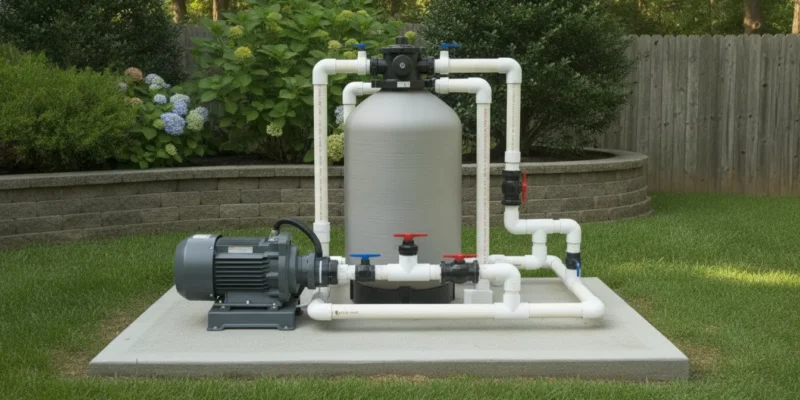
A swimming pool pump is supposed to hum while it circulates water through the filter. Pool pump noise troubleshooting starts by asking whether that sound is new, and whether it is a rattle, a gurgle, or a grind. On a Long Island inground pool, the useful first step is a short, power-off look at the strainer housing and the equipment pad, not a guess about the motor windings.
Contact Gappsi through our contact page to talk through a noisy pool pump
This guide sorts the sounds a homeowner can describe, then lists checks that stay outside the motor housing. It does not size a replacement pump or walk through electrical repair. If the pump will not start, smells hot, or trips the breaker, stop and call a pool professional before another restart.
What does normal pool pump noise sound like?
A healthy circulation pump makes a steady, low hum while it runs. The pitch can change a little when the pump starts, or when a variable-speed pump steps from a low speed to a higher one. Hayward, a major pump maker, notes that the motor has an internal cooling fan you can hear. A pump under a bedroom window will be more noticeable than one set farther from the house.
Write down what changed before you open anything on the equipment pad. A sound that has always been there is different from a sound that started this week after a storm or a long swim day. Use the same listening spot each time, a few feet from the pad, with the same pump speed selected.
- Steady hum: Usually the motor and its cooling fan doing normal work.
- New rattle: Often something loose on the pad, or debris caught in the water path.
- Gurgle or gravel sound: Often air in the suction line, or cavitation from restricted flow.
- Squeal or grind: Often a bearing or shaft-seal problem. Stop the pump and get help.
Compare the sound with the water returning to the pool, not only with the motor housing. Weak return flow, bubbles at the wall fittings, or a cloudy pool can point to the same restriction that makes the pump loud. A louder hum with normal flow and clear water is less urgent than a new grind that was not there last week.
How should pool pump noise troubleshooting start?
Turn the pump off at the breaker before you touch the strainer lid, the basket, or any fitting. Pentair’s service guidance says to identify the pool-pump breaker, confirm power is off, and make sure the system is not running before you open a pump or check pipes. Confirm the equipment pad is quiet and that a timer or automation system will not start the pump while the lid is open. Keep hands, tools, and children away from the motor while it could restart. The Pentair variable-speed pump servicing tips are written for technicians, and the power-off step applies at a home pad too.
Then work from the outside of the equipment inward. Look before you loosen a fitting. A cracked strainer lid, a wet motor housing, or a burning smell is a stop sign, not a homeowner repair.
- Power off. Shut the circulation pump off at the breaker and confirm the equipment pad is silent.
- Look at the lid and basket. Note cracks, a loose lid, or a strainer basket packed with leaves and seed pods.
- Check the pad. See whether the pump rocks on the concrete, or whether the mounting bolts are loose.
- Restart and listen once. If the noise is a grind or the breaker trips, shut the pump off again.
- Write the result. Note the sound, the flow at the return fittings, and any bubbles in the pool.
Do not open the motor housing, pull electrical wires, or drain the pool to chase a sound. Those steps belong with a technician who can test the equipment safely. The goal of this first pass is a clear description, plus any obvious debris or loose hardware you can see with the power off.
Why does a pool pump rattle or sound like gravel?
A rattle that comes and goes often tracks with debris. Leaves, seed pods, and small stones can reach the strainer basket, and some can pass toward the impeller. Hayward ties many noisy-pump complaints to cavitation, which is a water-flow problem rather than a mystery inside the motor.
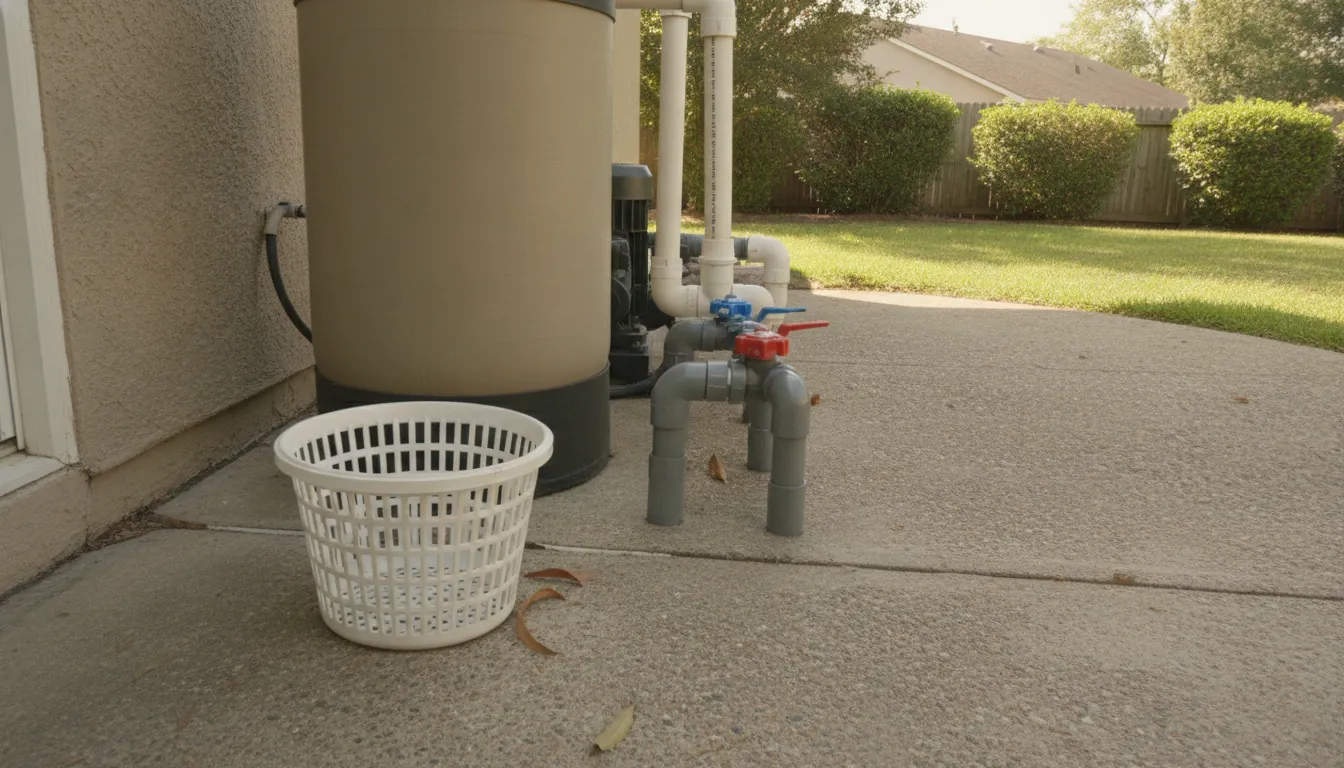
Hayward describes two hydraulic causes. The suction pipe can be too small for the water the pump is trying to move, so the pump starves and gets loud. Or the pressure side can have little backpressure, which Hayward notes is common on some water-feature pumps. A valve or other restriction on the return side is the kind of change a technician would plan, not a knob to turn at random.
Air in the suction line is the other common clue a homeowner can see from the pool. Bubbles at the returns, a gurgling strainer lid, or a water level that sits at the skimmer mouth can pull air into the line. Check that the pool water covers the skimmer opening the way your system expects, and that the strainer lid and its O-ring look intact. Do not add sealant or force the lid if the threads look damaged.
If the strainer basket is full, clearing it with the power off is a fair homeowner check. If the basket is clean and the gravel sound continues, stop there. Impeller debris and undersized suction lines are service calls, not a reason to run the same pump longer.
When is the noise coming from the pad, not the motor?
Some pumps are loud because the pad amplifies them. Hayward says vibration from the pump feet and the base can make a pump noisy. A piece of rubber between the feet and the pad can reduce that transfer. The pump also needs to sit level. Suction lines should not sit higher than the pump.
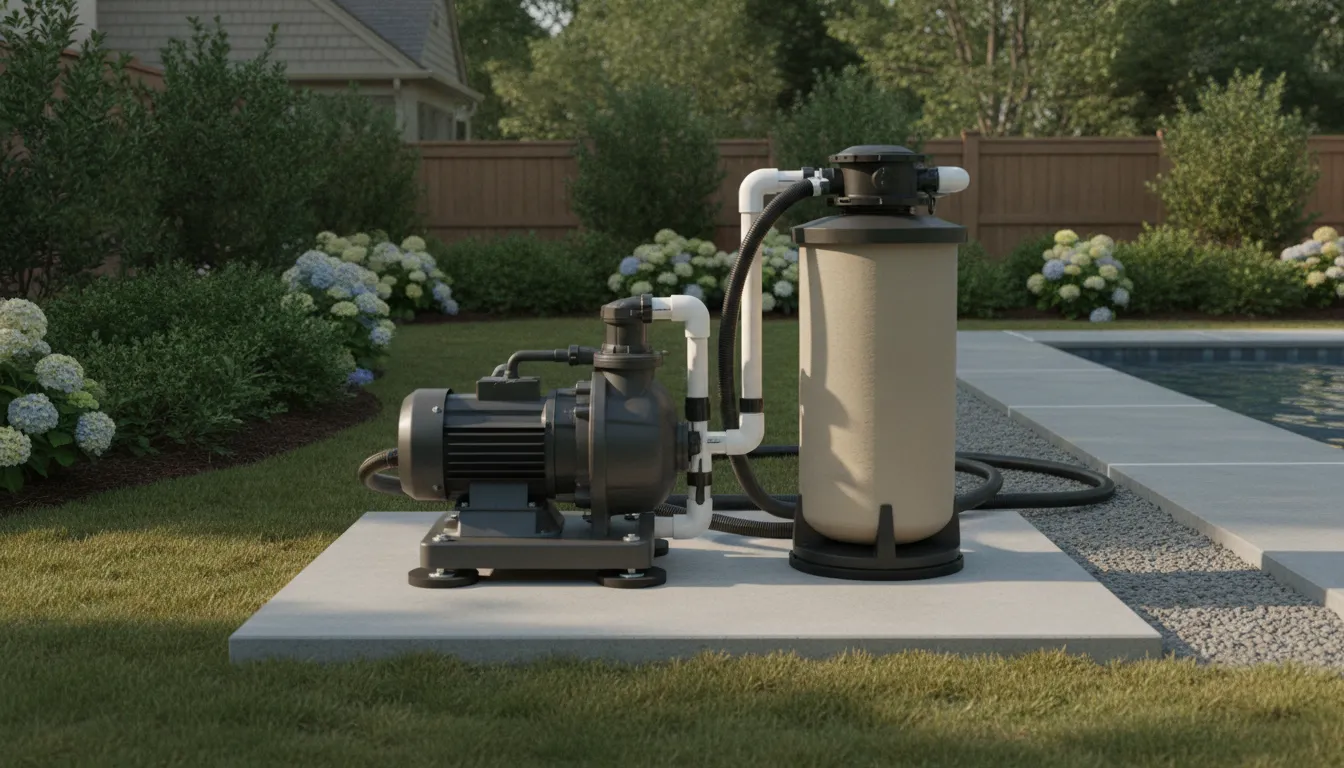
With the power off, look at the feet and the bolts. A pump that rocks on a cracked pad, or that sits on loose pavers, will buzz even when the motor is fine. Tightening a clearly loose mounting bolt is reasonable. Rebuilding the pad, moving plumbing, or changing pipe size is not a same-day homeowner task.
Listen for a buzz that changes when someone leans lightly on the filter or a pipe. That kind of change points to vibration in the plumbing, not to a failing bearing. Note which pipe moves, then leave the alignment to a technician so a joint is not stressed.
Location still matters after the hardware is tight. A pump beside a bedroom or a covered patio will sound louder than the same pump across the yard. Moving it is an installation project. The pool equipment guide for Long Island inground pools covers how pumps, filters, and heaters are planned on the pad. This page stays with the noise you already have.
Which pool pump sounds mean stop and call?
A squeal, a grind, or a screech that gets worse as the pump runs is a different problem from a leaf-filled basket. Hayward says bearings can get noisy with age or with heat and high chemical concentrations, and that a leaking pump seal can damage the front motor bearing. The maker’s advice is to repair leaks quickly and to have bearings or the motor replaced by an authorized dealer, not to keep running the pump.
Use the table as a sorting tool. It is not a diagnosis. If two rows seem true at once, use the more cautious one.
| What you notice | What it often suggests | What to do next |
|---|---|---|
| Steady hum, normal return flow, no new leak | Ordinary motor and fan noise | Note it. Recheck only if the sound changes. |
| Rattle with a full strainer basket | Debris limiting flow | Power off, empty the basket, restart once. |
| Gravel sound plus bubbles at the returns | Air leak or cavitation | Check water level and the lid. Call if it continues. |
| Buzz that changes when the pump is touched at the feet | Pad or plumbing vibration | Look for loose bolts. Leave pipe work to a pro. |
| Squeal, grind, wet motor, or a hot smell | Seal, bearing, or electrical trouble | Shut the pump off and call a pool professional. |
Water that will not clear is a separate clue. A noisy pump with weak flow can leave debris circulating, but adding more chlorine will not quiet the motor. The Long Island pool maintenance guide covers weekly water care. Use it after the pump is running normally again.
Shut the pump off and leave it off if the breaker trips. Do the same if the motor housing is wet, or if water sprays from the seal area. Running it to see if the sound stops can turn a seal leak into a damaged bearing. That is the point where a phone call costs less than another restart.
How do Long Island seasons change what you hear?
A pump that sat all winter can sound different on the first spring start. Air in the lines, a dry lid gasket, or debris left in the skimmer can gurgle until the system primes. Follow the start-up steps in your pool opening guide, and treat a grind on that first start as a stop, not as air that will work itself out.
Summer use is the other spike. Heavy swimmer loads and more debris mean fuller baskets and longer run times. A variable-speed pump may be quiet on a low overnight speed and louder on a high daytime speed. That change is expected. A new grind at the low speed is not.
Heat and covered equipment areas also raise the stakes. Hayward links noisy bearings to heat and to high chemical concentrations. Store chemicals away from the motor, and do not mix products on the pad. If sanitizer levels or pH have been far outside the range your product label allows, mention that history when you call. Out-of-range water can irritate swimmers and damage equipment, which is a reason to fix the water after the pump is safe to run. Heater noise and heater sizing belong in a separate conversation, not in this pump check.
Fall leaf drop fills skimmers fast. Pentair notes that sticks, leaves, and acorns can pack a skimmer basket, and that a blockage adds friction to the system. A basket you emptied in June may be packed solid by October. The pump will sound harsher as flow drops. Empty the basket with the power off. If the noise stays after a clean basket and a normal water level, call a technician. A higher pump speed is not the next step.
Winter cover season changes the sound again. A pump on a short circulation cycle can seem louder because the yard is quiet. Judge it against flow and leaks, not against summer background noise. If you close the pool, follow the equipment steps from installation. Do not invent a shutdown on the pad. A winter cover is a different job from diagnosing the pump.
What should you tell a pool professional?
A useful call is specific. Say when the sound started, what it resembles, and what you already checked with the power off. A technician can move faster with that record than with “the pump is loud.”
- The sound: Hum, rattle, gurgle, squeal, or grind, and whether it is new.
- The timing: At startup only, after an hour, or the whole run cycle.
- The flow: Strong returns, weak returns, or bubbles in the pool.
- The basket and lid: Clean or packed, and whether the lid or O-ring looks damaged.
- The pad: Level, rocking, loose bolts, or a wet motor housing.
- The power: Whether the breaker tripped or the pump shut itself off.
Gappsi designs and builds gunite, vinyl-liner, and fiberglass pools, and pool equipment is part of that work, including filters, heaters, and salt chlorine generators. A noise visit is not a cue to replace the whole pad. Ask what failed, what will be repaired, and what will be left as is. If the larger issue is an aging pool rather than one noisy pump, that is a renovation question, not a same-day noise check. Planting tight around the pad can also block service access, so leave that work until the equipment is quiet.
If the technician recommends a different pump or a plumbing change, that is an installation decision. Keep this troubleshooting record, and use the equipment guide when you compare options. Automation can also change when the pump runs, which changes when you hear it. The pool automation guide covers schedules and controls, not motor repair.
Bring photos of the pad, the lid, and any wet seal area. Photos keep the conversation on the equipment you have. They also stop a phone description from turning into a guess about a different pump model.
Contact Gappsi through our contact page before the noise gets worse
Frequently Asked Questions
Why is my pool pump suddenly loud?
A new sound usually means something changed in the water path or inside the motor. Start with the power off and look at the strainer basket, the lid, and whether the pump sits firmly on the equipment pad. A new grind, a hot smell, or a wet motor housing means stop and call a pool professional.
Can leaves in the basket make a pool pump noisy?
Yes. A packed strainer basket limits flow, so the pump works harder and sounds rougher than it did on a clean day. With the breaker off, empty the basket, reseat the lid, and restart once. If the harsh sound remains, leave the impeller and the plumbing to a professional.
Is a humming pool pump always a problem?
No. A steady hum from the motor and its cooling fan is a normal operating sound on most residential pumps. The problem is a new rattle, gurgle, squeal, or grind, especially when it shows up with weak return flow, bubbles, or a leak at the pump.
Should I keep running a pump that squeals?
No. A squeal or grind can mean a worn bearing or a leaking shaft seal, and Hayward advises a dealer repair rather than continued use. Turn the pump off at the breaker and schedule service before you try another cycle.
Does a noisy pump mean I need a new one?
Not by itself. Debris in the basket, air in the suction line, or a loose equipment pad can be loud without a failed motor. Ask a technician to separate a simple restriction from a seal or bearing failure before you replace the pump.
Ready to sort out a noisy pump?
Start with the sound, a power-off look at the basket and pad, and a note about flow and bubbles. Stop when the motor grinds, leaks, or trips the breaker. Gappsi was founded in 1987 and builds pools for homeowners in Nassau and Suffolk Counties. You can review Gappsi swimming pool services or contact Gappsi through our contact page to talk through the pump you have. Posted by Gappsi Group.