


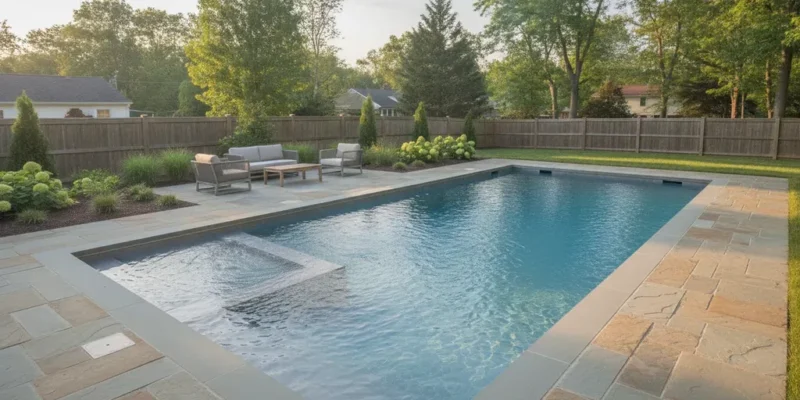
Fiberglass pools give Long Island homeowners a factory-built shell, a smooth finished surface, and a defined starting point for the backyard design. The best result depends on more than choosing a shape from a catalog. You also need to plan access, drainage, equipment, coping, fencing, and the way the pool will connect to the rest of the property.
Contact Gappsi through our contact page
This guide focuses on design and ownership decisions rather than detailed pricing. It explains how fiberglass differs from gunite and vinyl, which shapes and features deserve attention, what happens during installation, and how to plan maintenance for a Long Island season.
What are fiberglass pools?
Fiberglass pools are pre-manufactured shells made from layered fiberglass and finished with a gelcoat surface. The shell arrives at the property as a complete pool vessel. After excavation and base preparation, the installation team places it, connects the plumbing, backfills around it, and coordinates the surrounding deck and landscape work.
That construction method creates a different planning process from a gunite pool, which is formed on site, or a vinyl liner pool, which uses a liner over a structural wall system. A fiberglass pool has a set interior shape and dimensions, so the design conversation should begin with how that shell fits the property.
The surface is smooth and nonporous. That can make routine brushing and cleaning easier, but it does not remove the need for balanced water chemistry, filtration, circulation, winterization, and equipment service.
Which fiberglass pool shapes work best for Long Island yards?
The right pool shape is the one that fits the yard, access route, intended use, and surrounding hardscape. Rectangular shells suit lap swimming and clean contemporary layouts. Freeform shells can create softer lines in a planted backyard. Roman, Grecian, and other modified shapes can support a more traditional home design.
Rectangle and geometric shells
A rectangle uses space efficiently and leaves clear edges for coping, pavers, lounge areas, and safety circulation. It also creates a straightforward lane for swimming. On a narrow property, measure the full installation zone, not only the water area. Excavation, retaining conditions, equipment access, and the finished deck all need room.
Freeform shells
Freeform designs can work well when the pool needs to follow a curved planting bed or connect with a natural-looking landscape. Curves can make the pool feel integrated with the yard, but they may require more careful planning for furniture, fencing, cover systems, and deck layout.
Smaller shells and plunge-style layouts
A compact shell can provide cooling, shallow lounging, and a focal point without using the entire backyard. Before selecting a small pool, decide whether the primary use is family recreation, entertaining, exercise, or relaxation. A smaller footprint does not eliminate the need for equipment space, drainage, safe access, and a code-compliant barrier.
How should you choose a fiberglass pool finish and features?
Choose the shell color, interior features, coping, deck, and equipment as one design system. A blue-toned shell can create a brighter water appearance, while darker colors can produce a deeper visual effect. The surrounding stone, porcelain, planting, and fence will strongly influence how the water looks from the house.
Shell color and surface
Ask to see full-size samples or completed installations in outdoor light. A small sample under showroom lighting cannot show how trees, shade, surrounding pavers, and water depth will affect the final appearance. Also ask how the selected finish should be cleaned and what products are compatible with it.
Tanning ledges and entry steps
A tanning ledge can create a shallow place for sitting, supervised play, or placing in-water chairs. Wide steps can make entry more comfortable and provide a visual transition between the deck and the deeper area. Consider the location of steps in relation to the main seating area and the path from the house.
Water features, lighting, and covers
Waterfalls, bubblers, deck jets, LED lighting, and automatic safety covers should be planned before the shell is ordered. Each feature can affect plumbing, electrical work, equipment sizing, deck details, and service access. Gappsi’s Long Island swimming pool design and construction service includes pool planning alongside coping, natural stone, porcelain, equipment, and outdoor-living elements.
What site conditions should be reviewed before installation?
Site planning determines whether the selected shell can reach the yard and sit correctly after excavation. A professional review should consider property lines, utilities, overhead wires, soil, grades, drainage, access for delivery equipment, and the location of the equipment pad.
- Delivery route: Measure gates, side yards, turns, overhead clearance, and staging areas for the shell and lifting equipment.
- Excavation limits: Account for the shell dimensions, working space, base material, and the finished deck or coping.
- Drainage: Plan how roof runoff, surface water, groundwater, and pool discharge will be managed without directing water toward the house.
- Utilities: Locate electric, gas, water, sewer, irrigation, and other buried or overhead services before excavation.
- Grade changes: Identify whether slopes, walls, steps, or additional structural work are needed around the pool.
- Equipment location: Leave enough room for pumps, filters, heaters, automation, service access, and sound separation from living areas.
Long Island properties vary widely. A level suburban lot and a wooded property with limited side access can require very different preparation. The shell should not be selected in isolation from the site review.
What happens during fiberglass pool installation?
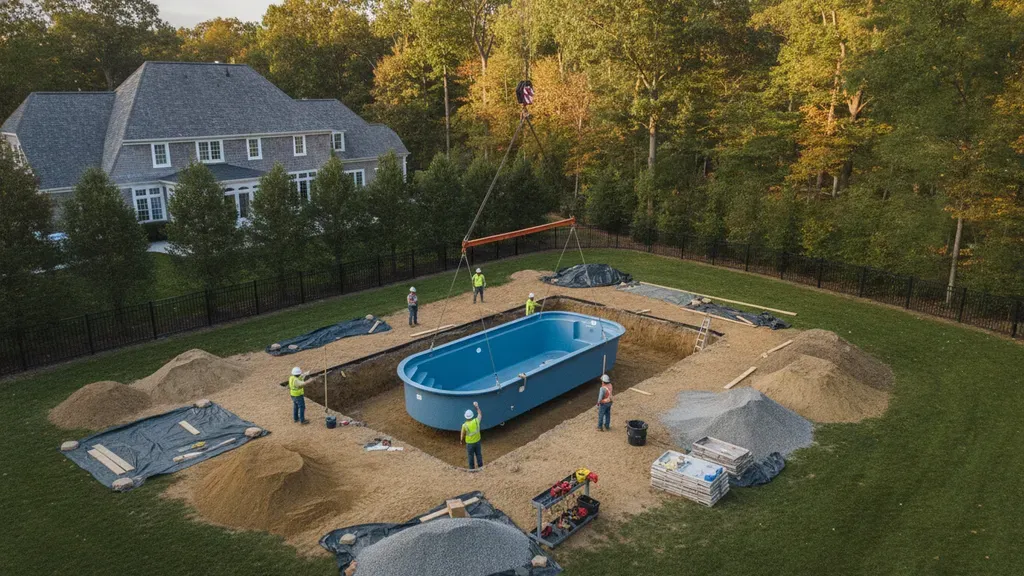
Fiberglass pool installation follows a coordinated sequence from design and permits through excavation, shell placement, connections, backfill, and finishing. The exact schedule depends on the shell, property, permit process, weather, access, inspections, and the amount of deck and landscape work included.
- Design and site review: Confirm the shell, features, access, equipment, coping, deck, fencing, drainage, and landscape relationship.
- Permits and utility coordination: Prepare the required documents and confirm local requirements before excavation begins.
- Excavation and base preparation: Dig to the planned profile, manage spoils, prepare the base, and verify elevations.
- Shell delivery and placement: Move the shell into the property and lower it into the prepared excavation using an appropriate lifting plan.
- Leveling and plumbing: Confirm the shell position, connect circulation lines, and coordinate electrical work and equipment locations.
- Backfill and stabilization: Place approved material in a controlled sequence while the pool is filled as directed by the installation plan.
- Coping, decking, and barriers: Install the selected edge and deck materials, then complete the required fence, gate, and safety details.
- Startup and orientation: Balance the water, check circulation, review equipment operation, and explain routine care.
The visible shell placement can be quick, but the complete project includes many connected trades. Rushing the base, drainage, backfill, or deck transitions can create problems that are more difficult to correct after the yard is finished.
How do fiberglass pools compare with gunite and vinyl pools?
Fiberglass, gunite, and vinyl liner pools can all serve Long Island homeowners, but they differ in customization, surface, construction method, and future planning. The best choice depends on the property and the experience the homeowner wants, not on one universal ranking.
| Pool type | Design and construction profile | Planning questions |
|---|---|---|
| Fiberglass | Factory-built shell with a smooth gelcoat surface and defined shapes. | Can the shell reach the yard? Does the shape support the deck, cover, and intended use? |
| Gunite | Concrete pool formed on site with broad flexibility for custom geometry and features. | Does the property and project scope justify a more customized build sequence? |
| Vinyl liner | Structural pool walls paired with a replaceable vinyl liner. | How do liner selection, future replacement, and the desired shape fit the ownership plan? |
Gappsi designs and builds all three pool types. A consultation can compare the shell, the site, the surrounding materials, and the intended use before the project is finalized.
Contact Gappsi through our contact page
What maintenance do fiberglass pools need?
Fiberglass pool maintenance still requires consistent water care, circulation, cleaning, and seasonal preparation. The smooth surface may simplify brushing and can make the pool less hospitable to buildup than a rougher surface, but maintenance depends on the water, equipment, weather, trees, and how often the pool is used.
- Test water chemistry on a regular schedule and adjust it according to the equipment and service guidance.
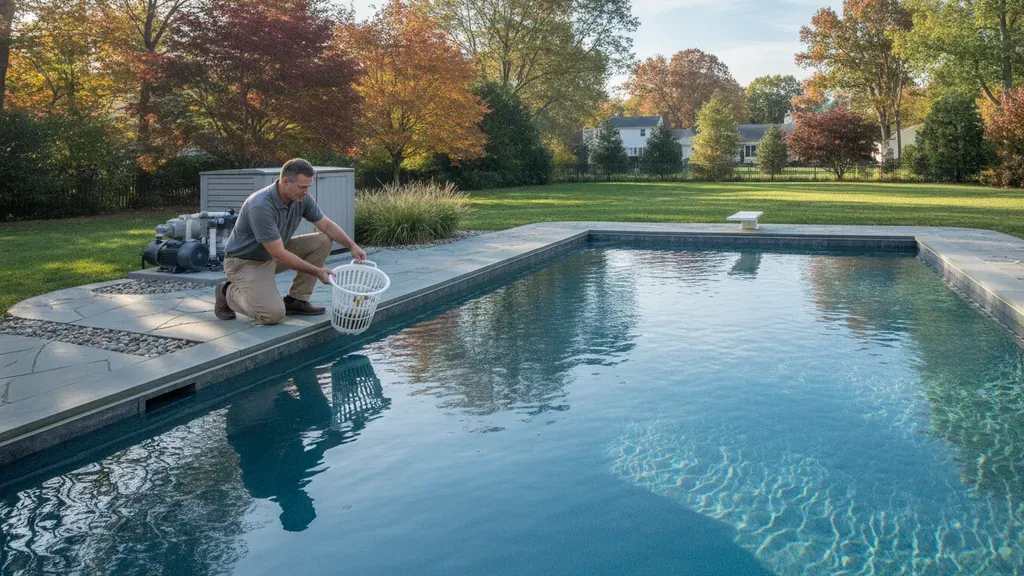
- Skim the surface and empty baskets so circulation is not restricted by leaves and debris.
- Brush steps, ledges, walls, and waterline areas as needed.
- Inspect the filter, pump, heater, lighting, automation, and safety cover.
- Watch for changes in water level, unusual equipment noise, leaks, or poor circulation.
- Prepare the pool for winter with the correct closing procedure for the shell and equipment.
- Schedule a spring opening that includes equipment checks, water testing, and a review of the cover and barriers.
Do not choose chemicals, abrasive tools, or cleaning methods only because they worked on another pool. Follow the shell and equipment manufacturers’ guidance, and ask the installer which products are appropriate for the selected finish.
What Long Island planning details should homeowners not overlook?
A successful Long Island pool project accounts for local approvals, seasonal weather, property access, drainage, and the relationship between the pool and the rest of the yard. These details are easier to solve during design than after the shell and deck are in place.
Permits and barriers
New York State publishes swimming pool barrier requirements, and local laws can be more restrictive. Review the current requirements with the project team and the authority having jurisdiction. The state’s technical bulletin on swimming pools and spas is a useful starting point, not a substitute for local confirmation.
Weather and seasonal scheduling
Long Island weather can affect excavation, concrete, masonry, planting, and final startup. Build the schedule around the full scope instead of assuming that shell placement alone means the backyard is ready to use.
Deck, drainage, and landscaping
Pool water, roof runoff, irrigation, and hardscape drainage should be considered together. Gappsi’s Long Island pool landscaping guide covers planting, privacy, lighting, and splash-zone planning. For barrier planning, review the Long Island pool fence options guide before selecting the final layout.
Equipment and future service
Leave practical access around the equipment pad. The Long Island pool equipment guide explains how pumps, filters, heaters, cleaners, and automation fit into the ownership plan.
How can you plan a fiberglass pool project with fewer surprises?
Start with a written scope that connects the pool shell to the site, equipment, safety features, finishes, deck, drainage, and landscaping. Ask the builder to explain what is included, which decisions are still open, and which site conditions could change the work.
- Bring a property survey, photos of the access route, and a rough sketch of how you use the yard.
- List must-have features separately from features you would consider if the site allows them.
- Ask where the shell, excavation material, equipment, and construction vehicles will move.
- Confirm the scope for coping, decking, fencing, gates, drainage, lighting, planting, and cleanup.
- Request equipment details and a service-access plan, not only a pool model name.
- Review the opening, closing, water-care, and warranty responsibilities before signing.
For a separate look at budget factors, read Gappsi’s fiberglass pool cost guide for Long Island. It covers the variables that affect an installed project without replacing a property-specific proposal.
Contact Gappsi through our contact page
Frequently Asked Questions
Are fiberglass pools a good choice for Long Island?
Fiberglass pools can be a strong fit when a homeowner wants a factory-built shell, a smooth surface, and a defined installation plan. The property still needs a suitable delivery route, excavation plan, drainage strategy, equipment location, and compliant barriers. A site review should come before a final shell selection.
How long do fiberglass pools typically last?
Service life depends on the shell, installation, water chemistry, equipment, climate exposure, and maintenance. Ask the builder and manufacturer for the written warranty, care instructions, and conditions that apply to the selected shell and finish. Regular water care and prompt equipment service support long-term ownership.
What is the downside to a fiberglass pool?
The fixed shell limits the exact shape, size, and depth compared with a pool formed on site. Delivery and placement also depend on property access and lifting logistics. If the preferred design needs unusual geometry or extensive custom features, compare fiberglass with a gunite pool before deciding.
Can a fiberglass pool include a tanning ledge or steps?
Many fiberglass shell designs include entry steps, benches, or tanning ledges. These features are selected before the shell is ordered, so consider how they affect circulation, seating, supervision, cleaning, cover use, and the placement of the surrounding deck.