


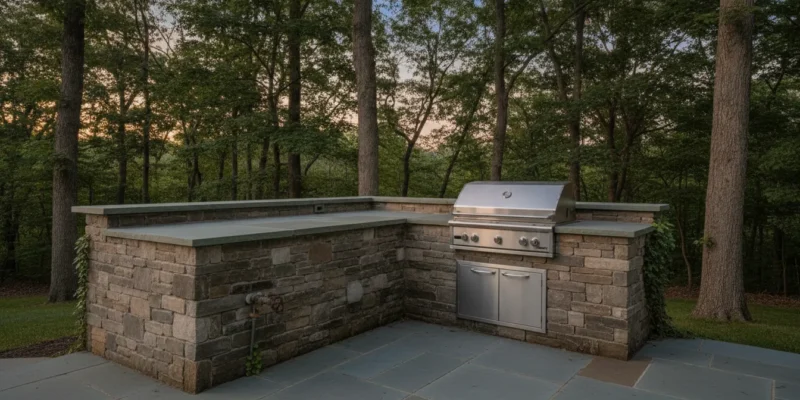
Posted by Gappsi Group
Homeowners searching for an outdoor kitchen gas line long island guide need the answer before the island is built, not after the counter is set. The line is either a buried run from the house gas meter or a propane supply with its own tank and regulator. Wind, freeze-thaw, and the walk back to the meter decide which one is usable. This guide is the fuel decision. It is not a layout guide, a price list, or a winter shut-down checklist.
Contact Gappsi through our contact page
What does an outdoor kitchen gas line on Long Island have to do?
Start with the appliances that will actually burn fuel. A grill, a side burner, and a gas pizza oven do not share one hose. Each one needs a listed connector, its own shutoff, and enough pipe size for the combined load. Write three facts down before anyone digs:
- Fuel at the house: natural gas at the meter, or propane only.
- Distance: feet from the meter, or from the propane regulator, to the island.
- Appliances: grill, side burner, pizza oven, or a gas fire feature, and whether they are outdoor-rated.
A short run on the same side of the house is a different job from a line that crosses a patio, a driveway, or a pool deck. Long Island salt air also punishes exposed steel fittings, so the last few feet at the island matter as much as the trench.
Gappsi designs custom outdoor kitchens in Nassau and Suffolk and can connect outdoor-rated grills and ovens. The licensed plumbing work and the utility visit stay with the trades those rules require. Do not treat a blog as a pipe-sizing sheet.
Should the outdoor kitchen gas line be natural gas or propane?
Natural gas comes from the existing meter. You do not store fuel in the yard. The limit is pipe length and what the meter can still supply once the house loads are counted. Propane uses a tank and a regulator. It fits yards with no gas service, and it can sit closer to the island. It adds tank placement, delivery access, and a second set of rules for the tank itself.
Pick natural gas when the meter is on the kitchen side of the house and the utility confirms capacity. Pick propane when the meter is far, the yard has no gas, or a future owner may want to move the cooking zone. Do not run a rubber hose across the lawn as a stand-in for either one.
Use this side-by-side only for the fuel choice. It is not a quote.
| Decision | Natural gas line | Propane supply |
|---|---|---|
| Source | House meter. Downstream of delivery. | Tank and regulator for the appliances. |
| Best fit | Meter is close and has spare capacity | No gas service, or a very long run. |
| Yard work | Trench to a sleeve at the island. | Tank pad and a shorter buried stub. |
| What to confirm first | Utility capacity and the permit path. | Tank setback and the appliance rating. |
The model code draws a bright line at the point of delivery. For natural gas, that point is the outlet of the meter assembly. For undiluted propane, it is the outlet of the service pressure regulator. Piping upstream of that point is the utility’s or the tank supplier’s system. Piping downstream is the part a building code and a licensed installer cover. The ICC explains that split in its underground gas piping CodeNotes.
Ask the utility for a capacity note before you promise a large grill plus a pizza oven on the same meter. A house that already runs a generator, a pool heater, or several fireplaces can be near the meter’s limit. That answer can flip the plan to propane even when a trench looks easy. Get it in writing. A verbal “should be fine” is how islands end up with a grill that starves when the oven lights.
When should the outdoor kitchen gas line be trenched?
Trench the line before the patio base and the island footing go in. A line added later means cutting finished pavers, undermining a new base, and guessing where the sleeve should have landed. The usual order on a Long Island yard is:
- Mark the island footprint and the meter or tank location on the same plan.
- Call 811 and wait for the existing utilities to be marked.
- Have the pipe sized for the real appliance load, not a guess.
- Dig, lay listed pipe, and pressure-test before backfill.
- Leave a protected stub or sleeve exactly where the grill bay will sit.
- Build the masonry or cabinet run so the shutoff stays reachable.
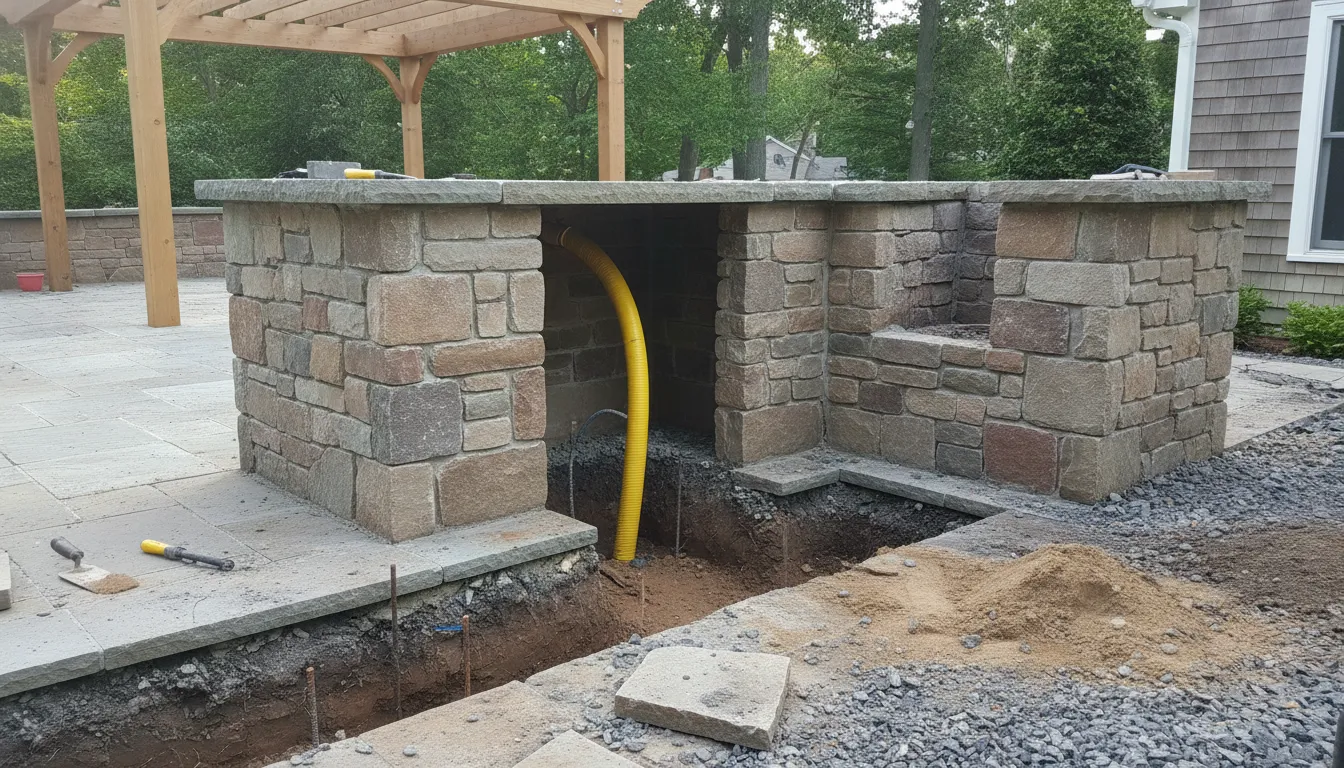
Underground systems in the model code are buried at least 12 inches below grade. A single line that serves only an outdoor grill or similar appliance may be 8 inches below finished grade when the authority having jurisdiction approves it and the spot is not prone to damage. Those figures are in IRC G2415.12 and IFGC 404.12. The ICC restates them in its underground gas piping CodeNotes. Your town can ask for more cover. A driveway crossing usually needs a sleeve and more protection than open lawn.
Plastic pipe, where it is allowed underground, is not a do-it-yourself swap for steel at the island. The riser, the fittings, and the transition to the appliance have to match the listing. Record the trench path before the lawn grows back. A later patio or fence post should not land on a line nobody mapped.
Photograph the open trench with a tape measure in the frame, then mark the stub on the site plan. Store that photo with the appliance manuals. The next owner, and the next plumber, should not have to guess. If irrigation, lighting, or a pool bond wire will share the yard, keep those runs on the same drawing so they do not nick the gas line.
Winter use is a placement issue, not a shut-down checklist. A valve you can reach in January matters more than a valve hidden behind a stored cover. The seasonal close-up steps live in the winterization guide. This page only makes sure the valve exists and stays labeled.
Where does the shutoff go on an outdoor kitchen gas line?
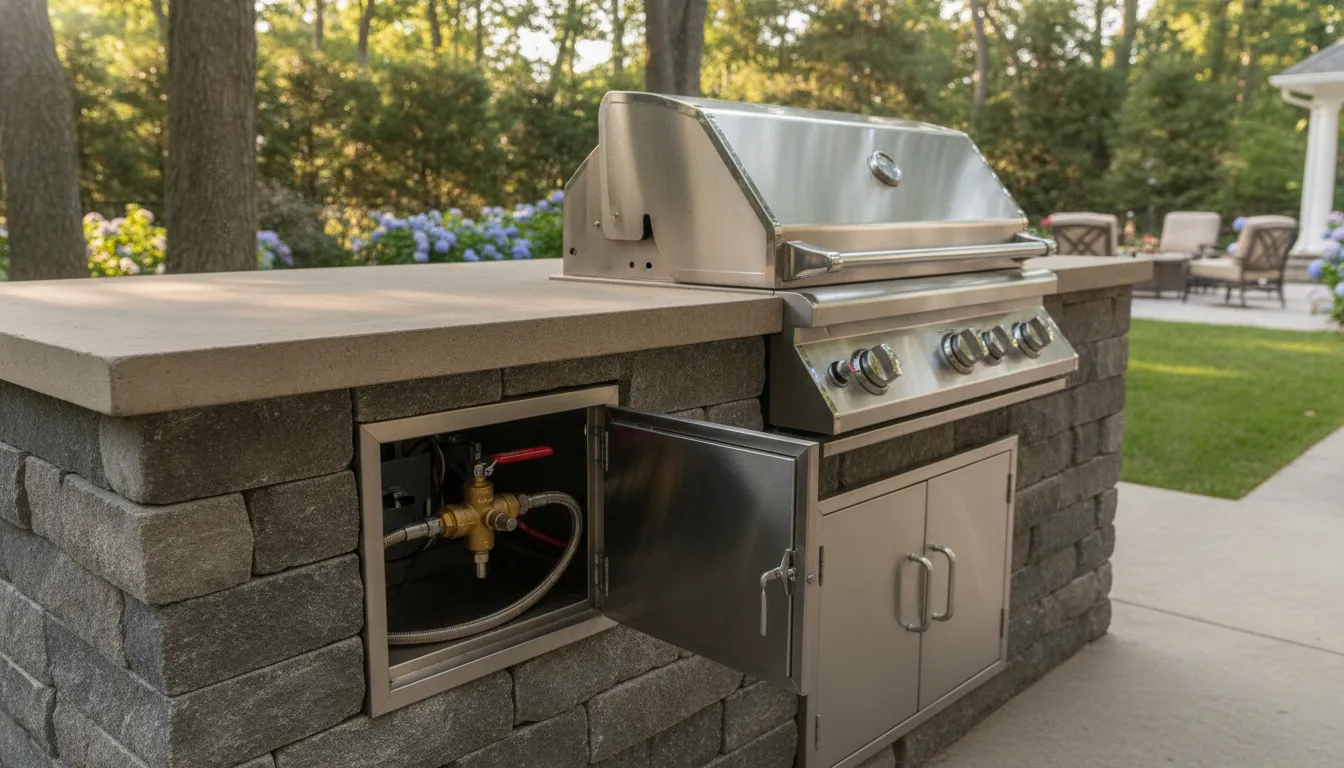
Each appliance needs a shutoff valve with access. In the model fuel-gas rules, that valve sits in reach of the appliance, upstream of the connector, and within 6 feet. The text is IRC G2420.5 and IFGC 409.5. A readable copy is on UpCodes for the appliance shutoff. Behind a slide-out grill can count as access. Buried in a closed masonry chase does not.
Plan the valve where a person can reach it without moving the counter. A side panel, a listed access door, or an exterior valve at the end of the island all work if they stay labeled. A grill, a side burner, and a pizza oven each get their own valve. One hidden valve for the whole island makes a leak or a service call harder, not easier.
Use the connector the appliance maker lists, and keep it in the bay rather than as a long whip across the toe-kick. Outdoor-rated grills from the Gappsi outdoor appliance lineup are built for weather. A connector still has to be the right fuel, the right length, and protected from grease and from being pinched by a door.
Ask for the shutoff location on the drawing before stone is ordered. Moving a valve after the veneer is up means opening finished work.
How do masonry, sleeves, and weather change the gas line?
The island is not just a box around a grill. Masonry construction on Long Island has to leave a path for the riser, a sleeve through the wall or footing, and a vent path the appliance instructions require. A sleeve that is an inch off forces the grill off its bay or puts the connector in a bind.
Salt air and freeze-thaw attack exposed threads. Keep buried pipe at the approved depth, seal the place where a pipe passes a wall above grade, and do not let the line enter the house below grade. The same ICC CodeNotes page flags that below-grade foundation penetration as prohibited. Slope and sleeve the run so water does not sit on fittings.
A roof or pergola over the kitchen does not replace the gas plan. It can change clearances and where a technician can stand. If you are comparing a cover, use the pavilion and pergola notes for structure, and keep the fuel decisions on this page. Layout choices, including linear and L-shaped islands, belong in the luxury outdoor kitchen designs guide. Link the two plans. Do not collapse them into one.
Counter material is a separate choice. Stainless and sintered surfaces near a grill still need the clearances in the appliance manual. Material comparisons live in the countertop guide, not here.
Who approves an outdoor kitchen gas line, and what should you ask?
Towns on Long Island do not share one form. Huntington, for example, lists exterior gas fireplaces and larger structures on its permit page, and plumbing work runs through licensed plumbers. Islip, Brookhaven, Oyster Bay, and the villages each publish their own triggers. Read the building department that covers your parcel, then ask three questions:
- Does this island, this piping, or this propane tank need a permit in this town?
- Will the inspector want a pressure test before the trench is closed?
- Does the gas utility have to sign off on meter capacity before rough-in?
Gappsi can coordinate the kitchen, the masonry, and the appliance layout. A licensed plumber or the gas utility still owns pipe sizing, the test, and the meter. If a town requires a licensed plumber’s signature, that is the path. Do not bury an untested line to save a site visit.
Bring the appliance manuals to that conversation. Nameplate input, in BTU per hour, is what the pipe is sized from. A showroom visit at the outdoor-rated appliance store is useful for seeing grill and oven sizes. It is not a substitute for the load calculation.
Budget talk belongs on the cost to build page. Hiring talk belongs on the builders comparison. If a sink is going in the same island, plan the water and drain trench in the same dig, then read the sink guide for the bowl and faucet. Do not let the plumber and the mason each assume the other left the sleeve.
Contact Gappsi through our contact page
Frequently Asked Questions
Can I add an outdoor kitchen gas line after the patio is finished?
You can, but you will cut finished paving and you may undermine the base. It is simpler to trench, test, and sleeve the line before the patio and the island go in. If the patio is already down, ask the mason and the plumber to map a joint line so the patch does not become the low spot that holds water.
Does every grill need its own shutoff?
Yes. Each appliance gets a shutoff with access, upstream of its connector. A grill, a side burner, and a pizza oven are separate appliances. One valve buried in a closed chase does not meet the access rule in the model code, and it is a poor way to isolate a leak.
Is propane simpler than a natural gas line on Long Island?
Propane avoids a long trench back to the meter, but it adds a tank, a regulator, refill access, and NFPA 58 rules for storage. Natural gas avoids a tank when the meter has capacity and the run is reasonable. The shorter safe path is the right one, not the one that looks easier on day one.
How deep does the buried line have to be?
The model code sets 12 inches of cover for underground gas piping, with a possible 8 inches for an individual outdoor grill line when the inspector approves it and the spot will not be damaged. Driveways, future posts, and local amendments can require more. Confirm the depth with the town before backfill.
Who sizes the pipe, Gappsi or the plumber?
A licensed plumber or the utility sizes and tests the pipe. Gappsi plans the kitchen, the masonry openings, and the outdoor-rated appliances so the stub lands in the right bay. Bring nameplate BTU ratings to that meeting so the pipe is not undersized on the first pour.