


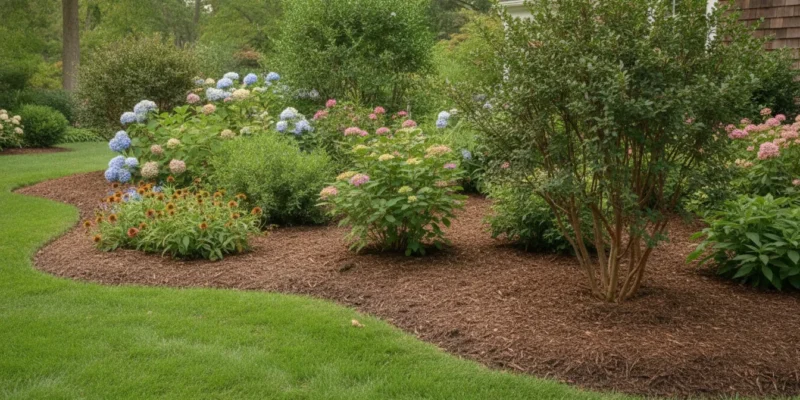
Should Long Island homeowners use landscape fabric under mulch? For most planted beds, no. A 2 to 4 inch layer of organic mulch on prepared soil controls annual weeds and feeds the bed as it breaks down. Fabric can blunt weeds for a couple of years, then it clogs, sheds water, and lets new weeds root in the mulch on top. Landscape fabric vs mulch Long Island is a bed-by-bed choice, not a blanket rule.
Contact Gappsi through our contact page to review a planting bed before fabric goes down.
Posted by Gappsi Group.
This guide answers the keep-or-skip question. It does not replace a mulch-installation plan, a plant list, or a drainage design. Those jobs have their own pages. Here, the job is to decide what belongs between the soil and the mulch.
Should You Use Landscape Fabric Under Mulch?
Skip landscape fabric in shrub beds, perennial beds, and mixed foundation plantings. Put organic mulch on bare, weeded soil instead. Cornell’s turf and landscape weed guide says mulch stops weeds mainly by blocking light, and a 2 to 4 inch layer is enough for annual weeds. The same guide says fabric is effective for a relatively short time and is weak against perennial weeds.
University of Illinois Extension horticulturist Christopher Enroth makes the same point from the other direction. In The disadvantages of landscape fabric, he writes that fabric can suppress weeds for a couple of years. After that, pores clog with sediment. He has lifted fabric after a soaking rain and found dry soil underneath. Seeds that blow in later sprout in the mulch sitting on the fabric, not in the soil the fabric was meant to protect. Cornell’s weed-barrier guidance sets the matching mulch depth at 2 to 4 inches and lists the same fabric failures.
That pattern shows up on Long Island. Wet springs push water across beds. Summer dry spells bake a clogged sheet. Fall leaves settle into the mulch and become a thin new soil. Weeds then grow on top of an intact fabric, which is exactly the problem the roll was supposed to prevent.
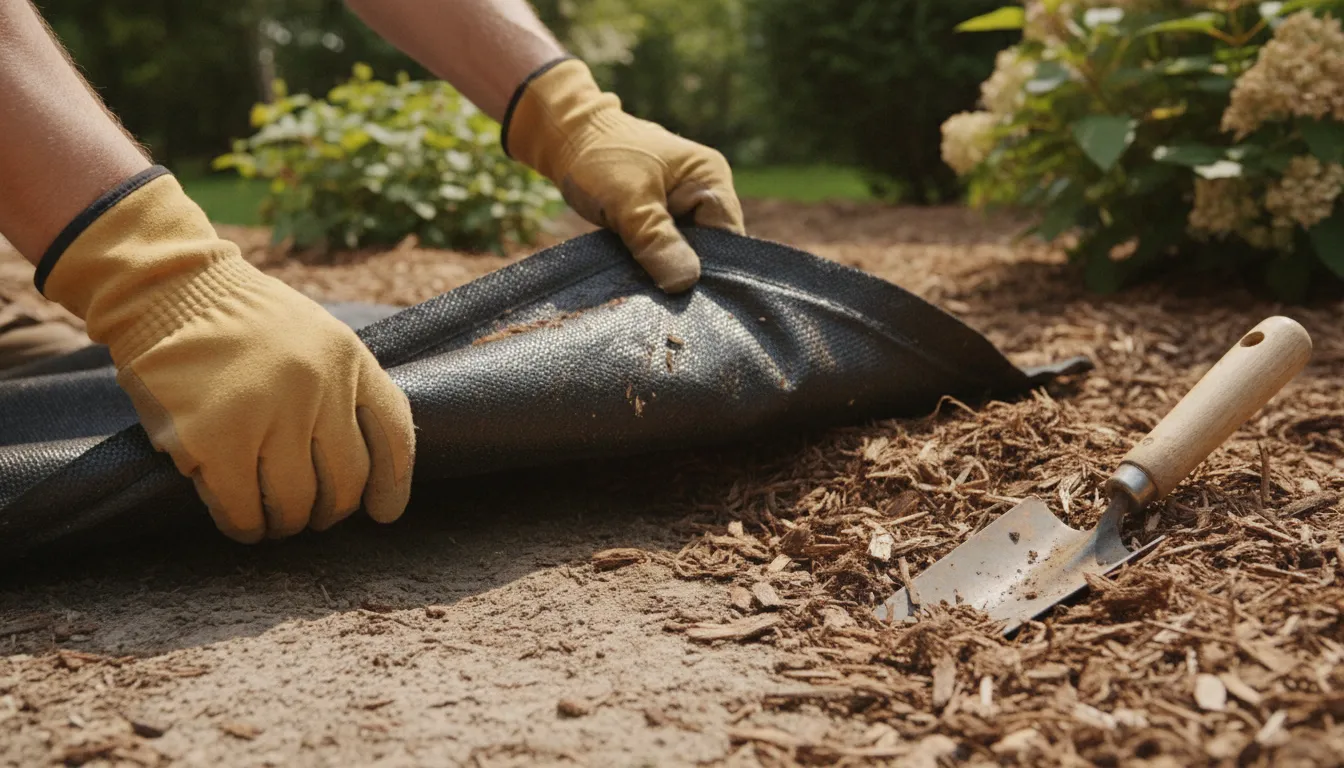
Fabric still has a job. Use a geotextile where the goal is separation, not plant health. A gravel path, a utility strip, or soil held behind a wall is a different problem from a hydrangea bed. The planted bed gets mulch on soil. The path can get a separator under stone.
Plan the bed with Gappsi landscape design and construction if the yard mixes planted areas and stone.
How Does Landscape Fabric vs Mulch Long Island Compare?
Homeowners usually compare four things: weed control, water, soil, and the work required later. Fabric wins the first season in a freshly disturbed bed. Mulch wins the years after that, because it can be refreshed without cutting a plastic sheet into scraps.
| Question | Organic mulch on soil | Landscape fabric under mulch |
|---|---|---|
| Weed control in year one | Strong on annual weeds at 2 to 4 inches. | Strong at first in a new, disturbed bed. |
| Weed control after a few years | Stays useful if the depth is kept up. | Drops as seeds sprout in mulch on the sheet. |
| Water and air | Moves through the mulch into the soil. | Slows as pores fill with fine sediment. |
| Soil | Gains organic matter as mulch breaks down. | Gains nothing. The sheet blocks that mixing. |
| Later planting | Dig, plant, and remulch. | Cut holes, then live with a torn sheet. |
| Best fit | Shrubs, perennials, trees, and foundation beds. | Gravel paths and separation, not planted beds. |
Cornell lists the practical failures in plain language. Fabric is harder to install around existing plants. Weeds that punch through are harder to pull. New weeds can root into the sheet. The material also catches on tools. It does not decompose, so a bad install stays in the ground.
Cost is the trap that makes fabric look thrifty. The roll is cheap next to a crew day. The second cost shows up when the bed has to be opened for a new shrub, a moved light, or a wider edge. Someone then cuts, folds, and sometimes hauls out a dirty sheet before the new mulch can go down. A mulch-only bed skips that step. You rake, add mulch, and finish.
There is no single Gappsi price for this choice, and there should not be. A foundation bed, a gravel path, and a new graded lawn edge are different jobs. The useful comparison is labor later, not the price of the roll today.
Illinois Extension adds the store detail homeowners miss. Most rolls are either woven plastic strips or spun polyester. Both are described as permeable. Both still restrict water and air, and both get less permeable as dirt packs the pores. A bed that looks watered can be dry underneath.
When Is Fabric the Wrong Layer for a Planted Bed?
Fabric is the wrong layer anywhere you expect roots, replanting, or mulch to become soil. That covers most residential landscape beds Gappsi builds: foundation shrubs, perennial borders, and mixed plantings around a patio.
Four failures show up again and again:
- Weeds move upstairs. Leaf litter and broken-down mulch form a seedbed on the fabric. Pulling those weeds lifts the sheet.
- Water sheets off. A clogged weave sends irrigation sideways. Plants stress in August even when the mulch looks damp.
- Soil stays idle. Organic mulch cannot mix into the ground, so the bed never gains the structure Cornell credits to mulch that is allowed to break down.
- The next planting gets harder. Every new perennial needs a cut. After a few seasons the fabric is a loose web, not a barrier.
Perennial weeds are the other limit. Cornell notes that fabric has limited effect on them. Quackgrass, nutsedge, and vines already in a Long Island bed will find a seam or grow through a thin weave. Removing those plants before mulch goes down matters more than the roll underneath.
Watch the bed after a storm, not only on install day. Long Island downpours move fine grit into the weave. By the next July the sheet can shed water that the first spring let through. If you already have fabric and the plants look thirsty while the mulch looks wet, peel a corner after a rain. Dry soil under a soaked surface is the sign Enroth describes. At that point the fabric is no longer helping the planting.
Removal is messy, and it is still the right repair for a failing shrub bed. Cut the sheet into strips, pull it away from trunks, and shake mulch back onto the soil. Do not try to plant through a map of old holes and expect the barrier to keep working. Once the sheet is out, reset the mulch depth and keep it off the bark.
Keep mulch off woody stems either way. Cornell’s weed-barrier guidance says to leave 3 to 5 inches bare around young plants and 8 to 18 inches around mature trees, and never to bury the root flare. A fabric collar tight against bark makes that worse, because it holds moisture on the trunk. Tree placement itself belongs in the tree planting service guide for Long Island yards, not in this decision.
Where Does a Geotextile Still Belong?
Use fabric, or a heavier geotextile, when plants are not the point. The layer should separate two materials so they do not mix. It should not pretend to be a permanent weed cure under hardwood mulch.
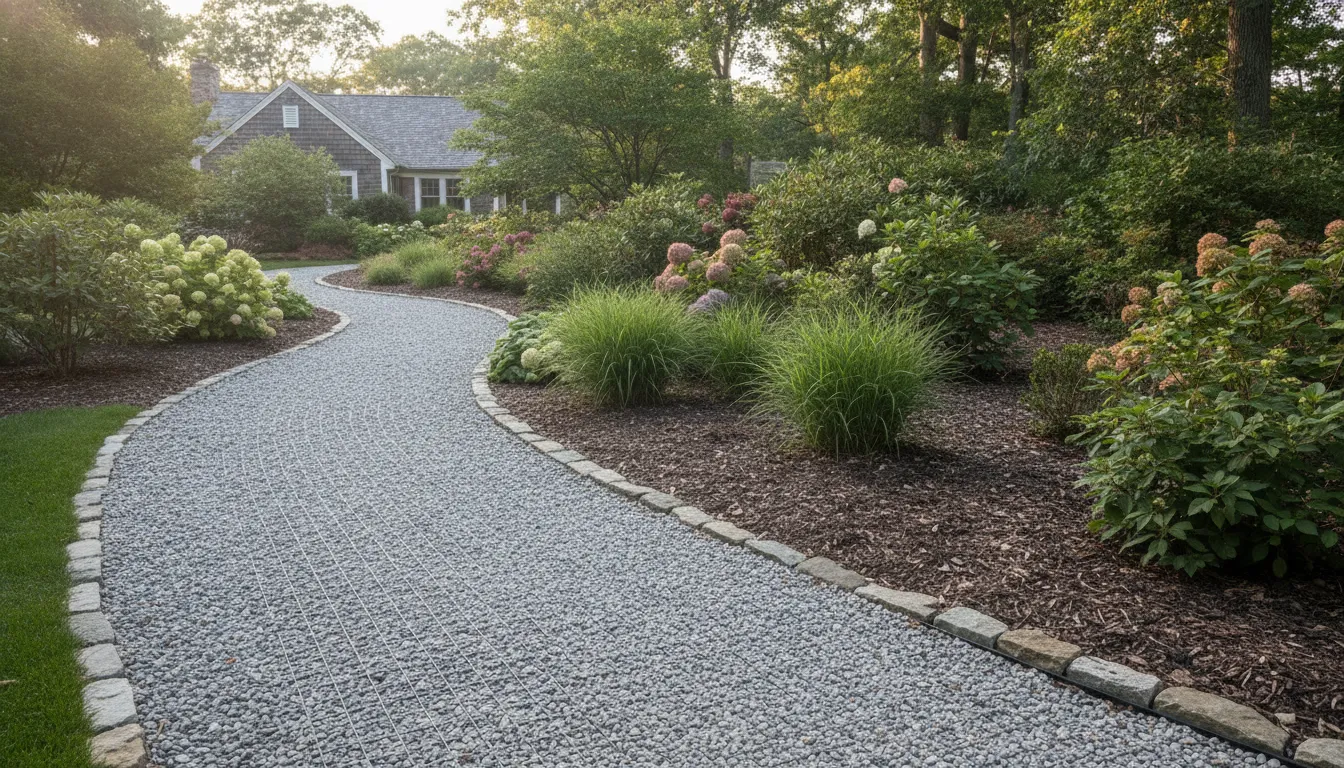
Reasonable uses:
- Gravel and stone paths. A separator keeps stone from sinking into soft soil. The surface is stone, not a planted mulch bed.
- Soil separation at a wall or edge. Geotextile is a construction layer, the same family of use Illinois Extension traces back to holding soil during structural work. Planting in front of a wall is a separate choice, covered in plants for Long Island retaining walls.
- A short establishment window. A new bed that was just graded can throw a flush of weeds. Fabric can blunt that flush. Plan to remove it or stop relying on it once the planting fills in. Do not treat it as a 10-year layer under shrubs.
Do not put plastic sheeting under mulch in a planted bed. Plastic is not fabric. It blocks water outright. If a bed already holds water, the fix is grading and drainage, not another sheet. Start with drainage planning for Long Island landscapes and, where the soil itself is the problem, topsoil delivery and grading.
What Should Go Under Mulch Instead?
The alternative is dull and effective: weed the bed, fix the soil you can see, edge it, then mulch. No hidden layer.
- Remove existing weeds, including roots of perennials. Fabric will not finish that job.
- Loosen only where planting requires it. Broad tilling wakes more seeds. Enroth’s point is that every disturbance is a new chance for those seeds.
- Set plants and water them in before the mulch goes down, so you are not cutting holes later.
- Spread 2 to 4 inches of weed-free organic mulch and pull it back from stems and root flares. Cornell also says coarser mulch dries faster and blocks more light, which helps weed control.
- Top up every 2 to 3 years as the layer settles, instead of ripping out a rotten sheet.
Newspaper is the one short-lived sheet Cornell still describes as useful. Two to four layers, wetted so they stay put, then covered with wood chips or leaf mulch. Paper breaks down and can fold into the soil. It is not a substitute for a thick mulch layer, and it is not landscape fabric.
Plant choice changes how much bare mulch you need. A bed filled with the right shrubs shades the soil and needs less annual patching. See native plants for Long Island for that planting logic. How the whole yard is sequenced, from grading to planting, sits in the landscape design and construction guide.
Request a Gappsi consultation for the planting beds before you buy a roll for the whole yard.
How Should Long Island Beds Be Decided Before Mulch Day?
Walk the yard once and sort every surface. Planted ground gets organic mulch on soil. Stone that must stay separated from soil can get a geotextile. Turf edges and open lawn are neither.
Ask four questions at each bed:
- Will someone plant here again in the next three years? If yes, skip fabric.
- Is the weed problem perennial roots already in the soil? If yes, remove those plants first.
- Does water sit or run off? Fix grade and drainage before any covering.
- Is the surface gravel or planting? Match the layer to that surface.
Small yards make the mistake easier to see, because one bad sheet runs from the foundation to the fence. A tighter layout is covered in Long Island backyard design. Larger Suffolk properties have more bed edge, so a fabric mistake costs more to undo. Scope for that work starts with full-service landscaping in Suffolk County.
Gappsi’s landscape work includes design, ground preparation, planting, and seasonal mulching. The fabric decision is part of that preparation, made before mulch is ordered. If the project is really a patio, wall, or walk, the lead trade may be masonry rather than planting. That split is explained in hardscape contractor versus landscaper.
Contact Gappsi through our contact page and say which beds are planted and which surfaces are stone.
Frequently Asked Questions
Should Long Island homeowners use landscape fabric under mulch?
Not in planted beds. Use 2 to 4 inches of organic mulch on weeded soil. Save geotextile for gravel paths and for separating soil from stone, not for shrub and perennial beds.
What is an alternative to landscape fabric under mulch?
Bare, prepared soil plus a maintained mulch layer. A short-term option Cornell describes is two to four layers of newspaper under the mulch. Paper breaks down. Plastic fabric does not.
What plants should not have mulch piled on them?
Do not pile mulch against woody trunks or cover root flares. Cornell says to leave 3 to 5 inches bare around young plants and 8 to 18 inches around mature trees. Plants that want sharp drainage also suffer if mulch is stacked deeper than about 4 inches.
What is the downside of rubber mulch in a planting bed?
Rubber does not feed the soil, and it stays in the bed the way fabric does. It can still host weeds in debris that collects on top. For planted beds, a wood or bark mulch that breaks down is the better match.
Decide the Bed Before You Buy the Roll
For landscape fabric vs mulch on Long Island, planted beds should get organic mulch on soil. Fabric belongs under stone and in true separation details, not under the shrubs. A short walkthrough of each bed prevents a sheet you will be cutting apart in year three.
Contact Gappsi through our contact page to plan the beds, the mulch, and any path that actually needs a separator.